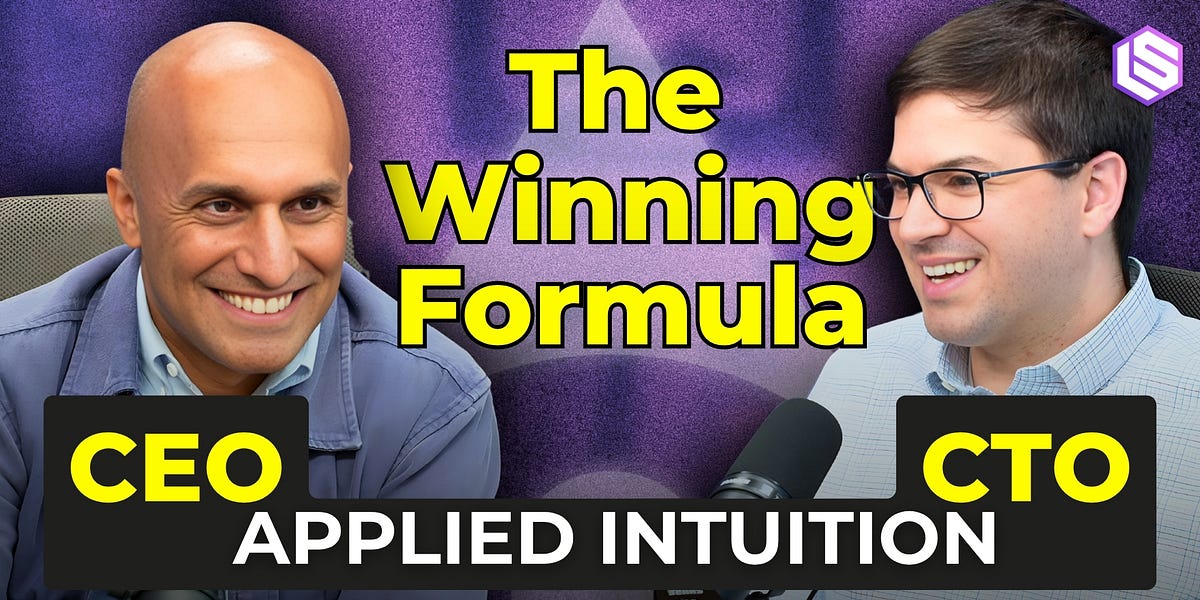
Physical AI that Moves the World — Qasar Younis & Peter Ludwig, Applied Intuition
Касар Юнис и Питер Людвиг, основатели Applied Intuition, рассказывают, как за десять лет превратили компанию из YC-стартапа по инструментам для автономии в технологический холдинг стоимостью $15 млрд, обслуживающий 18 из 20 крупнейших мировых автопроизводителей вне Китая, а также клиентов в обороне, горнодобыче, сельском хозяйстве и строительстве. Компания строит «физический AI» по трём направлениям: симуляция и инфраструктура для RL, настоящие операционные системы для машин (по аналогии с Android для смартфонов до его появления) и фундаментальные модели автономии, включая мировые модели. Сегодня в Японии уже работают беспилотные грузовики L4, а у Applied Intuition более 30 продуктов и около 1000 инженеров. Ключевой тезис: физический AI ограничен не интеллектом моделей, а развёртыванием на ограниченном железе с требованиями к латентности, мощности и безопасности. Обсуждаются также эволюция верификации от детерминированных тестов к статистической надёжности «в девятках», уроки кейса Cruise, использование Cursor и Claude Code внутри компании, и почему советы YC 2014 года не работают в 2026-м. Касар советует фаундерам ограничивать коммерческую задачу и не копировать стратегии зрелых компаний.

Physical AI that Moves the World — Qasar Younis & Peter Ludwig, Applied Intuition
Физический AI, который движет миром — Касар Юнис и Питер Людвиг, Applied Intuition
From building Applied Intuition from YC-era autonomy tooling into a $15B physical AI company, Qasar Younis and Peter Ludwig have spent the last decade living through the full arc of autonomy: from simulation and data infrastructure for robotaxi companies, to operating systems for safety-critical machines, to deploying AI onto cars, trucks, mining equipment, construction vehicles, agriculture, defense systems, and driverless L4 trucks running in Japan today. They join us to explain why “physical AI” is not just LLMs on wheels, why the real bottleneck is no longer model intelligence but deployment onto constrained hardware, and why the future of autonomy may look less like one-off demos and more like Android for every moving machine.
Пройдя путь от инструментов автономии эпохи YC к компании физического AI стоимостью $15B, Касар Юнис и Питер Людвиг прожили последнее десятилетие в полном цикле автономии: от симуляции и инфраструктуры данных для робо-такси-компаний к операционным системам для safety-critical машин и развёртыванию AI на легковых и грузовых авто, в горной технике, строительной технике, сельском хозяйстве, оборонных системах и беспилотных грузовиках L4, которые сегодня уже ездят по Японии. Они присоединяются к нам, чтобы объяснить, почему «физический AI» — это не просто LLM на колёсах, почему реальное узкое место — уже не интеллект моделей, а развёртывание на ограниченном железе, и почему будущее автономии может выглядеть не как разовые демо, а как Android для каждой движущейся машины. Building Applied Intuition.
We discuss:
Мы обсуждаем:
Applied Intuition’s mission: building physical AI for a safer, more prosperous world, powering cars, trucks, construction and mining equipment, agriculture, defense, and other moving machines
Why physical AI is different from screen-based AI: learned systems can make mistakes in chat or coding, but safety-critical machines like driverless trucks, autonomous vehicles, and robots need much higher reliability
The evolution from autonomy tooling to a broad physical AI platform: starting with simulation and data infrastructure for robotaxi companies, then expanding into 30+ products across simulation, operating systems, autonomy, and AI models
Why tooling companies came back into fashion: Qasar on why developer tooling looked unfashionable in 2016, why Applied Intuition still bet on it, and how the AI boom made workflows and tools central again
The three core buckets of Applied Intuition’s technology: simulation and RL infrastructure, true operating systems for vehicles and machines, and fundamental AI models for autonomy and world understanding
Why vehicles need a real AI operating system: real-time control, sensor streaming, latency, memory management, fail-safes, reliable updates, and why “bricking a car” is much worse than bricking an iPad
Physical machines as “phones before Android and iOS”: Peter explains why today’s vehicle and machine software stack is fragmented across many operating systems, and why Applied Intuition wants to consolidate the platform layer
Coding agents inside Applied Intuition: Cursor, Claude Code, internal adoption leaderboards, and how AI tools are changing engineering workflows even in embedded systems and safety-critical software
Verification and validation for physical AI: why evals get harder as models improve, how end-to-end autonomy changes simulation requirements, and why neural simulation has to be fast and cheap enough to make RL practical
From deterministic tests to statistical safety: why autonomy validation is shifting from binary pass/fail requirements toward “how many nines” of reliability and mean time between failures
Cruise, Waymo, and public trust: Qasar and Peter discuss why autonomy failures are not just technical issues, how companies interact with regulators, and why Waymo is setting a high bar for the industry
Simulation vs. reality: why no simulator perfectly represents the real world, how sim-to-real validation works, and why real-world testing will never disappear
World models for physical AI: hydroplaning, construction equipment, visual cues, cause-and-effect learning, and where world models help versus where they are not enough
Onboard vs. offboard AI: why data-center models can be huge and slow, but onboard vehicle models need millisecond-level latency, low power, small size, and distillation-like efficiency
Why physical AI is not constrained by model intelligence alone: the hard part is deploying models onto real hardware, under safety, latency, power, cost, and reliability constraints
Legacy autonomy vs. intelligent autonomy: RTK GPS in mining and agriculture, why hand-coded path-following worked for decades, and why modern systems need perception and dynamic intelligence
Planning for physical systems: how “plan mode” applies to robotaxis, mining, defense, and multi-step physical tasks where actions change the state of the world
Why robotics demos are not production: the brittle last 1%, humanoid reliability, DARPA Grand Challenge-style prize policy, and the advanced engineering gap between research and deployment
Applied Intuition’s hard-earned lessons: after nearly a decade, Peter says they can look at a robotics demo and predict the next 20 problems the company will hit
Qasar’s advice to founders: constrain the commercial problem, avoid copying mature-company strategies too early, and remember that compounding technology only matters if you survive long enough to see it compound
Why 2014 YC advice may not apply in 2026: capital markets, AI company dynamics, and the difference between building in stealth with a deep network versus building as a new founder today
What Applied is hiring for: operating systems, autonomy, dev tooling, model performance, evals, safety-critical systems, hardware/software boundaries, and engineers with deep curiosity about how things work
Миссия Applied Intuition: создание физического AI для более безопасного и процветающего мира — для машин, грузовиков, строительной и горной техники, сельского хозяйства, обороны и других движущихся системПочему физический AI отличается от экранного AI: обученные системы могут ошибаться в чате или коде, но safety-critical машины вроде беспилотных грузовиков, автономных авто и роботов требуют гораздо большей надёжностиЭволюция от инструментов автономии к широкой платформе физического AI: начало с симуляции и инфраструктуры данных для робо-такси, затем расширение до 30+ продуктов в симуляции, операционных системах, автономии и AI-моделяхПочему компании про инструменты снова вошли в моду: Касар о том, почему dev tooling выглядел немодным в 2016 году, почему Applied Intuition всё равно сделали на него ставку, и как AI-бум вернул workflow и инструменты в центр вниманияТри ключевых блока технологий Applied Intuition: симуляция и RL-инфраструктура, настоящие операционные системы для машин, и фундаментальные AI-модели для автономии и понимания мираПочему машинам нужна настоящая AI-операционка: real-time управление, стриминг с сенсоров, латентность, управление памятью, fail-safe, надёжные обновления, и почему «забриковать машину» гораздо хуже, чем забриковать iPadФизические машины как «телефоны до Android и iOS»: Питер объясняет, почему сегодняшний софт-стек авто и техники фрагментирован между множеством ОС, и почему Applied Intuition хочет консолидировать слой платформыCoding-агенты внутри Applied Intuition: Cursor, Claude Code, внутренние leaderboards по внедрению, и как AI-инструменты меняют инженерные workflow даже в embedded-системах и safety-critical софтеВерификация и валидация физического AI: почему evals усложняются по мере улучшения моделей, как end-to-end автономия меняет требования к симуляции, и почему нейронная симуляция должна быть быстрой и дешёвой, чтобы RL был практиченОт детерминированных тестов к статистической безопасности: почему валидация автономии смещается от бинарного pass/fail к «скольким девяткам» надёжности и среднему времени между отказамиCruise, Waymo и общественное доверие: Касар и Питер о том, почему сбои автономии — не только технические вопросы, как компании взаимодействуют с регуляторами, и почему Waymo задаёт высокую планку для индустрииСимуляция против реальности: почему ни один симулятор не отражает реальный мир идеально, как работает sim-to-real валидация, и почему реальное тестирование никогда не исчезнетМировые модели для физического AI: аквапланирование, строительная техника, визуальные подсказки, обучение причинно-следственным связям, где мировые модели помогают, а где их недостаточноOnboard vs. offboard AI: почему дата-центровые модели могут быть огромными и медленными, но onboard-моделям в машине нужна латентность в миллисекунды, низкое энергопотребление, малый размер и эффективность уровня дистилляцииПочему физический AI ограничен не только интеллектом моделей: сложная часть — развернуть модели на реальном железе при ограничениях безопасности, латентности, энергии, стоимости и надёжностиLegacy-автономия против intelligent-автономии: RTK GPS в горной добыче и сельском хозяйстве, почему hand-coded path-following работал десятилетиями, и почему современные системы требуют восприятия и динамического интеллектаПланирование для физических систем: как «plan mode» применяется к робо-такси, горной добыче, обороне и многошаговым физическим задачам, где действия меняют состояние мираПочему robotics-демо — это не production: хрупкий последний 1%, надёжность гуманоидов, prize policy в духе DARPA Grand Challenge, и разрыв в advanced engineering между исследованиями и развёртываниемУроки Applied Intuition, оплаченные кровью: спустя почти десятилетие Питер говорит, что они могут посмотреть на demo робота и предсказать следующие 20 проблем, с которыми столкнётся компанияСовет Касара фаундерам: ограничивайте коммерческую задачу, не копируйте стратегии зрелых компаний слишком рано, и помните, что compounding-технологии работают только если вы доживёте до того, чтобы увидеть это compoundПочему советы YC 2014 года могут не работать в 2026-м: рынки капитала, динамика AI-компаний и разница между построением в stealth с глубокой сетью контактов и построением как новый фаундер сегодняКого нанимает Applied: операционные системы, автономия, dev tooling, производительность моделей, evals, safety-critical системы, граница hardware/software и инженеры с глубоким любопытством к тому, как устроены вещи
Applied Intuition:
Applied Intuition:
LinkedIn: https://www.linkedin.com/company/applied-intuition-inc
YouTube: https://www.youtube.com/@AppliedIntuitionIncX: https://x.com/AppliedIntLinkedIn: https://www.linkedin.com/company/applied-intuition-inc
Qasar Younis:
Касар Юнис:
LinkedIn: https://www.linkedin.com/in/qasar/
X: https://x.com/qasarLinkedIn: https://www.linkedin.com/in/qasar/
Peter Ludwig:
Питер Людвиг:
Timestamps
Тайм-коды
00:00:00 Introduction: Applied Intuition, Physical AI, and 10 Years of Building
00:00:00 Введение: Applied Intuition, физический AI и 10 лет разработки
00:01:37 Physical AI vs. Screen AI: Why Safety-Critical Changes Everything
00:01:37 Физический AI против экранного AI: почему safety-critical меняет всё
00:02:51 The Origin Story: Tooling, YC, and the Scale AI Comparison
00:02:51 История возникновения: инструменты, YC и сравнение со Scale AI
00:05:41 The Three Buckets: Simulation, Operating Systems, and Autonomy Models
00:05:41 Три блока: симуляция, операционные системы и модели автономии
00:11:10 Hardware, Sensors, and the LiDAR Question
00:11:10 Железо, сенсоры и вопрос про LiDAR
00:14:26 The Operating System Layer: Why Vehicles Are Like Pre-Android Phones
00:14:26 Слой операционной системы: почему машины похожи на телефоны до Android
00:19:13 Customers, Licensing, and the Better-Together Stack
00:19:13 Клиенты, лицензирование и стек «лучше вместе»
00:21:19 AI Coding Adoption: Cursor, Claude Code, and the Bimodal Engineer
00:21:19 Внедрение AI-кодинга: Cursor, Claude Code и бимодальный инженер
00:26:41 Verifiable Rewards, Evals, and Neural Simulation
00:26:41 Verifiable rewards, evals и нейронная симуляция
00:31:04 Statistical Validation, Regulators, and the Cruise Lesson
00:31:04 Статистическая валидация, регуляторы и урок Cruise
00:40:25 World Models, Hydroplaning, and Cause-Effect Learning
00:40:25 Мировые модели, аквапланирование и обучение причинно-следственным связям
00:43:34 Onboard vs. Offboard: Latency, Embedded ML, and Distillation
00:43:34 Onboard против offboard: латентность, embedded ML и дистилляция
00:50:57 Plan Mode for Physical Systems and Next-Token Prediction Universally
00:50:57 Plan mode для физических систем и универсальность next-token prediction
00:53:04 Productionization: The 20 Problems Every Robotics Demo Will Hit
00:53:04 Продакшен: 20 проблем, на которые наткнётся любое robotics-демо
00:58:00 Founder Advice: Constraints, Compounding Tech, and Mature-Company Mimicry
00:58:00 Советы фаундерам: ограничения, compounding-технологии и подражание зрелым компаниям
01:05:41 Hiring Philosophy: Hardware/Software Boundary and Engineering Mindset
01:05:41 Философия найма: граница hardware/software и инженерный mindset
01:08:50 General Motors Institute, Education, and the Curiosity Mindset
01:08:50 Институт General Motors, образование и mindset любопытства
Transcript
Транскрипт
Introduction: Applied Intuition, Physical AI, and 10 Years of Building
Введение: Applied Intuition, физический AI и 10 лет разработки
Alessio [00:00:00]: Hey everyone, welcome to the Latent Space Podcast. This is Alessio, founder of Kernel Labs, and I’m joined by Swyx, editor of Latent Space.
Алессио [00:00:00]: Привет всем, добро пожаловать в Latent Space Podcast. Это Алессио, фаундер Kernel Labs, и со мной Swyx, редактор Latent Space.
Swyx [00:00:10]: And today we’re very honored to have the founders of Applied Intuition, Qasar and Peter. Welcome.
Swyx [00:00:10]: И сегодня у нас большая честь — с нами фаундеры Applied Intuition, Касар и Питер. Добро пожаловать.
Qasar [00:00:17]: You guys really know how to turn it on to podcast mode. That was, you guys are real pros at this.
Касар [00:00:17]: Ребята, вы реально умеете переключаться в подкаст-режим. Настоящие профи.
Qasar [00:00:23]: They were just joking around right before this, and then they flipped it pretty quick.
Касар [00:00:23]: Только что шутили перед началом, а потом — раз, и моментально переключились.
Alessio [00:00:29]: Oh, yeah, it’s good to have you guys. Maybe you just wanna introduce yourself so people know the voice on the mic and they’ll know what they’re hearing.
Алессио [00:00:29]: О да, рады вас видеть. Может, представитесь, чтобы слушатели знали, чей голос звучит в микрофоне?
Peter [00:00:33]: Oh, sure. Yeah, I’m Peter Ludwig. I’m the co-founder and CTO of Applied Intuition.
Питер [00:00:33]: Конечно. Я Питер Людвиг, сооснователь и CTO Applied Intuition.
Qasar [00:00:38]: And my name is Qasar Younis. I am the CEO and co-founder with Peter.
Касар [00:00:38]: А меня зовут Касар Юнис. Я CEO и сооснователь вместе с Питером.
Alessio [00:00:42]: Nice. Can you guys give the high-level overview of what Applied Intuition is? And I was reading through some of the Congress files, when you went out there, Peter, and eighteen of the top twenty global non-Chinese automakers, you two guys, you have customers in agriculture, defense, construction. I think most people have heard of Applied Intuition tied to YC when it was first started, and then you were kinda in stealth for a long time, so maybe just give people the high-level overview of what it is today, and then we’ll dive into the different pieces.
Алессио [00:00:42]: Отлично. Можете дать общий обзор того, что такое Applied Intuition? Я читал материалы из Конгресса — Питер, когда ты там выступал — 18 из 20 крупнейших мировых автопроизводителей вне Китая, у вас клиенты в сельском хозяйстве, обороне, строительстве. Думаю, большинство слышали про Applied Intuition ещё со времён YC, потом вы долго были в stealth-режиме. Расскажите, что компания представляет сегодня, а потом нырнём в детали.
Peter [00:01:10]: Yeah. So at Applied Intuition, our mission is to build physical AI for a safer, more prosperous world. And so we work on physical AI for all different types of moving systems, everything from cars to trucks to construction and mining equipment, to defense technologies. And we’re a true technology company, so we build and sell the technology, and we sell it to the companies that make the machines. We sell it to the government, really anyone that wants to buy a technology to make machines smart.
Питер [00:01:10]: Да. Миссия Applied Intuition — строить физический AI для более безопасного и процветающего мира. Мы работаем над физическим AI для самых разных движущихся систем: от легковых автомобилей и грузовиков до строительной и горной техники, до оборонных технологий. Мы настоящая технологическая компания: мы создаём и продаём технологии — компаниям, которые производят машины. Мы продаём правительству, в общем — всем, кто хочет купить технологию, чтобы сделать машины умными.
Physical AI vs. Screen AI: Why Safety-Critical Changes Everything
Физический AI против экранного AI: почему safety-critical меняет всё
Qasar [00:01:38]: Yeah. And I think in the broader AI landscape, a lot of the focus, rightfully so in the last, three years has been on large language models, and so everything fits in a screen. Like, whether it’s code complete products or things like that. And what’s different about us is we’re deploying intelligence onto a lot of things that don’t have screens. they’re physical machines. There are sometimes screens within the cabin or for example of a car or a truck or something like that, but most of the value we provide is putting intelligence that is in safety critical environments. So that those two words are really important because learn systems can make mistakes if you’re asking for, like, some, so something like, “Tell me about these podcast hosts
Касар [00:01:38]: Да. Думаю, в более широком AI-ландшафте основной фокус последних трёх лет вполне справедливо был на больших языковых моделях — то есть на всём, что помещается в экран. Будь то продукты для автодополнения кода или что-то в этом духе. А мы отличаемся тем, что разворачиваем интеллект в массе вещей, у которых нет экранов. Это физические машины. Иногда в кабине, например в машине или грузовике, есть экраны, но основная ценность, которую мы создаём, — это размещение интеллекта в safety-critical средах. Эти два слова крайне важны: обученные системы могут ошибаться, если их попросишь, скажем, «расскажи мне про этих ведущих подкаста,»
Qasar [00:02:28]: that I’m about to go meet.” But you can’t do that obviously when you run, like, as an example, we run driverless trucks in Japan right now, as we speak. We can’t have errors. Those are L4 trucks. Yeah.
Касар [00:02:28]: «с которыми я сейчас иду встречаться». Но мы не можем себе такого позволить, например, у нас прямо сейчас в Японии ездят беспилотные грузовики. Мы не можем допускать ошибок. Это L4-грузовики. Да.
Alessio [00:02:40]: Yeah. Was that always the mission? I remember initially, I think people put you and Scale AI very similarly for some things about being kinda like on the data infrastructure side of things. What was the evolution of the company?
Алессио [00:02:40]: Да. А такая миссия была изначально? Помню, поначалу вас сравнивали со Scale AI — что-то про инфраструктуру данных. Как эволюционировала компания?
The Origin Story: Tooling, YC, and the Scale AI Comparison
История возникновения: инструменты, YC и сравнение со Scale AI
Peter [00:02:51]: Well, from the very beginning, we always wanted to, really be a technology company that helped generally push forward the industrial sector. And so we started off working in autonomy. Our very first customers were robotaxi companies. And we started off doing a lot of work in simulation and data infrastructure. And then over the years, we’ve expanded our portfolios. Now we have, over thirty products, and it’s a pretty broad technology play within the landscape of physical AI.
Питер [00:02:51]: С самого начала мы всегда хотели быть технологической компанией, которая в целом двигает вперёд индустриальный сектор. Стартовали мы в области автономии. Нашими самыми первыми клиентами были компании, делающие робо-такси. Мы начинали с большой работы по симуляции и инфраструктуре данных. А с годами портфолио расширялось — сейчас у нас более 30 продуктов, и это уже довольно широкая технологическая игра в ландшафте физического AI.
Qasar [00:03:19]: Yeah, I think the Scale reason is because we’re all YC Universe companies. But it was a very different company. Scale, was, is more of a services company, data labeling company fundamentally. We started and still are, do a lot of tooling. So like, you think developer tooling is now in vogue again, thanks to the AI boom. But honestly, ten years ago, it was out of vogue. It w Like, doing a tooling company in 2016, 2017 was not, like, the thing to do because, I don’t know if you remember, the VCs generally, their views was that toolings are They’re just workflows, and workflows ultimately are not really interesting. And we’ve gone and come, full circle with that. But when we started the company, our kind of it’s kinda like in the periphery of what the company wants to be. It was like, from our earliest days, like, we wanna deploy software on physical machines, like on cars and on trucks and things like that. And obviously, we didn’t know that the transformer boom was gonna happen. We didn’t know that autonomy systems would become end-to-end. Those things we didn’t know. And why that’s important when autonomy systems become end-to-end, it is just now those models can be generalized to, multiple form factors. And so back nine, ten years ago, tooling was a great way, and still is a great way to, build the technology and sell technology to our end customers, a lot of them who wanna build this stuff themselves. And so we just offer like a spectrum of solutions from you can just use like one part of a development suite of tools all the way to buying the full thing. The way to think about the company, or at least the way we think about the company is, as Peter said, a technology provider. It’s kinda like, what NVIDIA does or what an AMD, but we just don’t do chips.
Касар [00:03:19]: Да, сравнение со Scale возникает потому, что мы все из YC-вселенной. Но это была очень другая компания. Scale — это, по сути, сервисная компания, фундаментально — компания по разметке данных. Мы стартовали и до сих пор много делаем в инструментах. Сейчас dev tooling снова в моде благодаря AI-буму. Но честно — десять лет назад это было немодно. Делать tooling-компанию в 2016–2017 годах было «не то». Не помню, может, вы помните, но позиция VC в целом была: tooling — это просто workflow, а workflow, в конечном счёте, не очень интересны. Мы прошли с этим полный круг. Но когда мы запускали компанию, это было где-то на периферии того, чем компания хотела быть. С самых первых дней мы хотели разворачивать софт на физических машинах — на машинах, грузовиках и тому подобном. И, очевидно, мы не знали, что случится трансформерный бум. Не знали, что системы автономии станут end-to-end. Этих вещей мы не знали. И почему это важно: когда системы автономии становятся end-to-end, эти модели можно обобщить на много форм-факторов. Поэтому 9–10 лет назад tooling был — и остаётся — отличным способом построить технологию и продавать её конечным клиентам, многие из которых хотят строить это сами. Поэтому мы предлагаем спектр решений: от использования одной части набора инструментов разработки до покупки всего стека целиком. Способ думать о компании — по крайней мере, как мы о ней думаем, — как Питер сказал, технологический поставщик. Это вроде того, что делает NVIDIA или AMD, только мы не делаем чипы.
Qasar [00:05:06]: We don’t do silicon. But we’re a technology provider fundamentally. And I think even, we used to joke when we started the company, like, we’re not the guys to build, like, Instagram. Like that was just towards That’s not our That’s just not us in a most fundamental way. I
Касар [00:05:06]: Мы не делаем кремний. Но мы фундаментально технологический поставщик. И, кстати, мы шутили, когда запускались, что мы — не те ребята, которые построят Instagram. Это просто… это не мы, на самом базовом уровне.
Alessio [00:05:20]: You have thoughts.
Алессио [00:05:20]: У вас есть мысли.
Qasar [00:05:21]: Yes.
Касар [00:05:21]: Да.
Qasar [00:05:22]: Well, it’s, it’s I mean, I think it’s just like what And I mean, we worked on Maps and stuff, Google Maps. Consumer products are extremely difficult for a lot of different reasons. It just, I think doesn’t scratch the itch. I think we’re like Michigan guys who are kind of more of that traditional engineering kind of a realm, or lineage. we used to joke
Касар [00:05:22]: Ну, мы работали над Maps и прочим, Google Maps. Потребительские продукты крайне сложны по куче причин. Это просто… думаю, не цепляет. Мы скорее ребята из Мичигана, ближе к традиционной инженерной школе, к этой линии. Мы шутили…
The Three Buckets: Simulation, Operating Systems, and Autonomy Models
Три блока: симуляция, операционные системы и модели автономии
Peter [00:05:41]: I gotta say, though, what was clear ten years ago was that there was so much more that was possible with software and AI in vehicles
Питер [00:05:41]: Должен сказать, что десять лет назад было очевидно: с софтом и AI в машинах возможно гораздо больше,
Peter [00:05:47]: and that was generally the space that we started in ten years ago.
Питер [00:05:47]: и именно с этого пространства мы стартовали десять лет назад.
Peter [00:05:51]: And the precise path that we’ve taken over the years, I think we’ve been strategic, and we’ve adjusted to make sure that we’re actually building stuff that’s valuable to the market. And like, the technology has changed so much. Like our own technology stack has completely changed, I would say, roughly every two years. And so now we’ve probably done, let’s say, four complete evolutions of our own technology stack. And I sort of see that cadence roughly keeping up.
Питер [00:05:51]: А точный путь, который мы прошли за эти годы, — думаю, мы были стратегичны и корректировались, чтобы строить именно то, что ценно для рынка. Технологии так сильно изменились. Наш собственный технологический стек полностью менялся, я бы сказал, примерно каждые два года. Так что мы сделали уже примерно четыре полные эволюции стека. И эта частота, мне кажется, сохранится.
Peter [00:06:13]: And so the way even we think about engineering is almost on this two-year horizon, we’re preparing ourselves that, hey, like, we wanna invest the appropriate amount, but then also be very dynamic as the research gets published and as our research team figures out new advancements and adapting to that.
Питер [00:06:13]: Поэтому даже сама инженерная работа у нас выстроена с горизонтом примерно в два года: мы готовимся к тому, что хотим инвестировать соответствующий объём, но при этом быть очень динамичными по мере того, как публикуются исследования и наша исследовательская команда находит новые продвижения.
Qasar [00:06:27]: Yeah. One thing that has been consistent is the type of people we’ve, we’ve recruited. It’s engineers who are fall into the sometimes very traditional, like, Google
Касар [00:06:27]: Да. Что было неизменным — это тип людей, которых мы нанимаем. Это инженеры, которые попадают в очень традиционный кластер вроде Google,
Qasar [00:06:38]: -gen suite, but way different from, other companies. We are hiring folks who really know the intersection of hardware and software, who know really low-level systems. Obviously, traditional ML researchers and folks who’ve, actually, put ML systems into production. That’s been pretty consistent. I think that, like, you look at the mix of our engineering, eighty-three percent of the company is engineering, so it’s, like, a giant list.
Касар [00:06:38]: но при этом сильно отличаются от других компаний. Мы нанимаем людей, которые реально понимают пересечение железа и софта, разбираются в low-level системах. Очевидно, традиционных ML-исследователей и тех, кто реально выводил ML-системы в production. Это было довольно постоянно. Если посмотреть на структуру нашего инженерного состава — 83% компании это инженеры, такой огромный список.
Qasar [00:07:05]: A lot of engineers.
Касар [00:07:05]: Куча инженеров.
Alessio [00:07:06]: Which, by the way, a thousand engineers
Алессио [00:07:06]: Кстати, тысяча инженеров,
Qasar [00:07:07]: Yeah. A thousand engineers.
Касар [00:07:07]: Да. Тысяча инженеров.
Alessio [00:07:08]: that’s on your website, so I imagine it’s up to date.
Алессио [00:07:08]: написано на сайте, надеюсь, информация актуальная.
Qasar [00:07:11]: It is, it is up to date, yes. Yes.
Касар [00:07:11]: Актуальная, да. Да.
Alessio [00:07:12]: okay. And then forty-plus founders.
Алессио [00:07:12]: Окей. И сорок с лишним фаундеров.
Qasar [00:07:15]: Yeah. We would tend to also, This was more luck than strategy. But we’ve recruited a lot of ex-founders. It’s been a great place for founders, YC and non, ‘cause obviously I know a lot of the YC folks. It’s kind of like we recruit a lot of Google people.
Касар [00:07:15]: Да. Тут больше удача, чем стратегия. Но мы наняли много бывших фаундеров. Для них наша компания — отличное место, и для YC-выпускников, и для не-YC, поскольку я, очевидно, знаю многих YC-ребят. Это как мы нанимаем много людей из Google.
Qasar [00:07:33]: For them to exercise both their technical and non-technical skills because, we’re, we’re, we’re on the applied side. We have a research team that we do fundamental research, we publish, and we’ve, we’ve had great traction there. But fundamentally, the business wants to take this intelligence and deploy it into production and there’s, like, a certain type of person that’s more interested in that.
Касар [00:07:33]: Чтобы они могли реализовывать и технические, и нетехнические навыки, потому что мы на стороне applied. У нас есть исследовательская команда, которая занимается фундаментальными исследованиями, мы публикуемся, и у нас отличная traction там. Но фундаментально бизнес хочет брать этот интеллект и развёртывать его в production, и есть определённый тип людей, которых это больше интересует.
Alessio [00:07:54]: Yeah. You mentioned the tech stack, Peter, so I just wanted to give you some rein to just go into it. I’m interested in where Wayve Nutrition, starts and ends in some sense, what won’t you do? What, do you do that’s common among all the verticals that you cover?
Алессио [00:07:54]: Да. Питер, ты упомянул техстек, дам тебе развить тему. Мне интересно, где Applied Intuition начинается и заканчивается? Чего вы не делаете? И что общего у того, что вы делаете для всех вертикалей?
Peter [00:08:10]: There’s a few buckets of work that we do, and we’ve been at this for almost ten years now, so the technology’s pretty broad. But we got started
Питер [00:08:10]: У нас есть несколько блоков работы. Мы этим занимаемся уже почти десять лет, так что технологии у нас довольно широкие. Стартовали мы…
Qasar [00:08:17]: Yeah, with a thousand engineers, like, you could work on lots of things.
Касар [00:08:17]: Да, с тысячей инженеров можно работать над многими вещами.
Peter [00:08:19]: There’s lots of stuff, yeah, espe-especially with AI tools to help.
Питер [00:08:19]: Лотов всего, да, особенно с AI-инструментами в помощь.
Peter [00:08:22]: So we got our start in simulation and simulation tooling and infrastructure. And so generally, if you’re trying to build a very complex software system that involves moving machines, you need to test that, and the best way to test it is it’s a combination of virtual developments, a simulation, and then also obviously real world testing.
Питер [00:08:22]: Стартовали мы в симуляции и инструментарии/инфраструктуре для симуляции. В общем, если вы строите очень сложную программную систему, в которой задействованы движущиеся машины, её нужно тестировать. И лучший способ — комбинация виртуальной разработки, симуляции и реального тестирования.
Peter [00:08:39]: And then there’s a very careful process of that correlation between the simulation results and the real world results and ensuring that the simulator is in fact accurate to that. Simulation’s a very deep topic.
Питер [00:08:39]: Затем идёт очень тщательный процесс корреляции между результатами симуляции и реального мира — нужно убедиться, что симулятор действительно точен. Симуляция — очень глубокая тема.
Peter [00:08:49]: We have a whole suite of products in that, and we could talk for many hours about that specifically. But that is one part of what we do as a company. Reinforcement learning as a subpart of that is also super critical. I think a lot of the a lot of the best advancements happening in a lot of these AI systems right now in some way relate to reinforcement learning, and with now we have lots of compute, and you can do tons of interesting things for reinforcement learning. The second bucket of work that we do is on operating systems technology. true operating systems. Like, think about, schedulers and memory management and middleware and message passing and highly reliable networking and data links. Like, the reality is, if you want to deploy AI onto vehicles, you need a really good operating system. And when we were getting deeper into that space, there wasn’t really anything that we were happy with.
Питер [00:08:49]: У нас целый набор продуктов в этой области, мы могли бы говорить об этом часами. Но это одна часть того, что мы делаем как компания. Reinforcement learning как подраздел — тоже сверхкритичен. Думаю, многие лучшие продвижения в AI-системах сейчас так или иначе связаны с RL, и сейчас, когда у нас много compute, можно делать массу интересного. Второй блок нашей работы — операционные системы. Настоящие операционные системы. Имеется в виду планировщики, управление памятью, middleware, передача сообщений, высоконадёжный networking и data links. По сути, если хотите развернуть AI на машинах, нужна реально хорошая операционная система. И когда мы стали глубже копать в это пространство, на рынке не было ничего, что нас бы устроило.
Peter [00:09:39]: Like, things existed, absolutely, and we were using what was available in the market, and as an engineering organization, we roughly realized these things aren’t great. We think we can do this better, and so let’s, let’s build something. And that was then the that was the moment of inspiration that started our operating systems business, which is now a very real business for us. And in order to write and run great AI, you need a great operating system, and so that-that’s what got us into that. And then the third bucket that we work on, it’s, it’s true fundamental AI technology. Models, we do a lot of work in, as mentioned, the foundational research, but then the also the world models and the actual autonomy models that are running on these physical machines, and that’s across cars, trucks, mining, construction, agriculture, and defense, and so that’s both land, air, and sea.
Питер [00:09:39]: Решения существовали — мы использовали то, что доступно на рынке, — и как инженерная организация мы постепенно поняли: это не очень. Мы думаем, что сделаем лучше — давайте построим что-то своё. Это и был момент вдохновения, с которого начался наш бизнес по операционным системам — сейчас это очень реальный бизнес для нас. Чтобы писать и запускать отличный AI, нужна отличная ОС, и так мы туда пришли. А третий блок, над которым мы работаем, — это настоящая фундаментальная AI-технология. Модели — мы много занимаемся фундаментальными исследованиями, как уже говорилось, но также мировыми моделями и реальными моделями автономии, которые работают на этих физических машинах. Это касается машин, грузовиков, горной, строительной, сельскохозяйственной техники и обороны — то есть земля, воздух и море.
Qasar [00:10:31]: And also, a smaller subsector of that third bucket is the interaction of humans with those machines.
Касар [00:10:31]: И ещё меньший подсектор этого третьего блока — взаимодействие людей с этими машинами.
Qasar [00:10:38]: So that’s a multimodal, experience. Historically, if you’re moving a dirt mover or any of these machines, there are, like, buttons you press, whether they’re actual physical tactile buttons or something like a touch screen. That’s just That fundamentally is changing to where you’re just talking to the machine and the machine and you’re teaming with the machine.
Касар [00:10:38]: Это мультимодальный опыт. Исторически, если вы управляете самосвалом или любой такой машиной, там есть кнопки, которые надо нажимать, — физические тактильные кнопки или, например, тачскрин. Это фундаментально меняется на то, что вы просто разговариваете с машиной и работаете в команде с машиной.
Alessio [00:10:58]: Voice?
Алессио [00:10:58]: Голосом?
Qasar [00:10:59]: Yeah, voice, absolutely, yeah.
Касар [00:10:59]: Да, голосом, абсолютно.
Alessio [00:11:00]: Oh.
Алессио [00:11:00]: О.
Qasar [00:11:00]: And also the machine just being aware of who is in the cabin, what their state is. you can think from a safety systems perspective, the most simple version of this is, like, the driver is tired, right? They’re, they’re if you get those alerts when you’re driving your car and says
Касар [00:11:00]: И ещё машина просто понимает, кто в кабине и в каком он состоянии. С точки зрения систем безопасности самая простая версия этого — водитель устал. Те самые алерты, когда вы едете в машине, и она говорит:
Hardware, Sensors, and the LiDAR Question
Железо, сенсоры и вопрос про LiDAR
Qasar [00:11:15]: -maybe take a coffee break, that take that times, a couple of order of magnitudes up. But this concept of teaming man and machine is important. When you think about running agents or just running, different instances of, Claude and doing work for you in the background, you can take that analogy out, almost copy and paste and put it into, like, a farm, where you have a farmer who’s running a number of machines. So where they interact with the machine is where there’s maybe a critical decision or a disengagement or something like that, but generally speaking, the agent on the physical machine is running and making decisions on the behalf of the farmer until there’s something maybe critical. And that’s also what we work on. So that’s not pure autonomy. It’s a little bit of a mix, but it falls under, autonomy. In the automotive sense, that’s typically defined in SAE levels as an L2++ system
Касар [00:11:15]: «может, сделай перерыв на кофе», — теперь умножьте это на пару порядков. Но концепция команды человека и машины важна. Если думать про запуск агентов или, скажем, разные инстансы Claude, делающие для вас работу в фоне, можно почти скопировать эту аналогию и перенести её на ферму, где фермер управляет рядом машин. Взаимодействие с машиной происходит, когда есть важное решение, disengagement или что-то подобное, но в целом агент на физической машине работает и принимает решения от имени фермера, пока не появится что-то критическое. Над этим мы тоже работаем. Это не чистая автономия, это немного смесь, но входит в автономию. В автомобильном смысле это обычно классифицируется по уровням SAE как система L2++
Qasar [00:12:05]: -with a human in the loop. But just take that idea, to other verticals.
Касар [00:12:05]: с человеком в петле. Просто перенесите эту идею на другие вертикали.
Alessio [00:12:09]: Yeah. You’ve not mentioned hardware at all, like sensors or obviously we you mentioned you don’t do chips. I think even in AV there’s, like, a big, cameras versus lidars. Like, what are, like, in your space maybe some of those design decisions that you made, and are they driven by the OEM’s ability to put things on the machinery? And like, how much influence do you guys have on co-designing those?
Алессио [00:12:09]: Да. Вы вообще не упомянули hardware — например, сенсоры. Очевидно, вы говорили, что не делаете чипы. Я думаю, даже в автономном вождении есть большая дискуссия — камеры против LiDAR. Какие в вашей сфере дизайн-решения вы приняли, и продиктованы ли они возможностью OEM ставить вещи на технику? И насколько вы влияете на их совместный дизайн?
Peter [00:12:32]: Yeah. So we don’t make sensors. Like, we’re, we’re not a manufacturer. Obviously, we use a lot of sensors in our autonomy products. in terms of what actually goes on the vehicles, we have a preferred set of sensors that we, let’s say fully support, and then our customers, they can sort of choose from those. And obviously if there’s a very strong opinion on supporting something else, we’ll add that to the platform as well. And the lidar question is at this point sort of the age-old,
Питер [00:12:32]: Да, мы сенсоры не делаем. Мы не производитель. Очевидно, мы используем много сенсоров в наших продуктах автономии. По тому, что реально ставится на машины, у нас есть преимущественный набор сенсоров, которые мы, скажем так, полностью поддерживаем, и наши клиенты могут выбирать из этого набора. Если у них сильное мнение в пользу чего-то другого, мы добавим это на платформу тоже. А вопрос про LiDAR — это уже классическая,
Peter [00:12:59]: topic in autonomy, and the state of the industry right now is lidar is hands down a useful sensor, specifically for data collection and the R&D phase of autonomy development. if you see, for example, a Tesla R&D vehicle, it actually has lidar on it
Питер [00:12:59]: вечная тема в автономии. Состояние индустрии сейчас такое: LiDAR — однозначно полезный сенсор, особенно для сбора данных и фазы R&D в разработке автономии. Если посмотреть, например, на R&D-машину Tesla — там вообще-то есть LiDAR.
Peter [00:13:17]: to this day, right? In the Bay Area we see these. you’ll see, like, Model Ys or Cybercab that have lidars on them just driving around. So it’s, it’s useful because it gives you per pixel depth information. So if you can pair a lidar with a camerand you can say that, well, this camera’s looking this direction, this lidar’s looking this direction, and now for each pixel of the camera I can see how far away is that pixel. you can actually then use that as a part of your model training, and then the that depth information then becomes a learned, a learned state of the camera data. And then when you’re doing the production system, you can now remove the lidar
Питер [00:13:17]: До сих пор. В Bay Area такие можно видеть — Model Y или Cybercab с LiDAR на крыше просто ездят. Это полезно, потому что даёт информацию о глубине на пиксель. Если пара LiDAR с камерой смотрит в одном направлении, то для каждого пикселя камеры можно понять, насколько он далеко. Это можно использовать как часть обучения модели — информация о глубине становится выученным состоянием данных с камеры. И уже в продакшен-системе LiDAR можно убрать
Peter [00:13:52]: and now you can actually get depth with just the camera. And so that difference between, like, a highly sensored R&D vehicle and then the down-costed production vehicle, we use that across our whole portfolio of products. And of course the end goal is you want super low cost and super reliable.
Питер [00:13:52]: и получать глубину только с камеры. Разница между сильно засенсоренной R&D-машиной и удешевлённой продакшен-машиной — мы используем этот приём по всему портфелю продуктов. Конечная цель, конечно, — суперэффективная стоимость и сверхнадёжность.
Peter [00:14:08]: And then in certain use cases you have some more, bespoke things. Like in defense as an example, you do things at night oftentimes, and so you care about sensors like infrared, more so than And you don’t, you don’t wanna be putting energy out, so you don’t wanna use lidar or radar.
Питер [00:14:08]: А в некоторых кейсах есть более специфические вещи. В обороне, например, многое делается ночью, поэтому важны сенсоры типа инфракрасных — больше, чем… И вы не хотите излучать энергию, поэтому LiDAR или радар использовать не будете.
Peter [00:14:23]: but you still need to be able to see at nighttime. So yeah, we work the whole gamut.
Питер [00:14:23]: Но видеть ночью всё равно надо. Мы работаем по всему спектру.
The Operating System Layer: Why Vehicles Are Like Pre-Android Phones
Слой операционной системы: почему машины похожи на телефоны до Android
Alessio [00:14:27]: Cool. So that’s kinda like on the hardware level. Then on the OS level, how does that look like? What is, like, unique? my drive- I drive a Tesla. Whenever I drive some other car that has a screen, it always sucks.
Алессио [00:14:27]: Круто. Это про hardware. А про OS — как это выглядит? Что уникального? Я езжу на Tesla. Когда я сажусь в другие машины с экраном — это всегда отстой.
Alessio [00:14:38]: It’s on, like, cheap Android tablet. It’s like, it’s laggy and all of that. What does the OS of, like, the autonomy future look like?
Алессио [00:14:38]: Как будто стоит дешёвый Android-планшет, лагающий и так далее. Как будет выглядеть ОС в автономном будущем?
Peter [00:14:46]: When most people, it’s really what you just described. When you think about operating system in a vehicle, you’re thinking about the HMI, right? The human machine interface, and absolutely that’s a an important part of it, but that’s actually only one thin layer on top. So when we talk about operating systems for, like, AI in vehicles, there’s many layers that go deep into the CPU critical realm and embedded systems, and you’re talking about the real time control of
Питер [00:14:46]: Когда большинство людей слышит «операционная система автомобиля», они представляют именно то, что ты описал — HMI, human machine interface. Это, конечно, важный слой, но на самом деле — лишь один тонкий слой сверху. Когда мы говорим про операционные системы для AI в машинах, есть много слоёв, идущих вглубь CPU-критичной области и embedded-систем, — это real-time управление…
Peter [00:15:13]: let’s say the electric motors or the engine and the actuators, and you have different redundancies for different, let’s say, the steering actuation in the vehicle. And all of these things, need very core support in the in the operating system. And then of course for autonomy you have real time sensor data that’s streaming in, and the latencies there are really important, right? If you try to Imagine you try to run Microsoft Windows
Питер [00:15:13]: например, электромоторов или двигателя и актуаторов. Разные redundancies для разных частей — скажем, актуатор рулевого управления. Все эти вещи требуют ядровой поддержки в ОС. Для автономии есть real-time данные с сенсоров, которые туда стримятся, и латентности тут очень важны. Представьте, что вы пытаетесь запустить Microsoft Windows
Peter [00:15:35]: like streaming your sensor data in or controlling the vehicle. Like, the latencies are gonna be absurd. Like, you can never do that. And so what’s special about what we do is we really have this system level thinking, right? So we’re looking at, we care about every performance characteristics of the entire system, and then we also, because we’re doing a lot of the software or all of that software, we can fine-tune and control all of those things. So we can very carefully tune in the latencies for every aspect of the system. We can carefully tune in the memory management. We can have the right, fail-safes and fallbacks, for different things. ‘Cause you have to account for what if, what if there is a critical failure? What if there’s a cosmic ray that flips
Питер [00:15:35]: и стримить туда данные с сенсоров или управлять машиной. Латентности будут абсурдными. Так делать нельзя. То, что в нас особенного, — это системное мышление: нас волнуют характеристики производительности всей системы, и поскольку мы делаем большую часть этого софта или весь его целиком, мы можем точно настраивать и контролировать все эти вещи. Можно тонко настраивать латентности под каждый аспект системы. Аккуратно настраивать управление памятью. У нас есть правильные fail-safe и fallback. Потому что надо учитывать: а что если будет критический сбой? Что если cosmic ray перевернёт
Peter [00:16:14]: a bit in the middle of the processor that causes some, malfunction? And you have to have a fail-safe to all of that, and so the core operating system is a part of that. And then the one last thing, which is a lot less exciting but is, actually a very big topic, is reliability of updates.
Питер [00:16:14]: бит в процессоре и вызовет какой-то сбой? У всего должен быть fail-safe, и ядро ОС — часть этого. И последнее, что менее зрелищно, но очень большая тема, — надёжность обновлений.
Peter [00:16:30]: so the I have a Tesla and you get updates fairly frequently, right?
Питер [00:16:30]: У меня Tesla, и обновления приходят довольно часто.
Peter [00:16:36]: Once a month. Most companies that are making vehicles
Питер [00:16:36]: Раз в месяц. Большинство компаний, делающих машины,
Peter [00:16:40]: are basically never doing updates, and they’re And even if they are doing updates, they’re usually only updating maybe one module. Maybe they’re updating the HMI module. But they’re not able to update, let’s say, the CPU critical parts of the system.
Питер [00:16:40]: по сути не делают обновления вообще. Даже если делают, то обычно обновляют только один модуль. Возможно, модуль HMI. Но они не могут обновить, скажем, CPU-критичные части системы.
Peter [00:16:51]: You have to go into the dealer for that. And so with our operating system now we can actually enable highly reliable updates of any system in the vehicle, and that’s way easier said than done. Like, there’s lots of technical, technically deep stuff, in the tech stack to do that in a way that you’re not going to accidentally brick a vehicle.
Питер [00:16:51]: Для этого надо ехать к дилеру. Наша ОС позволяет реально надёжно обновлять любые системы в машине, и это куда легче сказать, чем сделать. В техстеке для этого куча сложных вещей, чтобы случайно не забриковать машину.
Peter [00:17:08]: And right? If, imagine your
Питер [00:17:08]: Представьте свою…
Alessio [00:17:10]: That would be bad.
Алессио [00:17:10]: Это было бы плохо.
Alessio [00:17:11]: Bad.
Алессио [00:17:11]: Плохо.
Peter [00:17:11]: Bricking a car is a very expensive
Питер [00:17:11]: Забриковать машину очень дорого
Peter [00:17:13]: and honestly, like across the industry maybe one of the most just pure impactful things that we’ve done is we’ve just, we’re, we’re now enabling the industry to actually do software updates.
Питер [00:17:13]: и, честно, наверное, одна из самых импактных вещей, которые мы сделали для индустрии, — что мы позволяем индустрии вообще делать software-обновления.
Alessio [00:17:22]: Just to clarify as well, who is the customer for this? Like, I assume a lot of hardware manufacturers have their own firmware, and I’m sure some of them would just have you write it for them because you’re experts. And others would have their own. Like, who pays for this? Who invites you into the house? Is it, is it the end user, or is it, is it the manufacturer?
Алессио [00:17:22]: Уточню — а кто заказчик? Я полагаю, у многих производителей железа своя прошивка, и некоторые из них с радостью попросят вас её написать, потому что вы эксперты. У других — своя. Кто за это платит? Кто вас приглашает в дом — конечный пользователь или производитель?
Peter [00:17:41]: Yeah. So let me make an analogy firstly on the on the fragmentation of software. So physical machines today are more akin to the state of the phone market before Android and iOS existed, right? So I worked on Android at Google by the way many years ago, and part of the reason that Larry at Google decided to get into Android was they wanted to run Google products on a bunch of phones, and they bought all of these phones from the industry, and it turned out they had like 50 different operating systems on these phones. And it was virtually impossible
Питер [00:17:41]: Да. Сначала аналогия про фрагментацию софта. Физические машины сегодня больше похожи на рынок телефонов до появления Android и iOS. Я, кстати, много лет назад работал в Google над Android, и часть причины, по которой Ларри в Google решил заняться Android, — желание запускать продукты Google на куче телефонов. Они скупили кучу телефонов с рынка и обнаружили, что там 50 разных операционных систем. И сделать так, чтобы их приложение одинаково хорошо работало на всех 50 устройствах, было практически невозможно
Peter [00:18:17]: for Google to make their app run on all 50 devices equally well. And so the solution was, well, actually what if, what if they created-A really great operating system and made it attractive to all of these phone makers, and that was sort of the genesis for what Android was and why Android existed. It was a way for Google to get their products onto really wide diversity of devices. The state of the physical, industry right now, it’s a little bit like that. Like, there’s yes, these companies have firmware, but they have so many different operating systems, it’s so fragmented, and to actually get a modern AI application to run on these vehicles, you actually, you first have to consolidate the operating system, and so that’s, that’s why we’ve done that. And then, your specific question was who are our customers? It’s, it’s, generally it’s the companies that are making these machines.
Питер [00:18:17]: для Google. Решение: а что если создать реально классную ОС и сделать её привлекательной для всех этих производителей телефонов? Это и был генезис того, чем стал Android и зачем он существовал. Это был способ для Google поставить свои продукты на очень разнообразные устройства. Состояние физической индустрии сейчас немного похоже на это. Да, у этих компаний есть firmware, но у них столько разных ОС, всё так фрагментировано, что для запуска современного AI-приложения на этих машинах сначала надо консолидировать ОС. Поэтому мы это и сделали. Если конкретно про клиентов — обычно это компании, которые делают эти машины.
Peter [00:19:06]: And we’re, we’re, we’re selling our technology to them to really simplify the architecture and then enable these AI applications to run on them.
Питер [00:19:06]: И мы продаём нашу технологию им — чтобы реально упростить архитектуру и позволить AI-приложениям на них работать.
Customers, Licensing, and the Better-Together Stack
Клиенты, лицензирование и стек «лучше вместе»
Swyx [00:19:13]: How much is reusable across? Like, do you have, like, one OS that is just configured for everything, or is there some more customization that is needed?
Swyx [00:19:13]: Насколько это переиспользуется? У вас одна ОС, которая просто конфигурируется под всё, или нужна более глубокая кастомизация?
Peter [00:19:22]: Yeah, highly reusable. So the fundamental technology is quite universal, right? So things that we do have to think about though are, like, chipset support. And so if you’re, if you’re coding, let’s say, an LLM and you have start with an assumption that, “Hey, oh, I’m gonna, I’m gonna use CUDA, and I’m gonna run this, on an NVIDIA chip,” then you don’t really have to think about the hardware in that sense. Like, you’re just, “Okay, I’m just I’m in the CUDA/NVIDIA ecosystem, and I’m, I’m going to use that.” But the hardware, especially in safety critical systems, it’s a lot more diverse. There’s not one or one or two players. There’s a bunch of different chipsets that we have to support. And so our operating system doesn’t just run on, like, the equivalent of X86. It has to, it has to run on a number of different architectures from chips from a bunch of different companies. But again, we’ve been working on this for a long time now, so we have, we have support for all of those chipsets. And then when you want to then run the AI applications, we can then do that reliably across now a variety of providers.
Питер [00:19:22]: Да, сильно переиспользуется. Фундаментальная технология весьма универсальна. О чём нам всё же приходится думать — это поддержка чипсетов. Если вы пишете, скажем, LLM, и стартуете с предположением: «окей, я возьму CUDA, запущу это на NVIDIA-чипе», то про железо думать особо не нужно. Вы просто в экосистеме CUDA/NVIDIA и в ней работаете. Но железо, особенно в safety-critical системах, гораздо более разнообразное. Тут нет одного-двух игроков. Есть куча разных чипсетов, которые надо поддерживать. Наша ОС работает не только на эквиваленте x86. Ей нужно работать на ряде разных архитектур от чипов разных компаний. Но опять же, мы работаем над этим уже долго, и поддержка всех этих чипсетов у нас есть. И тогда, когда вы запускаете AI-приложения, мы можем это делать надёжно у целого ряда поставщиков.
Qasar [00:20:19]: And I think that is, like, heavily inspired by Android, right? Android has a huge suite of testing and it’s a reliable operating system that runs on thousands of devices. And we think we can, we can do the same in all these physical moving machines, with the difference that we’re really in a safety critical realm. Android isn’t.
Касар [00:20:19]: Тут много вдохновения от Android. У Android огромный набор тестирования, это надёжная ОС, которая работает на тысячах устройств. Мы думаем, что можем сделать то же самое во всех этих физических движущихся машинах, с тем отличием, что мы реально в safety-critical зоне. Android — нет.
Alessio [00:20:40]: So on Android, I don’t need to use Gmail, I can use Superhuman. Like, what about your machinery? Like, can people bring somebody else’s automation to it, or is it kinda like all-in-one?
Алессио [00:20:40]: Если на Android мне не обязательно использовать Gmail, я могу использовать Superhuman. А у вашей техники как? Можно ли привнести чью-то ещё автоматизацию или это all-in-one?
Qasar [00:20:50]: You have to use us. No. Yeah. we’re If, Yeah. Yeah, it’s totally open. Yeah.
Касар [00:20:50]: Только нас. Нет. Да. Если, ну, да. Да, всё абсолютно открыто. Да.
Peter [00:20:56]: Yeah. our philosophy is that we are a technology company, and so we license our technology to customers to use how they want. And so if a customer wants to If they wanna license our autonomy tech and our operating system, then great, we’ll license those. If they just wanna license the operating system and then use different autonomy tech, that’s fine also, and we have great documentation and
Питер [00:20:56]: Да. Наша философия — мы технологическая компания, и лицензируем технологию клиентам так, как они хотят. Если клиент хочет лицензировать наш autonomy-стек и нашу ОС — отлично, мы лицензируем оба. Если хочет лицензировать только ОС и использовать другой autonomy-стек — тоже окей, и у нас есть отличная документация и…
Swyx [00:21:17]: Or if they wanna use developer tooling.
Swyx [00:21:17]: Или если они хотят использовать dev tooling.
Peter [00:21:18]: Yeah, exactly.
Питер [00:21:18]: Да, именно.
AI Coding Adoption: Cursor, Claude Code, and the Bimodal Engineer
Внедрение AI-кодинга: Cursor, Claude Code и бимодальный инженер
Swyx [00:21:19]: It’s, like, a better together if, obviously, if you, if they work together. Is it all C++ I assume is with different compile targets?
Swyx [00:21:19]: Это как «лучше вместе», если они работают вместе. Полагаю, всё на C++ с разными compile target'ами?
Peter [00:21:27]: We use a lot of C++.
Питер [00:21:27]: Мы много используем C++.
Peter [00:21:28]: Rust is sort of a hot, the new hot kid on the block
Питер [00:21:28]: Rust — это вроде нового модного парня в квартале
Peter [00:21:32]: for a bunch of things as well. But yeah, the lower level you get, especially when you get to real-time constraints, you hit C++ at some point, and at some point maybe you work your way into assembly when needed.
Питер [00:21:32]: для кучи вещей. Но да, чем ниже спускаешься, особенно при real-time ограничениях, тем чаще упираешься в C++, а в какой-то момент — и в ассемблер, когда это нужно.
Swyx [00:21:44]: Oh, damn.
Swyx [00:21:44]: Ого.
Alessio [00:21:46]: I’m curious about the coding agent adoption, just, like, since you’re mentioning more esoteric languages. Like, what’s the adoption internally? What have you learned?
Алессио [00:21:46]: Мне интересен внутренний пикап coding-агентов, раз вы упомянули более эзотерические языки. Какое внутреннее усвоение? Чему вы научились?
Peter [00:21:55]: Yeah. We use everything. So Cursor was, I think the hottest tool in the company for a good while. Now Claude Code, I think has taken the reign on that. We have a internal leader, leaderboard that we use just to sort of encourage adoption
Питер [00:21:55]: Да. Мы используем всё. Cursor долгое время был самым горячим инструментом в компании. Сейчас Claude Code, кажется, перехватил инициативу. У нас есть внутренний leaderboard, который мы используем, чтобы поощрять внедрение
Peter [00:22:09]: with-within the company. And yeah, it’s, they’re phenomenally useful. it’s, Honestly, we take inspiration from some of those tools also in how we’re adapting some of that mindset of thinking to the physical realm. Like if it’s so easy to build an app for this or that thing that lives just on a screen, we can We’re taking now a lot of the same ideas and applying that to, “Okay, well, if you wanted a physical machine to do something, how easy can we make that, using our own tooling and platform as well?”
Питер [00:22:09]: внутри компании. И да, это феноменально полезно. Мы, честно, черпаем вдохновение в этих инструментах и в том, как переносим этот mindset в физический мир. Если так легко собрать приложение, которое живёт только на экране, можно ли применить эти идеи к тому, чтобы физическая машина что-то делала — насколько просто мы можем сделать это, используя наше же tooling и платформу?
Alessio [00:22:40]: Are you changing any of, like, the OS architecture, kinda like the way you expose services to, like, be more AI friendly or?
Алессио [00:22:40]: Вы меняете архитектуру ОС, как выставляете сервисы, чтобы они были более AI-friendly?
Peter [00:22:48]: Yeah, absolutely. The in the early days of our tools infrastructure work, it was a lot about, You had engineers that were experts in certain topics, but the things that you’re dealing with, they’re oftentimes more mathematical or more abstract, where actually GUI tools are very useful for certain things. Like as an example, we have a product we call Sensor Studio, which is, it helps you design the sensor suite for your autonomous vehicle, whether, again, it could be a car, it could be a drone, could be a mining equipment, could be a robot. And you place sensors in different places. You There’s different, There’s a library. You can understand what are the trade-offs that you’re making in the design of that system, and that was, like, a very, a very GUI intensive, thing ‘cause it’s a little more like a CAD tool in that sense
Питер [00:22:48]: Да, абсолютно. В ранние дни нашей работы над tooling-инфраструктурой это было про инженеров, которые были экспертами в определённых темах, но вещи, с которыми они имеют дело, нередко более математические или абстрактные, и GUI-инструменты тут реально полезны. Например, у нас есть продукт Sensor Studio, который помогает спроектировать набор сенсоров для автономного транспорта — будь то машина, дрон, горная техника или робот. Вы расставляете сенсоры в разных местах. Есть библиотека. Можно понимать trade-off'ы при проектировании. Это был очень GUI-интенсивный инструмент, ближе к CAD по духу,
Swyx [00:23:37]: Yep
Swyx [00:23:37]: Угу.
Peter [00:23:37]: if you’ve seen CAD tools. Nowadays, though, right, we expose all of the underlying APIs for that and now using, AI agents, you can actually configure a sensor suite with just text and likely reach a better result than you could’ve through the GUI in the past, and we’re taking that thinking now through the whole product portfolio.
Питер [00:23:37]: если вы видели CAD-инструменты. Сейчас же мы выставляем все нижележащие API, и с помощью AI-агентов вы можете сконфигурировать набор сенсоров просто текстом и, скорее всего, получить лучший результат, чем через GUI. Эту идею мы сейчас разносим по всему портфелю продуктов.
Swyx [00:23:57]: Another thing I was thinking about is just in terms of, like, AI, adoption, does it change your hiring at least a little bit, or how do you, how do you sort of manage engineers, differently?
Swyx [00:23:57]: Ещё думал — внедрение AI меняет ли ваш найм хоть немного, или как вы по-другому управляете инженерами?
Peter [00:24:08]: Yeah. absolutely, it does. we, I think like every company in the Valley right now, are evolving our hiring practices
Питер [00:24:08]: Да. Абсолютно меняет. Думаю, как и любая компания в Долине сейчас, мы эволюционируем практики найма,
Peter [00:24:16]: because the skills required to be effective are changing so fast, right? you used to really select for just rote implementation ability and now it is more the AI engineer skill set, right? Where it’s like, yeah, how to implement, but actually-Just banging out code is no longer the core job, right? It’s, it’s actually knowing what questions to ask, knowing how to tie, how to tie together these different AI tools. And so the interviews that we give now I think are way harder than they’ve ever been.
Питер [00:24:16]: потому что навыки, нужные для эффективности, меняются так быстро. Раньше отбирали в основном по способности рутинно имплементить, а сейчас это уже AI-engineer skill set. Да, как реализовывать, но фактически — просто молотить код больше не основная работа. Реально важно знать, какие вопросы задавать, как связывать разные AI-инструменты. И собеседования, которые мы сейчас проводим, я бы сказал, гораздо сложнее, чем когда-либо.
Peter [00:24:46]: But we also allow, right, selective use of AI tools to solve the problems. And I think in that you start to see more of a bimodal distribution of engineers, right? You start to see like wow, there’s, there’s this subset of people that they really get it. Like they’re, they’re all in and they’ve, they’ve clearly invested the hours needed to learn these tools and how to be effective.
Питер [00:24:46]: Но мы и разрешаем выборочное использование AI-инструментов для решения задач. И тут начинаешь видеть более бимодальное распределение инженеров. Видишь — есть подгруппа людей, они реально въезжают. Они all-in и явно вложили нужные часы в изучение этих инструментов и того, как быть эффективным.
Peter [00:25:09]: And then there’s sort of the group of people that haven’t done that, and that the productivity gap is just enormous. And so we’re, we’re trying to obviously select for the people that are really into this.
Питер [00:25:09]: А есть группа людей, которые этого не делали, и разрыв в производительности — просто огромный. Поэтому мы стараемся отбирать тех, кто реально в это вложен.
Qasar [00:25:20]: I first wrote the my AI engineer piece three years ago, and when I first wrote about it, I was like, “Actually, not everyone should be an AI engineer,” ‘cause I think there’s a there’s an extremist stance where well, every software is an engineer is an AI engineer. And my actual example of people who should not be adopting AI was embedded systems and operating systems, and database people. Are they adopting AI?
Касар [00:25:20]: Я писал свою статью про AI Engineer три года назад, и тогда я говорил: «На самом деле, не каждый должен быть AI engineer». Есть экстремистская позиция: «каждый разработчик — AI engineer». А моим примером тех, кому AI внедрять не стоит, были embedded-системы, операционные системы и работа с базами данных. Они внедряют AI?
Peter [00:25:41]: I think it’s the classic bitter lesson, topic, which is the Six months ago I would’ve said the same thing, but it’s, it’s becoming super useful for every domain.
Питер [00:25:41]: Думаю, это классический урок: полгода назад я бы сказал то же самое, но это становится суперполезным для каждой области.
Qasar [00:25:53]: I’m sure.
Касар [00:25:53]: Уверен.
Peter [00:25:54]: Right? Like,
Питер [00:25:54]: Точно.
Peter [00:25:56]: there was, I think six months ago, or maybe a year ago, if you tried to use, let’s say the latest Claude model for writing shaders, GPU shaders, the results were probably underwhelming. And if you use the latest model now to do that kind of task, you’re a little bit blown away, like, “Wow, that actually worked. That’s amazing.” And we see the same thing in the embedded realm. No question though, especially when you get into safety critical systems, the human validation is
Питер [00:25:56]: Думаю, полгода назад или год назад, если бы вы попробовали последнюю модель Claude для написания шейдеров (GPU-шейдеров), результаты были бы, скорее всего, разочаровывающими. А если использовать последнюю модель сейчас — вы немного офигеете: «вау, это работает, это классно». В embedded-сфере мы видим то же самое. Без вопросов, особенно в safety-critical системах, валидация человеком —
Peter [00:26:25]: is 100% key. Like I You’re not gonna trust your life to a an AI written software that’s, that’s not been very carefully, checked by humans. And so I think now the really the challenge is about that appropriate level of human validation for these safety critical systems.
Питер [00:26:25]: на 100% ключевая. Вы не доверите свою жизнь софту, написанному AI без тщательной проверки человеком. И сейчас реальный вызов — это адекватный уровень human-валидации для safety-critical систем.
Verifiable Rewards, Evals, and Neural Simulation
Verifiable rewards, evals и нейронная симуляция
Alessio [00:26:41]: How do you think about, yeah, touching on the simulation side, I think verifiable reward and reinforcement learning is, like, the hottest thing. What have you done internally to build around that? And like, what gives you What makes you sleep at night? Like, if somebody’s like, just web coding something or like
Алессио [00:26:41]: Как вы думаете про verifiable reward и reinforcement learning? Это сейчас одна из самых горячих тем. Что вы делаете внутри, чтобы это построить? Что даёт спать спокойно? Если кто-то просто vibe-кодит что-то новое,
Alessio [00:26:57]: wants to try something new, you have like a good enough system. Because I think the opposite is also true, is like if it’s super easy to write anything
Алессио [00:26:57]: и у вас должен быть достаточно хороший проверочный контур. Потому что обратное тоже верно: если очень легко писать что угодно,
Alessio [00:27:04]: then it puts a lot of work on like the verifiable
Алессио [00:27:04]: это сильно нагружает verifiable
Alessio [00:27:07]: side of it. Like, what does that look like for people?
Алессио [00:27:07]: сторону. Как это устроено?
Peter [00:27:10]: Yeah. So verifiability, a broader bucket of like evaluations, right? Like how do you evaluate the results that you’re, you’re getting? I think this is probably the hardest problem right now, because the As the models get better, it can be harder and harder to find the faults on the system.
Питер [00:27:10]: Да. Verifiability — это часть более широкого блока evaluations. Как оценивать результаты, которые вы получаете? Это, наверное, сейчас самая сложная проблема, потому что чем лучше становятся модели, тем сложнее найти неисправности в системе.
Peter [00:27:29]: And so like the problem of doing proper eval to find those faults, like that problem also keeps getting harder as the models get better. But it’s no less important than it’s ever been, right? You still there are still going to be edge cases that are not met and whatnot. And so it’s, it’s a big area of investment for us. On the reinforcement learning topic, the key thing is there’s all these new requirements that come to be in the latest generation of these technologies. So for example, end-to-end is the big thing right now in autonomy and physical AI, which is you can now train these models that can effectively take sensor data in and then put control signals out, and get really good results out of that. But the way that you train and improve those models is really different from the previous generations. And so to do reinforcement learning on an end-to-end model, you now need to actually simulate all the sensor data, right? So then this becomes a we call our, work in this neural simulation, but it’s
Питер [00:27:29]: Задача делать правильные evals тоже становится всё сложнее по мере роста моделей. Но не менее важна, чем когда-либо: всегда будут edge-кейсы, которые не покрыты. Это большая зона инвестиций для нас. По теме RL — ключевое: с последним поколением технологий приходят новые требования. Например, end-to-end — большая тема сейчас в автономии и физическом AI. Вы можете обучить модели, которые эффективно берут данные с сенсоров на вход и выдают control signals на выходе, получая отличные результаты. Но способ обучения и улучшения этих моделей радикально отличается от предыдущих поколений. Чтобы делать RL над end-to-end-моделью, нужно симулировать все сенсорные данные. И это становится тем, что мы называем нейронной симуляцией —
Peter [00:28:26]: think of it like a hybrid of Gaussian, splatting and diffusion methods, and where you really care about performance. Like performance is everything. If you can’t do enough simulation fast enough and cheap enough, you actually can’t get results that are worthwhile, in the end. It also gets to a lot of our work in embedded systems, which is like performance critical work, and that performance optimization, performance criticality, it carries over to a lot of the model training work. because, like, the only way to make it affordable is it has to be really fast.
Питер [00:28:26]: думайте об этом как о гибриде Gaussian splatting и diffusion-методов, где производительность — это всё. Если не можете симулировать достаточно быстро и дёшево, результаты в итоге не оправдают себя. Это упирается во многое из нашей работы по embedded-системам, тоже performance-критичной. И эта оптимизация и критичность производительности переносятся на тренировку моделей, потому что единственный способ сделать её доступной — она должна быть очень быстрой.
Qasar [00:28:58]: I think it’s worth a few minutes talking about our own, evolving thoughts on verification and validation within
Касар [00:28:58]: Стоит уделить пару минут нашим эволюционирующим взглядам на verification и validation —
Qasar [00:29:05]: kind of, traditional simulators, which are, you can think of like vehicle dynamics or something like that, which you’re just taking textbooks and taking those formulas
Касар [00:29:05]: внутри традиционных симуляторов, скажем, vehicle dynamics, где вы берёте учебники, формулы и переносите их в софт,
Qasar [00:29:13]: and putting them into software, to like now this neural sim/world model universe. I think that’s an interesting topic.
Касар [00:29:13]: и до вселенной neural sim и world models. Думаю, это интересная тема.
Peter [00:29:20]: Yeah. So in more traditional development, right, you oftentimes would have, more black-and-white answers to questions.
Питер [00:29:20]: Да. В более традиционной разработке у вас часто были более чёрно-белые ответы на вопросы.
Peter [00:29:28]: And so the in Europe as an example, there’s, a regulatory, system, it’s called Euro NCAP. It’s the European New Car Assessment Program, and as part of that, the vehicles have to pass a bunch of tests, and those tests actually, include, safety systems. So automatic emergency braking for a child that runs in front of a car
Питер [00:29:28]: В Европе, например, есть регуляторная система Euro NCAP — European New Car Assessment Program. Машины должны проходить набор тестов, включая системы безопасности. Например, automatic emergency braking — экстренное торможение при ребёнке, выбегающем перед машиной
Peter [00:29:51]: or let’s say an occluded child that runs out and you hit it. And so you have You end up with sort of these binary answers of like, well, did the car under test pass this specific test? And there’s a very well-known set of test cases
Питер [00:29:51]: или закрытом ребёнке, который выбегает на дорогу и вы его сбиваете. Получались такие бинарные ответы: прошёл или не прошёл тестируемый автомобиль конкретный тест. Есть очень известный набор тест-кейсов,
Peter [00:30:05]: that the vehicle has to pass. And that was how the industry worked, let’s say, until 10-ish years ago. But what’s changed now is with these models, everything is statistics, right? Like you no longer have a black-and-white answer, but it’s like, well, how many orders of magnitude or how many nines of reliability can I get in the system, and how can I, how can I prove that to be true? And the big unlock honestly for physical AI as an industry is that these models are just becoming much more reliable. Right? Things like things actually work a lot better. It’s like the number of nines you can get out of these systems are now good enough that it actually becomes cost effective to really deploy these things. And so the big shift in, so verification and validation has been from a little bit more of a Again the past it was strictly requirements, and are you meeting or not? And now it’s more of a statistical, verification and validation case where it’s all about how many nines of reliability and meantime between failures, that sort of thing.
Питер [00:30:05]: которые автомобиль должен пройти. Так индустрия работала примерно до 10 лет назад. А с этими моделями всё стало статистикой. У вас больше нет чёрно-белого ответа — а сколько порядков, сколько девяток надёжности я могу достичь и как это доказать? И большой unlock для физического AI как индустрии — модели становятся гораздо надёжнее. Вещи реально работают значительно лучше. Количество девяток теперь достаточно хорошее, чтобы реально стало экономически осмысленно разворачивать эти системы. Большой сдвиг в verification & validation — раньше это были жёсткие требования, и вы либо им соответствуете, либо нет. Теперь это скорее статистическая верификация и валидация, где всё про сколько девяток надёжности и mean time between failures.
Statistical Validation, Regulators, and the Cruise Lesson
Статистическая валидация, регуляторы и урок Cruise
Swyx [00:31:04]: And is the target audience regulators or even the customers are yeah, if you I imagine the customers are bought in, and it’s mostly regulators that need to be satisfied.
Swyx [00:31:04]: А целевая аудитория — это регуляторы или клиенты тоже? Полагаю, клиенты bought-in, и в основном надо удовлетворить регуляторов.
Peter [00:31:15]: We do work with the US government, we do work of course with the European governments and the government of Japan, and the government is not like an AI lab by any means.
Питер [00:31:15]: Мы работаем с правительством США, с европейскими правительствами и с правительством Японии. Правительство — это никаким образом не AI-лаборатория.
Peter [00:31:25]: So Swyx [00:31:26]: They just care about the outcome.
Питер [00:31:25]: Поэтому Swyx [00:31:26]: Им просто важен результат.
Peter [00:31:27]: They care about the outcome.
Питер [00:31:27]: Им важен результат.
Peter [00:31:28]: And so we do education, in that regard, and like so sort of teaching about, “Hey, this is how we think validation should be done, and this is an approach that we think is reasonable,” and how to think about like when is a driverless system actually safe enough to go on the roads and that sort of thing. But I wouldn’t say that the government is asking for it. It’s like we’re more teaching the government in that, in that sense. It’s honestly, it’s more so for our own, our own comfort, right? Like, we want to build very safe systems, and then of course our customers care deeply about that as well. But in that context we’re also typically educating our customers.
Питер [00:31:28]: Поэтому мы занимаемся образованием в этом отношении — рассказываем: «вот так, мы считаем, должна делаться валидация, и вот разумный подход», как думать о том, когда беспилотная система действительно достаточно безопасна для дорог. Но не сказал бы, что правительство этого требует. Мы скорее обучаем правительство. Честно говоря, это нужно больше для нашего собственного комфорта: мы хотим строить очень безопасные системы, и наши клиенты, конечно, тоже о этом глубоко заботятся. Но в этом контексте мы обычно ещё и обучаем клиентов.
Qasar [00:32:01]: Yeah. Our first, our first core value is on round safety. So I think we can’t underline enough that, us also verifying and validating that the systems that we’re deploying are safe to us is probably as important as, like, some regulator or a customer saying,
Касар [00:32:01]: Да. Наш первый core value — про безопасность. Нельзя достаточно подчеркнуть, что нам самим важно верифицировать и валидировать, что разворачиваемые нами системы безопасны, — это, наверное, не менее важно, чем мнение регулятора или клиента,
Swyx [00:32:19]: Of course. Okay. Yeah.
Swyx [00:32:19]: Конечно. Окей. Да.
Swyx [00:32:20]: You have to satisfy yourselves.
Swyx [00:32:20]: Надо устроить самих себя.
Peter [00:32:22]: As I say, as a whole across the world, regulation oftentimes it’s like a almost lowest common denominator. But like, you really have to substantially exceed what the regulators are expecting to make good products.
Питер [00:32:22]: Как правило, по миру в целом регулирование — это почти lowest common denominator. Вам нужно реально превзойти то, что ждут регуляторы, чтобы сделать хорошие продукты.
Swyx [00:32:33]: Yeah. One thing I often talk about, I think and I try to make this relatable to the audience also, is Cruise, where they had an accident that basically ended the company. I wonder if people overreact to single incidents, because incidents are going to happen regardless, right? ‘Cause it’s a statistical thing, but as long I don’t know if regulators understand that, you cannot extrapolate from a single incident, but we do because that’s all we have to go on. And your sample sizes are necessarily gonna be lower than, I don’t know
Swyx [00:32:33]: Да. Одно, о чём я часто говорю и пытаюсь сделать релевантным для аудитории, — это Cruise: у них случилась авария, которая, по сути, закончила компанию. Думаю, люди переоценивают единичные инциденты, потому что инциденты будут происходить так или иначе — это статистика, но я не уверен, что регуляторы это понимают. Нельзя экстраполировать с одного инцидента, но мы это делаем, потому что больше ничего нет. И размеры выборок у вас обязательно будут меньше, чем у обычного
Swyx [00:33:00]: consumer driving.
Swyx [00:33:00]: вождения людьми.
Qasar [00:33:01]: Yeah. I think the Cruise example wasn’t a technology failure. there was The real, compounding issue there was just how did the company talk to the regulators and what was their kind of behavior, and I think that became more of the issue. If you look,
Касар [00:33:01]: Да. Думаю, пример с Cruise — это не технологический провал. Реально усугубляющая проблема была в том, как компания говорила с регуляторами, какое у неё было поведение, — это стало главной проблемой. Если посмотреть,
Peter [00:33:19]: It isn’t It definitely was a technology failure, but it was made much worse by the
Питер [00:33:19]: Это технологический провал был. Но его сильно усугубил…
Swyx [00:33:23]: Put the car back on the woman.
Swyx [00:33:23]: Перепарковали машину поверх женщины.
Qasar [00:33:25]: Yeah. And let me put it another way. There is a version where Cruise still exists.
Касар [00:33:25]: Да. Скажу иначе. Есть версия мира, где Cruise всё ещё существует.
Swyx [00:33:29]: right. Right.
Swyx [00:33:29]: Точно. Да.
Qasar [00:33:30]: Right. It’s
Касар [00:33:30]: Точно.
Swyx [00:33:30]: It was like the last straw
Swyx [00:33:30]: Это была последняя капля
Qasar [00:33:31]: It
Касар [00:33:31]: Это
Swyx [00:33:31]: in like a long chain of
Swyx [00:33:31]: в длинной цепочке
Swyx [00:33:33]: like issues.
Swyx [00:33:33]: проблем.
Qasar [00:33:33]: So do you feel like ATG had that horrific accident or someone actually dying, because, that was a homeless person crossing the street? So yeah, I think we can’t understate enough that ultimately, like, statistical validation of something, that’s one part of it, but it’s not the only part of it. Like, consumer and let’s say, mainstream adoption of these technologies is also gonna be part of that conversation. I think companies like Waymo are doing a lot of service positively to the industry in the sense of they’re, they’re setting a high benchmark and they’re showing, kind of in a very responsible way how to, how to deal with these. There have been Waymo incidences as well. They’ve just not been as significant as the Cruise one that you mentioned. But yeah, so I think you’ll just continue to see that. I think probably the long term question is really gonna be, again, around Like it is very clear humans are way worse drivers statistically.
Касар [00:33:33]: Так что считаете ли, что у ATG (Uber ATG) была эта жуткая авария, или, скажем, реальная гибель человека — там был бездомный, переходивший улицу? Так что не могу преувеличить — статистическая валидация это одно, но это не единственная часть. Принятие потребителями, mainstream-усвоение этих технологий тоже будет частью этой беседы. Думаю, такие компании, как Waymo, делают много позитивного для индустрии — задают высокую планку и показывают, как ответственно подходить к этому. У Waymo тоже были инциденты. Просто они не были такими значимыми, как у Cruise. И вы продолжите это видеть. Долгосрочный вопрос будет про… С людьми статистически дела хуже на дороге.
Qasar [00:34:29]: Like, there’s no, there’s no debate. And so at what point But we’re emotional animals.
Касар [00:34:29]: Дебатов нет. И в какой момент… Но мы эмоциональные животные.
Swyx [00:34:34]: Yeah. So my thing is, like, we have to get to a point as a society where we accept horrific accidents that would never happen by a human because statistically we understand that it is safer overall. In the same way that planes, they’re safer, than I think they’re the safest mode of transport that we have.
Swyx [00:34:34]: Да. Моя мысль в том, что нам как обществу надо дойти до точки, где мы принимаем ужасные аварии, которые с человеком никогда не произошли бы, потому что статистически система безопаснее в целом. Так же, как самолёты — самый безопасный вид транспорта.
Qasar [00:34:50]: Yeah. it’s more dangerous to drive to the airport than it is to get on a flight.
Касар [00:34:50]: Да. Ехать в аэропорт опаснее, чем лететь.
Qasar [00:34:53]: So if you’re ever
Касар [00:34:53]: Так что если когда-нибудь
Qasar [00:34:54]: if you’re ever getting nervous about getting on a plane, just think “I just gotta get to the airport.”
Касар [00:34:54]: будете нервничать перед посадкой, думайте: «мне просто надо добраться до аэропорта».
Swyx [00:34:58]: Yes, we’re flying.
Swyx [00:34:58]: Да, мы летим.
Qasar [00:34:59]: If I get to the airport
Касар [00:34:59]: Если я доберусь до аэропорта,
Qasar [00:35:00]: I’ll be good.
Касар [00:35:00]: всё ок.
Swyx [00:35:00]: But then it’s, planes also concentrate the tail risk if planes
Swyx [00:35:00]: Но самолёты также концентрируют tail risk. Если самолёты
Qasar [00:35:03]: Yeah. And
Касар [00:35:03]: Да. И
Peter [00:35:04]: And I was, I don’t think we honestly have to worry about there ever being, accidents from these systems that are like much worse than what humans would cause, ‘cause humans do terrible things.
Питер [00:35:04]: Не думаю, что нам реально стоит волноваться, что эти системы когда-либо приведут к авариям хуже, чем те, что вызывают люди. Люди делают ужасные вещи.
Peter [00:35:14]: Like, people fall asleep at the wheel all the time.
Питер [00:35:14]: Люди постоянно засыпают за рулём.
Swyx [00:35:16]: I have.
Swyx [00:35:16]: Я тоже.
Swyx [00:35:17]: Like, I’ll call, I’ve been a drowsy driver.
Swyx [00:35:17]: Я был сонным водителем.
Peter [00:35:19]: Kinda drunk drivers, and that’s
Питер [00:35:19]: Пьяные водители — это крайность.
Peter [00:35:20]: that’s the extreme end of the example. But these AI systems, you have redundancies, you have fallbacks. Like, there’s many things have to go wrong for there to actually be a something catastrophic because there’s, there’s so many, fallbacks that these systems have.
Питер [00:35:20]: А у AI-систем есть redundancies, fallback'и. Многое должно пойти не так, чтобы случилось что-то катастрофическое, потому что fallback'ов много.
Alessio [00:35:36]: your simulation is like so vast because there’s so many use cases. What are, like, maybe things that worked in a simulation and then you put it out and it’s like, “Fuck, this is
Алессио [00:35:36]: Ваша симуляция огромна, потому что юзкейсов много. Что-то работало в симуляции, а потом в реальности — «чёрт, это вообще не работает,»
Alessio [00:35:45]: this just did not work at all?”
Алессио [00:35:45]: вообще не работало?»
Peter [00:35:47]: Yes.
Питер [00:35:47]: Да.
Alessio [00:35:47]: Is
Алессио [00:35:47]: Это
Peter [00:35:47]: That’s maybe a bit of a misconception, about simulation there. So let me go a little bit, more technical on this. So at first go, no simulation is going to represent the real world. There’s always a process of this, sim to real matching
Питер [00:35:47]: Это, наверное, некоторое заблуждение про симуляцию. Дам чуть более технический ответ. Изначально — никакая симуляция не отражает реальный мир. Всегда есть процесс sim-to-real matching,
Peter [00:36:02]: where you actually, you need the real world feedback to basically feed into the parameters that are being used in the simulator, and you have to do that, it’s like this validation flow, a number of times until you can get some confidence that, like I think the simulator is now accurately representing
Питер [00:36:02]: где вам нужен feedback из реального мира, который попадает в параметры симулятора. И вы делаете это — этот flow валидации — несколько раз, пока не получите уверенность: «думаю, симулятор теперь точно отражает,»
Peter [00:36:19]: what’s gonna happen in the real world. Now, if you have a situation where you’ve done that full validation and you thought that it was accurate and then there’s something different, those are much trickier cases, and that’s, that absolutely can happen, but really I think the validation process is a really important part. You can never skip the simulation validation process, like where you’re actually ensuring that, hey, the actual, my sim to real gap here is small enough that I can trust these simulation results. And there’s, there’s so many fun things that you can do when you get into it. Like, I’ll, I’ll give one fun example that came up recently is like in these humanoid robotics, systemsOverheating actuators is a real problem, right? So obviously phenomenal demos. I
Питер [00:36:19]: что произойдёт в реальном мире. Если же вы прошли всю валидацию и думали, что точно, а потом оказалось иначе — это куда более коварные случаи, и они абсолютно случаются. Но процесс валидации очень важен. Никогда нельзя пропускать процесс валидации симулятора — где вы убеждаетесь, что sim-to-real gap достаточно мал, чтобы доверять результатам симуляции. И в этом полно прикольных вещей. Дам один забавный пример из недавнего — в гуманоидных роботах перегрев актуаторов — реальная проблема. Демки потрясающие. Я
Peter [00:37:01]: The most amazing
Питер [00:37:01]: Самые потрясающие
Alessio [00:37:02]: For 10 minutes.
Алессио [00:37:02]: На 10 минут.
Peter [00:37:03]: The most amazing I can get. I love, I love watching robots do acrobatics like everybody but the these systems actually overheat, right? If, like, And one of the ways you can use simulation though is you can actually have that, the temperature of those actuators be one of the parameters that’s represented
Питер [00:37:03]: Самые потрясающие, которые я могу собрать. Обожаю смотреть, как роботы делают акробатику, как и все. Но эти системы реально перегреваются. И один из способов использовать симуляцию — сделать температуру актуаторов одним из параметров, представленных
Peter [00:37:18]: in the simulation. And if you’re doing reinforcement learning over a certain task, then the robot can actually adjust its motions in the simulation to account for the fact that, oh, it knows that as it’s moving, it’s actually beginning to overheat this motor. But if you didn’t have that parameter of, let’s say, the heat of that motor represented in the simulation initially, then your RL policy might It will disregard that. And now you run that on the robot and the robot will overheat and fail.
Питер [00:37:18]: в симуляции. И если вы делаете RL над какой-то задачей, робот может корректировать движения в симуляции, учитывая, что, двигаясь, он начинает перегревать этот мотор. А если бы вы не имели параметра тепла мотора в симуляции изначально, RL-политика его проигнорировала бы. И запустив это на роботе, он бы перегрелся и сломался.
Alessio [00:37:43]: I guess the question is, like, how do you have all of these parameters taken care of while also understanding the deployment environment? Like, temperature is like a great example, right? Well
Алессио [00:37:43]: Вопрос: как учитывать все эти параметры и одновременно понимать среду развёртывания? Температура — хороший пример. Ну,
Alessio [00:37:53]: why did you make my robot worse when it runs in like a freezer?
Алессио [00:37:53]: «зачем вы сделали моего робота хуже, когда он работает в морозильнике?»
Alessio [00:37:57]: So it actually shouldn’t worry about that. it’s like, yeah, how do you design these simulations?
Алессио [00:37:57]: Это и не должно его беспокоить. Как вы такие симуляции проектируете?
Peter [00:38:02]: This is honestly the This is what makes simulation so hard, right? it’s because you Simulation is fundamentally about you’re trying to optimize the development of a system, right? Like, how can I build this system faster and better and cheaper and what are all the levers that I have to actually accomplish that? And because simulation’s just a software program, you can, you can change it a lot more easily than you can hardware systems. And then what’s particularly awesome about the let’s say, world models and using that as a part of simulation is now the simulation doesn’t just scale with, let’s say, adding new math equations in
Питер [00:38:02]: Это, честно, то, что делает симуляцию настолько сложной. Симуляция фундаментально про оптимизацию разработки системы — как мне строить эту систему быстрее, лучше и дешевле, и какие у меня есть рычаги для этого? Поскольку симуляция — просто софт, её можно менять гораздо легче, чем железо. И что особенно круто в world models как части симуляции, — симуляция теперь масштабируется не только добавлением математики,
Peter [00:38:36]: but we can actually scale the simulation environment now with additional real world data and that also unlocks a whole new field of robotics.
Питер [00:38:36]: но и дополнительными реальными данными, и это открывает целое новое поле в робототехнике.
Qasar [00:38:46]: There is a meniscus line where you cross where still doing real world testing is better. there’s, in this, sim-to-real gap, you can reproduce reality at exceedingly expensive costs and this So nothing is free. So really you have to you’re finding that line where you’re getting great performance, you’re getting great feedback, whether it’s on the training side or on the eval side, but it’s way cheaper than doing it in the real world. At some point it, that doesn’t make sense. And so even, from our earliest days in autonomy, our view was you’re still gonna do real world testing. You There’s, there’s not, there’s not this, magical land where you’re not gonna do that. And maybe even like a more nuanced version of this in like traditional software development is, most of your testing for software in a vehicle, 95% of that can be like traditional CI/CD kind of, flows that you would have in traditional web development. But once you have Now you, let’s say you have a truck. Well, you can do like 4% of those in like a rig which has all the components, the electrical and electronics of a truck, but doesn’t have, it doesn’t have the tires and it doesn’t have the And then you have the 1%, which is actually the vehicle. There’s something There’s a similar analogy in terms of using simulation for intelligent systems. You can do a lot in a simulator, but in using world models, but ultimately it’s, it’s physical AI. So you’re gonna deploy it on physical machines and
Касар [00:38:46]: Есть граница, после которой реальное тестирование лучше. В sim-to-real gap можно воспроизвести реальность с непомерно высокой стоимостью — ничто не бесплатно. Поэтому вы ищете ту линию, где получаете отличный perfomance, отличный feedback — на тренировке или на eval — но это куда дешевле, чем реальный мир. В какой-то момент это просто перестаёт иметь смысл. С самых ранних дней в автономии у нас была установка: реальное тестирование всё равно будет. Нет такой магической страны, где его не будет. Возможно, более нюансная версия в традиционной разработке софта — большая часть тестирования авто-софта, 95%, может быть как обычный CI/CD в web-разработке. Но если у вас грузовик, ну, 4% можно делать на стенде, где есть электрика и электроника грузовика, но нет шин и нет… А есть 1% — это сам автомобиль. Похожая аналогия и в использовании симуляции для интеллектуальных систем. В симуляторе можно делать много, используя world models, но в конечном счёте это physical AI. Вы развёртываете его на физических машинах, и
Qasar [00:40:17]: the freezer example comes to, comes to light.
Касар [00:40:17]: пример с морозильником всплывает.
Alessio [00:40:20]: The world model thing has been to me the hardest thing to
Алессио [00:40:20]: Тема world models — самое сложное для меня, чтобы
Alessio [00:40:22]: wrap my head around. Like we have Faith Eliyon on the podcast.
Алессио [00:40:22]: уложить в голове. У нас был Faith Eliyon в подкасте.
World Models, Hydroplaning, and Cause-Effect Learning
Мировые модели, аквапланирование и обучение причинно-следственным связям
Qasar [00:40:25]: We’ve been doing a small series with like another Intuition company, General Intuition as well.
Касар [00:40:25]: Мы делаем небольшую серию с другой Intuition-компанией — General Intuition тоже.
Qasar [00:40:31]: yeah, and I mean, lots of, lots of coverage on NeRFs and yes.
Касар [00:40:31]: Да. И ещё много материала про NeRFs.
Alessio [00:40:34]: Yeah. It feels like we talk with about, the heliocentric system, right? It’s like in a world model, if you just feed visual data, the model might learn that the sun spins around the Earth. It makes sense, right? And it’s like, well, not really. And I think what are like some of these other things that like hydroplaning is one thing I think about, is like can a world model understand hydroplaning and like what amount of water like causes it to happen? And it’s like, yeah, to me it’s like I don’t understand how you guys do it. I guess it’s like the real thing is like when you’re doing both cars and the highway in Japan versus the excavator in a mine in,
Алессио [00:40:34]: Да. Это как разговор о гелиоцентризме. Если world-модели скармливать только визуальные данные, модель может выучить, что Солнце вращается вокруг Земли. Это имеет смысл, верно? И тут — ну, на самом деле нет. И ещё — про аквапланирование: может ли world-модель понимать аквапланирование и сколько именно воды его вызывает? Это для меня загадка. И ещё интересно — когда вы делаете и машины на хайвее в Японии, и экскаватор на шахте в…
Qasar [00:41:13]: Arizona
Касар [00:41:13]: Аризоне
Alessio [00:41:13]: wherever you’re Arizona, wherever you’re deploying them.
Алессио [00:41:13]: Аризоне, где бы вы их ни разворачивали.
Alessio [00:41:15]: How much of it are you relying on the world models to like generate the simulations for you and then try and close the gap after versus like giving the world models as a tool to your engineers to like curate the simulations if that makes sense?
Алессио [00:41:15]: Насколько вы опираетесь на world models, чтобы они генерировали симуляции, и потом закрываете разрыв, по сравнению с тем, чтобы давать world models как инструмент инженерам для курирования симуляций?
Peter [00:41:28]: Yeah, totally. So yeah, I can say at a pure engineering level, I think if you’re hoping to do real world deploys and you’re purely relying on a world model approach, you probably won’t get to something that works, before you go bankrupt. So there is just a very practical mindset of like, world models are amazing and they’re extremely useful for a lot of use cases, but there are a lot of other things that you need to do to actually get something started and something deployed and working. most fundamentally, world models are all about It’s understanding the world, but also understanding what’s going to happen. It’s like the cause-effect relationship.
Питер [00:41:28]: Да. С чисто инженерной позиции: если вы надеетесь делать реальные деплои и опираетесь только на world model подход — вы, скорее всего, не дойдёте до чего-то работающего раньше, чем обанкротитесь. Поэтому есть очень практичный mindset: world models потрясающие и полезны для множества кейсов, но есть и много другого, что нужно сделать, чтобы что-то развернуть и заставить работать. Самое фундаментальное — world models про понимание мира и про то, что произойдёт. Это причинно-следственная связь.
Peter [00:42:01]: Right? And so like it, right, if you have a take some sort of construction tool, and that construction tool is gonna be doing some work on the Earth in some way, it’s gonna be moving earth, the world model needs to understand that cause-effect relationship. Like, okay, when I, when I take this material from here and put it over there and now I have things that are over here and not over there anymore and that cause-effect, relationship. data obviously is a is a big problem. The hydroplaning
Питер [00:42:01]: Если у вас строительный инструмент, и он будет работать с землёй — двигать землю — world model должна понимать эту cause-effect связь. «Окей, когда я беру материал отсюда и кладу туда, теперь здесь его нет, а там есть» — эта причинно-следственная связь. Данные — большая проблема. Пример с аквапланированием —
Peter [00:42:26]: one is actually a really great example because it’s actually quite non-obvious sometimes. Right? It’s like, well, it’s, it’s raining and well this road, has, let’s say the appropriate curvature to it so the water is running off the road and cars are driving faster here and then you approach a road that’s very flat and water is now puddling on that road and all of a sudden cars are driving slower because when they were driving faster they were starting to lose control. And there are a lot of visual nuance, very nuanced visual cues in the scene and so I do think in the world model concept there’s a good chance that the model actually would learn that you should just drive slower when these visual cues exist, and that’s obviously the beautiful-The beauty of, these kinds of models where they just, they learn these non-obvious things.
Питер [00:42:26]: реально классный, потому что он часто неочевидный. Идёт дождь, у этой дороги адекватная кривизна, вода с неё стекает, и машины едут быстрее, а потом подъезжаешь к плоскому участку, вода скапливается, и вдруг машины едут медленнее — потому что когда они ехали быстрее, они начинали терять управление. В сцене много визуальных нюансных подсказок, и я думаю, что world model вполне может научиться, что в таких условиях нужно ехать медленнее — это и есть
Swyx [00:43:14]: It doesn’t need to know about hydroplaning to know that it needs to drive slower.
Питер [00:43:14]: красота этих моделей: они выучивают неочевидные вещи.
Peter [00:43:17]: Yes.
Swyx [00:43:14]: Ей не нужно знать про аквапланирование, чтобы понимать, что надо ехать медленнее.
Swyx [00:43:17]: I guess it’s Yeah. I wanna ask questions about, also deploying models. I presume, like, you use a lot of these world models for training data and simulation, but what about deploying it onto the systems in production? Presumably you have you have, like, GPUs on device
Питер [00:43:17]: Да.
Onboard vs. Offboard: Latency, Embedded ML, and Distillation
Onboard против offboard: латентность, embedded ML и дистилляция
Swyx [00:43:36]: but they’re I keep saying on device. What’s the what’s the right term for that?
Swyx [00:43:17]: Да, я хочу спросить про развёртывание моделей. Полагаю, вы используете world models для тренировочных данных и симуляции, но что насчёт развёртывания в production? Полагаю, у вас есть GPU на устройстве. Я говорю «на устройстве».
Peter [00:43:40]: On machine.
Swyx [00:43:36]: Какое правильное слово?
Swyx [00:43:41]: On machine.
Питер [00:43:40]: «На машине».
Peter [00:43:41]: Or embedded, yeah.
Swyx [00:43:41]: На машине.
Swyx [00:43:42]: Yeah. What is the embedded world like? because for people who are not used to that world, this is very alien.
Питер [00:43:41]: Или embedded, да.
Peter [00:43:49]: Yeah. So it’s actually We call it onboard and off board.
Swyx [00:43:42]: Да. Каков мир embedded? Для тех, кто к нему не привык, всё это инопланетно.
Peter [00:43:52]: So like, onboard software and off board software.
Питер [00:43:49]: Да. У нас это называется onboard и offboard.
Peter [00:43:54]: And the great thing about off board software is you don’t have to care about time, and you can run really large models, right? So you can, you can say, “Well, this model, I don’t care if it takes one second for it to give me a result or 10 seconds for it to give me a result, because we have time.” And the models can be really big, and they can run, in a data center or on a on a huge GPU and you can obviously have distribute to compute, et cetera. But onboard you don’t have any of those benefits. You’re like, “Well, I need I have this many milliseconds where I need an answer from this model.” And so a lot more of the energy then is about, think of it more like distillation and it’s like truly efficiency and like, literally every fraction of a millisecond counts. And you can’t have a situation where the model takes too long because then the vehicle can’t actually function.
Питер [00:43:52]: Onboard-софт и offboard-софт.
Peter [00:44:42]: And so you can, you can still use a lot of the same techniques, and the models themselves you can think of as like a derivative of larger models that you can run offline, and then you’re, you’re trying to just get a model that is still performs really well but it’s, it’s a it’s smaller, small enough version that you can then run on this embedded system where you care about latency and power.
Питер [00:43:54]: Класс offboard-софта — в нём не надо беспокоиться о времени, и можно гонять реально большие модели. Можно сказать: «эта модель — мне без разницы, выдаст она результат через секунду или через 10 секунд, потому что у нас есть время». Модели могут быть огромные, работать в дата-центре или на гигантском GPU, можно распределять compute и так далее. Но onboard ничего из этого нет. У вас есть конкретное число миллисекунд, в которые нужен ответ. И гораздо больше энергии уходит на дистилляцию и реальную эффективность — буквально каждая доля миллисекунды на счету. Не может быть ситуации, когда модель занимает слишком много времени, потому что тогда машина не сможет функционировать.
Qasar [00:45:03]: Yeah. And I think like, the broader point I think which, maybe is not obvious but it’s worth saying is in physical AI world, we’re not really constrained right now by, like, the intelligence of the models. It’s actually what Peter’s talking about, it’s actually deploying them in
Питер [00:44:42]: Можно использовать многие из тех же техник, и модели можно считать производными от больших офлайн-моделей. Вы стремитесь получить модель, которая всё ещё работает очень хорошо, но достаточно мала, чтобы её можно было запустить на embedded-системе с заботой о латентности и энергопотреблении.
Swyx [00:45:19]: The hardware they give you.
Касар [00:45:03]: Да. И более широкая мысль, возможно, неочевидная, но важная: в мире физического AI мы сейчас не ограничены интеллектом моделей. Ограничивает именно то, о чём говорит Питер, — развёртывание моделей в…
Qasar [00:45:21]: Yeah. On the hardware you give you.
Swyx [00:45:19]: …на железе, которое вам дают.
Qasar [00:45:22]: And so And there’s just a reality is of safety critical systems. So those end up being the your limiting factors
Касар [00:45:21]: Да. На железе, которое дают.
Qasar [00:45:29]: rather than, let’s say, a limiting factor for, a foundation model company
Касар [00:45:22]: И есть реальность safety-critical систем. Это и становится вашим limiting factor,
Qasar [00:45:34]: is gonna be just capital maybe or researchers.
Касар [00:45:29]: тогда как, скажем, для foundation model компании limiting factor —
Qasar [00:45:38]: So we’re, we’re in that way dealing with, for us as people who kind of come in that realm with like a very interesting Those constraints force creativity.
Касар [00:45:34]: капитал или исследователи.
Swyx [00:45:47]: And I imagine, nobody was deploying or giving you the hardware for transformers back in 2018, whatever, but now they are. What’s the evolution like? just peel back the curtains a little bit.
Касар [00:45:38]: Мы в этом смысле имеем дело с очень интересными ограничениями, и они forcing creativity.
Peter [00:45:59]: Yeah. Transformers first off, I think the paper was originally published in 2017.
Swyx [00:45:47]: Полагаю, никто в 2018-м не давал вам железо для трансформеров, а сейчас дают. Как шла эволюция? Откройте чуть-чуть занавес.
Swyx [00:46:02]: 2017.
Питер [00:45:59]: Да. Трансформеры — изначально статья опубликована в 2017.
Swyx [00:46:02]: So there’s no time.
Swyx [00:46:02]: 2017.
Peter [00:46:04]: And I
Swyx [00:46:02]: Не так давно.
Swyx [00:46:05]: But I’m just saying I guess I’m saying, like, embedded ML systems usually, like, a lot less parameters, a lot less compute, and now, like, orders of magnitude more.
Питер [00:46:04]: А я
Peter [00:46:14]: Yeah. absolutely. what I was gonna say though was I think in the in the original paper in 2017, maybe it’s in the last paragraph, somewhere in the paper they talk about, like, “Oh, by the way, this technique might be useful for, like, images and videos as well.”
Swyx [00:46:05]: Просто хочу сказать — embedded ML обычно гораздо меньше параметров, меньше compute, а сейчас на порядки больше.
Peter [00:46:30]: These last subjects.
Питер [00:46:14]: Да, абсолютно. Что я хотел сказать — в оригинальной статье 2017-го, кажется в последнем параграфе, авторы пишут: «кстати, эта техника может быть полезна также для изображений и видео».
Peter [00:46:31]: And it took a few years for that impact to really hit. But like, now, we’re seeing transformers are everywhere.
Питер [00:46:30]: Эти последние сюжеты.
Swyx [00:46:39]: Yeah. Vision transformers.
Питер [00:46:31]: И понадобилось несколько лет, чтобы эффект реально проявился. Но сейчас трансформеры повсюду.
Peter [00:46:40]: And then then the compute just keeps getting better and better. But you do have this fundamental trade-off, right? It’s like you have power, you have cost, and performance and like, getting the right, getting the right mix of those things in an embedded package that can also be, like, shaken and baked in all the
Swyx [00:46:39]: Да. Vision transformers.
Peter [00:47:00]: conditions that these things have to have to operate in. But yeah, I think that they’re only going to keep getting better and so we also try to plan our strategy understanding that, we know the rate of improvements of these systems.
Питер [00:46:40]: А compute всё продолжает улучшаться. И есть фундаментальный trade-off: мощность, стоимость и производительность. Получить правильный микс в embedded-корпусе, который ещё должен выдерживать тряску и прогрев в любых
Swyx [00:47:11]: Yeah. So like, Google just released the Gemma 2B model
Питер [00:47:00]: условиях работы. Но всё будет только лучше, поэтому мы планируем стратегию с пониманием темпа улучшений этих систем.
Swyx [00:47:15]: that effective 2B model. Is that useful to you guys or is that too big?
Swyx [00:47:11]: Да. Google только что выпустил модель Gemma 2B
Peter [00:47:18]: You can run that model on an embedded system, definitely.
Swyx [00:47:15]: эффективная 2B-модель. Это полезно вам или слишком большое?
Peter [00:47:21]: the So yes, it’s, it’s useful in that regard. The bigger question is, like, what do you use it for in an embedded system? Like, you actually need to customize it quite a bit to make it useful for something. But yeah, you could run a two billion parameter model, definitely.
Питер [00:47:18]: Эту модель можно запустить на embedded-системе, определённо.
Swyx [00:47:35]: It also interesting, like, what percent is a custom ML model that only does that thing versus a generalist LLM
Питер [00:47:21]: В этом смысле она полезна. Большой вопрос — для чего вы её используете в embedded-системе. Её нужно довольно сильно кастомизировать, чтобы она была полезна для конкретного. Но да, модель на 2 миллиарда параметров можно запустить.
Swyx [00:47:41]: which probably is not that useful actually for your context.
Swyx [00:47:35]: Интересно — какой процент это кастомная ML-модель только под одну задачу, а какой — generalist LLM,
Peter [00:47:46]: Like, you, like, you can imagine different use cases, right?
Swyx [00:47:41]: которая, наверное, не так полезна в вашем контексте.
Peter [00:47:48]: So the
Питер [00:47:46]: Можно представить разные кейсы.
Swyx [00:47:49]: The voice stuff, yes.
Питер [00:47:48]: Так что
Peter [00:47:49]: Yeah, the voice test. Totally, yes.
Swyx [00:47:49]: Голос, да.
Peter [00:47:51]: So for the actual, autonomy elements, that’s 100% in-house. We do every bit of that, the data simulation, the model, everything. But when you get into the more generic use cases like voice or voice assistant kind of thing, that’s where these more generalist models like Gemma actually can be quite, can be quite useful.
Питер [00:47:49]: Да, голос. Однозначно.
Swyx [00:48:09]: Yeah. And then there’s also obviously a trade-off between, like, what percent must you do on machine, versus just call home.
Питер [00:47:51]: Для реальных элементов автономии — это на 100% in-house. Мы делаем всё: данные, симуляцию, модель — всё. Когда речь идёт о более общих кейсах — голос или voice assistant, — вот тут более универсальные модели вроде Gemma могут быть очень полезны.
Peter [00:48:16]: Yeah. It’s all about latency.
Swyx [00:48:09]: Да. И есть, очевидно, ещё trade-off: какой процент должен исполняться на машине, а какой — звонком домой.
Swyx [00:48:17]: Latency.
Питер [00:48:16]: Да. Всё про латентность.
Peter [00:48:17]: It’s all about latency. Yeah.
Swyx [00:48:17]: Латентность.
Swyx [00:48:18]: Yeah. Well, like, I think actually in a lot of contexts, especially in the US, you can just have a connection to the web.
Питер [00:48:17]: Всё про латентность.
Qasar [00:48:26]: Yeah. I think though most of our universe is everything has to be fairly, embedded and local because just the nature of Even in the US there’s a lot of like
Swyx [00:48:18]: Да. Думаю, в куче контекстов, особенно в США, можно просто иметь связь с сетью.
Swyx [00:48:39]: Patchiness
Касар [00:48:26]: Да. Хотя большая часть нашей вселенной — всё должно быть достаточно embedded и локально, просто в силу природы. Даже в США есть много мест с
Qasar [00:48:40]: don’t have
Swyx [00:48:39]: Лоскутным
Qasar [00:48:41]: have coverage, right? And if you look at, like, the old world of autonomy within mining, which is, like, long before transformers and kind of, neural networks, in the like CNN and kind of a universe, they were really just hand-coded, systems. They were just like, this machine is gonna run to that place with this
Касар [00:48:40]: покрытием. И если посмотреть на старый мир автономии в горнодобыче — задолго до трансформеров и нейронных сетей CNN-эпохи — это были hand-coded системы. «Эта машина едет туда вот с этим…»
Peter [00:49:03]: That was our GPS, like very accurate GPS.
Питер [00:49:03]: Это был наш GPS, очень точный GPS.
Qasar [00:49:05]: Yeah. And so that worked, and that worked for 20 years, so why would we actually need to use transformers or kind of more modern end-to-end systems? Mainly because you can only really run a path and run backwards. That provided a lot of value, but m-Not as much as you get when the machine is actually intelligent. It’s, it’s seeing, it’s perceiving, it’s acting in a dynamic world.
Касар [00:49:05]: Да. И это работало 20 лет — зачем нам трансформеры или современные end-to-end системы? В основном потому, что можно было только пройти заранее заданный путь туда-обратно. Это давало большую ценность, но не такую, как когда машина реально интеллектуальна — она видит, воспринимает, действует в динамическом мире.
Alessio [00:49:28]: I looked up RTK, real-time kinematic, one to two-centimeter accuracy.
Алессио [00:49:28]: Я загуглил RTK — real-time kinematic, точность 1–2 см.
Qasar [00:49:32]: Yeah. Fantastic. But the and fantastic in faraway lands where there’s not gonna be cell phone coverage.
Касар [00:49:32]: Да. Фантастика. И фантастика — в далёких краях, где не будет сотового покрытия.
Peter [00:49:39]: Yeah, so it’s widely used on the legacy mining and agricultural autonomy systems today. So like, for example, a combine that can be precise within one or two centimeters as it’s driving down the field, they use RTK.
Питер [00:49:39]: Да. RTK широко применяется в legacy-системах горнодобычи и сельского хозяйства. Например, комбайн, который может ехать вдоль поля с точностью 1–2 см — он использует RTK.
Qasar [00:49:53]: Yes.
Касар [00:49:53]: Да.
Peter [00:49:53]: But it’s, it’s expensive.
Питер [00:49:53]: Но это дорого.
Qasar [00:49:54]: Yeah. And it’s, it’s, it’s autonomy, but it’s not intelligent in the way that I think all of us
Касар [00:49:54]: Да. И это автономия, но не интеллект в том смысле, в каком…
Qasar [00:49:58]: if in twenty-six we’d be talking about intelligence.
Касар [00:49:58]: в 2026-м мы говорим об интеллекте.
Alessio [00:50:00]: In one of your blog posts, you mentioned research on large scale transformers that are similar to those doing modern generative AI. What are, like, the big differences other than, “You’re absolutely right. I should steer the car, so you probably wanna remove that?”
Алессио [00:50:00]: В одном из ваших постов вы упоминаете исследования по large scale трансформерам, аналогичным современному generative AI. В чём, помимо «ты абсолютно прав, мне стоит вести машину, поэтому давай это уберём», ключевые отличия?
Peter [00:50:14]: We have a diversified bet strategy internally, and the reason we’ve done that is because we operate in now a bunch of industries, a bunch of geographies, and each of the approaches has, obviously a different risk to them.
Питер [00:50:14]: У нас внутри диверсифицированная стратегия ставок, и причина — мы работаем в нескольких индустриях, нескольких географиях, и у каждого подхода — свои очевидные риски.
Peter [00:50:27]: And so like, we’re not going to put all of our eggs in a single basket for a single approach because that approach may not work out.
Питер [00:50:27]: Поэтому мы не кладём все яйца в одну корзину для какого-то одного подхода, который может не сработать.
Peter [00:50:36]: and so that’s, that’s one of the bets that we have, and it has certain advantages in certain scenarios, and then But the way that these things play out in practice is it has certain benefits and also has certain drawbacks. And then, and then the research team tries to then work on, the situations where that’s actually worse than these other approaches and to ultimately arrive at a really great solution for all of these things.
Питер [00:50:36]: И на практике у этого есть плюсы и минусы. Исследовательская команда затем работает над сценариями, где подход хуже других, чтобы в конечном счёте прийти к реально отличному решению для всех этих вещей.
Plan Mode for Physical Systems and Next-Token Prediction Universally
Plan mode для физических систем и универсальность next-token prediction
Alessio [00:50:57]: Is there a plan mode for physical autonomy, like the other planning step and then, action step or?
Алессио [00:50:57]: Есть ли plan mode для физической автономии — отдельный шаг планирования, потом действия?
Peter [00:51:03]: So short answer is yes, right? So just like you can use, Claude code to plan out some complex coding task and you get some almost specification written out, those similar approaches absolutely can be applied to physical systems because imagine you’re trying to accomplish some task. The easiest to think about is robotaxi, but I think
Питер [00:51:03]: Короткий ответ — да. Так же, как вы можете использовать Claude Code, чтобы спланировать сложную задачу по кодированию, и получить почти спецификацию, аналогичные подходы применимы к физическим системам. Представьте, что вы пытаетесь выполнить какую-то задачу. Проще всего думать про robotaxi, но,
Peter [00:51:23]: things get more interesting, let’s say, in the defense context or in the in the mining context. You actually do have to think about many steps in advance.
Питер [00:51:23]: думаю, всё становится интереснее, скажем, в оборонном контексте или горнодобыче. Там вам реально нужно продумывать много шагов вперёд.
Peter [00:51:32]: It’s, it’s not just this one thing, but to accomplish the goal, there’s a hundred steps, and then the this concept of the plan mode, it’s, yeah, very applicable, in those
Питер [00:51:32]: Это не одно действие — чтобы достичь цели, нужно сто шагов, и концепция plan mode очень применима в этих
Alessio [00:51:40]: Yeah. I was gonna say, to me, driving feels like a great next token prediction thing because you’re kinda like on a path and like, it doesn’t really matter what you’ve done before. you can always turn around.
Алессио [00:51:40]: Да. Я хотел сказать — вождение похоже на отличный кейс next-token prediction, потому что ты идёшь по маршруту, и неважно, что было до. Всегда можно развернуться.
Qasar [00:51:49]: It’s all planning. Yeah.
Касар [00:51:49]: Это всё планирование. Да.
Alessio [00:51:50]: Yeah. Versus, like, mining, it’s like, “Oh, man, I took a I took a scoop out of this thing.” It’s like, now we can’t really
Алессио [00:51:50]: Да. А горнодобыча — «о, я взял ковш отсюда». Теперь мы не можем
Alessio [00:51:57]: I can’t really go there anymore. it’s like, is there like a huge difference? Like, how would you I guess, like, do you have like a taxonomy of, like, these different types? So there’s kinda like driving
Алессио [00:51:57]: я не могу туда вернуться. Есть огромная разница? Есть ли у вас таксономия этих разных типов? Есть вождение,
Alessio [00:52:07]: excavating, like, flying. How do you
Алессио [00:52:07]: экскавация, полёт. Как вы…
Peter [00:52:11]: So the interesting thing is, yeah, I think probably everything in the world can actually be boiled down to, like, a next token prediction problem.
Питер [00:52:11]: Интересное наблюдение: да, думаю, в принципе всё в мире можно свести к задаче next-token prediction.
Peter [00:52:18]: and in any workflow, anything, can be thought of almost as like there’s this sequence of steps or the sequence of trajectories or what-whatever you wanna call it, and it can be boiled down actually to that sort of thing. And in the mining case, you can imagine, like, taking that scoop. Okay, that was that set of tokens, and now that’s, the model is now understanding that, okay, that the state space is different, and now the next time I do token predictions, it’s going to, going to be modified by that. But yeah, these The remarkable thing about these techniques is just how universally applicable they are, right? it’s, it’s truly is incredible.
Питер [00:52:18]: Любой workflow, любая последовательность шагов или траекторий — как ни назови — сводится к этому. В кейсе горнодобычи, представьте: «взял ковш — это был набор токенов, теперь модель понимает, что state space другой», и следующая токен-prediction будет модифицирована этим. Удивительная вещь в этих техниках — насколько они универсально применимы. Это правда невероятно.
Alessio [00:52:53]: What else is underrated about what you guys are building on the physical side? I think there I mean, we were talking about it before the episode. There’s a lot of humanoid companies that do these great demos, and then I can’t buy it, so obviously it can’t all be there. In your case, you’re, like, in production on real streets with, like, a lot of customers. What are, like, the things people are underestimating? The same way the Waymo demos seven years ago were great and then took seven years to actually get them on the street. Can you share about maybe like, the last one percent that was really hard to get done technically?
Алессио [00:52:53]: Что ещё недооценено в том, что вы строите на физической стороне? Мы говорили перед эпизодом, что много humanoid-компаний делают отличные демо, но я не могу это купить — значит, всё не там. У вас же машины в production на реальных дорогах, у вас много клиентов. Что люди недооценивают? Демки Waymo семь лет назад были классные, и понадобилось семь лет, чтобы их вывести на улицы. Расскажете про последний 1%, который технически было особенно сложно сделать?
Productionization: The 20 Problems Every Robotics Demo Will Hit
Продакшен: 20 проблем, на которые наткнётся любое robotics-демо
Peter [00:53:27]: Yeah. So certainly, productionizing stuff is really challenging no matter what. So I maybe would, I would split the answer maybe into research and then also in production. First, on the production side, there’s just so many problems that you find when you actually get the stuff to go in the real world. And so the classic problem in humanoids right now is these systems are actually pretty brittle.
Питер [00:53:27]: Да. Продакшенизация чего угодно — большой вызов. Я бы поделил ответ на research и production. На стороне production — куча проблем, которые проявляются, когда вы выходите в реальный мир. Классическая проблема в гуманоидах сейчас — эти системы довольно хрупкие.
Peter [00:53:48]: and so I’m not talking about any one company, but just as an industry, these systems are pretty brittle. interestingly, I saw this thing, the other day that, I think China is doing a marathon with humanoids.
Питер [00:53:48]: Я не про какую-то одну компанию, а про индустрию — системы хрупкие. Интересно, на днях видел, что Китай проводит марафон с гуманоидами.
Qasar [00:54:00]: What?
Касар [00:54:00]: Что?
Peter [00:54:00]: Yeah. So in government, and not China specifically, but in any government, there is a there’s a concept called, prize policy, which is so that there’s, there’s different ways of influencing an industry to go a certain direction. Like, you can, you can regulate it, right? You can do mandates, or you can actually just do these competitions. So the US version of this was the DARPA Grand Challenge. that
Питер [00:54:00]: Да. Это в государстве — не конкретно Китай — концепция «prize policy». Есть разные способы влиять на индустрию: можно регулировать, делать мандаты или просто проводить такие соревнования. US-версия — DARPA Grand Challenge. Это
Alessio [00:54:20]: That worked.
Алессио [00:54:20]: Сработало.
Peter [00:54:21]: But it really worked. It
Питер [00:54:21]: Реально сработало. Это
Alessio [00:54:22]: That really worked
Алессио [00:54:22]: Реально сработало.
Peter [00:54:22]: took the whole industry. But I think China is literally doing this marathon because they know that reliability, of these humanoids is a problem. And so what cooler way to solve that than to have a competition where humanoids need to run twenty-six miles, right?
Питер [00:54:22]: всю индустрию перенесло. Думаю, Китай буквально проводит этот марафон, потому что знает, что надёжность гуманоидов — проблема. Что может быть круче, чем соревнование, где гуманоиды должны пробежать 26 миль?
Alessio [00:54:37]: Are we there? Can robots run a marathon?
Алессио [00:54:37]: Мы уже дошли? Роботы могут пробежать марафон?
Peter [00:54:40]: I think it’s happening any day now.
Питер [00:54:40]: Думаю, это вот-вот случится.
Peter [00:54:42]: So it’s
Питер [00:54:42]: Это
Alessio [00:54:43]: So we’re there.
Алессио [00:54:43]: Так мы там.
Qasar [00:54:43]: By the way, also, automotive, there’s a version of this which is, like, twenty-four Hours Le Mans, right?
Касар [00:54:43]: Кстати, в автопроме есть аналог — 24 Hours of Le Mans.
Qasar [00:54:48]: It’s like Porsche wins twenty-four Hours Le Mans
Касар [00:54:48]: Porsche выигрывает Le Mans
Alessio [00:54:51]: New product
Алессио [00:54:51]: Новый продукт
Qasar [00:54:51]: and then literally puts those, the products into production. I would actually break it down. You, talk about research and you talk about production. There’s actually a step in the middle which is, like, advanced engineering, and I think a lot of the industry is moving into advanced engineering where it’s like it’s not fundamental research. Like, we’re coming in with novel techniques. It really is advanced engineering for production. So what are the subcomponents that are gonna limit to getting into production? Once you’re in production, you’re dealing with another set of problems which is, like, the deployment, maintenance, of those machines that exist. So I’d say, at least in our field-We’re mostly in advanced engineering in the like, automotive parlance.
Касар [00:54:51]: и буквально ставит эти продукты в production. Я бы разбил так — research, production и между ними advanced engineering. Большая часть индустрии переходит в advanced engineering: это не фундаментальные исследования с новыми техниками. Реально это advanced engineering для production. Какие подкомпоненты ограничат выход в production? Когда вы уже в production — другая группа проблем: развёртывание, обслуживание существующих машин. В нашей сфере мы в основном в advanced engineering в автомобильной терминологии.
Peter [00:55:29]: honestly, every step is hard though.
Питер [00:55:29]: Честно, каждый шаг сложный.
Alessio [00:55:33]: Paul, this way you’re worth 15 billion dollars, so don’t answer.
Алессио [00:55:33]: Пол, вы стоите $15B, так что не отвечайте.
Qasar [00:55:36]: You bleed every step.
Касар [00:55:36]: Кровь на каждом шагу.
Qasar [00:55:38]: Yeah. And I think
Касар [00:55:38]: Да. И
Peter [00:55:39]: It’s fun. I think it’s like, I don’t know. I find it really enjoyable. Yeah, but what it was also fun is like, so we’ve, we’ve been doing this now for almost ten years, and we’ve just seen, we’ve seen so much bad times. And so right now we can look at any company in this space and like, get a demo, and like, I can, I can write down a list of I know exactly the next 20 problems they’re gonna hit.
Питер [00:55:39]: Это весело. Не знаю. Мне реально нравится. Прикольно, что мы этим занимаемся уже почти 10 лет, видели столько плохих времён. Сейчас можем посмотреть на любую компанию в этом пространстве, увидеть демо — и я могу выписать список из следующих 20 проблем, на которые они наткнутся.
Peter [00:55:59]: And like, and I can guess also what they’re going to try to solve each of those, and I can guess which one’s gonna actually work.
Питер [00:55:59]: И могу угадать, что они попытаются решить в каждой из них, и какая попытка реально сработает.
Qasar [00:56:04]: Yeah. It’s not because we’re, like, particularly, like, geniuses.
Касар [00:56:04]: Да. Не потому что мы гении.
Peter [00:56:07]: We’ve just seen this stuff now.
Питер [00:56:07]: Мы это уже видели.
Qasar [00:56:07]: Yeah. We’ve seen enough of this stuff. We lived enough of this stuff. We, our own kind of mental models of the world as leads in the company, we’ve tried so many things and many of We’re talking about the winds here. Like
Касар [00:56:07]: Да. Достаточно насмотрелись. Пережили этого достаточно. Наши собственные ментальные модели мира как лидеров компании — мы перепробовали столько вещей, и многих… Мы говорим тут о победах.
Qasar [00:56:21]: There
Касар [00:56:21]: Тут
Peter [00:56:21]: Plenty of losses there.
Питер [00:56:21]: Поражений тоже хватает.
Qasar [00:56:21]: There’s plenty of losses among that many people doing that many different things and so that kinda, like, get baked into your, like
Касар [00:56:21]: Хватает поражений, когда столько людей делают столько разных вещей, это въедается в
Qasar [00:56:29]: mental model of the world.
Касар [00:56:29]: ментальную модель мира.
Peter [00:56:30]: Yeah. But I would say and in general, like, we’re excited about robotics for sure, and like
Питер [00:56:30]: Да. В целом мы экзайтед по робототехнике, и
Peter [00:56:34]: the
Питер [00:56:34]: тут
Qasar [00:56:36]: Massive opportunity
Касар [00:56:36]: Огромная возможность.
Peter [00:56:37]: massive opportunity and what’s, what’s happening now in the industry is like none of these concept are new, right? What’s new is, like, this stuff is actually working now.
Питер [00:56:37]: Огромная возможность. То, что сейчас происходит в индустрии: ни одна из этих концепций не новая. Новое — что всё это реально начало работать.
Peter [00:56:46]: Right? The people have wanted to use, neural nets robotics for a long time, but now, like, again, we now have the data sets, we have the simulation technologies where stuff is actually starting to really work, and yeah, we wanna be part, we
Питер [00:56:46]: Люди хотели использовать нейросети в робототехнике давно, но теперь у нас есть датасеты, у нас есть симуляционные технологии, где вещи реально начинают работать. И мы хотим быть частью этого, мы
Peter [00:56:58]: we’re gonna be part of that for sure.
Питер [00:56:58]: будем частью этого без сомнений.
Alessio [00:57:00]: Do you have requests for startups or like, advice against starting certain startups? There’s a lot of, like, scale-up robotics, companies. It’s like what do you think are things
Алессио [00:57:00]: Есть ли requests for startups или, наоборот, советы не делать определённые стартапы? Много scale-up robotics-компаний. Что вы думаете?
Qasar [00:57:10]: A lot of, a lot of applied intuitions for other things.
Касар [00:57:10]: Куча applied intuitions для других вещей.
Qasar [00:57:14]: I think you hit a you hit a certain, what is it, badge when YC
Касар [00:57:14]: Думаю, ты достигаешь какого-то значка в YC,
Peter [00:57:21]: X for Y
Питер [00:57:21]: X для Y
Qasar [00:57:21]: right, you become like, or literally the same similar names, like,? I think my biggest advice, in this, like, almost like commercialization of technology is I think often the that constraint, so we talked about, like, hardware constraints, or we talked about, there’s also, like, on the commercial side, there’s constraints, which is we’re gonna only do things that fit in this box. That is, I think very good for founders. The reason I think it’s not often focused on is because you have plenty of access to capital, and the technical problems are so hard you’re like, “I already have a constraint,” which is just getting this technical problem solved, and I think the venture community, generally speaking, tends to be not very technical. For them, if you just say, “If we solve this thing, it’s gonna be a lot of money,” that’s kind of enough for them, but you as a founder, I’m not giving you advice on how to pitch VCs. That’ll work for VCs. You still gotta run a sustainable business. And I think we’re really in that, question you asked earlier about kind of, what’s maybe not obvious about our company. It’s like this is truly compounding technology. A lot of the work that we do just compounds. we don’t throw it away. It gets better. The operating system work gets better. The dev tooling gets better. The models get better, and so we’re really gonna get a hu- I think you see it in Waymo as an example. Like, Waymo is a company that is, I would say, very interesting for a long time, but not worth one hundred and twenty-six billion dollars, right? So what happens, like, is that the human brain just doesn’t emotionally understand the compounding effects, so that’s gonna happen in our universe. So now if you’re a founder, you’re at the beginning of that long, walk. If you can put a little constraint on commercials that has a small ability for you to more likely see the other end of that, the that walk, ‘cause if you can get to the other end, you will get the big return from compounding technology. Just a lot of people just don’t make it. So yeah. summarize, like, think a little bit about the equation of how you use money and where you use the limited resources and limited engineers that you have. I think sometimes then founders falsely kind of take very mature companies’ strategies and then apply to their, like, nascent. They’re like, “Oh, well, Steve Jobs says be completely vertical.” Well, yeah, in 2007, Apple is very different than 1978 and 1982. Those companies were different. They were literally just taking electronics from other manufacturers and just putting it in an enclosure. And so just be a bit more like, I don’t know, be a bit more nuanced in your, in your commercial approach as it informs your technical approach.
Касар [00:57:21]: или буквально похожие названия. Главный совет в этой коммерциализации технологий: часто это ограничение… Мы говорили про hardware-ограничения; есть и коммерческие ограничения — мы делаем только то, что укладывается в эту коробку. Это, думаю, очень хорошо для фаундеров. Но об этом часто не говорят, потому что у вас полно доступа к капиталу, а технические проблемы такие сложные, что вы как будто говорите: «у меня уже есть ограничение — решить эту техническую проблему». А venture community в массе своей не очень техническое. Им если вы говорите «если мы это решим, будет куча денег» — этого, типа, достаточно. Но вы как фаундер — я не даю советы, как питчить VC. Это сработает с VC. Вам всё равно нужно строить устойчивый бизнес. И мы реально про это — про вопрос «что неочевидно в нашей компании». Это truly compounding technology. Большая часть нашей работы compound'ится. Мы её не выбрасываем. Она улучшается. Работа по ОС улучшается. Dev tooling улучшается. Модели улучшаются. И мы реально получим огромный — это видно на примере Waymo. Waymo — очень интересная компания долгое время, но не стоящая $126 млрд. И вот, человеческий мозг просто эмоционально не понимает compound-эффектов. То же будет в нашей вселенной. Если вы фаундер, вы в начале этой долгой прогулки. Если вы добавите небольшое ограничение по коммерции, увеличите вероятность дойти до другого конца этой прогулки, потому что если вы дойдёте — получите большой возврат от compounding technology. Просто многие не доходят. Так что подумайте чуть-чуть об уравнении: как вы используете деньги и где используете ограниченные ресурсы и инженеров. Иногда фаундеры ошибочно берут стратегии очень зрелых компаний и применяют их к своим юным. Они говорят: «Стив Джобс сказал быть полностью вертикальным». Ну да, в 2007-м Apple очень отличался от Apple 1978-го и 1982-го. Те компании были другие — буквально брали электронику у других производителей и складывали в корпус. Будьте чуть более нюансными в коммерческом подходе, как он информирует ваш технический подход.
Founder Advice: Constraints, Compounding Tech, and Mature-Company Mimicry
Советы фаундерам: ограничения, compounding-технологии и подражание зрелым компаниям
Alessio [01:00:03]: Do you feel differently today? Like, you just joined X, right?
Алессио [01:00:03]: Чувствуете по-другому сегодня? Вы только что появились в X.
Alessio [01:00:06]: You’ve been building this company
Алессио [01:00:06]: Вы строили компанию
Alessio [01:00:08]: you’ve been building this company in stealth, and now you’re like, “Well, I should probably be talking about what I’m doing.” I think a lot of founders are in a similar way where they wanna raise a lot of money to signal they’re strong, and you raise a lot of money without spending it.
Алессио [01:00:08]: в stealth, и сейчас «надо, наверное, рассказать, что делаю». Многие фаундеры идут схожим путём — хотят поднять много денег, чтобы сигнализировать силу, и не тратят их.
Qasar [01:00:20]: And to hire. And to hire, yeah.
Касар [01:00:20]: И на найм. И на найм, да.
Alessio [01:00:21]: You obviously like that. Do you think that’s still possible to, like, have a very narrow approach of, like, “Hey, we’re kinda like building a compounding thing without a grand vision right away,” versus
Алессио [01:00:21]: Это вы любите. Вы всё ещё думаете, что возможен очень узкий подход — «мы строим compounding-вещь без grand vision сразу»?
Qasar [01:00:32]: It’s, it’s very difficult to answer very general questions
Касар [01:00:32]: Очень сложно отвечать на очень общие вопросы.
Alessio [01:00:35]: Well
Алессио [01:00:35]: Ну
Qasar [01:00:35]: that, I, but I, so maybe like, maybe I reframe it as in is it possible to build a product that has a small, let’s say, problem space and hope that the problem space will grow? Maybe that’s, like, a different way of asking the same question but ma- more answerable. I think always yes. That is the old YC, like, go really deep and then, rather than very broad and shallow.
Касар [01:00:35]: Может, переформулирую: возможно ли построить продукт с маленьким problem space, надеясь, что problem space вырастет? Так, наверное, тот же вопрос, но отвечабельнее. Думаю, всегда да. Это старый YC: идти глубоко, а не широко и мелко.
Qasar [01:01:00]: Very broad and shallow unfortunately, there’s just too many especially in hard tech companies, there’s just too many problems, and you can’you’re gonna do all of them in a very mediocre way, and so the full product is actually fairly mediocre. So yeah, I still in, I’m still in the camp of find a small problem space. The other question you’re asking is a tangential is, like, should you, like, build in stealth and anonymity? Well, yeah, if you’re a YC COO
Касар [01:01:00]: Широко и мелко — к сожалению, в hard-tech-компаниях слишком много проблем, и вы будете делать всё посредственно, и продукт получится посредственным. Так что я в лагере «находите маленький problem space». Другой вопрос — стоит ли строить в stealth и анонимно? Да, если вы YC COO,
Qasar [01:01:28]: you can be
Касар [01:01:28]: вы можете быть
Swyx [01:01:29]: Oh, Travis Kalanick.
Swyx [01:01:29]: О, Travis Kalanick.
Qasar [01:01:29]: And we, yeah, we worked, we worked, together at Google. We have a long history, and we don’t And which means, which is another way of saying we have big networks. our first of 400 people, majority were Googlers. Like, a majority of the company came from, this giant company we worked at, and that’s just very different. You’re a founder who is doesn’t have that experience. You have to do these things. And I think it’s kinda, that’s a so it’s like just don’t take my version of the world or whatever other founder, Jensen’s version of the world. They are in different time and space.
Касар [01:01:29]: И мы, да, мы вместе работали в Google. Большая история, и не… Иначе говоря, у нас большие сети контактов. Первые 400 человек большинство были Googler'ами. Большинство пришло из этой гигантской компании, где мы работали. У других фаундеров такого нет. Им приходится делать другие вещи. Не берите мою версию мира или версию Jensen'а. Они в другом времени и пространстве.
Qasar [01:02:02]: And most importantly, their companies are in a different phase.
Касар [01:02:02]: И, главное, их компании в другой фазе.
Qasar [01:02:06]: And so then if you wanna take inspiration from other really young companies, that’s also bad because most of them are gonna fail.
Касар [01:02:06]: А брать вдохновение у других очень молодых компаний — тоже плохо, потому что большинство из них провалятся.
Qasar [01:02:11]: So the only, the only solution you really have is use first principle thinking and say, “Based on my skills, my co-founder’s skills, the skills of my early team members, and the what I’m hearing from customers, what’s a product space that I should, I should build?” And
Касар [01:02:11]: Единственное реальное решение — first principle thinking: «исходя из моих навыков, навыков ко-фаундеров и ранних членов команды, и того, что я слышу от клиентов, какой product space мне стоит строить?»
Qasar [01:02:26]: Yeah. Does that make sense?
Касар [01:02:26]: Понятно?
Swyx [01:02:27]: Yeah, it does.
Swyx [01:02:27]: Да.
Alessio [01:02:27]: Yeah. I, Sam Altman, he said he regrets a lot of the advice that he’s given in YC.
Алессио [01:02:27]: Да. Sam Altman сказал, что жалеет о многих советах, которые давал в YC.
Alessio [01:02:33]: So I’m always curious to ask, founders like you who’ve now been
Алессио [01:02:33]: Мне всегда интересно спросить фаундеров вроде вас, которые давно…
Qasar [01:02:36]: So I
Касар [01:02:36]: Так я
Alessio [01:02:36]: Just a long time ago
Алессио [01:02:36]: Давным-давно
Qasar [01:02:37]: everyone who leaves YC, like, does the opposite.
Касар [01:02:37]: Все, кто выходит из YC, делают наоборот.
Qasar [01:02:41]: well, Sam was president, I was COO.
Касар [01:02:41]: Sam был президентом, я был COO.
Qasar [01:02:43]: Right? So and we’d have a CEO, so we worked together, extremely closely would be an understatement
Касар [01:02:43]: У нас был CEO, мы работали вместе — сказать, что очень близко, — это ничего не сказать.
Qasar [01:02:48]: ‘cause the firm was also small. The
Касар [01:02:48]: Фирма была маленькой.
Alessio [01:02:50]: Yep
Алессио [01:02:50]: Угу.
Qasar [01:02:50]: YC wasn’t wasn’t as big as, like, an OpenAI is. I directionally agree with that, but I would say that’s not more of a YC function, it’s more of the market
Касар [01:02:50]: YC не был таким большим, как OpenAI. Я директионально соглашусь, но это больше функция рынка.
Qasar [01:03:02]: has changed.
Касар [01:03:02]: изменился.
Qasar [01:03:03]: It is a different world. The AI industry is at the AI companies, I should say more specifically, and how they relate to the other YC companies and market, just so fundamentally different. The amount of money raised is different, the amount of investors, the sheer number of seed funds. One of our early investors is Floodgate, and they did some analysis in the late, 2000, like, double O’s, where they were like, “There’s, like, single-digit number of funds that were like Floodgate,” which were, like, writing sub $1 million checks, first checks, and they were not accelerating incubator. And Anne, who’s, who’s one of the co-founders there, with Mike, they said that today they try to do, or like, today as in, like, three, four years ago, they tried to do this analysis and they, like, lost count at, like
Касар [01:03:03]: Это другой мир. AI-индустрия, AI-компании, и как они относятся к другим YC-компаниям и рынку — фундаментально иные. Объёмы денег, число инвесторов, количество seed-фондов. Один из наших ранних инвесторов — Floodgate. Они делали анализ в конце 2000-х: «было односложное число фондов вроде Floodgate, которые выписывали первые чеки на сумму меньше $1M, и не были акселератором или incubator». Anne, одна из сооснователей вместе с Майком, говорила, что недавно — года 3–4 назад — пытались сделать тот же анализ и потеряли счёт
Qasar [01:03:46]: 350 funds or something like that. So we’re just in a different environment, so the YC advice from 2014-
Касар [01:03:46]: на 350 фондах или около того. Мы в другой среде, и YC-совет 2014-го
Qasar [01:03:55]: just would not apply in 2026. But Sam is, like, way better at saying these things than me.
Касар [01:03:55]: просто не сработает в 2026-м. Но Sam лучше меня умеет это формулировать.
Qasar [01:04:00]: Like, he sometimes makes sound like He says it in a shorter, most, more interesting and than me. I can just give you, like, the Like, I, like, if you ask me, like, “What is the purpose of a car?” Like, open the owner’s manual and I say
Касар [01:04:00]: Он говорит короче, интереснее. Я могу только дать… Если спросите меня «какой смысл машины», я открою owner's manual и скажу:
Qasar [01:04:13]: “Number one, look, there’s a steering wheel,” and instead of, like, “It can change your life and will be there.”
Касар [01:04:13]: «Номер один: вот руль», вместо «она может изменить твою жизнь и будет рядом».
Alessio [01:04:21]: Yeah, it gives you autonomy and freedom.
Алессио [01:04:21]: Да, она даёт автономию и свободу.
Qasar [01:04:22]: Yeah, exactly. Yeah.
Касар [01:04:22]: Да, точно. Да.
Swyx [01:04:24]: and then for Peter, I was just kinda curious if there’s any particular tech or research problem that you would call out as very meaningful for you guys if it was solved, and unsolved, and if anyone is working on it, they should get in touch with you.
Swyx [01:04:24]: И для Питера: есть ли какая-то конкретная техническая или исследовательская проблема, которую вы бы выделили как очень важную для вас, если бы её решили? Нерешённая, и если кто-то над этим работает — пусть свяжется.
Peter [01:04:40]: Yeah, I think th- generally the making models very efficient, right? So because we have to run on actual vehicles, like physical AI is literally, it’s taking, like, very large AI and now making it very small and very efficient. And so we’re constantly just at that boundary of these limitations of, like, well, you have a great model, but now we need to make it faster and smaller and so that in general as a as a field. And then I would say also, folks that are just really passionate about, like, evaluating this technology. As in, like, mo- model evals, is, it’s a hugely difficult topic, especially in safety critical systems. And we have a I think a really great engineering team that works on this now and researchers, but it’s, it’s a big area of investment. And so yeah, folks that are passionate about, yeah, performance, I say model performance, both in terms of capability and literally latency, and then, and then evaluation of models.
Питер [01:04:40]: Да. В целом — делать модели очень эффективными. Поскольку мы должны работать на реальных машинах, физический AI — это буквально брать очень большой AI и делать его очень маленьким и очень эффективным. Мы постоянно на этой границе ограничений: «есть отличная модель, но нам нужно сделать её быстрее и меньше». В целом как поле. И ещё — те, кто реально страстен по поводу оценки этой технологии. Model evals — это огромная сложная тема, особенно в safety-critical системах. У нас отличная инженерная команда и исследователи, работающие над этим, но это большая зона инвестиций. Так что — те, кто страстен по поводу производительности (и в плане способностей, и в плане буквально латентности) и оценки моделей.
Hiring Philosophy: Hardware/Software Boundary and Engineering Mindset
Философия найма: граница hardware/software и инженерный mindset
Alessio [01:05:41]: Awesome. You guys, any, specific engineering roles that you’re hiring for? And especially, like, who are people that succeed at your company as engineers? I think that’s always the most important thing.
Алессио [01:05:41]: Круто. Конкретные инженерные роли, которые вы нанимаете? И главное — кто успешен в вашей компании как инженер? Это всегда самое важное.
Qasar [01:05:50]: Yeah. fly.co/careers, I think there’s, there’s literally hundreds of roles. we’re looking at all the topics we talked about from, dev tooling and physical AI to operating systems, to autonomy and AI, within physical machines. The types of engineers, that’s a great question. That’s actually more interesting than
Касар [01:05:50]: Да. fly.co/careers, там буквально сотни ролей. Смотрим всё, о чём говорили: от dev tooling и физического AI до операционных систем, автономии и AI в физических машинах. Типы инженеров — отличный вопрос, интереснее, чем
Qasar [01:06:09]: the roles ‘cause we’re, we’re a large enough company, we’re roughly
Касар [01:06:09]: роли, потому что мы большая компания, мы
Alessio [01:06:11]: Hiring everything.
Алессио [01:06:11]: Нанимаем всё.
Qasar [01:06:12]: Everything, yeah. We hire everything.
Касар [01:06:12]: Всё, да. Мы нанимаем всё.
Qasar [01:06:14]: Yeah. I think we’re a Sunnyvale company and I think just from this conversation and kind of our backgrounds, you can kind of predict a little bit of what that means. we tend to hire fairly serious people, who are, who understand low-level systems, not just like a as a superficial understanding of technology, like engineers’ engineers almost. We definitely hire folks who are, like, have some diverse skill sets. We hire tons of specialists as well, to be very clear, but they’ve seen production and I think that, ‘cause that really informs how you, how you build technology.
Касар [01:06:14]: Мы компания из Sunnyvale, и из нашего разговора и бэкграундов можно немного предсказать, что это значит. Мы обычно нанимаем достаточно серьёзных людей, которые понимают low-level системы — не на поверхностном уровне, инженеры-инженеры почти. Нанимаем и людей с разнообразными скиллами. Нанимаем массу специалистов тоже, чтобы было понятно, но они видели production, и это очень информирует подход к созданию технологии.
Peter [01:06:53]: Yeah. I would say people that really appreciate the hardware-software boundary.
Питер [01:06:53]: Да. Люди, которые реально ценят границу hardware/software.
Qasar [01:06:56]: Yeah, exactly.
Касар [01:06:56]: Да, точно.
Peter [01:06:56]: definitely in the vibe coding era, there are a crop of engineers that they don’t think about hardware at all.
Питер [01:06:56]: В эпоху vibe coding есть группа инженеров, которые вообще не думают о железе.
Peter [01:07:05]: And we don’t have that luxury, and so people that are a little more passionate about going a little bit deeper.
Питер [01:07:05]: У нас такой роскоши нет. Поэтому ищем людей, которые более страстно идут чуть глубже.
Qasar [01:07:09]: Yeah, if you’re to contrast us versus, like, a AI lab or something, that’s where you’re gonna get the biggest contrast, which is, like, we’re just dealing with reality. what other things? All of the classic stuff. you want, you want folks who work hard and who are, who love the technology and like-Like a podcast like this or rather
Касар [01:07:09]: Если контрастировать нас с AI-лабом — самый большой контраст в том, что мы имеем дело с реальностью. Что ещё? Все классические вещи. Хочется людей, которые работают усердно, любят технологию и
Qasar [01:07:30]: Like, if you made it to this part of the podcast
Касар [01:07:30]: Если вы досидели до этой части подкаста,
Qasar [01:07:33]: you’re probably qualified for or you’re interested in this.
Касар [01:07:33]: то вы, наверное, квалифицированы или интересуетесь этим.
Swyx [01:07:37]: Yeah. And Peter said that he, likes the podcast as well, which is like
Swyx [01:07:37]: Да. И Питер сказал, что ему тоже нравится подкаст, что
Swyx [01:07:42]: really cool.
Swyx [01:07:42]: реально круто.
Qasar [01:07:43]: I’m a I’m a fan. Yeah.
Касар [01:07:43]: Я фанат. Да.
Swyx [01:07:44]: Yeah. Specifically on the hardware-software boundary part, it’s, it’s something I think about of our education system, in the States, but also maybe just in generally. I feel like there is that retreat away from that classical computer science or EE education
Swyx [01:07:44]: Да. Конкретно про границу hardware/software — я часто думаю об образовании, в США в частности и в целом. Есть отступление от классического CS или EE-образования.
Qasar [01:07:59]: Computer engineering or Yeah.
Касар [01:07:59]: Computer engineering или Да.
Swyx [01:08:01]: And like, is there a point where you just do it yourself? Like, ‘cause at this point, you guys are the world experts on this, and actually you shouldn’t wait for some college system to spit them out for you.
Swyx [01:08:01]: И — есть ли точка, где надо просто делать самим? Сейчас вы в этом мировые эксперты, и не должны ждать, пока какая-то система образования вам их выдаст.
Peter [01:08:11]: you mean the in terms of education and upskilling kind of thing?
Питер [01:08:11]: В смысле образования и upskill?
Swyx [01:08:14]: Yeah. Yeah, just grab, like, young
Swyx [01:08:14]: Да. Брать молодых
Qasar [01:08:16]: General Motors already did it.
Касар [01:08:16]: General Motors это уже сделал.
Swyx [01:08:17]: Smart kids.
Swyx [01:08:17]: Умных детей.
Peter [01:08:19]: GMI.
Питер [01:08:19]: GMI.
Qasar [01:08:19]: Literally.
Касар [01:08:19]: Буквально.
Swyx [01:08:19]: Is there a Harvard University?
Swyx [01:08:19]: Есть Harvard University?
Qasar [01:08:21]: Yeah, that’s where I went to for undergrad. Went to the General Motors Institute.
Касар [01:08:21]: Да, я там учился на бакалавриате. Учился в General Motors Institute.
Swyx [01:08:25]: I, that did not come up. I saw HBS.
Swyx [01:08:25]: Это, кажется, не всплывало. Я видел HBS.
Swyx [01:08:27]: I didn’t
Swyx [01:08:27]: Я не…
Qasar [01:08:27]: Everyone sees HBS.
Касар [01:08:27]: Все видят HBS.
Qasar [01:08:31]: The Harvard brand, Lewis is high.
Касар [01:08:31]: Бренд Harvard сильный.
Swyx [01:08:34]: What’s General Motors Institute like? What
Swyx [01:08:34]: А что такое General Motors Institute?
Qasar [01:08:36]: it started 100 years ago for, to answer this exact question, literally the question you just said, which is like
Касар [01:08:36]: Он был основан 100 лет назад ровно для того, чтобы ответить на твой вопрос —
Qasar [01:08:40]: not enough engineers in Michigan. you’re talking about the early days of the modern corporation
Касар [01:08:40]: «недостаточно инженеров в Мичигане». Ранние дни современной корпорации,
Qasar [01:08:45]: General Motors being There’s a great book, Alfred P. Sloan’s, My Years with General Motors, that is highly recommended, which basically talks about what becomes a modern corporation. But a part of that is they’re like, “We are, we’re basically buffering on engineers.” So they started a school and actually even Google as most, as recent as probably 10 years ago was thinking of starting a university. In term there was discussions on it. So yeah, it was abso- we definitely up, we definitely upskill folks as well. The amount of training we do in term is actually surprising. Yeah. But it’s a luxury you have when you’re at our size.
Касар [01:08:45]: General Motors. Есть отличная книга — My Years with General Motors Альфреда П. Слоуна — крайне рекомендую, по сути, про то, что становится современной корпорацией. И часть этого: «у нас не хватает инженеров». Поэтому открыли школу. Даже Google всего лет 10 назад думал о запуске университета. Так что да — мы определённо upskill-им людей. Объём обучения у нас на самом деле удивляет. Да. Но это роскошь, когда вы нашего размера.
General Motors Institute, Education, and the Curiosity Mindset
Институт General Motors, образование и mindset любопытства
Qasar [01:09:20]: When you’re, like, 25 engineers
Касар [01:09:20]: Когда у тебя 25 инженеров,
Swyx [01:09:22]: No.
Swyx [01:09:22]: Нет.
Qasar [01:09:22]: you just gotta survive. So again, take advice that’s relevant for your company rather than, like, immediately start trying to take high schoolers
Касар [01:09:22]: тебе нужно просто выжить. Опять же, берите советы, которые актуальны вашей компании, а не сразу пытайтесь брать старшеклассников
Qasar [01:09:29]: and make them engineers.
Касар [01:09:29]: и делать из них инженеров.
Swyx [01:09:30]: But I, like I did go up to a class that you taught ‘cause, like, it sounds like you can teach a lot.
Swyx [01:09:30]: Но я доходил до класса, который ты вёл, потому что, кажется, можно многому научить.
Peter [01:09:36]: Yeah. Well, I think honestly, the one of the most amazing use cases of these large models now is education, right?
Питер [01:09:36]: Да. Честно, один из самых удивительных кейсов больших моделей сейчас — образование.
Peter [01:09:42]: Like, I’ve, I’ve taken, an engineer who, very good engineer, aerospace engineering background, and in a relatively short time span, like, he’s doing very confident front-end work, very confident back-end work, like, with the help of these models.
Питер [01:09:42]: У нас есть инженер с бэкграундом в aerospace engineering, очень хороший инженер, и за относительно короткое время он уверенно делает front-end, уверенно делает back-end — с помощью этих моделей.
Peter [01:09:57]: And like, not only can you do the implementation with them, but you can also just learn, right? It’s like you ask questions and you don’t feel embarrassed ‘cause the model’s
Питер [01:09:57]: Можно не только имплементить с ними, можно и учиться. Задаёшь вопросы и не стесняешься, потому что модель
Peter [01:10:04]: not gonna, model’s not gonna call you out on anything.
Питер [01:10:04]: не будет тебя стыдить.
Qasar [01:10:07]: Yeah. I think the I think the thing you probably need more than an engineering degree, though engineering degrees are, like, very important, like, I don’t know if there’s a way to shortcut, like, fluid dynamics or heat transfer
Касар [01:10:07]: Да. Думаю, нужнее, чем инженерная степень… хотя инженерные степени очень важны — я не знаю, как срезать путь через fluid dynamics или heat transfer.
Peter [01:10:17]: The fundamental stuff
Питер [01:10:17]: Фундаменталка.
Qasar [01:10:17]: the fundamental stuff, at least on the mechanical side, is you need an engineering mindset and that sometimes is actually Not everybody actually has that. Some people are emotionally drawn towards arts or something else and that’s completely fine. There’s no judgment there. But I think the engineering mindset maybe in a more usable way is, like, wanting to understand a lower level and the lower level and the lower Like, how do photons move?
Касар [01:10:17]: Фундаменталка, по крайней мере на mechanical-стороне. Нужен инженерный mindset, и не у всех он есть. Кого-то эмоционально тянет к искусствам или чему-то ещё, и это окей, никакого осуждения. Но инженерный mindset, может, в более практичном виде — это желание понять более низкий уровень, ещё более низкий уровень: как двигаются фотоны?
Peter [01:10:42]: And extreme curiosity.
Питер [01:10:42]: И экстремальное любопытство.
Qasar [01:10:44]: Extreme curiosity. Like, what is light? What is a radio wave? Like, these really fundamental questions.
Касар [01:10:44]: Экстремальное любопытство. Что такое свет? Что такое радиоволна? Реально фундаментальные вопросы.
Peter [01:10:49]: Right. If and if you get curious enough about software, you ultimately end up in hardware.
Питер [01:10:49]: И если вы достаточно увлеклись софтом, в конце концов придёте к железу.
Peter [01:10:55]: And so
Питер [01:10:55]: И
Swyx [01:10:56]: That’s the Alan Kay quote. Yeah.
Swyx [01:10:56]: Это цитата Алана Кея. Да.
Qasar [01:10:57]: Yeah, exactly.
Касар [01:10:57]: Да, точно.
Swyx [01:10:58]: So I’m trying to make analogies and then do all these things. Like, you’re kind of a blend between new General Motors and Tesla autonomy division for everyone else.
Swyx [01:10:58]: Так что, пытаюсь делать аналогии — вы вроде смеси New General Motors и Tesla autonomy division для всех остальных.
Qasar [01:11:07]: we do work in all these other fields. I think if you talk to our trucking customers, they wouldn’t even perceive, they, like, some sense like, “Oh, you guys did some automotive stuff, but you’re, you’re really helping us.” So
Касар [01:11:07]: Мы делаем работу во всех этих других полях. Если поговорите с нашими trucking-клиентами, они даже не воспримут так, мол: «вы делали что-то автомобильное, но вы реально помогаете нам». Так что
Swyx [01:11:18]: Automotive is not trucking?
Swyx [01:11:18]: Автомобильное — это не trucking?
Qasar [01:11:19]: No. no. That’s, that’s
Касар [01:11:19]: Нет. Это
Swyx [01:11:20]: It’s, like, a whole
Swyx [01:11:20]: Это, типа, целая
Qasar [01:11:21]: It’s, it’s, it’s, it’s separate. There’s different problems. The mass And you have, you have the general categories of on-road and off-road. I think that’s what you’re thinking. So there’s on-road and off-road, but within on-road there’s all these subclasses
Касар [01:11:21]: Это отдельно. Разные проблемы. Масса… И у вас есть общие категории on-road и off-road — это, наверное, то, о чём ты думаешь. Внутри on-road есть подклассы
Swyx [01:11:33]: Oh, okay
Swyx [01:11:33]: О, окей.
Qasar [01:11:33]: of machines. Especially when you talk about, you look at, a delivery robot that doesn’t have a human in it. That’s actually very different because now you’re not concerned with, like, the actual feeling that you have
Касар [01:11:33]: машин. Особенно — посмотрите на delivery robot без человека внутри. Это совсем другое, потому что вас не волнует ощущение, которое у вас
Qasar [01:11:45]: when you’re in a self-driving system. You don’t have to account for that. You can
Касар [01:11:45]: возникает в self-driving системе. Это можно не учитывать. Можно
Swyx [01:11:48]: Just break.
Swyx [01:11:48]: Просто тормозить.
Qasar [01:11:48]: You can, you break hard.
Касар [01:11:48]: Можно тормозить жёстко.
Qasar [01:11:50]: And you don’t care about jerk and all of these metrics don’t, or become in
Касар [01:11:50]: И не волноваться о рывках и всех этих метриках, они становятся…
Peter [01:11:53]: The way to think about it, honestly, is a little bit like, any system that you as an as a human would need special training to operate, you can think of a little bit differently. So like, the license to operate a truck is different from the license to operate a car
Питер [01:11:53]: Если думать честно, любая система, для управления которой человеку нужно специальное обучение, рассматривается чуть иначе. Например, лицензия на грузовик отличается от лицензии на машину,
Peter [01:12:04]: which is different from the license to fly a plane. It’s different from You get it, right?
Питер [01:12:04]: которая отличается от лицензии пилота. Отличается от… ну, поняли идею.
Swyx [01:12:08]: Awesome, guys. Thank you for taking the time.
Swyx [01:12:08]: Круто, ребята. Спасибо, что нашли время.
Qasar [01:12:10]: Yeah, thanks for having us.
Касар [01:12:10]: Да, спасибо, что позвали.
Peter [01:12:11]: Thanks for having us.
Питер [01:12:11]: Спасибо, что позвали.
Peter [01:12:11]: Thank you. [outro music]
Питер [01:12:11]: Спасибо. [аутро-музыка]
Discussion about this episode
Обсуждение этого эпизода