0ee9651ce7dff42619a666d6bf08db3d581a8fac7b54e20a1a46c2b5c2f2c3ac

Digital marketing used to be like going on a road trip with just a paper map.
It was fun, but it required a lot of manual effort, guesswork, and there were a few hiccups along the way. You’d research keywords, schedule posts, and track performance manually, hoping to hit the right audience at the right time.
Enter AI agents, and it’s like suddenly upgrading to a GPS that plots the fastest route, predicts traffic, and even suggests scenic detours.
With digital marketing AI agents, campaigns learn, adapt, and optimize themselves in real-time, transforming marketing from a manual journey into a dynamic, data-driven adventure.
Just as digital maps revolutionized road trips, AI agents are redefining digital marketing.
What is AI in digital marketing?
AI in digital marketing is the use of AI to analyze data and optimize marketing strategies. It helps businesses understand customer behaviour and deliver personalized experiences with minimal manual effort.
It leverages conversational AI to engage customers instantly and refine targeting based on interactions.
Imagine running an ad campaign for a new skincare product. Traditional marketing might involve manually identifying target demographics using limited, static data. This requires significant time and effort, relying on surveys and other labour-intensive methods to gather insights. These insights can quickly become outdated as customer preferences evolve, making it challenging to keep campaigns relevant and effective.
AI, however, takes this targeting to an entirely new level by analyzing vast amounts of data in real time. It identifies niche segments, such as users specifically searching for ‘natural anti-aging creams,’ and delivers personalized ads. This ensures precision targeting, keeping campaigns dynamic and aligned with evolving customer behaviours.
How to Use AI Agents for Digital Marketing
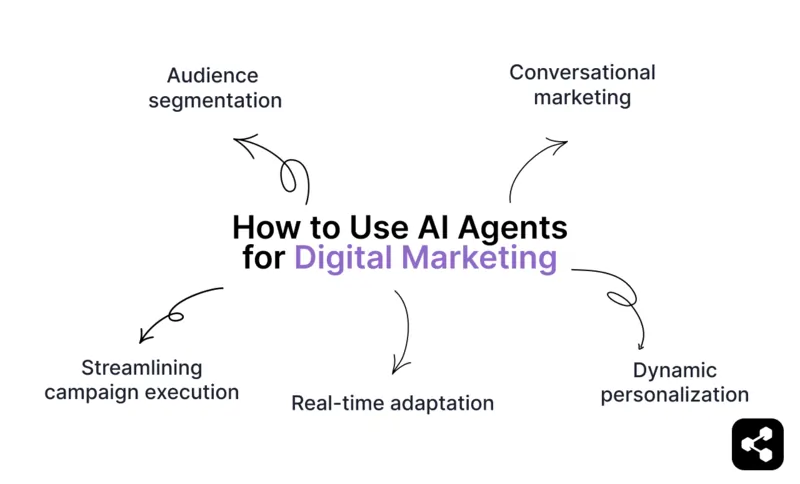
1. Audience segmentation and targeting
By analyzing customer data from multiple sources, AI agents identify detailed audience segments based on traits, preferences, and behaviours.
This enables marketers to deliver campaigns that resonate deeply with specific customer groups, ensuring content reaches the right people at the right time.
A SaaS company offering a new project management tool could use AI agents to analyze customer data from various sources, including website behaviour, social media engagement, and CRM data.
These insights help the company identify distinct audience segments: startups looking for scalable tools and corporate teams focused on integration capabilities.
Campaigns are then customized for each group. For example, startups are shown ads emphasizing affordability, while corporate teams see messaging about seamless integrations.
2. Streamlining campaign execution
AI agents, including AI sales agents, streamline the execution of marketing campaigns by automating tasks like email scheduling, ad placement, and social media posting. They can even adjust the timing and messaging of these campaigns to optimize engagement.
AI agents could then automate marketing tasks to execute campaigns efficiently:
3. Real-time adaptation
One of the standout features of AI agents is their ability to optimize campaigns in real time. Leveraging multi-agent systems (MAS), these AI agents collaborate to analyze performance data and implement adjustments more efficiently, enhancing the overall effectiveness of the marketing strategy.
If an ad isn’t performing well, the AI can tweak the content, adjust the audience, or shift the budget to higher-performing channels.
As the SaaS’ campaign progresses, AI agents could monitor results and adapt dynamically. For example:
4. Dynamic personalization
Using insights gained from customer interactions, AI agents craft personalized recommendations, emails, and ads tailored to individual needs.
Using data from customer interactions, the AI personalizes touchpoints:
5. Conversational marketing
One powerful application of AI in digital marketing is conversational marketing, which uses tools like AI chatbots, voice agents, and messaging platforms to create real-time, personalized interactions with customers.
- Startups are guided toward free trials focused on team collaboration.
- Freelancers receive instant answers about pricing.
- Corporate teams are offered options to schedule a demo.
What industries are using AI agents for digital marketing?
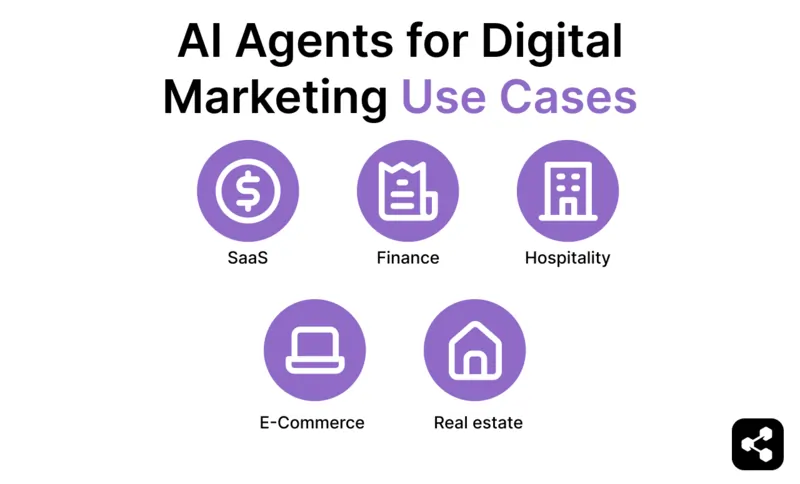
Although AI agents are used for digital marketing in countless industries, here’s how they are making an impact in some of the most popular ones.
Real estate
AI digital marketing tools, such as AI chatbots for real estate, streamline how agents connect with buyers by creating hyper-targeted campaigns and automating outreach. These tools:
Let’s say a young couple is searching online for properties in a specific suburb. They might then start to see Instagram ads highlighting newly listed homes in that area, complete with virtual tour links.
Finance
AI agents in financial marketing use data to craft campaigns that make complex services feel approachable and relatable.
Finance chatbots are game-changers in digital marketing by engaging customers with personalized recommendations, answering queries in real time, and driving conversions through tailored campaigns.
Someone exploring cryptocurrency might see a YouTube ad on “Crypto Investing 101,” with AI following up through tailored newsletters and tools like ROI calculators to build trust.
SaaS
In the SaaS industry, AI enhances digital marketing by identifying user intent and tailoring outreach strategies for maximum impact. AI tools enable businesses to:
Consider a mid-sized company exploring CRM tools. AI agents identify their interest based on time spent reading blog posts about team collaboration. This triggers Facebook ads showcasing the SaaS platform's features and follows up with a personalized webinar invitation.
E-commerce
AI is redefining online retail with highly targeted and personalized marketing strategies. Conversational AI for e-commerce enables real-time product recommendations tailored to individual preferences.
So, a customer exploring eco-friendly home goods might see a Facebook ad for sustainable kitchenware after visiting the brand’s blog on green living. Later, they receive an email showcasing products that align with their eco-conscious values, like reusable straws.
Hospitality
AI tools, including chatbots for hotels, are transforming digital marketing by creating highly personalized customer journeys.
Top 7 Tools in AI Digital Marketing
1. Botpress
Botpress is a powerful, flexible platform for building AI-powered digital marketing agents and LLM-driven solutions. Designed for developers and marketers, it combines adaptability with advanced features like natural language understanding (NLU), multilingual capabilities, and omnichannel support.
With Botpress, users can create customizable and scalable AI agents tailored for lead generation, campaign automation, and personalized customer engagement. These agents integrate seamlessly with CRMs, email marketing tools, and analytics platforms, making them an ideal choice for businesses aiming to optimize their digital marketing efforts.
Key features
Pros
Cons
2. Drift
Drift, acquired by Salesloft in February 2024, is a conversational marketing platform that specializes in helping businesses connect with prospects in real time.
Drift's AI chatbots specialize in lead qualification, automating meeting scheduling, and personalizing conversations.
Key features
Pros:
Cons:
3. Intercom
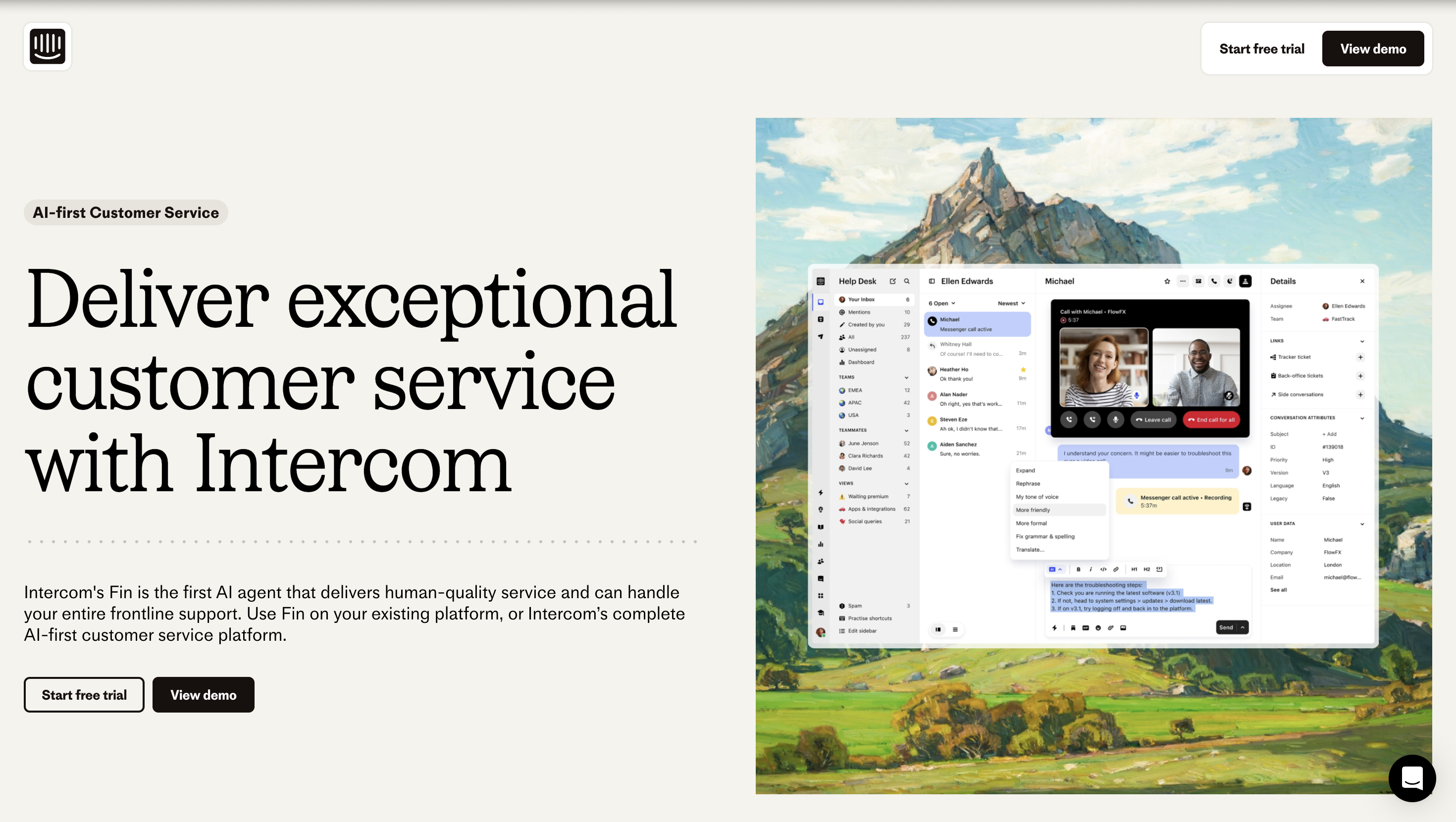
Intercom is a customer communication platform that combines AI chatbots with messaging tools to help businesses connect with their customers effectively. Intercom excels at automating customer support, onboarding new users, and qualifying leads.
Its chatbots work alongside live chat to provide personalized assistance in real time.
Key features
Pros:
Cons:
4. Ada
Ada is a no-code chatbot platform designed for businesses seeking to automate customer interactions at scale.
Ideal for customer support, Ada’s AI-driven bots handle routine inquiries, guide users through troubleshooting, and personalize interactions based on customer behaviour.
Key features
Pros:
Cons:
5. Tars
Tars is a chatbot platform that focuses on creating conversational landing pages to boost lead generation and conversions. Perfect for businesses running PPC campaigns, Tars replaces traditional forms with interactive chatbots that engage users, collect information, and guide them toward completing actions.
Its intuitive interface and robust analytics help businesses optimize their campaigns for maximum ROI.
Key features
Pros:
Cons:
6. ManyChat
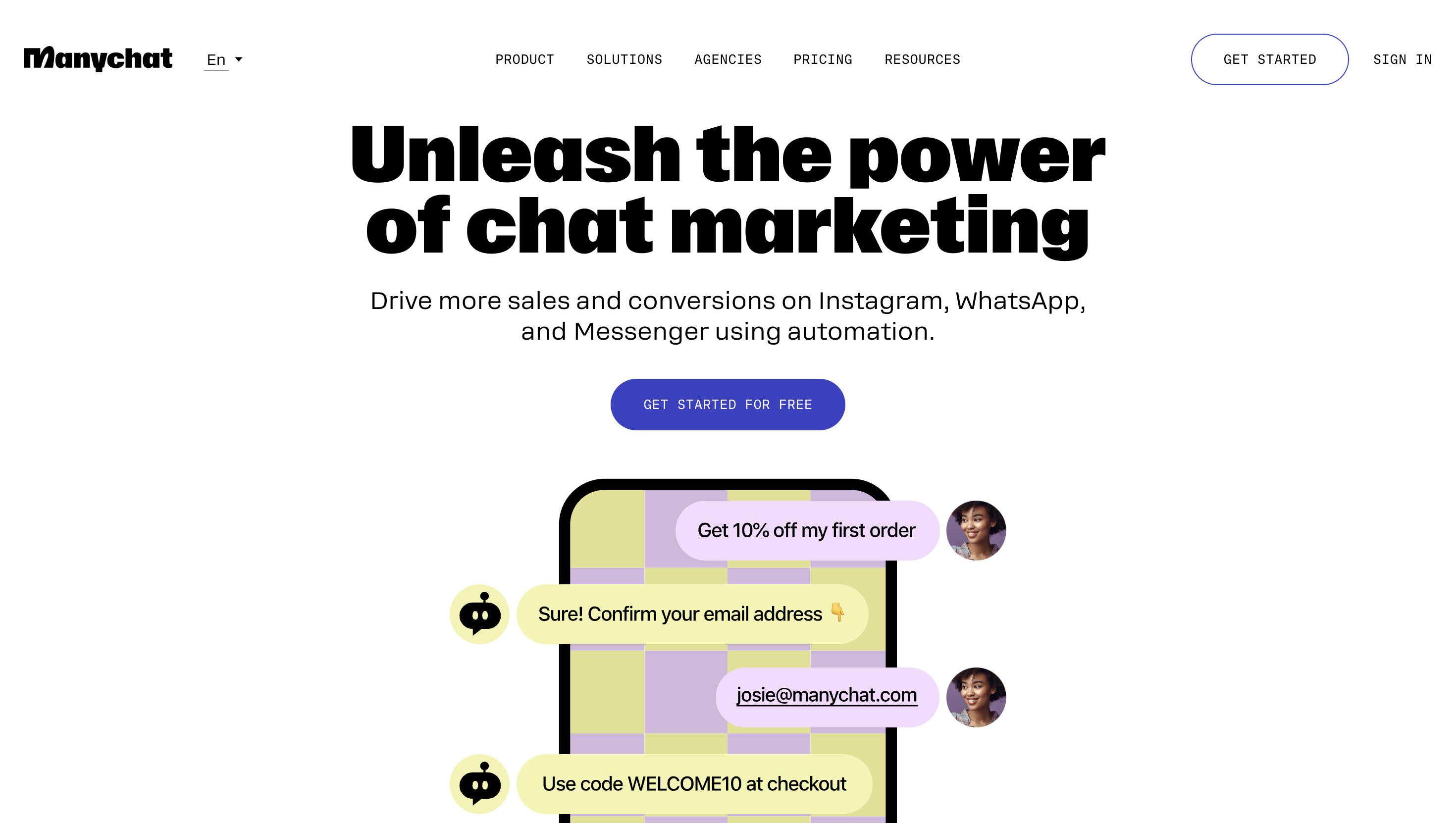
ManyChat is a chatbot builder specializing in automating interactions on social media platforms like Facebook Messenger, Instagram, and WhatsApp. Designed for marketers and small businesses, ManyChat simplifies lead generation, customer engagement, and follow-ups with its easy-to-use drag-and-drop interface.
By connecting with e-commerce tools and CRMs, ManyChat helps businesses drive sales and build relationships through interactive, conversational marketing.
Key features
Pros:
Cons:
Elevate your Digital Marketing Effort with AI
These days, digital marketing campaigns strongly benefit from leveraging AI to optimize strategies, personalize customer experiences, and drive meaningful engagement.
It’s like upgrading to a GPS after using a paper map your whole life.
Ready to transform your digital marketing? Botpress provides you with the tools you need to build custom AI solutions, including advanced chatbots and intelligent automation.
Start building today. It’s free.
FAQs
1. What types of data do AI agents need to perform effectively?
AI agents need access to structured data (like CRM records and web analytics) and unstructured data (like chat transcripts and social media interactions) to perform effectively. The more relevant and diverse the data, the better the agent can personalize messaging and automate workflows.
2. How secure is the data that AI agents analyze in marketing contexts?
The data that AI agents analyze in marketing contexts is secured with encryption protocols and compliance standards like GDPR, CCPA, and SOC 2. However, the actual level of security depends on how the business configures its data policies and whether third-party tools are vetted properly.
3. How do AI agents differ from machine learning models in marketing?
AI agents differ from machine learning models in that AI agents not only analyze data but also make real-time decisions and manage workflows autonomously. Machine learning models generate insights and predictions, but AI agents use those outputs to actively execute marketing strategies.
4. Can AI agents be integrated with existing MarTech stacks (like HubSpot, Mailchimp, etc.)?
Yes, AI agents can be integrated with existing MarTech stacks like HubSpot, Mailchimp, Salesforce, and others through built-in integrations or custom API connectors. This allows them to automate follow-ups and unify customer insights across platforms.
5. What are the challenges in integrating AI agents with CRM and analytics tools?
The main challenges in integrating AI agents with CRM and analytics tools include differences in data schemas, limited API access, syncing issues, and aligning AI behavior with business-specific rules. Overcoming these challenges requires technical configuration and ongoing monitoring to ensure the AI functions reliably.