How Clay Uses Clay for SEO and AEO in 2026 - The GTM with Clay Blog
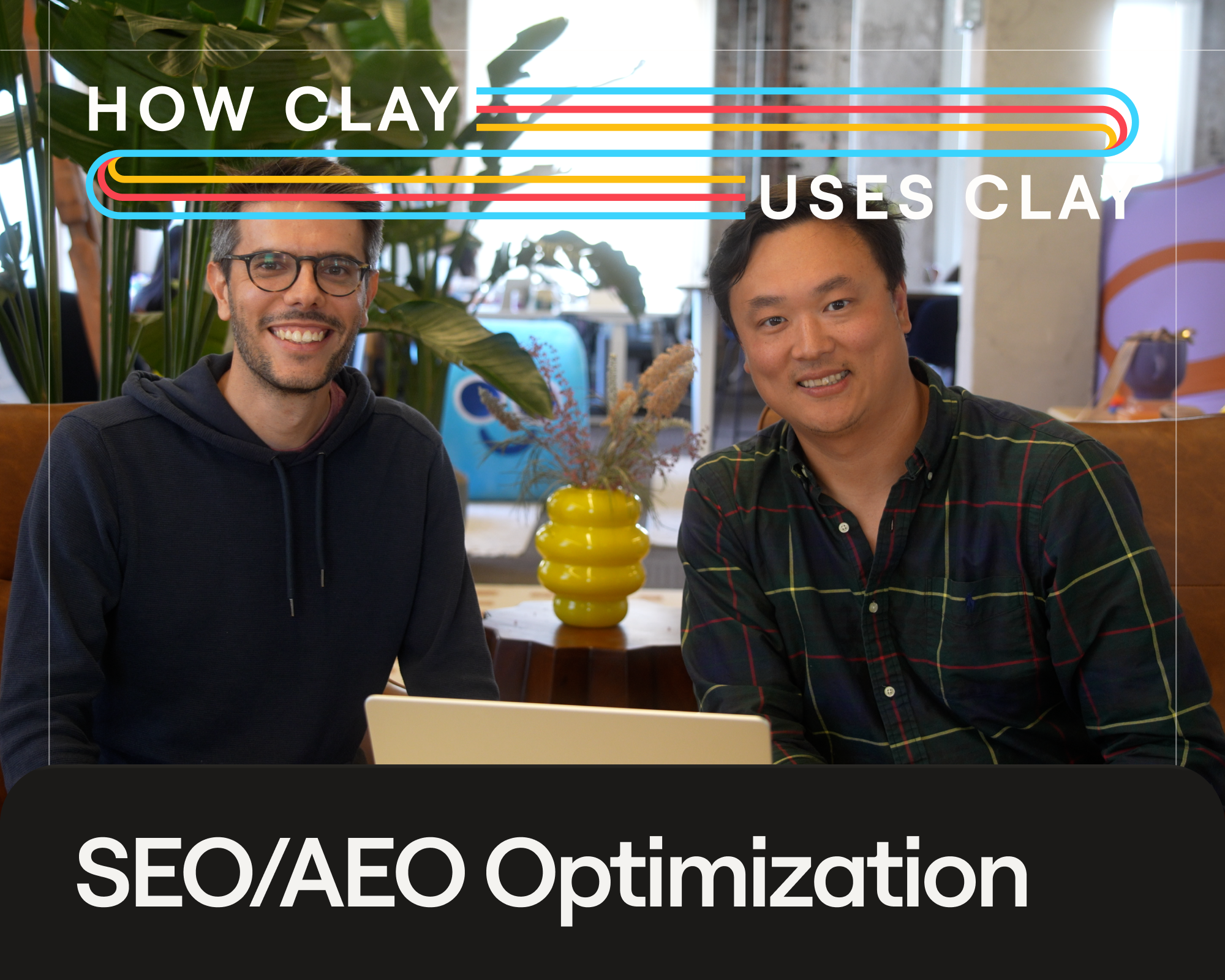
Sung Jo, SEO/AEO Lead команды роста Clay, построил три системы на базе Clay для масштабирования контент-инжиниринга. Первая — таблица Clay с интеграцией Webflow, которая автоматически обновляет 8 000+ dossier-страниц: проверяет данные на актуальность, переписывает устаревшие секции через LLM и пушит обратно в CMS. Вторая — конвертация транскриптов видео (Loom, вебинары) в структурированные туториал-страницы через Claygent, что превращает невидимый видеоконтент в индексируемые страницы. Третья — кастомный дашборд AI-видимости, собранный за два дня с помощью Clay, Supabase, Claude Code и Vercel; отслеживает упоминания бренда, тональность и долю голоса конкурентов в ответах LLM, стоит примерно в пять раз меньше готовых AEO-инструментов. Подход отражает сдвиг от производства контента к контент-инжинирингу: повторяемая структура, систематическая обработка и человеческое суждение только в ключевых точках.
Claygent Builder: The easiest way to build, test, and deploy GTM Agents
Claygent Builder: самый простой способ создавать, тестировать и развёртывать GTM-агентов
Build production-ready Claygents in natural language with Sculptor. Test on real data for free, track versions, and deploy once across every workflow. All inside Clay.
Создавайте production-готовых Claygent на естественном языке с помощью Sculptor. Тестируйте на реальных данных бесплатно, отслеживайте версии и разворачивайте один раз во всех воркфлоу. Всё внутри Clay.
How Clay Uses Clay Ads: From $250 to $25 CPL
Как Clay использует Clay Ads: с $250 до $25 CPL
See how Clay uses its own Ads feature to cut LinkedIn CPL from $250 to $25 and unlock Meta with enriched CRM audiences. No manual uploads needed.
Посмотрите, как Clay использует собственную функцию Ads, чтобы снизить LinkedIn CPL с $250 до $25 и подключить Meta с обогащёнными CRM-аудиториями. Без ручных загрузок.
HG Insights Corporate Hierarchy: GTM Precision in Clay
HG Insights Corporate Hierarchy: GTM-точность в Clay
Use HG Insights corporate hierarchy data in Clay to clean CRMs, map parent-child accounts, and trigger expansion plays. See how it works.
Используйте данные корпоративной иерархии HG Insights в Clay, чтобы чистить CRM, картировать связи материнских и дочерних компаний и запускать сценарии экспансии. Посмотрите, как это работает.
Sales GTM Engineering: How Clay Built the Role From Scratch
Sales GTM Engineering: как Clay построил эту роль с нуля
Learn what sales GTM engineering is, how it collapses SDR, AE, and SE roles into one, and how Clay built and hires for this high-leverage function. See how it works.
Узнайте, что такое sales GTM engineering, как он объединяет роли SDR, AE и SE в одну, и как Clay построил и нанимает на эту высокорычажную функцию. Посмотрите, как это работает.
How to Automate Inbound Lead Outreach: The Clay Playbook
Как автоматизировать работу с входящими лидами: плейбук Clay
Learn how to automate inbound lead outreach with enrichment, scoring, and personalized sequences. See the exact Clay workflow that runs without manual work.
Узнайте, как автоматизировать обработку входящих лидов с обогащением, скорингом и персонализированными последовательностями. Посмотрите точный воркфлоу Clay, который работает без ручного труда.
demandDrive Joins Clay’s Partner Ecosystem as an Official Clay Studio Partner
demandDrive присоединяется к партнёрской экосистеме Clay как официальный партнёр Clay Studio
demandDrive joins Clay’s partner ecosystem to help B2B teams turn account intelligence into pipeline and revenue with GTM engineering and automation.
demandDrive присоединяется к партнёрской экосистеме Clay, чтобы помогать B2B-командам превращать аналитику по аккаунтам в pipeline и выручку с помощью GTM-инжиниринга и автоматизации.
B2B Sales Prospecting: 15 Strategies to Drive More Conversions
B2B-проспектинг: 15 стратегий для роста конверсий
Master B2B sales prospecting with 15 proven strategies covering ICP building, multi-channel outreach, and list hygiene. Build a pipeline that converts.
Освойте B2B-проспектинг с помощью 15 проверенных стратегий: построение ICP, многоканальный outreach и гигиена списков. Постройте pipeline, который конвертирует.
AI Sales Assistants: 11 Ways to Accelerate Your Outbound
AI-ассистенты продаж: 11 способов ускорить outbound
Discover 11 ways AI sales assistants automate lead research, enrichment, and email personalization. See how top B2B teams use them to accelerate outbound.
Откройте для себя 11 способов, как AI-ассистенты продаж автоматизируют исследование лидов, обогащение и персонализацию писем. Узнайте, как лучшие B2B-команды используют их для ускорения outbound.
The Three Laws of GTM: How to Win in the AI Era
Три закона GTM: как побеждать в эпоху AI
The three laws of GTM explain why uniqueness, saturation, and iteration speed determine who wins. Learn how AI changes the rules and what to do about it.
Три закона GTM объясняют, почему уникальность, насыщенность и скорость итераций определяют победителей. Узнайте, как AI меняет правила и что с этим делать.
Best Work Email Finders by Segment: SMB vs. Enterprise
Лучшие сервисы поиска рабочих email по сегментам: SMB vs Enterprise
We tested 12 email finders across 4,700+ contacts to find the best work emails by segment. See accuracy, cost, and coverage winners for SMB and enterprise.
Мы протестировали 12 сервисов поиска email на 4 700+ контактах, чтобы найти лучшие источники рабочих email по сегментам. Смотрите победителей по точности, стоимости и охвату для SMB и Enterprise.
How Clay Converts Trial Users Into Customers With Automated Outreach
Как Clay конвертирует пользователей пробной версии в клиентов с помощью автоматизированного outreach
See how Clay uses automated outreach to convert trial users into customers, with enrichment, lead scoring, and personalized HubSpot campaigns. Learn how.
Посмотрите, как Clay использует автоматизированный outreach, чтобы превращать пробных пользователей в клиентов с обогащением, скорингом лидов и персонализированными HubSpot-кампаниями. Узнайте как.
Best Mobile Phone Data Providers for B2B Sales Teams
Лучшие провайдеры данных мобильных телефонов для B2B-команд продаж
We tested 9,806 numbers across 10 B2B mobile phone data providers. See which wins on accuracy, coverage, and cost for NAMER, EMEA, and APAC.
Мы протестировали 9 806 номеров от 10 B2B-провайдеров мобильных данных. Смотрите, кто побеждает по точности, охвату и стоимости для NAMER, EMEA и APAC.
How to Build a Complete AI Outbound Sales Funnel
Как построить полную AI outbound-воронку продаж
Learn how to build a complete AI outbound sales funnel—from account scoring to personalized outreach—using Clay waterfalls and automation. See how it works.
Узнайте, как построить полную AI outbound-воронку продаж — от скоринга аккаунтов до персонализированного outreach — с использованием Clay waterfalls и автоматизации. Посмотрите, как это работает.
How to Get More Customers Using Outbound Sales: A Complete Guide
Как привлечь больше клиентов с помощью outbound-продаж: полное руководство
Learn how outbound sales works, who it's right for, and how to build a strategy from prospecting to closing. Covers cold calling, email, and more.
Узнайте, как работают outbound-продажи, кому они подходят и как построить стратегию от проспектинга до закрытия. Охватывает холодные звонки, email и не только.
How to Automate 6 Cold Email Campaigns in One Clay Workflow
Как автоматизировать 6 cold email кампаний в одном воркфлоу Clay
Learn how to automate 6 cold email campaigns from a single Clay table — with enrichment, AI classification, and deduplication built in. See how it works.
Узнайте, как автоматизировать 6 cold email кампаний из одной таблицы Clay — со встроенным обогащением, AI-классификацией и дедупликацией. Посмотрите, как это работает.
How Clay Identifies Tier 1 Accounts: A Three-Score System
Как Clay выявляет аккаунты Tier 1: система из трёх оценок
See how Clay identifies tier 1 accounts using a three-score system: fit, engagement, and contract value. Learn how sales and marketing align on the same priorities.
Посмотрите, как Clay выявляет аккаунты Tier 1 с помощью системы из трёх оценок: соответствие, вовлечённость и стоимость контракта. Узнайте, как продажи и маркетинг согласуют общие приоритеты.
Lead Scoring in Clay: A Step-by-Step Formula Guide
Lead Scoring в Clay: пошаговое руководство по формулам
Learn how to build lead scoring formulas in Clay to prioritize your ICP leads by employee count, job postings, and more. See how it works.
Узнайте, как строить формулы скоринга лидов в Clay, чтобы приоритизировать ICP-лиды по количеству сотрудников, открытым вакансиям и другим параметрам. Посмотрите, как это работает.
How to Validate Cold Outbound Offers and Find Message-Market Fit
Как валидировать cold outbound-офферы и найти message-market fit
Learn how to validate cold outbound offers by finding message-market fit — from breaking down your value prop to testing with a phased email approach. See how it works.
Узнайте, как валидировать cold outbound-офферы, находя message-market fit — от разбора ценностного предложения до тестирования с поэтапным подходом к email. Посмотрите, как это работает.
Troubleshooting Outbound Sales and Prospecting: A Comprehensive Guide
Траблшутинг outbound-продаж и проспектинга: подробное руководство
Fix broken outbound sales campaigns with this guide. Diagnose open and reply rates, reduce no-shows, qualify prospects with MEDDIC, and optimize what's working.
Чините сломанные кампании outbound-продаж с этим руководством. Диагностируйте open- и reply-rate, сокращайте no-show, квалифицируйте проспектов через MEDDIC и оптимизируйте то, что работает.
Bulk Enrichment: Enrich Millions of CRM Records in Clay
Bulk Enrichment: обогащайте миллионы CRM-записей в Clay
Bulk enrichment lets Enterprise teams enrich millions of Salesforce records with firmographics, tech stack, and AI research — then write results back automatically.
Bulk enrichment позволяет Enterprise-командам обогащать миллионы записей Salesforce фирмографикой, технологическим стеком и AI-исследованиями — а затем автоматически записывать результаты обратно.
Clay Templates: Automate, Customize, and Replicate Any GTM Workflow
Clay Templates: автоматизируйте, кастомизируйте и реплицируйте любой GTM-воркфлоу
Clay Templates let you replicate full GTM workflows in hours, not days. Automate prospecting from data scraping to AI messaging, free and fully customizable.
Clay Templates позволяют реплицировать полные GTM-воркфлоу за часы, а не дни. Автоматизируйте проспектинг от парсинга данных до AI-сообщений, бесплатно и с полной кастомизацией.
How to Optimize Your Credit Usage in Clay
Как оптимизировать использование кредитов в Clay
Learn how to optimize your credit usage in Clay with conditional formulas, Clearbit waterfall lookups, and smarter enrichment workflows. Save credits fast.
Узнайте, как оптимизировать использование кредитов в Clay с помощью условных формул, waterfall-поиска через Clearbit и более умных воркфлоу обогащения. Экономьте кредиты быстро.
AI for sales prospecting
AI для проспектинга в продажах
Learn about how to use AI for sales prospecting in this comprehensive guide, including framework for creating AI prompts and examples of cold email templates using AI that real sales teams have used successfully to land clients. AI sales prospecting can save your team thousands of hours—and double or triple your positive response rates.
Узнайте, как использовать AI для проспектинга в продажах из этого подробного руководства, включая фреймворк создания AI-промптов и примеры шаблонов cold email с использованием AI, которые реальные команды продаж успешно применяли для привлечения клиентов. AI sales prospecting может сэкономить вашей команде тысячи часов — и удвоить или утроить долю позитивных ответов.
The Reverse Demo: How Clay Replaced Traditional B2B Sales Demos
The Reverse Demo: как Clay заменил традиционные B2B sales demos
A reverse demo lets prospects solve real problems live, guided by your rep. Learn how Clay used 100+ sessions to boost conversion, retention, and product quality.
Reverse demo позволяет проспектам решать реальные задачи в прямом эфире под руководством вашего рэпа. Узнайте, как Clay использовал 100+ сессий, чтобы повысить конверсию, удержание и качество продукта.
Data Waterfalls: How to Maximize Contact Coverage with Clay
Data Waterfalls: как максимизировать охват контактов с Clay
Data waterfalls query multiple providers in sequence so you only pay for matches. See how Clay pushes coverage from 30% to 80%+ without annual contracts.
Data waterfalls запрашивают нескольких провайдеров последовательно, чтобы вы платили только за совпадения. Посмотрите, как Clay поднимает охват с 30% до 80%+ без годовых контрактов.
How Clay Runs ABM Campaigns: A Step-by-Step Playbook
Как Clay запускает ABM-кампании: пошаговый плейбук
See how Clay runs ABM campaigns — scoring 300 accounts, personalizing mailers and landing pages, and automating SDR follow-up. Learn how.
Посмотрите, как Clay запускает ABM-кампании — скоря 300 аккаунтов, персонализируя физические рассылки и лендинги и автоматизируя SDR follow-up. Узнайте как.
How We Built Clay's GTM Engineering Function
Как мы построили функцию GTM Engineering в Clay
See how Clay built its GTM engineering function with sprint-based delivery, founder-level reporting, and full sales automation. A practical inside look.
Посмотрите, как Clay построил функцию GTM-инжиниринга со спринт-моделью доставки, отчётностью на уровне основателей и полной автоматизацией продаж. Практический взгляд изнутри.
Best Personal Email Finder Tools: Tested and Ranked
Лучшие инструменты поиска персональных email: протестировано и ранжировано
We tested 5 personal email finder tools across 2,354 prospects. See accuracy, coverage, and pricing data — plus the waterfall order that hit 79% coverage.
Мы протестировали 5 инструментов поиска персональных email на 2 354 проспектах. Смотрите данные по точности, охвату и стоимости — плюс waterfall-порядок, который дал охват 79%.
How to Use OpenAI to Write Cold Emails from Scratch with Clay
Как использовать OpenAI для написания cold email с нуля в Clay
Learn how to use OpenAI to write personalized cold emails at scale with Clay. Set up the integration, craft better prompts, and boost deliverability.
Узнайте, как использовать OpenAI для написания персонализированных cold email в масштабе с помощью Clay. Настройте интеграцию, создавайте лучшие промпты и повышайте доставляемость.
How to Run a Personalized Demo Play at Scale with Clay
Как запустить персонализированный demo play в масштабе с Clay
Learn how to automate a personalized demo play using Clay, Claygent, and AI enrichment to build custom mockups at scale. See how it works.
Узнайте, как автоматизировать персонализированный demo play, используя Clay, Claygent и AI-обогащение, чтобы создавать кастомные макеты в масштабе. Посмотрите, как это работает.
Automated Slide Deck Creation: How Clay Builds QBRs from Your Data
Автоматизированное создание слайд-деков: как Clay строит QBR из ваших данных
Clay's automated slide deck creation pulls from Snowflake, Salesforce, and Gong to build QBRs in minutes. Save 90+ hours per quarter. See how it works.
Автоматизированное создание слайд-деков в Clay подтягивает данные из Snowflake, Salesforce и Gong, чтобы строить QBR за минуты. Экономьте 90+ часов в квартал. Посмотрите, как это работает.
HG Insights + Clay: B2B Technographic and Firmographic Data
HG Insights + Clay: B2B-технографические и фирмографические данные
HG Insights surfaces deep technographic and firmographic data from billions of documents. Use it in Clay workflows to enrich accounts and power GTM. See how it works.
HG Insights раскрывает глубокие технографические и фирмографические данные из миллиардов документов. Используйте их в воркфлоу Clay для обогащения аккаунтов и питания GTM. Посмотрите, как это работает.
B2B Cold Email Deliverability: 21 Best Practices
Доставляемость B2B cold email: 21 лучшая практика
Master B2B cold email deliverability with 21 proven best practices: domain setup, inbox warmup, authentication, and copy tips that keep you out of spam. Learn how.
Освойте доставляемость B2B cold email с 21 проверенной практикой: настройка домена, прогрев инбокса, аутентификация и советы по копирайту, которые держат вас вне спама. Узнайте как.
Basics of Google Search Operators: A Practical Guide
Основы операторов Google-поиска: практическое руководство
Learn the basics of Google Search Operators and how to use them in Clay for prospecting, list building, and company research. See how it works.
Узнайте основы операторов Google-поиска и как использовать их в Clay для проспектинга, построения списков и исследования компаний. Посмотрите, как это работает.
AI Lead Generation: The Complete B2B Guide
AI Lead Generation: полное B2B-руководство
Learn how AI lead generation automates list building, enrichment, and personalized outreach for B2B teams. Scale your pipeline without scaling headcount. See how it works.
Узнайте, как AI lead generation автоматизирует построение списков, обогащение и персонализированный outreach для B2B-команд. Масштабируйте pipeline без роста штата. Посмотрите, как это работает.
Clay MCP: Ops-built workflows, consumable by reps
Clay MCP: воркфлоу от Ops, доступные для рэпов
Clay MCP: Ops-built workflows, consumable by reps
Clay MCP: воркфлоу от Ops, доступные для рэпов
How to Manage and Enrich Inbound Leads Automatically
Как автоматически управлять входящими лидами и обогащать их
Learn how to manage and enrich inbound leads automatically using a four-phase workflow that scores, segments, and triggers outreach from one email. See how it works.
Узнайте, как автоматически управлять и обогащать входящие лиды с помощью четырёхфазного воркфлоу, который скорит, сегментирует и запускает outreach из одного email. Посмотрите, как это работает.
GTM Alpha: How Winning Teams Build a Competitive Edge
GTM Alpha: как побеждающие команды создают конкурентное преимущество
GTM alpha is the edge winning teams build with unique data and signal-based plays. Learn how to find hidden signals, run better plays, and outpace competitors.
GTM alpha — это преимущество, которое побеждающие команды строят с уникальными данными и сигнальными плеями. Узнайте, как находить скрытые сигналы, запускать лучшие плеи и опережать конкурентов.
Why Good CRM Data Matters and How Clay Helps
Почему хорошие CRM-данные важны и как помогает Clay
Poor CRM data kills outreach. Learn why CRM data coverage fails and how Clay's waterfall enrichment lifts coverage rates from 20% to 80%. See how it works.
Плохие CRM-данные убивают outreach. Узнайте, почему охват CRM-данных не работает и как waterfall-обогащение Clay поднимает уровень охвата с 20% до 80%. Посмотрите, как это работает.
How to Use Formulas in Clay: AI Generator and Manual Entry
Как использовать формулы в Clay: AI-генератор и ручной ввод
Learn how to use formulas in Clay with the AI Formula Generator or manual entry. Transform and clean your data faster. See how it works.
Узнайте, как использовать формулы в Clay с AI Formula Generator или ручным вводом. Трансформируйте и чистите данные быстрее. Посмотрите, как это работает.
GTM Engineering: What It Is, How It Works, and How to Hire
GTM Engineering: что это, как работает и как нанимать
GTM engineering turns ops teams into revenue builders using AI and automation. Learn what GTM engineers do, how to structure the role, and how to hire one.
GTM engineering превращает ops-команды в строителей выручки с помощью AI и автоматизации. Узнайте, что делают GTM-инженеры, как структурировать роль и как нанять.
Formulas in Clay: A Beginner's Intro for Non-Engineers
Формулы в Clay: введение для не-инженеров
Learn how to use formulas in Clay without coding. This intro covers conditional statements, combining columns, and auto-qualifying leads. Start in 30 minutes.
Узнайте, как использовать формулы в Clay без кода. Это введение охватывает условные операторы, объединение столбцов и автоквалификацию лидов. Начните за 30 минут.
How Clay Uses Clay for SEO and AEO: 3 Systems That Scale
Как Clay использует Clay для SEO и AEO: 3 масштабируемых системы
See how Clay uses Clay for SEO and AEO: automated content refresh, video-to-page conversion, and a custom AI visibility dashboard. Learn how.
Посмотрите, как Clay использует Clay для SEO и AEO: автоматизированный refresh контента, конвертация видео в страницы и кастомный дашборд AI-видимости. Узнайте как.
Turn Web Visitors into Leads: A Warm Outbound Play for B2B Sales
Превращайте посетителей сайта в лиды: warm outbound play для B2B-продаж
Learn how to turn web visitors into leads using a warm outbound play for B2B sales — with RB2B, Clay, and Lemlist. See how it works.
Узнайте, как превращать посетителей сайта в лиды с помощью warm outbound play для B2B-продаж — с RB2B, Clay и Lemlist. Посмотрите, как это работает.
How to Use Web Scraping to Enrich Your Data with Clay
Как использовать web scraping для обогащения данных в Clay
Learn how to use web scraping to enrich your data without code. Clay's Claygent answers deep GTM research questions at scale. See how it works.
Узнайте, как использовать web scraping для обогащения данных без кода. Claygent в Clay отвечает на глубокие GTM-исследовательские вопросы в масштабе. Посмотрите, как это работает.
How to Create a Sales Prospect List in Minutes
Как создать список проспектов за минуты
Learn how to create your own sales prospect list in minutes using Clay. Pull from 40+ sources, enrich with ICP data, and export to your CRM. See how it works.
Узнайте, как создать собственный список проспектов за минуты с помощью Clay. Тяните из 40+ источников, обогащайте ICP-данными и экспортируйте в CRM. Посмотрите, как это работает.
Best B2B Email List Providers: Tested and Ranked (2026)
Лучшие провайдеры B2B email-списков: протестировано и ранжировано (2026)
We tested 8 B2B email list providers head-to-head. See accuracy results, per-email pricing, and how to waterfall providers for maximum coverage.
Мы сравнили 8 провайдеров B2B email-списков. Смотрите результаты по точности, цене за email и как объединять провайдеров в waterfall для максимального охвата.
Outbound Sales Automation: How to 10x Pipeline Without More SDRs
Outbound Sales Automation: как сделать 10x pipeline без новых SDR
Learn how outbound sales automation replaces manual SDR work, cuts cost per email by 100x, and scales pipeline without growing headcount. See how it works.
Узнайте, как автоматизация outbound-продаж заменяет ручную работу SDR, снижает стоимость email в 100 раз и масштабирует pipeline без роста штата. Посмотрите, как это работает.
The Wake the Dead Play: Reactivate Closed-Lost Deals with Clay
The Wake the Dead Play: реактивируйте closed-lost сделки с Clay
The wake the dead play uses Clay + ChatGPT to send automated, personalized emails to closed-lost prospects. Restart stalled deals in a few steps. Learn how.
Wake the dead play использует Clay + ChatGPT для отправки автоматизированных персонализированных писем closed-lost проспектам. Перезапустите застоявшиеся сделки за несколько шагов. Узнайте как.
Three Tips to Guarantee Email Deliverability for Cold Outbound
Три совета для гарантированной доставляемости cold email outbound
Split volume, verify contacts, and personalize copy to guarantee email deliverability for cold outbound. Three actionable tips that keep you out of spam.
Разбивайте объём, верифицируйте контакты и персонализируйте копирайт, чтобы гарантировать доставляемость cold email outbound. Три действенных совета, которые держат вас вне спама.
How Clay Uses Clay for Customer Support: 3 Real Workflows
Как Clay использует Clay для клиентской поддержки: 3 реальных воркфлоу
See how Clay's customer support team uses Clay to enrich Intercom tickets, automate QA, and draft help articles. Real workflows, real results.
Посмотрите, как команда клиентской поддержки Clay использует Clay, чтобы обогащать тикеты Intercom, автоматизировать QA и составлять статьи помощи. Реальные воркфлоу, реальные результаты.
B2B Cold Email Copywriting: The Complete Guide
B2B Cold Email копирайтинг: полное руководство
Master B2B cold email copywriting with proven templates, a research framework, and a checklist used to send 800k+ emails a month. Start writing emails that get replies.
Освойте копирайтинг B2B cold email с проверенными шаблонами, фреймворком исследования и чек-листом, использованным для отправки 800k+ писем в месяц. Начните писать письма, на которые отвечают.
Introducing Clay Functions
Представляем Clay Functions
Build Your GTM Logic Once, Apply It Everywhere
Постройте свою GTM-логику один раз, применяйте везде
Clay and Apollo Integration: Enrichment, Sequencing, and More
Интеграция Clay и Apollo: обогащение, sequencing и многое другое
The Clay and Apollo integration unlocks 5X faster enrichment and direct sequencer API access. See how joint customers go from data to booked meetings.
Интеграция Clay и Apollo обеспечивает 5x более быстрое обогащение и прямой доступ к sequencer API. Посмотрите, как совместные клиенты переходят от данных к назначенным встречам.
The Many Lives of Spreadsheets: A History and What Comes Next
Многие жизни спредшитов: история и что дальше
Explore the many lives of spreadsheets — from VisiCalc in 1979 to self-filling automation tools today. See how the no-code vision keeps evolving.
Исследуйте многие жизни спредшитов — от VisiCalc в 1979 году до инструментов автозаполнения сегодня. Посмотрите, как продолжает развиваться видение no-code.
AI recruiting strategies
AI-стратегии рекрутинга
Learn our top AI recruiting workflows to help you identify, research, and reach out to qualified candidates for open roles. AI can eliminate manual work and help you reach out to—and land—better employees for your clients.
Изучите наши лучшие AI-воркфлоу рекрутинга, чтобы идентифицировать, исследовать и связываться с квалифицированными кандидатами на открытые роли. AI может устранить ручную работу и помочь вам выходить на лучших сотрудников — и привлекать их — для ваших клиентов.
How to Hire a GTM Engineer: The Complete Guide
Как нанять GTM-инженера: полное руководство
Learn how to hire a GTM engineer: when to make the hire, what skills to screen for, red flags to avoid, and where to find the best candidates. See how it works.
Узнайте, как нанимать GTM-инженера: когда делать наём, какие навыки скринить, каких красных флагов избегать и где найти лучших кандидатов. Посмотрите, как это работает.
Inside Clay's GTM Engineering Lab: Plays, Principles, and Automation
Внутри GTM Engineering Lab Clay: плеи, принципы и автоматизация
See how Clay's GTM engineering lab turns internal problems into revenue plays using AI, automation, and data-driven principles. Learn how it works.
Посмотрите, как GTM engineering lab Clay превращает внутренние проблемы в плеи на выручку с помощью AI, автоматизации и data-driven принципов. Узнайте, как это работает.
How to Build the Most Targeted Account Lists Possible
Как создать максимально таргетированные списки аккаунтов
Generic tools leave bad-fit companies in your account list. Learn how to build targeted account lists using AI enrichment and real workflow examples in Clay.
Generic-инструменты оставляют в вашем списке аккаунтов плохо подходящие компании. Узнайте, как создавать таргетированные списки аккаунтов с помощью AI-обогащения и реальных примеров воркфлоу в Clay.
Personalized Direct Mail at Scale: The Gifting Play with Clay
Персонализированная прямая рассылка в масштабе: gifting play с Clay
Learn how to run personalized direct mail campaigns using Clay — validate contacts, generate AI gift copy, and export to email. See how it works.
Узнайте, как запускать кампании персонализированной прямой рассылки с помощью Clay — валидируйте контакты, генерируйте AI-копирайт подарков и экспортируйте в email. Посмотрите, как это работает.
How to Set Up Your Full Inbound Sales Process on Clay
Как настроить полный процесс inbound-продаж в Clay
Learn how to set up your full inbound sales process on Clay — enrich leads, tag MQLs, and automate email campaigns from form to demo. See how it works.
Узнайте, как настроить полный процесс inbound-продаж в Clay — обогащайте лиды, маркируйте MQL и автоматизируйте email-кампании от формы до демо. Посмотрите, как это работает.
AI-Enabled GTM for Private Equity: The Value Creation Playbook
AI-Enabled GTM для Private Equity: плейбук создания ценности
Learn how AI-enabled GTM for private equity drives value creation across portfolios—from data quality to agentic workflows. See how it works.
Узнайте, как AI-enabled GTM для private equity создаёт ценность в портфелях — от качества данных до агентских воркфлоу. Посмотрите, как это работает.
Do More With Your Data: Clay's Post-Data-Provider Approach
Делайте больше с данными: post-data-provider подход Clay
Clay's post-data-provider approach combines 150+ providers, waterfall enrichment, and AI scraping to maximize data coverage. See how it works.
Post-data-provider подход Clay объединяет 150+ провайдеров, waterfall-обогащение и AI-парсинг, чтобы максимизировать охват данных. Посмотрите, как это работает.
Google Maps Lead Generation for Niche Local Businesses
Google Maps Lead Generation для нишевых локальных бизнесов
Learn how to use Google Maps lead generation to find niche local businesses, enrich owner contacts, and send personalized outreach at scale with Clay.
Узнайте, как использовать Google Maps lead generation, чтобы находить нишевые локальные бизнесы, обогащать контакты владельцев и отправлять персонализированный outreach в масштабе с Clay.
24 AI Email Personalization Examples for Cold Outreach (With Prompts)
24 примера AI-персонализации email для cold outreach (с промптами)
Get 24 AI email personalization examples for cold outreach, with ChatGPT prompts you can run at scale in Clay. Learn how to write emails that actually convert.
Получите 24 примера AI-персонализации email для cold outreach с ChatGPT-промптами, которые можно запускать в масштабе в Clay. Узнайте, как писать письма, которые действительно конвертируют.
How to Ace Your Follow-Ups: A Practical Sales Guide
Как мастерски делать follow-up: практическое руководство по продажам
Learn how to ace your follow-ups with value-driven outreach, personalization tips, multi-channel tactics, and automation tools that keep deals moving. See how it works.
Узнайте, как мастерски делать follow-up с value-driven outreach, советами по персонализации, мульти-канальной тактикой и инструментами автоматизации, которые двигают сделки. Посмотрите, как это работает.
How to Prioritize Your Waitlist with Lead Enrichment
Как приоритизировать waitlist с помощью обогащения лидов
Learn how to prioritize your waitlist using lead enrichment. Turn raw signups into qualified leads by company, title, and role — no long forms needed. See how.
Узнайте, как приоритизировать waitlist с помощью обогащения лидов. Превращайте сырые регистрации в квалифицированные лиды по компании, должности и роли — без длинных форм. Узнайте как.
B2B Cold Email Templates: Frameworks That Get Replies
B2B Cold Email шаблоны: фреймворки, которые получают ответы
Learn how to write B2B cold email templates that convert with a proven 5-part framework, follow-up strategy, and real examples. See how it works.
Узнайте, как писать B2B cold email шаблоны, которые конвертируют, с проверенным фреймворком из 5 частей, стратегией follow-up и реальными примерами. Посмотрите, как это работает.
Audiences: now in Enterprise beta
Audiences: теперь в Enterprise beta
Clay Audiences unifies your CRM, product data, and intent signals into one layer — so reps and agents can run precise, personalized GTM plays at scale.
Clay Audiences объединяет ваш CRM, продуктовые данные и intent-сигналы в один слой — чтобы рэпы и агенты могли запускать точные персонализированные GTM-плеи в масштабе.
The thinking behind our new pricing: our internal memo
Мысли за нашей новой моделью ценообразования: наш внутренний меморандум
Clay pricing memo: INTERNAL
Меморандум Clay по ценообразованию: ВНУТРЕННИЙ
Introducing Clay’s new pricing
Представляем новые цены Clay
Today, we’re launching a pricing update that reduces data costs, and simplifies and improves the value of our plans. Our goal is to have Clay be your default tool for GTM Engineering.
Сегодня мы запускаем обновление ценообразования, которое снижает стоимость данных, упрощает планы и повышает их ценность. Наша цель — сделать Clay вашим инструментом по умолчанию для GTM Engineering.
Clay partners with Lusha and Beauhurst to expand European data coverage
Clay сотрудничает с Lusha и Beauhurst, чтобы расширить европейское покрытие данных
Lusha adds lookalike prospecting, contact enrichment, and signals in EMEA. Beauhurst adds private funding and corporate structure data in the UK and Germany.
Lusha добавляет lookalike-проспектинг, обогащение контактов и сигналы в EMEA. Beauhurst добавляет данные о частном финансировании и корпоративной структуре в Великобритании и Германии.
Source your precise TAM from lookalikes you can trust with Ocean.io and Clay
Берите свой точный TAM от lookalikes, которым можно доверять, с Ocean.io и Clay
Clay + Ocean now enable preview-based B2B lookalike discovery. Preview leads before committing credits and expand your TAM with greater precision.
Clay + Ocean теперь обеспечивают B2B lookalike-обнаружение на основе превью. Просматривайте лиды до того, как тратите кредиты, и расширяйте TAM с большей точностью.
Clay doubles down on supporting European GTM teams
Clay удваивает усилия по поддержке европейских GTM-команд
Clay's waterfall enrichment delivers 2–3x more mobile phone coverage than leading solo providers across Europe. Plus new data partnerships, a London office, and timezone-aligned support.
Waterfall-обогащение Clay обеспечивает в 2–3 раза больше покрытия мобильных телефонов, чем ведущие одиночные провайдеры по Европе. Плюс новые партнёрства по данным, лондонский офис и поддержка по часовым поясам.
In Nigeria, she built a life where money wouldn’t decide
В Нигерии она построила жизнь, где деньги не решают
Clay blog | In Nigeria, she built a life where money wouldn’t decide
Блог Clay | В Нигерии она построила жизнь, где деньги не решают
Sculptor Analyst Mode: Turning Context-Rich Data Into Actionable GTM Insights
Sculptor Analyst Mode: превращение контекстно-богатых данных в действенные GTM-инсайты
Gather business intelligence and share documents of this analysis directly from Sculptor
Собирайте бизнес-аналитику и делитесь документами с этим анализом прямо из Sculptor
In a place where girls often choose between career or marriage, she carved her own path
В месте, где девушки часто выбирают между карьерой и браком, она проложила свой путь
Javeria Shah won the Clay Cup 2025 despite being denied a US visa and competing remotely from Pakistan. Learn how she transitioned from electronics engineering into GTM engineering and built her own business.
Javeria Shah выиграла Clay Cup 2025, несмотря на отказ в визе в США и участие удалённо из Пакистана. Узнайте, как она перешла из электронной инженерии в GTM-инжиниринг и построила собственный бизнес.
How we designed Sculpt
Как мы спроектировали Sculpt
Our first conference, Sculpt, is where the analog soul of Clay met the digital mind of Clay.
Наша первая конференция Sculpt — это место, где аналоговая душа Clay встретила цифровой разум Clay.
Clay announces second employee tender offer in nine months at a $5B valuation
Clay объявляет о втором tender offer для сотрудников за девять месяцев при оценке в $5B
A rare repeat employee liquidity event, designed to give builders flexibility as Clay accelerates
Редкое повторное событие ликвидности для сотрудников, разработанное, чтобы дать строителям гибкость по мере того, как Clay ускоряется
Clay is now available as a connector in Claude
Clay теперь доступен как коннектор в Claude
Bring Clay's contact databases, enrichment providers, and AI agents into your Claude workflow.
Принесите контактные базы данных Clay, провайдеров обогащения и AI-агентов в свой воркфлоу Claude.
Sellers have a new AI edge: Clay in ChatGPT
У продавцов новое AI-преимущество: Clay в ChatGPT
Use Clay directly in ChatGPT to find the right buyers, research people and companies, and draft personalized outbound. One conversation, powered by live GTM data.
Используйте Clay прямо в ChatGPT, чтобы находить правильных покупателей, исследовать людей и компании и составлять персонализированный outbound. Один разговор, питаемый живыми GTM-данными.
Clay reaches $100M ARR
Clay достигает $100M ARR
Clay has crossed $100M ARR, growing from $1M to $100M in two years after six years of foundational product work. The milestone reflects durable customer adoption, efficient growth, and an ecosystem of GTM builders using Clay to power their business.
Clay пересёк отметку $100M ARR, вырос с $1M до $100M за два года после шести лет фундаментальной работы над продуктом. Этот рубеж отражает устойчивое внедрение клиентами, эффективный рост и экосистему GTM-строителей, использующих Clay для развития бизнеса.
Clay Certifications: Turning mastery into credentials that matter
Clay Certifications: превращаем мастерство в значимые сертификаты
The Clay education team has built a certification program that runs entirely on Clay and gives users credentials that actually matter
Команда образования Clay построила программу сертификации, которая полностью работает на Clay и даёт пользователям сертификаты, которые действительно имеют значение
Mobile Phone Verification Methodology
Методология верификации мобильных телефонов
Clay has partnered with The Kiln to setup a series of large-scale data test across mobile phone, work email, personal email, email verification, and more. Below, we explain the approach to these tests.
Clay сотрудничает с The Kiln для проведения серии крупномасштабных тестов данных по мобильным телефонам, рабочим email, персональным email, верификации email и многому другому. Ниже мы объясняем подход к этим тестам.
Work Email Verification Methodology
Методология верификации рабочих email
Clay has partnered with The Kiln to setup a series of large-scale data test across mobile phone, work email, personal email, email verification, and more. Below, we explain the approach to these tests.
Clay сотрудничает с The Kiln для проведения серии крупномасштабных тестов данных по мобильным телефонам, рабочим email, персональным email, верификации email и многому другому. Ниже мы объясняем подход к этим тестам.
Stop Guessing, Start Analyzing: How Sculptor Turns Your GTM Data Into Your Competitive Advantage
Хватит гадать, начните анализировать: как Sculptor превращает ваши GTM-данные в конкурентное преимущество
Analyze your GTM data with Sculptor to turn fragmented information into actionable insight.
Анализируйте свои GTM-данные с помощью Sculptor, чтобы превращать разрозненную информацию в действенные инсайты.
Find and outreach local businesses with Openmart and Clay Sequencer
Находите и связывайтесь с локальными бизнесами с помощью Openmart и Clay Sequencer
Get the right contacts for local businesses without stitching together multiple tools or wasting valuable time on setup instead of selling.
Получайте правильные контакты для локальных бизнесов без сшивания нескольких инструментов и без растраты ценного времени на настройку вместо продаж.
Announcing Web Intent
Представляем Web Intent
Use Website Intent in Clay to see which companies visit your site, track engagement, and trigger personalized GTM plays. Turn website traffic into real buyer intent data.
Используйте Website Intent в Clay, чтобы видеть, какие компании посещают ваш сайт, отслеживать вовлечённость и запускать персонализированные GTM-плеи. Превращайте трафик сайта в реальные данные о намерениях покупателей.
How Clay Uses Clay: Conversational Data
Как Clay использует Clay: Conversational Data
How we use Clay to mine millions of pages of call transcripts to generate revenue, and how you can use it too.
Как мы используем Clay, чтобы добывать миллионы страниц транскриптов звонков для генерации выручки, и как вы можете использовать его тоже.
Sculpting GTM’s future with six major launches
Лепим будущее GTM с шестью крупными запусками
Today at Sculpt, we're launching six major features that will help teams turn any growth idea into reality faster.
Сегодня на Sculpt мы запускаем шесть крупных функций, которые помогут командам быстрее превращать любую идею роста в реальность.
Introducing Claygent Navigator
Представляем Claygent Navigator
A new Claygent model that can use a browser to take actions and extract information from webpages.
Новая модель Claygent, которая может использовать браузер для выполнения действий и извлечения информации с веб-страниц.
Announcing the Clay Partner Program
Объявляем о Clay Partner Program
The Clay Partner Program is to a partner, what a toolbox is to an artist. It keeps essential resources within reach and grows more sophisticated as your expertise develops. We've designed everything around one simple principle: helping you grow your business as Clay grows.
Clay Partner Program — это для партнёра то же, что набор инструментов для художника. Она держит важные ресурсы под рукой и становится более сложной по мере развития вашей экспертизы. Мы разработали всё вокруг одного простого принципа: помогать вам развивать свой бизнес по мере роста Clay.
Introducing GPT-5 in Claygent: sharper research, stronger formulas, better outbound
Представляем GPT-5 в Claygent: более точные исследования, более сильные формулы, лучший outbound
GPT-5 is now a model option across Clay, bringing the best research and conversational writing we've ever shipped to your GTM workflows.
GPT-5 теперь доступен как опция модели в Clay, привнося лучшие исследовательские и разговорные writing-возможности, которые мы когда-либо выпускали, в ваши GTM-воркфлоу.
Clay Series C announcement. The GTM engineering era begins now
Анонс Series C от Clay. Эпоха GTM engineering начинается сейчас
We raised a $100M Series C at a $3.1B valuation to power GTM engineering!
Мы привлекли $100M Series C при оценке $3.1B, чтобы питать GTM engineering!
Claygent surpasses 1 billion runs
Claygent превысил 1 миллиард запусков
The world's most loved AI research agent in GTM has passes a huge milestone at 1 billion runs.
Самый любимый в мире AI-исследовательский агент в GTM прошёл огромный рубеж в 1 миллиард запусков.
Announcing Sculpt: Clay’s first annual user conference
Анонсируем Sculpt: первую ежегодную пользовательскую конференцию Clay
Join us for Sculpt, Clay’s first annual user conference on Sept 17 in San Francisco where GTM leaders build AI workflows, share creative tactics, and get early access to new features.
Присоединяйтесь к Sculpt, первой ежегодной пользовательской конференции Clay 17 сентября в Сан-Франциско, где GTM-лидеры строят AI-воркфлоу, делятся креативными тактиками и получают ранний доступ к новым функциям.
Announcing custom signals at Clay
Анонсируем custom signals в Clay
Clay's new custom signals platform helps sales teams track unique data changes that indicate buying opportunities. Turn any data point into a sales signal, enrich with context, and automate personalized outreach to find GTM alpha your competitors miss.
Новая платформа custom signals от Clay помогает командам продаж отслеживать уникальные изменения данных, указывающие на покупательские возможности. Превращайте любую точку данных в сигнал продаж, обогащайте контекстом и автоматизируйте персонализированный outreach, чтобы находить GTM alpha, которое упускают ваши конкуренты.
Clay announces employee tender offer led by Sequoia at $1.5B valuation
Clay объявляет об employee tender offer во главе с Sequoia при оценке $1.5B
Clay allows employees to sell vested shares for immediate liquidity through a $20M tender offer at a $1.5B valuation. With 10x revenue growth in 2022-2023 and serving 8,000+ customers including OpenAI and Hubspot, Clay continues to change how businesses approach go-to-market strategies with their AI agent Claygent.
Clay позволяет сотрудникам продавать вестированные акции для немедленной ликвидности через tender offer на $20M при оценке $1.5B. С 10x ростом выручки в 2022–2023 и обслуживанием 8 000+ клиентов, включая OpenAI и Hubspot, Clay продолжает менять то, как бизнесы подходят к стратегиям выхода на рынок, с их AI-агентом Claygent.
Create personalized presentations at scale with Clay and Google Slides
Создавайте персонализированные презентации в масштабе с Clay и Google Slides
Automate personalized sales decks with Clay’s Google Slides integration. Instantly generate tailored presentations for leads, customers, QBRs, and internal updates. Use one template to create hundreds of presentations at scale.
Автоматизируйте персонализированные sales-деки с интеграцией Google Slides от Clay. Мгновенно генерируйте кастомные презентации для лидов, клиентов, QBR и внутренних апдейтов. Используйте один шаблон, чтобы создавать сотни презентаций в масштабе.
Turn Gong conversations into automated GTM workflows
Превращайте разговоры Gong в автоматизированные GTM-воркфлоу
Clay now integrates with Gong—turn messy call transcripts into powerful automations in Salesforce, HubSpot, Notion, Slack, Google Sheets, and 100+ other integrations.
Clay теперь интегрируется с Gong — превращайте сырые транскрипты звонков в мощные автоматизации в Salesforce, HubSpot, Notion, Slack, Google Sheets и 100+ других интеграциях.
Product
Продукт
Use Cases
Сценарии использования
Solutions
Решения
Resources
Ресурсы
Company
Компания
Pricing
Цены
Features
Возможности


ClaygentsИсследуйте целевые компании и людей с помощью AIWaterfallОбъединяйте нескольких провайдеров данных для лучшего охватаSignals and IntentОтслеживайте смены работы, повышения и другие сигналыData marketplaceПокупайте данные у 150+ провайдеров в одном месте
.
.



AdsСинхронизируйте таргетированные рекламные аудитории с LinkedIn, Meta и GoogleAudiencesЦентрализуйте first- и third-party источники данных в ClaySequencerИспользуйте нативный sequencer Clay или автоматизируйте сообщенияSculptorСтройте GTM-воркфлоу на естественном языке
Additional
Дополнительно
FunctionsЗдесь будет длинное описание ссылки.AI formattingЗдесь будет длинное описание ссылки.Clay MCPЗдесь будет длинное описание ссылки.Clay for SalesforceЗдесь будет длинное описание ссылки.ChangelogЗдесь будет длинное описание ссылки.Security at ClayЗдесь будет длинное описание ссылки.
How Clay uses Clay
Как Clay использует Clay
LinkedIn + Meta Ads on Autopilot
LinkedIn + Meta Ads на автопилоте



Обогащение CRMЗдесь будет длинное описание ссылки.Проспектинг для рэповЗдесь будет длинное описание ссылки.Автоматизированный inboundСтройте рекламные аудитории и синхронизируйте их с основными рекламными платформамиABMЗдесь будет длинное описание ссылки.



Reverse ETLЗдесь будет длинное описание ссылки.OutboundЗдесь будет длинное описание ссылки.PLG assistЗдесь будет длинное описание ссылки.TAM sourcingЗдесь будет длинное описание ссылки.



Account researchЗдесь будет длинное описание ссылки.Rep assistЗдесь будет длинное описание ссылки.Планирование территорийЗдесь будет длинное описание ссылки.
CRM enrichment
Обогащение CRM
Keep your CRM clean with the highest quality data
Поддерживайте чистоту вашего CRM с данными высочайшего качества
BY TEAM
ПО КОМАНДАМ



GTM OpsЗдесь будет длинное описание ссылки.МаркетингЗдесь будет длинное описание ссылки.ПродажиЗдесь будет длинное описание ссылки.
BY STAGE
ПО СТАДИЯМ


BY CUSTOMERS
ПО КЛИЕНТАМ

Rippling
Rippling
Link long form description will go in this slot here.
Здесь будет длинное описание ссылки.
Pump
Pump
Link long form description will go in this slot here.
Здесь будет длинное описание ссылки.
Sendoso
Sendoso
Link long form description will go in this slot here.
Здесь будет длинное описание ссылки.
ElevenLabs
ElevenLabs
Link long form description will go in this slot here.
Здесь будет длинное описание ссылки.
OpenAI
OpenAI
Link long form description will go in this slot here.
Здесь будет длинное описание ссылки.
Intercom
Intercom
Grew their outbound-sourced pipeline by +140%
Вырастили outbound-sourced pipeline на +140%
START GROWING
НАЧНИТЕ РАСТИ




LivestreamsЗдесь будет длинное описание ссылки.Когортные живые занятияЗдесь будет длинное описание ссылки.Найти экспертов ClayЗдесь будет длинное описание ссылки.Нанять GTM-талантЗдесь будет длинное описание ссылки.Доска вакансий GTMEЗдесь будет длинное описание ссылки.
DISCOVER
ОТКРЫВАЙТЕ
UniversityЗдесь будет длинное описание ссылки.ШаблоныЗдесь будет длинное описание ссылки.Блог GTMEЗдесь будет длинное описание ссылки.Документация поддержкиЗдесь будет длинное описание ссылки.
Community
Сообщество
Живые мероприятияЗдесь будет длинное описание ссылки.Clay cupЗдесь будет длинное описание ссылки.Сообщество ClayЗдесь будет длинное описание ссылки.SlackЗдесь будет длинное описание ссылки.
PARTNER WITH US
СТАНЬТЕ ПАРТНЁРОМ
Стать партнёромЗдесь будет длинное описание ссылки.Solution partnersЗдесь будет длинное описание ссылки.Integration partnersЗдесь будет длинное описание ссылки.Программа создателейЗдесь будет длинное описание ссылки.Программа для стартаповЗдесь будет длинное описание ссылки.Private EquityЗдесь будет длинное описание ссылки.
Clay Commnity
Сообщество Clay
In Nigeria, she built a life where money wouldn’t decide
В Нигерии она построила жизнь, где деньги не решают
OUR COMPANY
НАША КОМПАНИЯ



О насЗдесь будет длинное описание ссылки.КарьераЗдесь будет длинное описание ссылки.Открытые вакансииЗдесь будет длинное описание ссылки.
GET IN TOUCH
СВЯЗАТЬСЯ


SOCIALS
СОЦСЕТИ



LinkedInЗдесь будет длинное описание ссылки.YouTubeЗдесь будет длинное описание ссылки.XЗдесь будет длинное описание ссылки.
Article – NY Times
Статья – NY Times
Clay allows employees to sell shares at a $5b valuation.
Clay позволяет сотрудникам продавать акции при оценке $5B.
How Clay Uses Clay for SEO and AEO: 3 Systems That Scale
Как Clay использует Clay для SEO и AEO: 3 масштабируемых системы
Learn how Clay’s growth team uses Clay to keep SEO pages up-to-date and accurate automatically.
Узнайте, как команда роста Clay использует Clay, чтобы автоматически поддерживать SEO-страницы актуальными и точными.
When Sung Jo joined Clay's growth team as SEO/AEO Lead, he was given a thought experiment: imagine you have unlimited budget, unlimited resources, and no legacy constraints. How would you run your SEO/AEO program?
Когда Sung Jo присоединился к команде роста Clay в роли SEO/AEO Lead, ему предложили мысленный эксперимент: представьте, что у вас неограниченный бюджет, неограниченные ресурсы и нет legacy-ограничений. Как бы вы запустили свою SEO/AEO программу?
The question wasn't hypothetical for the sake of it. SEO and AEO have evolved fast enough that the right answer today looks nothing like the right answer two years ago. People discover tools through Google, but they also discover them by asking ChatGPT or Claude for a recommendation. They read blog posts, but they also skim LLM-generated summaries that may or may not mention your product. The surface area for discoverability has expanded, and the systems that serve it need to expand with it.
Этот вопрос был не гипотетическим ради гипотетического. SEO и AEO эволюционировали достаточно быстро, чтобы правильный ответ сегодня выглядел совсем не так, как два года назад. Люди обнаруживают инструменты через Google, но также через запросы к ChatGPT или Claude с просьбой о рекомендации. Они читают блог-посты, но также скиммят LLM-генерируемые саммари, которые могут упоминать или не упоминать ваш продукт. Площадь обнаруживаемости расширилась, и системы, которые её обслуживают, должны расширяться вместе с ней.
Sung spent his first 30 days thinking about that surface area from first principles. Not what content to produce next, but what systems would make Clay consistently discoverable across search engines and AI models, and what would make that experience genuinely useful for the person on the other end. Someone trying to understand what Clay does, or learning how to become a GTM Engineer, or asking an LLM which data enrichment tools exist for their specific use case. The goal was to meet all of those people with accurate, current, helpful information, wherever they're looking.
Sung провёл первые 30 дней, размышляя об этой площади с первых принципов. Не какой контент производить дальше, а какие системы сделают Clay стабильно обнаруживаемым в поисковиках и AI-моделях, и что сделает этот опыт по-настоящему полезным для человека на другом конце. Для кого-то, кто пытается понять, что делает Clay, или учится становиться GTM-инженером, или спрашивает у LLM, какие инструменты обогащения данных существуют для его конкретного use case. Цель — встречать всех этих людей точной, актуальной и полезной информацией, где бы они ни искали.
What he built was three systems, each solving a different part of that problem. This post walks through all three: what they do, how they work inside Clay, and why the approach reflects a broader shift from content production toward content engineering. There are also templates for each to help get you started in Clay.
Он построил три системы, каждая из которых решает свою часть проблемы. Этот пост проходит по всем трём: что они делают, как работают внутри Clay и почему такой подход отражает более широкий сдвиг от производства контента к инжинирингу контента. Для каждой системы есть шаблоны, которые помогут вам начать в Clay.
TL;DR
- Clay's SEO/AEO Lead built three Clay-powered systems to handle content refresh, video-to-page conversion, and LLM visibility tracking at scale.
- A Clay table automates continuous refresh of 8,000+ dossier pages by pulling from Webflow, checking for data changes, rewriting stale sections, and pushing updates back to the CMS.
- Claygent converts video transcripts into structured, searchable tutorial pages, turning low-visibility Loom recordings into indexed, linkable content.
- A custom AI visibility dashboard built in two days tracks brand mentions, sentiment, and competitor share of voice across LLM responses, at a fraction of the cost of off-the-shelf AEO tools.
TL;DRSEO/AEO Lead команды Clay построил три системы на базе Clay для масштабирования refresh контента, конвертации видео в страницы и отслеживания видимости в LLM.Таблица Clay автоматизирует непрерывный refresh 8 000+ dossier-страниц, подтягивая данные из Webflow, проверяя изменения, переписывая устаревшие секции и пушащая обновления обратно в CMS.Claygent конвертирует транскрипты видео в структурированные, ищущиеся туториал-страницы, превращая Loom-записи с низкой видимостью в индексируемый, линкуемый контент.Кастомный дашборд AI-видимости, построенный за два дня, отслеживает упоминания бренда, тональность и долю голоса конкурентов в ответах LLM, по цене в разы меньше готовых AEO-инструментов.
Why the traditional SEO pipeline breaks down
Почему традиционный SEO-пайплайн ломается
The standard SEO content workflow runs roughly like this: keyword research takes a day, writing a brief takes two days, handoff and alignment takes another day, writing and editing takes a week, and feedback and publishing takes a few more days. About two weeks per article, one article per week.
Стандартный SEO контент-воркфлоу выглядит примерно так: исследование ключевых слов занимает день, написание брифа — два дня, передача и согласование — ещё день, написание и редактура — неделю, обратная связь и публикация — ещё несколько дней. Около двух недель на статью, одна статья в неделю.
That pipeline was designed for a world where discoverability meant ranking on Google. It assumed a manageable volume of pages, a stable set of ranking factors, and content that stayed relevant for months after publishing. None of those assumptions hold anymore.
Этот пайплайн был разработан для мира, где обнаруживаемость означала ранжирование в Google. Он предполагал управляемый объём страниц, стабильный набор факторов ранжирования и контент, который оставался актуальным месяцами после публикации. Ни одно из этих допущений больше не работает.
What Sung built instead treats content the way a GTM engineer treats a data workflow: structured inputs, systematic processing, human judgment at the decision points, and throughput that scales with the system rather than the headcount. Under this model, the timeline compresses from two weeks to about three days, and the output isn't one article. It's as many as the system can process in that window.
Вместо этого Sung построил подход, который относится к контенту так же, как GTM-инженер к воркфлоу данных: структурированные входы, систематическая обработка, человеческое суждение в точках принятия решений и пропускная способность, которая масштабируется с системой, а не с количеством сотрудников. При этой модели timeline сжимается с двух недель примерно до трёх дней, а на выходе не одна статья. Их столько, сколько система может обработать за это окно.
Clay Play 1: Refreshing existing content at scale
Clay Play 1: масштабное обновление существующего контента
The first problem Sung tackled was stale content.
Первая проблема, за которую взялся Sung, — устаревший контент.
Clay maintains a large library of "dossier" pages: detailed profiles of companies and executives that answer questions people are actively searching. These pages perform well when they're accurate and become liabilities when they're not. A page titled "Who is the CTO of Shopify in 2026?" that still shows a previous executive will fail to rank, will actively erode trust with anyone who lands on it, and it gives LLMs bad information to cite.
Clay поддерживает большую библиотеку «dossier»-страниц: детальных профилей компаний и руководителей, которые отвечают на вопросы, активно искомые людьми. Эти страницы хорошо работают, когда они точные, и становятся пассивом, когда нет. Страница с заголовком «Кто CTO Shopify в 2026?», которая всё ещё показывает предыдущего руководителя, не сможет ранжироваться, активно подорвёт доверие любого, кто на неё попадёт, и даст LLM плохую информацию для цитирования.
The manual approach to this problem is familiar to anyone who's worked in content operations. You audit the library, flag what's stale, assign someone to update each page, QA the updates, and publish. Then you do it again in six months when everything is stale again.
Ручной подход к этой проблеме знаком любому, кто работал в контент-операциях. Вы аудируете библиотеку, помечаете устаревшее, назначаете кого-то на обновление каждой страницы, проводите QA обновлений и публикуете. Затем повторяете через шесть месяцев, когда всё снова устареет.
But with a library of over 8,000 pages all needing maintenance, content refresh could quickly become his full-time job. Instead, Sung built a Clay table that automates the loop.
Но с библиотекой более 8 000 страниц, все из которых нуждаются в обслуживании, refresh контента мог бы быстро стать его работой на полную ставку. Вместо этого Sung построил таблицу Clay, которая автоматизирует цикл.
The table pulls down existing page content from Webflow, runs enrichment to check whether the underlying data has changed (new executives, updated company information, shifted org structures), flags pages where the content no longer matches reality, uses LLMs to rewrite the stale sections with current data, and pushes the updated content back into the CMS.
Таблица подтягивает существующий контент страниц из Webflow, запускает обогащение для проверки, изменились ли базовые данные (новые руководители, обновлённая информация о компаниях, изменённая орг-структура), помечает страницы, где контент больше не соответствует реальности, использует LLM для переписывания устаревших секций с актуальными данными и пушит обновлённый контент обратно в CMS.
Because the whole thing runs through Clay's Webflow integration, it operates on a continuous cycle. Pages don't sit stale for months waiting for someone to notice. Fresh content is automatically updated in the CMS.
Поскольку всё это работает через интеграцию Clay с Webflow, оно работает по непрерывному циклу. Страницы не лежат устаревшими месяцами, ожидая, пока кто-то заметит. Свежий контент автоматически обновляется в CMS.
The before and after is visible. A dossier page that previously showed Troy Stevenson as Uber's COO now correctly shows Andrew Macdonald, with updated work history, education, and tenure details. That's one page. The system handles the other 8,000 pages the same way, automatically.
До и после видно. Dossier-страница, которая раньше показывала Troy Stevenson как COO Uber, теперь корректно показывает Andrew Macdonald с обновлённой историей работы, образованием и сроками работы. Это одна страница. Систему так же обрабатывает остальные 8 000 страниц, автоматически.
Want to try this yourself in Clay? Here's the Dossier Refresh Start template to get started.
Хотите попробовать это сами в Clay? Вот шаблон Dossier Refresh Start для старта.
Clay Play 2: Turning video content into searchable pages
Clay Play 2: превращение видеоконтента в ищущиеся страницы
Clay produces a lot of video content: webinars, Loom walkthroughs, product demos. That content is often the most detailed and practical material the company has. It's also effectively invisible to both search engines and LLMs. Video transcripts aren't indexed the same way written content is, and nobody is going to watch a seven-minute Loom to find the answer to a specific question.
Clay производит много видеоконтента: вебинары, Loom-walkthrough, продуктовые демо. Этот контент часто самый детальный и практичный материал, который есть у компании. Он также фактически невидим как для поисковиков, так и для LLM. Транскрипты видео не индексируются так же, как письменный контент, и никто не будет смотреть семиминутный Loom, чтобы найти ответ на конкретный вопрос.
The second system Sung built converts video content into structured, searchable tutorial pages.
Вторая система, которую построил Sung, конвертирует видеоконтент в структурированные, ищущиеся туториал-страницы.
The workflow starts with a transcript. That transcript goes into a Clay table, where Claygent analyzes the content and extracts the logical steps: what tools were used, what the workflow does, how to get started, and what the expected output looks like. The result is a complete template page with a description, a list of Clay features used, a step-by-step guide, and an embedded video for anyone who wants the full walkthrough.
Воркфлоу начинается с транскрипта. Этот транскрипт попадает в таблицу Clay, где Claygent анализирует контент и извлекает логические шаги: какие инструменты использовались, что делает воркфлоу, как начать и как выглядит ожидаемый результат. Итог — полная шаблонная страница с описанием, списком используемых функций Clay, пошаговым гайдом и встроенным видео для тех, кто хочет полный walkthrough.
One example: a Loom recording walking through how to craft outbound email campaigns with case studies became a full Clay University template page. The original video had 141 views on Loom. The template page is now discoverable through search, linkable, and structured in a way that LLMs can reference when someone asks how to personalize outbound emails.
Один пример: Loom-запись, рассказывающая, как создавать outbound email кампании с case studies, стала полноценной шаблонной страницей Clay University. У оригинального видео было 141 просмотр на Loom. Шаблонная страница теперь обнаруживается через поиск, линкуема и структурирована так, что LLM могут на неё ссылаться, когда кто-то спрашивает, как персонализировать outbound email.
Every webinar Clay has ever recorded is a potential source of multiple template pages. The constraint isn't production capacity. It's deciding which videos to prioritize.
Каждый вебинар, который Clay когда-либо записал, — потенциальный источник нескольких шаблонных страниц. Ограничение не в производственной мощности. Это решение, какие видео приоритизировать.
Build this yourself in Clay by creating a table using the Claybook Creator template.
Постройте это самостоятельно в Clay, создав таблицу с шаблоном Claybook Creator.
Clay Play 3: Building an AI visibility dashboard from scratch
Clay Play 3: построение дашборда AI-видимости с нуля
The third system is the most technically ambitious, and it illustrates a principle worth spending time on.
Третья система — самая технически амбициозная, и она иллюстрирует принцип, на котором стоит остановиться.
When Sung started evaluating AEO monitoring tools, he found a growing market of products that track how brands show up in LLM responses. They work by sending prompts to various models, parsing the responses, and reporting on mentions, sentiment, and competitive positioning.
Когда Sung начал оценивать инструменты мониторинга AEO, он обнаружил растущий рынок продуктов, которые отслеживают, как бренды появляются в ответах LLM. Они работают, отправляя промпты разным моделям, парся ответы и отчитываясь об упоминаниях, тональности и конкурентном позиционировании.
After evaluating several, he realized two things. First, every one of these tools is calling the same LLM APIs that already live inside Clay. The differentiation is in the parsing and presentation, not the data retrieval. Second, the parsing is exactly the part that needed to be customized. Off-the-shelf tools couldn't track how Clay's MCP app was being discussed, or how Claygent was being mentioned, or what the community sentiment was around a recent pricing change. These were the questions the growth team actually needed answered, and no vendor was going to ship those features on Clay's timeline.
Оценив несколько, он понял две вещи. Во-первых, каждый из этих инструментов вызывает те же LLM API, которые уже живут внутри Clay. Дифференциация — в парсинге и презентации, а не в извлечении данных. Во-вторых, парсинг — это именно та часть, которую нужно было кастомизировать. Готовые инструменты не могли отслеживать, как обсуждается MCP-приложение Clay, или как упоминается Claygent, или какая community-тональность вокруг недавнего изменения цен. Это были вопросы, на которые команде роста реально нужны были ответы, и ни один вендор не собирался выпускать эти функции в сроки Clay.
So Sung built the whole thing in two days.
Поэтому Sung построил всё это за два дня.
The system works in four stages:
Система работает в четыре этапа:
Список промптов генерируется и классифицируется по теме, intent и use case. Они мапятся в категории, определённые с PMM-командой, поэтому данные структурированы вокруг вопросов, на которые бизнесу действительно нужны ответы. Эти промпты отправляются нескольким LLM через Clay, и ответы парсятся, чтобы извлечь упоминания брендов, упоминания конкурентов, тональность, источники цитирования и позиционирование. Обогащённые данные пушатся в Supabase, который делает ежедневный снэпшот и служит слоем хранения. Claude Code запрашивает Supabase и генерирует функциональный дашборд, развёрнутый на Vercel.
The dashboard tracks visibility score, citation rate, average position, sentiment breakdown, competitor share of voice, and prompt-level detail. It supports filtering by date range, platform, keyword type, and tags.
Дашборд отслеживает visibility score, citation rate, среднюю позицию, разбивку тональности, долю голоса конкурентов и детали по промптам. Он поддерживает фильтрацию по диапазону дат, платформе, типу ключевых слов и тегам.
The proof of concept cost roughly five times less than the tools Sung had evaluated. But the real advantage is maintenance cost. The dashboard doesn't touch Clay's core data infrastructure or orchestration layer. It sits on top. If a better approach emerges in three months, the team can rebuild it in another two days. There's no migration, no contract to unwind, no sunk implementation to protect. The underlying systems (Clay for enrichment, Supabase for storage) stay the same. Only the analysis layer changes.
Proof of concept стоил примерно в пять раз меньше, чем инструменты, которые оценивал Sung. Но реальное преимущество — стоимость поддержки. Дашборд не трогает основную инфраструктуру данных Clay или слой оркестрации. Он сидит сверху. Если через три месяца появится лучший подход, команда сможет пересобрать его ещё за два дня. Нет миграции, нет контракта для расторжения, нет sunk implementation для защиты. Базовые системы (Clay для обогащения, Supabase для хранения) остаются теми же. Меняется только аналитический слой.
Here's the SEO/AEO Visibility template you can use in Clay to build your own.
Вот шаблон SEO/AEO Visibility, который вы можете использовать в Clay, чтобы построить свой собственный.
What this adds up to
К чему всё это сводится
Stale content, underutilized video assets, and opaque LLM visibility are three distinct problems. But Sung approached all three the same way: identify the repeatable structure, build the system that handles it, and keep human judgment focused on the decisions that actually require it.
Устаревший контент, недоиспользуемые видеоассеты и непрозрачная LLM-видимость — это три разные проблемы. Но Sung подошёл ко всем трём одинаково: идентифицируйте повторяющуюся структуру, постройте систему, которая её обрабатывает, и держите человеческое суждение сфокусированным на решениях, которые этого действительно требуют.
This is content engineering as a natural extension of GTM engineering. The same principles that let Clay's growth team run personalized outreach across hundreds of accounts also apply to making Clay discoverable across search and AI. The tools are the same. The logic is the same. The leverage is the same.
Это контент-инжиниринг как естественное расширение GTM-инжиниринга. Те же принципы, которые позволяют команде роста Clay запускать персонализированный outreach по сотням аккаунтов, также применимы к тому, чтобы делать Clay обнаруживаемым в поиске и AI. Инструменты те же. Логика та же. Рычаг тот же.
Want to see how these systems work from the inside? Watch Sung walk through the builds live in How Clay Uses Clay Episode 7 workshop, where he covers the end-to-end flow from prompt research to dashboard deployment.
Хотите увидеть, как эти системы работают изнутри? Посмотрите, как Sung проходит сборки вживую в воркшопе How Clay Uses Clay Episode 7, где он охватывает end-to-end флоу от исследования промптов до развёртывания дашборда.
Frequently Asked Questions
Часто задаваемые вопросы
What is AEO and how is it different from SEO?
Что такое AEO и чем оно отличается от SEO?
SEO focuses on ranking in traditional search engines like Google. AEO (Answer Engine Optimization) focuses on making your content discoverable and citable by AI models like ChatGPT and Claude. Both matter because people now discover tools through both channels, and the content structures that serve each are increasingly different.
SEO фокусируется на ранжировании в традиционных поисковиках вроде Google. AEO (Answer Engine Optimization) фокусируется на том, чтобы делать ваш контент обнаруживаемым и цитируемым AI-моделями вроде ChatGPT и Claude. Оба важны, потому что люди теперь обнаруживают инструменты через оба канала, и контент-структуры, обслуживающие каждый, всё больше различаются.
How does Clay automate content refresh for thousands of pages?
Как Clay автоматизирует refresh контента для тысяч страниц?
Clay uses a Clay table connected to Webflow. The table pulls existing page content, runs enrichment to check whether underlying data has changed, flags stale sections, uses LLMs to rewrite them with current data, and pushes the updates back to the CMS automatically. The cycle runs continuously, so pages don't sit outdated for months.
Clay использует таблицу Clay, подключённую к Webflow. Таблица подтягивает существующий контент страниц, запускает обогащение для проверки изменений базовых данных, помечает устаревшие секции, использует LLM для их переписывания с актуальными данными и автоматически пушит обновления обратно в CMS. Цикл работает непрерывно, поэтому страницы не остаются устаревшими месяцами.
How does Clay turn video content into searchable pages?
Как Clay превращает видеоконтент в ищущиеся страницы?
The workflow starts with a video transcript loaded into a Clay table. Claygent analyzes the transcript and extracts the logical steps, tools used, workflow description, and expected output. The result is a structured template page with a step-by-step guide and embedded video, indexed by search engines and referenceable by LLMs.
Воркфлоу начинается с транскрипта видео, загруженного в таблицу Clay. Claygent анализирует транскрипт и извлекает логические шаги, использованные инструменты, описание воркфлоу и ожидаемый результат. Итог — структурированная шаблонная страница с пошаговым гайдом и встроенным видео, индексируемая поисковиками и доступная для ссылки LLM.
Can I build my own AI visibility dashboard without buying a dedicated AEO tool?
Могу ли я построить свой собственный дашборд AI-видимости, не покупая выделенный AEO-инструмент?
Yes. Sung built Clay's internal AEO dashboard in two days using Clay to send prompts to LLMs and parse responses, Supabase for storage, and Claude Code to generate a Vercel-deployed dashboard. The build cost roughly five times less than the off-the-shelf tools he evaluated, and the analysis layer can be rebuilt quickly if requirements change.
Да. Sung построил внутренний AEO-дашборд Clay за два дня, используя Clay для отправки промптов LLM и парсинга ответов, Supabase для хранения и Claude Code для генерации дашборда, развёрнутого на Vercel. Сборка стоила примерно в пять раз меньше, чем готовые инструменты, которые он оценивал, и аналитический слой можно быстро пересобрать, если требования изменятся.
When Sung Jo joined Clay's growth team as SEO/AEO Lead, he was given a thought experiment: imagine you have unlimited budget, unlimited resources, and no legacy constraints. How would you run your SEO/AEO program?
Когда Sung Jo присоединился к команде роста Clay в роли SEO/AEO Lead, ему предложили мысленный эксперимент: представьте, что у вас неограниченный бюджет, неограниченные ресурсы и нет legacy-ограничений. Как бы вы запустили свою SEO/AEO программу?
The question wasn't hypothetical for the sake of it. SEO and AEO have evolved fast enough that the right answer today looks nothing like the right answer two years ago. People discover tools through Google, but they also discover them by asking ChatGPT or Claude for a recommendation. They read blog posts, but they also skim LLM-generated summaries that may or may not mention your product. The surface area for discoverability has expanded, and the systems that serve it need to expand with it.
Этот вопрос был не гипотетическим ради гипотетического. SEO и AEO эволюционировали достаточно быстро, чтобы правильный ответ сегодня выглядел совсем не так, как два года назад. Люди обнаруживают инструменты через Google, но также через запросы к ChatGPT или Claude с просьбой о рекомендации. Они читают блог-посты, но также скиммят LLM-генерируемые саммари, которые могут упоминать или не упоминать ваш продукт. Площадь обнаруживаемости расширилась, и системы, которые её обслуживают, должны расширяться вместе с ней.
Sung spent his first 30 days thinking about that surface area from first principles. Not what content to produce next, but what systems would make Clay consistently discoverable across search engines and AI models, and what would make that experience genuinely useful for the person on the other end. Someone trying to understand what Clay does, or learning how to become a GTM Engineer, or asking an LLM which data enrichment tools exist for their specific use case. The goal was to meet all of those people with accurate, current, helpful information, wherever they're looking.
Sung провёл первые 30 дней, размышляя об этой площади с первых принципов. Не какой контент производить дальше, а какие системы сделают Clay стабильно обнаруживаемым в поисковиках и AI-моделях, и что сделает этот опыт по-настоящему полезным для человека на другом конце. Для кого-то, кто пытается понять, что делает Clay, или учится становиться GTM-инженером, или спрашивает у LLM, какие инструменты обогащения данных существуют для его конкретного use case. Цель — встречать всех этих людей точной, актуальной и полезной информацией, где бы они ни искали.
What he built was three systems, each solving a different part of that problem. This post walks through all three: what they do, how they work inside Clay, and why the approach reflects a broader shift from content production toward content engineering. There are also templates for each to help get you started in Clay.
Он построил три системы, каждая из которых решает свою часть проблемы. Этот пост проходит по всем трём: что они делают, как работают внутри Clay и почему такой подход отражает более широкий сдвиг от производства контента к инжинирингу контента. Для каждой системы есть шаблоны, которые помогут вам начать в Clay.
TL;DR
- Clay's SEO/AEO Lead built three Clay-powered systems to handle content refresh, video-to-page conversion, and LLM visibility tracking at scale.
- A Clay table automates continuous refresh of 8,000+ dossier pages by pulling from Webflow, checking for data changes, rewriting stale sections, and pushing updates back to the CMS.
- Claygent converts video transcripts into structured, searchable tutorial pages, turning low-visibility Loom recordings into indexed, linkable content.
- A custom AI visibility dashboard built in two days tracks brand mentions, sentiment, and competitor share of voice across LLM responses, at a fraction of the cost of off-the-shelf AEO tools.
TL;DRSEO/AEO Lead команды Clay построил три системы на базе Clay для масштабирования refresh контента, конвертации видео в страницы и отслеживания видимости в LLM.Таблица Clay автоматизирует непрерывный refresh 8 000+ dossier-страниц, подтягивая данные из Webflow, проверяя изменения, переписывая устаревшие секции и пушащая обновления обратно в CMS.Claygent конвертирует транскрипты видео в структурированные, ищущиеся туториал-страницы, превращая Loom-записи с низкой видимостью в индексируемый, линкуемый контент.Кастомный дашборд AI-видимости, построенный за два дня, отслеживает упоминания бренда, тональность и долю голоса конкурентов в ответах LLM, по цене в разы меньше готовых AEO-инструментов.
Why the traditional SEO pipeline breaks down
Почему традиционный SEO-пайплайн ломается
The standard SEO content workflow runs roughly like this: keyword research takes a day, writing a brief takes two days, handoff and alignment takes another day, writing and editing takes a week, and feedback and publishing takes a few more days. About two weeks per article, one article per week.
Стандартный SEO контент-воркфлоу выглядит примерно так: исследование ключевых слов занимает день, написание брифа — два дня, передача и согласование — ещё день, написание и редактура — неделю, обратная связь и публикация — ещё несколько дней. Около двух недель на статью, одна статья в неделю.
That pipeline was designed for a world where discoverability meant ranking on Google. It assumed a manageable volume of pages, a stable set of ranking factors, and content that stayed relevant for months after publishing. None of those assumptions hold anymore.
Этот пайплайн был разработан для мира, где обнаруживаемость означала ранжирование в Google. Он предполагал управляемый объём страниц, стабильный набор факторов ранжирования и контент, который оставался актуальным месяцами после публикации. Ни одно из этих допущений больше не работает.
What Sung built instead treats content the way a GTM engineer treats a data workflow: structured inputs, systematic processing, human judgment at the decision points, and throughput that scales with the system rather than the headcount. Under this model, the timeline compresses from two weeks to about three days, and the output isn't one article. It's as many as the system can process in that window.
Вместо этого Sung построил подход, который относится к контенту так же, как GTM-инженер к воркфлоу данных: структурированные входы, систематическая обработка, человеческое суждение в точках принятия решений и пропускная способность, которая масштабируется с системой, а не с количеством сотрудников. При этой модели timeline сжимается с двух недель примерно до трёх дней, а на выходе не одна статья. Их столько, сколько система может обработать за это окно.
Clay Play 1: Refreshing existing content at scale
Clay Play 1: масштабное обновление существующего контента
The first problem Sung tackled was stale content.
Первая проблема, за которую взялся Sung, — устаревший контент.
Clay maintains a large library of "dossier" pages: detailed profiles of companies and executives that answer questions people are actively searching. These pages perform well when they're accurate and become liabilities when they're not. A page titled "Who is the CTO of Shopify in 2026?" that still shows a previous executive will fail to rank, will actively erode trust with anyone who lands on it, and it gives LLMs bad information to cite.
Clay поддерживает большую библиотеку «dossier»-страниц: детальных профилей компаний и руководителей, которые отвечают на вопросы, активно искомые людьми. Эти страницы хорошо работают, когда они точные, и становятся пассивом, когда нет. Страница с заголовком «Кто CTO Shopify в 2026?», которая всё ещё показывает предыдущего руководителя, не сможет ранжироваться, активно подорвёт доверие любого, кто на неё попадёт, и даст LLM плохую информацию для цитирования.
The manual approach to this problem is familiar to anyone who's worked in content operations. You audit the library, flag what's stale, assign someone to update each page, QA the updates, and publish. Then you do it again in six months when everything is stale again.
Ручной подход к этой проблеме знаком любому, кто работал в контент-операциях. Вы аудируете библиотеку, помечаете устаревшее, назначаете кого-то на обновление каждой страницы, проводите QA обновлений и публикуете. Затем повторяете через шесть месяцев, когда всё снова устареет.
But with a library of over 8,000 pages all needing maintenance, content refresh could quickly become his full-time job. Instead, Sung built a Clay table that automates the loop.
Но с библиотекой более 8 000 страниц, все из которых нуждаются в обслуживании, refresh контента мог бы быстро стать его работой на полную ставку. Вместо этого Sung построил таблицу Clay, которая автоматизирует цикл.
The table pulls down existing page content from Webflow, runs enrichment to check whether the underlying data has changed (new executives, updated company information, shifted org structures), flags pages where the content no longer matches reality, uses LLMs to rewrite the stale sections with current data, and pushes the updated content back into the CMS.
Таблица подтягивает существующий контент страниц из Webflow, запускает обогащение для проверки, изменились ли базовые данные (новые руководители, обновлённая информация о компаниях, изменённая орг-структура), помечает страницы, где контент больше не соответствует реальности, использует LLM для переписывания устаревших секций с актуальными данными и пушит обновлённый контент обратно в CMS.
Because the whole thing runs through Clay's Webflow integration, it operates on a continuous cycle. Pages don't sit stale for months waiting for someone to notice. Fresh content is automatically updated in the CMS.
Поскольку всё это работает через интеграцию Clay с Webflow, оно работает по непрерывному циклу. Страницы не лежат устаревшими месяцами, ожидая, пока кто-то заметит. Свежий контент автоматически обновляется в CMS.
The before and after is visible. A dossier page that previously showed Troy Stevenson as Uber's COO now correctly shows Andrew Macdonald, with updated work history, education, and tenure details. That's one page. The system handles the other 8,000 pages the same way, automatically.
До и после видно. Dossier-страница, которая раньше показывала Troy Stevenson как COO Uber, теперь корректно показывает Andrew Macdonald с обновлённой историей работы, образованием и сроками работы. Это одна страница. Систему так же обрабатывает остальные 8 000 страниц, автоматически.
Want to try this yourself in Clay? Here's the Dossier Refresh Start template to get started.
Хотите попробовать это сами в Clay? Вот шаблон Dossier Refresh Start для старта.
Clay Play 2: Turning video content into searchable pages
Clay Play 2: превращение видеоконтента в ищущиеся страницы
Clay produces a lot of video content: webinars, Loom walkthroughs, product demos. That content is often the most detailed and practical material the company has. It's also effectively invisible to both search engines and LLMs. Video transcripts aren't indexed the same way written content is, and nobody is going to watch a seven-minute Loom to find the answer to a specific question.
Clay производит много видеоконтента: вебинары, Loom-walkthrough, продуктовые демо. Этот контент часто самый детальный и практичный материал, который есть у компании. Он также фактически невидим как для поисковиков, так и для LLM. Транскрипты видео не индексируются так же, как письменный контент, и никто не будет смотреть семиминутный Loom, чтобы найти ответ на конкретный вопрос.
The second system Sung built converts video content into structured, searchable tutorial pages.
Вторая система, которую построил Sung, конвертирует видеоконтент в структурированные, ищущиеся туториал-страницы.
The workflow starts with a transcript. That transcript goes into a Clay table, where Claygent analyzes the content and extracts the logical steps: what tools were used, what the workflow does, how to get started, and what the expected output looks like. The result is a complete template page with a description, a list of Clay features used, a step-by-step guide, and an embedded video for anyone who wants the full walkthrough.
Воркфлоу начинается с транскрипта. Этот транскрипт попадает в таблицу Clay, где Claygent анализирует контент и извлекает логические шаги: какие инструменты использовались, что делает воркфлоу, как начать и как выглядит ожидаемый результат. Итог — полная шаблонная страница с описанием, списком используемых функций Clay, пошаговым гайдом и встроенным видео для тех, кто хочет полный walkthrough.
One example: a Loom recording walking through how to craft outbound email campaigns with case studies became a full Clay University template page. The original video had 141 views on Loom. The template page is now discoverable through search, linkable, and structured in a way that LLMs can reference when someone asks how to personalize outbound emails.
Один пример: Loom-запись, рассказывающая, как создавать outbound email кампании с case studies, стала полноценной шаблонной страницей Clay University. У оригинального видео было 141 просмотр на Loom. Шаблонная страница теперь обнаруживается через поиск, линкуема и структурирована так, что LLM могут на неё ссылаться, когда кто-то спрашивает, как персонализировать outbound email.
Every webinar Clay has ever recorded is a potential source of multiple template pages. The constraint isn't production capacity. It's deciding which videos to prioritize.
Каждый вебинар, который Clay когда-либо записал, — потенциальный источник нескольких шаблонных страниц. Ограничение не в производственной мощности. Это решение, какие видео приоритизировать.
Build this yourself in Clay by creating a table using the Claybook Creator template.
Постройте это самостоятельно в Clay, создав таблицу с шаблоном Claybook Creator.
Clay Play 3: Building an AI visibility dashboard from scratch
Clay Play 3: построение дашборда AI-видимости с нуля
The third system is the most technically ambitious, and it illustrates a principle worth spending time on.
Третья система — самая технически амбициозная, и она иллюстрирует принцип, на котором стоит остановиться.
When Sung started evaluating AEO monitoring tools, he found a growing market of products that track how brands show up in LLM responses. They work by sending prompts to various models, parsing the responses, and reporting on mentions, sentiment, and competitive positioning.
Когда Sung начал оценивать инструменты мониторинга AEO, он обнаружил растущий рынок продуктов, которые отслеживают, как бренды появляются в ответах LLM. Они работают, отправляя промпты разным моделям, парся ответы и отчитываясь об упоминаниях, тональности и конкурентном позиционировании.
After evaluating several, he realized two things. First, every one of these tools is calling the same LLM APIs that already live inside Clay. The differentiation is in the parsing and presentation, not the data retrieval. Second, the parsing is exactly the part that needed to be customized. Off-the-shelf tools couldn't track how Clay's MCP app was being discussed, or how Claygent was being mentioned, or what the community sentiment was around a recent pricing change. These were the questions the growth team actually needed answered, and no vendor was going to ship those features on Clay's timeline.
Оценив несколько, он понял две вещи. Во-первых, каждый из этих инструментов вызывает те же LLM API, которые уже живут внутри Clay. Дифференциация — в парсинге и презентации, а не в извлечении данных. Во-вторых, парсинг — это именно та часть, которую нужно было кастомизировать. Готовые инструменты не могли отслеживать, как обсуждается MCP-приложение Clay, или как упоминается Claygent, или какая community-тональность вокруг недавнего изменения цен. Это были вопросы, на которые команде роста реально нужны были ответы, и ни один вендор не собирался выпускать эти функции в сроки Clay.
So Sung built the whole thing in two days.
Поэтому Sung построил всё это за два дня.
The system works in four stages:
Система работает в четыре этапа:
Список промптов генерируется и классифицируется по теме, intent и use case. Они мапятся в категории, определённые с PMM-командой, поэтому данные структурированы вокруг вопросов, на которые бизнесу действительно нужны ответы. Эти промпты отправляются нескольким LLM через Clay, и ответы парсятся, чтобы извлечь упоминания брендов, упоминания конкурентов, тональность, источники цитирования и позиционирование. Обогащённые данные пушатся в Supabase, который делает ежедневный снэпшот и служит слоем хранения. Claude Code запрашивает Supabase и генерирует функциональный дашборд, развёрнутый на Vercel.
The dashboard tracks visibility score, citation rate, average position, sentiment breakdown, competitor share of voice, and prompt-level detail. It supports filtering by date range, platform, keyword type, and tags.
Дашборд отслеживает visibility score, citation rate, среднюю позицию, разбивку тональности, долю голоса конкурентов и детали по промптам. Он поддерживает фильтрацию по диапазону дат, платформе, типу ключевых слов и тегам.
The proof of concept cost roughly five times less than the tools Sung had evaluated. But the real advantage is maintenance cost. The dashboard doesn't touch Clay's core data infrastructure or orchestration layer. It sits on top. If a better approach emerges in three months, the team can rebuild it in another two days. There's no migration, no contract to unwind, no sunk implementation to protect. The underlying systems (Clay for enrichment, Supabase for storage) stay the same. Only the analysis layer changes.
Proof of concept стоил примерно в пять раз меньше, чем инструменты, которые оценивал Sung. Но реальное преимущество — стоимость поддержки. Дашборд не трогает основную инфраструктуру данных Clay или слой оркестрации. Он сидит сверху. Если через три месяца появится лучший подход, команда сможет пересобрать его ещё за два дня. Нет миграции, нет контракта для расторжения, нет sunk implementation для защиты. Базовые системы (Clay для обогащения, Supabase для хранения) остаются теми же. Меняется только аналитический слой.
Here's the SEO/AEO Visibility template you can use in Clay to build your own.
Вот шаблон SEO/AEO Visibility, который вы можете использовать в Clay, чтобы построить свой собственный.
What this adds up to
К чему всё это сводится
Stale content, underutilized video assets, and opaque LLM visibility are three distinct problems. But Sung approached all three the same way: identify the repeatable structure, build the system that handles it, and keep human judgment focused on the decisions that actually require it.
Устаревший контент, недоиспользуемые видеоассеты и непрозрачная LLM-видимость — это три разные проблемы. Но Sung подошёл ко всем трём одинаково: идентифицируйте повторяющуюся структуру, постройте систему, которая её обрабатывает, и держите человеческое суждение сфокусированным на решениях, которые этого действительно требуют.
This is content engineering as a natural extension of GTM engineering. The same principles that let Clay's growth team run personalized outreach across hundreds of accounts also apply to making Clay discoverable across search and AI. The tools are the same. The logic is the same. The leverage is the same.
Это контент-инжиниринг как естественное расширение GTM-инжиниринга. Те же принципы, которые позволяют команде роста Clay запускать персонализированный outreach по сотням аккаунтов, также применимы к тому, чтобы делать Clay обнаруживаемым в поиске и AI. Инструменты те же. Логика та же. Рычаг тот же.
Want to see how these systems work from the inside? Watch Sung walk through the builds live in How Clay Uses Clay Episode 7 workshop, where he covers the end-to-end flow from prompt research to dashboard deployment.
Хотите увидеть, как эти системы работают изнутри? Посмотрите, как Sung проходит сборки вживую в воркшопе How Clay Uses Clay Episode 7, где он охватывает end-to-end флоу от исследования промптов до развёртывания дашборда.
Frequently Asked Questions
Часто задаваемые вопросы
What is AEO and how is it different from SEO?
Что такое AEO и чем оно отличается от SEO?
SEO focuses on ranking in traditional search engines like Google. AEO (Answer Engine Optimization) focuses on making your content discoverable and citable by AI models like ChatGPT and Claude. Both matter because people now discover tools through both channels, and the content structures that serve each are increasingly different.
SEO фокусируется на ранжировании в традиционных поисковиках вроде Google. AEO (Answer Engine Optimization) фокусируется на том, чтобы делать ваш контент обнаруживаемым и цитируемым AI-моделями вроде ChatGPT и Claude. Оба важны, потому что люди теперь обнаруживают инструменты через оба канала, и контент-структуры, обслуживающие каждый, всё больше различаются.
How does Clay automate content refresh for thousands of pages?
Как Clay автоматизирует refresh контента для тысяч страниц?
Clay uses a Clay table connected to Webflow. The table pulls existing page content, runs enrichment to check whether underlying data has changed, flags stale sections, uses LLMs to rewrite them with current data, and pushes the updates back to the CMS automatically. The cycle runs continuously, so pages don't sit outdated for months.
Clay использует таблицу Clay, подключённую к Webflow. Таблица подтягивает существующий контент страниц, запускает обогащение для проверки изменений базовых данных, помечает устаревшие секции, использует LLM для их переписывания с актуальными данными и автоматически пушит обновления обратно в CMS. Цикл работает непрерывно, поэтому страницы не остаются устаревшими месяцами.
How does Clay turn video content into searchable pages?
Как Clay превращает видеоконтент в ищущиеся страницы?
The workflow starts with a video transcript loaded into a Clay table. Claygent analyzes the transcript and extracts the logical steps, tools used, workflow description, and expected output. The result is a structured template page with a step-by-step guide and embedded video, indexed by search engines and referenceable by LLMs.
Воркфлоу начинается с транскрипта видео, загруженного в таблицу Clay. Claygent анализирует транскрипт и извлекает логические шаги, использованные инструменты, описание воркфлоу и ожидаемый результат. Итог — структурированная шаблонная страница с пошаговым гайдом и встроенным видео, индексируемая поисковиками и доступная для ссылки LLM.
Can I build my own AI visibility dashboard without buying a dedicated AEO tool?
Могу ли я построить свой собственный дашборд AI-видимости, не покупая выделенный AEO-инструмент?
Yes. Sung built Clay's internal AEO dashboard in two days using Clay to send prompts to LLMs and parse responses, Supabase for storage, and Claude Code to generate a Vercel-deployed dashboard. The build cost roughly five times less than the off-the-shelf tools he evaluated, and the analysis layer can be rebuilt quickly if requirements change.
Да. Sung построил внутренний AEO-дашборд Clay за два дня, используя Clay для отправки промптов LLM и парсинга ответов, Supabase для хранения и Claude Code для генерации дашборда, развёрнутого на Vercel. Сборка стоила примерно в пять раз меньше, чем готовые инструменты, которые он оценивал, и аналитический слой можно быстро пересобрать, если требования изменятся.