Automated Web Scraping: Python Tips & No-Code Tools 2026 - The GTM with Clay Blog
Claygent Builder: The easiest way to build, test, and deploy GTM Agents
Build production-ready Claygents in natural language with Sculptor. Test on real data for free, track versions, and deploy once across every workflow. All inside Clay.
How Clay Uses Clay Ads: From $250 to $25 CPL
See how Clay uses its own Ads feature to cut LinkedIn CPL from $250 to $25 and unlock Meta with enriched CRM audiences. No manual uploads needed.
HG Insights Corporate Hierarchy: GTM Precision in Clay
Use HG Insights corporate hierarchy data in Clay to clean CRMs, map parent-child accounts, and trigger expansion plays. See how it works.
Sales GTM Engineering: How Clay Built the Role From Scratch
Learn what sales GTM engineering is, how it collapses SDR, AE, and SE roles into one, and how Clay built and hires for this high-leverage function. See how it works.
How to Automate Inbound Lead Outreach: The Clay Playbook
Learn how to automate inbound lead outreach with enrichment, scoring, and personalized sequences. See the exact Clay workflow that runs without manual work.
demandDrive Joins Clay’s Partner Ecosystem as an Official Clay Studio Partner
demandDrive joins Clay’s partner ecosystem to help B2B teams turn account intelligence into pipeline and revenue with GTM engineering and automation.
B2B Sales Prospecting: 15 Strategies to Drive More Conversions
Master B2B sales prospecting with 15 proven strategies covering ICP building, multi-channel outreach, and list hygiene. Build a pipeline that converts.
AI Sales Assistants: 11 Ways to Accelerate Your Outbound
Discover 11 ways AI sales assistants automate lead research, enrichment, and email personalization. See how top B2B teams use them to accelerate outbound.
The Three Laws of GTM: How to Win in the AI Era
The three laws of GTM explain why uniqueness, saturation, and iteration speed determine who wins. Learn how AI changes the rules and what to do about it.
Best Work Email Finders by Segment: SMB vs. Enterprise
We tested 12 email finders across 4,700+ contacts to find the best work emails by segment. See accuracy, cost, and coverage winners for SMB and enterprise.
How Clay Converts Trial Users Into Customers With Automated Outreach
See how Clay uses automated outreach to convert trial users into customers, with enrichment, lead scoring, and personalized HubSpot campaigns. Learn how.
Best Mobile Phone Data Providers for B2B Sales Teams
We tested 9,806 numbers across 10 B2B mobile phone data providers. See which wins on accuracy, coverage, and cost for NAMER, EMEA, and APAC.
How to Build a Complete AI Outbound Sales Funnel
Learn how to build a complete AI outbound sales funnel—from account scoring to personalized outreach—using Clay waterfalls and automation. See how it works.
How to Get More Customers Using Outbound Sales: A Complete Guide
Learn how outbound sales works, who it's right for, and how to build a strategy from prospecting to closing. Covers cold calling, email, and more.
How to Automate 6 Cold Email Campaigns in One Clay Workflow
Learn how to automate 6 cold email campaigns from a single Clay table — with enrichment, AI classification, and deduplication built in. See how it works.
How Clay Identifies Tier 1 Accounts: A Three-Score System
See how Clay identifies tier 1 accounts using a three-score system: fit, engagement, and contract value. Learn how sales and marketing align on the same priorities.
Lead Scoring in Clay: A Step-by-Step Formula Guide
Learn how to build lead scoring formulas in Clay to prioritize your ICP leads by employee count, job postings, and more. See how it works.
How to Validate Cold Outbound Offers and Find Message-Market Fit
Learn how to validate cold outbound offers by finding message-market fit — from breaking down your value prop to testing with a phased email approach. See how it works.
Troubleshooting Outbound Sales and Prospecting: A Comprehensive Guide
Fix broken outbound sales campaigns with this guide. Diagnose open and reply rates, reduce no-shows, qualify prospects with MEDDIC, and optimize what's working.
Bulk Enrichment: Enrich Millions of CRM Records in Clay
Bulk enrichment lets Enterprise teams enrich millions of Salesforce records with firmographics, tech stack, and AI research — then write results back automatically.
Clay Templates: Automate, Customize, and Replicate Any GTM Workflow
Clay Templates let you replicate full GTM workflows in hours, not days. Automate prospecting from data scraping to AI messaging, free and fully customizable.
How to Optimize Your Credit Usage in Clay
Learn how to optimize your credit usage in Clay with conditional formulas, Clearbit waterfall lookups, and smarter enrichment workflows. Save credits fast.
AI for sales prospecting
Learn about how to use AI for sales prospecting in this comprehensive guide, including framework for creating AI prompts and examples of cold email templates using AI that real sales teams have used successfully to land clients. AI sales prospecting can save your team thousands of hours—and double or triple your positive response rates.
The Reverse Demo: How Clay Replaced Traditional B2B Sales Demos
A reverse demo lets prospects solve real problems live, guided by your rep. Learn how Clay used 100+ sessions to boost conversion, retention, and product quality.
Data Waterfalls: How to Maximize Contact Coverage with Clay
Data waterfalls query multiple providers in sequence so you only pay for matches. See how Clay pushes coverage from 30% to 80%+ without annual contracts.
How Clay Runs ABM Campaigns: A Step-by-Step Playbook
See how Clay runs ABM campaigns — scoring 300 accounts, personalizing mailers and landing pages, and automating SDR follow-up. Learn how.
How We Built Clay's GTM Engineering Function
See how Clay built its GTM engineering function with sprint-based delivery, founder-level reporting, and full sales automation. A practical inside look.
Best Personal Email Finder Tools: Tested and Ranked
We tested 5 personal email finder tools across 2,354 prospects. See accuracy, coverage, and pricing data — plus the waterfall order that hit 79% coverage.
How to Use OpenAI to Write Cold Emails from Scratch with Clay
Learn how to use OpenAI to write personalized cold emails at scale with Clay. Set up the integration, craft better prompts, and boost deliverability.
How to Run a Personalized Demo Play at Scale with Clay
Learn how to automate a personalized demo play using Clay, Claygent, and AI enrichment to build custom mockups at scale. See how it works.
Automated Slide Deck Creation: How Clay Builds QBRs from Your Data
Clay's automated slide deck creation pulls from Snowflake, Salesforce, and Gong to build QBRs in minutes. Save 90+ hours per quarter. See how it works.
HG Insights + Clay: B2B Technographic and Firmographic Data
HG Insights surfaces deep technographic and firmographic data from billions of documents. Use it in Clay workflows to enrich accounts and power GTM. See how it works.
B2B Cold Email Deliverability: 21 Best Practices
Master B2B cold email deliverability with 21 proven best practices: domain setup, inbox warmup, authentication, and copy tips that keep you out of spam. Learn how.
Basics of Google Search Operators: A Practical Guide
Learn the basics of Google Search Operators and how to use them in Clay for prospecting, list building, and company research. See how it works.
AI Lead Generation: The Complete B2B Guide
Learn how AI lead generation automates list building, enrichment, and personalized outreach for B2B teams. Scale your pipeline without scaling headcount. See how it works.
Clay MCP: Ops-built workflows, consumable by reps
Clay MCP: Ops-built workflows, consumable by reps
How to Manage and Enrich Inbound Leads Automatically
Learn how to manage and enrich inbound leads automatically using a four-phase workflow that scores, segments, and triggers outreach from one email. See how it works.
GTM Alpha: How Winning Teams Build a Competitive Edge
GTM alpha is the edge winning teams build with unique data and signal-based plays. Learn how to find hidden signals, run better plays, and outpace competitors.
Why Good CRM Data Matters and How Clay Helps
Poor CRM data kills outreach. Learn why CRM data coverage fails and how Clay's waterfall enrichment lifts coverage rates from 20% to 80%. See how it works.
How to Use Formulas in Clay: AI Generator and Manual Entry
Learn how to use formulas in Clay with the AI Formula Generator or manual entry. Transform and clean your data faster. See how it works.
GTM Engineering: What It Is, How It Works, and How to Hire
GTM engineering turns ops teams into revenue builders using AI and automation. Learn what GTM engineers do, how to structure the role, and how to hire one.
Formulas in Clay: A Beginner's Intro for Non-Engineers
Learn how to use formulas in Clay without coding. This intro covers conditional statements, combining columns, and auto-qualifying leads. Start in 30 minutes.
How Clay Uses Clay for SEO and AEO: 3 Systems That Scale
See how Clay uses Clay for SEO and AEO: automated content refresh, video-to-page conversion, and a custom AI visibility dashboard. Learn how.
Turn Web Visitors into Leads: A Warm Outbound Play for B2B Sales
Learn how to turn web visitors into leads using a warm outbound play for B2B sales — with RB2B, Clay, and Lemlist. See how it works.
How to Use Web Scraping to Enrich Your Data with Clay
Learn how to use web scraping to enrich your data without code. Clay's Claygent answers deep GTM research questions at scale. See how it works.
How to Create a Sales Prospect List in Minutes
Learn how to create your own sales prospect list in minutes using Clay. Pull from 40+ sources, enrich with ICP data, and export to your CRM. See how it works.
Best B2B Email List Providers: Tested and Ranked (2026)
We tested 8 B2B email list providers head-to-head. See accuracy results, per-email pricing, and how to waterfall providers for maximum coverage.
Outbound Sales Automation: How to 10x Pipeline Without More SDRs
Learn how outbound sales automation replaces manual SDR work, cuts cost per email by 100x, and scales pipeline without growing headcount. See how it works.
The Wake the Dead Play: Reactivate Closed-Lost Deals with Clay
The wake the dead play uses Clay + ChatGPT to send automated, personalized emails to closed-lost prospects. Restart stalled deals in a few steps. Learn how.
Three Tips to Guarantee Email Deliverability for Cold Outbound
Split volume, verify contacts, and personalize copy to guarantee email deliverability for cold outbound. Three actionable tips that keep you out of spam.
How Clay Uses Clay for Customer Support: 3 Real Workflows
See how Clay's customer support team uses Clay to enrich Intercom tickets, automate QA, and draft help articles. Real workflows, real results.
B2B Cold Email Copywriting: The Complete Guide
Master B2B cold email copywriting with proven templates, a research framework, and a checklist used to send 800k+ emails a month. Start writing emails that get replies.
Introducing Clay Functions
Build Your GTM Logic Once, Apply It Everywhere
Clay and Apollo Integration: Enrichment, Sequencing, and More
The Clay and Apollo integration unlocks 5X faster enrichment and direct sequencer API access. See how joint customers go from data to booked meetings.
The Many Lives of Spreadsheets: A History and What Comes Next
Explore the many lives of spreadsheets — from VisiCalc in 1979 to self-filling automation tools today. See how the no-code vision keeps evolving.
AI recruiting strategies
Learn our top AI recruiting workflows to help you identify, research, and reach out to qualified candidates for open roles. AI can eliminate manual work and help you reach out to—and land—better employees for your clients.
How to Hire a GTM Engineer: The Complete Guide
Learn how to hire a GTM engineer: when to make the hire, what skills to screen for, red flags to avoid, and where to find the best candidates. See how it works.
Inside Clay's GTM Engineering Lab: Plays, Principles, and Automation
See how Clay's GTM engineering lab turns internal problems into revenue plays using AI, automation, and data-driven principles. Learn how it works.
How to Build the Most Targeted Account Lists Possible
Generic tools leave bad-fit companies in your account list. Learn how to build targeted account lists using AI enrichment and real workflow examples in Clay.
Personalized Direct Mail at Scale: The Gifting Play with Clay
Learn how to run personalized direct mail campaigns using Clay — validate contacts, generate AI gift copy, and export to email. See how it works.
How to Set Up Your Full Inbound Sales Process on Clay
Learn how to set up your full inbound sales process on Clay — enrich leads, tag MQLs, and automate email campaigns from form to demo. See how it works.
AI-Enabled GTM for Private Equity: The Value Creation Playbook
Learn how AI-enabled GTM for private equity drives value creation across portfolios—from data quality to agentic workflows. See how it works.
Do More With Your Data: Clay's Post-Data-Provider Approach
Clay's post-data-provider approach combines 150+ providers, waterfall enrichment, and AI scraping to maximize data coverage. See how it works.
Google Maps Lead Generation for Niche Local Businesses
Learn how to use Google Maps lead generation to find niche local businesses, enrich owner contacts, and send personalized outreach at scale with Clay.
24 AI Email Personalization Examples for Cold Outreach (With Prompts)
Get 24 AI email personalization examples for cold outreach, with ChatGPT prompts you can run at scale in Clay. Learn how to write emails that actually convert.
How to Ace Your Follow-Ups: A Practical Sales Guide
Learn how to ace your follow-ups with value-driven outreach, personalization tips, multi-channel tactics, and automation tools that keep deals moving. See how it works.
How to Prioritize Your Waitlist with Lead Enrichment
Learn how to prioritize your waitlist using lead enrichment. Turn raw signups into qualified leads by company, title, and role — no long forms needed. See how.
B2B Cold Email Templates: Frameworks That Get Replies
Learn how to write B2B cold email templates that convert with a proven 5-part framework, follow-up strategy, and real examples. See how it works.
Audiences: now in Enterprise beta
Clay Audiences unifies your CRM, product data, and intent signals into one layer — so reps and agents can run precise, personalized GTM plays at scale.
The thinking behind our new pricing: our internal memo
Clay pricing memo: INTERNAL
Introducing Clay’s new pricing
Today, we’re launching a pricing update that reduces data costs, and simplifies and improves the value of our plans. Our goal is to have Clay be your default tool for GTM Engineering.
Clay partners with Lusha and Beauhurst to expand European data coverage
Lusha adds lookalike prospecting, contact enrichment, and signals in EMEA. Beauhurst adds private funding and corporate structure data in the UK and Germany.
Source your precise TAM from lookalikes you can trust with Ocean.io and Clay
Clay + Ocean now enable preview-based B2B lookalike discovery. Preview leads before committing credits and expand your TAM with greater precision.
Clay doubles down on supporting European GTM teams
Clay's waterfall enrichment delivers 2–3x more mobile phone coverage than leading solo providers across Europe. Plus new data partnerships, a London office, and timezone-aligned support.
In Nigeria, she built a life where money wouldn’t decide
Clay blog | In Nigeria, she built a life where money wouldn’t decide
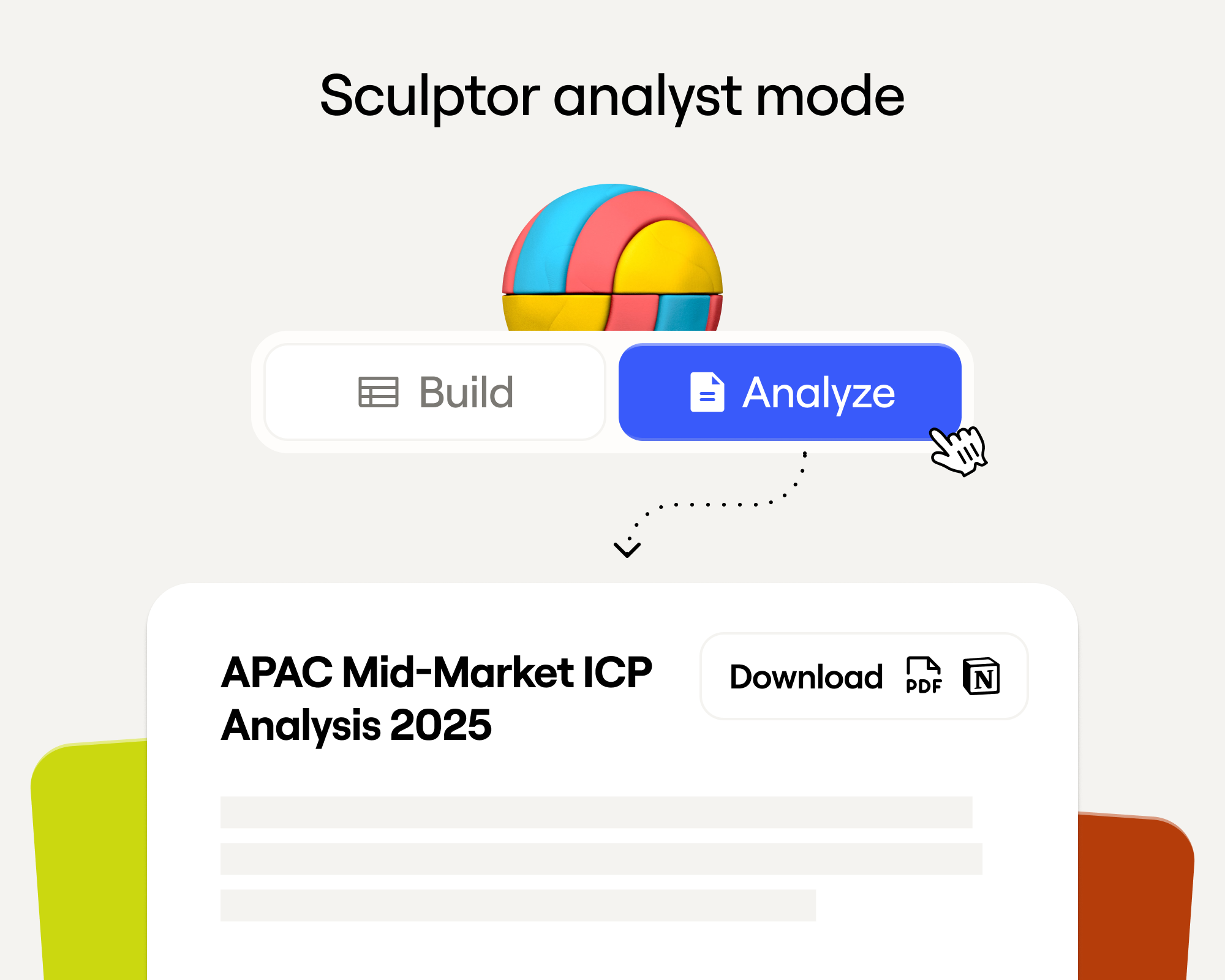
Sculptor Analyst Mode: Turning Context-Rich Data Into Actionable GTM Insights
Gather business intelligence and share documents of this analysis directly from Sculptor
In a place where girls often choose between career or marriage, she carved her own path
Javeria Shah won the Clay Cup 2025 despite being denied a US visa and competing remotely from Pakistan. Learn how she transitioned from electronics engineering into GTM engineering and built her own business.
How we designed Sculpt
Our first conference, Sculpt, is where the analog soul of Clay met the digital mind of Clay.
Clay announces second employee tender offer in nine months at a $5B valuation
A rare repeat employee liquidity event, designed to give builders flexibility as Clay accelerates
Clay is now available as a connector in Claude
Bring Clay's contact databases, enrichment providers, and AI agents into your Claude workflow.
Sellers have a new AI edge: Clay in ChatGPT
Use Clay directly in ChatGPT to find the right buyers, research people and companies, and draft personalized outbound. One conversation, powered by live GTM data.
Clay reaches $100M ARR
Clay has crossed $100M ARR, growing from $1M to $100M in two years after six years of foundational product work. The milestone reflects durable customer adoption, efficient growth, and an ecosystem of GTM builders using Clay to power their business.
Clay Certifications: Turning mastery into credentials that matter
The Clay education team has built a certification program that runs entirely on Clay and gives users credentials that actually matter
Mobile Phone Verification Methodology
Clay has partnered with The Kiln to setup a series of large-scale data test across mobile phone, work email, personal email, email verification, and more. Below, we explain the approach to these tests.
Work Email Verification Methodology
Clay has partnered with The Kiln to setup a series of large-scale data test across mobile phone, work email, personal email, email verification, and more. Below, we explain the approach to these tests.
Stop Guessing, Start Analyzing: How Sculptor Turns Your GTM Data Into Your Competitive Advantage
Analyze your GTM data with Sculptor to turn fragmented information into actionable insight.
Find and outreach local businesses with Openmart and Clay Sequencer
Get the right contacts for local businesses without stitching together multiple tools or wasting valuable time on setup instead of selling.
Announcing Web Intent
Use Website Intent in Clay to see which companies visit your site, track engagement, and trigger personalized GTM plays. Turn website traffic into real buyer intent data.
How Clay Uses Clay: Conversational Data
How we use Clay to mine millions of pages of call transcripts to generate revenue, and how you can use it too.
Sculpting GTM’s future with six major launches
Today at Sculpt, we're launching six major features that will help teams turn any growth idea into reality faster.
Introducing Claygent Navigator
A new Claygent model that can use a browser to take actions and extract information from webpages.
Announcing the Clay Partner Program
The Clay Partner Program is to a partner, what a toolbox is to an artist. It keeps essential resources within reach and grows more sophisticated as your expertise develops. We've designed everything around one simple principle: helping you grow your business as Clay grows.
Introducing GPT-5 in Claygent: sharper research, stronger formulas, better outbound
GPT-5 is now a model option across Clay, bringing the best research and conversational writing we've ever shipped to your GTM workflows.
Clay Series C announcement. The GTM engineering era begins now
We raised a $100M Series C at a $3.1B valuation to power GTM engineering!
Claygent surpasses 1 billion runs
The world's most loved AI research agent in GTM has passes a huge milestone at 1 billion runs.
Announcing Sculpt: Clay’s first annual user conference
Join us for Sculpt, Clay’s first annual user conference on Sept 17 in San Francisco where GTM leaders build AI workflows, share creative tactics, and get early access to new features.
Announcing custom signals at Clay
Clay's new custom signals platform helps sales teams track unique data changes that indicate buying opportunities. Turn any data point into a sales signal, enrich with context, and automate personalized outreach to find GTM alpha your competitors miss.
Clay announces employee tender offer led by Sequoia at $1.5B valuation
Clay allows employees to sell vested shares for immediate liquidity through a $20M tender offer at a $1.5B valuation. With 10x revenue growth in 2022-2023 and serving 8,000+ customers including OpenAI and Hubspot, Clay continues to change how businesses approach go-to-market strategies with their AI agent Claygent.
Create personalized presentations at scale with Clay and Google Slides
Automate personalized sales decks with Clay’s Google Slides integration. Instantly generate tailored presentations for leads, customers, QBRs, and internal updates. Use one template to create hundreds of presentations at scale.
Turn Gong conversations into automated GTM workflows
Clay now integrates with Gong—turn messy call transcripts into powerful automations in Salesforce, HubSpot, Notion, Slack, Google Sheets, and 100+ other integrations.

Product
Use Cases
Solutions
Resources
Company
Pricing
Features





Additional
How Clay uses Clay
LinkedIn + Meta Ads on Autopilot









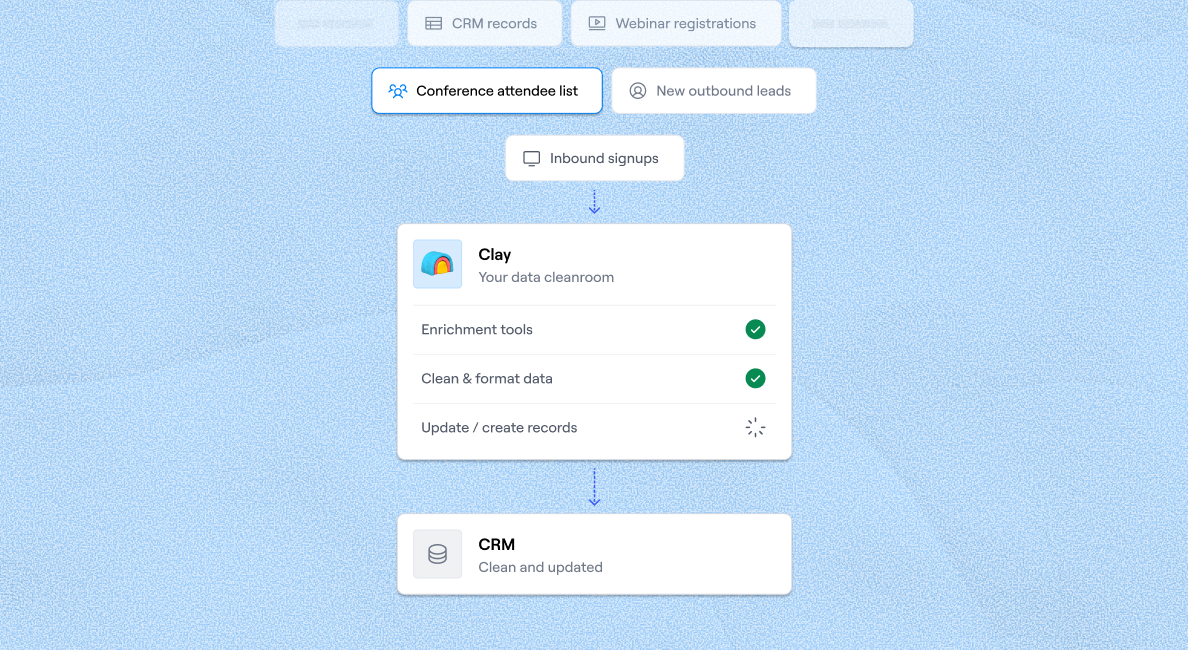
CRM enrichment
Keep your CRM clean with the highest quality data
BY TEAM



BY STAGE


BY CUSTOMERS


Rippling
Link long form description will go in this slot here.

Oyster
Link long form description will go in this slot here.

Exit Five
Link long form description will go in this slot here.

Intercom
Link long form description will go in this slot here.

Merge
Link long form description will go in this slot here.
Intercom
Grew their outbound-sourced pipeline by +140%

START GROWING




DISCOVER
Community
PARTNER WITH US
Clay Commnity
In Nigeria, she built a life where money wouldn’t decide

OUR COMPANY



GET IN TOUCH


SOCIALS



Article – NY Times
Clay allows employees to sell shares at a $5b valuation.

Automated Web Scraping: Tips, Tools, and How to Get Started

Solid data is an invaluable business asset, so it's no surprise that there's an entire industry built around its collection. You can find countless companies offering large databases you can use to tap into your addressable market and fill your pipeline with qualified leads. Such databases often come with hefty investments, though, so you might resort to web scraping as an alternative.
Unfortunately, you'll likely run into a considerable issue. Web scraping can be laborious and time-consuming, causing you to waste resources.
The good news is that you can take various steps to create an automated web scraping workflow. In this guide, we share some of the most effective tips based on our own extensive experience, as well as the best practices used by industry leaders in our network.
TL;DR
- Automating web scraping with Python requires handling pagination, proxy rotation, CAPTCHA solving, retry mechanisms, and scheduled runs — each step demands real coding skill.
- No-code and commercial web scraping tools remove the technical barrier, letting non-developers collect and organize data without building a scraper from scratch.
- Clay offers three built-in automated web scraping methods: Claygent (AI-powered), a Chrome extension, and pre-built integrations and templates.
- For lead generation, Clay's waterfall enrichment across 150+ data providers can replace scraping entirely, pulling emails, phone numbers, and company details automatically.
How to Automate Web Scraping Using Python
Python is a common choice when it comes to data scraping, so we'll start by focusing on this technique. If you have the necessary coding background, you can build a Python scraper by installing specific libraries like AutoScraper and defining the relevant parameters.
Still, this may not be enough to create a fully automated scraper. For a hands-off workflow, you'll also want to check the following boxes:
Pagination Handling
Pagination is the process of splitting content into more manageable segments to ensure a better visual appeal and clarity. You've almost certainly encountered it while browsing the web. Each time you saw numbered pages or the "show more" button, you ran into pagination.
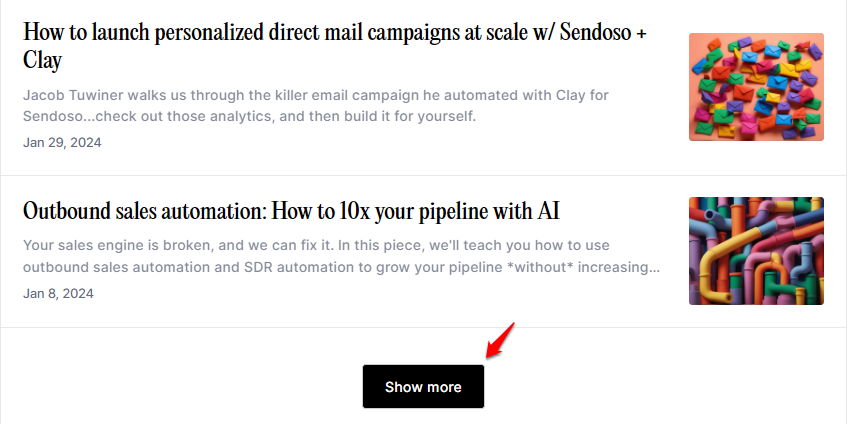
Pagination can be a significant scraping challenge because it requires manually navigating different pages to scrape their contents individually. Doing so wastes a ton of time, so you need to automate the process.
The specific automation steps will largely depend on the type of pagination. Some of the most popular forms include the following:
After you've figured out the pagination type, you can adapt your scraper accordingly. For example, if the website uses numeric and/or arrow-based pagination, you'll inspect the buttons and instruct the scraper to fetch links from them and visit them to keep scraping.
Note that this is a simplified example, and the actual steps involve considerable coding skills. Still, investing time in pagination handling can overcome a massive limitation, so it's worth the effort.
User Agent and Proxy Rotation
While web scraping is technically legal, many webmasters frown upon it. That's why they implement anti-scraping measures, which recognize automated actions and block those who try to perform them.
To overcome this issue, you can rotate user agents and proxies. Before we dive into the specifics, you can check the following table for definitions of both terms:
By rotating user agents and proxies, you can evade scraping counter-measures. Here's how this happens:
You can use the Tor browser to rotate proxies, though a Python Tor client like Torpy should also do the trick. As for user agent rotation, you can set it up manually by making a list of different user agents and then randomizing it so that a different one is used each time you start the scraping process.
CAPTCHA Solving
We've all solved a CAPTCHA or two while browsing the web, so they need no introduction. As frustrating as they might be, they're quite useful for distinguishing between human users and bots, which helps them ward off malicious traffic.
Sadly, this also means they can prevent automated scraping. If your scraper can't get past a page's CAPTCHA, you're out of luck because you can't extract data from it.
The best way around this is to use captcha-solving services like 2Captcha or Anti-Captcha. Such services offer APIs you can use to integrate them with your scraper, letting you sit back and relax as the tool automatically passes the necessary checks.
The downside here is that CAPTCHA solvers typically come at a price. This makes sense because they involve advanced technologies like OCR, but not everyone might have room in their budget to invest in an automated solver.
Auto Retry Mechanisms
When your scraper sends a request to a website and it doesn't succeed, you'll see a 4xx or 5xx status code. Some of the most common codes are shown in the following table:
To ensure your scraper doesn't give up when it gets one of these status codes, you need to use a so-called retry wrapper. You can either implement a pre-built wrapper or write a custom one from scratch.
Either way, you'll need to configure two important parameters:
These parameters can vary greatly depending on the specific status codes, so there's no one-size-fits-all solution.
Scheduled Scraping
There's a high chance you'll want to scrape a website more than once because doing so ensures you always have up-to-date information. While you can run multiple scrapes manually, a much better alternative is to schedule scraping according to your preferred cadence.
To do this, you'll need to set up so-called cron jobs, which will allow your script to run without your direct involvement. You can do this by using a package like Crontab, after which you can write the code that will let you schedule specific scraping tasks.
The Downsides of Automating Web Scraping With Python
As you can see, it's more than possible to avoid manual scraping by creating a comprehensive Python scraper that does the heavy lifting for you. The problem here is that it can take a lot of time and work before you reach the automation point.
Each of the above steps is highly technical and complex, so you may not be able to do it all independently unless you have extensive experience with Python.
You can pay a developer to build a scraper for you, but you'll still need to learn how to use it (or train your team to scrape the web with it). The learning curve may not be worth it, especially when there's a much more convenient alternative: using a commercial web scraping tool.
How a No-Code Automated Web Scraper Improves Your Data Collection
Many marketing and sales pros lack a coding background or don't want to bother with creating a web scraper from scratch. If you're among them, you can leverage a dedicated tool that makes the scraping process fast and simple.
Some of the main advantages of using such a tool include the following:
Now, this doesn't mean any web scraper will do the trick. There are various tools that only automate some aspects of web scraping while still requiring quite a bit of human input. That's why you should research different options carefully before making any commitments.
How to Find the Right Web Scraper
When browsing web scrapers, you can zero in on the best platform by focusing on the following criteria, outlined in the table below:
If you need a platform that checks all the necessary boxes and gives you countless data points without huge investments, Clay can be an excellent choice. 🌈
Automate Web Scraping With Clay
Clay is a comprehensive data enrichment and sales automation platform that offers three convenient ways to scrape the web:
Claygent
AI web scraping is among the latest data collection trends, and Claygent makes it a breeze. It's an AI assistant and web scraper that lets you scour any corner of the web through simple prompts and questions.
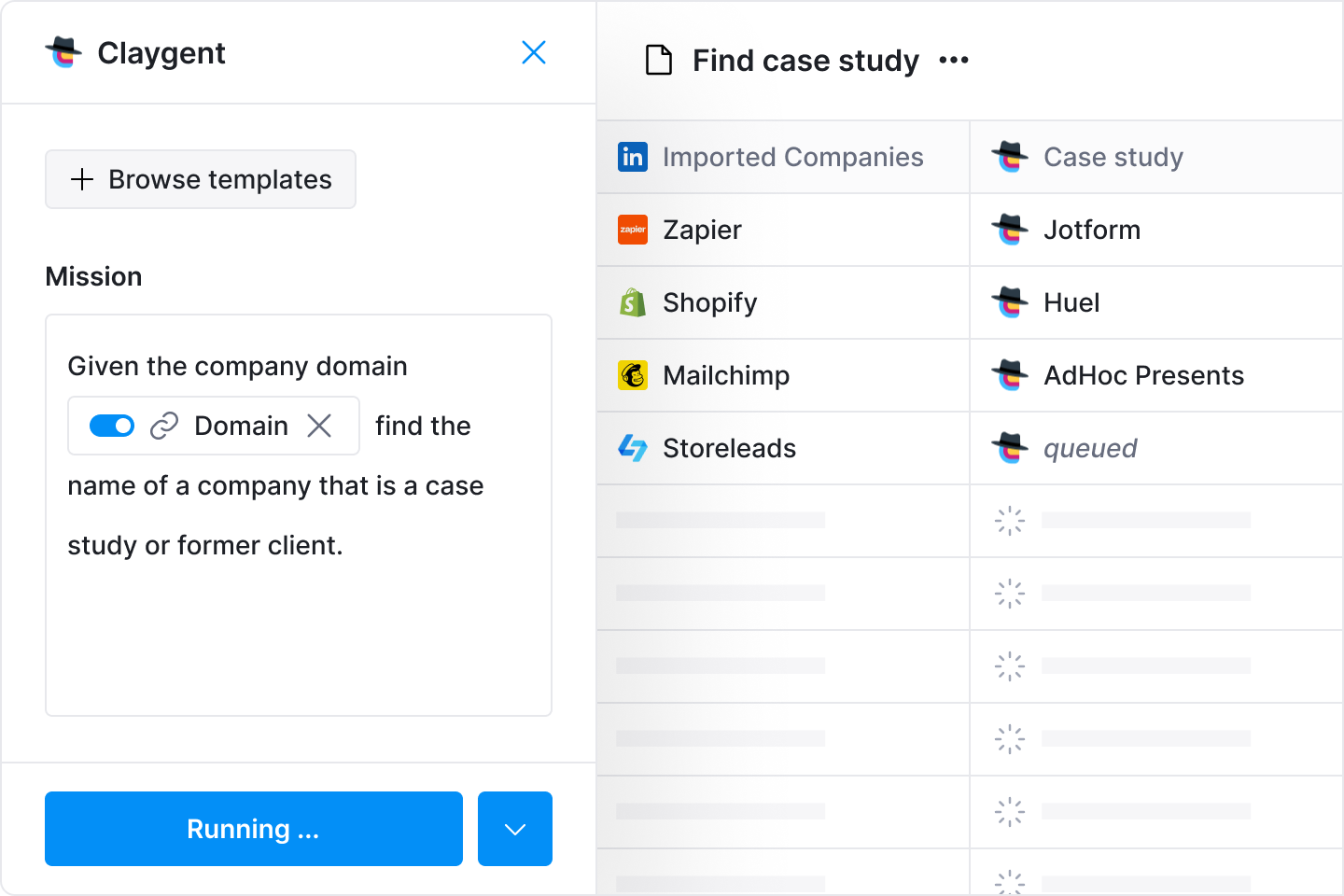
Claygent works similarly to ChatGPT. Ask it to fetch the information you need, and you'll have your data in seconds. You can also tell Claygent to perform specific actions like summarizing research, and it'll provide well-structured data without the need for manual web scraping.
Chrome Extension
If you prefer a more traditional yet streamlined approach to web scraping, Clay's Chrome extension is up to the task. You can use it to scrape any website you're visiting and automatically add relevant data to your Clay table to avoid manual processing and exports.
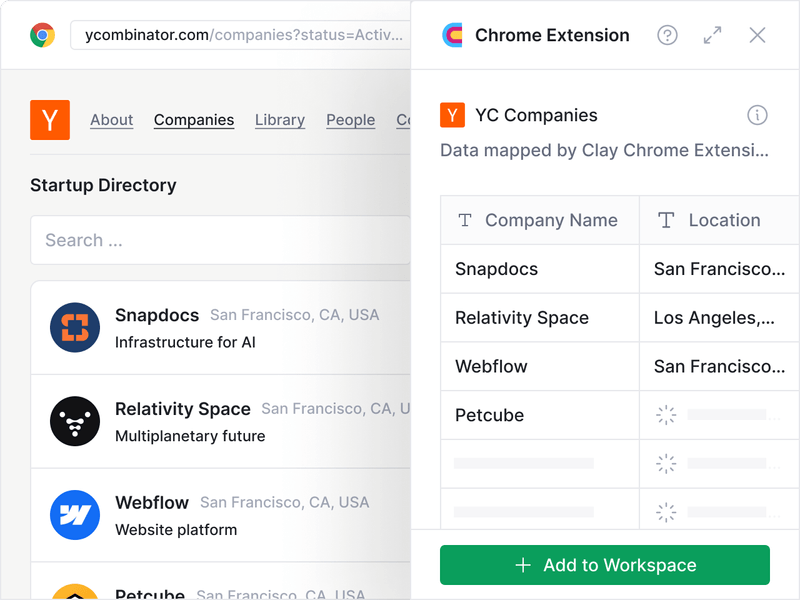
You can scrape data effortlessly by using pre-defined recipes and Clay's automatic list detection. If you want more customization, there's also an option to create new recipes in only a few clicks. All you need to do is map the website and instruct the extension on the data you need, and you're all set. No coding is required, so you can use the extension regardless of your background or prior knowledge.
Integrations and Templates
Clay offers numerous web scraping integrations that make it easy to get data from virtually any page. The following table shows some of the most commonly used ones:
If you want to further automate web scraping and avoid the setup process, Clay offers numerous templates that give you a head start. You'll get a pre-build Clay table with various actions, from scraping Google Maps to enriching inbound leads.
Build Abundant Lead Lists In Minutes
If your main goal is to generate and enrich leads, Clay lets you avoid the scraping process altogether. It provides access to 150+ data providers, which you can browse without even leaving the platform. Here's how it works:
If you want to see Clay's waterfall enrichment in action, check out this video:
Still don't have any leads or data? Clay can give you a significant jumpstart. You can use the Find People enrichment within Clay, and your lead list will be automatically enriched with the data points you ask for.
When you've gathered the data you need, you can export it to your CRM or as a CSV file. Clay integrates with 100+ platforms, so it will fit your current workflow seamlessly. Alternatively, you can first leverage the platform's AI email builder to draft personalized emails in seconds. You can then send your emails to a sequencer and start your outreach campaign.
Make Your Campaigns Effective and Cost-Efficient
If you want to see the above features in action, you can use Clay's free plan to test them first-hand. The free plan offers 100 monthly data credits and doesn't have a time limit, so it's great for getting started with outbound campaigns.
To unlock more data credits and advanced features, you can choose between four plans shown in the following table:
Clay's web scraping, enrichment, and email writing capabilities trim the fat from your workflow, letting one SDR complete the work of several people.
Frequently Asked Questions
What's the difference between automated web scraping with Python and using a no-code tool?
Python scraping gives you more flexibility and control, but it requires handling pagination, proxy rotation, CAPTCHA solving, retry logic, and scheduling yourself. No-code tools handle most of that automatically, making them a faster option for teams without a dedicated developer.
Do I need to know how to code to use Clay for web scraping?
No. Clay's Chrome extension and Claygent both work without any coding. You can scrape websites, map data fields, and add results to a Clay table using pre-defined recipes or simple prompts.
How does proxy rotation help with automated web scraping?
Many websites block IP addresses that send too many automated requests. Proxy rotation cycles through different IP addresses so your scraper can keep running even if one address gets blocked. You can set this up in Python using tools like the Tor browser or the Torpy client.
Can I schedule automated web scraping runs without writing code?
In Python, you'd use cron jobs (via a package like Crontab) to schedule recurring scrapes. Clay's Growth plan and above support scheduled recurring enrichment runs natively, so you can keep your data fresh without writing any scheduling logic yourself.
Create a Free Clay Account
You can get started with Clay and uplevel your outbound strategy in only three steps:
To learn more about the platform's capabilities, visit Clay University and join the Slack community. For regular updates and outreach tips, you can sign up for Clay's newsletter. 💌
Solid data is an invaluable business asset, so it's no surprise that there's an entire industry built around its collection. You can find countless companies offering large databases you can use to tap into your addressable market and fill your pipeline with qualified leads. Such databases often come with hefty investments, though, so you might resort to web scraping as an alternative.
Unfortunately, you'll likely run into a considerable issue. Web scraping can be laborious and time-consuming, causing you to waste resources.
The good news is that you can take various steps to create an automated web scraping workflow. In this guide, we share some of the most effective tips based on our own extensive experience, as well as the best practices used by industry leaders in our network.
TL;DR
- Automating web scraping with Python requires handling pagination, proxy rotation, CAPTCHA solving, retry mechanisms, and scheduled runs — each step demands real coding skill.
- No-code and commercial web scraping tools remove the technical barrier, letting non-developers collect and organize data without building a scraper from scratch.
- Clay offers three built-in automated web scraping methods: Claygent (AI-powered), a Chrome extension, and pre-built integrations and templates.
- For lead generation, Clay's waterfall enrichment across 150+ data providers can replace scraping entirely, pulling emails, phone numbers, and company details automatically.
How to Automate Web Scraping Using Python
Python is a common choice when it comes to data scraping, so we'll start by focusing on this technique. If you have the necessary coding background, you can build a Python scraper by installing specific libraries like AutoScraper and defining the relevant parameters.
Still, this may not be enough to create a fully automated scraper. For a hands-off workflow, you'll also want to check the following boxes:
Pagination Handling
Pagination is the process of splitting content into more manageable segments to ensure a better visual appeal and clarity. You've almost certainly encountered it while browsing the web. Each time you saw numbered pages or the "show more" button, you ran into pagination.
Pagination can be a significant scraping challenge because it requires manually navigating different pages to scrape their contents individually. Doing so wastes a ton of time, so you need to automate the process.
The specific automation steps will largely depend on the type of pagination. Some of the most popular forms include the following:
After you've figured out the pagination type, you can adapt your scraper accordingly. For example, if the website uses numeric and/or arrow-based pagination, you'll inspect the buttons and instruct the scraper to fetch links from them and visit them to keep scraping.
Note that this is a simplified example, and the actual steps involve considerable coding skills. Still, investing time in pagination handling can overcome a massive limitation, so it's worth the effort.
User Agent and Proxy Rotation
While web scraping is technically legal, many webmasters frown upon it. That's why they implement anti-scraping measures, which recognize automated actions and block those who try to perform them.
To overcome this issue, you can rotate user agents and proxies. Before we dive into the specifics, you can check the following table for definitions of both terms:
By rotating user agents and proxies, you can evade scraping counter-measures. Here's how this happens:
You can use the Tor browser to rotate proxies, though a Python Tor client like Torpy should also do the trick. As for user agent rotation, you can set it up manually by making a list of different user agents and then randomizing it so that a different one is used each time you start the scraping process.
CAPTCHA Solving
We've all solved a CAPTCHA or two while browsing the web, so they need no introduction. As frustrating as they might be, they're quite useful for distinguishing between human users and bots, which helps them ward off malicious traffic.
Sadly, this also means they can prevent automated scraping. If your scraper can't get past a page's CAPTCHA, you're out of luck because you can't extract data from it.
The best way around this is to use captcha-solving services like 2Captcha or Anti-Captcha. Such services offer APIs you can use to integrate them with your scraper, letting you sit back and relax as the tool automatically passes the necessary checks.
The downside here is that CAPTCHA solvers typically come at a price. This makes sense because they involve advanced technologies like OCR, but not everyone might have room in their budget to invest in an automated solver.
Auto Retry Mechanisms
When your scraper sends a request to a website and it doesn't succeed, you'll see a 4xx or 5xx status code. Some of the most common codes are shown in the following table:
To ensure your scraper doesn't give up when it gets one of these status codes, you need to use a so-called retry wrapper. You can either implement a pre-built wrapper or write a custom one from scratch.
Either way, you'll need to configure two important parameters:
These parameters can vary greatly depending on the specific status codes, so there's no one-size-fits-all solution.
Scheduled Scraping
There's a high chance you'll want to scrape a website more than once because doing so ensures you always have up-to-date information. While you can run multiple scrapes manually, a much better alternative is to schedule scraping according to your preferred cadence.
To do this, you'll need to set up so-called cron jobs, which will allow your script to run without your direct involvement. You can do this by using a package like Crontab, after which you can write the code that will let you schedule specific scraping tasks.
The Downsides of Automating Web Scraping With Python
As you can see, it's more than possible to avoid manual scraping by creating a comprehensive Python scraper that does the heavy lifting for you. The problem here is that it can take a lot of time and work before you reach the automation point.
Each of the above steps is highly technical and complex, so you may not be able to do it all independently unless you have extensive experience with Python.
You can pay a developer to build a scraper for you, but you'll still need to learn how to use it (or train your team to scrape the web with it). The learning curve may not be worth it, especially when there's a much more convenient alternative: using a commercial web scraping tool.
How a No-Code Automated Web Scraper Improves Your Data Collection
Many marketing and sales pros lack a coding background or don't want to bother with creating a web scraper from scratch. If you're among them, you can leverage a dedicated tool that makes the scraping process fast and simple.
Some of the main advantages of using such a tool include the following:
Now, this doesn't mean any web scraper will do the trick. There are various tools that only automate some aspects of web scraping while still requiring quite a bit of human input. That's why you should research different options carefully before making any commitments.
How to Find the Right Web Scraper
When browsing web scrapers, you can zero in on the best platform by focusing on the following criteria, outlined in the table below:
If you need a platform that checks all the necessary boxes and gives you countless data points without huge investments, Clay can be an excellent choice. 🌈
Automate Web Scraping With Clay
Clay is a comprehensive data enrichment and sales automation platform that offers three convenient ways to scrape the web:
Claygent
AI web scraping is among the latest data collection trends, and Claygent makes it a breeze. It's an AI assistant and web scraper that lets you scour any corner of the web through simple prompts and questions.
Claygent works similarly to ChatGPT. Ask it to fetch the information you need, and you'll have your data in seconds. You can also tell Claygent to perform specific actions like summarizing research, and it'll provide well-structured data without the need for manual web scraping.
Chrome Extension
If you prefer a more traditional yet streamlined approach to web scraping, Clay's Chrome extension is up to the task. You can use it to scrape any website you're visiting and automatically add relevant data to your Clay table to avoid manual processing and exports.
You can scrape data effortlessly by using pre-defined recipes and Clay's automatic list detection. If you want more customization, there's also an option to create new recipes in only a few clicks. All you need to do is map the website and instruct the extension on the data you need, and you're all set. No coding is required, so you can use the extension regardless of your background or prior knowledge.
Integrations and Templates
Clay offers numerous web scraping integrations that make it easy to get data from virtually any page. The following table shows some of the most commonly used ones:
If you want to further automate web scraping and avoid the setup process, Clay offers numerous templates that give you a head start. You'll get a pre-build Clay table with various actions, from scraping Google Maps to enriching inbound leads.
Build Abundant Lead Lists In Minutes
If your main goal is to generate and enrich leads, Clay lets you avoid the scraping process altogether. It provides access to 150+ data providers, which you can browse without even leaving the platform. Here's how it works:
If you want to see Clay's waterfall enrichment in action, check out this video:
Still don't have any leads or data? Clay can give you a significant jumpstart. You can use the Find People enrichment within Clay, and your lead list will be automatically enriched with the data points you ask for.
When you've gathered the data you need, you can export it to your CRM or as a CSV file. Clay integrates with 100+ platforms, so it will fit your current workflow seamlessly. Alternatively, you can first leverage the platform's AI email builder to draft personalized emails in seconds. You can then send your emails to a sequencer and start your outreach campaign.
Make Your Campaigns Effective and Cost-Efficient
If you want to see the above features in action, you can use Clay's free plan to test them first-hand. The free plan offers 100 monthly data credits and doesn't have a time limit, so it's great for getting started with outbound campaigns.
To unlock more data credits and advanced features, you can choose between four plans shown in the following table:
Clay's web scraping, enrichment, and email writing capabilities trim the fat from your workflow, letting one SDR complete the work of several people.
Frequently Asked Questions
What's the difference between automated web scraping with Python and using a no-code tool?
Python scraping gives you more flexibility and control, but it requires handling pagination, proxy rotation, CAPTCHA solving, retry logic, and scheduling yourself. No-code tools handle most of that automatically, making them a faster option for teams without a dedicated developer.
Do I need to know how to code to use Clay for web scraping?
No. Clay's Chrome extension and Claygent both work without any coding. You can scrape websites, map data fields, and add results to a Clay table using pre-defined recipes or simple prompts.
How does proxy rotation help with automated web scraping?
Many websites block IP addresses that send too many automated requests. Proxy rotation cycles through different IP addresses so your scraper can keep running even if one address gets blocked. You can set this up in Python using tools like the Tor browser or the Torpy client.
Can I schedule automated web scraping runs without writing code?
In Python, you'd use cron jobs (via a package like Crontab) to schedule recurring scrapes. Clay's Growth plan and above support scheduled recurring enrichment runs natively, so you can keep your data fresh without writing any scheduling logic yourself.
Create a Free Clay Account
You can get started with Clay and uplevel your outbound strategy in only three steps:
To learn more about the platform's capabilities, visit Clay University and join the Slack community. For regular updates and outreach tips, you can sign up for Clay's newsletter. 💌
More Articles
Claygent Builder: The easiest way to build, test, and deploy GTM Agents

How Clay Uses Clay Ads: From $250 to $25 CPL

HG Insights Corporate Hierarchy: GTM Precision in Clay

Sales GTM Engineering: How Clay Built the Role From Scratch

How to Automate Inbound Lead Outreach: The Clay Playbook
demandDrive Joins Clay’s Partner Ecosystem as an Official Clay Studio Partner

B2B Sales Prospecting: 15 Strategies to Drive More Conversions

AI Sales Assistants: 11 Ways to Accelerate Your Outbound

The Three Laws of GTM: How to Win in the AI Era

Best Work Email Finders by Segment: SMB vs. Enterprise

How Clay Converts Trial Users Into Customers With Automated Outreach

Best Mobile Phone Data Providers for B2B Sales Teams

How to Build a Complete AI Outbound Sales Funnel

How to Get More Customers Using Outbound Sales: A Complete Guide

How to Automate 6 Cold Email Campaigns in One Clay Workflow
How Clay Identifies Tier 1 Accounts: A Three-Score System

Lead Scoring in Clay: A Step-by-Step Formula Guide

How to Validate Cold Outbound Offers and Find Message-Market Fit

Troubleshooting Outbound Sales and Prospecting: A Comprehensive Guide
Bulk Enrichment: Enrich Millions of CRM Records in Clay

Clay Templates: Automate, Customize, and Replicate Any GTM Workflow

How to Optimize Your Credit Usage in Clay

AI for sales prospecting

The Reverse Demo: How Clay Replaced Traditional B2B Sales Demos

Data Waterfalls: How to Maximize Contact Coverage with Clay
How Clay Runs ABM Campaigns: A Step-by-Step Playbook

How We Built Clay's GTM Engineering Function

Best Personal Email Finder Tools: Tested and Ranked

How to Use OpenAI to Write Cold Emails from Scratch with Clay

How to Run a Personalized Demo Play at Scale with Clay

Automated Slide Deck Creation: How Clay Builds QBRs from Your Data

HG Insights + Clay: B2B Technographic and Firmographic Data

B2B Cold Email Deliverability: 21 Best Practices

Basics of Google Search Operators: A Practical Guide

AI Lead Generation: The Complete B2B Guide
Clay MCP: Ops-built workflows, consumable by reps

How to Manage and Enrich Inbound Leads Automatically

GTM Alpha: How Winning Teams Build a Competitive Edge

Why Good CRM Data Matters and How Clay Helps

How to Use Formulas in Clay: AI Generator and Manual Entry

GTM Engineering: What It Is, How It Works, and How to Hire

Formulas in Clay: A Beginner's Intro for Non-Engineers
How Clay Uses Clay for SEO and AEO: 3 Systems That Scale

Turn Web Visitors into Leads: A Warm Outbound Play for B2B Sales

How to Use Web Scraping to Enrich Your Data with Clay

How to Create a Sales Prospect List in Minutes

Best B2B Email List Providers: Tested and Ranked (2026)

Outbound Sales Automation: How to 10x Pipeline Without More SDRs

The Wake the Dead Play: Reactivate Closed-Lost Deals with Clay

Three Tips to Guarantee Email Deliverability for Cold Outbound
How Clay Uses Clay for Customer Support: 3 Real Workflows

B2B Cold Email Copywriting: The Complete Guide

Introducing Clay Functions
Clay and Apollo Integration: Enrichment, Sequencing, and More

The Many Lives of Spreadsheets: A History and What Comes Next

AI recruiting strategies
How to Hire a GTM Engineer: The Complete Guide

Inside Clay's GTM Engineering Lab: Plays, Principles, and Automation

How to Build the Most Targeted Account Lists Possible

Personalized Direct Mail at Scale: The Gifting Play with Clay

How to Set Up Your Full Inbound Sales Process on Clay
AI-Enabled GTM for Private Equity: The Value Creation Playbook

Do More With Your Data: Clay's Post-Data-Provider Approach

Google Maps Lead Generation for Niche Local Businesses

24 AI Email Personalization Examples for Cold Outreach (With Prompts)

How to Ace Your Follow-Ups: A Practical Sales Guide

How to Prioritize Your Waitlist with Lead Enrichment

B2B Cold Email Templates: Frameworks That Get Replies

Audiences: now in Enterprise beta
The thinking behind our new pricing: our internal memo
Introducing Clay’s new pricing
Clay partners with Lusha and Beauhurst to expand European data coverage
Source your precise TAM from lookalikes you can trust with Ocean.io and Clay
Clay doubles down on supporting European GTM teams
In Nigeria, she built a life where money wouldn’t decide
Sculptor Analyst Mode: Turning Context-Rich Data Into Actionable GTM Insights

In a place where girls often choose between career or marriage, she carved her own path

How we designed Sculpt
Clay announces second employee tender offer in nine months at a $5B valuation
Clay is now available as a connector in Claude
Sellers have a new AI edge: Clay in ChatGPT

Clay reaches $100M ARR

Clay Certifications: Turning mastery into credentials that matter
Mobile Phone Verification Methodology
Work Email Verification Methodology
Stop Guessing, Start Analyzing: How Sculptor Turns Your GTM Data Into Your Competitive Advantage
Find and outreach local businesses with Openmart and Clay Sequencer
Announcing Web Intent
How Clay Uses Clay: Conversational Data

Sculpting GTM’s future with six major launches

Introducing Claygent Navigator

Announcing the Clay Partner Program

Introducing GPT-5 in Claygent: sharper research, stronger formulas, better outbound
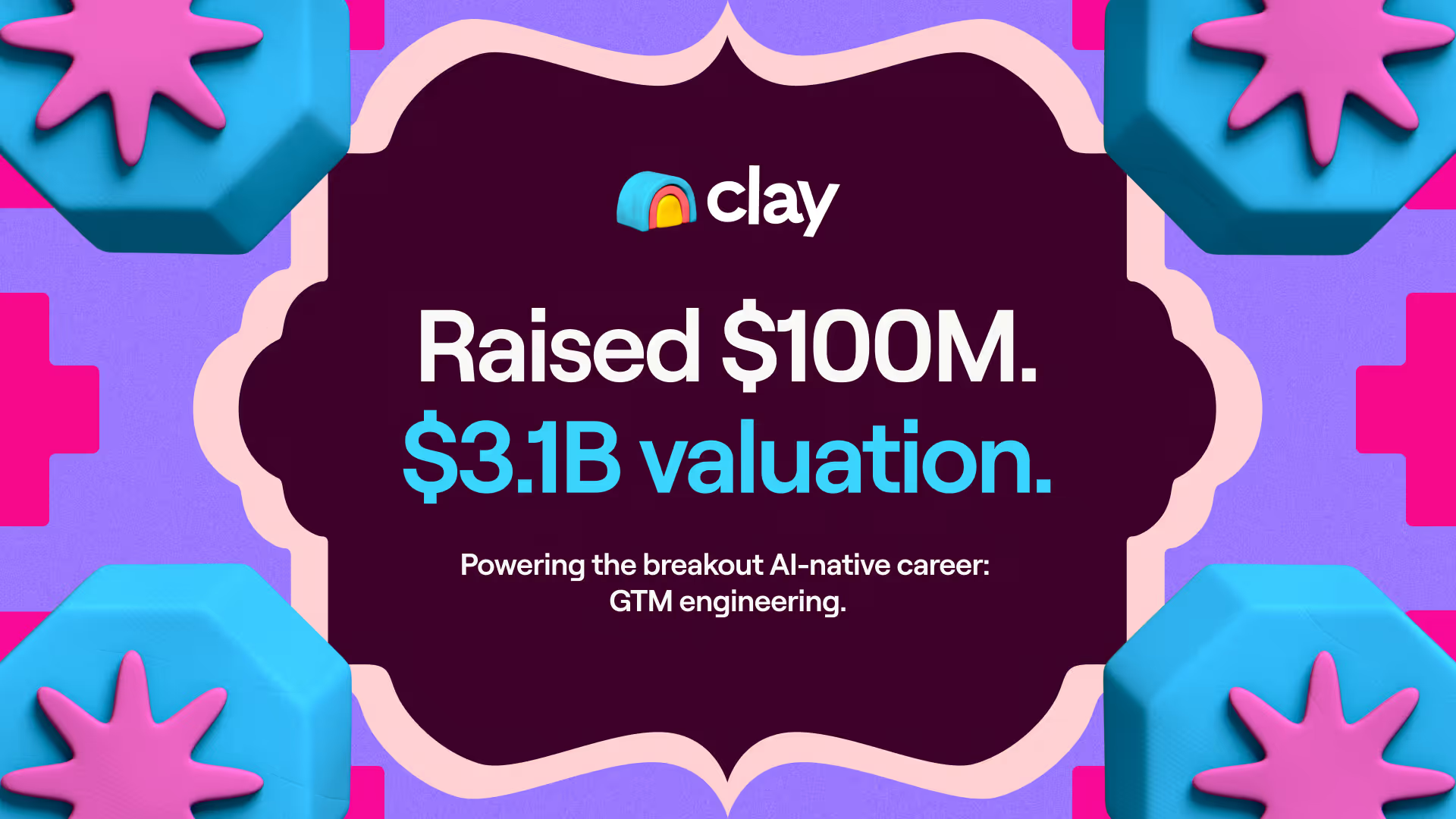
Clay Series C announcement. The GTM engineering era begins now

Claygent surpasses 1 billion runs

Announcing Sculpt: Clay’s first annual user conference
Announcing custom signals at Clay

Clay announces employee tender offer led by Sequoia at $1.5B valuation
Create personalized presentations at scale with Clay and Google Slides