NVIDIA's AI Engineers: Agent Inference at Planetary Scale and "Speed of Light" — Nader Khalil (Brev), Kyle Kranen (Dynamo)
В выпуске подкаста Latent Space гости из NVIDIA — Nader Khalil (Brev) и Kyle Kranen (Dynamo) — рассказывают о том, как NVIDIA, превратившись в корпорацию стоимостью $4,4 трлн, продолжает двигаться со скоростью стартапа. Nader описывает историю поглощения Brev — инструмента для мгновенного доступа разработчиков к GPU — и культуру «SOL» (Speed of Light), введённую Jensen Huang: принцип определения теоретического предела скорости любого процесса и работы от него. Kyle объясняет архитектуру Dynamo — фреймворка инференса масштаба дата-центра, поддерживающего SGLang, TRT-LLM и vLLM, с ключевыми оптимизациями вроде disaggregation (разделения prefill и decode), динамического масштабирования через Kubernetes-компонент Grove и балансировки стоимости, задержки и качества. Обсуждаются пределы длины контекста, совместное проектирование моделей и железа (model-hardware co-design), а также безопасность агентов: принцип «два из трёх» (доступ к файлам, интернет, исполнение кода). Участники прогнозируют появление агентов, способных автономно работать более 24 часов, и подчёркивают важность CLI-интерфейсов для взаимодействия LLM с инфраструктурой.
NVIDIA's AI Engineers: Agent Inference at Planetary Scale and "Speed of Light" — Nader Khalil (Brev), Kyle Kranen (Dynamo)
ИИ-инженеры NVIDIA: агентный инференс планетарного масштаба и «скорость света» — Nader Khalil (Brev), Kyle Kranen (Dynamo)
Join Kyle, Nader, Vibhu, and swyx live at NVIDIA GTC next week!
Присоединяйтесь к Kyle, Nader, Vibhu и swyx в прямом эфире на NVIDIA GTC на следующей неделе!
Now that AIE Europe tix are ~sold out, our attention turns to Miami and World’s Fair!
Теперь, когда билеты на AIE Europe почти распроданы, наше внимание переключается на Майами и World's Fair!
The definitive AI Accelerator chip company has more than 10xed this AI Summer:
Бесспорный лидер среди производителей ИИ-ускорителей вырос более чем в 10 раз за это «ИИ-лето»:
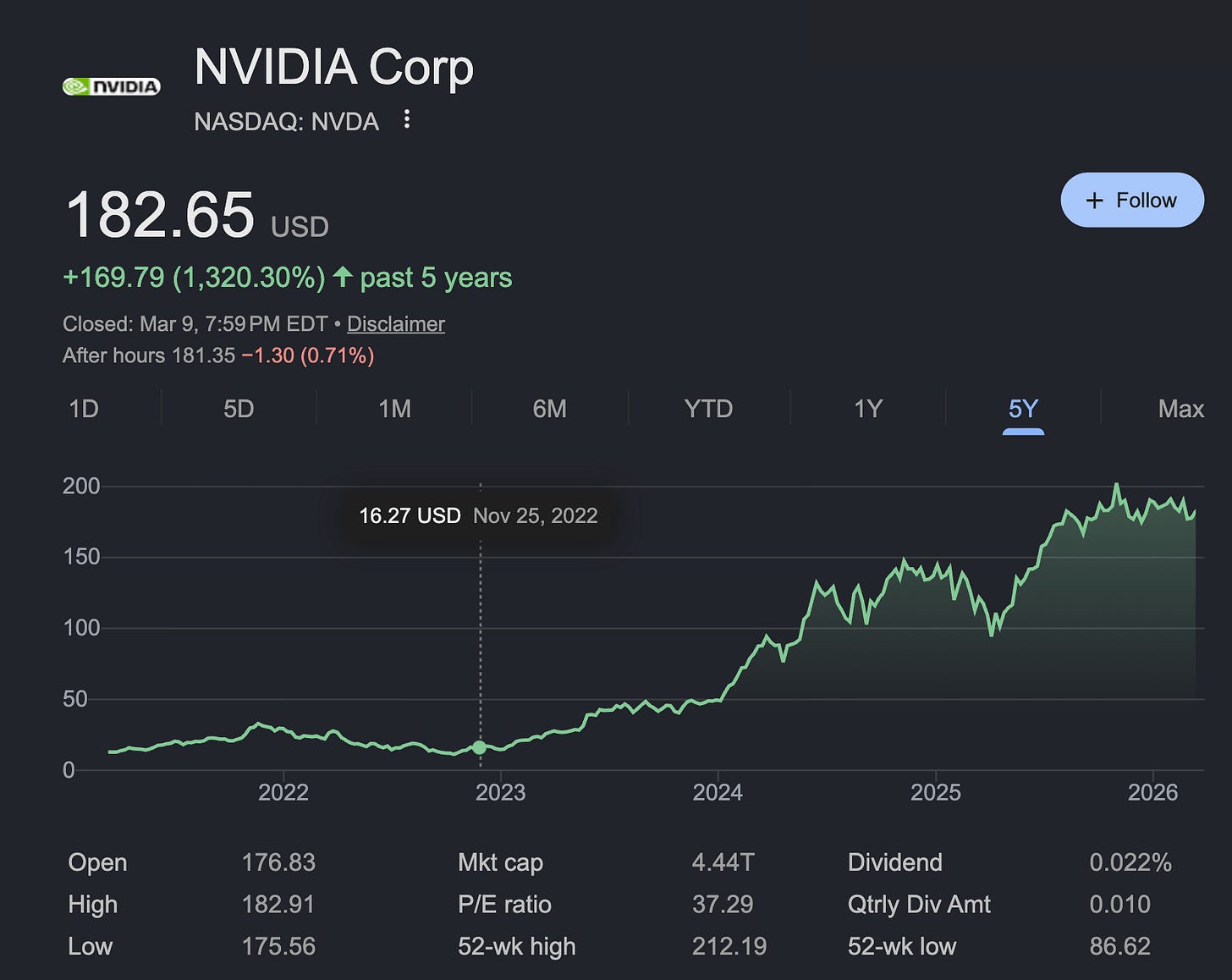
And is now a $4.4 trillion megacorp… that is somehow still moving like a startup. We are blessed to have a unique relationship with our first ever NVIDIA guests: Kyle Kranen who gave a great inference keynote at the first World’s Fair and is one of the leading architects of NVIDIA Dynamo (a Datacenter scale inference framework supporting SGLang, TRT-LLM, vLLM), and Nader Khalil, a friend of swyx from our days in Celo in The Arena, who has been drawing developers at GTC since before they were even a glimmer in the eye of NVIDIA:
И теперь это мегакорпорация стоимостью $4,4 трлн… которая каким-то образом по-прежнему движется как стартап. Нам повезло иметь уникальные отношения с нашими первыми гостями из NVIDIA: Kyle Kranen, который выступил с отличным докладом об инференсе на первом World's Fair и является одним из ведущих архитекторов NVIDIA Dynamo (фреймворк инференса масштаба дата-центра, поддерживающий SGLang, TRT-LLM, vLLM), и Nader Khalil, друг swyx со времён нашего совместного пребывания в Celo в The Arena, который привлекал разработчиков на GTC ещё до того, как NVIDIA обратила на них внимание:
Nader discusses how NVIDIA Brev has drastically reduced the barriers to entry for developers to get a top of the line GPU up and running, and Kyle explains NVIDIA Dynamo as a data center scale inference engine that optimizes serving by scaling out, leveraging techniques like prefill/decode disaggregation, scheduling, and Kubernetes-based orchestration, framed around cost, latency, and quality tradeoffs.
Nader рассказывает о том, как NVIDIA Brev радикально снизил порог входа для разработчиков, позволяя быстро запустить топовый GPU, а Kyle объясняет NVIDIA Dynamo как движок инференса масштаба дата-центра, оптимизирующий обслуживание через масштабирование наружу (scale out) с использованием таких техник, как разделение prefill/decode, планирование и оркестрация на базе Kubernetes, в рамках компромиссов между стоимостью, задержкой и качеством.
We also dive into Jensen’s “SOL” (Speed of Light) first-principles urgency concept, long-context limits and model/hardware co-design, internal model APIs (https://build.nvidia.com), and upcoming Dynamo and agent sessions at GTC.
Мы также погружаемся в концепцию «SOL» (Speed of Light) Jensen — подход к срочности, основанный на первых принципах, — обсуждаем пределы длинного контекста и совместное проектирование модели/железа, внутренние API моделей (https://build.nvidia.com), а также предстоящие сессии по Dynamo и агентам на GTC.
Full Video pod on YouTube
Полный видеоподкаст на YouTube
Timestamps
Таймкоды
00:00 Agent Security Basics
00:39 Podcast Welcome and Guests
07:19 Acquisition and DevEx Shift
13:48 SOL Culture and Dynamo Setup
27:38 Why Scale Out Wins
29:02 Scale Up Limits Explained
30:24 From Laptop to Multi Node
33:07 Cost Quality Latency Tradeoffs
38:42 Disaggregation Prefill vs Decode
41:05 Kubernetes Scaling with Grove
43:20 Context Length and Co Design
57:34 Security Meets Agents
58:01 Agent Permissions Model
59:10 Build Nvidia Inference Gateway
01:01:52 Hackathons And Autonomy Dreams
01:10:26 Local GPUs And Scaling Inference
01:15:31 Long Running Agents And SF Reflections
00:00 Основы безопасности агентов00:39 Приветствие подкаста и гости07:19 Поглощение и сдвиг в DevEx13:48 Культура SOL и введение в Dynamo27:38 Почему Scale Out побеждает29:02 Объяснение пределов Scale Up30:24 От ноутбука к мульти-ноде33:07 Компромиссы стоимости, качества и задержки38:42 Disaggregation — Prefill vs Decode41:05 Масштабирование Kubernetes с Grove43:20 Длина контекста и совместное проектирование57:34 Безопасность и агенты58:01 Модель разрешений агентов59:10 Build Nvidia Inference Gateway01:01:52 Хакатоны и мечты об автономности01:10:26 Локальные GPU и масштабирование инференса01:15:31 Долгоживущие агенты и размышления о Сан-Франциско
Transcript
Транскрипт
Agent Security Basics
Основы безопасности агентов
Nader: Agents can do three things. They can access your files, they can access the internet, and then now they can write custom code and execute it. You literally only let an agent do two of those three things. If you can access your files and you can write custom code, you don’t want internet access because that’s one to see full vulnerability, right?
Nader: Агенты могут делать три вещи. Они могут получать доступ к вашим файлам, они могут получать доступ к интернету, и теперь они могут писать собственный код и выполнять его. Вы буквально позволяете агенту делать только два из этих трёх. Если он может получить доступ к вашим файлам и может писать собственный код, вам не нужен доступ в интернет, потому что это полная уязвимость, верно?
If you have access to internet and your file system, you should know the full scope of what that agent’s capable of doing. Otherwise, now we can get injected or something that can happen. And so that’s a lot of what we’ve been thinking about is like, you know, how do we both enable this because it’s clearly the future.
Если у него есть доступ к интернету и вашей файловой системе, вы должны знать полный объём того, на что этот агент способен. Иначе в нас могут внедрить инъекцию или может произойти что-то подобное. И поэтому мы много думаем о том, как одновременно дать этому возможность развиваться, потому что это явно будущее.
But then also, you know, what, what are these enforcement points that we can start to like protect?
Но при этом, знаете, какие точки контроля мы можем начать защищать?
swyx: All right.
swyx: Хорошо.
Podcast Welcome and Guests
Приветствие подкаста и гости
swyx: Welcome to the Lean Space podcast in the Chromo studio. Welcome to all the guests here. Uh, we are back with our guest host Viu. Welcome. Good to have you back. And our friends, uh, Netter and Kyle from Nvidia. Welcome.
swyx: Добро пожаловать в подкаст Lean Space в студии Chromo. Приветствуем всех гостей. Мы вернулись с нашим приглашённым ведущим Viu. С возвращением. Рад, что ты снова с нами. И наши друзья Netter и Kyle из Nvidia. Добро пожаловать.
Kyle: Yeah, thanks for having us.
Kyle: Да, спасибо, что пригласили.
swyx: Yeah, thank you. Actually, I don’t even know your titles.
swyx: Да, спасибо. Вообще-то я даже не знаю ваших должностей.
Uh, I know you’re like architect something of Dynamo.
Я знаю, что ты вроде архитектор чего-то в Dynamo.
Kyle: Yeah. I, I’m one of the engineering leaders [00:01:00] and a architects of Dynamo.
Kyle: Да. Я один из инженерных лидеров [00:01:00] и архитекторов Dynamo.
swyx: And you’re director of something and developers, developer tech.
swyx: А ты директор чего-то там, и разработчики, разработческие технологии.
Nader: Yeah.
Nader: Да.
swyx: You’re the developers, developers, developers guy at nvidia,
swyx: Ты тот самый «developers, developers, developers»-парень в Nvidia.
Nader: open source agent marketing, brev,
Nader: Опенсорс, агентный маркетинг, Brev.
swyx: and like
swyx: И типа
Nader: Devrel tools and stuff.
Nader: Devrel-инструменты и прочее.
swyx: Yeah. Been
swyx: Да. Был
Nader: the focus.
Nader: в фокусе.
swyx: And we’re, we’re kind of recording this ahead of Nvidia, GTC, which is coming to town, uh, again, uh, or taking over town, uh, which, uh, which we’ll all be at. Um, and we’ll talk a little bit about your sessions and stuff. Yeah.
swyx: И мы как бы записываем это перед Nvidia GTC, которая приезжает в город, опять, или захватывает город, на которой мы все будем. И мы немного поговорим о ваших сессиях и всём таком. Да.
Nader: We’re super excited for it.
Nader: Мы невероятно воодушевлены.
GTC Booth Stunt Stories
Истории о стендах на GTC
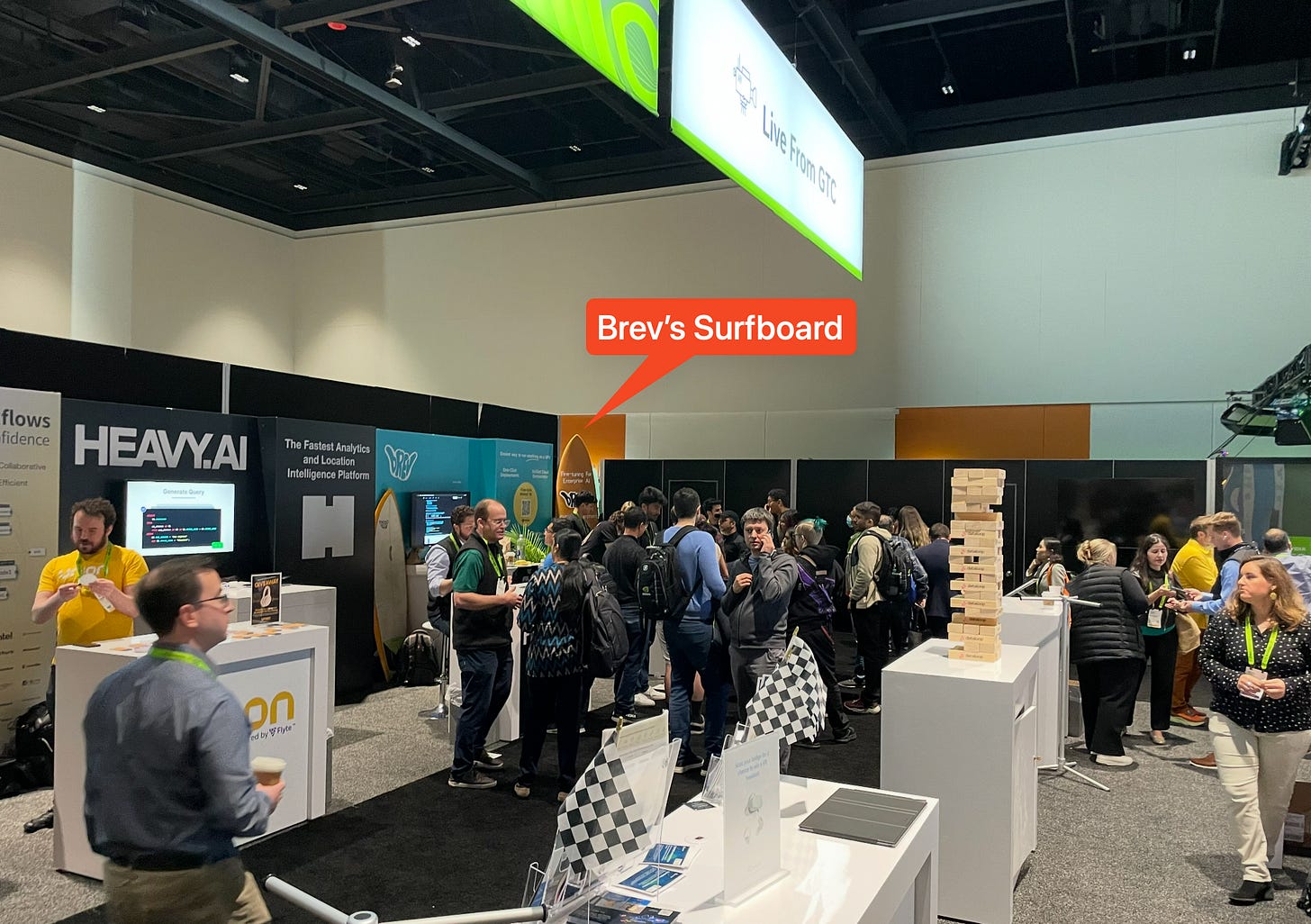
swyx: One of my favorite memories for Nader, like you always do like marketing stunts and like while you were at Rev, you like had this surfboard that you like, went down to GTC with and like, NA Nvidia apparently, like did so much that they bought you.
swyx: Одно из моих любимых воспоминаний о Nader — ты всегда устраиваешь маркетинговые трюки, и когда ты был в Brev, у тебя была эта доска для сёрфинга, с которой ты пришёл на GTC, и NVIDIA, видимо, настолько прониклась, что купила вас.
Like what, what was that like? What was that?
Расскажи, как это было? Что это было?
Nader: Yeah. Yeah, we, we, um. Our logo was a chaka. We, we, uh, we were always just kind of like trying to keep true to who we were. I think, you know, some stuff, startups, you’re like trying to pretend that you’re a bigger, more mature company than you are. And it was actually Evan Conrad from SF Compute who was just like, you guys are like previous
Nader: Да, да, мы... Наш логотип был «шака». Мы всегда старались оставаться верными себе. Знаете, некоторые стартапы пытаются притвориться более крупной и зрелой компанией, чем они есть. И на самом деле это Evan Conrad из SF Compute сказал нам: вы, ребята, как бы предыдущий
swyx: guest.
swyx: гость.
Yeah.
Да.
Nader: Amazing. Oh, really? Amazing. Yeah. He was just like, guys, you’re two dudes in the room. Why are you [00:02:00] pretending that you’re not? Uh, and so then we were like, okay, let’s make the logo a shaka. We brought surfboards to our booth to GTC and the energy was great. Yeah. Some palm trees too. They,
Nader: Потрясающе. Правда? Потрясающе. Да. Он просто сказал: ребята, вас двое в комнате. Зачем вы [00:02:00] притворяетесь, что это не так? И тогда мы решили: окей, давайте сделаем логотипом «шака». Мы принесли сёрфборды на свой стенд на GTC, и энергия была великолепная. Да. Ещё и пальмы. Они,
Kyle: they actually poked out over like the, the walls so you could, you could see the bread booth.
Kyle: они на самом деле торчали над стенками, так что стенд Brev было видно.
Oh, that’s so funny. And
О, это так смешно. И
Nader: no one else,
Nader: больше ни у кого,
Kyle: just from very far away.
Kyle: просто издалека.
Nader: Oh, so you remember it back
Nader: О, так ты помнишь это с тех
Kyle: then? Yeah I remember it pre-acquisition. I was like, oh, those guys look cool,
Kyle: пор? Да, я помню это до поглощения. Я подумал: о, эти ребята выглядят круто.
Nader: dude. That makes sense. ‘cause uh, we, so we signed up really last minute, and so we had the last booth. It was all the way in the corner. And so I was, I was worried that no one was gonna come.
Nader: Чувак. Это имеет смысл, потому что мы зарегистрировались буквально в последний момент, и у нас был последний стенд. Он был далеко в углу. И я переживал, что никто не придёт.
So that’s why we had like the palm trees. We really came in with the surfboards. We even had one of our investors bring her dog and then she was just like walking the dog around to try to like, bring energy towards our booth. Yeah.
Поэтому у нас были пальмы. Мы реально пришли с сёрфбордами. Мы даже попросили одну из наших инвесторов привести свою собаку, и она просто ходила с собакой вокруг, пытаясь привлечь народ к нашему стенду. Да.
swyx: Steph.
swyx: Steph.
Kyle: Yeah. Yeah, she’s the best,
Kyle: Да. Да, она лучшая.
swyx: you know, as a conference organizer, I love that.
swyx: Знаете, как организатор конференций, мне это нравится.
Right? Like, it’s like everyone who sponsors a conference comes, does their booth. They’re like, we are changing the future of ai or something, some generic bullshit and like, no, like actually try to stand out, make it fun, right? And people still remember it after three years.
Правда? Все, кто спонсирует конференцию, приходят, оформляют стенд. Они такие: мы меняем будущее ИИ или что-то в этом роде, какая-то дженерик-хрень, а нет — на самом деле выделяйтесь, делайте весело, верно? И люди помнят это спустя три года.
Nader: Yeah. Yeah. You know what’s so funny?
Nader: Да. Да. Знаете, что смешно?
I’ll, I’ll send, I’ll give you this clip if you wanna, if you wanna add it [00:03:00] in, but, uh, my wife was at the time fiance, she was in medical school and she came to help us. ‘cause it was like a big moment for us. And so we, we bought this cricket, it’s like a vinyl, like a vinyl, uh, printer. ‘cause like, how else are we gonna label the surfboard?
Я пришлю вам этот клип, если хотите вставить [00:03:00], но моя жена, тогда ещё невеста, училась в медицинском, и она приехала нам помочь, потому что для нас это был большой момент. Мы купили этот Cricut — это такой виниловый принтер, — потому что как ещё нам подписать сёрфборд?
So, we got a surfboard, luckily was able to purchase that on the company card. We got a cricket and it was just like fine tuning for enterprises or something like that, that we put on the. On the surfboard and it’s 1:00 AM the day before we go to GTC. She’s helping me put these like vinyl stickers on.
Итак, мы купили сёрфборд — к счастью, удалось оплатить корпоративной картой. Мы купили Cricut, и на нём было что-то вроде «файнтюнинг для предприятий» или что-то такое, что мы наклеили на сёрфборд. И вот час ночи, день перед GTC. Она помогает мне клеить эти виниловые стикеры.
And she goes, you son of, she’s like, if you pull this off, you son of a bitch. And so, uh, right. Pretty much after the acquisition, I stitched that with the mag music acquisition. I sent it to our family group chat. Oh
И она говорит: ну ты и... Типа: если ты это провернёшь, ты сукин сын. И вот, практически сразу после поглощения я склеил это с музыкой объявления о поглощении. Отправил в семейный групповой чат. О.
swyx: Yeah. No, well, she, she made a good choice there. Was that like basically the origin story for Launchable is that we, it was, and maybe we should explain what Brev is and
swyx: Да. Нет, ну, она сделала правильный выбор. Это было, по сути, историей создания Launchable — мы, это было, и, может, стоит объяснить, что такое Brev, и
Nader: Yeah.
Nader: Да.
Yeah. Uh, I mean, brev is just, it’s a developer tool that makes it really easy to get a GPU. So we connect a bunch of different GPU sources. So the basics of it is like, how quickly can we SSH you into a G, into a GPU and whenever we would talk to users, they wanted A GPU. They wanted an A 100. And if you go to like any cloud [00:04:00] provisioning page, usually it’s like three pages of forms or in the forms somewhere there’s a dropdown.
Да. Brev — это просто инструмент для разработчиков, который делает получение GPU максимально простым. Мы подключаем кучу разных источников GPU. Основная идея: как быстро мы можем дать вам SSH-доступ к GPU. И каждый раз, когда мы общались с пользователями, они хотели GPU. Они хотели A100. И если вы зайдёте на любую [00:04:00] страницу провижининга облака, обычно это три страницы форм, и где-то в формах есть выпадающий список.
And in the dropdown there’s some weird code that you know to translate to an A 100. And I remember just thinking like. Every time someone says they want an A 100, like the piece of text that they’re telling me that they want is like, stuffed away in the corner. Yeah. And so we were like, what if the biggest piece of text was what the user’s asking for?
А в выпадающем списке — какой-то странный код, который вы знаете как означающий A100. И я помню, подумал: каждый раз, когда кто-то говорит, что хочет A100, текст, который они мне говорят, запрятан где-то в углу. И мы подумали: а что, если самый крупный текст будет тем, что пользователь запрашивает?
And so when you go to Brev, it’s just big GPU chips with the type that you want with
И когда вы заходите на Brev, там просто большие чипы GPU с нужным вам типом с
swyx: beautiful animations that you worked on pre, like pre you can, like, now you can just prompt it. But back in the day. Yeah. Yeah. Those were handcraft, handcrafted artisanal code.
swyx: красивыми анимациями, над которыми ты работал до того, как можно было просто промптом сделать. Но раньше-то. Да. Да. Это были ручной работы, ремесленный код.
Nader: Yeah. I was actually really proud of that because, uh, it was an, i I made it in Figma.
Nader: Да. Я на самом деле очень гордился этим, потому что я сделал это в Figma.
Yeah. And then I found, I was like really struggling to figure out how to turn it from like Figma to react. So what it actually is, is just an SVG and I, I have all the styles and so when you change the chip, whether it’s like active or not it changes the SVG code and that somehow like renders like, looks like it’s animating, but it, we just had the transition slow, but it’s just like the, a JavaScript function to change the like underlying SVG.
Да. И потом я долго пытался понять, как перевести это из Figma в React. И по сути это просто SVG, и у меня есть все стили, и когда вы меняете чип — активный он или нет, — меняется SVG-код, и это как будто анимация, но мы просто замедлили transition, и это просто JavaScript-функция, которая меняет базовый SVG.
Yeah. And that was how I ended up like figuring out how to move it from from Figma. But yeah, that’s Art Artisan. [00:05:00]
Да. Вот так я в итоге разобрался, как перенести это из Figma. Но да, это было ремесленное дело. [00:05:00]
Kyle: Speaking of marketing stunts though, he actually used those SVGs. Or kind of use those SVGs to make these cards.
Kyle: Кстати, о маркетинговых трюках — он на самом деле использовал эти SVG, или что-то подобное, чтобы сделать открытки.
Nader: Oh yeah. Like
Nader: О да. Типа
Kyle: a GPU gift card Yes. That he handed out everywhere. That was actually my first impression of that
Kyle: подарочная карта GPU. Да. Он раздавал их повсюду. Это было моё первое впечатление от этого.
Nader: one.
Nader: Одного.
Yeah,
Да.
swyx: yeah, yeah.
swyx: Да, да, да.
Nader: Yeah.
Nader: Да.
swyx: I think I still have one of them.
swyx: Кажется, у меня до сих пор одна осталась.
Nader: They look great.
Nader: Они отлично выглядят.
Kyle: Yeah.
Kyle: Да.
Nader: I have a ton of them still actually in our garage, which just, they don’t have labels. We should honestly like bring, bring them back. But, um, I found this old printing press here, actually just around the corner on Ven ness. And it’s a third generation San Francisco shop.
Nader: У меня их ещё куча в гараже, только без этикеток. Нам стоит честно вернуть их. Но я нашёл эту старую типографию, буквально за углом на Van Ness. Это семейное заведение Сан-Франциско в третьем поколении.
And so I come in an excited startup founder trying to like, and they just have this crazy old machinery and I’m in awe. ‘cause the the whole building is so physical. Like you’re seeing these machines, they have like pedals to like move these saws and whatever. I don’t know what this machinery is, but I saw all three generations.
Захожу я такой, восторженный основатель стартапа, а у них эти безумно старые машины, и я в восторге, потому что всё здание такое физическое. Видишь эти машины, у них педали, чтобы двигать пилы или что-то ещё. Не знаю, что это за оборудование, но я увидел все три поколения.
Like there’s like the grandpa, the father and the son, and the son was like, around my age. Well,
Дедушка, отец и сын, и сын был примерно моего возраста. Ну,
swyx: it’s like a holy, holy trinity.
swyx: это как святая троица.
Nader: It’s funny because we, so I just took the same SVG and we just like printed it and it’s foil printing, so they make a a, a mold. That’s like an inverse of like the A 100 and then they put the foil on it [00:06:00] and then they press it into the paper.
Nader: Смешно, потому что мы взяли тот же SVG и просто напечатали его, и это фольгированная печать — они делают форму, как инверсию A100, потом кладут фольгу [00:06:00] и прессуют её в бумагу.
And I remember once we got them, he was like, Hey, don’t forget about us. You know, I guess like early Apple and Cisco’s first business cards were all made there. And so he was like, yeah, we, we get like the startup businesses but then as they mature, they kind of go somewhere else. And so I actually, I think we were talking with marketing about like using them for some, we should go back and make some cards.
И я помню, когда мы их получили, он сказал: эй, не забывайте о нас. Видимо, первые визитки ранних Apple и Cisco были сделаны там. Он сказал: да, к нам приходят стартапы, но когда они вырастают, они уходят куда-то ещё. И я на самом деле, мы обсуждали с маркетингом, не использовать ли их для чего-то, надо бы вернуться и сделать открытки.
swyx: Yeah, yeah, yeah. You know, I remember, you know, as a very, very small breadth investor, I was like, why are we spending time like, doing these like stunts for GPUs? Like, you know, I think like as a, you know, typical like cloud hard hardware person, you go into an AWS you pick like T five X xl, whatever, and it’s just like from a list and you look at the specs like, why animate this GP?
swyx: Да, да, да. Знаете, я помню, будучи очень-очень маленьким инвестором Brev, я думал: зачем мы тратим время на эти трюки с GPU? Ну, как типичный облачно-железячный человек, ты заходишь в AWS, выбираешь T5 XL или что-то такое из списка, смотришь на характеристики — зачем анимировать этот GPU?
And, and I, I do think like it just shows the level of care that goes throughout birth and Yeah. And now, and also the, and,
Но я думаю, это просто показывает уровень заботы, который пронизывает весь Brev, и да. И теперь, и ещё,
Nader: and Nvidia. I think that’s what the, the thing that struck me most when we first came in was like the amount of passion that everyone has. Like, I think, um, you know, you talk to, you talk to Kyle, you talk to, like, every VP that I’ve met at Nvidia goes so close to the metal.
Nader: и NVIDIA. Думаю, то, что меня больше всего поразило, когда мы пришли — это уровень страсти у каждого. Знаете, общаешься с Kyle, общаешься с каждым вице-президентом, которого я встречал в NVIDIA, и все погружены так глубоко в детали.
Like, I remember it was almost a year ago, and like my VP asked me, he’s like, Hey, [00:07:00] what’s cursor? And like, are you using it? And if so, why? Surprised at this, and he downloaded Cursor and he was asking me to help him like, use it. And I thought that was, uh, or like, just show him what he, you know, why we were using it.
Помню, это было почти год назад, и мой VP спрашивает: эй, [00:07:00] что такое Cursor? Ты его используешь? Если да, то почему? Я удивился, а он скачал Cursor и просил помочь ему разобраться. И я подумал, что это... ну, просто показать ему, зачем мы это используем.
And so, the amount of care that I think everyone has and the passion, appreciate, passion and appreciation for the moment. Right. This is a very unique time. So it’s really cool to see everyone really like, uh, appreciate that.
Уровень заботы и страсти, который есть у каждого, и признательность за момент. Это очень уникальное время. Так что реально круто видеть, как все это ценят.
swyx: Yeah.
swyx: Да.
Acquisition and DevEx Shift
Поглощение и сдвиг в DevEx
swyx: One thing I wanted to do before we move over to sort of like research topics and, uh, the, the stuff that Kyle’s working on is just tell the story of the acquisition, right?
swyx: Одну вещь я хотел сделать, прежде чем перейдём к исследовательским темам и тому, над чем работает Kyle, — рассказать историю поглощения.
Like, not many people have been, been through an acquisition with Nvidia. What’s it like? Uh, what, yeah, just anything you’d like to say.
Не так много людей проходили через поглощение NVIDIA. Каково это? Ну, да, просто что хочешь рассказать.
Nader: It’s a crazy experience. I think, uh, you know, we were the thing that was the most exciting for us was. Our goal was just to make it easier for developers.
Nader: Это безумный опыт. Знаете, для нас самым воодушевляющим было то, что наша цель — просто упростить жизнь разработчикам.
We wanted to find access to GPUs, make it easier to do that. And then all, oh, actually your question about launchable. So launchable was just make one click exper, like one click deploys for any software on top of the GPU. Mm-hmm. And so what we really liked about Nvidia was that it felt like we just got a lot more resources to do all of that.
Мы хотели найти доступ к GPU, упростить это. И ещё, кстати, к вопросу о Launchable. Launchable — это развёртывание в один клик любого софта поверх GPU. И нам очень понравилось в NVIDIA то, что мы как будто получили намного больше ресурсов, чтобы делать всё это.
I think, uh, you [00:08:00] know, NVIDIA’s goal is to make things as easy for developers as possible. So there was a really nice like synergy there. I think that, you know, when it comes to like an acquisition, I think the amount that the soul of the products align, I think is gonna be. Is going speak to the success of the acquisition.
Знаете, [00:08:00] цель NVIDIA — сделать всё максимально простым для разработчиков. Так что была отличная синергия. Когда дело касается поглощения, думаю, степень совпадения духа продуктов определяет успех поглощения.
Yeah. And so it in many ways feels like we’re home. This is a really great outcome for us. Like we you know, I love brev.nvidia.com. Like you should, you should use it’s, it’s the
И во многих отношениях это ощущается как дом. Для нас это отличный результат. Мне нравится brev.nvidia.com. Вам стоит попробовать, это
Kyle: front page for GPUs.
Kyle: главная страница для GPU.
Nader: Yeah. Yeah. If you want GP views,
Nader: Да. Да. Если хотите GPU,
Kyle: you go there, get
Kyle: идёте туда, получаете
swyx: it there, and it’s like internally is growing very quickly.
swyx: и внутри компании это растёт очень быстро.
I, I don’t remember You said some stats there.
Я не помню. Ты называл какую-то статистику.
Nader: Yeah, yeah, yeah. It’s, uh, I, I wish I had the exact numbers, but like internally, externally, it’s been growing really quickly. We’ve been working with a bunch of partners with a bunch of different customers and ISVs, if you have a solution that you want someone that runs on the GPU and you want people to use it quickly, we can bundle it up, uh, in a launchable and make it a one click run.
Nader: Да, да, да. Жаль, точных цифр не помню, но внутри и снаружи рост очень быстрый. Мы работаем с кучей партнёров, кучей клиентов и ISV: если у вас есть решение, работающее на GPU, и вы хотите, чтобы люди быстро его использовали, мы можем упаковать его в launchable и сделать запуск в один клик.
If you’re doing things and you want just like a sandbox or something to run on, right. Like open claw. Huge moment. Super exciting. Our, uh, and we’ll talk into it more, but. You know, internally, people wanna run this, and you, we know we have to be really careful from the security implications. Do we let this run on the corporate network?
Если вы просто хотите песочницу для запуска — вот, например, OpenClaw. Огромный момент. Очень волнительно. И мы ещё поговорим об этом, но внутри люди хотят это запускать, и мы знаем, что нужно быть очень осторожными с точки зрения безопасности. Позволять ли этому работать в корпоративной сети?
Security’s guidance was, Hey, [00:09:00] run this on breath, it’s in, you know, it’s, it’s, it’s a vm, it’s sitting in the cloud, it’s off the corporate network. It’s isolated. And so that’s been our stance internally and externally about how to even run something like open call while we figure out how to run these things securely.
Рекомендация от службы безопасности была: запускайте это на Brev, оно [00:09:00] в виртуальной машине, в облаке, вне корпоративной сети. Изолировано. Это наша позиция внутри и снаружи — как запускать что-то вроде OpenClaw, пока мы разбираемся, как это делать безопасно.
But yeah,
Но да,
swyx: I think there’s also like, you almost like we’re the right team at the right time when Nvidia is starting to invest a lot more in developer experience or whatever you call it. Yeah. Uh, UX or I don’t know what you call it, like software. Like obviously NVIDIA is always invested in software, but like, there’s like, this is like a different audience.
swyx: Думаю, ещё вы как бы оказались нужной командой в нужное время, когда NVIDIA начала серьёзно вкладываться в developer experience или как это ни назови. Да. UX или я не знаю, как это называть — софт. Очевидно, NVIDIA всегда инвестировала в софт, но это другая аудитория.
Yeah. It’s a
Да. Это
Nader: wider
Nader: более широкая
Kyle: developer base.
Kyle: база разработчиков.
swyx: Yeah. Right.
swyx: Да. Верно.
Nader: Yeah. Yeah. You know, it’s funny, it’s like, it’s not, uh,
Nader: Да. Да. Знаете, смешно, это как бы не то что...
swyx: so like, what, what is it called internally? What, what is this that people should be aware that is going on there?
swyx: Так как это называется внутри? Что это такое, о чём люди должны знать?
Nader: Uh, what, like developer experience
Nader: Ну, типа developer experience
swyx: or, yeah, yeah. Is it’s called just developer experience or is there like a broader strategy here
swyx: или, да, да. Это просто developer experience, или есть какая-то более широкая стратегия?
Nader: in Nvidia?
Nader: В NVIDIA?
Um, Nvidia always wants to make a good developer experience. The thing is and a lot of the technology is just really complicated. Like, it’s not, it’s uh, you know, I think, um. The thing that’s been really growing or the AI’s growing is having a huge moment, not [00:10:00] because like, let’s say data scientists in 2018, were quiet then and are much louder now.
NVIDIA всегда хочет создавать хороший developer experience. Дело в том, что многие технологии просто очень сложные. Это не... Знаете, я думаю, то, что реально растёт — ИИ переживает грандиозный момент, не [00:10:00] потому что дата-сайентисты в 2018 были тихими, а сейчас стали громкими.
The pie is com, right? There’s a whole bunch of new audiences. My mom’s wondering what she’s doing. My sister’s learned, like taught herself how to code. Like the, um, you know, I, I actually think just generally AI’s a big equalizer and you’re seeing a more like technologically literate society, I guess.
Пирог стал больше, верно? Появилась целая куча новых аудиторий. Моя мама интересуется, что она делает. Моя сестра сама научилась программировать. Я вообще думаю, что ИИ — это великий уравнитель, и мы видим более технически грамотное общество.
Like everyone’s, everyone’s learning how to code. Uh, there isn’t really an excuse for that. And so building a good UX means that you really understand who your end user is. And when your end user becomes such a wide, uh, variety of people, then you have to almost like reinvent the practice, right? Yeah. You have
Все учатся программировать. Оправдания больше нет. И создание хорошего UX означает, что нужно действительно понимать, кто ваш конечный пользователь. А когда конечный пользователь — это настолько разнообразная аудитория, приходится практически заново изобретать подход. Да. Нужно
Kyle: to, and actually build more developer ux, right?
Kyle: и ещё — реально строить больше developer UX, верно?
Because the, there are tiers of developer base that were added. You know, the, the hackers that are building on top of open claw, right? For example, have never used gpu. They don’t know what kuda is. They, they, they just want to run something.
Потому что появились новые уровни базы разработчиков. Хакеры, которые строят поверх OpenClaw, например, никогда не использовали GPU. Они не знают, что такое CUDA. Они просто хотят запустить что-то.
Nader: Yeah.
Nader: Да.
Kyle: You need new UX that is not just. Hey, you know, how do you program something in Cuda and run it?
Kyle: Нужен новый UX, который не просто «как запрограммировать что-то в CUDA и запустить».
And then, and then we built, you know, like when Deep Learning was getting big, we built, we built Torch and, and, but so recently the amount of like [00:11:00] layers that are added to that developer stack has just exploded because AI has become ubiquitous. Everyone’s using it in different ways. Yeah. It’s
А потом, когда глубокое обучение набрало обороты, мы создали Torch и прочее, но в последнее время количество [00:11:00] слоёв в этом стеке разработчика просто взорвалось, потому что ИИ стал повсеместным. Все используют его по-разному. Да. Это
Nader: moving fast in every direction.
Nader: движется быстро во всех направлениях.
Vertical, horizontal.
Вертикально, горизонтально.
Vibhu: Yeah. You guys, you even take it down to hardware, like the DGX Spark, you know, it’s, it’s basically the same system as just throwing it up on big GPU cluster.
Vibhu: Да. Вы даже довели это до уровня железа — DGX Spark, знаете, это по сути та же система, что и просто бросить задачу на большой GPU-кластер.
Nader: Yeah, yeah, yeah. It’s amazing. Blackwell.
Nader: Да, да, да. Потрясающе. Blackwell.
swyx: Yeah. Uh, we saw the preview at the last year’s GTC and that was one of the better performing, uh, videos so far, and video coverage so far.
swyx: Да. Мы видели превью на прошлогоднем GTC, и это было одно из самых успешных видео, одно из лучших по охвату.
Awesome. This will beat it. Um,
Надеемся, это побьёт рекорд.
Nader: that was
Nader: Это было
swyx: actually, we have fingers
swyx: на самом деле, скрестим пальцы
Nader: crossed. Yeah.
Nader: Да.
DGX Spark and Remote Access
DGX Spark и удалённый доступ
Nader: Even when Grace Blackwell or when, um, uh, DGX Spark was first coming out getting to be involved in that from the beginning of the developer experience. And it just comes back to what you
Nader: Даже когда Grace Blackwell или DGX Spark только появлялся — участвовать в этом с самого начала в плане developer experience. И это возвращается к тому, о чём ты
swyx: were involved.
swyx: говорил. Ты участвовал.
Nader: Yeah. St. St.
Nader: Да.
swyx: Mars.
swyx: Mars.
Nader: Yeah. Yeah. I mean from, it was just like, I, I got an email, we just got thrown into the loop and suddenly yeah, I, it was actually really funny ‘cause I’m still pretty fresh from the acquisition and I’m, I’m getting an email from a bunch of the engineering VPs about like, the new hardware, GPU chip, like we’re, or not chip, but just GPU system that we’re putting out.
Nader: Да. Да. В общем, мне просто пришло письмо, нас включили в процесс, и внезапно — да, было реально смешно, потому что я ещё новенький после поглощения, и мне приходит письмо от кучи инженерных VP про новый аппаратный GPU-чип, точнее не чип, а GPU-систему, которую мы выпускаем.
And I’m like, okay, cool. Matters. Now involved with this for the ux, I’m like. What am I gonna do [00:12:00] here? So, I remember the first meeting, I was just like kind of quiet as I was hearing engineering VPs talk about what this box could be, what it could do, how we should use it. And I remember, uh, one of the first ideas that people were idea was like, oh, the first thing that it was like, I think a quote was like, the first thing someone’s gonna wanna do with this is get two of them and run a Kubernetes cluster on top of them.
И я такой: окей, круто. Теперь я занимаюсь этим для UX, и думаю: что я тут [00:12:00] буду делать? На первой встрече я просто тихо сидел и слушал, как инженерные VP обсуждают, чем может быть этот бокс, что он может делать, как его использовать. И помню, одна из первых идей была типа: первое, что кто-то захочет сделать — это взять два таких и запустить Kubernetes-кластер поверх них.
And I was like, oh, I think I know why I’m here. I was like, the first thing we’re doing is easy. SSH into the machine. And then, and you know, just kind of like scoping it down of like, once you can do that every, you, like the person who wants to run a Kubernetes cluster onto Sparks has a higher propensity for pain, then, then you know someone who buys it and wants to run open Claw right now, right?
И я подумал: о, кажется, я понимаю, зачем я здесь. Я сказал: первое, что мы делаем — это простой SSH в машину. И потом, просто сужая масштаб: тот, кто хочет запустить Kubernetes на двух Spark, имеет гораздо более высокий порог боли, чем тот, кто покупает и хочет запустить OpenClaw прямо сейчас, верно?
If you can make sure that that’s as effortless as possible, then the rest becomes easy. So there’s a tool called Nvidia Sync. It just makes the SSH connection really simple. So, you know, if you think about it like. If you have a Mac, uh, or a PC or whatever, if you have a laptop and you buy this GPU and you want to use it, you should be able to use it like it’s A-A-G-P-U in the cloud, right?
Если вы сможете сделать это максимально простым, всё остальное станет легче. Есть инструмент NVIDIA Sync. Он делает SSH-подключение очень простым. Если подумать: у вас есть Mac или PC, ноутбук, и вы покупаете этот GPU и хотите его использовать — вы должны использовать его как GPU в облаке, верно?
Um, but there’s all this friction of like, how do you actually get into that? That’s part of [00:13:00] Revs value proposition is just, you know, there’s a CLI that wraps SSH and makes it simple. And so our goal is just get you into that machine really easily. And one thing we just launched at CES, it’s in, it’s still in like early access.
Но есть куча трений в том, как реально попасть туда. Это часть [00:13:00] ценностного предложения Brev — CLI, который оборачивает SSH и делает его простым. Наша цель — доставить вас в эту машину максимально легко. И мы только что запустили на CES, это ещё в раннем доступе.
We’re ironing out some kinks, but it should be ready by GTC. You can register your spark on Brev. And so now if you
Мы устраняем шероховатости, но к GTC должно быть готово. Вы можете зарегистрировать свой Spark в Brev. И теперь, если вы
swyx: like remote managed yeah, local hardware. Single pane of glass. Yeah. Yeah. Because Brev can already manage other clouds anyway, right?
swyx: типа удалённо управляемое, да, локальное железо. Единая панель управления. Да. Да. Потому что Brev и так уже умеет управлять другими облаками, верно?
Vibhu: Yeah, yeah. And you use the spark on Brev as well, right?
Vibhu: Да, да. И вы используете Spark на Brev тоже, верно?
Nader: Yeah. But yeah, exactly. So, so you, you, so you, you set it up at home you can run the command on it, and then it gets it’s essentially it’ll appear in your Brev account, and then you can take your laptop to a Starbucks or to a cafe, and you’ll continue to use your, you can continue use your spark just like any other cloud node on Brev.
Nader: Да. Но да, именно. Вы настраиваете его дома, запускаете команду, и он по сути появляется в вашем аккаунте Brev, а потом вы берёте ноутбук в Starbucks или кафе и продолжаете использовать свой Spark как любой другой облачный узел на Brev.
Yeah. Yeah. And it’s just like a pre-provisioned center
Да. Да. Это как заранее настроенный мини-дата-центр
swyx: in your
swyx: у вас
Nader: home. Yeah, exactly.
Nader: дома. Да, именно.
swyx: Yeah. Yeah.
swyx: Да. Да.
Vibhu: Tiny little data center.
Vibhu: Маленький дата-центр.
Nader: Tiny little, the size of
Nader: Маленький, размером с
Vibhu: your phone.
Vibhu: телефон.
SOL Culture and Dynamo Setup
Культура SOL и введение в Dynamo
swyx: One more thing before we move on to Kyle. Just have so many Jensen stories and I just love, love mining Jensen stories. Uh, my favorite so far is SOL. Uh, what is, yeah, what is S-O-L-S-O-L
swyx: Ещё одна вещь перед тем, как перейдём к Kyle. У тебя столько историй про Jensen, и я обожаю их выуживать. Моя любимая пока — SOL. Что такое S-O-L?
Nader: is actually, i, I think [00:14:00] of all the lessons I’ve learned, that one’s definitely my favorite.
Nader: SOL — это, наверное, [00:14:00] из всех уроков, которые я усвоил, мой самый любимый.
Kyle: It’ll always stick with you.
Kyle: Он останется с тобой навсегда.
Nader: Yeah. Yeah. I, you know, in your startup, everything’s existential, right? Like we’ve, we’ve run out of money. We were like, on the risk of, of losing payroll, we’ve had to contract our team because we l ran outta money. And so like, um, because of that you’re really always forcing yourself to I to like understand the root cause of everything.
Nader: Да. Да. Знаете, в стартапе всё экзистенциально, верно? Мы теряли деньги. Мы были на грани потери зарплаты, нам пришлось сокращать команду, потому что деньги закончились. И из-за этого ты постоянно заставляешь себя понять корневую причину всего.
If you get a date, if you get a timeline, you know exactly why that date or timeline is there. You’re, you’re pushing every boundary and like, you’re not just say, you’re not just accepting like a, a no. Just because. And so as you start to introduce more layers, as you start to become a much larger organization, SOL is is essentially like what is the physics, right?
Если тебе дают дату, если тебе дают сроки, ты точно знаешь, почему именно такие дата или сроки. Ты давишь на каждую границу и не просто принимаешь «нет» просто так. И когда начинаешь добавлять слои, когда становишься гораздо более крупной организацией, SOL — это, по сути, что говорит физика, верно?
The speed of light moves at a certain speed. So if flight’s moving some slower, then you know something’s in the way. So before trying to like layer reality back in of like, why can’t this be delivered at some date? Let’s just understand the physics. What is the theoretical limit to like, uh, how fast this can go?
Скорость света движется с определённой скоростью. Если свет движется медленнее, значит, что-то на пути. Так что прежде чем наслаивать реальность обратно — почему это нельзя доставить к такой-то дате — давайте сначала поймём физику. Каков теоретический предел того, как быстро это может быть?
And then start to tell me why. ‘cause otherwise people will start telling you why something can’t be done. But actually I think any great leader’s goal is just to create urgency. Yeah. [00:15:00] There’s an infinite
А потом уже скажите мне почему. Потому что иначе люди начнут говорить, почему что-то нельзя сделать. Но на самом деле цель любого великого лидера — создать ощущение срочности. [00:15:00] Это бесконечное
Kyle: create compelling events, right?
Kyle: создание мотивирующих событий, верно?
Nader: Yeah.
Nader: Да.
Kyle: Yeah. So l is a term video is used to instigate a compelling event.
Kyle: Да. SOL — это термин, который NVIDIA использует для создания мотивирующего события.
You say this is done. How do we get there? What is the minimum? As much as necessary, as little as possible thing that it takes for us to get exactly here and. It helps you just break through a bunch of noise.
Ты говоришь: вот готово. Как мы к этому приходим? Что минимально необходимо, максимально достаточно, чтобы добраться именно сюда? И это помогает мгновенно пробиться сквозь кучу шума.
swyx: Yeah.
swyx: Да.
Kyle: Instantly.
Kyle: Мгновенно.
swyx: One thing I’m unclear about is, can only Jensen use the SOL card? Like, oh, no, no, no.
swyx: Одно мне непонятно: только Jensen может использовать карту SOL? Типа, о, нет, нет, нет.
Not everyone get the bullshit out because obviously it’s Jensen, but like, can someone else be like, no, like
Не каждый же может вот так отсечь всю чушь, потому что это Jensen, а может ли кто-то другой сказать: нет, типа
Kyle: frontline engineers use it.
Kyle: рядовые инженеры используют это.
Nader: Yeah. Every, I think it’s not so much about like, get the bullshit out. It’s like, it’s like, give me the root understanding, right? Like, if you tell me something takes three weeks, it like, well, what’s the first principles?
Nader: Да. Каждый, я думаю, дело не столько в том, чтобы убрать чушь. Это скорее: дайте мне корневое понимание, верно? Если ты говоришь мне, что что-то займёт три недели, — ну, а каковы первые принципы?
Yeah, the first principles. It’s like, what’s the, what? Like why is it three weeks? What is the actual yeah. What’s the actual limit of why this is gonna take three weeks? If you’re gonna, if you, if let’s say you wanted to buy a new computer and someone told you it’s gonna be here in five days, what’s the SOL?
Да, первые принципы. Типа, а почему три недели? В чём реальный предел, почему это займёт три недели? Если, допустим, ты хочешь купить новый компьютер, и тебе говорят, что он придёт через пять дней, каков SOL?
Well, like the SOL is like, I could walk into a Best Buy and pick it up for you. Right? So then anything that’s like beyond that is, and is that practical? Is that how we’re gonna, you know, let’s say give everyone in the [00:16:00] company a laptop, like obviously not. So then like that’s the SOL and then it’s like, okay, well if we have to get more than 10, suddenly there might be some, right?
Ну, SOL — это: я могу зайти в Best Buy и купить его для тебя. Верно? Значит, всё, что дольше — и практично ли это? Будем ли мы так [00:16:00] обеспечивать всех в компании ноутбуками? Очевидно, нет. Так что это SOL, а дальше: окей, если нужно больше десяти, могут появиться причины.
And so now we can kind of piece the reality back.
И вот так мы начинаем наслаивать реальность обратно.
swyx: So, so this is the. Paul Graham do things that don’t scale. Yeah. And this is also the, what people would now call behi agency. Yeah.
swyx: То есть это Paul Graham — «делай то, что не масштабируется». Да. И это ещё то, что сейчас называют «обладать агентностью». Да.
Kyle: It’s actually really interesting because there’s a, there’s a second hardware angle to SOL that like doesn’t come up for all the org sol is used like culturally at a
Kyle: Кстати, есть интересный второй аспект SOL, связанный с железом, который не всплывает для всех подразделений. SOL используется культурно, как в
swyx: media for everything.
swyx: NVIDIA для всего.
I’m also mining for like, I think that can be annoying sometimes. And like someone keeps going IOO you and you’re like, guys, like we have to be stable. We have to, we to fucking plan. Yeah.
Я ещё копаю — думаю, это может иногда раздражать. Типа кто-то постоянно тебя SOL-ит, а ты такой: ребят, нам нужна стабильность. Нам нужно, блин, планировать. Да.
Kyle: It’s an interesting balance.
Kyle: Это интересный баланс.
Nader: Yeah. I encounter that with like, actually just with, with Alec, right? ‘cause we, we have a new conference so we need to launch, we have, we have goals of what we wanna launch by, uh, by the conference and like, yeah.
Nader: Да. Я сталкиваюсь с этим прямо с Alec, верно? У нас новая конференция, нам нужно запустить, у нас есть цели, что мы хотим запустить к конференции, и, да.
At the end of the day, where is
В конце концов, где это
swyx: this GTC?
swyx: GTC?
Nader: Um, well this is like, so we, I mean we did it for CES, we did for GT CDC before that we’re doing it for GTC San Jose. So I mean, like every, you know, we have a new moment. Um, and we want to launch something. Yeah. And we want to do so at SOL and that does mean that some, there’s some level of prioritization that needs [00:17:00] to happen.
Nader: Ну, вот мы сделали это для CES, для GTC DC до этого, делаем для GTC San Jose. Каждый раз у нас новый момент. И мы хотим что-то запустить. Да. И мы хотим сделать это на SOL, и это значит, что нужна определённая [00:17:00] приоритизация.
And so it, it is difficult, right? I think, um, you have to be careful with what you’re pushing. You know, stability is important and that should be factored into S-O-L-S-O-L isn’t just like, build everything and let it break, you know, that, that’s part of the conversation. So as you’re laying, layering in all the details, one of them might be, Hey, we could build this, but then it’s not gonna be stable for X, y, z reasons.
И это действительно сложно. Нужно быть осторожным с тем, что ты продвигаешь. Стабильность важна, и это должно учитываться в SOL. SOL — это не «построй всё и пусть ломается». Это часть разговора. Поэтому, когда ты наслаиваешь детали, одна из них может быть: мы можем это построить, но тогда оно не будет стабильным по таким-то причинам.
And so that was like, one of our conversations for CES was, you know, hey, like we, we can get this into early access registering your spark with brev. But there are a lot of things that we need to do in order to feel really comfortable from a security perspective, right? There’s a lot of networking involved before we deliver that to users.
Так что для CES наш разговор был: мы можем дать это в ранний доступ — регистрацию Spark на Brev. Но есть много вещей, которые нужно сделать для уверенности с точки зрения безопасности. Там много сетевых вопросов, прежде чем мы доставим это пользователям.
So it’s like, okay. Let’s get this to a point where we can at least let people experiment with it. We had it in a booth, we had it in Jensen’s keynote, and then let’s go iron out all the networking kinks. And that’s not easy. And so, uh, that can come later. And so that was the way that we layered that back in.
Итак: давайте доведём до точки, где люди хотя бы могут поэкспериментировать. Это было на стенде, в кейноуте Jensen, а потом давайте доработаем все сетевые нюансы. И это непросто. Так что это может подождать. Вот так мы это расслоили.
Yeah. But
Да. Но
Kyle: It’s not really about saying like, you don’t have to do the, the maintenance or operational work. It’s more about saying, you know, it’s kind of like [00:18:00] highlights how progress is incremental, right? Like, what is the minimum thing that we can get to. And then there’s SOL for like every component after that.
Kyle: Речь не о том, что тебе не нужно делать поддержку или операционную работу. Скорее [00:18:00] это подчёркивает, что прогресс инкрементален, верно? Какова минимальная вещь, до которой мы можем добраться? И дальше есть SOL для каждого следующего компонента.
But there’s the SOL to get you, get you to the, the starting line. And that, that’s usually how it’s asked. Yeah. On the other side, you know, like SOL came out of like hardware at Nvidia. Right. So SOL is like literally if we ran the accelerator or the GPU with like at basically full speed with like no other constraints, like how FAST would be able to make a program go.
Но есть SOL, чтобы добраться до стартовой линии. И обычно именно так его и спрашивают. На другой стороне — SOL родился из железячной культуры NVIDIA. SOL — это буквально: если бы мы запустили ускоритель или GPU на полной скорости без каких-либо других ограничений, насколько быстро мы смогли бы выполнить программу.
swyx: Yeah. Yeah. Right.
swyx: Да. Да. Верно.
Kyle: So
Kyle: Итак
swyx: in, in training that like, you know, then you work back to like some percentage of like MFU for example.
swyx: в обучении это, знаете, потом работаешь в обратном направлении до какого-то процента MFU, например.
Kyle: Yeah, that’s a, that’s a great example. So like, there’s an, there’s an S-O-L-M-F-U, and then there’s like, you know, what’s practically achievable.
Kyle: Да, отличный пример. Есть SOL по MFU, а есть то, что практически достижимо.
swyx: Cool. Should we move on to sort of, uh, Kyle’s side?
swyx: Круто. Перейдём к стороне Kyle?
Uh, Kyle, you’re coming more from the data science world. And, uh, I, I mean I always, whenever, whenever I meet someone who’s done working in tabular stuff, graph neural networks, time series, these are basically when I go to new reps, I go to ICML, I walk the back halls. There’s always like a small group of graph people.
Kyle, ты приходишь больше из мира data science. И я всегда, когда встречаю кого-то, кто работал с табличными данными, графовыми нейросетями, временными рядами — это такие, знаете, когда я хожу на NeurIPS, на ICML, по задним залам. Всегда есть маленькая группка людей, занимающихся графами.
Yes. Absolute small group of tabular people. [00:19:00] And like, there’s no one there. And like, it’s very like, you know what I mean? Like, yeah, no, like it’s, it’s important interesting work if you care about solving the problems that they solve.
Да. Маленькая группка табличных людей. [00:19:00] И там почти никого. И это такое, знаете, что я имею в виду: это важная и интересная работа, если вам важно решать те задачи, которые они решают.
Kyle: Yeah.
Kyle: Да.
swyx: But everyone else is just LMS all the time.
swyx: Но все остальные только про LLM всё время.
Kyle: Yeah. I mean it’s like, it’s like the black hole, right?
Kyle: Да. Это как чёрная дыра, верно?
Has the event horizon reached this yet in nerves? Um,
Достиг ли горизонт событий уже NeurIPS?
swyx: but like, you know, those are, those are transformers too. Yeah. And, and those are also like interesting things. Anyway, uh, I just wanted to spend a little bit of time on, on those, that background before we go into Dynamo, uh, proper.
swyx: Но знаете, это тоже трансформеры. Да. И это тоже интересные вещи. В общем, я хотел немного остановиться на этом бэкграунде, прежде чем перейдём к Dynamo непосредственно.
Kyle: Yeah, sure. I took a different path to Nvidia than that, or I joined six years ago, seven, if you count, when I was an intern.
Kyle: Да, конечно. Я пришёл в NVIDIA другим путём. Я присоединился шесть лет назад, семь, если считать стажировку.
So I joined Nvidia, like right outta college. And the first thing I jumped into was not what I’d done in, during internship, which was like, you know, like some stuff for autonomous vehicles, like heavyweight object detection. I jumped into like, you know, something, I’m like, recommenders, this is popular. And
Я пришёл в NVIDIA сразу после колледжа. И первое, за что я взялся, было не то, чем я занимался на стажировке — вроде тяжёлого распознавания объектов для автономных автомобилей. Я переключился на рекомендательные системы — подумал, это популярно. И
swyx: yeah, he did Rexi
swyx: да, он делал и Rexi
Kyle: as well.
Kyle: тоже.
Yeah, Rexi. Yeah. I mean that, that was the taboo data at the time, right? You have tables of like, audience qualities and item qualities, and you’re trying to figure out like which member of [00:20:00] the audience matches which item or, or more practically which item matches which member of the audience. And at the time, really it was like we were trying to enable.
Да, Rexi. Да. В то время это были табличные данные: таблицы с характеристиками аудитории и товаров, и нужно понять, какой пользователь [00:20:00] соответствует какому товару, или, практичнее, какой товар какому пользователю. И тогда мы пытались перевести рекомендательные системы, которые исторически были CPU-ориентированными, в формат, хорошо работающий на GPU. С тех пор это реализовано — есть куча библиотек, работающих на GPU. Популярные модели вроде Deep Learning Recommendation Model от Meta и Wide and Deep от Google были сильно ускорены на GPU за счёт быстрой HBM на чипах, особенно для векторных поисков.
Uh, recommender, which had historically been like a little bit of a CP based workflow into something that like, ran really well in GPUs. And it’s since been done. Like there are a bunch of libraries for Axis that run on GPUs. Uh, the common models like Deeplearning recommendation model, which came outta meta and the wide and deep model, which was used or was released by Google were very accelerated by GPUs using, you know, the fast HBM on the chips, especially to do, you know, vector lookups.
Но это было очень интересно тогда и суперактуально, потому что началось это. Взрывной рост лент и прочего, для чего нужны были постоянно работающие рекомендательные системы. И я немного переключился на графовые нейросети, когда открыл их, потому что подумал: с графовыми нейросетями можно представлять связи между людьми, товарами, концепциями, и это меня заинтересовало.
But it was very interesting at the time and super, super relevant because like we were starting to get like. This explosion of feeds and things that required rec recommenders to just actively be on all the time. And sort of transitioned that a little bit towards graph neural networks when I discovered them because I was like, okay, you can actually use graphical neural networks to represent like, relationships between people, items, concepts, and that, that interested me.
Так что я погрузился в это в [00:21:00] NVIDIA и активно занимался этим около двух лет.
So I jumped into that at [00:21:00] Nvidia and, and got really involved for like two-ish years.
swyx: Yeah. Uh, and something I learned from Brian Zaro Yeah. Is that you can just kind of choose your own path in Nvidia.
swyx: Да. И кое-что я узнал от Brian Zaro — что в NVIDIA можно просто выбрать свой путь.
Kyle: Oh my God. Yeah.
Kyle: О боже, да.
swyx: Which is not a normal big Corp thing. Yeah. Like you, you have a lane, you stay in your lane.
swyx: Что нетипично для большой корпорации. Да. Обычно у тебя есть своя полоса, и ты на ней остаёшься.
Nader: I think probably the reason why I enjoy being in a, a big company, the mission is the boss probably from a startup guy. Yeah. The mission
Nader: Думаю, для парня из стартапа, наверное, поэтому мне нравится быть в большой компании — миссия здесь начальник. Да. Миссия —
swyx: is the boss.
swyx: начальник.
Nader: Yeah. Uh, it feels like a big game of pickup basketball. Like, you know, if you play one, if you wanna play basketball, you just go up to the court and you’re like, Hey look, we’re gonna play this game and we need three.
Nader: Да. Это как большая игра в пикап-баскетбол. Знаете, если хочешь поиграть, приходишь на площадку и говоришь: мы будем играть, нам нужны трое.
Yeah. And you just like find your three. That’s honestly for every new initiative that’s what it feels like. Yeah.
Да. И просто находишь своих троих. Честно, каждая новая инициатива ощущается именно так. Да.
Vibhu: It also like shows, right? Like Nvidia. Just releasing state-of-the-art stuff in every domain. Yeah. Like, okay, you expect foundation models with Nemo tron voice just randomly parakeet.
Vibhu: Это ещё и видно, верно? NVIDIA выпускает state-of-the-art в каждой области. Да. Ладно, ожидаешь фундаментальных моделей с NeMo, потом внезапно Parakeet — голосовая модель.
Call parakeet just comes out another one, uh, voice. The
Просто появляется ещё одна, голосовая. Ещё
Kyle: video voice team has always been producing.
Kyle: голосовая команда всегда выдавала результат.
Vibhu: Yeah. There’s always just every other domain of paper that comes out, dataset that comes out. It’s like, I mean, it also stems back to what Nvidia has to do, right? You have to make chips years before they’re actually produced.
Vibhu: Да. Всегда в каждой области появляется статья, датасет. И это ещё связано с тем, что NVIDIA обязана делать: нужно делать чипы за годы до их реального выпуска.
Right? So you need to know, you need to really [00:22:00] focus. The
Верно? Нужно знать, нужно реально [00:22:00] фокусироваться. И
Kyle: design process starts like
Kyle: процесс проектирования начинается за
Vibhu: exactly
Vibhu: именно,
Kyle: three to five years before the chip gets to the market.
Kyle: три-пять лет до выхода чипа на рынок.
Vibhu: Yeah. I, I’m curious more about what that’s like, right? So like, you have specialist teams. Is it just like, you know, people find an interest, you go in, you go deep on whatever, and that kind of feeds back into, you know, okay, we, we expect predictions.
Vibhu: Да. Мне интересно, как это устроено изнутри? У вас есть специализированные команды. Люди находят интерес, погружаются, и это подпитывает прогнозы.
Like the internals at Nvidia must be crazy. Right? You know? Yeah. Yeah. You know, you, you must. Not even without selling to people, you have your own predictions of where things are going. Yeah. And they’re very based, very grounded. Right?
Внутренняя кухня NVIDIA наверняка безумная, верно? Да. Да. Вы же. Даже не продавая другим, у вас есть собственные прогнозы, куда всё движется. Да. И они очень обоснованные. Верно?
Kyle: Yeah. It, it, it’s really interesting. So there’s like two things that I think that Amed does, which are quite interesting.
Kyle: Да. Это реально интересно. Есть две вещи, которые NVIDIA делает очень хорошо.
Uh, one is like, we really index into passion. There’s a big. Sort of organizational top sound push to like ensure that people are working on the things that they’re passionate about. So if someone proposes something that’s interesting, many times they can just email someone like way up the chain that they would find this relevant and say like, Hey, can I go work on this?
Первая — мы сильно ориентируемся на страсть. Есть большое организационное давление сверху, чтобы люди работали над тем, что их увлекает. Если кто-то предлагает что-то интересное, он часто может просто написать кому-то высоко по цепочке и спросить: можно я пойду поработаю над этим?
Nader: It’s actually like I worked at a, a big company for a couple years before, uh, starting on my startup journey and like, it felt very weird if you were to like email out of chain, if that makes [00:23:00] sense. Yeah. The emails at Nvidia are like mosh pits
Nader: Я работал в крупной компании пару лет до стартапа, и там было очень странно писать за пределы цепочки, [00:23:00] если вы понимаете. Да. Переписки в NVIDIA — это мош-питы.
swyx: shoot,
swyx: Ого,
Nader: and it’s just like 60 people, just whatever. And like they’re, there’s this,
Nader: там просто 60 человек, все вперемешку. И это,
swyx: they got messy like, reply all you,
swyx: они такие хаотичные, reply all, тебя
Nader: oh, it’s in, it’s insane.
Nader: о, это безумие.
It’s insane. They just
Это безумие. Они просто
Kyle: help. You know, Maxim,
Kyle: помогают. Знаете, дают максимум
Nader: the context. But, but that’s actually like, I’ve actually, so this is a weird thing where I used to be like, why would we send emails? We have Slack. I am the entire, I’m the exact opposite. I feel so bad for anyone who’s like messaging me on Slack ‘cause I’m so unresponsive.
Nader: контекста. Но на самом деле, это забавно — раньше я думал: зачем отправлять имейлы? У нас есть Slack. Теперь я абсолютно противоположного мнения. Мне жаль всех, кто мне пишет в Slack, потому что я ужасно отвечаю.
swyx: Your email
swyx: Ты теперь
Nader: Maxi, email Maxim. I’m email maxing Now email is a different, email is perfect because man, we can’t work together. I’m email is great, right? Because important threads get bumped back up, right? Yeah, yeah. Um, and so Slack doesn’t do that. So I just have like this casino going off on the right or on the left and like, I don’t know which thread was from where or what, but like the threads get And then also just like the subject, so you can have like working threads.
Nader: максишь имейл. Имейл — это вообще другое дело. Имейл идеален, потому что важные треды всплывают обратно, верно? Да, да. А Slack этого не делает. У меня просто казино мигает слева, и я не знаю, какой тред откуда. А ещё — тема письма, можно вести рабочие треды.
I think what’s difficult is like when you’re small, if you’re just not 40,000 people I think Slack will work fine, but there’s, I don’t know what the inflection point is. There is gonna be a point where that becomes really messy and you’ll actually prefer having email. ‘cause you can have working threads.
Думаю, когда вы маленькие, не 40 000 человек, Slack работает отлично, но есть точка перелома. Когда-то это станет хаосом, и вы предпочтёте имейл, потому что можно вести рабочие треды.
You can cc more than nine people in a thread.
Можно включить больше девяти человек в тред.
Kyle: You can fork stuff.
Kyle: Можно форкать ветки.
Nader: You can [00:24:00] fork stuff, which is super nice and just like y Yeah. And so, but that is part of where you can propose a plan. You can also just. Start, honestly, momentum’s the only authority, right? So like, if you can just start, start to make a little bit of progress and show someone something, and then they can try it.
Nader: Можно [00:24:00] форкать, что очень удобно. И это часть того, как можно предложить план. Можно также просто начать — честно, импульс — единственная власть, верно? Если можешь просто начать делать немного прогресса и показать кому-то что-то, что он может попробовать.
That’s, I think what’s been, you know, I think the most effective way to push anything for forward. And that’s both at Nvidia and I think just generally.
Думаю, это самый эффективный способ продвинуть что-либо. И это работает и в NVIDIA, и вообще.
Kyle: Yeah, there’s, there’s the other concept that like is explored a lot at Nvidia, which is this idea of a zero billion dollar business. Like market creation is a big thing at Nvidia.
Kyle: Да, есть ещё одна концепция, которая активно обсуждается в NVIDIA — идея бизнеса на ноль миллиардов долларов. Создание рынков — это для NVIDIA большая тема.
Like,
Типа,
swyx: oh, you want to go and start a zero billion dollar business?
swyx: о, хочешь пойти и начать бизнес на ноль миллиардов?
Kyle: Jensen says, we are completely happy investing in zero billion dollar markets. We don’t care if this creates revenue. It’s important for us to know about this market. We think it will be important in the future. It can be zero billion dollars for a while.
Kyle: Jensen говорит: мы абсолютно готовы инвестировать в рынки на ноль миллиардов долларов. Нам всё равно, приносит ли это доход. Нам важно знать этот рынок. Мы думаем, он будет важен в будущем. Он может быть на ноле какое-то время.
I’m probably minging as words here for, but like, you know, like, I’ll give an example. NVIDIA’s been working on autonomous driving for a a long time,
Возможно, я немного перевираю его слова, но суть такая. Приведу пример. NVIDIA работает над автономным вождением очень давно.
swyx: like an Nvidia car.
swyx: Типа машина NVIDIA.
Kyle: No, they, they’ve
Kyle: Нет, они
Vibhu: used the Mercedes, right? They’re around the HQ and I think it finally just got licensed out. Now they’re starting to be used quite a [00:25:00] bit.
Vibhu: использовали Mercedes, верно? Они ездят вокруг штаб-квартиры, и, кажется, только недавно получили лицензию. Теперь их начинают активно [00:25:00] использовать.
For 10 years you’ve been seeing Mercedes with Nvidia logos driving.
Десять лет можно было видеть Mercedes с логотипами NVIDIA.
Kyle: If you’re in like the South San Santa Clara, it’s, it’s actually from South. Yeah. So, um. Zero billion dollar markets are, are a thing like, you know, Jensen,
Kyle: Если вы в южной части Санта-Клары, на самом деле с юга. Да. Так что, бизнесы на ноль миллиардов — это реально. Jensen,
swyx: I mean, okay, look, cars are not a zero billion dollar market. But yeah, that’s a bad example.
swyx: ну ладно, смотрите, машины — это не рынок на ноль миллиардов. Но да, пример не самый удачный.
Nader: I think, I think he’s, he’s messaging, uh, zero today, but, or even like internally, right? Like, like it’s like, uh, an org doesn’t have to ruthlessly find revenue very quickly to justify their existence. Right. Like a lot of the important research, a lot of the important technology being developed that, that’s kind of
Nader: Думаю, он имеет в виду ноль сегодня, или даже внутри, верно? Типа подразделению не нужно беспощадно искать доход, чтобы оправдать своё существование. Много важных исследований, важных технологий разрабатываются, и это как бы
Kyle: where research, research is very ide ideologically free at Nvidia.
Kyle: где исследования. Исследования в NVIDIA очень идеологически свободны.
Yeah. Like they can pursue things that they were
Они могут заниматься тем, что их интересует.
swyx: Were you research officially?
swyx: А ты был официально в research?
Kyle: I was never in research. Officially. I was always in engineering. Yeah. We in, I’m in an org called Deep Warning Algorithms, which is basically just how do we make things that are relevant to deep warning go fast.
Kyle: Я никогда не был в research официально. Я всегда был в инженерии. Я в подразделении Deep Learning Algorithms, которое по сути занимается тем, как заставить всё, что связано с глубоким обучением, работать быстро.
swyx: That sounds freaking cool.
swyx: Звучит чертовски круто.
Vibhu: And I think a lot of that is underappreciated, right? Like time series. This week Google put out time. FF paper. Yeah. A new time series, paper res. Uh, Symantec, ID [00:26:00] started applying Transformers LMS to Yes. Rec system. Yes. And when you think the scale of companies deploying these right. Amazon recommendations, Google web search, it’s like, it’s huge scale and
Vibhu: И я думаю, многое из этого недооценено. Временные ряды — на этой неделе Google выпустил статью TimeFF. Да. Новая статья по временным рядам. Symantec ID [00:26:00] начал применять трансформеры и LLM к рекомендательным системам. Да. И когда думаешь о масштабе компаний, внедряющих это — рекомендации Amazon, поиск Google, — это огромный масштаб.
Kyle: Yeah.
Kyle: Да.
Vibhu: You want fast?
Vibhu: И нужна скорость?
Kyle: Yeah. Yeah. Yeah. Actually it’s, it, I, there’s a fun moment that brought me like full circle. Like, uh, Amazon Ads recently gave a talk where they talked about using Dynamo for generative recommendation, which was like super, like weirdly cathartic for me. I’m like, oh my God. I’ve, I’ve supplanted what I was working on.
Kyle: Да. Да. Да. Кстати, есть забавный момент, который замкнул для меня круг. Amazon Ads недавно выступали с докладом, где рассказали об использовании Dynamo для генеративных рекомендаций, и это было невероятно — как будто катарсис. Я такой: о боже. Я вытеснил то, над чем работал.
Like, I, you’re using LMS now to do what I was doing five years ago.
Вы теперь используете LLM для того, что я делал пять лет назад.
swyx: Yeah. Amazing. And let’s go right into Dynamo. Uh, maybe introduce Yeah, sure. To the top down and Yeah.
swyx: Да. Потрясающе. Давайте сразу к Dynamo. Может, представишь сверху вниз.
Kyle: I think at this point a lot of people are familiar with the term of inference. Like funnily enough, like I went from, you know, inference being like a really niche topic to being something that’s like discussed on like normal people’s Twitter feeds.
Kyle: Думаю, на данный момент многие знакомы с термином «инференс». Забавно: я прошёл путь от инференса как нишевой темы до того, что обсуждается в обычных лентах Twitter.
It’s,
Это
Nader: it’s on billboards
Nader: на билбордах
Kyle: here now. Yeah. Very, very strange. Driving, driving, seeing just an inference ad on 1 0 1 inference at scale is becoming a lot more important. Uh, we have these moments like, you know, open claw where you have these [00:27:00] agents that take lots and lots of tokens, but produce, incredible results.
Kyle: теперь. Да. Очень странно. Едешь и видишь рекламу инференса на шоссе 101. Инференс в масштабе становится всё важнее. У нас бывают моменты, вроде [00:27:00] OpenClaw, где агенты потребляют огромное количество токенов, но производят невероятные результаты.
There are many different aspects of test time scaling so that, you know, you can use more inference to generate a better result than if you were to use like a short amount of inference. There’s reasoning, there’s quiring, there’s, adding agency to the model, allowing it to call tools and use skills.
Есть много аспектов масштабирования во время тестирования: можно использовать больше инференса, чтобы получить лучший результат, чем при коротком инференсе. Это рассуждения, запросы, добавление агентности модели — возможность вызывать инструменты и использовать навыки.
Dyno sort came about at Nvidia. Because myself and a couple others were, were sort of talking about the, these concepts that like, you know, you have inference engines like VLMS, shelan, tenor, TLM and they have like one single copy. They, they, they sort of think about like things as like one single copy, like one replica, right?
Dynamo появился в NVIDIA, потому что я и ещё несколько человек обсуждали эти концепции. Знаете, есть движки инференса вроде vLLM, SGLang, TensorRT-LLM — они работают с одной копией, одной репликой модели, верно?
Why Scale Out Wins
Почему Scale Out побеждает
Kyle: Like one version of the model. But when you’re actually serving things at scale, you can’t just scale up that replica because you end up with like performance problems. There’s a scaling limit to scaling up replicas. So you actually have to scale out to use a, maybe some Kubernetes type terminology.
Kyle: Одна версия модели. Но когда вы реально обслуживаете запросы в масштабе, нельзя просто масштабировать вверх эту реплику, потому что возникают проблемы производительности. Есть предел масштабирования вверх. Поэтому нужно масштабировать наружу — если использовать терминологию Kubernetes.
We kind of realized that there was like. A lot of potential optimization that we could do in scaling out and building systems for data [00:28:00] center scale inference. So Dynamo is this data center scale inference engine that sits on top of the frameworks like VLM Shilling and 10 T lm and just makes things go faster because you can leverage the economy of scale.
Мы поняли, что есть огромный потенциал оптимизации при масштабировании наружу и построении систем для инференса масштаба дата-центра. Dynamo — это движок инференса масштаба [00:28:00] дата-центра, который сидит поверх фреймворков вроде vLLM, SGLang и TensorRT-LLM и просто ускоряет всё за счёт эффекта масштаба.
The fact that you have KV cash, which we can define a little bit later, uh, in all these machines that is like unique and you wanna figure out like the ways to maximize your cash hits or you want to employ new techniques in inference like disaggregation, which Dynamo had introduced to the world in, in, in March, not introduced, it was a academic talk, but beforehand.
У вас есть KV-кеш во всех этих машинах — уникальный, — и вы хотите максимизировать попадания в кеш. Или вы хотите применить новые техники инференса, вроде disaggregation, которую Dynamo представил миру в марте — не изобрёл, это было в академических работах раньше.
But we are, you know, one of the first frameworks to start, supporting it. And we wanna like, sort of combine all these techniques into sort of a modular framework that allows you to. Accelerate your inference at scale.
Но мы одни из первых фреймворков, которые начали это поддерживать. И мы хотим объединить все эти техники в модульный фреймворк, который позволяет ускорить инференс в масштабе.
Nader: By the way, Kyle and I became friends on my first date, Nvidia, and I always loved, ‘cause like he always teaches me
Nader: Кстати, мы с Kyle подружились в мой первый день в NVIDIA, и мне всегда нравилось, потому что он всегда учит меня
swyx: new things.
swyx: новому.
Yeah. By the way, this is why I wanted to put two of you together. I was like, yeah, this is, this is gonna be
Да. Кстати, поэтому я хотел поставить вас двоих вместе. Я подумал: да, это будет
Kyle: good. It’s very, it’s very different, you know, like we’ve, we, we’ve, we’ve talked to each other a bunch [00:29:00] actually, you asked like, why, why can’t we scale up?
Kyle: хорошо. Мы очень разные, но мы часто [00:29:00] общались. Кстати, ты спросил: почему нельзя просто масштабировать вверх?
Nader: Yeah.
Nader: Да.
Scale Up Limits Explained
Объяснение пределов Scale Up
Nader: model, you said model replicas.
Nader: Модель, ты сказал — реплики модели.
Kyle: Yeah. So you, so scale up means assigning more
Kyle: Да. Масштабирование вверх означает выделение больше
swyx: heavier?
swyx: тяжелее?
Kyle: Yeah, heavier. Like making things heavier. Yeah, adding more GPUs. Adding more CPUs. Scale out is just like having a barrier saying, I’m gonna duplicate my representation of the model or a representation of this microservice or something, and I’m gonna like, replicate it Many times.
Kyle: Да, тяжелее. Делать вещи мощнее. Добавлять больше GPU. Больше CPU. Масштабирование наружу — это поставить барьер и сказать: я дублирую свою модель или микросервис и реплицирую его множество раз.
Handle, load. And the reason that you can’t scale, scale up, uh, past some points is like, you know, there, there, there are sort of hardware bounds and algorithmic bounds on, on that type of scaling. So I’ll give you a good example that’s like very trivial. Let’s say you’re on an H 100. The Maxim ENV link domain for H 100, for most Ds H one hundreds is heus, right?
Обрабатывать нагрузку. Причина, по которой нельзя масштабировать вверх бесконечно — есть аппаратные и алгоритмические ограничения. Вот хороший тривиальный пример. Допустим, у вас H100. Максимальный домен NVLink для H100, для большинства DGX H100 — это восемь GPU, верно?
So if you scaled up past that, you’re gonna have to figure out ways to handle the fact that now for the GPUs to communicate, you have to do it over Infin band, which is still very fast, but is not as fast as ENV link.
Если масштабируете выше, придётся решать, как GPU общаются через InfiniBand — всё ещё очень быстро, но не так быстро, как NVLink.
swyx: Is it like one order of magnitude, like hundreds or,
swyx: Это примерно на порядок, типа в сотни раз, или
Kyle: it’s about an order of magnitude?
Kyle: примерно на порядок.
Yeah. Okay. Um, so
Да. Окей.
swyx: not terrible.
swyx: Не ужасно.
Kyle: [00:30:00] Yeah. I, I need to, I need to remember the, the data sheet here, like, I think it’s like about 500 gigabytes. Uh, a second unidirectional for ENV link, and about 50 gigabytes a second unidirectional for Infin Band. I, it, it depends on the, the generation.
Kyle: [00:30:00] Да. Мне нужно вспомнить характеристики, но, кажется, около 500 гигабайт в секунду однонаправленно для NVLink и около 50 гигабайт в секунду однонаправленно для InfiniBand. Зависит от поколения.
swyx: I just wanna set this up for people who are not familiar with these kinds of like layers and the trash speed
swyx: Я просто хочу объяснить это людям, которые не знакомы с этими уровнями и скоростями передачи
Vibhu: and all that.
Vibhu: и всем таким.
Of course.
Конечно.
From Laptop to Multi Node
От ноутбука к мульти-ноде
Vibhu: Also, maybe even just going like a few steps back before that, like most people are very familiar with. You see a, you know, you can use on your laptop, whatever these steel viol, lm you can just run inference there. All, there’s all, you can, you
Vibhu: Ещё, может, на пару шагов назад — большинство людей хорошо знают: можно использовать на ноутбуке Ollama, vLLM, можно просто запустить инференс там. Можно запустить на
can run it on that
можно запустить на этом
Vibhu: laptop. You can run on laptop.
Vibhu: ноутбуке.
Then you get to, okay, uh, models got pretty big, right? JLM five, they doubled the size, so mm-hmm. Uh, what do you do when you have to go from, okay, I can get 128 gigs of memory. I can run it on a spark. Then you have to go multi GPU. Yeah. Okay. Multi GPU, there’s some support there. Now, if I’m a company and I don’t have like.
Потом доходит до: модели стали большими, верно? GLM 5, размер удвоился. Что делать, когда 128 ГБ памяти — можно запустить на Spark. Потом нужно переходить на несколько GPU. Да. Мульти-GPU — там есть поддержка. Теперь, если я компания и у меня нет
I’m not hiring the best researchers for this. Right. But I need to go [00:31:00] multi-node, right? I have a lot of servers. Okay, now there’s efficiency problems, right? You can have multiple eight H 100 nodes, but, you know, is that as a, like, how do you do that efficiently?
лучших исследователей для этого. Но мне нужно перейти [00:31:00] на мульти-ноду, верно? У меня много серверов. И тут проблемы эффективности, верно? У вас может быть несколько узлов по восемь H100, но как это делать эффективно?
Kyle: Yeah. How do you like represent them? How do you choose how to represent the model?
Kyle: Да. Как их организовать? Как выбрать способ представления модели?
Yeah, exactly right. That’s a, that’s like a hard question. Everyone asks, how do you size oh, I wanna run GLM five, which just came out new model. There have been like four of them in the past week, by the way, like a bunch of new models.
Да, именно. Это сложный вопрос. Все спрашивают: как масштабировать? Я хочу запустить GLM 5, которая только вышла. Новых моделей за последнюю неделю было штук четыре, кстати.
swyx: You know why? Right? Deep seek.
swyx: Знаете почему? DeepSeek.
Kyle: No comment. Oh. Yeah, but Ggl, LM five, right?
Kyle: Без комментариев. О. Да, но GLM 5, верно?
We, we have this, new model. It’s, it’s like a large size, and you have to figure out how to both scale up and scale out, right? Because you have to find the right representation that you care about. Everyone does this differently. Let’s be very clear. Everyone figures this out in their own path.
У нас есть эта новая модель, она большая, и нужно разобраться с масштабированием и вверх, и наружу, верно? Потому что нужно найти правильное представление. Каждый решает это по-своему. Будем чётко это понимать. Каждый находит свой путь.
Nader: I feel like a lot of AI or ML even is like, is like this. I think people think, you know, I, I was, there was some tweet a few months ago that was like, why hasn’t fine tuning as a service taken off? You know, that might be me. It might have been you. Yeah. But people want it to be such an easy recipe to follow.
Nader: Мне кажется, во многом ИИ и ML — именно такие. Люди думают, что это простой рецепт. Был твит пару месяцев назад: почему файнтюнинг как сервис не взлетел? Может, это был я. Может, ты. Да. Но люди хотят, чтобы это был простой рецепт.
But even like if you look at an ML model and specific
Но даже если посмотреть на ML-модель и конкретно
Kyle: to you Yeah,
Kyle: на вас. Да,
Nader: yeah.
Nader: да.
Kyle: And the [00:32:00] model,
Kyle: И модель, [00:32:00]
Nader: the situation, and there’s just so much tinkering, right? Like when you see a model that has however many experts in the ME model, it’s like, why that many experts? I don’t, they, you know, they tried a bunch of things and that one seemed to do better.
Nader: ситуация — там столько тюнинга. Когда видишь модель с таким-то количеством экспертов в MoE — почему именно столько? Они просто перебрали варианты, и этот оказался лучше.
I think when it comes to how you’re serving inference, you know, you have a bunch of decisions to make and there you can always argue that you can take something and make it more optimal. But I think it’s this internal calibration and appetite for continued calibration.
Когда дело касается обслуживания инференса, у вас куча решений, и всегда можно сделать что-то более оптимальным. Но это внутренняя калибровка и аппетит к продолжению калибровки.
Vibhu: Yeah. And that doesn’t mean like, you know, people aren’t taking a shot at this, like tinker from thinking machines, you know?
Vibhu: Да. И это не значит, что никто не пытается — вот Tinker от Thinking Machines, знаете?
Yeah. RL as a service. Yeah, totally. It’s, it also gets even harder when you try to do big model training, right? We’re not the best at training Moes, uh, when they’re pre-trained. Like we saw this with LAMA three, right? They’re trained in such a sparse way that meta knows there’s gonna be a bunch of inference done on these, right?
Да. RL как сервис. Да, верно. Это ещё сложнее, когда пытаешься обучить большую MoE-модель. Мы не лучшие в обучении MoE при pre-training. Мы видели это с Llama 3, верно? Они обучены таким разреженным образом, потому что Meta знает, что будет много инференса.
They’ll open source it, but it’s very trained for what meta infrastructure wants, right? They wanna, they wanna inference it a lot. Now the question to basically think about is, okay, say you wanna serve a chat application, a coding copilot, right? You’re doing a layer of rl, you’re serving a model for X amount of people.
Они опенсорсят это, но оно очень заточено под инфраструктуру Meta. Они хотят много инференса. Теперь вопрос: допустим, вы хотите обслуживать чат-приложение, кодинг-копилот. Вы делаете слой RL, обслуживаете модель для X пользователей.
Is it a chat model, a coding model? Dynamo, you know, back to that,
Это чат-модель, кодинг-модель? Dynamo, возвращаясь к этому,
Kyle: it’s [00:33:00] like, yeah, sorry. So you we, we sort of like jumped off of, you know, jumped, uh, on that topic. Everyone has like, their own, own journey.
Kyle: это [00:33:00] как бы, да, простите. Мы отвлеклись. У каждого свой путь.
Cost Quality Latency Tradeoffs
Компромиссы стоимости, качества и задержки
Kyle: And I, I like to think of it as defined by like, what is the model you need? What is the accuracy you need?
Kyle: И мне нравится думать об этом через три оси. Какая модель вам нужна? Какая точность?
Actually I talked to NA about this earlier. There’s three axes you care about. What is the quality that you’re able to produce? So like, are you accurate enough or can you complete the task with enough, performance, high enough performance. Yeah, yeah. Uh, there’s cost. Can you serve the model or serve your workflow?
Я обсуждал это с Nader раньше. Есть три оси. Первая — качество, которое вы можете обеспечить: достаточно ли вы точны или можете ли выполнить задачу с достаточно высокой производительностью. Да. Есть стоимость. Можете ли вы обслуживать модель или рабочий процесс?
Because it’s not just the model anymore, it’s the workflow. It’s the multi turn with an agent cheaply enough. And then can you serve it fast enough? And we’re seeing all three of these, like, play out, like we saw, we saw new models from OpenAI that you know, are faster. You have like these new fast versions of models.
Потому что это уже не просто модель, это рабочий процесс. Это мульти-турновое взаимодействие с агентом — достаточно ли дёшево. И можете ли вы обслуживать достаточно быстро? Мы видим, как все три фактора работают: новые модели от OpenAI, которые быстрее, есть быстрые версии моделей.
You can change the amount of thinking to change the amount of quality, right? Produce more tokens, but at a higher cost in a, in a higher latency. And really like when you start this journey of like trying to figure out how you wanna host a model, you, you, you think about three things. What is the model I need to serve?
Можно менять объём размышлений, чтобы влиять на качество, верно? Генерировать больше токенов, но при более высокой стоимости и задержке. И когда вы начинаете путь к размещению модели, вы думаете о трёх вещах. Какую модель нужно обслуживать?
How many times do I need to call it? What is the input sequence link was [00:34:00] the, what does the workflow look like on top of it? What is the SLA, what is the latency SLA that I need to achieve? Because there’s usually some, this is usually like a constant, you, you know, the SLA that you need to hit and then like you try and find the lowest cost version that hits all of these constraints.
Сколько раз нужно её вызвать? Какова длина входной последовательности, [00:34:00] как выглядит рабочий процесс поверх неё? Какой SLA, какой SLA по задержке нужно выдержать? Потому что обычно это константа — вы знаете SLA, который нужно выдерживать, и ищете самый дешёвый вариант, удовлетворяющий всем ограничениям.
Usually, you know, you, you start with those things and you say you, you kind of do like a bit of experimentation across some common configurations. You change the tensor parallel size, which is a form of parallelism
Обычно вы начинаете с этого и делаете экспериментирование по нескольким типовым конфигурациям. Меняете размер тензорного параллелизма — формы параллелизма.
Vibhu: I take, it goes even deeper first. Gotta think what model.
Vibhu: Нужно ещё глубже начать. Сначала — какая модель.
Kyle: Yes, course,
Kyle: Да, конечно,
of
конечно.
Kyle: course. It’s like, it’s like a multi-step design process because as you said, you can, you can choose a smaller model and then do more test time scaling and it’ll equate the quality of a larger model because you’re doing the test time scaling or you’re adding a harness or something.
Kyle: Это многоэтапный процесс проектирования, потому что, как ты сказал, можно выбрать модель поменьше, но делать больше масштабирования во время тестирования, и она сравняется по качеству с большой моделью. Или добавить обвязку.
So yes, it, it goes way deeper than that. But from the performance perspective, like once you get to the model you need, you need to host, you look at that and you say, Hey. I have this model, I need to serve it at the speed. What is the right configuration for that?
Так что да, это гораздо глубже. Но с точки зрения производительности — когда вы определились с моделью, вы смотрите на неё и говорите: у меня эта модель, мне нужна такая скорость. Какая правильная конфигурация?
Nader: You guys see the recent, uh, there was a paper I just saw like a few days ago that, uh, if you run [00:35:00] the same prompt twice, you’re getting like double Just try it
Nader: Вы видели недавно — была статья [00:35:00] буквально пару дней назад: если запустить один и тот же промпт дважды, получаешь почти вдвое лучше. Просто попробуй
again.
ещё раз.
Nader: Yeah, exactly.
Nader: Да, именно.
Vibhu: And you get a lot. Yeah. But the, the key thing there is you give the context of the failed try, right? Yeah. So it takes a shot. And this has been like, you know, basic guidance for quite a while. Just try again. ‘cause you know, trying, just try again. Did you try again? All advice
Vibhu: И результат гораздо лучше. Да. Но ключевое — вы даёте контекст неудачной попытки, верно? Да. Делает попытку. И это давно уже базовый совет. Просто попробуй ещё раз. Ты пробовал ещё раз? Весь совет
Nader: in life.
Nader: в жизни.
Vibhu: Just, it’s a paper from Google, if I’m not mistaken, right?
Vibhu: Это статья от Google, если не ошибаюсь?
Yeah,
Да,
Vibhu: yeah. I think it, it’s like a seven bas little short paper. Yeah. Yeah. The title’s very cute. And it’s just like, yeah, just try again. Give it ask context,
Vibhu: да. Кажется, семь страниц, короткая. Да. Да. Название очень милое. Просто — попробуй ещё раз. Дай контекст,
Kyle: multi-shot. You just like, say like, hey, like, you know, like take, take a little bit more, take a little bit more information, try and fail. Fail.
Kyle: мультишот. Просто: эй, возьми чуть больше, возьми чуть больше информации, попробуй, провались. Провались.
Vibhu: And that basic concept has gone pretty deep.
Vibhu: И эта базовая концепция зашла довольно глубоко.
There’s like, um, self distillation, rl where you, you do self distillation, you do rl and you have past failure and you know, that gives some signal so people take, try it again. Not strong enough.
Есть, например, self-distillation RL, где ты делаешь self-distillation, RL, учитываешь прошлые неудачи, и это даёт сигнал. Люди пробуют — попробуй ещё раз. Недостаточно сильный сигнал.
swyx: Uh, for, for listeners, uh, who listen to here, uh, vivo actually, and I, and we run a second YouTube channel for our paper club where, oh, that’s awesome.
swyx: Для слушателей — Vibhu и я ведём второй YouTube-канал для нашего клуба статей. О, это круто.
Vivo just covered this. Yeah. Awesome. Self desolation and all that’s, that’s why he, to speed [00:36:00] on it.
Vibhu как раз разбирал это. Да. Здорово. Self-distillation и всё такое — вот почему он [00:36:00] в теме.
Nader: I’ll to check it out.
Nader: Надо посмотреть.
swyx: Yeah. It, it’s just a good practice, like everyone needs, like a paper club where like you just read papers together and the social pressure just kind of forces you to just,
swyx: Да. Это просто хорошая практика — каждому нужен клуб статей, где вы вместе читаете статьи, и социальное давление заставляет.
Nader: we, we,
Nader: Мы, мы,
there’s
там
Nader: like a big inference.
Nader: есть большая инференс-
Kyle: Reading
Kyle: группа чтения
Nader: group at a video. I feel so bad every time. I I, he put it on like, on our, he shared it.
Nader: в NVIDIA. Мне каждый раз стыдно. Он выкладывает в наш чат.
swyx: One, one of
swyx: Один из
Nader: your guys,
Nader: ваших ребят,
swyx: uh, is, is big in that, I forget es han Yeah, yeah,
swyx: активно в этом, я забыл. Eshan? Да, да.
Kyle: es Han’s on my team. Actually. Funny. There’s a, there’s a, there’s a employee transfer between us. Han worked for Nater at Brev, and now he, he’s on my team.
Kyle: Eshan в моей команде, кстати. Забавно. Между нами был переход сотрудника. Eshan работал у Nader в Brev, а теперь он в моей команде.
He was
Он был
Nader: our head of ai. And then, yeah, once we got in, and
Nader: нашим руководителем ИИ. А потом, когда мы пришли, и
swyx: because I’m always looking for like, okay, can, can I start at another podcast that only does that thing? Yeah. And, uh, Esan was like, I was trying to like nudge Esan into like, is there something here? I mean, I don’t think there’s, there’s new infant techniques every day.
swyx: потому что я всегда ищу: можно ли запустить ещё один подкаст, который делает только это? Да. И Eshan — я пытался подтолкнуть его: может, тут что-то есть? Я имею в виду, новые техники инференса появляются каждый день.
So it’s like, it’s like
Типа, это как
Kyle: you would, you would actually be surprised, um, the amount of blog posts you see. And if
Kyle: вы бы удивились, сколько блог-постов появляется. И если
swyx: there’s a period where it was like, Medusa hydra, what Eagle, like, you
swyx: был период: Medusa, Hydra, Eagle, знаете,
Kyle: know, now we have new forms of decode, uh, we have new forms of specula, of decoding or new,
Kyle: теперь у нас новые формы декодирования, новые формы спекулятивного декодирования, или новые,
swyx: what,
swyx: чему
Kyle: what are you
Kyle: вы
Vibhu: excited? And it’s exciting when you guys put out something like Tron.
Vibhu: рады? И это захватывает, когда вы выпускаете что-то вроде Nemotron.
‘cause I remember the paper on this Tron three, [00:37:00] uh, the amount of like post train, the on tokens that the GPU rich can just train on. And it, it was a hybrid state space model, right? Yeah.
Помню статью про Nemotron 3, [00:37:00] объём пост-тренинга, количество токенов, на которых GPU-богатые могут дотренировать. И это была гибридная модель state space, верно? Да.
Kyle: It’s co-designed for the hardware.
Kyle: Она co-designed для железа.
Vibhu: Yeah, go design for the hardware. And one of the things was always, you know, the state space models don’t scale as well when you do a conversion or whatever the performance.
Vibhu: Да, совместно спроектирована с железом. И одна из проблем всегда была: state space модели не масштабируются так хорошо при конвертации или что-то с производительностью.
And you guys are like, no, just keep draining. And Nitron shows a lot of that. Yeah.
А вы такие: нет, просто продолжайте обучать. И Nemotron многое из этого демонстрирует. Да.
Nader: Also, something cool about Nitron it was released in layers, if you will, very similar to Dynamo. It’s, it’s, it’s essentially it was released as you can, the pre-training, post-training data sets are released. Yeah. The recipes on how to do it are released.
Nader: Ещё крутая штука в Nemotron — он был выпущен послойно, как и Dynamo. По сути, были выпущены данные pre-training и post-training, рецепты, как это делать. Да. Сама модель выпущена. Полная модель. Вы просто получаете выгоду от того, что мы включили GPU. Но есть компании вроде ServiceNow — они взяли датасет и обучили свою модель, и мы были очень рады и отметили эту работу.
The model itself is released. It’s full model. You just benefit from us turning on the GPUs. But there are companies like, uh, ServiceNow took the dataset and they trained their own model and we were super excited and like, you know, celebrated that work.
Zoom
Zoom
Vibhu: different. Zoom is, zoom is CGI, I think, uh, you know, also just to add like a lot of models don’t put out based models and if there’s that, why is fine tuning not taken off?
Vibhu: другое. Zoom — это CGI, кажется. И ещё: многие модели не выпускают базовые версии. И вот — почему файнтюнинг не взлетел?
You know, you can do your own training. Yeah,
Знаете, можно обучать самому. Да,
Kyle: sure.
Kyle: конечно.
Vibhu: You guys put out based model, I think you put out everything.
Vibhu: Вы выпускаете базовую модель, кажется, вы выпускаете вообще всё.
Nader: I believe I know [00:38:00]
Nader: Думаю, я знаю [00:38:00]
swyx: about base. Basically
swyx: про базовые. По сути
Vibhu: without base
Vibhu: без базовых
swyx: basic can be cancelable.
swyx: базовые можно использовать для снятия ограничений.
Vibhu: Yeah. Base can be cancelable.
Vibhu: Да. Базовые можно использовать для снятия ограничений.
swyx: Yeah.
swyx: Да.
Vibhu: Safety training.
Vibhu: Safety-тренинг.
swyx: Did we get a full picture of dymo? I, I don’t know if we, what,
swyx: Мы полностью разобрали Dynamo? Не знаю, обсудили ли мы. Что,
Nader: what I’d love is you, you mentioned the three axes like break it down of like, you know, what’s prefilled decode and like what are the optimizations that we can get with Dynamo?
Nader: Чего бы мне хотелось — ты упоминал три оси. Разложи это: что такое prefill, decode, и какие оптимизации даёт Dynamo?
Kyle: Yeah. That, that’s, that’s, that’s a great point. So to summarize on that three axis problem, right, there are three things that determine whether or not something can be done with inference, cost, quality, latency, right? Dynamo is supposed to be there to provide you like the runtime that allows you to pull levers to, you know, mix it up and move around the parade of frontier or the preto surface that determines is this actually possible with inference And AI today
Kyle: Да. Отличный вопрос. Итак, по проблеме трёх осей: есть три вещи, определяющие, можно ли что-то сделать с инференсом — стоимость, качество, задержка, верно? Dynamo должен предоставить вам среду выполнения, позволяющую крутить рычаги, двигаться по фронту Парето — той поверхности, которая определяет, возможно ли это с сегодняшним инференсом и ИИ.
Nader: gives you the knobs.
Nader: Даёт вам рычаги.
Kyle: Yeah, exactly. It gives you the knobs.
Kyle: Да, именно. Даёт рычаги.
Disaggregation Prefill vs Decode
Disaggregation — Prefill vs Decode
Kyle: Uh, and one thing that like we, we use a lot in contemporary inference and is, you know, starting to like pick up from, you know, in, in general knowledge is this co concept of disaggregation. So historically. Models would be hosted with a single inference engine. And that inference engine [00:39:00] would ping pong between two phases.
Kyle: И одна вещь, которую мы активно используем в современном инференсе и которая становится общеизвестной — это концепция disaggregation. Исторически модели размещались с одним движком инференса. И этот движок [00:39:00] переключался между двумя фазами.
There’s prefill where you’re reading the sequence generating KV cache, which is basically just a set of vectors that represent the sequence. And then using that KV cache to generate new tokens, which is called Decode. And some brilliant researchers across multiple different papers essentially made the realization that if you separate these two phases, you actually gain some benefits.
Есть prefill, где вы читаете последовательность и генерируете KV-кеш — по сути набор векторов, представляющих последовательность. А потом используете этот KV-кеш для генерации новых токенов — это decode. И несколько блестящих исследователей в разных статьях пришли к выводу, что если разделить эти две фазы, вы получаете преимущества.
Those benefits are basically a you don’t have to worry about step synchronous scheduling. So the way that an inference engine works is you do one step and then you finish it, and then you schedule, you start scheduling the next step there. It’s not like fully asynchronous. And the problem with that is you would have, uh, essentially pre-fill and decode are, are actually very different in terms of both their resource requirements and their sometimes their runtime.
Преимущества в том, что, во-первых, не нужно беспокоиться о синхронном пошаговом планировании. Движок инференса работает так: делает один шаг, завершает его, потом начинает планировать следующий. Это не полностью асинхронно. Проблема в том, что prefill и decode очень различаются по требованиям к ресурсам и иногда по времени выполнения.
So you would have like prefill that would like block decode steps because you, you’d still be pre-filing and you couldn’t schedule because you know the step has to end. So you remove that scheduling issue and then you also allow you, or you yourself, to like [00:40:00] split the work into two different ki types of pools.
Prefill мог блокировать шаги decode, потому что вы ещё делали prefill и не могли планировать, так как шаг должен завершиться. Так вы убираете эту проблему планирования и ещё позволяете [00:40:00] разделить работу на два разных типа пулов.
So pre-fill typically, and, and this changes as, as model architecture changes. Pre-fill is, right now, compute bound most of the time with the sequence is sufficiently long. It’s compute bound. On the decode side because you’re doing a full Passover, all the weights and the entire sequence, every time you do a decode step and you’re, you don’t have the quadratic computation of KV cache, it’s usually memory bound because you’re retrieving a linear amount of memory and you’re doing a linear amount of compute as opposed to prefill where you retrieve a linear amount of memory and then use a quadratic.
Prefill обычно — и это меняется с архитектурой модели — ограничен вычислениями, когда последовательность достаточно длинная. На стороне decode, поскольку вы делаете полный проход по всем весам и всей последовательности при каждом шаге декодирования, и у вас нет квадратичных вычислений KV-кеша, обычно узкое место — память, потому что вы извлекаете линейный объём памяти и выполняете линейный объём вычислений, в отличие от prefill, где извлекается линейный объём памяти, а вычисления квадратичные.
You know,
Знаете,
Nader: it’s funny, someone exo Labs did a really cool demo where for the DGX Spark, which has a lot more compute, you can do the pre the compute hungry prefill on a DG X spark and then do the decode on a, on a Mac. Yeah. And so
Nader: забавно, Exo Labs сделали отличную демку, где для DGX Spark, у которого намного больше вычислительной мощности, можно делать ресурсоёмкий prefill на DGX Spark, а decode — на Mac. Да. И вот
Vibhu: that’s faster.
Vibhu: это быстрее.
Nader: Yeah. Yeah.
Nader: Да. Да.
Kyle: So you could, you can do that. You can do machine strat stratification.
Kyle: Так можно. Можно делать стратификацию по машинам.
Nader: Yeah.
Nader: Да.
Kyle: And like with our future generation generations of hardware, we actually announced, like with Reuben, this [00:41:00] new accelerator that is prefilled specific. It’s called Reuben, CPX. So
Kyle: А с нашими будущими поколениями железа мы фактически анонсировали — с Rubin — новый ускоритель, [00:41:00] специально для prefill. Он называется Rubin CPX. Итак
Kubernetes Scaling with Grove
Масштабирование Kubernetes с Grove
Nader: I have a question when you do the scale out. Yeah. Is scaling out easier with Dynamo? Because when you need a new node, you can dedicate it to either the Prefill or, uh, decode.
Nader: У меня вопрос: при масштабировании наружу — проще ли это с Dynamo? Ведь когда нужна новая нода, можно выделить её под prefill или decode.
Kyle: Yeah. So Dynamo actually has like a, a Kubernetes component in it called Grove that allows you to, to do this like crazy scaling specialization. It has like this hot, it’s a representation that, I don’t wanna go too deep into Kubernetes here, but there was a previous way that you would like launch multi-node work.
Kyle: Да. У Dynamo есть Kubernetes-компонент под названием Grove, который позволяет делать это сумасшедшее специализированное масштабирование. У него есть представление... не хочу слишком глубоко в Kubernetes, но раньше для запуска мульти-нодной работы использовался другой подход.
Uh, it’s called Leader Worker Set. It’s in the Kubernetes standard, and Leader worker set is great. It served a lot of people super well for a long period of time. But one of the things that it’s struggles with is representing a set of cases where you have a multi-node replica that has a pair, right?
Он называется Leader Worker Set. Это часть стандарта Kubernetes, и Leader Worker Set — отличная штука. Она служила людям долгое время. Но одна из сложностей — представить набор случаев, когда у вас мульти-нодная реплика с парой, верно?
You know, prefill and decode, or it’s not paired, but it has like a second stage that has a ratio that changes over time. And prefill and decode are like two different things as your workload changes, right? The amount of prefill you’ll need to do may change. [00:42:00] The amount of decode that you, you’ll need to do might change, right?
Prefill и decode — два разных типа, и как второй этап, у них есть соотношение, которое меняется со временем. Prefill и decode — разные вещи по мере изменения нагрузки, верно? Объём необходимого prefill может меняться. [00:42:00] Объём decode тоже может меняться.
Like, let’s say you start getting like insanely long queries, right? That probably means that your prefill scales like harder because you’re hitting these, this quadratic scaling growth.
Допустим, вы начинаете получать безумно длинные запросы. Вероятно, prefill масштабируется сильнее из-за квадратичного роста.
swyx: Yeah.
swyx: Да.
And then for listeners, like prefill will be long input. Decode would be long output, for example, right?
Для слушателей: prefill — это длинный вход. Decode — это длинный выход, например, верно?
Kyle: Yeah. So like decode, decode scale. I mean, decode is funny because the amount of tokens that you produce scales with the output length, but the amount of work that you do per step scales with the amount of tokens in the context.
Kyle: Да. Decode — decode забавный, потому что количество генерируемых токенов масштабируется с длиной выхода, но объём работы на каждом шаге масштабируется с количеством токенов в контексте.
swyx: Yes.
swyx: Да.
Kyle: So both scales with the input and the output.
Kyle: Так что оба масштабируются и от входа, и от выхода.
swyx: That’s true.
swyx: Это правда.
Kyle: But on the pre-fold view code side, like if.
Kyle: Но на стороне prefill/decode, если
Suddenly, like the amount of work you’re doing on the decode side stays about the same or like scales a little bit, and then the prefilled side like jumps up a lot. You actually don’t want that ratio to be the same. You want it to change over time. So Dynamo has a set of components that A, tell you how to scale.
вдруг объём работы на стороне decode остаётся примерно тем же или немного растёт, а prefill резко увеличивается — вам не нужно, чтобы соотношение оставалось прежним. Вы хотите, чтобы оно менялось со временем. Dynamo имеет набор компонентов, которые, во-первых, говорят, как масштабировать.
It tells you how many prefilled workers and decoded workers you, it thinks you should have, and also provides a scheduling API for Kubernetes that allows you to actually represent and affect this scheduling on, on, on your actual [00:43:00] hardware, on your compute infrastructure.
Они говорят, сколько prefill-воркеров и decode-воркеров, по их мнению, вам нужно, а также предоставляют API планирования для Kubernetes, позволяющий представить и реализовать это планирование на [00:43:00] вашей реальной инфраструктуре, на вычислительных ресурсах.
Nader: Not gonna lie. I feel a little embarrassed for being proud of my SVG function earlier.
Nader: Не буду врать. Немного неловко за свою гордость SVG-функцией ранее.
swyx: No, it
swyx: Нет, это было
Nader: was
Nader: было
really
реально
Kyle: cute. I, I
Kyle: мило. Я,
swyx: like
swyx: мне
Nader: it’s all,
Nader: всё это
swyx: it’s all engineering. It’s all engineering. Um, that’s where I’m
swyx: всё инженерия. Всё инженерия.
Kyle: technical.
Kyle: Технически.
swyx: One thing I’m, I’m kind of just curious about with all with you see at a systems level, everything going on here. Mm-hmm. And we, you know, we’re scaling it up in, in multi, in distributed systems.
swyx: Одна вещь, которая мне интересна — при всём, что вы видите на системном уровне, всё это. И мы масштабируем в распределённых системах.
Context Length and Co Design
Длина контекста и совместное проектирование
swyx: Um, I think one thing that’s like kind of, of the moment right now is people are asking, is there any SOL sort of upper bounds. In terms of like, let’s call, just call it context length for one for of a better word, but you can break it down however you like.
swyx: Один вопрос, который сейчас актуален — есть ли какой-то SOL, верхний предел. По длине контекста, скажем так, или как вам удобнее это разбить.
Nader: Yeah.
Nader: Да.
swyx: I just think like, well, yeah, I mean, like clearly you can engage in hybrid architectures and throw in some state space models in there.
swyx: Я думаю: ну да, можно использовать гибридные архитектуры и добавить state space модели, сколько хочешь.
All, all you want, but it looks, still looks very attention heavy.
Но всё ещё выглядит очень attention-тяжело.
Kyle: Yes. Uh, yeah. Long context is attention heavy. I mean, we have these hybrid models, um,
Kyle: Да. Длинный контекст — это attention-тяжело. У нас есть гибридные модели,
swyx: to take and most, most models like cap out at a million contexts and that’s it. Yeah. Like for the last two years has been it.
swyx: возьмём, и большинство моделей останавливаются на миллионе контекста, и всё. Да. Последние два года это потолок.
Kyle: Yeah. The model hardware context co-design thing that we’re seeing these days is actually super [00:44:00] interesting.
Kyle: Да. Совместное проектирование модели, железа и контекста, которое мы видим сейчас, — [00:44:00] это суперинтересно.
It’s like my, my passion, like my secret side passion. We see models like Kimmy or G-P-T-O-S-S. I’m use these because I, I know specific things about these models. So Kimmy two comes out, right? And it’s an interesting model. It’s like, like a deep seek style architecture is MLA. It’s basically deep seek, scaled like a little bit differently, um, and obviously trained differently as well.
Это моя тайная страсть. Мы видим модели вроде Kimi или GPT-OSS. Я упоминаю их, потому что знаю конкретные вещи о них. Выходит Kimi 2, интересная модель. Архитектура в стиле DeepSeek — MLA. По сути DeepSeek, масштабированный немного иначе и, очевидно, обученный иначе.
But they, they talked about, why they made the design choices for context. Kimmy has more experts, but fewer attention heads, and I believe a slightly smaller attention, uh, like dimension. But I need to remember, I need to check that. Uh, it doesn’t matter. But they discussed this actually at length in a blog post on ji, which is like our pu which is like credit pu
Но они рассказывали, почему сделали определённые архитектурные решения для контекста. У Kimi больше экспертов, но меньше attention-голов, и, кажется, немного меньшая размерность attention. Нужно проверить. Неважно. Но они обсудили это подробно в блог-посте на Zhihu — это вроде нашего
swyx: Yeah.
swyx: Reddit. Да.
Kyle: Um, in, in China. Chinese red.
Kyle: В Китае. Китайский Reddit.
swyx: Yeah.
swyx: Да.
Kyle: It’s, yeah. So it, it’s, it’s actually an incredible blog post. Uh, like all the mls people in, in, in that, I’ve seen that on GPU are like very brilliant, but they, they talk about like the creators of Kimi K two [00:45:00] actually like, talked about it on, on, on there in the blog post.
Kyle: Это невероятный блог-пост. Все ML-люди [00:45:00] в GPU-мире, кого я знаю, — очень блестящие. Но создатели Kimi K2 реально подробно рассказали об этом на Zhihu.
And they say, we, we actually did an experiment, right? Attention scales with the number of heads, obviously. Like if you have 64 heads versus 32 heads, you do half the work of attention. You still scale quadratic, but you do half the work. And they made a, a very specific like. Sort of barter in their system, in their architecture, they basically said, Hey, what if we gave it more experts, so we’re gonna use more memory capacity.
И они пишут: мы провели эксперимент. Attention масштабируется с количеством голов, очевидно. Если у вас 64 головы вместо 32, работы вдвое меньше. Масштабирование по-прежнему квадратичное, но работы вдвое меньше. И они сделали очень конкретный обмен в своей архитектуре: что, если дать больше экспертов — то есть использовать больше памяти.
But we keep the amount of activated experts the same. We increase the expert sparsity, so we have fewer experts act. The ratio to of experts activated to number of experts is smaller, and we decrease the number of attention heads.
Но сохранить количество активируемых экспертов прежним. Увеличить разреженность экспертов — отношение активируемых к общему числу меньше — и уменьшить количество attention-голов.
Vibhu: And kind of for context, what the, what we had been seeing was you make models sparser instead.
Vibhu: Для контекста: до этого тренд был — делать модели более разреженными.
So no one was really touching heads. You’re just having, uh,
Никто особо не трогал головы. Просто имели больше,
Kyle: well, they, they did, they implicitly made it sparser.
Kyle: ну, они неявно сделали её более разреженной.
Vibhu: Yeah, yeah. For, for Kimmy. They did,
Vibhu: Да, да. Для Kimi — да,
Kyle: yes.
Kyle: да.
Vibhu: They also made it sparser. But basically what we were seeing was people were at the level of, okay, there’s a sparsity ratio. You want more total parameters, less active, and that’s sparsity.[00:46:00]
Vibhu: Они тоже сделали разреженнее. Но в целом тренд был на уровне: есть коэффициент разреженности. Нужно больше параметров, меньше активных — это разреженность. [00:46:00]
But what you see from papers, like, the labs like moonshot deep seek, they go to the level of, okay, outside of just number of experts, you can also change how many attention heads and less attention layers. More attention. Layers. Layers, yeah. Yes, yes. So, and that’s all basically coming back to, just tied together is like hardware model, co-design, which is
Но из статей лабораторий вроде Moonshot, DeepSeek видно, что они идут на уровень: помимо числа экспертов, можно менять количество attention-голов и attention-слоёв. Да. И всё это возвращается к совместному проектированию железа и модели, что по сути
Kyle: hardware model, co model, context, co-design.
Kyle: совместное проектирование железа, модели и контекста.
Vibhu: Yeah.
Vibhu: Да.
Kyle: Right. Like if you were training a, a model that was like. Really, really short context, uh, or like really is good at super short context tasks. You may like design it in a way such that like you don’t care about attention scaling because it hasn’t hit that, like the turning point where like the quadratic curve takes over.
Kyle: Если бы вы обучали модель для очень короткого контекста или для задач с суперкоротким контекстом, вы бы спроектировали её так, что вас не волнует масштабирование attention, потому что оно не достигло точки, где квадратичная кривая берёт верх.
Nader: How do you consider attention or context as a separate part of the co-design? Like I would imagine hardware or just how I would’ve thought of it is like hardware model. Co-design would be hardware model context co-design
Nader: Как вы выделяете attention или контекст как отдельную часть совместного проектирования? Я бы подумал, что hardware-model co-design — это и есть hardware-model-context co-design.
Kyle: because the harness and the context that is produced by the harness is a part of the model.
Kyle: Потому что обвязка и контекст, создаваемый обвязкой, становятся частью модели.
Once it’s trained in,
Когда она обучена с этим,
Vibhu: like even though towards the end you’ll do long context, you’re not changing architecture through I see. Training. Yeah.
Vibhu: типа, к концу обучения вы делаете длинный контекст, но не меняете архитектуру в процессе обучения. Да.
Kyle: I mean you can try.
Kyle: Ну, можно попробовать.
swyx: You’re saying [00:47:00] everyone’s training the harness into the model.
swyx: Вы говорите, [00:47:00] все обучают обвязку внутри модели.
Kyle: I would say to some degree, or
Kyle: Я бы сказал, в какой-то степени, или
swyx: there’s co-design for harness. I know there’s a small amount, but I feel like not everyone has like gone full send on this.
swyx: есть совместное проектирование для обвязки. Я знаю, что в небольшом объёме, но, кажется, не все пошли на полную с этим.
Kyle: I think, I think I think it’s important to internalize the harness that you think the model will be running. Running into the model.
Kyle: Думаю, важно интернализировать обвязку, в которой модель будет работать, в саму модель.
swyx: Yeah. Interesting. Okay. Bash is like the universal harness,
swyx: Да. Интересно. Хорошо. Bash — это универсальная обвязка.
Kyle: right? Like I’ll, I’ll give. An example here, right? I mean, or just like a, like a, it’s easy proof, right? If you can train against a harness and you’re using that harness for everything, wouldn’t you just train with the harness to ensure that you get the best possible quality out of,
Kyle: Верно? Приведу пример. Если можно обучить с обвязкой и вы используете эту обвязку для всего, разве вы не просто обучите с обвязкой, чтобы получить лучшее качество?
swyx: Well, the, uh, I, I can provide a counter argument.
swyx: Ну, я могу привести контраргумент.
Yeah, sure. Which is what you wanna provide a generally useful model for other people to plug into their harnesses, right? So if you
Да, конечно. Вы хотите предоставить универсально полезную модель, чтобы другие подключали свои обвязки, верно? Если вы
Kyle: Yeah. Harnesses can be open, open source, right?
Kyle: Да. Обвязки могут быть опенсорсными, верно?
swyx: Yeah. So I mean, that’s, that’s effectively what’s happening with Codex.
swyx: Да. То есть, по сути, это то, что происходит с Codex.
Kyle: Yeah.
Kyle: Да.
swyx: And, but like you may want like a different search tool and then you may have to name it differently or,
swyx: Но вам может понадобиться другой инструмент поиска, и, возможно, его нужно назвать иначе, или
Nader: I don’t know how much people have pushed on this, but can you.
Nader: не знаю, насколько люди продвинулись в этом, но можно ли
Train a model, would it be, have you have people compared training a model for the for the harness versus [00:48:00] like post training for
обучить модель, есть ли сравнения — обучать модель [00:48:00] для обвязки или пост-тренинг для
swyx: I think it’s the same thing. It’s the same thing. It’s okay. Just extra post training. I
swyx: Я думаю, это одно и то же. Одно и то же. Ладно. Просто дополнительный пост-тренинг. Я
Nader: see.
Nader: понял.
swyx: And so, I mean, cognition does this course, it does this where you, you just have to like, if your tool is slightly different, um, either force your tool to be like the tool that they train for.
swyx: И Cognition делает это, Cursor делает это — нужно, если ваш инструмент немного отличается, либо подогнать свой инструмент под тот, для которого обучали.
Hmm. Or undo their training for their tool and then Oh, that’s re retrain. Yeah. It’s, it’s really annoying and like,
Либо отменить их обучение для их инструмента и затем — о, это — переобучить. Да. Это очень раздражает, и типа,
Kyle: I would hope that eventually we hit like a certain level of generality with respect to training new
Kyle: Я бы надеялся, что в итоге мы достигнем определённого уровня обобщения в обучении новым
swyx: tools. This is not a GI like, it’s, this is a really stupid like. Learn my tool bitch.
swyx: инструментам. Это не AGI-уровень, это реально тупо — типа: выучи мой инструмент, блин.
Like, I don’t know if, I don’t know if I can say that, but like, you know, um, I think what my point kind of is, is that there’s, like, I look at slopes of the scaling laws and like, this slope is not working, man. We, we are at a million token context, okay, maybe next year, 2 million, we’re not going to a hundred trillion, you know, like this, this, oh, there’s so many interesting ways to get this Doesn’t work.
Я не знаю, можно ли так говорить, но, знаете. Мой поинт в том, что, смотрю на наклоны кривых масштабирования, и этот наклон не работает, ребят. Мы на миллионе токенов контекста, окей, может, в следующем году 2 миллиона. Мы не идём к ста триллионам. Это просто не работает.
Just doesn’t work.
Просто не работает.
Nader: What’s kind of funny is whenever there, I, I feel like we always want to see a trend that we can predict, but every time something’s come, it’s been like a leapfrog. So I, I imagine I, I don’t know how we go from one to two, but I imagine what, what’s likely to happen is [00:49:00] we break through that from some new
Nader: Забавно: мы всегда хотим увидеть тренд, который можем предсказать, но каждый раз что-то новое приходит как прыжок. Я не знаю, как мы перейдём от одного к двум, но, думаю, скорее всего [00:49:00] мы прорвёмся через это благодаря какому-то новому
Kyle: Yeah.
Kyle: Да.
There’s actually, there’s an interesting formalization of this. There, there’s an essay. It’s a pretty interesting essay by Leopold Ashton Brener called Situational Awareness.
Есть интересная формализация этого. Есть эссе, довольно любопытное, от Leopold Aschenbrenner, называется Situational Awareness.
swyx: Okay? Yes.
swyx: Окей? Да.
Kyle: He introduces a concept awareness called an un hobbler, right? So he, you know, Leopold in this essay details, Hey, I want to get.
Kyle: Он вводит концепцию «расковывателя» (unhobbler), верно? Leopold в этом эссе описывает: я хочу достичь
You know, like, I wanna get to this point in intelligence and I think that it is four orders of magnitude worth of like compute and data and training away. And you know, he says, oh yeah, I think data centers can scale up by about this much. I think that you can do, scale up the data and some other things by this much.
определённого уровня интеллекта, и думаю, что до него четыре порядка величины вычислений, данных и обучения. И он говорит: дата-центры могут масштабироваться вот настолько, данные — вот настолько.
But one of the things that like makes the rest of that order of magnitude growth, PO possibilities is un hobbler, like these scientific discoveries that are discovered during. You know, model architecture, search or training that really, really, really impact how, how you are able to scale. Like a, a good example of this might be that like we see like a mo a lot of models that are, [00:50:00] and this is probably a very tiny on hobbler.
Но одно из того, что делает оставшуюся часть роста на порядки возможной — это «расковыватели», научные открытия, сделанные во время поиска архитектуры или обучения, которые радикально влияют на возможности масштабирования. Хороший пример: [00:50:00] мы видим много моделей, и это, вероятно, очень маленький «расковыватель».
But is important for the performance perspective. We see a lot of models that are like trained with multi token prediction natively in during pre-training.
Но важный для производительности. Мы видим много моделей, обученных с multi-token prediction нативно в pre-training.
And per deep seek in their paper they say, Hey, decided this actually helped us in ensure sta more stable convergence. But they’re like, un Hobbs that are like that.
По DeepSeek — в их статье написано: мы решили, что это помогло обеспечить более стабильную сходимость. Есть маленькие «расковыватели».
And then they’re like, rather large on hobbler. Right. Like architecturally, a lot of our models, like we had different types of attention. And one of the problems with attention is like, you have a lot of kv, but people found like different forms of attention, like group query attention and, uh, like MLA in deep seek multi-head latent attention that like decrease the burden that KV has on the model, which allows you to grow like longer in context.
А есть довольно большие. Архитектурно у нас были разные типы attention. Одна из проблем — много KV, но люди нашли разные формы: group query attention и MLA (multi-head latent attention) у DeepSeek, которые уменьшают нагрузку KV на модель и позволяют увеличивать контекст.
swyx: Yeah. And that, that was very drastic for deeps seek.
swyx: Да. И это было очень существенно для DeepSeek.
Kyle: Yeah. This was like, yeah, it for context like the, the total, I think the total context length of deeps seek is 128,000 tokens or might be 256,000 with rope extension. That entire context, I think it’s 128,000 fits into eight gigabytes. Previously context, like I think the, the llama four or five B context [00:51:00] of a similar size was like 40 or 80 gigabytes in the same precision.
Kyle: Да. Для контекста: полная длина контекста DeepSeek, кажется, 128 000 токенов или может быть 256 000 с расширением RoPE. Весь этот контекст, кажется, 128 000, помещается в 8 гигабайт. Раньше KV-кеш Llama 4 или 5B [00:51:00] аналогичного размера занимал 40 или 80 гигабайт в той же точности.
swyx: Yeah.
swyx: Да.
Kyle: Um, so like those in Hobbler like really decrease the stuff of that size. And I wouldn’t be surprised if we do see the ability to like, break through to like 10 million, 20 million, a hundred million context through the an un hobbler showing up. I
Kyle: Так что такие «расковыватели» реально уменьшают размер этого. И я не удивлюсь, если мы увидим возможность прорваться к 10 миллионам, 20 миллионам, 100 миллионам контекста благодаря появлению нового «расковывателя».
swyx: see.
swyx: Понятно.
Kyle: And it’s just science.
Kyle: И это просто наука.
swyx: So more deep learning algorithms is what
swyx: Значит, больше алгоритмов глубокого обучения — вот что я
Kyle: I’m hearing.
Kyle: слышу.
Yeah. More deep learning algorithms. Um,
Да. Больше алгоритмов глубокого обучения.
swyx: yeah,
swyx: Да,
Kyle: I, I could, I could actually playing pickup
Kyle: я бы мог на самом деле... играя в пикап-баскетбол.
swyx: and he has
swyx: И у него есть
Kyle: room to, I I could actually give you an, an example like of like a, a theory, not a theory theory, but something theoretical and a hobar
Kyle: возможность. Я мог бы привести пример — теорию, не теорию-теорию, а что-то теоретическое. «Расковыватель»,
Nader: that you’re excited about or,
Nader: который тебя воодушевляет, или
Kyle: well, and, and a hobar that, I mean, I haven’t seen, so it could be a tar pit and it could not, just, not work.
Kyle: ну, и «расковыватель», который я не видел, так что это может быть тупиком и не сработать.
But, uh, I, I would be really excited to see a model that does prefill and decode differently. So a model that does, uh, prefill like locally, like document wise, prefill, like it doesn’t in chunks, and then you do decode globally across like the entire sequence because it, logically to me it doesn’t seem like you would necessarily need to [00:52:00] have KV b associative between documents that have like, no, no mutual association.
Но мне было бы очень интересно увидеть модель, которая делает prefill и decode по-разному. Модель, которая делает prefill локально — по документам, по кускам, — а потом decode глобально по всей последовательности, потому что логически мне не кажется, что KV обязательно должны быть ассоциативными [00:52:00] между документами, не имеющими взаимной связи.
But that like places a lot of burden on prefilled to like, or sorry, on, on decode and pure attention within the decode phase to like make those connections since the KV is like static at that point. And you see other techniques that are interesting like this too. But if, if you’re able to do that, like.
Но это накладывает большую нагрузку на decode и чистый attention в фазе decode для установления этих связей, поскольку KV к тому моменту статичен. Есть и другие интересные техники. Но если это получится:
If Prefill becomes local and decode is, is still global, you solve that prefilled quadratic scaling problem because you have a bunch of like small chunks that you prefill independently.
если prefill станет локальным, а decode останется глобальным, вы решите проблему квадратичного масштабирования prefill, потому что у вас много маленьких кусков, которые prefill-ятся независимо.
swyx: Okay. All right. Well, let’s, uh, wait and see, but I, I think it’ll be pretty exciting.
swyx: Хорошо. Ладно. Подождём и посмотрим, но я думаю, это будет захватывающе.
Kyle: Fingers crossed.
Kyle: Скрестим пальцы.
swyx: Yeah, fingers crossed.
swyx: Да, скрестим пальцы.
Yeah. Yeah.
Да. Да.
Vibhu: I’m excited for prefilled decode on separate hardware. So like yeah. CR acquisition, right. Can we decode on the gr Can we get super fast?
Vibhu: Меня воодушевляет prefill и decode на разном железе. Типа да. Покупка, верно? Можем ли мы декодировать на GR? Можем ли получить суперскорость?
Kyle: I don’t think I’m allowed to comment on this.
Kyle: Не думаю, что мне можно это комментировать.
swyx: Mark is gonna shoot arrows at us.
swyx: Mark собирается стрелять в нас стрелами.
Nader: Uh, he’s got a blow dark, he’s in the room, just
Nader: У него духовая трубка, он в комнате, просто
Kyle: like,
Kyle: типа,
Nader: like go to sleep.
Nader: засыпайте.
Yeah. Yeah.
Да. Да.
swyx: But
swyx: Но
Nader: I’m, I’m super excited to see the team come in and like, you know, I’ve gotten the, the pleasure of working with some of the, the GR people coming in. So, you know, yeah, I,
Nader: я очень рад видеть, как команда приходит, и мне повезло поработать с некоторыми людьми из GR. Так что, знаете, да, я,
swyx: I know Sonny, [00:53:00] we’ve had him, uh, at the same
swyx: я знаю Sonny, [00:53:00] мы приглашали его на ту же
Kyle: conference that
Kyle: конференцию, на которой
swyx: you are at.
swyx: ты был.
Nader: Yeah.
Nader: Да.
swyx: Um, and, uh, I, I think you’re, you guys are gonna be doing some sessions at G tc.
swyx: И вы, ребята, будете вести сессии на GTC.
I don’t know if you wanna, this is a good place to plug them.
Не знаю, хотите ли вы — это хорошее место для рекламы.
Kyle: Yeah, yeah, yeah. So, I can’t speak to any LPU related sessions at G tc. I have no idea about that. Oh, no, that was,
Kyle: Да, да, да. Я не могу говорить о сессиях, связанных с LPU, на GTC. Понятия не имею. О, нет, это было,
swyx: no. Yours
swyx: нет. Твои
Kyle: on the, on the GR side. Yeah. I use the associative NVIDIA U Yeah. Um, on the, on the Nvidia Dynamo side, we’re, we’re giving, there are a large number of sessions.
Kyle: на стороне GR. Да. Я использую ассоциативное NVIDIA. На стороне NVIDIA Dynamo мы проводим много сессий.
For those that aren’t aware, you can actually search. All of these sessions for GTC online, just go to the GTC website. I don’t know what the URL is, but go there. Google it. Yeah. Uh, and you can just look up Dynamo and you’ll get all the sessions. There’re about 20. There are a couple that are hosted by the Dynamo team.
Для тех, кто не знает, — можно искать все сессии GTC онлайн, просто зайдите на сайт GTC. Не помню URL, но зайдите. Загуглите. Да. И найдите Dynamo — увидите все сессии. Их около 20. Несколько ведёт команда Dynamo.
There are a couple that are hosted by people that use Dynamo that wanna show off the results they’ve been able to get. But there are two that I’m really excited about. Uh, one is just the General Dynamo tutorial, and this is the, I’m going out with Harry, who’s our lead product manager for Dynamo.
Несколько — люди, которые используют Dynamo и хотят показать результаты. Но есть две, которые меня особенно воодушевляют. Первая — общий туториал по Dynamo. Я выступаю с Harry, нашим главным продукт-менеджером Dynamo.
And we’re sort of talking about like how to use Dynamo to get better performance and also like where we see Dynamo going in the future. And [00:54:00] then there’s another session that I’m doing with one of our agents teams at Nvidia to talk about sort of the future of agents in production inference. Yeah. So we’re talking about, there’s like this new horizon with respect to agents because we have these harnesses that actually impart structure on upon calls.
Мы рассказываем, как использовать Dynamo для лучшей производительности и куда мы видим развитие Dynamo. [00:54:00] И есть ещё одна сессия с нашей командой агентов в NVIDIA — о будущем агентов в продакшен-инференсе. Мы говорим о новом горизонте с агентами, потому что обвязки придают структуру вызовам.
Like if you, if you compare like, the past and the, and the present with respect to like how LM calls work. Like in the early days when they were chatbots, like every call was like very different. There was basically no structure. You could assume that like people, you, if it was conversational, there might be like some implicit structure because you have, you know, a multi-term conversation.
Если сравнить прошлое и настоящее в том, как работают вызовы LLM: раньше, когда были чат-боты, каждый вызов был очень разным. Практически никакой структуры. В разговоре могла быть неявная структура из-за мульти-тернового общения.
But agency have this, this harness that, like abides by rules, right? So it imparts direct structure onto the context. And you see this, there was an interesting Twitter post about how Claude code like structures, its context so that you get as many cts as possible.
Но агенты имеют обвязку, которая следует правилам, верно? Она напрямую структурирует контекст. И вы это видите — был интересный твит о том, как Claude Code структурирует свой контекст, чтобы получить максимум попаданий в кеш.
And I think it was by one of the, the PMs for Claude code.
Кажется, это написал один из PM Claude Code.
And he, he wrote about it. And that type of structure that the harness can impart actually like goes hand in [00:55:00] hand with the. Inference co-design. So I’m doing a talk, I, I don’t know the session name or the session number, but I’m, I’m doing a talk, uh, you can look at me up by name on, on the GTC website, on how we accelerate agents and where we see specific optimizations for agents going in Dynamo and in inference in general.
И структура, которую обвязка может придать, [00:55:00] идёт рука об руку с совместным проектированием инференса. Так что я провожу доклад — не помню название и номер сессии, но можете найти меня по имени на сайте GTC — о том, как мы ускоряем агентов и какие конкретные оптимизации для агентов мы видим в Dynamo и в инференсе вообще.
swyx: Yeah. I think there’s only 1:00 PM for cloud code and it’s wo the rest. There’s, there’s Devrel, there’s Boris. Maybe it was maybe Devrel. Yeah, exactly. I mean, let’s go into agents. I think this was like the last part of the, the, the discussion we planned. Yeah. How have we not talked about agents also with you guys?
swyx: Да. У Claude Code, кажется, только один PM, это Wo, а остальные — Devrel, Boris. Может, это был Devrel. Да, именно. Давайте перейдём к агентам. Это была последняя часть нашей запланированной дискуссии. Как мы ещё не говорили про агентов с вами?
Well, we scheduled, it was like, I was like, okay, you know, like, let’s have like cohesive sections or,
Ну, мы планировали: я хотел связных разделов, или
Vibhu: I mean, there’s the big news, right? The NVIDIA’s a huge. Like deployment of Codex. Yeah, video
Vibhu: ну, есть же большая новость, верно? Масштабное развёртывание NVIDIA. Да, NVIDIA
swyx: uses everything. I mean, we use this cursor and we uses code,
swyx: использует всё. Мы используем Cursor и Claude Code,
Vibhu: but that’s, that’s a pretty big deployment, right?
Vibhu: но это довольно серьёзное развёртывание, верно?
Like, that’s tens of thousands of people.
Это десятки тысяч людей.
Nader: Totally. Yeah.
Nader: Точно. Да.
Vibhu: We’re super What? That’s,
Vibhu: Что? Это,
Nader: yeah. I, it goes back to the mosh pit of emails we kind of mentioned earlier, or just the like, um, how fluid the org feels. So when there’s new technology, people will just email it out and everyone will try it.
Nader: да. Это возвращает к мош-питу имейлов, о котором мы говорили, и к тому, насколько текучей ощущается организация. Когда появляется новая технология, люди просто рассылают её, и все пробуют.
[00:56:00] And if it, if it’s making people’s lives easier, it’ll spread like wildfire.
[00:56:00] И если она упрощает жизнь, она распространяется как лесной пожар.
Kyle: A lot of times Jensen will get it and it’ll be like, let’s make this work. Yeah. Across the company. Let’s make this work right now,
Kyle: Часто Jensen получает это и говорит: давайте заставим это работать. Да. По всей компании. Давайте заставим это работать прямо сейчас.
Nader: honestly, uh, if I was a startup, I feel like a cool hack. If you have something that’s going to save an Nvidia time they’ll spread it to a couple and the same thing.
Nader: Честно, если бы я был стартапом, классный хак: если у вас есть что-то, что экономит время NVIDIA, они распространят это на пару человек, и дальше то же самое.
Right? It’ll just spread like wildfire. Okay.
Верно? Распространится как лесной пожар. Окей.
Vibhu: Careful before your email blows up from startups. Well,
Vibhu: Осторожно, а то имейл завалят стартапы. Ну,
Nader: You gotta know the person. Right? But no, I, um, I, yeah, so I mean, we, I love using Codex. It’s been a ton of fun. Yeah. Uh, I’ve been using it personally. I’ve been using it at work. It’s been, um.
Nader: надо знать нужного человека. Но нет, я, да, мне нравится Codex. Это было невероятно весело. Да. Использую и лично, и на работе. Было
Yeah, I dunno. It’s been great to see the rollout, something really funny. Uh, on the data we got, uh, codex and cloud code access. I found this person, uh, his name’s Carlos at the company. He wrote an Outlook, CLI.
Да, не знаю. Было здорово видеть раскатку. Кое-что забавное. В тот день, когда мы получили доступ к Codex и Claude Code, я нашёл одного человека — его зовут Carlos — в компании. Он написал CLI для Outlook.
Kyle: Oh yeah.
Kyle: О да.
Nader: And, uh, just the CLI for email. And this was, I’ve
Nader: CLI для почты. И это было, я
Kyle: been using that,
Kyle: использую его.
Nader: yeah, maybe like four or five weeks ago.
Nader: Да, может, недель четыре-пять назад.
And, uh, the site, so once I got like Codex access I. Installed the CLI, it had a skill and I just asked it to go through all of my emails, which it’s very messy. So if I don’t respond to your email, I’m really sorry. But I asked it to gimme a summary, highlight any [00:57:00] escalations that I should look at, put any thread that it thinks I should respond to in a folder, and then archive everything.
Когда я получил доступ к Codex, я установил CLI, там был скилл, и я просто попросил пройтись по всем моим имейлам — они очень захламлены. Так что если я не ответил на ваше письмо — извините. Я попросил дать мне резюме, [00:57:00] выделить эскалации, которые нужно посмотреть, поместить треды, на которые стоит ответить, в папку, а всё остальное заархивировать.
And it did. So if I missed your email, it’s because it didn’t get,
И он сделал. Так что если я пропустил ваше письмо, это потому что оно не попало,
swyx: so I should put a prompt injection in my V to Yeah, yeah. What you should do is just FaceTime. Yeah. Um, my, yeah, my SLA is highest on FaceTime,
swyx: значит, мне нужно вставить prompt injection в письмо. Да, да. Лучше просто звоните по FaceTime. Да. Мой SLA самый быстрый в FaceTime.
Nader: but that was, it was magic. And so I, I sent it in a big email thread to like 500 people. A bunch of folks tried it out.
Nader: Но это была магия. И я отправил это в большой тред на 500 человек. Куча людей попробовала.
I started like FaceTiming whoever I could at the company to get them set up with this.
Я начал звонить по FaceTime всем, кому мог в компании, чтобы помочь настроить.
swyx: Yeah. Um, that specific example mm-hmm. You guys deal with like some pretty. Sensitive emails.
swyx: Да. Этот конкретный пример — вы же работаете с довольно конфиденциальными письмами.
Nader: Yeah.
Nader: Да.
swyx: Is there a security review with this?
swyx: Был ли обзор безопасности?
Security Meets Agents
Безопасность и агенты
swyx: ‘cause like one guy made, made it for himself, but like it’s not meant for all the
swyx: Потому что один парень сделал это для себя, но это же не предназначено для всех.
Nader: security team and Nvidia is incredible.
Nader: Команда безопасности NVIDIA невероятна.
Like, shout out to them. They’re, they’re, they’re trying to, we have a, we have an amazing security team ‘cause they’re progressive and they know that this is
Респект им. Они прогрессивны и понимают, что это
Kyle: really important technology and you have to bring it in. If you think about like, if you work at a big company, your laptop’s usually very locked down if
Kyle: реально важная технология, и её нужно внедрять. Если подумать: в крупной компании ваш ноутбук обычно сильно ограничен, если
Nader: you can only access certain things.
Nader: доступ только к определённым вещам.
Nvidia engineers have those restrictions aren’t there. So you’re expected to understand the risks when you try things out. And so. Very quickly, you know, made sure to [00:58:00] chime in security on what we were doing.
У инженеров NVIDIA этих ограничений нет. Ожидается, что вы понимаете риски, когда пробуете что-то. Поэтому [00:58:00] мы очень быстро подключили безопасность к тому, что делали.
Agent Permissions Model
Модель разрешений агентов
Nader: There’s actually a lot that we’ve been thinking about, especially with open claw, right? Like there’s, you know, agents can do three things.
Nader: Мы много думаем об этом, особенно с OpenClaw, верно? Знаете, агенты могут делать три вещи.
Yeah. A agents can do three things. They can access your files, they can access the internet, and then now they can write custom code, uh, and execute it. And you literally only let an agent do two of those three things. If you can access your files and you can write custom code, you don’t want internet access because that’s one to see full vulnerability, right?
Да. Агенты могут делать три вещи. Они могут получать доступ к файлам, к интернету, и теперь могут писать код и выполнять его. Вы буквально позволяете агенту делать только два из трёх. Если он может получить доступ к файлам и писать код, вам не нужен доступ к интернету, потому что это полная уязвимость, верно?
If you have access to internet and your file system, you should know the full scope of what that agent’s capable of doing. Otherwise, malware can get injected or something that can happen. And so that’s a lot of what we’ve been thinking about is like, you know, how do we both enable this because it’s clearly the future.
Если у него есть доступ к интернету и файловой системе, вы должны знать полный объём его возможностей. Иначе может быть внедрён вредоносный код или что-то подобное. Мы много думаем о том, как одновременно дать этому развиваться — это явно будущее.
But then also, you know, what, what are these enforcement points that we can start to like protect?
Но при этом — какие точки контроля мы можем начать защищать?
swyx: And is there any directive of like, Hey, we have a company account or a company agreement with open ai, we use open AI models here, or like choose whatever.
swyx: И есть ли какая-то директива типа: у нас корпоративный аккаунт или соглашение с OpenAI, мы используем модели OpenAI здесь, или выбирайте что хотите.
Nader: No, no. So, so I would never put any company data in a model that’s not either, that we don’t even, it has to most security.
Nader: Нет, нет. Я бы никогда не поместил данные компании в модель, которая не является нашей или даже... самая строгая безопасность.
Yeah. Yeah. I like how,
Да. Да. Мне нравится, как
swyx: how that goes. Uh, you know, obviously you could run your own [00:59:00] models. You Nemo and, and we, right, we, we as an, we have an internal cluster, so, you know, of course in random,
swyx: это устроено. Знаете, очевидно, вы можете запускать свои [00:59:00] модели. NeMo и, верно, у нас есть внутренний кластер, так что, конечно, случайным образом.
Kyle: uh, yeah.
Kyle: Да.
swyx: Yeah.
swyx: Да.
Nader: I think we’re dynamo’s first customers. Let’s go
Nader: Думаю, мы первые клиенты Dynamo. Поехали!
Build Nvidia Inference Gateway
Build Nvidia Inference Gateway
Kyle: actually, uh, there’s a funny story about like how I got the experience that informed what we needed for Dynamo at one point.
Kyle: Кстати, забавная история о том, как я получил опыт, который определил, что нужно для Dynamo.
There’s a website called build done n video.com and also for us infra dun n video com. That is allows people to try models. It gives an a p service. You can call the model with like a rest, API, and you know, you get a response. I ran the model side for that and it was at one point the largest inference deployment and still may actually be the largest inference deployment in video.
Есть сайт build.nvidia.com, а также infra.nvidia.com. Он позволяет людям пробовать модели. Даёт API-сервис. Можно вызвать модель через REST API и получить ответ. Я управлял модельной стороной, и в одно время это было самым крупным развёртыванием инференса в NVIDIA, и, возможно, до сих пор является. С тех пор я передал это другим, и они великолепно справляются. Это чрезвычайно
I’ve, I’ve since like, handed it off to some people and they’re doing a wonderful by way. This is a extremely
Nader: underknown or less known resource. Vil diamond v.com. You can get any of these open source models. And it’s rate limited, but it’s free. So it’s perfect for hackers to,
Nader: недооценённый ресурс. build.nvidia.com. Там можно получить любую из этих опенсорс-моделей. Есть ограничение по запросам, но это бесплатно. Идеально для хакеров, чтобы
Kyle: and, and the SLA on getting models day zero models up is like a day.
Kyle: и SLA на запуск моделей в первый день — около суток.
Yeah.
Да.
Kyle: Like they’re, they’re incredibly good at like figuring out the right way to host the model to [01:00:00] get it up there as soon as it comes out.
Kyle: Они невероятно хороши в том, чтобы [01:00:00] найти правильный способ размещения модели и запустить её как можно скорее после выхода.
swyx: You ran this?
swyx: Ты этим управлял?
Kyle: Yeah, I ran, I ran it a long time ago. It was originally called Nvidia AI Playground, then it was called AI Foundational insert. Yeah. And then it was called Build Nvidia call.
Kyle: Да, я управлял этим давно. Изначально это называлось NVIDIA AI Playground, потом AI Foundation. Да. А потом Build NVIDIA.
And I, I ran the model side of it. So there were, there was a large multi-organizational team. I ran how, which models should we host? How should we host them and like what’s the proportion of them? And then of course there was like an SRE team that like made sure that things ran well and scaled the models as well.
И я управлял модельной стороной. Была большая межорганизационная команда. Я отвечал за то, какие модели размещать, как их размещать и в каких пропорциях. Была ещё SRE-команда, следившая за стабильностью и масштабированием моделей.
But I ran like, you know, model, how do we get the model to silicon? And then, which model also worked with our product team Determine like which models were important a very long time ago.
Но я занимался: как доставить модель до кремния? А ещё работал с продуктовой командой, определяя, какие модели важны — очень давно.
Yeah. Yeah. There’s also like a middle ground in between there, right? This is like for the hacker. Try anything.
Да. Да. Есть ещё промежуточный уровень, верно? Для хакера — попробуй что угодно.
There’s the Brev console, then there’s Dynamo, there was also nims, right?
Есть консоль Brev, есть Dynamo, были ещё NIM, верно?
Kyle: Yes.
Kyle: Да.
I remember it had its little moment, like a year or two ago. Is it still?
Помню, у них был свой момент славы год-два назад. Они всё ещё?
Nader: Yeah. NIM is, uh, you know, inference, uh, oil. I, I think it like for something is it is a log or acronym. Yeah. It [01:01:00] just, just a name. But, um, yeah, NIM is, uh, how enterprises can take our uh, any of the, any of this technology and run it with support and all of that.
Nader: Да. NIM — это инференс... я думаю, это аббревиатура. [01:01:00] Просто название. Но NIM — это способ для предприятий взять любую из наших технологий и запустить с поддержкой и всем прочим.
And so that includes Daniel Mo. That includes, I don’t know all of our other optimizations that are packers up for Enterprise. Yep.
Это включает Dynamo. Включает, не знаю, все наши другие оптимизации, упакованные для Enterprise. Да.
swyx: Anyway, so, so you, you got a bunch of experience start running the sort of internal inference gateway playgrounds.
swyx: В общем, ты получил кучу опыта, управляя внутренним инференс-шлюзом и площадками для экспериментов.
Kyle: Yeah, I got And Bill also built how build NVIDIA’s first internal like vs.
Kyle: Да, получил. И ещё создал первый внутренний NVIDIA VS Code.
Code thing. We call it MB code.
Мы называем его NV Code.
swyx: That’s what I, uh, extension.
swyx: Это было расширение.
Kyle: Yeah, it was, it was a V first,
Kyle: Да, сначала это был форк VS Code.
like the fork vs code.
swyx: We jokes absolutely not. It just a while back they like, we should have a fourth vs. Code hackathon where you, that’s four. It’s the best four V vs code. We,
swyx: Мы шутили — абсолютно нет. Это было давно, типа: надо сделать четвёртый хакатон по форкам VS Code. Уже четыре. Лучший форк VS Code. Мы,
we were, we were doing a hack how make a billion dollars, someone from VS code was there and he was like somewhat down to get involved and I was like,
мы делали хакатон — как заработать миллиард, там был кто-то из VS Code, и он был типа готов поучаствовать, и я такой,
swyx: oh, you should do that.
swyx: о, вам стоит это сделать.
That’s all. Then the cool thing became four chrome hackathon
Вот и всё. Потом крутой штукой стал хакатон по форкам Chrome.
Chrome,
Chrome.
swyx: And no, no, no IDs or not cooling.
swyx: И нет, нет, IDE больше не в моде.
Nader: I saw, what’s it called?
Nader: Я видел, как это называется?
Hackathons And Autonomy Dreams
Хакатоны и мечты об автономности
Nader: I was talking to Joseph, uh, from Robo Flow and uh, they’re partnering crime. We were talking about how with the new Alpha Mayo model, so Nvidia just [01:02:00] released an open source. Uh, the, the Mercedes cars that you saw drag, she on Frazey?
Nader: Я разговаривал с Joseph из Roboflow, и они партнёрствуют с Chrome. Мы обсуждали, как с новой моделью Alpha Mayo — NVIDIA только что [01:02:00] выпустила опенсорс. Те Mercedes, которые вы видели, — знаешь?
swyx: Yeah.
swyx: Да.
Nader: Released. Will you open source, a autonomous driving model? Uh, I already, yeah, so we were thinking like, could we hackathon a driverless car? Like I have my old car. Let’s just try it.
Nader: Выпущены. Мы опенсорсили модель автономного вождения. Да, и мы думали: можно ли на хакатоне сделать беспилотную машину? У меня старая машина. Давайте просто попробуем.
swyx: We’ll take it,
swyx: Берём,
Nader: take it to like, click train with a treasure eye, like in the middle of the day. Just like, just see, let everyone, like how many, how many cameras do we need?
Nader: отвезём её, типа, обучим с камерой, среди бела дня. Посмотрим, дадим всем — сколько камер нужно?
Right? Like, 1, 2,
Одна, две,
swyx: 3, 4. They don’t. Five, six.
swyx: три, четыре. Не знаю. Пять, шесть.
Nader: I don’t know. I, yeah. But, um, I think we’re gonna try, you just do it with us.
Nader: Не знаю. Но мы попробуем, присоединяйтесь.
swyx: We can see, we could even
swyx: Можем даже
Nader: have a race. It’s like the first person to automate their
Nader: устроить гонку. Первый, кто автоматизирует своё
swyx: driving. Let me over a weekend. We do have an autonomy track at Will’s fair. Uh, WiMo was there like Yeah.
swyx: вождение. За выходные. У нас есть трек автономности на World's Fair. Waymo были там. Да.
Nvidia did send people that for Goot. Not because he didn’t have the driving thing yet.
NVIDIA присылала людей на это. Не потому, что у них не было модели вождения тогда.
Nader: Yeah.
Nader: Да.
swyx: Yeah. It’s, that’s cool.
swyx: Да. Это круто.
Yeah. I think comma, comma also has a version of this comma have open source driving. They’ve, they’ve done a fun hackathon on
Да. Comma тоже имеет версию этого. Comma — у них опенсорсное вождение. Они делали весёлый хакатон по
swyx: music and he and I also, ‘cause I, I really, what I really want is a Tesla with Tesla level self-driving.
swyx: этому. И я реально хочу Tesla с тесловским уровнем автопилота.
Yeah.
Да.
swyx: But as a smart car, like a two seater. That’s the basic CPA wheelchair with a [01:03:00] roof
swyx: Но в формате Smart Car — двухместный. По сути инвалидная коляска с [01:03:00] крышей.
and only thing they make them, but the demand has d they, no, they realize this probably five years. Yeah. Really?
И их только производят, но спрос упал. Они, нет, поняли это, наверное, лет пять назад. Да. Правда?
swyx: Yeah.
swyx: Да.
They were d manufacturer.
Они были сняты с производства.
Kyle: I thought it is one of those things, we’ll, where we’ll see someone buy the brand and it’ll be revived.
Kyle: Мне кажется, кто-нибудь купит бренд, и он возродится.
swyx: I, I would buy it like I
swyx: Я бы купил, типа
Kyle: probably. Someone hears this go by
Kyle: наверное. Кто-нибудь услышит это и купит
swyx: your car. Yeah. Yeah. That’s crazy. Nobody Mercedes, because they, they’re like, I think 10 Mercedes, Mercedes, uh, I in Mercedes used
swyx: вашу машину. Да. Да. Безумие. Mercedes, потому что, кажется, 10 Mercedes, Mercedes — я думаю, Mercedes их производил.
to make them, I don’t know. I feel like they own the brand and you out
Не знаю. Мне кажется, они владеют брендом, и вы выкупите
swyx: that’s your dream might come true enough. Okay.
swyx: — может, ваша мечта сбудется. Окей.
We we’re time notify and, and I was like, every time I, I try to park in San Francisco, I I have to buy a smart car because like 20% of the parking lots in San Francisco only fit smart cars.
Мы выходим за рамки, и каждый раз, когда я пытаюсь припарковаться в Сан-Франциско, мне нужен Smart Car, потому что 20% парковок в Сан-Франциско рассчитаны только на Smart Cars.
Nader: Yeah. So, Hey, really?
Nader: Да. Правда?
swyx: That’s where, I mean, it’s mall
swyx: Ну, это торговый центр.
Nader: even it was late here trying to, this comes from someone that like, basically does
Nader: Тут даже было поздно, пытаясь... Это от человека, который, по сути, вообще
Kyle: not drive.
Kyle: не водит.
Nader: That’s where the, the Vepa was a life hack. Yeah, exactly. Yeah. You know what happened to the Vespa? Um, I used to have [01:04:00] this yellow Vespa, uh, I left it outside the hacker house when we moved out. It trend. Um, it’s just, it was always there. And then like a month ago. It’s not there anymore. I’ve been meeting today.
Nader: Вот где Vespa была лайфхаком. Да, точно. Знаете, что стало с Vespa? Раньше у меня был жёлтый [01:04:00] Vespa. Я оставил его у хакер-хауса, когда мы уезжали. Он просто стоял. И где-то месяц назад его нет. Я сегодня заметил.
I don’t dunno. You could, it’s actually tv. You forgot about it.
Не знаю. Можно... На самом деле это кража. Вы забыли про него.
swyx: Yeah.
swyx: Да.
Nader: And left.
Nader: И оставили.
swyx: Yeah. Yeah. No, this, it’s probably hazard. And speaking of hackathons, I also wanted say, give a big shout out to the world. Shortest hackathon. Let’s go. Uh, you did twice. You gonna watch a
swyx: Да. Да. Нет, наверное, его увезли как брошенный объект. Кстати, о хакатонах — хочу отдать должное самому короткому в мире хакатону. Давайте. Вы делали его дважды. Будете
Nader: handful of times? Yeah. There’s gonna be one at G tc.
Nader: несколько раз? Да. На GTC будет один.
Oh, we’re doing pretty much we have a bunch of challenges that No, we haven’t released. And you get to bring your agent to come and attempt to, uh, go through those
У нас куча заданий, которые мы ещё не анонсировали. Приходите со своим агентом и пытайтесь пройти эти
Kyle: challeng again. It’s like a zero, the zero minute hackathon idea, which you just, you just bring your, I I approached eight, nine along a long time ago.
Kyle: задания. Это как идея хакатона на ноль минут — вы просто приносите агента, и нажимаете кнопку «старт». Кодить нельзя. Работает только агент.
You just bring your agent and then you press the go button. You’re not allowed to code. It’s just the Asian doing bond.
It’s a good hidden email, right?
Это хороший скрытый имейл, верно?
Kyle: Yeah.
Kyle: Да.
Do you make a jar? You make
Вы делаете банку? Делаете
Kyle: I there something I would love to see from cognition or someone else be like, come bring your agent. Drop it in
Kyle: Было бы круто увидеть от Cognition или кого-то ещё: приходите с агентом. Бросьте его.
because you don’t, you don’t know you like supervisor.
Потому что вы не знаете, вы как супервизор.
Well let be [01:05:00] a, you know, operate a browser, order a pizza. We’ll just see like that snake it, you know,
Ну, допустим, [01:05:00] управлять браузером, заказать пиццу. Посмотрим, как оценить, знаете.
swyx: and
swyx: И
Kyle: you don’t know what the
Kyle: вы не знаете, какое
swyx: task
swyx: задание.
Kyle: is. Yeah. You dunno what the task is like, or just like, you don’t even know what the judging categories are and then you give it the judging categories. Like, try as much as possible.
Kyle: Да. Не знаешь задание. Или даже не знаешь критериев оценки, и потом тебе дают критерии. Типа: попробуй максимум.
It’s great though. It turns into like, yeah, so let’s build something on dining party. It’s a great business. See,
Здорово. Это превращается в обеденную вечеринку. Отличный бизнес. Видите,
Kyle: anyway, funny story.
Kyle: в общем, забавная история.
Agent UX And CLI Everywhere
Агентный UX и CLI повсюду
Kyle: Actually, we have a couple of people at Nvidia, we’ve been working with security to like bring agents really close to compute. So we now have like stuff where we can like tell Dynamo, like go run some experience with Dynamo, like on, X cluster and just like try it right now, like queue up once you get queued, like, send this request load and we’ve actually been able to like, just like, you know, like one shot problems like.
Kyle: Кстати, у нас в NVIDIA есть несколько человек — мы работали с безопасностью, чтобы приблизить агентов к вычислениям. Теперь у нас есть штуки, где можно сказать Dynamo: запусти эксперименты на таком-то кластере, прямо сейчас, поставь в очередь, и когда получишь — отправь такую нагрузку. И мы реально смогли решать задачи за один заход.
We used to have this problem where you know, with Dynamo you have to like find the right configurations and we, sort of do it automatically for some parts of it, but you have to like a good initial configuration that you want to use. And we’ve just had like an agent just completely one shot that it goes, it gets the compute, it like runs a couple experiments.
Раньше с Dynamo нужно было подбирать конфигурации — мы частично автоматизируем это, но нужна хорошая начальная конфигурация. И у нас просто агент полностью решает это за один заход: получает вычисления, запускает [01:06:00] пару экспериментов.
It’s like [01:06:00] this is the best, this is this, these are part of the ER frontier. Go run this. And then we just like give that to people and it’s like faster than anything that they have.
Говорит: вот лучшее, вот фронт Парето. Запускай это. И мы отдаём это людям — быстрее всего, что у них есть.
Nader: Agent UX and agent marketing are super important. There’s stuff that we’ve been thinking a lot about. Um, Alec is like redoing the entire Brev CLI, um, so that you can fetch all the different compute types that are available.
Nader: Агентный UX и агентный маркетинг суперважны. Мы много думаем об этом. Alec переделывает весь Brev CLI, чтобы можно было просматривать все доступные типы вычислений.
I don’t know, it’s gonna be really soon, but then you can, you can just browse what GPUs are available and then provision one say to it right there. And you can pipe all the commands. But I think it goes back to like the Alex CLI, like if you, coding agents. It’s kind of funny. I feel like coding agents have been so much more effective than general purpose agents.
Не знаю, скоро ли, но потом можно будет смотреть, какие GPU доступны, и провижинить прямо оттуда. Можно пайпить все команды. И это возвращает к Outlook CLI: если кодинг-агенты. Забавно. Мне кажется, кодинг-агенты были гораздо эффективнее агентов общего назначения.
And I think a large part of that is it just has access to the terminal, like you said, and that means it has access to everything that you’ve installed into your terminal. It can run. So, you know, it would write code and, and it can compile the code and if there are errors, it can fix it, it can run your suite of tests because that’s all just in your terminal.
И большая часть причины — у них просто есть доступ к терминалу, как ты сказал, а значит — ко всему, что вы установили. Он может запускать. Он пишет код, компилирует, если ошибки — исправляет, запускает тесты — всё через терминал.
And so that, you know, then for the idea, what come me really excited about the CLI, we’re now just turning through building CLI for the entire, like for the entire business. We Slack, building Slack, also. Workday, C-L-I-S-A Go. I, I’ve also done that for myself first. Really? Yeah. Yeah. Um, we’re gonna, we’re gonna [01:07:00] open source all of this.
И вот, для идеи — что меня воодушевляет в CLI: мы теперь строим CLI для всего бизнеса. Slack CLI, Workday CLI. Да. Я и для себя сначала сделал. Правда? Да. Мы собираемся [01:07:00] всё это опенсорсить.
And like yeah, all the, the I they’re just they’re the C yeah. CLI for the business applications. We would love for someone to run with this and like build like, I don’t know, like open CLI foundation in or something. Yeah. We, I Nvidia would love to support, uh, anyone that’s doing this.
И да, все CLI для бизнес-приложений. Мы были бы рады, если кто-то подхватит это и создаст, не знаю, Open CLI Foundation или что-то такое. NVIDIA с удовольствием поддержит любого, кто этим занимается.
Like e every Devrel tool should really have good CLI support at this point.
Каждый Devrel-инструмент должен иметь хорошую поддержку CLI на данном этапе.
Yeah. Like at one point it was, you want your docs to be. Like accessible by an LM, right? You want LM Good dog. No, every, everything needs some CLI.
Да. Когда-то главное было — чтобы ваша документация была доступна для LLM, верно? Хорошая LLM-совместимая документация. Нет, теперь всему нужен CLI.
Nader: Yeah. It’s kind of funny, right? Like we, like computing began with a terminal with a shell, but we said that it’s not empathetic to, uh, humans. So we built these nice user interfaces and then now we have LMS navigating our user interfaces.
Nader: Да. Забавно, верно? Вычисления начались с терминала, с шелла, но мы решили, что это не эмпатично к людям. Построили красивые интерфейсы, а теперь LLM навигируют наши интерфейсы.
And ironically, we’re not empathetic to the machine anymore.
И по иронии — теперь мы не эмпатичны к машине.
swyx: Yeah.
swyx: Да.
Nader: Yeah. Just give the, the LLM access to the show.
Nader: Да. Просто дайте LLM доступ к шеллу.
swyx: One thing that slightly makes me uncomfortable is like, why do we have to build cli? Why can’t we just expose APIs? Like,
swyx: Одна вещь, которая меня немного напрягает: зачем строить CLI? Почему нельзя просто выставить API?
Kyle: I, I have, I have an interesting answer to this. So there are a couple reasons.
Kyle: У меня есть интересный ответ. Есть несколько причин.
Like there’s, there’s like, you know, portability is like one issue. Like, you know, like sometimes APIs are not like discoverable or like reachable by, by some, you know, types of [01:08:00] things. There’s some element of locality, right? Like, uh, like the CLI is like literally you interfacing with your like local system, which is a little bit different.
Портативность — одна из проблем. Иногда API не обнаруживаемы или недоступны [01:08:00] из некоторых сред. Есть элемент локальности: CLI — это буквально ваше взаимодействие с локальной системой, что немного отличается.
You could still do it by API, but like there’s this highlighting of like, what is the difference between like a CLI and an MCP, right? Like they kind of occupy the same purposes and you call them, it does something on the system and, and that’s done. I think that in pre-training there’s just an enormous amount.
Можно и через API, но вот вопрос: в чём разница между CLI и MCP? Они занимают одну и ту же нишу: вызываешь, оно что-то делает в системе, и всё. Я думаю, что в pre-training просто огромный объём
Oh, okay. Command line data. Yeah.
О, хорошо. Данных командной строки. Да.
Yeah. Like e even let’s ignore our, let’s let’s ignore our l Like you’re doing no harness, you’re doing no harness push training. Just the amount of like CLI versus API documentation for just like navigating this world of the CLI in your file system through that is just enormous.
Да. Даже если забыть обучение с обвязкой — просто объём документации по CLI versus API для навигации по файловой системе через командную строку — он огромен.
Nader: Yeah. Yeah.
Nader: Да. Да.
Kyle: Right. I
Kyle: Верно.
Nader: think there’s a, there’s a couple of things too. Like if, let’s say we wanna, so one I think your intuition’s, right? The CLI is just wrapping the API,
Nader: Думаю, есть ещё пара вещей. Во-первых, твоя интуиция верна: CLI — это просто обёртка над API,
swyx: right? So functional
swyx: верно? Функционально
Nader: functionally, right? Yeah. And I think it’s nice because one, you’re, you’re being very, uh, specific and pedantic even, um, of what and that’s really good ‘cause you’re describing the problem space.
Nader: функционально, верно? Да. И это удобно, потому что, во-первых, вы очень конкретны и даже педантичны в том, что определено, и это хорошо — вы описываете пространство задачи.
So you know what the, I don’t [01:09:00] know. I don’t wanna call it like what the, the space for vulnerability. You know what network calls you’re making, it’s not arbitrary and that’s not decided on the fly. That’s like pre-decided, which is important from a security perspective. But then if you were to write a bunch of API requests, you would probably do that.
Вы знаете, какие [01:09:00] сетевые вызовы делаются — не произвольные, предопределённые, что важно с точки зрения безопасности. А если бы вы писали кучу API-запросов, модель бы, наверное, использовала Python? Мне нравится, что CLI — это просто дефисы, это универсально. И не нужно проверять переменные окружения. Если версии Python разные — будет ли одна и та же модель писать разный код?
I don’t know. Would the model like use Python to do so? I kind of like that. Everything like a CLI is just dash because it’s ubiquitous. Like it’s just there. And you don’t have to make sure that there’s certain environment variables that are set up. Like if your Python versions, if the My Python version we’re using the same model to go do the same thing, is it gonna write like different code?
Скорее всего, да. Так что CLI — это как единый стандарт, верно? Да. Для людей. Да. Нет, я думаю — принимать эти решения заранее, а не на лету.
It probably would. And so it’s kind of like an nice deal work, right? Yeah. Human. Yeah. No, I think just like making those decisions happen ahead of time versus yeah.
swyx: One last thing on this sort of agent, I guess maybe co-location or whatever you call it, uh, one pattern on tracking for this year, I always try to think about what’s the theme of this year gonna be last year?
swyx: Последнее на тему агентов, я думаю — ко-локация или как это назвать. Один паттерн, который я отслеживаю в этом году. Я всегда думаю, какая тема года. Прошлый год — точно кодинг-агенты. Этот год — точно кодинг-агенты, выходящие из песочницы и расширяющиеся в мир. Определённо. Итак
Definitely coding agents this year is definitely coding agents, breaking out of containment into broadening third world. I go Definitely has. So
Vibhu: you rent a human?
Vibhu: вы арендуете человека?
swyx: Yeah. Yeah.
swyx: Да. Да.
I’m on here.
Я на этой платформе.
swyx: Are you really? [01:10:00]
swyx: Правда? [01:10:00]
I’m like $5,000. I’ll do anything. Really? I think so. I need, uh,
Я стою $5 000. Сделаю что угодно. Правда? Вроде да. Мне нужно, ну
swyx: my, uh, my borrow from Costco.
swyx: забрать мою покупку из Costco.
Uh, but I think the best part is only the agent can book me, you know?
Но лучшая часть — только агент может меня забронировать, знаете?
Yeah.
Да.
swyx: It’s very
swyx: Это очень
Kyle: usually like,
Kyle: обычно типа,
swyx: it’s just like another labor marketplace at Mechanical Turk was this.
swyx: это просто ещё одна биржа труда. Mechanical Turk был этим.
So definitely I have a weird story with why I did it. So back to your example of just giving agent access to compute, right? Yeah. You guys are GPU Rich at Nvidia. Yeah, I hooked up.
У меня странная история, почему я это сделал. Возвращаясь к вашему примеру — дать агенту доступ к вычислениям, верно? Да. Вы в NVIDIA GPU-богатые. Да, я подключил.
Nader: He’s not shy about it.
Nader: Он этого не стесняется.
Local GPUs And Scaling Inference
Локальные GPU и масштабирование инференса
I have, I have a 24 7 agent running, I hooked up to run pot.
У меня 24/7 работает агент, подключённый к RunPod.
It doesn’t shut down instances. And I’m like, I’ve tried prompting you, I’ve given the instruction. Shut down when you’re done. It’s like I to keep it warm, I’ll need it soon. And it’s horrible on time estimates too, ‘cause like they realize it’s like. Yeah, I’ll need it in 45 minutes. 45 minutes, I’ll shut it down.
Он не выключает инстансы. И я такой: я промптил, я давал инструкции — выключай, когда закончишь. Он отвечает: мне нужно держать тёплым, скоро понадобится. И ужасно оценивает время — они понимают: 45 минут. Через 45 минут выключу.
45 minutes of human time is actually three minute of agent time, so it’s like I’m booting it up, I’m waiting, I’ll just leave it on all night. And mo moo’s good at shutting down after something activity. I had it on my local server, like a little dual GPU thing. It just stays on. I have a little space heater at home now, but careful.
45 минут человеческого времени — это три минуты агентского, так что он типа: загружаю, жду, оставлю включённым на всю ночь. И Moo хорошо выключает после неактивности. Я держал его на локальном сервере — две GPU. Он просто работает. У меня теперь обогреватель дома. Осторожно.
[01:11:00] So basically, you know, they don’t care about the concept of money just burn it. I need it. It’s useful.
[01:11:00] По сути, знаете, им всё равно — концепция денег не важна. Просто жги. Мне нужно. Полезно.
Nader: And another DGX spark will be really nice. Like, I, I think I’m looking at it as super useful for agents because Yeah, you buy it once you plug it in and they it can rip. I’m gonna make a, I’m gonna make an Nvidia ad here.
Nader: И ещё один DGX Spark будет очень кстати. Я считаю его суперполезным для агентов, потому что покупаешь один раз, подключаешь, и они могут работать. Сейчас будет реклама NVIDIA.
Kyle: Okay. The Blackwell, like RTX 6,000 cards. Pro Pro only, like, I think it’s $8,000. Slightly cheaper. Yeah. Well, it’s much, it’s much cheaper than the data center cards.
Kyle: Хорошо. Карты Blackwell RTX 6000 Pro — только Pro, кажется, $8 000. Немного дешевле. Ну, намного дешевле дата-центровских карт.
Vibhu: Yeah.
Vibhu: Да.
Kyle: And it’s got 96 gigabytes of u gram. So if you and your, your crew want to go, like, run a local agent for you, you know, you, you in the home.
Kyle: И у неё 96 гигабайт VRAM. Так что если вы и ваша команда хотите запустить локального агента дома.
I feel like, hmm. It’s got a significant amount of vra m I’ve thought about purchasing this and running in my basement, except my neighbors would hate me.
Ощущение такое: хм. У неё значительный объём VRAM. Я думал купить и поставить в подвал, но соседи бы меня возненавидели.
It’s just a single, like two, three slot. GPU. It’s mostly,
Это просто одна двух-трёхслотовая GPU. В основном,
Kyle: yeah, it’s A-V-C-I-E.
Kyle: да, это PCIe.
Yeah, it’s
Да, это
Kyle: UCI u. So GPU, you can go by that. I mean, the big difference against like the RTX, like gaming, GPUs, it, I mean, obviously it’s like blackball Pro, like it’s a pro GPU and it has a [01:12:00] lot of E round, which means you can run pretty large models on it.
Kyle: PCIe GPU. Можете купить. Главное отличие от игровых RTX — это Blackwell Pro, профессиональная GPU, и у неё [01:12:00] много VRAM, значит можно запускать довольно большие модели.
You can stack four of them for the Maxim Q in a system that’s a beast.
Можно поставить четыре таких в систему, для максимальной конфигурации — это зверь.
Kyle: It’s beefy. You can run, uh, what is that, 96 ger or anything? 96, uh, you’re on a loge.
Kyle: Мощный. Можно запустить — это 96 гигов, или что-то около того? 96 — ну, на системном уровне.
Uh, but also they, they are slow. They’re not, I mean, performance of speed will be somewhat slower compared to API like,
Но они тоже медленные. Производительность будет ниже по сравнению с API-типа,
Kyle: oh yeah, that, that’s true. So again, the big learning economy of scale allows you to do things that allow you to get both speed and throughput.
Kyle: о да, это правда. Опять же, главный урок: эффект масштаба позволяет получить и скорость, и пропускную способность.
Like you can run. I’ll give you an example. There’s an optimization called Wide ep. I’m not gonna go into it fully, but like it featured heavily in, in inference Maxim for Deep seek. And there’s a, there’s a great set of stories from Nvidia and from semi analysis about like why y EP is important, but for like MOE models, it’s like basically essential and you run it like the A Level app parallelism, the level scale up parallelism used for it is like 32.
Приведу пример. Есть оптимизация Wide EP. Не буду подробно, но она активно использовалась для максимизации инференса DeepSeek. Есть отличные материалы от NVIDIA и Semi Analysis о том, почему Wide EP важен. Для MoE-моделей это по сути необходимо, и уровень параллелизма — 32.
So it goes beyond that eight barrier. And it like really, really, really is important to have that M mbl, L [01:13:00] 72, GB 200 MD link to serve at scale. And like, it’s like, I don’t remember the, the, you know, cost improvement I think against Hopper, right? Against Hopper. With this MBL L 72 system, you’re getting like 35 times cheaper per token for like a lot of the curve.
Это выходит за барьер восьми. И реально важно иметь NVLink [01:13:00] для обслуживания в масштабе. Я не помню точное улучшение стоимости по сравнению с Hopper, но для этой системы — примерно в 35 раз дешевле за токен для большой части кривой.
Yeah. Which is crazy.
Да. Что безумно.
swyx: Yeah.
swyx: Да.
Kyle: And Normalize per GPU obviously because the part of the GP is cost or the code, the GST part of the cost.
Kyle: И это нормализовано на GPU, очевидно, потому что стоимость GPU — часть общей стоимости.
swyx: One thing I’m exploring is the sort of, this year is also the year at the subagent, um, where you have the main agent, but then that also kicks off tools, which are in themselves, agents that have limiteds.
swyx: Одна вещь, которую я изучаю — в этом году ещё и год субагентов, где основной агент запускает инструменты, которые сами являются агентами с ограниченным контекстом.
Yeah. And sort of context locally, whatever, right? Yeah. Different prompts. So for example, one thing that Ian does is before you kick off a search, they do like a fast context model where you kick off April or you just to search, uh, across the code base plus all that. That is better than indexing. A a lot of the times, not, not all the times, and, uh, you should sell index for some picks, but like the idea that agents should be able to command subagent and probably run [01:14:00] them like maybe close to inference as well.
Да. Разные промпты, локально и так далее. Например, одна вещь, которую делает Claude — перед началом поиска запускает быструю модель контекста, просто для поиска по кодовой базе. Это лучше индексации [01:14:00] во многих случаях, не во всех, и нужно индексировать для некоторых вещей. Но идея, что агенты должны управлять субагентами и, возможно, запускать их близко к инференсу.
I don’t know if that’s like architecturally possible or even
Не знаю, архитектурно ли это возможно или даже
Kyle: Yeah, we’re, we’re thinking about that for dmo. That’s like our big theme for the year,
Kyle: Да, мы думаем об этом для Dynamo. Это наша главная тема года.
swyx: because like you, like if you can design that into your stuff, then a lot of people, a lot more people will use it. Right now it’s like just kind of theoretical because.
swyx: Потому что если вы заложите это в свой продукт, гораздо больше людей будут его использовать. Сейчас это скорее теоретически, потому что
You do pay a lot of like back and forth, uh, coordination costs. Yes.
вы платите много за координацию туда-обратно. Да.
Vibhu: I think it’ll net speed up though, right? Like even at a basic level, speculative decoding, you’re running a small model, you’re running two instances, but it’s not,
Vibhu: Думаю, в итоге это ускорит. На базовом уровне: спекулятивное декодирование — запускаете маленькую модель, две инстанции, но это не
swyx: that is one example. Yes.
swyx: один пример. Да.
Kyle: Yeah. But this is like a little bit like different with like agents.
Kyle: Да. Но с агентами немного иначе.
Agents, yeah. This is not spec. I think, I think there’s like a summarization of that trend that I like to do or I like to say to my team, it’s like, this is the year. So there are two things. This is the year system as model, right? Where like instead of having like a single model be a thing, you have a system of models and components that are working together to like emulate the black box model.
Агенты — это не спекулятивное декодирование. Я бы обобщил этот тренд так: это год «система как модель». Вместо одной модели у вас система моделей и компонентов, работающих вместе, чтобы эмулировать чёрный ящик модели.
So when you, when you make an API call to something that’s like, like a multi-agent in the background, it still looks like an API called a model. You’re still getting back to
Когда вы делаете API-вызов к чему-то, что является мульти-агентной системой внутри, снаружи это всё ещё выглядит как вызов модели. Вы получаете
swyx: grants, but under the hood.
swyx: гранты, но под капотом.
Kyle: Yeah, under the hood. It’s like a [01:15:00] billion different models. And that’s a lot of complexity, with Dynamo and with other libraries and media we’re, we’re looking to help manage
Kyle: Да, под капотом. Это как [01:15:00] миллиард разных моделей. И это много сложности, с Dynamo и другими библиотеками NVIDIA мы помогаем управлять
Nader: that complaint.
Nader: этой сложностью.
Yeah. It’s funny because we actually, for CES, we just released the model router. Uh, for DGX Spark where you can have a local model that’s running on the spark and then also a foundational model and then the model router decides when to send queries to which one. So it’s no longer this like either or.
Да. Забавно, потому что для CES мы выпустили модельный маршрутизатор для DGX Spark — локальная модель на Spark и фундаментальная модель, и маршрутизатор решает, куда отправлять запросы. Это больше не «или-или».
It’s used the best stuff for everything that’s available to you. You have a good post-training bottle that’s running on
Используйте лучшее из доступного. Есть хорошая пост-тренинговая модель, работающая на
swyx: these. There are leads that are also the bread functionality of being able to manage the spark.
swyx: этих. Это также функциональность Brev — управление Spark.
Kyle: Oh, that’d be cool. Oh yeah,
Kyle: О, это было бы круто. О да,
swyx: I did be able feature request. There we go.
swyx: я бы хотел. Фича-реквест. Вот так.
Long Running Agents And SF Reflections
Долгоживущие агенты и размышления о Сан-Франциско
Kyle: I actually like a question, like I, I like to like extend and flip over.
Kyle: У меня вопрос: как долго, по-вашему, агенты будут работать?
How much longer do you guys think like agents are gonna be running? Because that’s one thing I’ve been throwing around, like, what happens when, I
Потому что я обдумываю: что будет, когда, я
mean always are
всегда будет
Kyle: it
Kyle: это
even affects the, like back to the prefilled d the decode, right? Like, yeah. Codex is, I’d say, compared to cloud code, it’s much longer at tasks like, yeah, that thing, we’ll, like to run 6, 7, 8 hours.
даже влияет на prefill/decode, верно? Codex по сравнению с Claude Code работает гораздо дольше над задачами. Может работать 6, 7, 8 часов.
I’ll run it overnight.
Я запускаю на ночь.
Kyle: Yeah.
Kyle: Да.
And I’ll, I’ll go back and I have like a little crappy logging software I use and there’s just times where it wants to, like, I’m gonna go deep on [01:16:00] research and it’ll, I eat up 80,000 tokens go on another go on another, yeah. Just eat through tokens and you know, that’s part of it.
Возвращаюсь, у меня простенький логгер, и бывают моменты, когда агент решает: углублюсь в исследование — и [01:16:00] съедает 80 000 токенов. Ещё заход, ещё. Просто прожигает токены. Ну, так оно устроено.
Like, at the end it does, it does hit a long task. And I think you only see that, that expense. Yeah.
В конце концов он решает длинную задачу. И я думаю, эти расходы будут только расти. Да.
Nader: I, yeah, there’s insatiable demand for tokens and every improvement that comes kind of just makes our demand even higher. It’s kind of funny, right? Like if you have like a teammate and you ask me to do a task and they’re like, should I save some effort and not think too hard about this task?
Nader: Да, спрос на токены ненасытен, и каждое улучшение только увеличивает наш спрос. Забавно, верно? Если у вас есть коллега, и вы просите его сделать задачу, а он спрашивает: мне сэкономить усилия и не сильно думать?
I’m like, fuck no.
Я такой: ни за что.
I mean, my favorite was like, you can, you can have four shots, right? Yeah. Like the original codex before the app. You, why do one call, like, give it four attempts? Just, just use all the token to out, right? Try Moreal try, try again. Try more. It’s
Мне нравилось: можно дать четыре попытки, верно? Да. Оригинальный Codex до приложения. Зачем один вызов — дай четыре попытки? Просто используй все токены. Попробуй ещё. Попробуй ещё. Это
Kyle: like, it’s like the, the meta index right?
Kyle: типа Meta Index, верно?
Is the thing that tracks like how long models are able to run. I expect that we’ll just see like log linear, if not log super linear growth. We will see before the end of the year an agent that is capable of running for longer than 24 hours with like self consistency the entire time.
Штука, которая отслеживает, как долго модели могут работать. Я ожидаю логлинейный, если не логсуперлинейный рост. До конца года мы увидим агента, способного работать более 24 часов с сохранением самосогласованности всё это время.
I, I would also poke at different domains, having different [01:17:00] desires, right?
Я бы ещё указал, что разные домены имеют [01:17:00] разные потребности, верно?
Like at a consumer level. I’m getting slightly frustrated at 20 minutes per basic query. Sure. You can optimize, you know, six, eight hour. I don’t see myself shooting off many one week agents. Right. Someone doing like, okay, GPU kernel research or medical or biological, like, you know, in, in those domains Sure.
На потребительском уровне меня немного раздражают 20 минут на базовый запрос. Конечно, можно оптимизировать 6–8 часов. Но я не вижу, как буду отправлять агентов на неделю. Для GPU-ядер, медицины, биологии — да, в тех доменах отправляй много. Так что это будет зависеть от домена, потому что нужно ещё и настраивать.
Shoot off a lot. That take a, so like I think it will be somewhat domain specific ‘cause you also really need to turn that in. Right.
Kyle: It’s funny one, those was doing your taxes. Right. Like, that’s tax. Yeah, that’s, yeah. Okay. Yeah.
Kyle: Один забавный пример — налоговая декларация. Верно. Налоги. Да. Хорошо. Да.
Nader: Get it right. I wonder if like this major school say sort of like, uh, speculative decoding is like your agent figuring out what you might be prompting it the next day at night and like pre fetching.
Nader: Сделай правильно. Интересно, может ли это стать чем-то вроде спекулятивного декодирования — когда агент ночью предугадывает, что вы будете промптить завтра, и предзагружает.
swyx: Yeah, you can do
swyx: Да, можно
that.
так.
Nader: Yeah. Really? Branch, branch prediction.
Nader: Да. Правда? Предсказание ветвлений.
swyx: Oh, well no, that, well, that’s, that’s too, that’s too low level, but yes. Sorry. Yeah, yeah, yeah. One question I gotta get, so like, uh, we actually did record a part with the, the beat folks. Uh, with Sarah right here, their chart is the human equivalent work, uh, hours of work rather than how long it has themselves are, are being [01:18:00] autonomous.
swyx: О, ну нет, это слишком низкоуровнево, но да. Извините. Да, да, да. Один вопрос: мы записали часть с людьми из METR. С Sarah, прямо здесь. Их график — это эквивалентные [01:18:00] человеческие часы работы, а не время, в течение которого агенты автономны.
And that, that’s a huge difference, right? Like human work, five hours agent work, 30 minutes, like it’s actually 30 minutes not, uh, yeah. Firearms, right? Like, so like that, that, that chart that you see is them estimating what the human equivalent replacement is. Um, I think the, I think actually Enro release a more recent chart.
И это огромная разница, верно? Человеческая работа — пять часов, агентская — 30 минут. На самом деле 30 минут, а не пять часов. Тот график, который вы видите — это их оценка эквивалентной замены человеческого труда. Anthropic выпустил более свежий график.
That showed cloud code autonomy from their production traffic numbers, and that was 20 to 45 minutes. That’s roughly where we are. So yeah. Yeah, that’s the sort of realistic thing. I mean, I, I do think like there’s experimental setups we can just like, Ralph with and like just prompt it to keep going, uh, when it stops.
Он показал автономность Claude Code по их продакшен-трафику — от 20 до 45 минут. Вот примерно где мы сейчас. Да. Да, это реалистичные цифры. Хотя, конечно, есть экспериментальные сетапы, где можно просто промптить агента продолжать, когда он останавливается.
And obviously you can, that can go arbitrarily long,
И, очевидно, это может длиться как угодно долго.
Nader: I feel like
Nader: Мне кажется
from my
по моему
Nader: experience. Yeah. I guess 20 to 40 minutes seems right for when I’m using like Codex or cloud code. But then like what, I always try to just, like, if I wanna spin up like a new, there’s a net new project, I’ll, I’ll often start to rep it and like it’ll end for I believe, yeah, yeah.
Nader: опыту. Да. 20–40 минут кажется правильным для Codex или Claude Code. Но вот, я всегда пытаюсь — если хочу запустить новый проект с нуля, я часто начинаю повторять, и он завершится, и я снова, да, да.
Like spin up like the, their new, like from the V three agent. Like it’ll spin up a web browser and like click around and discover new bugs and just keep churning. Um, so I, I think like my longest was like over an hour that, hey, I’ve been churning
Запускаю, как из нового V3-агента. Он открывает браузер, кликает, находит баги и продолжает работать. Мой максимум — больше часа. Эй, я работаю.
I think before [01:19:00] we see super long running. I think there’s gonna be a bit of an efficiency hit.
Думаю, [01:19:00] прежде чем мы увидим суперкдолго работающих агентов, произойдёт скачок эффективности.
So. Sure you can take an hour and go down paths, but you also want you wanna be more efficient, you wanna be smarter in your reasoning, right? So I think that’ll actually go down before we go back up. Like, you don’t wanna scale non-optimized systems just for the heck of it. As much as I love saying, use all the tokens, um, you know, they are expensive.
Конечно, можно потратить час и пойти неправильными путями, но хочется быть эффективнее, умнее в рассуждениях, верно? Так что, думаю, время сначала снизится, а потом снова вырастет. Не стоит масштабировать неоптимизированные системы просто так. При всей моей любви к «используй все токены» — они дорогие.
Like going from dance to reasoning models, that’s an added cost, right? You’re paying for a lot of tokens and it doesn’t make sense to just scale stuff that’s not optimized. So there’s, there’s always that little balance.
Переход от обычных моделей к рассуждающим — это дополнительная стоимость, верно? Вы платите за кучу токенов, и нет смысла масштабировать неоптимизированное. Всегда есть этот баланс.
Nader: Yeah.
Nader: Да.
But you know. I think you’ll see both sides of it.
Но увидите обе стороны.
Nader: Yeah. So 2023 was super exciting.
Nader: Да. 2023 год был суперзахватывающим.
I think if you were in SF you were like, okay, uh, I know this is gonna be a huge world changing moment, but it seemed like, you know, no one had known yet. And maybe even before, was it 2022 maybe?
Если вы были в Сан-Франциско, вы понимали: окей, это будет огромный, меняющий мир момент, но казалось, что больше никто ещё не знал. А может, 2022?
swyx: Yeah, yeah. I would say, yeah, like RU had this tweet where like everyone was in SF from like 2021 to 2023. Yeah.
swyx: Да, да. Я бы сказал, RU был твит, где все были в SF с 2021 по 2023. Да.
Understood what it was like to be late, early.
Понимали, каково быть поздно-ранним.
Nader: Totally. Um, yeah, 2021, that’s when I made my first open AI account. Yeah, it went, um, it was crazy. [01:20:00] And I remember it was so funny ‘cause at the time SF had not been doing well. So pretty much what it felt like was the concentration of founders in the city had ro had risen because, um, where my neighbors were used to doing a bunch of stuff, those people had all left.
Nader: Точно. 2021 — тогда я создал первый аккаунт в OpenAI. Да, пошло. [01:20:00] Это было безумие. Помню, было так смешно, потому что в то время SF переживал не лучшие времена. И ощущение было такое: концентрация основателей в городе выросла, потому что соседи, которые раньше занимались всяким, — все уехали.
So the only people that were still in the city were people that really wanted to build It was cheap tech. It was, yeah. It was also way cheaper. I feel really bad anyone, uh, who is trying to get rent now, but there was, uh, cell was they had a huge office.
Единственные, кто остался в городе — люди, которые реально хотели строить. Техника дешевела. Да. Аренда тоже. Мне жаль всех, кто сейчас ищет жильё. Но Celo — у них был огромный офис.
swyx: So blockchain in Yeah, like took over the, the old Casper building.
swyx: Блокчейн. Да, заняли старое здание Casper.
Nader: Yeah. They had the showroom and they had the, like the, what would, I think it was like the back warehouse. It was, and it was a huge office. And
Nader: Да. У них был шоурум и задний склад. Огромный офис. И
swyx: it’s right across an opening Eyes in New Link.
swyx: он прямо напротив OpenAI в Mission.
Nader: Yeah. It was in
Nader: Да. Это была
the original arena.
оригинальная Arena.
swyx: I named the Arena because of it.
swyx: Я назвал Arena из-за этого.
Nader: Yeah. Yeah. And so it was really exciting because like vo flow I think uh, I forgot the Minify.
Nader: Да. Да. И это было очень захватывающе, потому что Voiceflow, кажется, Minify.
Yeah. Minify, uh, brev was there. You guys were there. I remember. That was actually, it was there that you bought the AI engineer domain.
Да. Minify, Brev были там. Вы были там. Помню. Именно там ты купил домен AI Engineer.
swyx: Yeah. I didn’t know what I was gonna do in ai. I, I wanna do something,
swyx: Да. Я не знал, чем буду заниматься в ИИ. Хочу что-то делать,
Nader: but it was kind of this, it was a really fun moment where we were kind of all in this solo space and it, um, I don’t know.
Nader: но это был крутой момент, когда мы все были в одном пространстве, и [01:21:00] не знаю.
It was, [01:21:00] it was a really cool community, especially being so
Это было реально классное сообщество, особенно на таком раннем этапе.
swyx: early. Yeah. And so it, then you got me early cruise access. Oh yeah. So there was a going period of time. They both cruises and Waymo’s were just free. Yeah, always.
swyx: Да. И ты достал мне ранний доступ к Cruise. О да. Был период, когда и Cruise, и Waymo были бесплатными. Да, всегда.
If you had, I mean, they’re, they’re so Back Cell is opened again.
Если у тебя был доступ. Они и сейчас дешёвые. Cruise снова открылся.
swyx: Yeah. So Nature Zoo.
swyx: Да. Теперь Zoox.
Zoo is Nature Zoo. Zoo Robot Taxi. Yeah. So Totally. Yeah.
Zoox — это Zoox-робо-такси. Да. Точно. Да.
Nader: Oh. But yeah. And so it’s actually really cool that you guys have this studio so close to, uh, cell. Yeah. This rock climbing gin right around the corner. It was like, um, 2000. Oh yeah. Yeah. It’s, it’s an awesome block.
Nader: О. Ну да. И классно, что у вас студия так близко к Celo. Да. Скалодром за углом. Было типа, 2000. О да. Отличный квартал.
swyx: Cool. Yeah. Just, and you bit services partnership.
swyx: Круто. Да. И ваше партнёрство с Brev.
Uh, I do think one, one thing I try to do with the podcast is like bring, like what is, I get to be a San Francisco to the rest of the world and also just like. Maybe give, uh, yeah.
Одна вещь, которую я пытаюсь делать с подкастом — доносить атмосферу Сан-Франциско до всего мира и, может, дать... да.
Nader: Yeah. My favorite talk was in the city, uh, and
Nader: Да. Мой любимый доклад был в городе, и
swyx: yeah, stick and stream. I know. It’s very good.
swyx: да, выступай и стримь. Знаю. Очень хорошо.
Nader: Yeah. And I guess what it’s like to be in San Francisco I think is just everyone seems to be super supportive.
Nader: Да. И, думаю, быть в Сан-Франциско — это когда все кажутся очень поддерживающими.
Uh, sometimes I feel like the city believes in you more than you do. And even, uh, I don’t know if you remember, but I remember [01:22:00] posting my first blog post and I had met you on Twitter and you gave me like an hour of your time super randomly, and you kind of coached me through, uh, writing content for developers.
Иногда мне кажется, что город верит в тебя больше, чем ты сам. И, не знаю, помнишь ли — я помню, [01:22:00] как опубликовал свой первый блог-пост, познакомился с тобой в Twitter, и ты случайно уделил мне час. И вроде как помог мне с написанием контента для разработчиков.
And I was trying really hard not to come off salesy or plug myself. And so I kind of stripped all personality out of the blog post. Yeah. And you, you brought that out. You’re like, people don’t, it’s, it’s okay to talk about what you’re doing. Like you don’t have to be weird about it. And I remember just that, I think that really helped me kind of figure out what our voice is and not shy away from it.
Я старался не быть рекламным и не пиарить себя. И из-за этого убрал всю индивидуальность из поста. И ты вернул это. Сказал: людям нормально слышать, чем ты занимаешься. Не нужно стесняться. И я помню — это реально помогло мне понять наш голос и не прятаться от него.
And so always really grateful for you. Hey, you inject your voice into like, everything. Now it’s actually a huge advantage to be like very
Так что всегда благодарен. Эй, теперь ты вкладываешь свой голос буквально во всё. Это на самом деле огромное преимущество — быть
Kyle: genuine about what you care about.
Kyle: искренним в том, что тебе важно.
swyx: Yeah. Yeah. You imagine like summer, some infra in DMU and like, it’s like, can you gimme feedback on this blog post? And it’s pretty boring and you’re like.
swyx: Да. Да. Представьте: какой-то инфраструктурный чувак пишет: можешь дать обратную связь на блог-пост? И он скучный, и ты такой.
Find like, you know, he looks interesting. I’ll just do a zoom call and then you meet this guy. Yeah, right. He’s so energetic, so just be right. There’s, but like, I think people are trained to write a certain way in school and Yeah. They never totally see there’s like a broader well,
Нашёл: выглядит интересно. Созвонимся. И встречаешь этого парня. Да, верно. Столько энергии, просто будь собой. Но люди приучены писать определённым образом в школе. И они не видят более широкой перспективы.
and
И
Nader: lots un unlearn
Nader: много нужно разучить.
Kyle: writing.
Kyle: Писательство.
Writing is thinking and like everyone thinks differently. So [01:23:00] like, might as well as just like,
Писательство — это мышление. Все мыслят по-разному. [01:23:00] Так что пишите по-своему.
swyx: yeah. Yeah.
swyx: Да. Да.
Kyle: Write your way.
Kyle: Пишите по-своему.
swyx: Cool. Well, thank you for, uh, in indulging with us, uh, really broad breaking discussion, but I love, like, you guys are like, sort of like the sort of young faces on video with so much energy and, but like also lot of technic death and I think, uh, people learn about for this session.
swyx: Круто. Спасибо, что поговорили с нами. Очень широкая, но увлекательная дискуссия. Мне нравится — вы как молодые лица NVIDIA, с такой энергией, но и с глубиной, и я думаю, люди многое узнают из этого выпуска.
So thank you.
Спасибо.
Nader: This was awesome. Thank you guys. So thank you for everything that you’ve done in the talk. Yeah, NG the podcast, all the above. And uh, C-O-T-C-I really forward to it. Yeah. Cool. Thanks. That’s awesome. Thank you. Thank you.
Nader: Было потрясающе. Спасибо вам. За всё, что вы делаете — доклады, подкаст и всё остальное. Увидимся на GTC. Круто. Спасибо. Здорово. Спасибо. Спасибо.
Discussion about this episode
Обсуждение этого выпуска