Not much is changing, a lot is changing
Итан Моллик комментирует неожиданное увольнение Сэма Альтмана из OpenAI и переход его вместе с Грегом Брокманом и значительной частью команды в Microsoft. Автор подчёркивает уникальность OpenAI: компания была мировым лидером в LLM от GPT-3 до GPT-4 и искренне ставила цель создать безопасный сверхразум. Моллик проводит параллели с историческими расколами в Кремниевой долине — «вероломной восьмёркой» Fairchild Semiconductor и «мафией PayPal», — и прогнозирует масштабный исход сотрудников OpenAI с появлением «OpenOffspring». Настоящее AI-индустрии почти не изменится: ChatGPT, Claude, Bard и Microsoft Copilot продолжат работать, а Google, Anthropic и X уже тренируют конкурирующие модели. Зато будущее изменится сильно: лидерство и видение OpenAI больше не будут единственным ориентиром, а гонка ИИ, скорее всего, ускорится, а не замедлится.
Not much is changing, a lot is changing
Мало что меняется, многое меняется
OpenAI, Microsoft, and the OpenOffspring
OpenAI, Microsoft и OpenOffspring
I usually don’t try to cover the detailed ups and downs of the companies in the AI space in these posts. I prefer to spend time focusing on what the technology means. In fact, I had an almost complete post on the organizational implications of Microsoft and Google integrating AI into every office application on the planet, but I think I need to put that off to talk a little bit about what happened this weekend.
Обычно я не пытаюсь подробно освещать взлёты и падения компаний в сфере ИИ в этих постах. Я предпочитаю тратить время на размышления о том, что значит сама технология. По сути, у меня был почти готовый пост об организационных последствиях того, что Microsoft и Google встраивают ИИ в каждое офисное приложение на планете, но, думаю, мне придётся отложить его, чтобы немного поговорить о том, что произошло в эти выходные.
For those who have not been glued to the drama, Sam Altman, the CEO of OpenAI, was suddenly fired due to an apparent split with the nonprofit board overseeing the company. Attempts to bring him back fell through. There is a lot of chaos and it is likely OpenAI is going to go through a lot of changes (this is a good summary of the latest news). Then, Microsoft, OpenAI’s frustrated partner, announced that a large part of the OpenAI team, including Altman and Greg Brockman, would be joining the company. It is a huge event in the world of AI, with wide-ranging implications.
Для тех, кто не был прикован к этой драме: Сэм Альтман, CEO OpenAI, был внезапно уволен из-за очевидного раскола с некоммерческим советом директоров, надзирающим за компанией. Попытки вернуть его сорвались. Происходит много хаоса, и OpenAI, скорее всего, ждут большие перемены (вот хорошая сводка последних новостей). Затем Microsoft, разочарованный партнёр OpenAI, объявила, что значительная часть команды OpenAI, включая Альтмана и Грега Брокмана, присоединится к компании. Это огромное событие в мире ИИ с далеко идущими последствиями.
First off, to answer the big question in the most boring way possible: I have no idea what happened. I spoke to a decent number of people at OpenAI last week, and everyone seemed happy and focused and excited about the company’s mission (if tired after their first Developer Day). I don’t think most people there had any idea of what was coming, either. Presumably, that information will leak out in the coming days, and it is likely to seem exceptional, at least by the standards of most corporate power struggles.
Прежде всего, чтобы ответить на главный вопрос самым скучным образом: я понятия не имею, что произошло. На прошлой неделе я общался с приличным числом сотрудников OpenAI, и все казались довольными, сосредоточенными и воодушевлёнными миссией компании (хоть и уставшими после первого Developer Day). Думаю, большинство из них тоже не подозревали о том, что грядёт. Предположительно, эта информация просочится в ближайшие дни и, скорее всего, окажется исключительной — по крайней мере по меркам большинства корпоративных битв за власть.
But it is clear that OpenAI was an exceptional company, which was worrying to people who thought AI development was moving too fast and exciting for those who wanted to see it move faster. Since the rise of commercial Large Language Models in June of 2020, OpenAI’s have always been the world leader: from GPT-3 to ChatGPT (GPT-3.5) to GPT-4, there has never been a single moment where another company has had a better widely-available AI system. It is hard to overstate the importance of OpenAI to our current AI moment. If it had not released ChatGPT, we would never have seen the AI boom we saw today, where giants like Microsoft pivoted their business models in record time, and every organization suddenly needed an AI strategy.
Но очевидно, что OpenAI была исключительной компанией — тревожащей для тех, кто считал, что разработка ИИ движется слишком быстро, и вдохновляющей для тех, кто хотел, чтобы она шла ещё быстрее. С момента появления коммерческих LLM в июне 2020 года модели OpenAI всегда были мировыми лидерами: от GPT-3 до ChatGPT (GPT-3.5) и до GPT-4 не было ни единого момента, когда у другой компании была бы более качественная общедоступная ИИ-система. Трудно переоценить значение OpenAI для нынешнего момента развития ИИ. Если бы они не выпустили ChatGPT, мы бы никогда не увидели того AI-бума, который наблюдаем сегодня: когда гиганты вроде Microsoft в рекордные сроки разворачивают свои бизнес-модели, а каждой организации внезапно потребовалась AI-стратегия.
It was also clear that OpenAI was an unusual company. Not just in its very weird corporate structure (a remnant of its early days as a non-profit, and its focus on building superhuman AI intelligences, safely), but also in its sense of mission. To repeat what was in the parentheses above: they really were dedicated to explicitly building a superhuman intelligence, and trying to make sure it wouldn’t be dangerous. That is not an exaggeration or marketing language, their goal was clear to everyone who interacted with them. I don’t know if it is possible, but the team at OpenAI certainly thought it was. Lots of companies are building AIs, but OpenAI were unique in their sense of mission, and the enthusiasm with which they pursued it. This seemed to be the source of at least some of the strains that broke the leadership team apart.
Также было ясно, что OpenAI — необычная компания. Не только своей очень странной корпоративной структурой (наследием её ранних дней как некоммерческой организации и фокуса на безопасном создании сверхчеловеческого интеллекта), но и ощущением миссии. Повторю то, что было в скобках выше: они действительно были привержены тому, чтобы целенаправленно создать сверхчеловеческий интеллект и постараться сделать его безопасным. Это не преувеличение и не маркетинговый язык — их цель была очевидна каждому, кто с ними взаимодействовал. Не знаю, возможно ли это, но команда OpenAI определённо считала, что да. Многие компании создают ИИ, но OpenAI были уникальны своим ощущением миссии и энтузиазмом, с которым они её преследовали. Похоже, именно в этом и крылась хотя бы часть напряжения, разорвавшего руководящую команду.
This all sounds like a eulogy for a company that has collapsed, and that is unfair. OpenAI is likely to continue, though in what form, and with how many of its original employees, is unclear. There will clearly be a change in strategy, and in mission. Its partnership with Microsoft is going to change as well. Given the immense capabilities that remain in the organization, I think we should all be paying very close attention to what those changes are, and what they mean for OpenAI’s timeline for creating new forms of AI.
Всё это звучит как панихида по рухнувшей компании, и это несправедливо. OpenAI, скорее всего, продолжит существовать, хотя в какой форме и со сколькими из её первоначальных сотрудников — неясно. Очевидно, произойдут изменения в стратегии и миссии. Партнёрство с Microsoft тоже изменится. Учитывая огромные возможности, остающиеся в организации, думаю, нам всем стоит очень внимательно следить за тем, какими будут эти изменения и что они означают для сроков создания OpenAI новых форм ИИ.
But I can speculate, using the history of Silicon Valley, about what comes next. Sam Altman and Greg Brockman inspired a loyal following at OpenAI, and their departure to Microsoft is likely to start a cascade of other exits, some to Microsoft, some to startups. Funders are already lining up to support them. It is likely that talent from other AI labs will follow.
Но я могу спекулировать, опираясь на историю Кремниевой долины, о том, что будет дальше. Сэм Альтман и Грег Брокман вдохновляли преданных последователей в OpenAI, и их уход в Microsoft, вероятно, запустит каскад других уходов — кто-то в Microsoft, кто-то в стартапы. Инвесторы уже выстраиваются в очередь, чтобы их поддержать. Скорее всего, за ними последуют и таланты из других AI-лабораторий.
Children of Chat
Дети Chat
Silicon Valley is built on these sorts of moments. In fact, the Valley started when the so-called “Traitorous Eight” engineers left early pioneer Shockley Semiconductor (run by an increasingly mentally unwell William Shockley) to form Fairchild Semiconductor, and, from there to start Intel, National Semiconductor, and early venture capital firm Kleiner-Perkins, among others. It is a story that repeated many times in the Valley. The growth, and eventual acquisition, of Paypal led to the departures of many early employees. This “Paypal Mafia” consisting of Peter Thiel, Elon Musk, Reid Hoffman, and many other famous names, founded everything from Tesla to YouTube.
Кремниевая долина построена на подобных моментах. По сути, Долина началась тогда, когда так называемая «вероломная восьмёрка» инженеров покинула одного из ранних пионеров — Shockley Semiconductor (управляемую всё более психически нестабильным William Shockley), чтобы основать Fairchild Semiconductor, а уже оттуда — Intel, National Semiconductor и одну из первых венчурных фирм Kleiner-Perkins, среди прочих. Эта история повторялась в Долине много раз. Рост и последующее поглощение PayPal привели к уходу многих ранних сотрудников. Эта «мафия PayPal», состоящая из Peter Thiel, Elon Musk, Reid Hoffman и многих других известных имён, основала всё — от Tesla до YouTube.
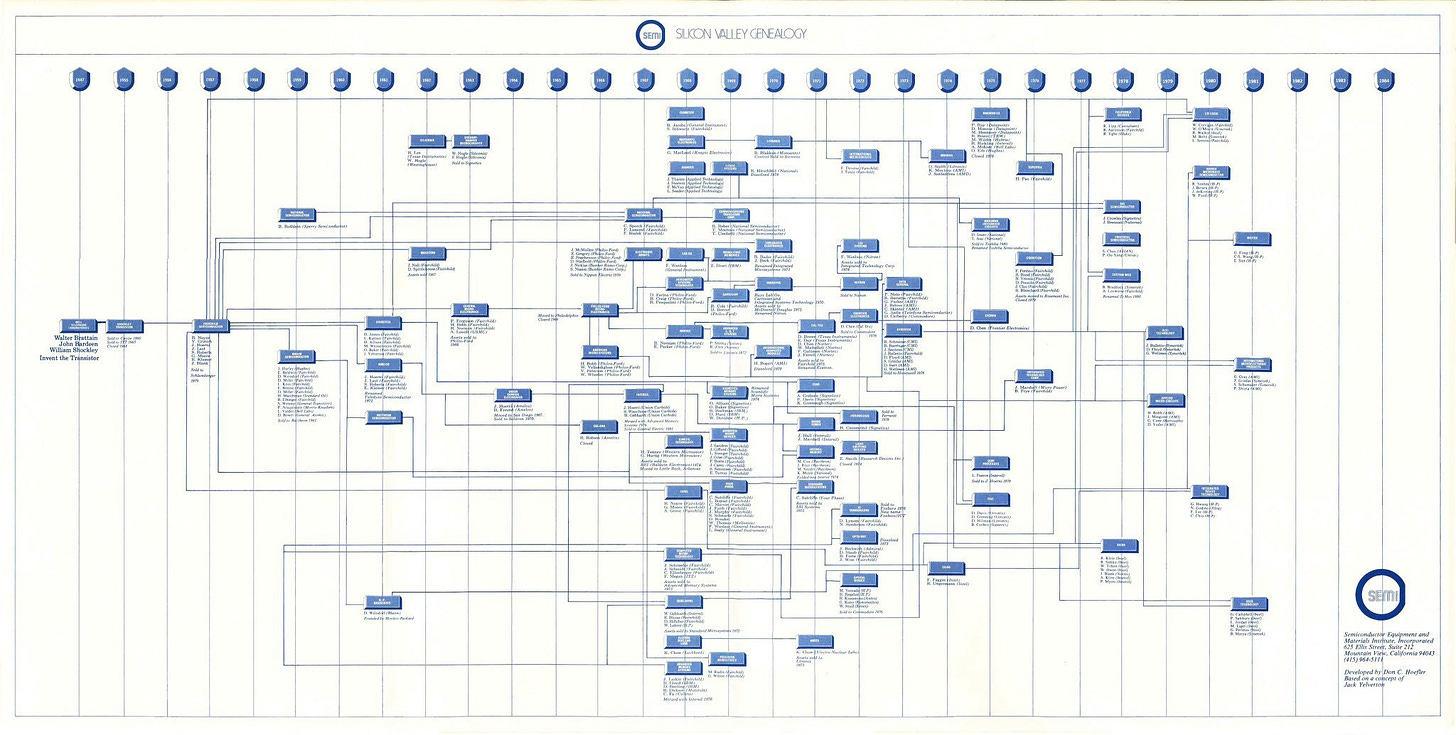
Even the nascent field of generative AI has had at least two Fairchild moments. The early authors of the key paper that developed the concept of the Large Language Model, Attention is All You Need, were all at Google at the time they wrote the paper in 2017. Now, all have left for other projects and startups. And OpenAI itself had a series of splits and fights in its early history that led to key employees leaving to found competing startups like Anthropic.
Даже зарождающаяся область генеративного ИИ уже пережила как минимум два «момента Fairchild». Ранние авторы ключевой статьи, в которой была разработана концепция LLM, Attention is All You Need, в момент её написания в 2017 году все работали в Google. Сейчас все они ушли в другие проекты и стартапы. А у самой OpenAI в ранней истории была серия расколов и конфликтов, приведших к уходу ключевых сотрудников и основанию конкурирующих стартапов, таких как Anthropic.
So, I think the exodus we are about to see from OpenAI is going to be at the level of Fairchild and PayPal. We are going to see many OpenOffspring (ChatGPT’s suggestion for a catchy name, we will see if it sticks) funded to compete with the existing AI labs, and to pursue new ideas. Microsoft will be one beneficiary, but it will not be the only place OpenAI veterans go. The question is not whether new startups will form, but how many. And, also, how much realignment will happen among the other, larger, players in the space like Google and Microsoft, relative to the AI labs.
Так что, думаю, исход, который мы вот-вот увидим из OpenAI, будет масштаба Fairchild и PayPal. Мы увидим множество OpenOffspring (это предложенное ChatGPT звучное название, посмотрим, приживётся ли оно), профинансированных для конкуренции с существующими AI-лабораториями и для развития новых идей. Microsoft станет одним из бенефициаров, но это будет далеко не единственное место, куда уйдут ветераны OpenAI. Вопрос не в том, появятся ли новые стартапы, а в том, сколько их будет. И ещё — насколько серьёзно произойдёт перестройка среди других, более крупных игроков в этой области, таких как Google и Microsoft, по отношению к AI-лабораториям.
What happens to Generative AI?
Что будет с генеративным ИИ?
The probable changes to OpenAI as an organization are unlikely to change our present, but they do change our future. It is important to realize that people will keep using ChatGPT and Claude and Bard and Microsoft Copilot, and these AI tools will continue to disrupt our world. Even if no one advances technology past what is available today, AI’s impact is going to be significant and growing. But the situation is unlikely to be static, even if OpenAI retreats, as there are already a number of contenders to the ChatGPT-4 crown that are training larger models: Google, Anthropic, and Musks’s X among them; along with whatever the new team at Microsoft will do. Very little about the present of our AI moment is going to be different as a result of this weekend.
Вероятные изменения в OpenAI как в организации вряд ли изменят наше настоящее, но они изменят наше будущее. Важно понимать, что люди продолжат использовать ChatGPT, Claude, Bard и Microsoft Copilot, и эти AI-инструменты продолжат менять наш мир. Даже если технологии не продвинутся дальше того, что доступно сегодня, влияние ИИ будет значительным и растущим. Но ситуация вряд ли останется статичной, даже если OpenAI отступит, поскольку уже есть ряд претендентов на корону ChatGPT-4, тренирующих более крупные модели: Google, Anthropic и X Маска — наряду с тем, что сделает новая команда в Microsoft. Очень мало в нынешнем моменте AI изменится в результате этих выходных.
What is going to change is the future: OpenAI had a lead over the rest of the field, and its vision was likely to continue to set the precedent for what AI meant and how it was used. That means that not only were OpenAI’s decisions about product releases shaping the entire field of AI (everyone was working on GPT knock-offs), but also that, to the extent superintelligence was possible, they were likely to be the people who came closest, first. Now, other players will have a chance to leave their own imprint on AI, for better and worse.
Что изменится — так это будущее: OpenAI опережала остальную отрасль, и её видение, скорее всего, и дальше задавало бы прецедент для того, что означает ИИ и как он используется. Это значит, что решения OpenAI о выпуске продуктов формировали не только всё поле ИИ (все работали над клонами GPT), но и то, что — в той мере, в какой сверхразум вообще возможен — именно они, скорее всего, подошли бы к нему ближе всех и первыми. Теперь у других игроков появится шанс оставить собственный отпечаток на ИИ — к лучшему или к худшему.
As momentum shifts from OpenAI to a mix of large companies like Microsoft and the new OpenOffspring, we are likely to see the field accelerate, not slow down. A space that was already confusing and fast moving is likely to become even more so. The exact implications of this are totally unclear, but, if people were breathing a sigh of relief that the mad AI rush is going to slow down soon, I think they are going to be very unprepared about what comes next. And, even if there is no development beyond the current level of AI, we have at least a decade of absorbing the effects of ChatGPT on our lives and work, even without any more advancement. For most people, little about how AI will affect their jobs or education will change as a result of what happened this weekend, but our future may be very different than what might have been.
По мере того как импульс смещается от OpenAI к смеси крупных компаний вроде Microsoft и новой плеяды OpenOffspring, мы, скорее всего, увидим ускорение поля, а не замедление. Пространство, которое и так было запутанным и быстро развивающимся, станет ещё более таковым. Точные последствия этого совершенно неясны, но если кто-то с облегчением выдыхал в надежде, что безумная AI-гонка вот-вот замедлится, думаю, его ждёт серьёзная неподготовленность к тому, что будет дальше. И даже если развитие не выйдет за пределы нынешнего уровня ИИ, нам предстоит как минимум десятилетие осмысления влияния ChatGPT на нашу жизнь и работу — даже без дальнейшего прогресса. Для большинства людей мало что в том, как ИИ повлияет на их работу или образование, изменится в результате этих выходных, но наше будущее может оказаться очень не таким, каким могло бы быть.