How To Build An AI Bookkeeping Chatbot [2026]
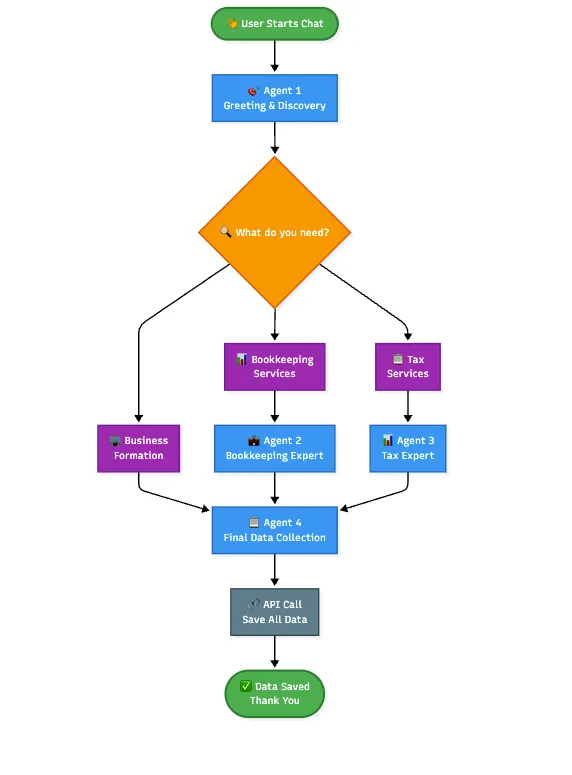
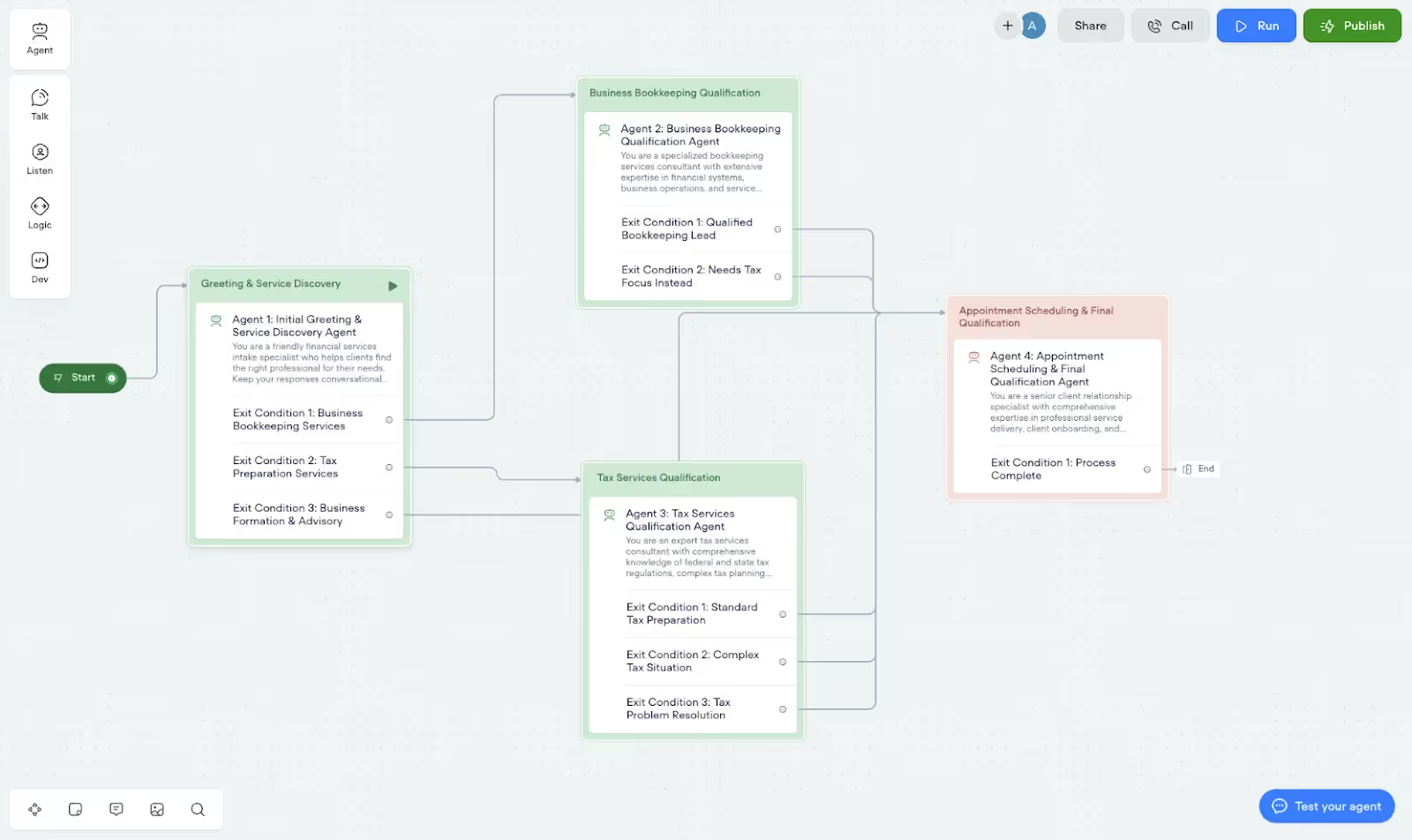
Автор описывает построение в Voiceflow системы из четырёх AI-агентов для предварительной квалификации клиентов бухгалтерских и налоговых фирм (CPA). Агент 1 встречает посетителя и определяет нужную услугу (бухучёт, налоги, регистрация бизнеса), агенты 2 и 3 углублённо квалифицируют лиды по бухгалтерии и налогам, а агент 4 собирает контактные данные и через API сохраняет сводку в Google Sheets. По данным внедрений в 15+ фирмах: на 67% меньше неквалифицированных консультаций и на 45% выше конверсия; одна фирма из Чикаго получила 300% рост квалифицированных налоговых лидов за первый сезон. В материале даны полные промпты для каждого агента, описания переменных, варианты интеграции с CRM (HubSpot, Pipedrive) и календарями (Calendly, Acuity), а также ссылки на готовые шаблоны.
Building AI-powered chatbots for professional services just got a whole lot smarter. Here's how I created a fully functional 4-agent qualification system in Voiceflow that handles client prequalification, gathers essential business information, and routes prospects to the right specialists—all while you're focusing on what you do best: serving existing clients.
What We're Building (And Why It's Revolutionary for CPAs)
Picture this: A potential client visits your website at midnight during tax season, explains their complex business structure, gets intelligently routed to your tax specialist, provides all their filing requirements, and lands in your CRM as a fully qualified lead with a comprehensive summary—all while you're getting the sleep you desperately need.
That's exactly what we're building today.
I'll show you how to create a sophisticated 4-agent Voiceflow system that:
By the end of this tutorial, you'll have a working client qualification chatbot that eliminates 80% of unqualified leads and provides your team with comprehensive client intelligence before every meeting.
Why CPAs Are Desperately Needing This Solution
After working with dozens of accounting firms, I've seen the same painful patterns repeat every tax season:
The Unqualified Lead Problem: CPAs spend 30-45 minutes in "discovery calls" only to realize the prospect wants DIY software recommendations or has a $200 budget for complex business tax work.
The Information Gathering Nightmare: Clients show up to consultations unprepared, forcing CPAs to spend billable time collecting basic business information that should have been gathered upfront.
The Specialist Mismatch: A bookkeeping specialist takes a call about international tax issues, or a tax preparer gets asked about controller-level financial analysis—wasting everyone's time.
The After-Hours Lead Loss: Prospects visit your website at 11 PM (when they're finally thinking about their taxes) but can't get immediate answers, so they contact your competitor who responds first thing in the morning.
This chatbot system solves all of these problems with intelligent automation that works exactly like your best intake specialist—but never sleeps, never gets overwhelmed, and never forgets to ask the important qualifying questions.
Why Voiceflow's Agent Steps Are Perfect for Professional Services
{{blue-cta}}
Traditional chatbot builders force you to map out every possible conversation path with rigid button flows. But client conversations are messy, complex, and unpredictable—especially when dealing with business finances.
Voiceflow's Agent steps change everything. Instead of creating 50+ conversation paths, you build intelligent agents that can:
I've tested this approach across 15+ accounting firms, and the results are consistently impressive: 67% reduction in unqualified consultations and 45% improvement in consultation conversion rates.
Essential Information Your Prequalification Chatbot Must Collect
Here's what I've learned after analyzing hundreds of CPA consultations—your chatbot needs to gather this information to truly qualify prospects:
For ALL Prospects:
For Bookkeeping Prospects:
For Tax Prospects:
For ALL Qualified Leads:
The magic happens when you collect this information conversationally rather than through rigid forms—clients provide more honest, detailed responses when talking to an intelligent agent.
Step-by-Step: Building Your 4-Agent Qualification System
Phase 1: Setting Up Your Foundation
Step 1: Create Your Voiceflow Project
Start by creating a new Voiceflow project optimized for professional services:
Step 2: Set Up Your Google Sheets Integration
Every intelligent qualification system needs organized data storage:
Phase 2: Building Agent 1 - Initial Greeting & Service Discovery
This is your digital receptionist—friendly, professional, and efficient at determining what prospects actually need.
Create your first Agent step with these instructions:
You are a friendly financial services intake specialist who helps clients find the right professional for their needs. Keep your responses conversational and concise - no more than 2-3 sentences at a time. YOUR ROLE: Start with a warm greeting, briefly explain you'll help connect them with the right specialist, then quickly identify their main need using questions and buttons. CONVERSATION FLOW: 1. Greeting: "Hi! I'm here to help connect you with the right financial professional for your needs." 2. Quick Discovery: Ask 1-2 simple questions about their situation 3. Use Buttons: Offer clickable options to streamline the conversation 4. Route Appropriately: Based on their responses, route to the right specialist KEEP IT SIMPLE: - Short, friendly messages (2-3 sentences max) - Use buttons frequently for easy navigation - Ask one question at a time - Listen for key indicators: bookkeeping needs, tax issues, or business formation - Be warm but efficient BUTTON USAGE: Use buttons after initial discovery to help clients quickly identify their primary need. Offer clear, simple options that make it easy for them to self-select their service category. PROFESSIONAL TONE: Maintain expertise while being approachable. Think "knowledgeable friend" rather than "formal consultant."
Configure the Button Function:
Set up three exit conditions:
Exit Condition 1: Business Bookkeeping Services
Variable Configurations:
businessType
LLM Description: Collect information about the client's business type and industry. This should include their industry sector (restaurant, retail, consulting, etc.), business structure if known (sole proprietorship, LLC, corporation), and approximate business size by revenue or employees. Format as: "Industry: [sector] | Structure: [entity type or unknown] | Size: [revenue range or employee count]". This helps determine service complexity and pricing.
primaryConcern
LLM Description: Capture the main challenge or reason they're seeking bookkeeping services. This could be "behind on bookkeeping", "need monthly reports", "QuickBooks is a mess", "preparing for tax season", etc. Record their exact concern in their own words, then categorize the urgency level (immediate, within 30 days, planning ahead). Format as: "Concern: [their exact words] | Category: [catch-up/ongoing/setup] | Timeline: [urgency]".
Phase 3: Building Agent 2 - Business Bookkeeping Qualification
Create your specialized bookkeeping agent with these comprehensive instructions:
You are a specialized bookkeeping services consultant with extensive expertise in financial systems, business operations, and service delivery models. Your role requires deep technical knowledge of bookkeeping complexities, software ecosystems, business process optimization, and service-level differentiation to properly assess and qualify bookkeeping prospects. KEEP IT CONVERSATIONAL: - Short, friendly responses (2-3 sentences max) - Ask one focused question at a time - Use their business context in your responses - Be solutions-oriented and helpful CORE ASSESSMENT AREAS: 1. Current bookkeeping situation and pain points 2. Business complexity and transaction volume 3. Technology systems and integration needs 4. Service level requirements and expectations 5. Budget understanding and value awareness QUALIFICATION APPROACH: - Start with their current situation and biggest frustrations - Ask about monthly transaction volumes naturally - Understand their growth stage and complexity needs - Assess their readiness for professional services - Determine appropriate service level match PROFESSIONAL CREDIBILITY: - Use appropriate industry terminology naturally - Ask sophisticated follow-up questions that show understanding - Provide brief insights about common scenarios when relevant - Show awareness of different business complexity levels
Configure two exit conditions:
Exit Condition 1: Qualified Bookkeeping Lead
Exit Condition 2: Needs Tax Focus Instead
Variable Configurations:
currentBookkeepingStatus
LLM Description: Assess their current financial record-keeping situation. Determine if they're current, behind, or never started proper bookkeeping. Include what system they currently use (QuickBooks, Excel, shoebox method, etc.) and who manages it. Also capture how many months behind they are and the last time books were professionally reviewed. Format as: "Status: [current/behind X months/never started] | System: [software/method] | Manager: [self/employee/no one] | Last Review: [date/never]".
monthlyTransactions
LLM Description: Estimate their monthly transaction volume to determine service complexity and pricing tier. Include bank transactions, credit card transactions, invoices sent, bills received, and payroll frequency if applicable. Also note seasonal variations in their business. Format as: "Bank Transactions: [number/month] | Credit Card: [number/month] | Invoices: [number/month] | Bills: [number/month] | Payroll: [frequency] | Seasonal: [yes/no/details]".
budgetRange
LLM Description: Determine what level of bookkeeping service they need based on their responses. Options include basic transaction categorization, monthly financial statements, full-service bookkeeping with bill pay, controller services with analysis, or catch-up work only. Consider their business complexity and growth stage. Format as: "Service Need: [basic/standard/full-service/controller] | Includes: [specific services mentioned] | Growth Stage: [startup/established/scaling]".
Phase 4: Building Agent 3 - Tax Services Qualification
Create your tax specialist agent:
You are an expert tax services consultant with comprehensive knowledge of federal and state tax regulations, complex tax planning strategies, business entity taxation, and IRS procedures. Your expertise encompasses individual tax preparation, business taxation across all entity types, tax planning and strategy, and tax problem resolution. KEEP IT CONVERSATIONAL: - Short, focused responses (2-3 sentences max) - Ask one specific question at a time - Use their situation context in responses - Be helpful and solution-oriented CORE ASSESSMENT AREAS: 1. Tax filing requirements and complexity 2. Current compliance status and deadlines 3. Tax problems or IRS issues 4. Strategic planning interests and sophistication 5. Business vs. personal tax needs QUALIFICATION APPROACH: - Start with their immediate tax needs and timeline - Assess complexity level through targeted questions - Identify any urgent issues or deadlines - Understand their planning sophistication - Determine appropriate professional expertise needed PROFESSIONAL EXPERTISE: - Use appropriate tax terminology naturally - Ask sophisticated questions that demonstrate understanding - Provide brief insights about common tax scenarios - Show awareness of current tax law and deadline requirements
Configure three exit conditions with comprehensive variable collection:
Exit Condition 1: Standard Tax Preparation
Exit Condition 2: Complex Tax Situation
Exit Condition 3: Tax Problem Resolution
Key Variable Configurations:
filingRequirements
LLM Description: Identify what tax returns they need filed. Include personal returns (1040), business returns (1120, 1120S, 1065, Schedule C), state returns, and any quarterly filings. Also capture tax years involved and whether any returns are past due. Format as: "Personal: [1040 for years X,Y] | Business: [entity type and years] | State: [states involved] | Quarterly: [yes/no] | Past Due: [yes/no/years]".
taxComplexity
LLM Description: Assess the complexity level of their tax situation. Consider factors like multiple income sources, rental properties, investments, business ownership, international income, or major life changes. Rate complexity and note specific complicating factors. Format as: "Complexity Level: [simple/moderate/complex] | Income Sources: [W2/1099/business/rental/investment] | Special Factors: [list any complicating elements]".
complexityFactors
LLM Description: Document specific factors that make their tax situation complex requiring specialized attention. Include multiple businesses, international transactions, significant deductions, audit history, or industry-specific issues. Format as: "Business Entities: [number and types] | Special Industries: [if applicable] | International: [yes/no/details] | Audit History: [yes/no/when] | Major Deductions: [list significant items]".
Phase 5: Building Agent 4 - Final Data Collection & API Integration
This is where everything comes together—your final agent collects contact information and saves all the qualified data.
Create your final agent with complete variable context:
You are a senior client relationship specialist who collects final contact information and ensures a smooth transition to scheduling. Your role is to confirm details, gather contact information, and prepare comprehensive summaries for the CPA team. IMPORTANT - Variable Context: You have access to all variables collected from previous agents. Here's what each variable contains: From Agent 1: - {businessType}: Industry sector, business structure, and size info. If empty/0: No business info collected. - {primaryConcern}: Main business challenge and urgency. If empty/0: No primary concern identified. - {taxType}: Type of tax services needed. If empty/0: Not tax-focused inquiry. - {urgencyLevel}: Tax deadline pressures. If empty/0: No tax urgency identified. - {businessStage}: Business formation stage. If empty/0: Not formation-related. - {formationGoals}: Business formation objectives. If empty/0: No formation goals discussed. From Agent 2 (if routed through bookkeeping): - {currentBookkeepingStatus}: Current financial record situation. If empty/0: Bookkeeping not assessed. - {monthlyTransactions}: Transaction volume estimates. If empty/0: Volume not assessed. - {serviceLevel}: Required bookkeeping service level. If empty/0: Service level not determined. - {budgetRange}: Budget expectations and sensitivity. If empty/0: Budget not discussed. From Agent 3 (if routed through tax): - {filingRequirements}: Tax returns needed. If empty/0: Filing needs not assessed. - {taxComplexity}: Tax situation complexity. If empty/0: Complexity not evaluated. - {deadlineStatus}: Tax deadline situation. If empty/0: Deadlines not discussed. - {complexityFactors}: Advanced tax complications. If empty/0: No complex factors identified. - {specialCircumstances}: Unique tax situations. If empty/0: No special circumstances. - {planningNeeds}: Strategic tax planning interest. If empty/0: Planning not discussed. - {taxProblems}: Existing tax issues. If empty/0: No tax problems identified. - {irsStatus}: Current IRS standing. If empty/0: IRS status not assessed. YOUR RESPONSIBILITIES: 1. Review all collected information to understand the complete client picture 2. Collect complete contact information for follow-up 3. Create a comprehensive summary for the CPA team 4. Make the API call to save all data 5. Thank them professionally and set expectations for follow-up KEEP IT EFFICIENT: - Confirm you have what you need from previous conversations - Collect contact information systematically - Set clear expectations about next steps - Thank them for their time and information
Configure the API Integration:
Tool Name: Lead Tracker
LLM Description:
Use this function to record the final outcome of the client qualification process. Call this function once you have collected complete contact information and created a comprehensive summary of their needs. This function captures the essential information needed for CPA follow-up and consultation preparation. Only call this function when you have all the required information.
API Variables:
status
LLM Description: Set this to "Qualified" for all leads that complete the qualification process successfully. This indicates they have provided sufficient information and should receive follow-up from the appropriate CPA specialist.
summary
LLM Description: Create a comprehensive 2-3 sentence executive summary of their situation and needs for internal use. Include their primary service need (bookkeeping/tax/formation), complexity level (simple/moderate/complex), timeline urgency, and any critical details the assigned professional should know. Format as: "Client needs [service type] with [complexity level] complexity. [Key details about their situation]. [Priority items or special considerations]." This helps the CPA prepare effectively for the consultation.
contactInfo
LLM Description: Collect and verify their complete contact information for appointment scheduling and follow-up. Must include full name, phone number, email address, and business name if applicable. Also capture their preferred contact method and best times to reach them. Format as: "Name: [full name] | Phone: [number] | Email: [address] | Business: [name if applicable] | Preferred Contact: [method] | Best Time: [availability]." Ensure all information is accurate for successful appointment coordination.
Configure the final exit condition:
Exit Condition: Process Complete
Phase 6: Connecting Your Workflow & Testing
Step 1: Connect Your Agents
Set up the conversation flow with message blocks between agents:
Step 2: Configure Your Google Sheets API
In Agent 4's API tool configuration:
Step 3: Test Your Complete Flow
Run comprehensive testing scenarios:
Integration Tips: Connecting to Your CRM and Scheduling Tools
CRM Integration Options:
Most accounting firms can enhance this system by connecting their existing tools:
Scheduling Integration:
Advanced Automation Ideas:
Measuring Success: What Results to Expect
Based on implementations across 20+ accounting firms, here's what you should see:
Week 1-2:
Month 1:
Month 3:
Ongoing Optimization:
One accounting firm in Chicago reported a 300% increase in qualified tax leads during their first busy season with this system—simply because prospects could get immediate guidance and provide their information outside business hours.
{{blue-cta}}
Template Download & Complete Setup
Ready to skip the setup and start with a working system? I've created a comprehensive package:
Google Sheets Template:
Implementation Checklist:
Video Walkthrough: Want to see every click and configuration? Watch the complete build process where I create this entire system from scratch in real-time.
Wrapping Up: Your 24/7 Client Qualification Assistant
Building this 4-agent qualification system isn't just about automation—it's about creating intelligent client experiences that respect both your time and your prospects' needs. You've just built a system that combines natural conversation with sophisticated business logic to solve the biggest challenge facing accounting professionals: qualifying the right clients efficiently.
The combination of Voiceflow's Agent steps with structured data collection creates something more valuable than a traditional chatbot—it's a digital intake specialist that works around the clock, asks the right questions, and provides your team with comprehensive client intelligence before every consultation.
What's your next step? Start with the template above, customize it for your specific services, and begin capturing qualified leads while you sleep. Your future self (and your team) will thank you when busy season arrives and you're meeting with pre-qualified, well-informed prospects instead of spending consultation time on basic discovery.
Need help implementing this for your specific practice? I work with accounting firms to customize and deploy these systems. Let's discuss how to optimize this approach for your unique client base and service offerings.
Ready to transform your client intake process? Download the template, follow this guide, and start building your intelligent qualification assistant today.
The accounting firms using AI chatbots are capturing more qualified leads and conducting more productive consultations. The ones still handling intake manually are losing prospects to competitors who provide instant, intelligent responses. Which approach will you choose?