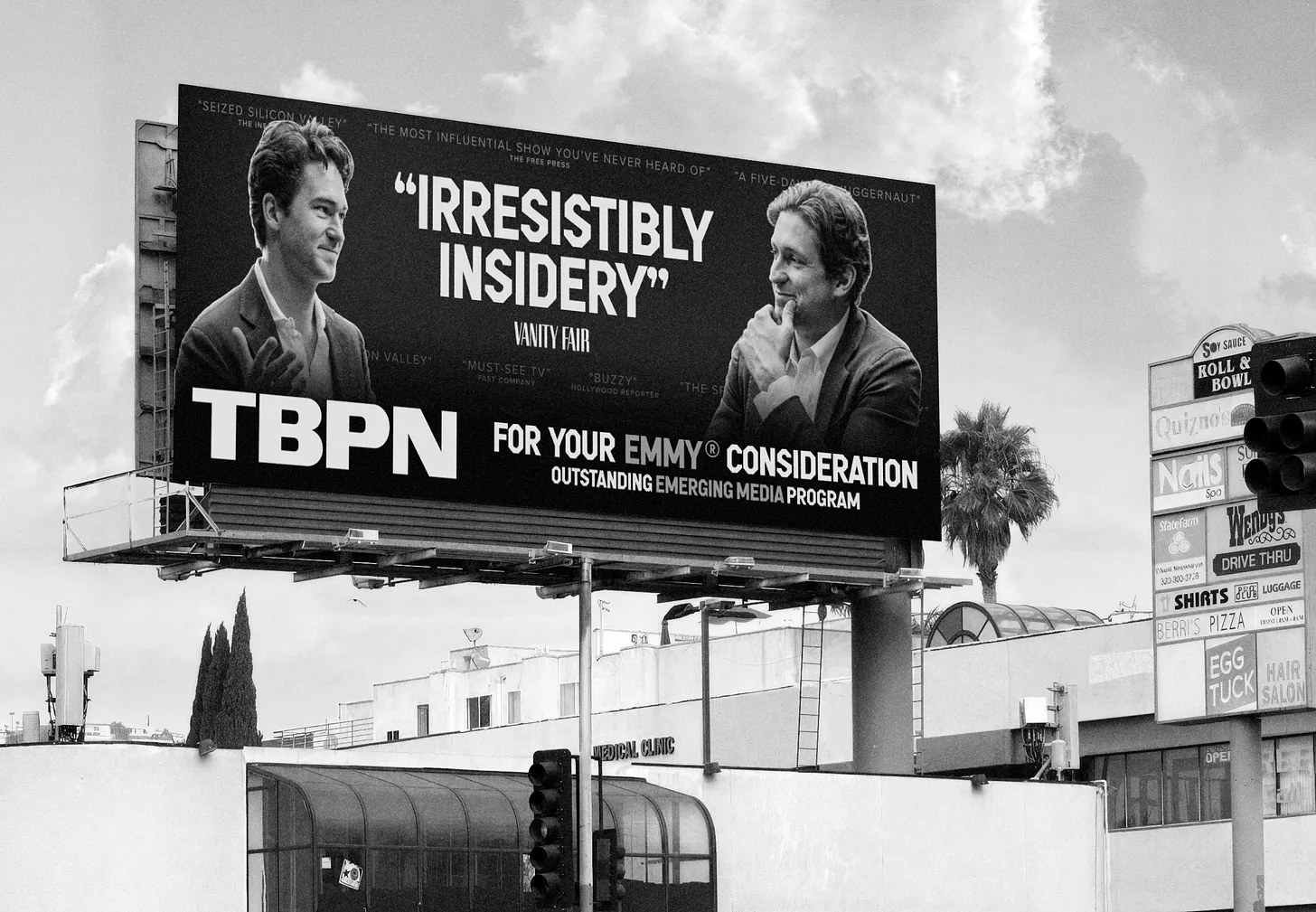
The Season Finale of TBPN
Эссе анализирует феномен TBPN — технологического подкаста, приобретённого OpenAI, — через призму культурной власти и медиастратегии. Автор утверждает, что главным шоу было не само новостное вещание, а мета-история о том, как John и Jordi создавали TBPN и делали его неотразимым. OpenAI, по мнению автора, купила не просто подкаст, а «культурных единорогов» — людей, умеющих двигать культуру и работать в экономике фидов, поскольку конкуренция между AI-лабораториями всё больше становится культурной, а не только технической. Приобретение нанесло удар по ауре бренда: TBPN больше не дерзкий аутсайдер, а инсайдерская аудитория воспринимает выход как финал сезона. Автор вводит концепцию «медиа-машинной сингулярности» — каждая организация теперь работает как наполовину медиакомпания, наполовину машина, и лучшие истории находят своих рассказчиков сами.
The Season Finale of TBPN
Финал сезона TBPN
On the show, the meta-show, and cultural power.
О шоу, мета-шоу и культурной власти.
People have been sending me TBPN headlines to opine on because I’ve been thinking about the consumer-tech-media-complex for a long time. I've been friendly with John and Jordi, and Dylan, for years via the Twitterverse and their string of culture-first companies and media experiments, and occasional near-misses working together. Last year I wrote an essay about the duality of our era, Media and Machines, and it’s timely once again.
Мне присылают заголовки TBPN с просьбой высказаться, потому что я давно размышляю о потребительско-техно-медийном комплексе. Я дружу с John, Jordi и Dylan уже несколько лет — через Twitterverse, их серию компаний с приоритетом культуры, медиаэксперименты и случаи, когда мы почти начали работать вместе. В прошлом году я написал эссе о двойственности нашей эпохи, «Медиа и машины», и оно снова актуально.
I published a version of this essay on Twitter, the native home of TBPN. (If you’re not familiar with TBPN, this NYT profile should get you up to speed.)
Я опубликовал версию этого эссе в Twitter — родном доме TBPN. (Если вы не знакомы с TBPN, этот профиль NYT введёт вас в курс дела.)
Watching the show get made.
Наблюдая за созданием шоу.
It’s become a cliché to call for a sequel to HBO’s Silicon Valley, but the stories we want to watch are now indistinguishable from how company building and content creation is playing out on YouTube or X or whatever new platform’s being built. It’s the new television and TBPN is a new kind of show.
Стало клише призывать к продолжению Silicon Valley от HBO, но истории, которые мы хотим смотреть, теперь неотличимы от того, как строительство компаний и создание контента разворачивается на YouTube, X или любой новой платформе. Это новое телевидение, а TBPN — шоу нового типа.
I’ve tuned into TBPN more to spectate than to voraciously consume. To see what new segments they were testing, which big-deal guests they’d courted, what life-sized tchotchkes they’d added to the set — and what new tricks John and Jordi had up their suit sleeves. Digesting the news itself felt secondary.
Я смотрел TBPN скорее как зритель-наблюдатель, а не жадный потребитель. Чтобы увидеть, какие новые рубрики они тестировали, каких знаменитых гостей приглашали, какие безумные штуковины в натуральную величину добавили в студию — и какие новые фокусы John и Jordi прятали в рукавах своих пиджаков. Переваривание самих новостей ощущалось как вторичное.
TBPN the podcast is great. But the story of John and Jordi creating TBPN and making it undeniable — that’s the best tech content we’ve seen in a long time. We’ve been watching a news show, but the better show has been watching it get made. That’s the show founders and investors and executives fell in love with and have been dying to guest star in, and that’s the show OpenAI acquired. In a sense, the meta-show was the main show.
TBPN как подкаст — великолепен. Но история о том, как John и Jordi создавали TBPN и сделали его неотразимым — вот лучший технологический контент, который мы видели за долгое время. Мы смотрели новостное шоу, но лучшее шоу — это наблюдение за тем, как оно создаётся. Именно в это шоу влюбились фаундеры, инвесторы и топ-менеджеры, именно в нём они мечтали появиться в качестве гостя, и именно это шоу приобрела OpenAI. В каком-то смысле мета-шоу было главным шоу.
Casting is everything.
Кастинг решает всё.
Was the content that good, or was the biggest draw watching the thing get built? The same question lingered around Clubhouse’s generational run.1
Был ли контент настолько хорош, или главной притягательностью было наблюдать, как всё это строится? Тот же вопрос витал вокруг легендарного взлёта Clubhouse.1
There’s a kind of universal rule I’ve seen a few times now: when your audience is mostly composed of high-value insiders, they’re almost certainly watching the meta-game as much as they’re using the product. This is why “going viral on X” is valuable but not indicative of PMF with ‘normal’ people. Even still, it’s a strong signal of the producer’s taste, tact, distribution instincts, and cultural fluency.2 You just need to know which PMF matters for you.
Есть своего рода универсальное правило, которое я наблюдал уже несколько раз: когда ваша аудитория в основном состоит из ценных инсайдеров, они почти наверняка следят за мета-игрой не меньше, чем пользуются продуктом. Вот почему «стать вирусным в X» ценно, но не свидетельствует о PMF с «обычными» людьми. Тем не менее это сильный сигнал о вкусе создателя, его такте, дистрибуционных инстинктах и культурной грамотности.2 Просто нужно понимать, какой именно PMF важен для вас.
My analogy has been that guesting on TBPN is less like going on a tech podcast and more like being featured in Rolling Stone — if Rolling Stone published a new issue every day. The ‘ESPN for tech’ framing captures the live energy and the play-by-play, but the show is also doing prestige TV and magazine profile work all in one. I’ve always said smart people want to be cool and cool people want to be smart, and TBPN found a way to deliver on that desire.
Моя аналогия заключалась в том, что быть гостем TBPN — это не как сходить на технологический подкаст, а скорее как попасть на обложку Rolling Stone — если бы Rolling Stone выходил каждый день. Формулировка «ESPN для технологий» передаёт энергию прямого эфира и поминутный комментарий, но шоу одновременно делает уровень престижного телевидения и журнального профиля. Я всегда говорил, что умные люди хотят быть крутыми, а крутые — умными, и TBPN нашли способ удовлетворить это желание.
A consistently popular narrative on X is that TBPN succeeded because of their “clips” strategy, despite few people watching the live shows 3 hrs/day. Clips are a great distribution mechanic, and TBPN is doing it well enough, but that's not their claim to fame (clipping is big outside tech media) nor their X-factor. TBPN’s prowess is less algo-hacking and more arts & culture.
Популярный нарратив в X гласит, что TBPN преуспел благодаря стратегии «клипов», несмотря на то что мало кто смотрит прямые эфиры по 3 часа в день. Клипы — отличный механизм дистрибуции, и TBPN делает это достаточно хорошо, но это не их заявка на славу (нарезка популярна и за пределами техномедиа) и не их X-фактор. Сила TBPN — это не алгоритмический хакинг, а искусство и культура.
A big part of TBPN’s success is that people love the characters.
Важная часть успеха TBPN в том, что люди любят персонажей.
Jordi is the nerdy jock and John is the jocky nerd.
Jordi — это ботанистый спортсмен, а John — спортивный ботаник.
They have a meme-able height gap yet neither is insecure (they’re both still tall). They were already credible talents in startupland, and now they’ve proven to be star communicators and likable in a way we rarely see in tech. They’re that likable because of their personality, passion, positivity, and because of their golden-retriever-good-looks (the first part their own admission, the second the audience’s). Tyler the intern, equally likable, is the equivalent of the late night talk show host sidekick. One intangible on top of it all is they’re good at improv.
У них мемная разница в росте, но ни один из них не комплексует (оба всё равно высокие). Они уже были признанными талантами в мире стартапов, а теперь доказали, что являются звёздными коммуникаторами, обаятельными так, как мы редко видим в технологиях. Они настолько обаятельны благодаря своей индивидуальности, страсти, позитиву и внешности «золотых ретриверов» (первое — по их собственному признанию, второе — по мнению аудитории). Tyler-стажёр, столь же обаятельный, — эквивалент напарника ведущего ночного ток-шоу. Ещё одно нематериальное преимущество — у них хорошо с импровизацией.
They’re having fun and letting us play along. (Fun includes TBPN trading cards, coveted merch, gong hits, guest polaroids, absurd soundboard, studio horse, et al.)
Они веселятся и приглашают нас веселиться вместе. (Веселье включает коллекционные карточки TBPN, желанный мерч, удары в гонг, полароидные снимки гостей, абсурдный саундборд, лошадь в студии и прочее.)
The details matter, because, as I’ve been repeating lately — casting is everything. Tech has access to some of the most impressive people on earth, and somehow keeps featuring the same few faces that aren’t great at storytelling or the format.
Детали важны, потому что, как я повторяю в последнее время, — кастинг решает всё. У технологической индустрии есть доступ к одним из самых впечатляющих людей на земле, и почему-то она продолжает показывать одни и те же лица, которые не умеют рассказывать истории или работать в формате.
A great cast still needs a great script.
Даже великому касту нужен великий сценарий.
The most compelling Silicon Valley stories used to be about generational software companies that took a decade to make it and convinced you they’d last for decades, as the acquirers and not the acquired. The most impressive stories now are all about momentum and spectacle, about the ride from founding to exit (ideally in under two years). Any guilt or shame around ephemerality is gone. Joining one of the big AI ships, especially as a standout talent or team that was courted, is the smart, sexy, high status Silicon Valley play right now.
Самые захватывающие истории Кремниевой долины раньше были о компаниях поколения, которые шли к успеху десятилетие и убеждали, что продержатся ещё несколько десятилетий — как покупатели, а не как приобретённые. Самые впечатляющие истории сейчас — все про моментум и зрелищность, про путь от основания до выхода (желательно за два года). Любое чувство вины или стыда за эфемерность исчезло. Присоединиться к одному из больших AI-кораблей, особенно если тебя заметили и переманивали как выдающийся талант или команду, — это умный, сексуальный и статусный ход в Кремниевой долине прямо сейчас.
The next storyline.
Следующая сюжетная линия.
Even before the OpenAI acquisition, I’d been wondering how TBPN would make 2026 as big as 2025. Staying indie and grinding for more mainstream relevance didn’t strike me as ideal. And greater ambitions are expensive to deliver. Something I’ve repeatedly observed is that the relentless energy of the first two years of any enterprise is very hard to sustain in later years. One way to re-up that energy is to take a crazy leap of some kind. The most entertaining outcome is the most likely outcome because it’s often the most energizing one.3
Ещё до приобретения OpenAI я задавался вопросом, как TBPN сделает 2026-й таким же значимым, как 2025-й. Оставаться независимыми и пробиваться к более широкой аудитории не казалось мне идеальным вариантом. А более масштабные амбиции дорого обходятся. Я неоднократно наблюдал, что неукротимую энергию первых двух лет любого предприятия очень трудно поддерживать в последующие годы. Один из способов заново зарядиться энергией — совершить безумный прыжок. Самый зрелищный исход — наиболее вероятный, потому что зачастую он же и наиболее вдохновляющий.3
Rebrand, partner, pivot, buy, sell. Good or bad reactions matter less than maintaining energy and with that, relevance, for yourself and the audience.
Ребрендинг, партнёрство, пивот, покупка, продажа. Хорошие или плохие реакции имеют меньше значения, чем поддержание энергии и, вместе с ней, актуальности — для себя и для аудитории.
All else equal, I’m a bit less excited to tune into TBPN now than I was a few weeks ago, and I’d bet a big chunk of the tech insider audience feels the same.
При прочих равных мне чуть менее интересно включать TBPN сейчас, чем несколько недель назад, и готов поспорить, что значительная часть инсайдерской аудитории чувствует то же самое.
This is an example of how the sophistication of TBPN’s audience cuts both ways. Insider audiences who made the show valuable are also the ones most sensitive to ownership changes and meta-story cycles — an exit reads like an ending.
Это пример того, как изощрённость аудитории TBPN работает в обе стороны. Инсайдеры, сделавшие шоу ценным, — те же самые люди, наиболее чувствительные к смене владельца и циклам мета-истории — выход воспринимается как финал.
You can’t air a season finale on Friday and immediately premiere the next season on Monday. You need to reset the stakes, rebuild tension, and give the audience a reason to return. You need new slow-burn plotlines, new bits, and even fresh characters, to keep the audience hooked. We’re in what really should be the off-season, the hiatus — they’re just posting through it because so much good has come from their relentless forward momentum these past 18 months.
Нельзя показать финал сезона в пятницу и сразу запустить премьеру следующего в понедельник. Нужно обнулить ставки, заново нарастить напряжение и дать аудитории повод вернуться. Нужны новые сюжетные линии с медленным развитием, новые фишки и даже свежие персонажи, чтобы удержать зрителей. Сейчас по-хорошему должен быть межсезонный перерыв — просто они продолжают постить, потому что слишком многое хорошее пришло из их безостановочного движения вперёд за последние 18 месяцев.
Still, people keep saying no one will want to come on the show anymore, and I don’t buy that. If you would have taken a call from OpenAI — which the vast majority of people would — you’d still be willing to go on TBPN, maybe even more so now. Competitors and their allies will be wary, but the thing to pay attention to is less who’s a little less likely to be a guest and more why and with what sentiment in tow. The longevity of the show depends on sentiment, and how the show adapts in a no-longer-underdog environment. More on this later.
Тем не менее люди продолжают говорить, что больше никто не захочет приходить на шоу, и я в это не верю. Если бы вы приняли звонок от OpenAI — а подавляющее большинство бы приняло — вы бы всё ещё согласились прийти на TBPN, может быть, даже охотнее. Конкуренты и их союзники будут осторожны, но внимание стоит обращать не столько на то, кто чуть менее вероятно придёт в качестве гостя, сколько на то, почему и с каким настроением. Долголетие шоу зависит от настроений и от того, как шоу адаптируется в условиях, когда оно больше не аутсайдер. Об этом позже.
Buying up cultural power.
Скупая культурную власть.
Everyone has their own theory on why OpenAI acquired TBPN. It’s a marketing and comms play or ‘they bought distribution’ — all too literal. It’s a soft power play. Or it’s agitprop. Of all the takes on X, this tweet felt most efficiently true:
У каждого своя теория, зачем OpenAI приобрела TBPN. Это маркетинговый и PR-ход, или «они купили дистрибуцию» — слишком буквально. Это игра на мягкую силу. Или это агитпроп. Из всех мнений в X этот твит показался мне наиболее точным:
They wanted to acquire @johncoogan, @jordihays, @DylanAbruscato and the team. These guys are some of the smartest, most experienced marketers on the internet right now. They understand how to win the vibe war, while making everyone love them. Luxury positioning with down-to-earth approachability.
Они хотели приобрести @johncoogan, @jordihays, @DylanAbruscato и команду. Эти ребята — одни из самых умных и опытных маркетологов в интернете прямо сейчас. Они понимают, как побеждать в войне вайбов, заставляя при этом всех их любить. Люксовое позиционирование с приземлённой доступностью.
My intellectualization: OpenAI is buying up cultural know-how personified, and cultural power itself. Yes, OpenAI bought a podcast, but they really acquired the writers, showrunners, and stars who already function as a powerful cultural production unit — with a successful testing ground for public discourse. (I say this with great respect because my heroes have always been closer to writer-directors than traditional tech founders.)4 Cultural power is something like magic than can be applied to people, products, and of course, more podcasts.
Моя интерпретация: OpenAI скупает персонифицированное культурное ноу-хау и саму культурную власть. Да, OpenAI купила подкаст, но на самом деле она приобрела сценаристов, шоураннеров и звёзд, которые уже функционируют как мощная культурная производственная единица — с успешным полигоном для публичного дискурса. (Говорю это с огромным уважением, потому что моими героями всегда были скорее сценаристы-режиссёры, нежели традиционные технологические фаундеры.)4 Культурная власть — это нечто вроде магии, которую можно применить к людям, продуктам и, конечно, к новым подкастам.
Pete Steinberger, Riley Walz, TBPN.
Pete Steinberger, Riley Walz, TBPN.
This string of acqui-hires is brilliant casting for OpenAI’s special teams. This is a pattern of talent that understands how to move culture and operate inside the feed economy getting poached by the machine-makers — because competition between AI labs is increasingly cultural, not just technical.5
Эта серия acqui-hire'ов — блестящий кастинг для спецкоманд OpenAI. Это паттерн: таланты, которые понимают, как двигать культуру и работать внутри фид-экономики, переманиваются создателями машин — потому что конкуренция между AI-лабораториями становится всё более культурной, а не только технической.5
Impressive feats of almost any kind now double as a job application to the biggest labs. The term “unicorn” has been worn out as far as companies go, but these are “culture unicorn” hires. All the better if what you’re doing is even tangentially related to AI. The comp package is just whatever it takes.
Впечатляющие достижения практически любого рода теперь одновременно являются резюме для крупнейших лабораторий. Термин «единорог» затёрт, когда речь идёт о компаниях, но это найм «культурных единорогов». Тем лучше, если ваша деятельность хотя бы косвенно связана с AI. Компенсационный пакет — просто «столько, сколько нужно».
ChatGPT has a billion weekly active users, so OAI doesn’t need ‘distribution’ in the literal sense, but aura and know-how you can layer on top of that is worth infinite dollars. Anthropic has been gaining on OpenAI with tech insiders, market analysts, and TikTok generations alike. Paying “low hundreds of millions” for TBPN is a cheap move in the culture war against a rising competitor. Winning this war is just as consequential for hiring as it is for sales, funding, and policy.6
У ChatGPT миллиард активных пользователей в неделю, поэтому OAI не нуждается в «дистрибуции» в буквальном смысле, но аура и ноу-хау, которые можно наложить поверх этого, стоят бесконечных денег. Anthropic набирала позиции среди техноинсайдеров, рыночных аналитиков и поколений TikTok. Заплатить «невысокие сотни миллионов» за TBPN — дешёвый ход в культурной войне с набирающим силу конкурентом. Победа в этой войне столь же важна для найма, как и для продаж, привлечения инвестиций и политического влияния.6
What does it mean that the most consequential AI companies are now hiring for charisma and communication alongside competence that captures attention?7
Что это значит, когда самые влиятельные AI-компании теперь нанимают за харизму и умение коммуницировать наряду с компетентностью, которая привлекает внимание?7
There’s a deeper reason charisma now matters more at an AI lab than anywhere else: AI is an inherently difficult protagonist to root for. It’s abstract, threatening, moves fast, and doesn’t have a face. John and Jordi have proven they can make people feel okay, good even, about AI progress. They’re likable faces for an unlikable protagonist that needs to win over the world (while sociopolitical dissent keeps rising). It’s a personhood play — for John and Jordi’s uniquely human presence to soften an inhuman one.
Есть более глубокая причина, почему харизма сейчас важнее в AI-лаборатории, чем где-либо ещё: AI — это по своей природе трудный протагонист, за которого хочется болеть. Он абстрактный, угрожающий, движется быстро и не имеет лица. John и Jordi доказали, что могут заставить людей чувствовать себя нормально — и даже хорошо — по поводу прогресса AI. Они — симпатичные лица для несимпатичного протагониста, которому нужно завоевать мир (пока социально-политическое недовольство нарастает). Это игра на человечность — уникально человеческое присутствие John и Jordi смягчает нечеловеческое.
Most tech thought-leaders have shouted that they don’t get it and it makes them question OpenAI’s judgment. Legacy-new-media is writing that “the vibes are off at OpenAI” and Ronan Farrow just dropped a lukewarm hitpiece on Sam Altman.
Большинство технологических лидеров мнений кричали, что они не понимают этого, и это заставляет их сомневаться в суждениях OpenAI. Старые-новые медиа пишут, что «вайбы у OpenAI не те», а Ronan Farrow только что выпустил прохладный хитпис на Sam Altman.
But most people want John and Jordi to win, and that’s a superpower. Is there a transitive property of good vibes and good will? If everyone wants two guys to win and you hire those two guys, maybe they’ll want you to win too — or at least lose less?8
Но большинство людей хотят, чтобы John и Jordi победили, и это суперсила. Существует ли транзитивное свойство хороших вайбов и доброжелательности? Если все хотят, чтобы двое парней победили, и ты нанимаешь этих двоих — может, люди захотят, чтобы и ты победил тоже? Или хотя бы проиграл поменьше?8
The critics and the risks.
Критики и риски.
It’s hard to deny TBPN has taken an aura hit — it’s no longer a scrappy upstart, and no longer default-neutral. OpenAI buying the brand dilutes it, which is why TBPN is smartly signaling it’s independence as much as possible. ‘Everything will stay the same’ is the politically correct party-line for this kind of acquisition, but something must change, and it will.
Сложно отрицать, что TBPN потерял в ауре — он больше не дерзкий стартап и больше не нейтрален по умолчанию. Покупка бренда OpenAI размывает его, и поэтому TBPN разумно подчёркивает свою независимость по максимуму. «Всё останется как было» — это политически корректная дежурная фраза для такого рода приобретений, но что-то должно измениться — и изменится.
As far as all the media folks’ opinions on the acquisition — my intuition says most of them, both the clowners and the celebrators, are quietly relieved. Those criticizing TBPN for selling are secretly pining for an offer in hand too.
Что касается мнений всех медийщиков о приобретении — моя интуиция подсказывает, что большинство из них, и хейтеры, и поздравляющие, втайне облегчённо выдохнули. Те, кто критикует TBPN за продажу, втайне мечтают получить такое предложение сами.
The top spot for indie tech media startup of the year feels open again. Anyone who’s been ostensibly playing for second place has renewed hope. Many will try to replicate the success of TBPN, and many will struggle.
Первое место среди независимых технологических медиастартапов года снова кажется свободным. Каждый, кто по сути играл за второе место, обрёл надежду заново. Многие попытаются повторить успех TBPN, и многие потерпят неудачу.
There’s already a question about whether Twitter/X is shadow banning TBPN now that it’s owned by OpenAI (Sama and Elon are less than allies right now). Is this happening or is the audience taking a post-sale break from the show, is the show itself on soft-hiatus, or all of the above?
Уже возникает вопрос, не блокирует ли Twitter/X тайком TBPN теперь, когда он принадлежит OpenAI (Sama и Elon сейчас не совсем союзники). Это действительно происходит, или аудитория берёт паузу после продажи, или само шоу ушло в мягкий перерыв, или всё вместе?
The wildcard to consider: TBPN has grown on X and Elon is known to throttle competition. If distribution is squeezed, YouTube is the natural next home — TBPN has ~100K subs there. Substack is an option but video podcasts haven’t popped there yet and the audience skews less tech. Or bolder — leverage their own platform, or build one? TBPN x OAI. Elon throttling Substack links on Twitter incentivized Substack to launch a competitive product with Notes … For TBPN’s meta-show, this would be a new underdog plot. For OAI, owning the culture unicorn could be an uno reverse card.9
Фактор неопределённости: TBPN вырос на X, а Elon известен тем, что душит конкурентов. Если дистрибуцию зажмут, YouTube — естественный следующий дом: у TBPN там ~100K подписчиков. Substack — вариант, но видеоподкасты там пока не взлетели, а аудитория менее техническая. Или смелее — задействовать собственную платформу или создать её? TBPN x OAI. Elon, ограничивший ссылки на Substack в Twitter, стимулировал Substack запустить конкурентный продукт Notes… Для мета-шоу TBPN это была бы новая сюжетная линия аутсайдера. Для OAI владение культурным единорогом могло бы стать козырной картой.9
(Fwiw, It’s been denied, and even if it were happening, I think the public discourse would become loud enough that it’d have to be walked back some.)
(К слову, это было опровергнуто, и даже если бы это происходило, я думаю, что публичная дискуссия стала бы достаточно громкой, чтобы это пришлось бы частично откатить.)
“Half-media, half-machine.”
«Наполовину медиа, наполовину машина.»
Every organization will now operate as half-media, half-machine. Every media company will have a head of machines and every machine company will have a head of media. Call it the media-machine singularity of business — the hybrid imperative.
Каждая организация теперь будет работать как наполовину медиакомпания, наполовину машина. У каждой медиакомпании будет руководитель по машинам, а у каждой машинной компании — руководитель по медиа. Назовём это медиа-машинной сингулярностью бизнеса — гибридным императивом.
The duality of our era is Media and Machines. As the technical side of tech splits into automation or genius, the media side only gets more competitive. As I keep saying, tech is becoming the center of culture and so ambitious people from adjacent fields are flocking to it — both young people inside tech (shadow artists in trad roles) and outside tech (film and internet creatives) alike.10
Двойственность нашей эпохи — это «Медиа и машины». По мере того как техническая сторона технологий разделяется на автоматизацию и гениальность, медийная сторона становится только конкурентнее. Как я повторяю, технологии становятся центром культуры, и поэтому амбициозные люди из смежных сфер стремятся туда — и молодые люди внутри технологий (скрытые творцы на традиционных должностях), и за их пределами (кино и интернет-креативщики).10
Every big tech company, and especially the big AI labs are trying to figure out the best mix of investment and effort into media alongside machines. A great machine strategy with a poor media strategy will lose to someone with a better media strategy, or be beholden to them.
Каждая крупная технологическая компания, и особенно ведущие AI-лаборатории, пытается найти оптимальный баланс инвестиций и усилий в медиа наряду с машинами. Отличная стратегия по машинам при слабой медиастратегии проиграет тому, у кого медиастратегия лучше, — или окажется в зависимости от него.
VC firms are scaling their “new media” efforts, and I keep waiting to be impressed. There are glorified minor changes to set design and post-production and more launches. More stuff is being made but nothing has truly imprinted on my mind. There’s a foundational tension in making media to market founders, companies, and narratives you need to sell— it’s rarely conducive to making art. It’s hard for me not to conclude something poetic:
Венчурные фирмы масштабируют свои усилия в «новых медиа», и я всё жду, когда буду впечатлён. Бросаются в глаза мелкие улучшения дизайна студий и постпродакшена и всё новые запуски. Создаётся больше материала, но ничто по-настоящему не отпечаталось в моём сознании. Существует фундаментальное противоречие в создании медиа для продвижения фаундеров, компаний и нарративов, которые тебе нужно продать — это редко способствует созданию искусства. Мне трудно не сделать поэтический вывод:
The best stories don’t depend on their owners to tell them; the best stories find their own tellers.
Лучшие истории не зависят от своих владельцев в том, кто их расскажет; лучшие истории сами находят своих рассказчиков.
The center of gravity is moving toward things that look less like companies and more like production sets you can invest in.
Центр тяжести смещается к вещам, которые всё меньше похожи на компании и всё больше — на съёмочные площадки, в которые можно инвестировать.
There are very few writers’ rooms so close to the center of everything happening right now — TBPN’s is one of them. And every internet native knows the gold standard for a show’s run is six seasons and a movie.
Очень мало сценарных комнат находятся так близко к эпицентру всего, что происходит прямо сейчас — комната TBPN — одна из них. И каждый интернет-нейтив знает, что золотой стандарт для шоу — шесть сезонов и фильм.
TBPN just aired its season finale, but which one? Season 1? Season 2? Season 3? I guess we’ll get the answer once we see what comes next.
TBPN только что показал финал сезона, но какого именно? Первого? Второго? Третьего? Думаю, мы получим ответ, когда увидим, что будет дальше.
Thanks for taking the time to read, and thank you as always to my generous patrons. If you enjoyed this essay, consider sharing with a friend or community, or on X. DMs welcome. // P.S. If you wanted this essay to be longer, give me a prompt.
Спасибо, что нашли время прочитать, и, как всегда, спасибо моим щедрым покровителям. Если вам понравилось это эссе, поделитесь с другом или сообществом, или в X. Пишите в личные сообщения. // P.S. Если хотите, чтобы это эссе было длиннее, подкиньте мне тему.
Recently popular essays:
Недавно популярные эссе:
Dreams of Stability
Мечты о стабильности
White Collar Goes Blue
Белые воротнички становятся синими
The story, with all its inner workings and crazy context, could still make a great script.
Эта история, со всеми её внутренними механизмами и безумным контекстом, всё ещё могла бы стать отличным сценарием.
And this signal matters when you’re trying to drive bottom-up demand, top-down legitimacy (with government, politicians, media), and horizontal affinity across peers—investors, founders, tech media, and other builders in the ecosystem.
И этот сигнал важен, когда вы пытаетесь обеспечить спрос снизу, легитимность сверху (от государства, политиков, медиа) и горизонтальное сродство среди равных — инвесторов, фаундеров, техномедиа и других строителей экосистемы.
The promise from John & Jordi is that nothing will change and they’ll continue to operate independently. ‘Everything will stay the same’ is the politically correct party-line for acquisitions. But with this massive a context shift, it has to change—TBD.
Обещание John и Jordi в том, что ничего не изменится и они продолжат работать независимо. «Всё останется как было» — политически корректная дежурная фраза для приобретений. Но при столь масштабном изменении контекста что-то должно измениться — увидим.
The only other podcast that has done that at scale in recent years is the All-In Podcast.
Единственный другой подкаст, которому удалось сделать подобное в таком масштабе за последние годы, — All-In Podcast.
I’m willing to bet we see more of these hires that fit the pattern. My bet is on Farza next — he’s launched hit after hit prototype using the latest AI tools / features and is already a competent, charismatic communicator well-loved in the SV ecosystem.
Готов поспорить, что мы увидим ещё больше таких наймов, вписывающихся в этот паттерн. Ставлю на Farza как следующего — он запускал один хит за другим, используя новейшие AI-инструменты и функции, и уже является компетентным, харизматичным коммуникатором, которого любят в экосистеме SV.
The wildcard to consider: TBPN has grown on X and Elon is known to throttle competition. If that distribution gets squeezed, YouTube is the natural next home — TBPN is already near 100K subs there though live viewership is low. Substack is an option but video podcasts haven’t really popped there yet and the audience skews less tech. Or maybe build their own platform? TBPN x OAI. Elon throttling Substack links on Twitter incentivized Substack to launch a competitive product with Notes …
Фактор неопределённости: TBPN вырос на X, а Elon известен тем, что душит конкурентов. Если эту дистрибуцию зажмут, YouTube — естественный следующий дом: у TBPN уже около 100K подписчиков, хотя просмотры прямых эфиров невысоки. Substack — вариант, но видеоподкасты там пока не взлетели, а аудитория менее техническая. Или, может, создать свою платформу? TBPN x OAI. Elon, ограничивший ссылки на Substack в Twitter, стимулировал Substack запустить конкурентный продукт Notes…
The underlying 2x2 is competence and charisma, with public proof. The archetype is the quirkily agentic generalist star who builds and speaks. The higher-value the person’s collaborators and audience, the stronger the signal — winning over the hard to win. The meme “OpenAI is nothing without its people” is makes so much sense for the next phase.
В основе лежит матрица 2×2: компетентность и харизма с публичным доказательством. Архетип — причудливо агентный звёздный универсал, который строит и выступает. Чем ценнее коллабораторы и аудитория человека, тем сильнее сигнал — побеждать тех, кого трудно покорить. Мем «OpenAI — ничто без своих людей» обретает огромный смысл для следующей фазы.
An emotional read: it’s the tech equivalent of a billionaire acquiring an incredibly expensive painting or producing a movie or buying a sports team. It’s a trophy, a competitive signal, and a cultural asset. It’s a “win” against Elon given that TBPN grew up on X (see footnote 8…). It’s less about the spreadsheet math and more about possessing something that makes you happy and makes you feel cool.
Эмоциональное прочтение: это технологический эквивалент того, как миллиардер приобретает невероятно дорогую картину, продюсирует фильм или покупает спортивную команду. Это трофей, конкурентный сигнал и культурный актив. Это «победа» над Elon, учитывая, что TBPN вырос на X (см. сноску 8…). Дело не столько в математике электронных таблиц, сколько в обладании чем-то, что делает тебя счастливым и заставляет чувствовать себя крутым.
In another life, what would you have wanted to accomplish? Who would you want to have been? “Strategy” often justifies instinctual desire.
В другой жизни — чего бы вы хотели достичь? Кем бы вы хотели быть? «Стратегия» часто оправдывает инстинктивное желание.
It’s still unproven, I don’t think the TBPN team signed up to become X competitors and product founders all over again, and I think they’d have known the risks — yet all this discourse is just another reason the meta-show is the main show.
Это ещё не доказано, я не думаю, что команда TBPN подписывалась на то, чтобы снова стать конкурентами X и продуктовыми фаундерами, и думаю, они осознавали риски — но весь этот дискурс лишь ещё одна причина, почему мета-шоу и есть главное шоу.
From my recent essay “Dreams of Stability,” on serving the frontier, not owning it:
Из моего недавнего эссе «Мечты о стабильности» — о том, как служить фронтиру, а не владеть им:
Serving the frontier instead of trying to own it is sexy now. More people seem to be building around tech than inside it. Most of my friends used to be founders, operators, or investors. Now many are fractional executives, freelancers, writers, podcasters, filmmakers. Instead of joining the race, they’re selling shovels to the gold rush, and selling the polish too. Selling into an industry swimming in capital is good business …
The corporate-artist straddle is the new creator bet … It looks like a hedge and plays like a shot. I expect a generation of rich creatives and strong brands made here.
Служить фронтиру, а не пытаться им владеть — сейчас это сексуально. Всё больше людей строят вокруг технологий, а не внутри них. Большинство моих друзей раньше были фаундерами, операционными директорами или инвесторами. Теперь многие стали фрактальными руководителями, фрилансерами, писателями, подкастерами, кинематографистами. Вместо того чтобы вступать в гонку, они продают лопаты золотоискателям, а заодно и полировку. Продавать в индустрию, утопающую в капитале, — хороший бизнес… Корпоративно-артистическая растяжка — это новая ставка креатора… Она выглядит как хедж, а играет как удар. Я ожидаю поколение богатых креативщиков и сильных брендов, созданных здесь.
The arbitrage on being early will last a few months, maybe a year or two for more mainstream roles. Then the geeks give way to the mops and sociopaths. For now you can sell your skills, but very soon you’ll need to know your edge — the why you.
Арбитраж на ранний вход продлится несколько месяцев, может, год-два для более массовых ролей. Потом гиков вытеснят обыватели и социопаты. Пока можно продавать свои навыки, но очень скоро нужно будет знать своё преимущество — «почему именно ты».