Best Open Source Web Scraping Tools 2026: Top 5 - The GTM with Clay Blog
Статья представляет обзор пяти лучших open-source инструментов для веб-скрапинга в 2026 году: Scrapy, Beautiful Soup, PySpider, Apache Nutch и Heritrix. Каждый инструмент проанализирован по критериям простоты использования, поддержки JavaScript, масштабируемости и расширяемости. Scrapy лидирует благодаря мощным возможностям параллельных запросов и расширений на Python, Beautiful Soup подходит новичкам, PySpider умеет работать с JavaScript-страницами, Apache Nutch масштабируется через Hadoop, а Heritrix предназначен для веб-архивирования. Авторы отмечают общие ограничения open-source решений — необходимость навыков программирования, вопросы безопасности и совместимости — и предлагают Clay как no-code альтернативу, объединяющую скрапинг с обогащением данных, поиском лидов и персонализацией кампаний.
Claygent Builder: The easiest way to build, test, and deploy GTM Agents
Claygent Builder: самый простой способ создавать, тестировать и развёртывать GTM-агентов
Build production-ready Claygents in natural language with Sculptor. Test on real data for free, track versions, and deploy once across every workflow. All inside Clay.
Создавайте готовых к продакшену Claygent-агентов на естественном языке с помощью Sculptor. Тестируйте на реальных данных бесплатно, отслеживайте версии и развёртывайте один раз для всех рабочих процессов. Всё внутри Clay.
How Clay Uses Clay Ads: From $250 to $25 CPL
Как Clay использует Clay Ads: от $250 до $25 за лид
See how Clay uses its own Ads feature to cut LinkedIn CPL from $250 to $25 and unlock Meta with enriched CRM audiences. No manual uploads needed.
Узнайте, как Clay использует собственную рекламную функцию, чтобы снизить CPL в LinkedIn с $250 до $25 и запустить Meta с обогащёнными CRM-аудиториями. Без ручной загрузки данных.
HG Insights Corporate Hierarchy: GTM Precision in Clay
Корпоративная иерархия HG Insights: точность GTM в Clay
Use HG Insights corporate hierarchy data in Clay to clean CRMs, map parent-child accounts, and trigger expansion plays. See how it works.
Используйте данные корпоративной иерархии HG Insights в Clay для очистки CRM, построения связей между материнскими и дочерними аккаунтами и запуска сценариев расширения. Узнайте, как это работает.
Sales GTM Engineering: How Clay Built the Role From Scratch
Sales GTM Engineering: как Clay создала роль с нуля
Learn what sales GTM engineering is, how it collapses SDR, AE, and SE roles into one, and how Clay built and hires for this high-leverage function. See how it works.
Узнайте, что такое Sales GTM Engineering, как эта роль объединяет функции SDR, AE и SE, и как Clay создала и нанимает специалистов для этой высокоэффективной функции. Узнайте, как это работает.
How to Automate Inbound Lead Outreach: The Clay Playbook
Как автоматизировать исходящие коммуникации с входящими лидами: плейбук Clay
Learn how to automate inbound lead outreach with enrichment, scoring, and personalized sequences. See the exact Clay workflow that runs without manual work.
Узнайте, как автоматизировать исходящие коммуникации с входящими лидами с помощью обогащения, скоринга и персонализированных цепочек писем. Посмотрите точный рабочий процесс Clay, который работает без ручного труда.
demandDrive Joins Clay’s Partner Ecosystem as an Official Clay Studio Partner
demandDrive присоединяется к партнёрской экосистеме Clay в качестве официального партнёра Clay Studio
demandDrive joins Clay’s partner ecosystem to help B2B teams turn account intelligence into pipeline and revenue with GTM engineering and automation.
demandDrive присоединяется к партнёрской экосистеме Clay, чтобы помочь B2B-командам превращать аналитику по аккаунтам в пайплайн и выручку с помощью GTM-инженерии и автоматизации.
B2B Sales Prospecting: 15 Strategies to Drive More Conversions
B2B-проспектинг в продажах: 15 стратегий для увеличения конверсий
Master B2B sales prospecting with 15 proven strategies covering ICP building, multi-channel outreach, and list hygiene. Build a pipeline that converts.
Освойте B2B-проспектинг с помощью 15 проверенных стратегий, охватывающих построение ICP, многоканальный аутрич и гигиену списков. Создайте пайплайн, который конвертирует.
AI Sales Assistants: 11 Ways to Accelerate Your Outbound
AI-ассистенты для продаж: 11 способов ускорить исходящие продажи
Discover 11 ways AI sales assistants automate lead research, enrichment, and email personalization. See how top B2B teams use them to accelerate outbound.
Откройте для себя 11 способов, которыми AI-ассистенты для продаж автоматизируют исследование лидов, обогащение данных и персонализацию email. Узнайте, как лучшие B2B-команды используют их для ускорения аутбаунда.
The Three Laws of GTM: How to Win in the AI Era
Три закона GTM: как побеждать в эпоху AI
The three laws of GTM explain why uniqueness, saturation, and iteration speed determine who wins. Learn how AI changes the rules and what to do about it.
Три закона GTM объясняют, почему уникальность, насыщение рынка и скорость итераций определяют победителя. Узнайте, как AI меняет правила игры и что с этим делать.
Best Work Email Finders by Segment: SMB vs. Enterprise
Лучшие сервисы поиска рабочих email по сегментам: SMB vs. Enterprise
We tested 12 email finders across 4,700+ contacts to find the best work emails by segment. See accuracy, cost, and coverage winners for SMB and enterprise.
Мы протестировали 12 сервисов поиска email на 4 700+ контактах, чтобы найти лучшие рабочие адреса по сегментам. Смотрите результаты по точности, стоимости и покрытию для SMB и enterprise.
How Clay Converts Trial Users Into Customers With Automated Outreach
Как Clay конвертирует пробных пользователей в клиентов с помощью автоматического аутрича
See how Clay uses automated outreach to convert trial users into customers, with enrichment, lead scoring, and personalized HubSpot campaigns. Learn how.
Узнайте, как Clay использует автоматический аутрич для конвертации пробных пользователей в клиентов — с обогащением, скорингом лидов и персонализированными кампаниями в HubSpot. Узнайте как.
Best Mobile Phone Data Providers for B2B Sales Teams
Лучшие поставщики данных мобильных телефонов для B2B-отделов продаж
We tested 9,806 numbers across 10 B2B mobile phone data providers. See which wins on accuracy, coverage, and cost for NAMER, EMEA, and APAC.
Мы протестировали 9 806 номеров у 10 B2B-поставщиков данных мобильных телефонов. Узнайте, кто лидирует по точности, покрытию и стоимости для регионов NAMER, EMEA и APAC.
How to Build a Complete AI Outbound Sales Funnel
Как построить полноценную AI-воронку исходящих продаж
Learn how to build a complete AI outbound sales funnel—from account scoring to personalized outreach—using Clay waterfalls and automation. See how it works.
Узнайте, как построить полноценную AI-воронку исходящих продаж — от скоринга аккаунтов до персонализированного аутрича — с помощью водопадов и автоматизации Clay. Узнайте, как это работает.
How to Get More Customers Using Outbound Sales: A Complete Guide
Как привлечь больше клиентов с помощью исходящих продаж: полное руководство
Learn how outbound sales works, who it's right for, and how to build a strategy from prospecting to closing. Covers cold calling, email, and more.
Узнайте, как работают исходящие продажи, кому они подходят и как выстроить стратегию от проспектинга до закрытия сделки. Охватывает холодные звонки, email и многое другое.
How to Automate 6 Cold Email Campaigns in One Clay Workflow
Как автоматизировать 6 кампаний холодных email в одном рабочем процессе Clay
Learn how to automate 6 cold email campaigns from a single Clay table — with enrichment, AI classification, and deduplication built in. See how it works.
Узнайте, как автоматизировать 6 кампаний холодных email из одной таблицы Clay — с обогащением, AI-классификацией и дедупликацией. Узнайте, как это работает.
How Clay Identifies Tier 1 Accounts: A Three-Score System
Как Clay определяет аккаунты первого уровня: система из трёх оценок
See how Clay identifies tier 1 accounts using a three-score system: fit, engagement, and contract value. Learn how sales and marketing align on the same priorities.
Узнайте, как Clay определяет аккаунты первого уровня с помощью системы из трёх оценок: соответствие, вовлечённость и стоимость контракта. Узнайте, как продажи и маркетинг выстраивают единые приоритеты.
Lead Scoring in Clay: A Step-by-Step Formula Guide
Скоринг лидов в Clay: пошаговое руководство по формулам
Learn how to build lead scoring formulas in Clay to prioritize your ICP leads by employee count, job postings, and more. See how it works.
Узнайте, как создавать формулы скоринга лидов в Clay для приоритизации лидов по ICP на основе численности сотрудников, открытых вакансий и других параметров. Узнайте, как это работает.
How to Validate Cold Outbound Offers and Find Message-Market Fit
Как валидировать офферы для холодного аутбаунда и найти message-market fit
Learn how to validate cold outbound offers by finding message-market fit — from breaking down your value prop to testing with a phased email approach. See how it works.
Узнайте, как валидировать офферы для холодного аутбаунда через поиск message-market fit — от декомпозиции ценностного предложения до тестирования поэтапным подходом к email. Узнайте, как это работает.
Troubleshooting Outbound Sales and Prospecting: A Comprehensive Guide
Диагностика исходящих продаж и проспектинга: исчерпывающее руководство
Fix broken outbound sales campaigns with this guide. Diagnose open and reply rates, reduce no-shows, qualify prospects with MEDDIC, and optimize what's working.
Исправьте неработающие кампании исходящих продаж с помощью этого руководства. Диагностируйте показатели открытий и ответов, сокращайте неявки, квалифицируйте проспектов по MEDDIC и оптимизируйте то, что работает.
Bulk Enrichment: Enrich Millions of CRM Records in Clay
Массовое обогащение: обогатите миллионы CRM-записей в Clay
Bulk enrichment lets Enterprise teams enrich millions of Salesforce records with firmographics, tech stack, and AI research — then write results back automatically.
Массовое обогащение позволяет Enterprise-командам обогащать миллионы записей Salesforce фирмографическими данными, данными о технологическом стеке и AI-исследованиями — а затем автоматически записывать результаты обратно.
Clay Templates: Automate, Customize, and Replicate Any GTM Workflow
Шаблоны Clay: автоматизируйте, настраивайте и тиражируйте любой GTM-процесс
Clay Templates let you replicate full GTM workflows in hours, not days. Automate prospecting from data scraping to AI messaging, free and fully customizable.
Шаблоны Clay позволяют тиражировать полноценные GTM-процессы за часы, а не дни. Автоматизируйте проспектинг от сбора данных до AI-сообщений — бесплатно и с полной настройкой.
How to Optimize Your Credit Usage in Clay
Как оптимизировать расход кредитов в Clay
Learn how to optimize your credit usage in Clay with conditional formulas, Clearbit waterfall lookups, and smarter enrichment workflows. Save credits fast.
Узнайте, как оптимизировать расход кредитов в Clay с помощью условных формул, водопадных запросов Clearbit и более умных процессов обогащения. Экономьте кредиты быстро.
AI for sales prospecting
AI для проспектинга в продажах
Learn about how to use AI for sales prospecting in this comprehensive guide, including framework for creating AI prompts and examples of cold email templates using AI that real sales teams have used successfully to land clients. AI sales prospecting can save your team thousands of hours—and double or triple your positive response rates.
Узнайте, как использовать AI для проспектинга в продажах, из этого исчерпывающего руководства, включая фреймворк для создания AI-промптов и примеры шаблонов холодных email с использованием AI, которые реальные отделы продаж успешно применяли для привлечения клиентов. AI-проспектинг может сэкономить вашей команде тысячи часов и удвоить или утроить количество положительных ответов.
The Reverse Demo: How Clay Replaced Traditional B2B Sales Demos
Обратное демо: как Clay заменила традиционные B2B-демонстрации
A reverse demo lets prospects solve real problems live, guided by your rep. Learn how Clay used 100+ sessions to boost conversion, retention, and product quality.
Обратное демо позволяет проспектам решать реальные задачи в режиме реального времени под руководством вашего менеджера. Узнайте, как Clay провела 100+ сессий для повышения конверсии, удержания и качества продукта.
Data Waterfalls: How to Maximize Contact Coverage with Clay
Водопады данных: как максимизировать покрытие контактов с Clay
Data waterfalls query multiple providers in sequence so you only pay for matches. See how Clay pushes coverage from 30% to 80%+ without annual contracts.
Водопады данных последовательно запрашивают нескольких провайдеров, и вы платите только за совпадения. Узнайте, как Clay увеличивает покрытие с 30% до 80%+ без годовых контрактов.
How Clay Runs ABM Campaigns: A Step-by-Step Playbook
Как Clay проводит ABM-кампании: пошаговый плейбук
See how Clay runs ABM campaigns — scoring 300 accounts, personalizing mailers and landing pages, and automating SDR follow-up. Learn how.
Узнайте, как Clay проводит ABM-кампании — скоринг 300 аккаунтов, персонализация рассылок и лендингов, автоматизация follow-up SDR. Узнайте как.
How We Built Clay's GTM Engineering Function
Как мы построили функцию GTM-инженерии в Clay
See how Clay built its GTM engineering function with sprint-based delivery, founder-level reporting, and full sales automation. A practical inside look.
Узнайте, как Clay построила функцию GTM-инженерии со спринтовой доставкой, отчётностью на уровне фаундера и полной автоматизацией продаж. Практический взгляд изнутри.
Best Personal Email Finder Tools: Tested and Ranked
Лучшие инструменты поиска личных email: протестировано и ранжировано
We tested 5 personal email finder tools across 2,354 prospects. See accuracy, coverage, and pricing data — plus the waterfall order that hit 79% coverage.
Мы протестировали 5 инструментов поиска личных email на 2 354 проспектах. Смотрите данные по точности, покрытию и ценам — а также водопадный порядок, давший 79% покрытия.
How to Use OpenAI to Write Cold Emails from Scratch with Clay
Как использовать OpenAI для написания холодных email с нуля в Clay
Learn how to use OpenAI to write personalized cold emails at scale with Clay. Set up the integration, craft better prompts, and boost deliverability.
Узнайте, как использовать OpenAI для написания персонализированных холодных email в масштабе с Clay. Настройте интеграцию, создавайте лучшие промпты и повышайте доставляемость.
How to Run a Personalized Demo Play at Scale with Clay
Как запустить персонализированное демо в масштабе с Clay
Learn how to automate a personalized demo play using Clay, Claygent, and AI enrichment to build custom mockups at scale. See how it works.
Узнайте, как автоматизировать персонализированное демо с помощью Clay, Claygent и AI-обогащения для создания кастомных макетов в масштабе. Узнайте, как это работает.
Automated Slide Deck Creation: How Clay Builds QBRs from Your Data
Автоматическое создание слайд-презентаций: как Clay строит QBR из ваших данных
Clay's automated slide deck creation pulls from Snowflake, Salesforce, and Gong to build QBRs in minutes. Save 90+ hours per quarter. See how it works.
Автоматическое создание слайдов Clay собирает данные из Snowflake, Salesforce и Gong для построения QBR за минуты. Экономьте 90+ часов в квартал. Узнайте, как это работает.
HG Insights + Clay: B2B Technographic and Firmographic Data
HG Insights + Clay: технографические и фирмографические данные B2B
HG Insights surfaces deep technographic and firmographic data from billions of documents. Use it in Clay workflows to enrich accounts and power GTM. See how it works.
HG Insights извлекает глубокие технографические и фирмографические данные из миллиардов документов. Используйте их в процессах Clay для обогащения аккаунтов и усиления GTM. Узнайте, как это работает.
B2B Cold Email Deliverability: 21 Best Practices
Доставляемость холодных B2B-email: 21 лучшая практика
Master B2B cold email deliverability with 21 proven best practices: domain setup, inbox warmup, authentication, and copy tips that keep you out of spam. Learn how.
Освойте доставляемость холодных B2B-email с помощью 21 проверенной практики: настройка домена, прогрев инбокса, аутентификация и советы по копирайтингу, которые уберегут от спама. Узнайте как.
Basics of Google Search Operators: A Practical Guide
Основы операторов поиска Google: практическое руководство
Learn the basics of Google Search Operators and how to use them in Clay for prospecting, list building, and company research. See how it works.
Изучите основы операторов поиска Google и узнайте, как использовать их в Clay для проспектинга, создания списков и исследования компаний. Узнайте, как это работает.
AI Lead Generation: The Complete B2B Guide
AI-генерация лидов: полное руководство для B2B
Learn how AI lead generation automates list building, enrichment, and personalized outreach for B2B teams. Scale your pipeline without scaling headcount. See how it works.
Узнайте, как AI-генерация лидов автоматизирует создание списков, обогащение и персонализированный аутрич для B2B-команд. Масштабируйте пайплайн без увеличения штата. Узнайте, как это работает.
Clay MCP: Ops-built workflows, consumable by reps
Clay MCP: процессы, созданные ops-командой и доступные менеджерам
Clay MCP: Ops-built workflows, consumable by reps
Clay MCP: процессы, созданные ops-командой и доступные менеджерам
How to Manage and Enrich Inbound Leads Automatically
Как автоматически управлять входящими лидами и обогащать их
Learn how to manage and enrich inbound leads automatically using a four-phase workflow that scores, segments, and triggers outreach from one email. See how it works.
Узнайте, как автоматически управлять входящими лидами и обогащать их с помощью четырёхфазного процесса, который оценивает, сегментирует и запускает аутрич из одного email. Узнайте, как это работает.
GTM Alpha: How Winning Teams Build a Competitive Edge
GTM Alpha: как побеждающие команды создают конкурентное преимущество
GTM alpha is the edge winning teams build with unique data and signal-based plays. Learn how to find hidden signals, run better plays, and outpace competitors.
GTM Alpha — это преимущество, которое побеждающие команды создают с помощью уникальных данных и сценариев на основе сигналов. Узнайте, как находить скрытые сигналы, запускать лучшие сценарии и опережать конкурентов.
Why Good CRM Data Matters and How Clay Helps
Почему качественные данные в CRM важны и как помогает Clay
Poor CRM data kills outreach. Learn why CRM data coverage fails and how Clay's waterfall enrichment lifts coverage rates from 20% to 80%. See how it works.
Плохие данные в CRM убивают аутрич. Узнайте, почему покрытие данных CRM падает и как водопадное обогащение Clay поднимает покрытие с 20% до 80%. Узнайте, как это работает.
How to Use Formulas in Clay: AI Generator and Manual Entry
Как использовать формулы в Clay: AI-генератор и ручной ввод
Learn how to use formulas in Clay with the AI Formula Generator or manual entry. Transform and clean your data faster. See how it works.
Узнайте, как использовать формулы в Clay с AI-генератором формул или ручным вводом. Трансформируйте и очищайте данные быстрее. Узнайте, как это работает.
GTM Engineering: What It Is, How It Works, and How to Hire
GTM-инженерия: что это, как работает и как нанимать
GTM engineering turns ops teams into revenue builders using AI and automation. Learn what GTM engineers do, how to structure the role, and how to hire one.
GTM-инженерия превращает ops-команды в создателей выручки с помощью AI и автоматизации. Узнайте, что делают GTM-инженеры, как структурировать роль и как нанять специалиста.
Formulas in Clay: A Beginner's Intro for Non-Engineers
Формулы в Clay: введение для не-инженеров
Learn how to use formulas in Clay without coding. This intro covers conditional statements, combining columns, and auto-qualifying leads. Start in 30 minutes.
Узнайте, как использовать формулы в Clay без программирования. Это введение охватывает условные операторы, объединение столбцов и автоматическую квалификацию лидов. Начните за 30 минут.
How Clay Uses Clay for SEO and AEO: 3 Systems That Scale
Как Clay использует Clay для SEO и AEO: 3 масштабируемые системы
See how Clay uses Clay for SEO and AEO: automated content refresh, video-to-page conversion, and a custom AI visibility dashboard. Learn how.
Узнайте, как Clay использует Clay для SEO и AEO: автоматическое обновление контента, конвертация видео в страницы и кастомный дашборд видимости в AI. Узнайте как.
Turn Web Visitors into Leads: A Warm Outbound Play for B2B Sales
Превратите посетителей сайта в лидов: сценарий тёплого аутбаунда для B2B-продаж
Learn how to turn web visitors into leads using a warm outbound play for B2B sales — with RB2B, Clay, and Lemlist. See how it works.
Узнайте, как превратить посетителей сайта в лидов с помощью сценария тёплого аутбаунда для B2B-продаж — с RB2B, Clay и Lemlist. Узнайте, как это работает.
How to Use Web Scraping to Enrich Your Data with Clay
Как использовать веб-скрапинг для обогащения данных с Clay
Learn how to use web scraping to enrich your data without code. Clay's Claygent answers deep GTM research questions at scale. See how it works.
Узнайте, как использовать веб-скрапинг для обогащения данных без кода. Claygent от Clay отвечает на глубокие вопросы GTM-исследований в масштабе. Узнайте, как это работает.
How to Create a Sales Prospect List in Minutes
Как создать список проспектов для продаж за минуты
Learn how to create your own sales prospect list in minutes using Clay. Pull from 40+ sources, enrich with ICP data, and export to your CRM. See how it works.
Узнайте, как создать собственный список проспектов для продаж за минуты с помощью Clay. Извлекайте данные из 40+ источников, обогащайте данными ICP и экспортируйте в CRM. Узнайте, как это работает.
Best B2B Email List Providers: Tested and Ranked (2026)
Лучшие поставщики B2B-списков email: протестировано и ранжировано (2026)
We tested 8 B2B email list providers head-to-head. See accuracy results, per-email pricing, and how to waterfall providers for maximum coverage.
Мы протестировали 8 поставщиков B2B-списков email в прямом сравнении. Смотрите результаты по точности, стоимости за email и рекомендации по водопадному использованию провайдеров для максимального покрытия.
Outbound Sales Automation: How to 10x Pipeline Without More SDRs
Автоматизация исходящих продаж: как увеличить пайплайн в 10 раз без дополнительных SDR
Learn how outbound sales automation replaces manual SDR work, cuts cost per email by 100x, and scales pipeline without growing headcount. See how it works.
Узнайте, как автоматизация исходящих продаж заменяет ручную работу SDR, снижает стоимость email в 100 раз и масштабирует пайплайн без увеличения штата. Узнайте, как это работает.
The Wake the Dead Play: Reactivate Closed-Lost Deals with Clay
Сценарий «Воскрешение»: реактивация проигранных сделок с Clay
The wake the dead play uses Clay + ChatGPT to send automated, personalized emails to closed-lost prospects. Restart stalled deals in a few steps. Learn how.
Сценарий «Воскрешение» использует Clay + ChatGPT для отправки автоматических персонализированных email проспектам с проигранными сделками. Перезапустите застопорившиеся сделки за несколько шагов. Узнайте как.
Three Tips to Guarantee Email Deliverability for Cold Outbound
Три совета для гарантии доставляемости email в холодном аутбаунде
Split volume, verify contacts, and personalize copy to guarantee email deliverability for cold outbound. Three actionable tips that keep you out of spam.
Распределяйте объёмы, верифицируйте контакты и персонализируйте тексты, чтобы гарантировать доставляемость email в холодном аутбаунде. Три практических совета, которые уберегут от спама.
How Clay Uses Clay for Customer Support: 3 Real Workflows
Как Clay использует Clay для поддержки клиентов: 3 реальных процесса
See how Clay's customer support team uses Clay to enrich Intercom tickets, automate QA, and draft help articles. Real workflows, real results.
Узнайте, как команда поддержки Clay использует Clay для обогащения тикетов Intercom, автоматизации QA и подготовки справочных статей. Реальные процессы, реальные результаты.
B2B Cold Email Copywriting: The Complete Guide
Копирайтинг холодных B2B-email: полное руководство
Master B2B cold email copywriting with proven templates, a research framework, and a checklist used to send 800k+ emails a month. Start writing emails that get replies.
Освойте копирайтинг холодных B2B-email с проверенными шаблонами, фреймворком исследования и чек-листом, используемым для отправки 800 000+ email в месяц. Начните писать письма, на которые отвечают.
Introducing Clay Functions
Представляем Clay Functions
Build Your GTM Logic Once, Apply It Everywhere
Создайте свою GTM-логику один раз — применяйте везде
Clay and Apollo Integration: Enrichment, Sequencing, and More
Интеграция Clay и Apollo: обогащение, секвенсинг и многое другое
The Clay and Apollo integration unlocks 5X faster enrichment and direct sequencer API access. See how joint customers go from data to booked meetings.
Интеграция Clay и Apollo обеспечивает в 5 раз более быстрое обогащение и прямой доступ к API секвенсера. Узнайте, как совместные клиенты проходят путь от данных до назначенных встреч.
The Many Lives of Spreadsheets: A History and What Comes Next
Множество жизней электронных таблиц: история и что будет дальше
Explore the many lives of spreadsheets — from VisiCalc in 1979 to self-filling automation tools today. See how the no-code vision keeps evolving.
Исследуйте множество жизней электронных таблиц — от VisiCalc в 1979 году до современных инструментов автоматического заполнения. Узнайте, как эволюционирует концепция no-code.
AI recruiting strategies
Стратегии AI-рекрутинга
Learn our top AI recruiting workflows to help you identify, research, and reach out to qualified candidates for open roles. AI can eliminate manual work and help you reach out to—and land—better employees for your clients.
Изучите наши лучшие AI-процессы рекрутинга, которые помогут вам выявлять, исследовать и выходить на квалифицированных кандидатов на открытые вакансии. AI может устранить ручную работу и помочь вам привлекать и нанимать лучших сотрудников для ваших клиентов.
How to Hire a GTM Engineer: The Complete Guide
Как нанять GTM-инженера: полное руководство
Learn how to hire a GTM engineer: when to make the hire, what skills to screen for, red flags to avoid, and where to find the best candidates. See how it works.
Узнайте, как нанять GTM-инженера: когда делать наём, какие навыки проверять, каких красных флагов избегать и где искать лучших кандидатов. Узнайте, как это работает.
Inside Clay's GTM Engineering Lab: Plays, Principles, and Automation
Внутри GTM-инженерной лаборатории Clay: сценарии, принципы и автоматизация
See how Clay's GTM engineering lab turns internal problems into revenue plays using AI, automation, and data-driven principles. Learn how it works.
Узнайте, как GTM-инженерная лаборатория Clay превращает внутренние проблемы в сценарии генерации выручки с помощью AI, автоматизации и принципов, основанных на данных. Узнайте, как это работает.
How to Build the Most Targeted Account Lists Possible
Как составить максимально таргетированные списки аккаунтов
Generic tools leave bad-fit companies in your account list. Learn how to build targeted account lists using AI enrichment and real workflow examples in Clay.
Универсальные инструменты оставляют неподходящие компании в вашем списке аккаунтов. Узнайте, как создавать таргетированные списки аккаунтов с помощью AI-обогащения и реальных примеров процессов в Clay.
Personalized Direct Mail at Scale: The Gifting Play with Clay
Персонализированная прямая рассылка в масштабе: сценарий подарков с Clay
Learn how to run personalized direct mail campaigns using Clay — validate contacts, generate AI gift copy, and export to email. See how it works.
Узнайте, как запускать персонализированные кампании прямой рассылки с Clay — валидация контактов, генерация AI-текстов для подарков и экспорт в email. Узнайте, как это работает.
How to Set Up Your Full Inbound Sales Process on Clay
Как настроить полный процесс входящих продаж в Clay
Learn how to set up your full inbound sales process on Clay — enrich leads, tag MQLs, and automate email campaigns from form to demo. See how it works.
Узнайте, как настроить полный процесс входящих продаж в Clay — обогащение лидов, присвоение тега MQL и автоматизация email-кампаний от формы до демо. Узнайте, как это работает.
AI-Enabled GTM for Private Equity: The Value Creation Playbook
GTM на базе AI для частного капитала: плейбук создания стоимости
Learn how AI-enabled GTM for private equity drives value creation across portfolios—from data quality to agentic workflows. See how it works.
Узнайте, как GTM на базе AI для частного капитала стимулирует создание стоимости в портфелях — от качества данных до агентных процессов. Узнайте, как это работает.
Do More With Your Data: Clay's Post-Data-Provider Approach
Больше пользы от ваших данных: пост-провайдерный подход Clay
Clay's post-data-provider approach combines 150+ providers, waterfall enrichment, and AI scraping to maximize data coverage. See how it works.
Пост-провайдерный подход Clay объединяет 150+ провайдеров, водопадное обогащение и AI-скрапинг для максимального покрытия данных. Узнайте, как это работает.
Google Maps Lead Generation for Niche Local Businesses
Генерация лидов через Google Maps для нишевого локального бизнеса
Learn how to use Google Maps lead generation to find niche local businesses, enrich owner contacts, and send personalized outreach at scale with Clay.
Узнайте, как использовать генерацию лидов через Google Maps для поиска нишевых локальных бизнесов, обогащения контактов владельцев и отправки персонализированного аутрича в масштабе с Clay.
24 AI Email Personalization Examples for Cold Outreach (With Prompts)
24 примера AI-персонализации email для холодного аутрича (с промптами)
Get 24 AI email personalization examples for cold outreach, with ChatGPT prompts you can run at scale in Clay. Learn how to write emails that actually convert.
Получите 24 примера AI-персонализации email для холодного аутрича с промптами для ChatGPT, которые можно запускать в масштабе в Clay. Узнайте, как писать письма, которые действительно конвертируют.
How to Ace Your Follow-Ups: A Practical Sales Guide
Как освоить follow-up: практическое руководство по продажам
Learn how to ace your follow-ups with value-driven outreach, personalization tips, multi-channel tactics, and automation tools that keep deals moving. See how it works.
Узнайте, как освоить follow-up с помощью аутрича, ориентированного на ценность, советов по персонализации, многоканальных тактик и инструментов автоматизации, которые продвигают сделки. Узнайте, как это работает.
How to Prioritize Your Waitlist with Lead Enrichment
Как приоритизировать список ожидания с помощью обогащения лидов
Learn how to prioritize your waitlist using lead enrichment. Turn raw signups into qualified leads by company, title, and role — no long forms needed. See how.
Узнайте, как приоритизировать список ожидания с помощью обогащения лидов. Превратите необработанные заявки в квалифицированных лидов по компании, должности и роли — без длинных форм. Узнайте как.
B2B Cold Email Templates: Frameworks That Get Replies
Шаблоны холодных B2B-email: фреймворки, на которые отвечают
Learn how to write B2B cold email templates that convert with a proven 5-part framework, follow-up strategy, and real examples. See how it works.
Узнайте, как писать шаблоны холодных B2B-email, которые конвертируют, с помощью проверенного фреймворка из 5 частей, стратегии follow-up и реальных примеров. Узнайте, как это работает.
Audiences: now in Enterprise beta
Audiences: уже в Enterprise-бете
Clay Audiences unifies your CRM, product data, and intent signals into one layer — so reps and agents can run precise, personalized GTM plays at scale.
Clay Audiences объединяет ваши данные CRM, продуктовые данные и сигналы интента в единый слой — чтобы менеджеры и агенты могли запускать точные персонализированные GTM-сценарии в масштабе.
The thinking behind our new pricing: our internal memo
Логика нашего нового ценообразования: внутренний меморандум
Clay pricing memo: INTERNAL
Меморандум о ценообразовании Clay: ВНУТРЕННИЙ
Introducing Clay’s new pricing
Представляем новое ценообразование Clay
Today, we’re launching a pricing update that reduces data costs, and simplifies and improves the value of our plans. Our goal is to have Clay be your default tool for GTM Engineering.
Сегодня мы запускаем обновление ценообразования, которое снижает стоимость данных, а также упрощает и повышает ценность наших планов. Наша цель — сделать Clay вашим основным инструментом для GTM-инженерии.
Clay partners with Lusha and Beauhurst to expand European data coverage
Clay заключает партнёрство с Lusha и Beauhurst для расширения покрытия европейских данных
Lusha adds lookalike prospecting, contact enrichment, and signals in EMEA. Beauhurst adds private funding and corporate structure data in the UK and Germany.
Lusha добавляет поиск похожих аудиторий, обогащение контактов и сигналы в EMEA. Beauhurst добавляет данные о частном финансировании и корпоративной структуре в Великобритании и Германии.
Source your precise TAM from lookalikes you can trust with Ocean.io and Clay
Определите точный TAM по похожим компаниям с Ocean.io и Clay
Clay + Ocean now enable preview-based B2B lookalike discovery. Preview leads before committing credits and expand your TAM with greater precision.
Clay + Ocean теперь обеспечивают B2B-поиск похожих компаний с предварительным просмотром. Просматривайте лидов перед списанием кредитов и расширяйте TAM с большей точностью.
Clay doubles down on supporting European GTM teams
Clay удваивает поддержку европейских GTM-команд
Clay's waterfall enrichment delivers 2–3x more mobile phone coverage than leading solo providers across Europe. Plus new data partnerships, a London office, and timezone-aligned support.
Водопадное обогащение Clay обеспечивает в 2–3 раза больше покрытия мобильных телефонов, чем ведущие единичные провайдеры по всей Европе. Плюс новые партнёрства по данным, лондонский офис и поддержка в европейских часовых поясах.
In Nigeria, she built a life where money wouldn’t decide
В Нигерии она построила жизнь, в которой деньги не решают
Clay blog | In Nigeria, she built a life where money wouldn’t decide
Блог Clay | В Нигерии она построила жизнь, в которой деньги не решают
Sculptor Analyst Mode: Turning Context-Rich Data Into Actionable GTM Insights
Режим аналитика Sculptor: превращение контекстно насыщенных данных в действенные GTM-инсайты
Gather business intelligence and share documents of this analysis directly from Sculptor
Собирайте бизнес-аналитику и делитесь документами этого анализа прямо из Sculptor
In a place where girls often choose between career or marriage, she carved her own path
Там, где девушки часто выбирают между карьерой и замужеством, она проложила свой путь
Javeria Shah won the Clay Cup 2025 despite being denied a US visa and competing remotely from Pakistan. Learn how she transitioned from electronics engineering into GTM engineering and built her own business.
Javeria Shah выиграла Clay Cup 2025, несмотря на отказ в визе США и дистанционное участие из Пакистана. Узнайте, как она перешла из электронной инженерии в GTM-инженерию и создала собственный бизнес.
How we designed Sculpt
Как мы разработали дизайн Sculpt
Our first conference, Sculpt, is where the analog soul of Clay met the digital mind of Clay.
Наша первая конференция Sculpt — место, где аналоговая душа Clay встретилась с цифровым разумом Clay.
Clay announces second employee tender offer in nine months at a $5B valuation
Clay объявляет о втором тендерном предложении для сотрудников за девять месяцев при оценке в $5 млрд
A rare repeat employee liquidity event, designed to give builders flexibility as Clay accelerates
Редкое повторное мероприятие по обеспечению ликвидности для сотрудников, призванное дать создателям гибкость по мере ускорения Clay
Clay is now available as a connector in Claude
Clay теперь доступен как коннектор в Claude
Bring Clay's contact databases, enrichment providers, and AI agents into your Claude workflow.
Подключите базы контактов Clay, провайдеров обогащения и AI-агентов к вашему рабочему процессу в Claude.
Sellers have a new AI edge: Clay in ChatGPT
У продавцов появилось новое AI-преимущество: Clay в ChatGPT
Use Clay directly in ChatGPT to find the right buyers, research people and companies, and draft personalized outbound. One conversation, powered by live GTM data.
Используйте Clay прямо в ChatGPT для поиска нужных покупателей, исследования людей и компаний и подготовки персонализированного аутбаунда. Один диалог на основе актуальных GTM-данных.
Clay reaches $100M ARR
Clay достигает $100M ARR
Clay has crossed $100M ARR, growing from $1M to $100M in two years after six years of foundational product work. The milestone reflects durable customer adoption, efficient growth, and an ecosystem of GTM builders using Clay to power their business.
Clay преодолела отметку в $100M ARR, вырастив выручку с $1M до $100M за два года после шести лет фундаментальной работы над продуктом. Этот рубеж отражает устойчивое внедрение клиентами, эффективный рост и экосистему GTM-строителей, использующих Clay для развития бизнеса.
Clay Certifications: Turning mastery into credentials that matter
Сертификации Clay: превращение мастерства в значимые квалификации
The Clay education team has built a certification program that runs entirely on Clay and gives users credentials that actually matter
Образовательная команда Clay создала программу сертификации, которая полностью работает на Clay и даёт пользователям квалификации, которые действительно имеют значение
Mobile Phone Verification Methodology
Методология верификации мобильных телефонов
Clay has partnered with The Kiln to setup a series of large-scale data test across mobile phone, work email, personal email, email verification, and more. Below, we explain the approach to these tests.
Clay в партнёрстве с The Kiln организовала серию масштабных тестов данных по мобильным телефонам, рабочим email, личным email, верификации email и другим направлениям. Ниже мы объясняем подход к этим тестам.
Work Email Verification Methodology
Методология верификации рабочих email
Clay has partnered with The Kiln to setup a series of large-scale data test across mobile phone, work email, personal email, email verification, and more. Below, we explain the approach to these tests.
Clay в партнёрстве с The Kiln организовала серию масштабных тестов данных по мобильным телефонам, рабочим email, личным email, верификации email и другим направлениям. Ниже мы объясняем подход к этим тестам.
Stop Guessing, Start Analyzing: How Sculptor Turns Your GTM Data Into Your Competitive Advantage
Хватит гадать — начните анализировать: как Sculptor превращает ваши GTM-данные в конкурентное преимущество
Analyze your GTM data with Sculptor to turn fragmented information into actionable insight.
Анализируйте свои GTM-данные с помощью Sculptor, чтобы превратить разрозненную информацию в действенные инсайты.
Find and outreach local businesses with Openmart and Clay Sequencer
Находите локальные бизнесы и выходите на них с Openmart и Clay Sequencer
Get the right contacts for local businesses without stitching together multiple tools or wasting valuable time on setup instead of selling.
Получайте нужные контакты локальных бизнесов без склеивания множества инструментов и траты ценного времени на настройку вместо продаж.
Announcing Web Intent
Анонс Web Intent
Use Website Intent in Clay to see which companies visit your site, track engagement, and trigger personalized GTM plays. Turn website traffic into real buyer intent data.
Используйте Website Intent в Clay, чтобы видеть, какие компании посещают ваш сайт, отслеживать вовлечённость и запускать персонализированные GTM-сценарии. Превращайте трафик сайта в реальные данные о покупательском интенте.
How Clay Uses Clay: Conversational Data
Как Clay использует Clay: разговорные данные
How we use Clay to mine millions of pages of call transcripts to generate revenue, and how you can use it too.
Как мы используем Clay для анализа миллионов страниц стенограмм звонков с целью генерации выручки, и как вы тоже можете это делать.
Sculpting GTM’s future with six major launches
Формируя будущее GTM: шесть крупных запусков
Today at Sculpt, we're launching six major features that will help teams turn any growth idea into reality faster.
Сегодня на Sculpt мы запускаем шесть крупных функций, которые помогут командам быстрее воплощать любые идеи роста в реальность.
Introducing Claygent Navigator
Представляем Claygent Navigator
A new Claygent model that can use a browser to take actions and extract information from webpages.
Новая модель Claygent, которая может использовать браузер для выполнения действий и извлечения информации с веб-страниц.
Announcing the Clay Partner Program
Анонс партнёрской программы Clay
The Clay Partner Program is to a partner, what a toolbox is to an artist. It keeps essential resources within reach and grows more sophisticated as your expertise develops. We've designed everything around one simple principle: helping you grow your business as Clay grows.
Партнёрская программа Clay для партнёра — как набор инструментов для художника. Она держит необходимые ресурсы под рукой и становится сложнее по мере развития вашей экспертизы. Мы спроектировали всё вокруг одного простого принципа: помочь вам развивать бизнес по мере роста Clay.
Introducing GPT-5 in Claygent: sharper research, stronger formulas, better outbound
Представляем GPT-5 в Claygent: более точные исследования, мощные формулы, лучший аутбаунд
GPT-5 is now a model option across Clay, bringing the best research and conversational writing we've ever shipped to your GTM workflows.
GPT-5 теперь доступна как модель во всей Clay, обеспечивая лучшие исследования и разговорный копирайтинг, которые мы когда-либо выпускали, для ваших GTM-процессов.
Clay Series C announcement. The GTM engineering era begins now
Анонс раунда Series C от Clay. Эра GTM-инженерии начинается сейчас
We raised a $100M Series C at a $3.1B valuation to power GTM engineering!
Мы привлекли $100M в раунде Series C при оценке в $3,1 млрд для развития GTM-инженерии!
Claygent surpasses 1 billion runs
Claygent преодолевает отметку в 1 миллиард запусков
The world's most loved AI research agent in GTM has passes a huge milestone at 1 billion runs.
Самый популярный AI-агент для исследований в GTM преодолел огромный рубеж — 1 миллиард запусков.
Announcing Sculpt: Clay’s first annual user conference
Анонс Sculpt: первая ежегодная пользовательская конференция Clay
Join us for Sculpt, Clay’s first annual user conference on Sept 17 in San Francisco where GTM leaders build AI workflows, share creative tactics, and get early access to new features.
Присоединяйтесь к Sculpt — первой ежегодной пользовательской конференции Clay 17 сентября в Сан-Франциско, где лидеры GTM создают AI-процессы, делятся креативными тактиками и получают ранний доступ к новым функциям.
Announcing custom signals at Clay
Анонс пользовательских сигналов в Clay
Clay's new custom signals platform helps sales teams track unique data changes that indicate buying opportunities. Turn any data point into a sales signal, enrich with context, and automate personalized outreach to find GTM alpha your competitors miss.
Новая платформа пользовательских сигналов Clay помогает отделам продаж отслеживать уникальные изменения данных, указывающие на возможности для покупки. Превращайте любую точку данных в сигнал продаж, обогащайте контекстом и автоматизируйте персонализированный аутрич, чтобы находить GTM-альфу, которую упускают конкуренты.
Clay announces employee tender offer led by Sequoia at $1.5B valuation
Clay объявляет о тендерном предложении для сотрудников под руководством Sequoia при оценке в $1,5 млрд
Clay allows employees to sell vested shares for immediate liquidity through a $20M tender offer at a $1.5B valuation. With 10x revenue growth in 2022-2023 and serving 8,000+ customers including OpenAI and Hubspot, Clay continues to change how businesses approach go-to-market strategies with their AI agent Claygent.
Clay позволяет сотрудникам продать вестированные акции для немедленной ликвидности через тендерное предложение на $20M при оценке в $1,5 млрд. С 10-кратным ростом выручки в 2022–2023 годах и обслуживая 8 000+ клиентов, включая OpenAI и HubSpot, Clay продолжает менять подход компаний к стратегиям выхода на рынок с помощью AI-агента Claygent.
Create personalized presentations at scale with Clay and Google Slides
Создавайте персонализированные презентации в масштабе с Clay и Google Slides
Automate personalized sales decks with Clay’s Google Slides integration. Instantly generate tailored presentations for leads, customers, QBRs, and internal updates. Use one template to create hundreds of presentations at scale.
Автоматизируйте персонализированные продажные презентации с интеграцией Clay и Google Slides. Мгновенно генерируйте адаптированные презентации для лидов, клиентов, QBR и внутренних обновлений. Используйте один шаблон для создания сотен презентаций в масштабе.
Turn Gong conversations into automated GTM workflows
Превращайте разговоры в Gong в автоматизированные GTM-процессы
Clay now integrates with Gong—turn messy call transcripts into powerful automations in Salesforce, HubSpot, Notion, Slack, Google Sheets, and 100+ other integrations.
Clay теперь интегрируется с Gong — превращайте сырые стенограммы звонков в мощные автоматизации в Salesforce, HubSpot, Notion, Slack, Google Sheets и 100+ других интеграциях.

Product
Продукт
Use Cases
Сценарии использования
Solutions
Решения
Resources
Ресурсы
Company
Компания
Pricing
Цены
Features
Функции


ClaygentsИсследуйте целевые компании и людей с помощью AIWaterfallКомбинируйте нескольких поставщиков данных для лучшего покрытияСигналы и интентОтслеживайте смену работы, повышения и другие сигналыМаркетплейс данныхПокупайте данные у 150+ поставщиков в одном месте



РекламаСинхронизируйте таргетированные рекламные аудитории в LinkedIn, Meta и GoogleАудиторииЦентрализуйте first-party и third-party источники данных в ClayСеквенсерИспользуйте встроенный секвенсер Clay или автоматизируйте рассылкиSculptorСоздавайте GTM-процессы на естественном языке
Additional
Дополнительно
FunctionsОписание ссылки будет размещено в этом месте.AI-форматированиеОписание ссылки будет размещено в этом месте.Clay MCPОписание ссылки будет размещено в этом месте.Clay для SalesforceОписание ссылки будет размещено в этом месте.Журнал измененийОписание ссылки будет размещено в этом месте.Безопасность в ClayОписание ссылки будет размещено в этом месте.
How Clay uses Clay
Как Clay использует Clay
LinkedIn + Meta Ads on Autopilot
Реклама в LinkedIn + Meta на автопилоте




Обогащение CRMОписание ссылки будет размещено в этом месте.Проспектинг для менеджеровОписание ссылки будет размещено в этом месте.Автоматизация входящихСоздавайте рекламные аудитории и синхронизируйте их с основными рекламными платформамиABMОписание ссылки будет размещено в этом месте.



Reverse ETLОписание ссылки будет размещено в этом месте.ИсходящиеОписание ссылки будет размещено в этом месте.Помощь PLGОписание ссылки будет размещено в этом месте.Определение TAMОписание ссылки будет размещено в этом месте.



Исследование аккаунтовОписание ссылки будет размещено в этом месте.Помощь менеджерамОписание ссылки будет размещено в этом месте.Планирование территорийОписание ссылки будет размещено в этом месте.
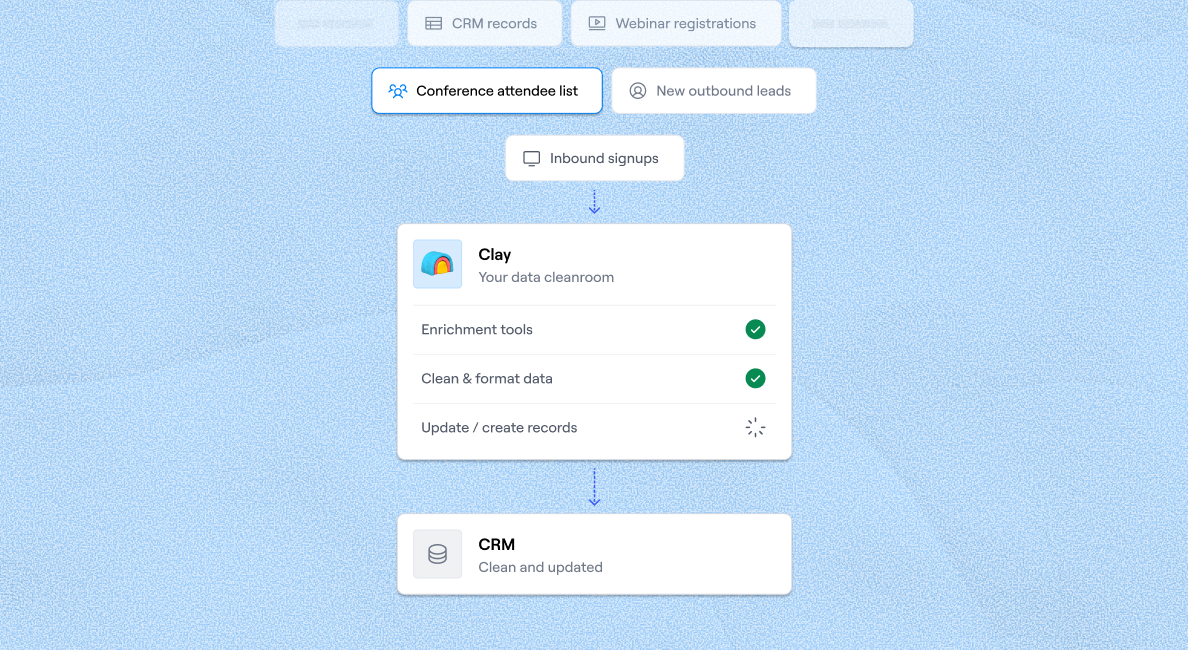
CRM enrichment
Обогащение CRM
Keep your CRM clean with the highest quality data
Поддерживайте чистоту CRM с данными высочайшего качества
BY TEAM
ПО КОМАНДАМ



GTM OpsОписание ссылки будет размещено в этом месте.МаркетингОписание ссылки будет размещено в этом месте.ПродажиОписание ссылки будет размещено в этом месте.
BY STAGE
ПО СТАДИЯМ


EnterpriseОписание ссылки будет размещено в этом месте.СтартапыОписание ссылки будет размещено в этом месте.
BY CUSTOMERS
ПО КЛИЕНТАМ


Rootly
Rootly
Link long form description will go in this slot here.
Описание ссылки будет размещено в этом месте.

Regency Supply
Regency Supply
Link long form description will go in this slot here.
Описание ссылки будет размещено в этом месте.

Mistral AI
Mistral AI
Link long form description will go in this slot here.
Описание ссылки будет размещено в этом месте.

A-LIGN
A-LIGN
Link long form description will go in this slot here.
Описание ссылки будет размещено в этом месте.

Intercom
Intercom
Link long form description will go in this slot here.
Описание ссылки будет размещено в этом месте.
Intercom
Intercom
Grew their outbound-sourced pipeline by +140%
Увеличили пайплайн из исходящих каналов на +140%

START GROWING
НАЧНИТЕ РАСТИ




ТрансляцииОписание ссылки будет размещено в этом месте.Когортные занятия в режиме реального времениОписание ссылки будет размещено в этом месте.Найти экспертов по ClayОписание ссылки будет размещено в этом месте.Нанять GTM-специалистовОписание ссылки будет размещено в этом месте.Доска вакансий GTMEОписание ссылки будет размещено в этом месте.
DISCOVER
ОТКРОЙТЕ ДЛЯ СЕБЯ
UniversityОписание ссылки будет размещено в этом месте.ШаблоныОписание ссылки будет размещено в этом месте.Блог GTMEОписание ссылки будет размещено в этом месте.Документация поддержкиОписание ссылки будет размещено в этом месте.
Community
Сообщество
Живые мероприятияОписание ссылки будет размещено в этом месте.Clay CupОписание ссылки будет размещено в этом месте.Сообщество ClayОписание ссылки будет размещено в этом месте.SlackОписание ссылки будет размещено в этом месте.
PARTNER WITH US
СТАНЬТЕ ПАРТНЁРОМ
Стать партнёромОписание ссылки будет размещено в этом месте.Партнёры по решениямОписание ссылки будет размещено в этом месте.Партнёры по интеграциямОписание ссылки будет размещено в этом месте.Программа для креаторовОписание ссылки будет размещено в этом месте.Программа для стартаповОписание ссылки будет размещено в этом месте.Частный капиталОписание ссылки будет размещено в этом месте.
Clay Commnity
Сообщество Clay
In Nigeria, she built a life where money wouldn’t decide
В Нигерии она построила жизнь, в которой деньги не решают

OUR COMPANY
НАША КОМПАНИЯ



О насОписание ссылки будет размещено в этом месте.КарьераОписание ссылки будет размещено в этом месте.Открытые вакансииОписание ссылки будет размещено в этом месте.
GET IN TOUCH
СВЯЗАТЬСЯ С НАМИ


КонтактыОписание ссылки будет размещено в этом месте.ПрессаОписание ссылки будет размещено в этом месте.
SOCIALS
СОЦСЕТИ



LinkedInОписание ссылки будет размещено в этом месте.YouTubeОписание ссылки будет размещено в этом месте.XОписание ссылки будет размещено в этом месте.
Article – NY Times
Статья — NY Times
Clay allows employees to sell shares at a $5b valuation.
Clay позволяет сотрудникам продать акции при оценке в $5 млрд.

Best Open Source Web Scraping Tools: Top 5 Reviewed
Лучшие open-source инструменты для веб-скрапинга: обзор топ-5

Web scraping is your ticket to unlocking access to vast amounts of data available on the internet and skipping time-consuming manual research.
Веб-скрапинг — это ваш ключ к доступу к огромным объёмам данных в интернете и возможность пропустить трудоёмкие ручные исследования.
In only a few clicks, you can get info that serves as a solid foundation for generating leads, researching the market and competition, and growing your business.
Всего в несколько кликов вы можете получить информацию, которая станет надёжной основой для генерации лидов, исследования рынка и конкурентов, а также роста вашего бизнеса.
There are plenty of fish in the web scraping sea, and if your priorities are cost efficiency and flexibility, open-source tools can be the way to go. 🧑💻
В море веб-скрапинга полно вариантов, и если ваши приоритеты — экономичность и гибкость, open-source инструменты могут быть отличным выбором. 🧑💻
While the open-source filter narrows down your options to a certain degree, you can still find plenty of choices. To help you understand their advantages and drawbacks, our team compiled this list of excellent web scraping tools among open-source options.
Хотя фильтр open-source в определённой степени сужает ваши варианты, выбор всё равно остаётся обширным. Чтобы помочь вам понять их преимущества и недостатки, наша команда составила этот список отличных инструментов веб-скрапинга среди open-source решений.
We also found a potentially superior alternative that offers more efficiency. 🥊
Мы также нашли потенциально более совершенную альтернативу, предлагающую большую эффективность. 🥊
TL;DR
- The top five open source web scraping tools are Scrapy, Beautiful Soup, PySpider, Apache Nutch, and Heritrix — each suited to different use cases and technical skill levels.
- Open source scrapers are free and flexible, but most require coding knowledge (Python or Java) and come with tradeoffs around JavaScript handling, scalability, or security.
- If you need scraping plus enrichment, prospecting, and campaign personalization without writing code, Clay is a no-code alternative worth considering.
- Clay's Claygent (an AI-based web scraper), Chrome extension, and pre-built web scraping templates let you extract and normalize data without any programming background.
КраткоТоп-5 open-source инструментов для веб-скрапинга — это Scrapy, Beautiful Soup, PySpider, Apache Nutch и Heritrix, каждый из которых подходит для разных задач и уровней технической подготовки.Open-source скраперы бесплатны и гибки, но большинство требуют навыков программирования (Python или Java) и имеют компромиссы в работе с JavaScript, масштабируемости или безопасности.Если вам нужен скрапинг плюс обогащение, проспектинг и персонализация кампаний без написания кода, Clay — достойная no-code альтернатива.Claygent от Clay (AI-скрапер), расширение для Chrome и готовые шаблоны веб-скрапинга позволяют извлекать и нормализовать данные без какого-либо опыта программирования.
How We Selected the Best Open Source Web Scraping Tools
Как мы выбирали лучшие open-source инструменты для веб-скрапинга
We wanted to ensure each and every review in this article is objective and bias-free, which is why our team tailored a unique approach:
Мы хотели убедиться, что каждый обзор в этой статье объективен и непредвзят, поэтому наша команда разработала уникальный подход:
Мы изучили функциональность десятков open-source веб-скраперов, чтобы понять их сильные и слабые стороны ✔️ Мы задействовали нашу сеть отраслевых экспертов и лидеров мнений для получения рекомендаций и ценного вклада ✔️Мы проверили популярные платформы отзывов, такие как Capterra и G2, чтобы узнать, какие open-source веб-скраперы популярны среди пользователей ✔️
We can shortlist the best open-source web scrapers, but we can't estimate your specific needs. To make a smart decision, consider the factors listed in the table below:
Мы можем составить шортлист лучших open-source веб-скраперов, но не можем оценить ваши конкретные потребности. Для принятия разумного решения учитывайте факторы, перечисленные в таблице ниже:
Top 5 Open Source Web Scraping Tools: In-Depth Reviews
Топ-5 open-source инструментов для веб-скрапинга: подробные обзоры
Our three-step approach to analyzing open-source web scrapers yielded a list of the top five options:
Наш трёхэтапный подход к анализу open-source веб-скраперов позволил составить список пяти лучших вариантов:
ScrapyBeautiful SoupPySpiderApache NutchHeritrix
📌 If you don't want to limit yourself to open-source solutions exclusively and want more feature variety, we'll introduce you to another fantastic web scraping alternative: Clay.
📌 Если вы не хотите ограничиваться исключительно open-source решениями и желаете большего разнообразия функций, мы познакомим вас с ещё одной отличной альтернативой для веб-скрапинга: Clay.
1. Scrapy
1. Scrapy
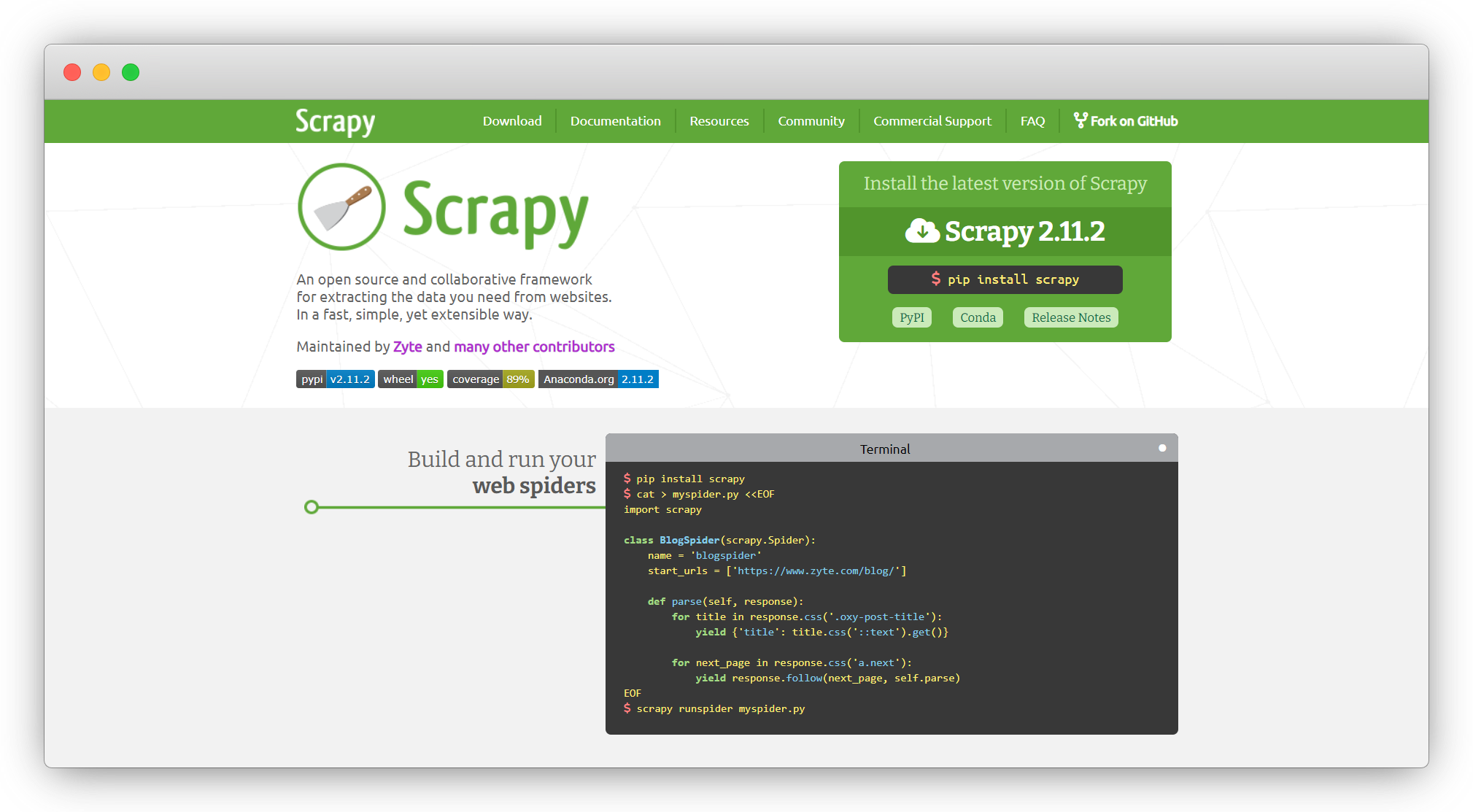
Scrapy sits at the open-source web scraping throne. It's written in Python, so you can install and run it like any other Python package. 👑
Scrapy занимает трон open-source веб-скрапинга. Он написан на Python, поэтому его можно установить и запустить как любой другой Python-пакет. 👑
Though Scrapy's main purpose is web scraping, it has two more uses:
Хотя основное назначение Scrapy — веб-скрапинг, у него есть ещё два применения:
Извлечение данных через APIУниверсальный веб-краулинг
To extract info from a web page with Scrapy, you need to write spiders and define how the website will be scraped, how to complete the crawl, and how to pull structured data.
Чтобы извлечь информацию с веб-страницы с помощью Scrapy, нужно написать «пауков» (spiders) и определить, как будет парситься сайт, как завершать обход и как извлекать структурированные данные.
You'll be thrilled by Scrapy's ability to process multiple requests simultaneously. You don't have to wait for one request to complete before running another one.
Вас порадует способность Scrapy обрабатывать несколько запросов одновременно. Не нужно ждать завершения одного запроса, чтобы запустить следующий.
If you want strong extensibility support, Scrapy has it. Different middleware, extensions, and pipelines allow you to add your own functionalities to the tool.
Если вам нужна мощная поддержка расширяемости, у Scrapy она есть. Различные middleware, расширения и конвейеры позволяют добавлять собственные функции в инструмент.
While you can extend the supported file formats in the tool's settings for more flexibility, by default, Scrapy lets you store data in:
Хотя вы можете расширить поддерживаемые форматы файлов в настройках инструмента для большей гибкости, по умолчанию Scrapy позволяет сохранять данные в:
JSONCSVXML
Scrapy is completely free to use, making it an excellent option for beginners with a limited budget and startups.
Scrapy полностью бесплатен, что делает его отличным вариантом для начинающих с ограниченным бюджетом и стартапов.
As for potential drawbacks, it's important to mention that Scrapy can't scrape dynamic content on its own (you can use plug-ins to change this). There's also a learning curve, especially for those who aren't familiar with Python.
Что касается потенциальных недостатков, важно отметить, что Scrapy не может парсить динамический контент самостоятельно (можно использовать плагины для решения этой проблемы). Также присутствует кривая обучения, особенно для тех, кто не знаком с Python.
✔️ Written in Python, easy to set up
✔️ Написан на Python, легко настраивается
✔️ Extensibility support
✔️ Поддержка расширяемости
✔️ Multiple export options
✔️ Множество вариантов экспорта
2. Beautiful Soup
2. Beautiful Soup
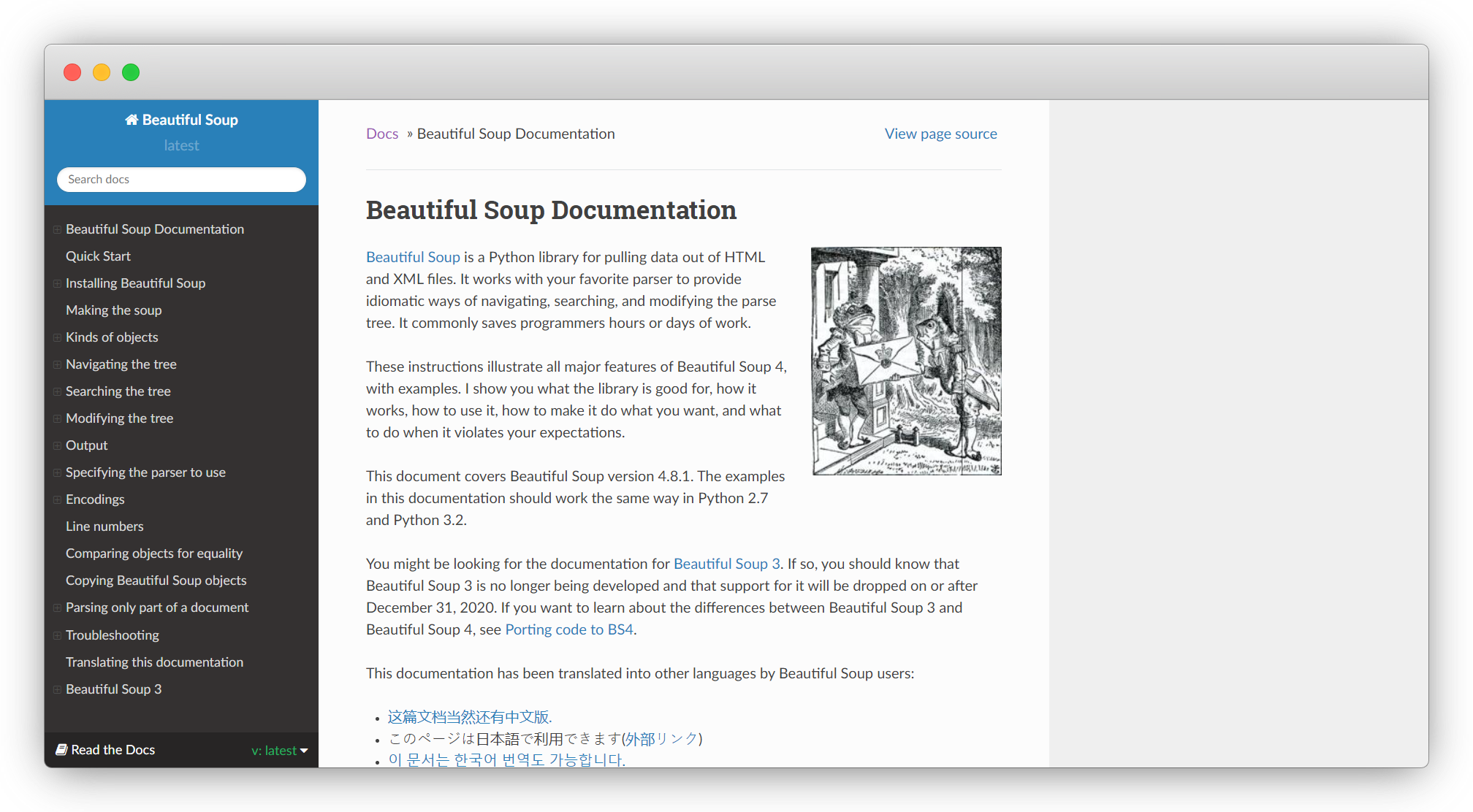
Beautiful Soup is a Python package that can pull data from HTML and XML documents, and you can use it for web scraping purposes.
Beautiful Soup — это Python-пакет, который может извлекать данные из HTML- и XML-документов, и его можно использовать для веб-скрапинга.
The package works by creating a parse tree of the parsed web page based on specific criteria. This tree is filled with Python elements. You can navigate and modify it to pull the elements you're interested in.
Пакет работает путём создания дерева разбора обработанной веб-страницы на основе определённых критериев. Это дерево заполнено элементами Python. Вы можете перемещаться по нему и модифицировать его для извлечения нужных элементов.
Beautiful Soup is known for its ease of use. A user-friendly syntax makes it appealing even for non-programmers and scraping novices. Still, the package is quite powerful and can handle missing or broken HTML by trying to interpret them to get you the data you need. 💪
Beautiful Soup известен своей простотой использования. Удобный синтаксис делает его привлекательным даже для непрограммистов и новичков в скрапинге. При этом пакет достаточно мощный и может обрабатывать отсутствующий или повреждённый HTML, пытаясь интерпретировать его для получения нужных данных. 💪
If you're new to the Beautiful Soup universe, you'll appreciate its huge community. You can easily find detailed documentation and resources on the functionalities and uses.
Если вы новичок во вселенной Beautiful Soup, вы оцените его огромное сообщество. Вы легко найдёте подробную документацию и ресурсы по функциям и применению.
In terms of drawbacks, Beautiful Soup can't handle concurrent requests as well as Scrapy can. So, if you're looking for a tool for large-scale or complex scraping, Beautiful Soup isn't the best option. Another potential downside is that Beautiful Soup can't handle JavaScript, which limits its functionality.
Что касается недостатков, Beautiful Soup не может обрабатывать параллельные запросы так же хорошо, как Scrapy. Поэтому, если вы ищете инструмент для масштабного или сложного скрапинга, Beautiful Soup — не лучший вариант. Ещё один потенциальный минус — Beautiful Soup не умеет работать с JavaScript, что ограничивает его функциональность.
✔️ Easy to use
✔️ Прост в использовании
✔️ Ideal for simpler scraping tasks
✔️ Идеален для простых задач скрапинга
✔️ Backed by a huge community
✔️ Поддерживается огромным сообществом
3. PySpider
3. PySpider
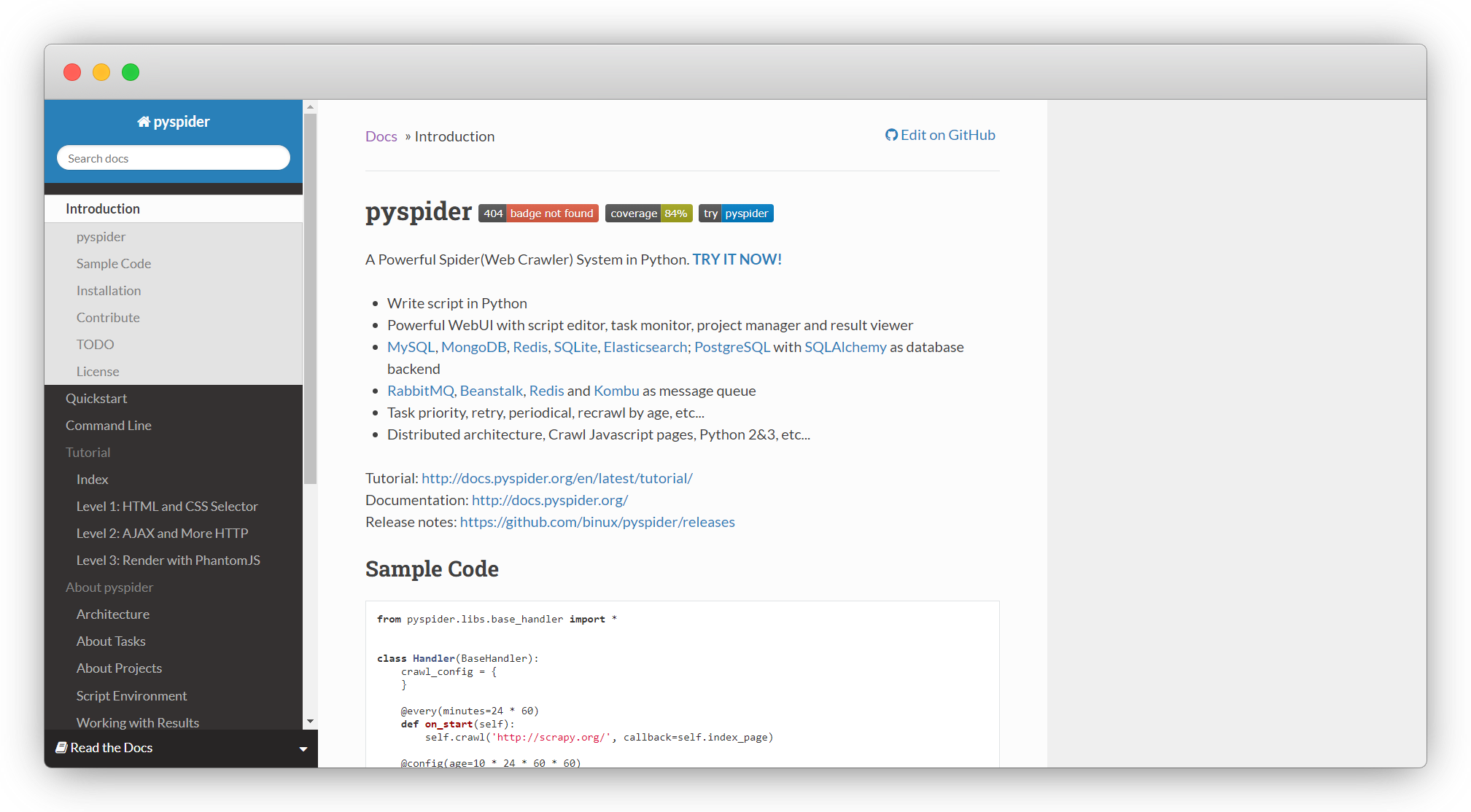
PySpider is an open-source web crawler system written in Python. The platform has its own web user interface that lets you:
PySpider — это open-source система веб-краулинга, написанная на Python. Платформа имеет собственный веб-интерфейс, который позволяет:
Редактировать скриптыОтслеживать задачиПросматривать результаты
If you need to scrape a web page at specific times or multiple times within a particular period, you'll like PySpider's scheduling option. It lets you schedule scraping tasks in advance and ensure you don't miss important info.
Если вам нужно парсить веб-страницу в определённое время или несколько раз за определённый период, вам понравится функция планирования PySpider. Она позволяет заранее планировать задачи парсинга и гарантировать, что вы не упустите важную информацию.
Another convenient option is handling concurrent requests. You can run multiple scraping tasks simultaneously and boost your efficiency. Plus, it can crawl JavaScript pages, providing fantastic scraping coverage.
Ещё одна удобная функция — обработка параллельных запросов. Вы можете запускать несколько задач скрапинга одновременно и повышать эффективность. Кроме того, он умеет обходить JavaScript-страницы, обеспечивая отличное покрытие при скрапинге.
PySpider and its options are well-documented, so you can easily find answers to your questions. Still, the system comes with a learning curve and a complex setup, so it's not an option for those lacking coding skills or scraping experience.
PySpider и его возможности хорошо задокументированы, поэтому вы легко найдёте ответы на свои вопросы. Тем не менее, система имеет кривую обучения и сложную настройку, поэтому она не подходит тем, у кого нет навыков программирования или опыта скрапинга.
✔️ Task scheduler
✔️ Планировщик задач
✔️ Can crawl JavaScript pages
✔️ Умеет обходить JavaScript-страницы
✔️ Well-documented
✔️ Хорошо задокументирован
💡 Pro tip: If you're looking for a no-code scraping solution, Clay is an excellent option.
💡 Совет: Если вы ищете no-code решение для скрапинга, Clay — отличный вариант.
4. Apache Nutch
4. Apache Nutch
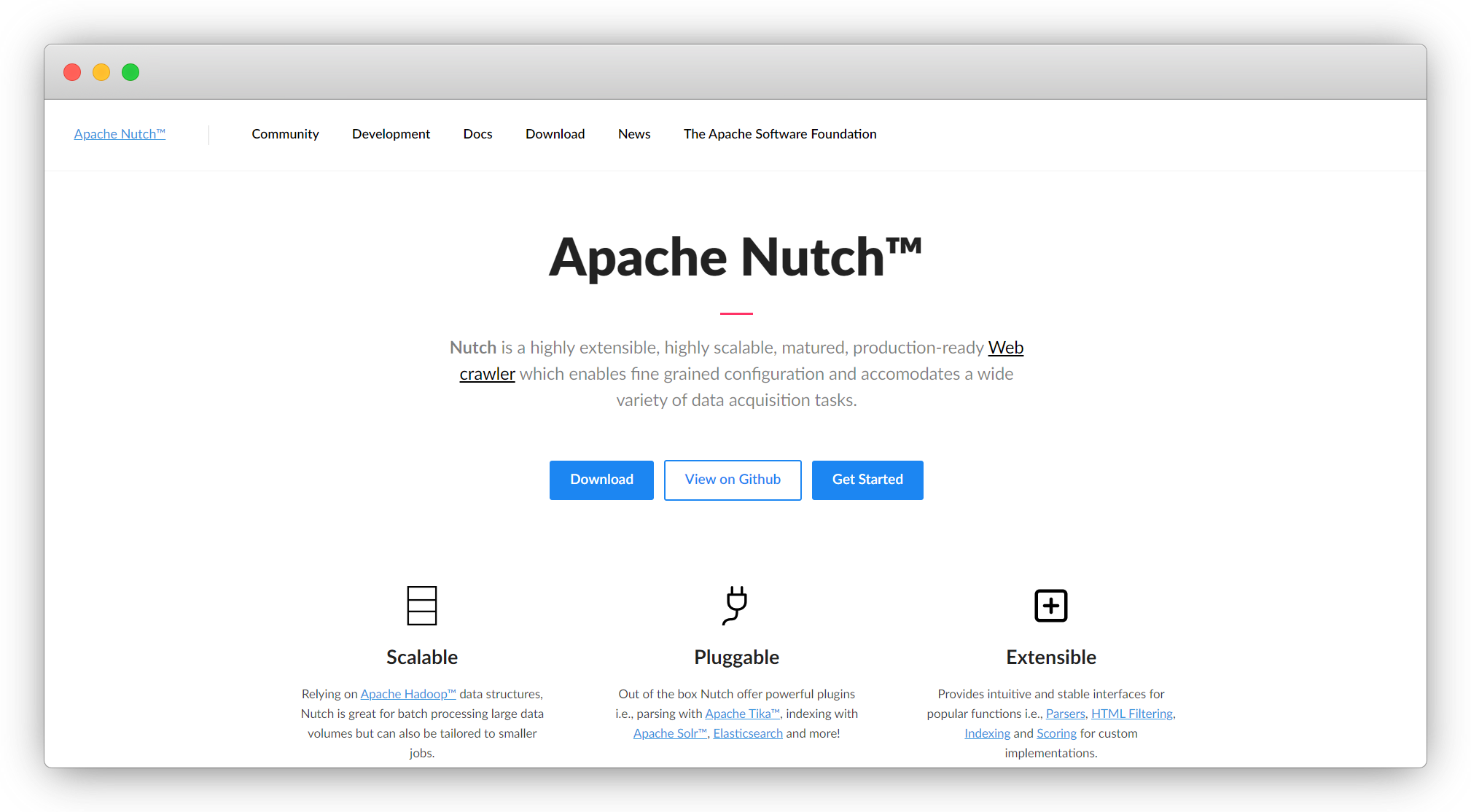
Known for its extensibility and scalability, Apache Nutch is another popular open-source web crawler.
Известный своей расширяемостью и масштабируемостью, Apache Nutch — ещё один популярный open-source веб-краулер.
The crawler is written in Java and based on the Apache Hadoop framework designed for seamless processing of large datasets across clusters of computers. Thanks to this, Apache Nutch can handle large-scale scraping tasks without a drop in performance. Of course, it's also suitable for smaller scraping jobs.
Краулер написан на Java и основан на фреймворке Apache Hadoop, предназначенном для бесшовной обработки больших наборов данных в кластерах компьютеров. Благодаря этому Apache Nutch может справляться с масштабными задачами скрапинга без потери производительности. Разумеется, он также подходит для более мелких задач.
Apache Nutch comes with built-in plugins, including:
Apache Nutch поставляется со встроенными плагинами, включая:
Apache Tika для парсингаApache Solr для индексации данных
As the crawler is extensible and has a modular architecture, users can also configure custom implementations for parsing, HTML filtering, or scoring and create their own plug-ins. 🔌
Поскольку краулер расширяем и имеет модульную архитектуру, пользователи также могут настраивать собственные реализации для парсинга, фильтрации HTML или скоринга и создавать собственные плагины. 🔌
The platform has a wide community and extensive documentation, so you can easily find answers to your questions and resolve issues. Like other platforms on the list, this one's also free. 💲
Платформа имеет широкое сообщество и обширную документацию, поэтому вы легко найдёте ответы на свои вопросы и решите проблемы. Как и другие платформы в списке, эта тоже бесплатна. 💲
As for drawbacks, some users report that Apache Nutch consumes too much memory and CPU, so you need a solid infrastructure if you want to run it.
Что касается недостатков, некоторые пользователи отмечают, что Apache Nutch потребляет слишком много памяти и CPU, поэтому для его запуска нужна надёжная инфраструктура.
✔️ Good for large-scale scraping tasks
✔️ Подходит для масштабных задач скрапинга
✔️ Modular architecture
✔️ Модульная архитектура
✔️Extensive documentation and a live community
✔️ Обширная документация и активное сообщество
5. Heritrix
5. Heritrix
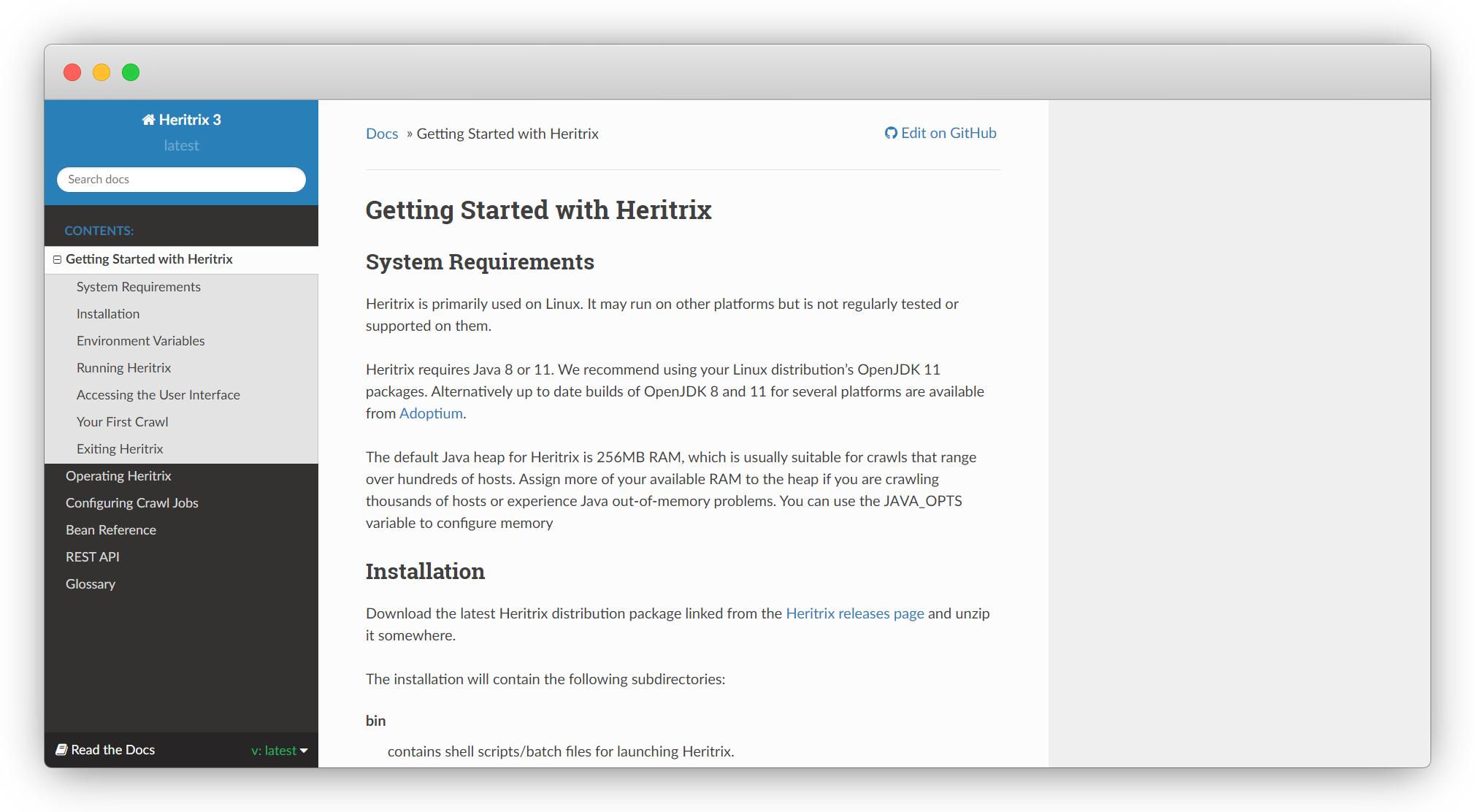
Heritrix is another open-source web scraper written in Java. Its main purpose is web archiving: collecting data from the internet in an archival format to preserve it for scientists or the public.
Heritrix — ещё один open-source веб-скрапер, написанный на Java. Его основное назначение — веб-архивирование: сбор данных из интернета в архивном формате для сохранения в интересах учёных или широкой публики.
Heritrix respects the robots.txt exclusion directives and META nofollow tags, so it won't try to access pages, content, or links that aren't allowed by the website you're trying to scrape. This ensures you're always scraping ethically without breaking any rules or laws. 👌
Heritrix соблюдает директивы исключения robots.txt и META-теги nofollow, поэтому не будет пытаться получить доступ к страницам, контенту или ссылкам, которые запрещены сайтом, который вы пытаетесь парсить. Это гарантирует, что вы всегда парсите этично, не нарушая правил или законов. 👌
The system comes with a web-based user interface, where you can control the scraping process and see any potential issues or delays.
Система оснащена веб-интерфейсом, где вы можете контролировать процесс скрапинга и видеть возможные проблемы или задержки.
Heritrix is completely free, and you can redistribute or modify it without worries.
Heritrix полностью бесплатен, и вы можете свободно распространять или модифицировать его.
While it's excellent for collecting all kinds of data points, Heritrix has had issues with crawling and storing duplicate content in the past, which can be a significant drawback for some users.
Хотя он отлично подходит для сбора всех видов данных, в прошлом у Heritrix были проблемы с обходом и сохранением дублирующегося контента, что может быть существенным недостатком для некоторых пользователей.
✔️ Designed for web archiving
✔️ Предназначен для веб-архивирования
✔️ Respects robots.txt exclusion directives and META nofollow tags
✔️ Соблюдает директивы исключения robots.txt и META-теги nofollow
✔️ Web-based user interface
✔️ Веб-интерфейс
Benefits and Limitations of Open Source Web Scraping Tools
Преимущества и ограничения open-source инструментов для веб-скрапинга
While open-source software tools have plenty of benefits, they also come with a fair share of drawbacks. Exploring these in more detail can help you determine if this is the right path for you. Consult the table below for an overview of benefits and limitations:
Хотя open-source программные инструменты имеют множество преимуществ, у них также есть немало недостатков. Их подробное изучение поможет вам определить, подходит ли вам этот путь. Обратитесь к таблице ниже для обзора преимуществ и ограничений:
What Can You Use Instead of Open-Source Web Scrapers?
Что можно использовать вместо open-source веб-скраперов?
If you're not willing to compromise on security, compatibility, or user-friendliness, consider looking into other web scraping options. Specialized tools with advanced web scraping features are your best bet. They can scrape any type of data from any website in seconds. ⏩
Если вы не готовы идти на компромисс в вопросах безопасности, совместимости или удобства использования, рассмотрите другие варианты веб-скрапинга. Специализированные инструменты с продвинутыми функциями веб-скрапинга — ваш лучший выбор. Они могут парсить любой тип данных с любого сайта за секунды. ⏩
Some tools even go beyond data scraping and offer options for:
Некоторые инструменты даже выходят за рамки скрапинга данных и предлагают возможности для:
ОбогащенияПроспектингаПерсонализации кампаний
If you're in the market for such a tool, Clay is a fantastic choice. This GTM infrastructure platform offers ease of use, advanced functionality, and affordable pricing to help you tighten workflows. 😍
Если вы ищете такой инструмент, Clay — отличный выбор. Эта GTM-инфраструктурная платформа предлагает простоту использования, продвинутую функциональность и доступные цены для оптимизации рабочих процессов. 😍
🚨 Want to see Clay's scraping features first-hand? Check out this video:
🚨 Хотите увидеть функции скрапинга Clay своими глазами? Посмотрите это видео:
How Can Clay Help You Scrape Data?
Как Clay может помочь вам парсить данные?
As a top-rated GTM infrastructure platform, Clay offers several scraping features that can help you search every corner of the internet and find the info you need.
Как высоко оценённая GTM-инфраструктурная платформа, Clay предлагает несколько функций скрапинга, которые помогут вам обыскать каждый уголок интернета и найти нужную информацию.
One of the platform's stellar options is Claygent, an AI-based web scraper. Tell Claygent what you need, and it will visit every website to find the info. You only need to provide a few simple prompts in Claygent's Mission field, and it will take care of the rest. 😎
Одна из выдающихся функций платформы — Claygent, AI-скрапер. Скажите Claygent, что вам нужно, и он посетит каждый сайт, чтобы найти информацию. Вам нужно лишь ввести несколько простых промптов в поле Mission Claygent, и он позаботится об остальном. 😎
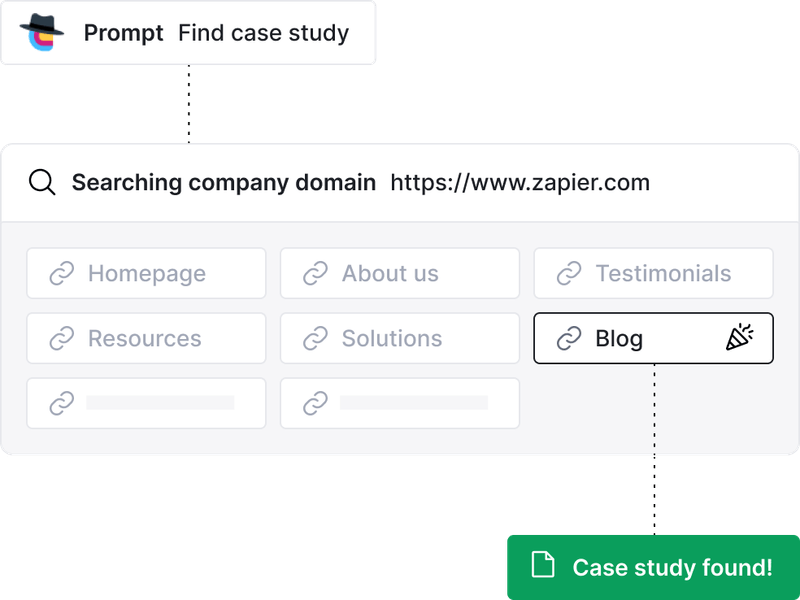
Besides scraping data from websites, Claygent can also read and summarize PDFs, so you can extract info from documents as well. As you can check the logic behind Claygent's every answer, you can be 100% confident of its accuracy. 🥰
Помимо парсинга данных с сайтов, Claygent также может читать и резюмировать PDF-файлы, так что вы можете извлекать информацию и из документов. Поскольку вы можете проверить логику каждого ответа Claygent, вы можете быть на 100% уверены в его точности. 🥰
Another noteworthy scraping feature in Clay's arsenal is the Chrome extension. It can scrape info from any website and extract it to a table for easier navigation and further work, allowing your team to focus on other valuable aspects of your sales campaigns. ⌛
Ещё одна примечательная функция скрапинга в арсенале Clay — расширение для Chrome. Оно может парсить информацию с любого сайта и извлекать её в таблицу для удобной навигации и дальнейшей работы, позволяя вашей команде сосредоточиться на других важных аспектах продажных кампаний. ⌛
Web scraping templates are another reason why Clay stands out from its alternatives. Use these templates to save time when performing specific scraping tasks, such as:
Шаблоны веб-скрапинга — ещё одна причина, по которой Clay выделяется среди альтернатив. Используйте эти шаблоны для экономии времени при выполнении конкретных задач скрапинга, таких как:
Парсинг вакансий Indeed для получения количества офисов компанииПоиск количества открытых вакансий и сотрудников по URL компанииПоиск локальных бизнесов и их контактной информации через Google Maps
A common problem when web scraping is data uniformity. You often end up with inconsistent names, job titles, locations, or whatever data points you're scraping. Clay helps you overcome this problem with its data formatting options that clean the scraped data and organize it in a table. The feature lets you automatically normalize data points like:
Распространённая проблема при веб-скрапинге — однородность данных. Часто вы получаете непоследовательные имена, должности, местоположения или другие точки данных. Clay помогает решить эту проблему с помощью функций форматирования данных, которые очищают извлечённые данные и организуют их в таблицу. Функция позволяет автоматически нормализовать такие данные, как:
✔️ Имя и фамилия✔️ Название компании✔️ Должность✔️ Домен✔️ Местоположение
Other Clay Features You'll Adore
Другие функции Clay, которые вам понравятся
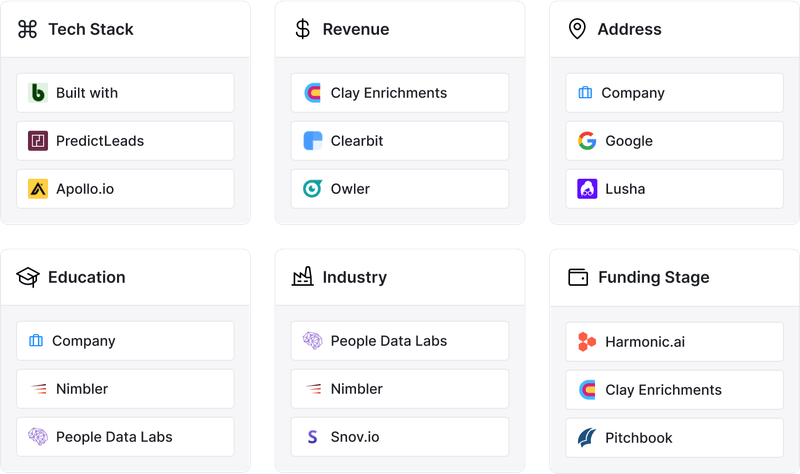
Fantastic scraping options are only a portion of Clay's offer.
Отличные возможности скрапинга — лишь часть предложения Clay.
Unlike many of its alternatives, which pull data from a single database, Clay can tap into over 50 of them, allowing you to find even the most specific pieces of info. This ensures fantastic data coverage. You can extract all kinds of data from virtually any corner of the internet.
В отличие от многих альтернатив, которые извлекают данные из единственной базы, Clay может подключаться к более чем 50 из них, позволяя находить даже самую специфическую информацию. Это обеспечивает отличное покрытие данных. Вы можете извлекать любые данные практически из любого уголка интернета.
Aside from that, Clay offers plenty of other useful options to help you streamline your workflows and save time, such as:
Помимо этого, Clay предлагает множество других полезных функций для оптимизации рабочих процессов и экономии времени, таких как:
Although it's charged with advanced options that can scale your business, Clay is incredibly easy to set up and use. You don't need a degree in programming or any knowledge of Python or JavaScript to leverage Clay's options.
Несмотря на то что Clay наполнен продвинутыми функциями для масштабирования вашего бизнеса, Clay невероятно прост в настройке и использовании. Вам не нужна степень в программировании или знание Python или JavaScript для использования возможностей Clay.
See what a user says about Clay:
Вот что говорит пользователь о Clay:

Create a Clay Account
Создайте аккаунт в Clay
The only action left to take is to create your Clay account, and that won't take much of your time:
Единственное оставшееся действие — создать аккаунт в Clay, и это не займёт много времени:
Перейдите на страницу регистрации платформы 👈Укажите необходимую информацию Исследуйте возможности Clay!
Clay has a free forever plan that allows you to explore the platform and its options and integrations at zero cost and see if it's a good fit. If you like it, you can choose one of the paid plans outlined below:
У Clay есть бесплатный навсегда план, который позволяет изучить платформу, её возможности и интеграции без каких-либо затрат и понять, подходит ли она вам. Если вам понравится, вы можете выбрать один из платных планов, описанных ниже:
All plans, including the free one, come with unlimited users, so you and your entire team can enjoy Clay. 🥰
Все планы, включая бесплатный, включают неограниченное количество пользователей, так что вы и вся ваша команда можете пользоваться Clay. 🥰
If you're not sure if Clay's the right option just yet and want to learn more about it, visit Clay University for detailed overviews of the platform's features. We also recommend joining the Slack community and subscribing to the newsletter to learn about different uses of Clay and receive the latest updates. 📥
Если вы ещё не уверены, что Clay — правильный выбор, и хотите узнать больше, посетите Clay University для подробных обзоров функций платформы. Мы также рекомендуем присоединиться к Slack-сообществу и подписаться на рассылку, чтобы узнавать о различных способах использования Clay и получать последние обновления. 📥
Frequently Asked Questions
Часто задаваемые вопросы
Which open source web scraping tool is best for beginners?
Какой open-source инструмент для веб-скрапинга лучше всего подходит для начинающих?
Beautiful Soup is the most beginner-friendly option on this list. Its user-friendly syntax works even for non-programmers, and it has a large community with detailed documentation. That said, it's best suited for simpler scraping tasks and can't handle JavaScript or concurrent requests.
Beautiful Soup — самый дружелюбный к новичкам вариант в этом списке. Его удобный синтаксис работает даже для непрограммистов, а большое сообщество предоставляет подробную документацию. При этом он лучше всего подходит для простых задач скрапинга и не умеет работать с JavaScript или параллельными запросами.
Do any of these open source scrapers handle JavaScript-rendered pages?
Поддерживают ли какие-либо из этих open-source скраперов страницы с рендерингом JavaScript?
PySpider can crawl JavaScript pages, which gives it an advantage over Scrapy and Beautiful Soup for dynamic content. Scrapy can't handle dynamic content on its own, though you can add plug-ins to extend that capability.
PySpider умеет обходить JavaScript-страницы, что даёт ему преимущество перед Scrapy и Beautiful Soup при работе с динамическим контентом. Scrapy не может самостоятельно обрабатывать динамический контент, хотя вы можете добавить плагины для расширения этой возможности.
What's the difference between a web scraper and a web crawler?
В чём разница между веб-скрапером и веб-краулером?
A web scraper extracts specific data from web pages, while a web crawler systematically browses the web to index or archive content. Several tools on this list, including Scrapy, Apache Nutch, and Heritrix, support both functions to varying degrees.
Веб-скрапер извлекает конкретные данные с веб-страниц, тогда как веб-краулер систематически обходит интернет для индексации или архивирования контента. Несколько инструментов из этого списка, включая Scrapy, Apache Nutch и Heritrix, поддерживают обе функции в разной степени.
When does it make sense to use a no-code tool instead of an open source scraper?
Когда имеет смысл использовать no-code инструмент вместо open-source скрапера?
If your team lacks Python or Java experience, or if you need scraping combined with enrichment, prospecting, and campaign personalization, a no-code tool is the faster path. Clay's Claygent and Chrome extension let you extract and normalize data without writing any code.
Если у вашей команды нет опыта работы с Python или Java, или если вам нужен скрапинг в сочетании с обогащением, проспектингом и персонализацией кампаний, no-code инструмент — более быстрый путь. Claygent от Clay и расширение для Chrome позволяют извлекать и нормализовать данные без написания кода.
Web scraping is your ticket to unlocking access to vast amounts of data available on the internet and skipping time-consuming manual research.
Веб-скрапинг — это ваш ключ к доступу к огромным объёмам данных в интернете и возможность пропустить трудоёмкие ручные исследования.
In only a few clicks, you can get info that serves as a solid foundation for generating leads, researching the market and competition, and growing your business.
Всего в несколько кликов вы можете получить информацию, которая станет надёжной основой для генерации лидов, исследования рынка и конкурентов, а также роста вашего бизнеса.
There are plenty of fish in the web scraping sea, and if your priorities are cost efficiency and flexibility, open-source tools can be the way to go. 🧑💻
В море веб-скрапинга полно вариантов, и если ваши приоритеты — экономичность и гибкость, open-source инструменты могут быть отличным выбором. 🧑💻
While the open-source filter narrows down your options to a certain degree, you can still find plenty of choices. To help you understand their advantages and drawbacks, our team compiled this list of excellent web scraping tools among open-source options.
Хотя фильтр open-source в определённой степени сужает ваши варианты, выбор всё равно остаётся обширным. Чтобы помочь вам понять их преимущества и недостатки, наша команда составила этот список отличных инструментов веб-скрапинга среди open-source решений.
We also found a potentially superior alternative that offers more efficiency. 🥊
Мы также нашли потенциально более совершенную альтернативу, предлагающую большую эффективность. 🥊
TL;DR
- The top five open source web scraping tools are Scrapy, Beautiful Soup, PySpider, Apache Nutch, and Heritrix — each suited to different use cases and technical skill levels.
- Open source scrapers are free and flexible, but most require coding knowledge (Python or Java) and come with tradeoffs around JavaScript handling, scalability, or security.
- If you need scraping plus enrichment, prospecting, and campaign personalization without writing code, Clay is a no-code alternative worth considering.
- Clay's Claygent (an AI-based web scraper), Chrome extension, and pre-built web scraping templates let you extract and normalize data without any programming background.
КраткоТоп-5 open-source инструментов для веб-скрапинга — это Scrapy, Beautiful Soup, PySpider, Apache Nutch и Heritrix, каждый из которых подходит для разных задач и уровней технической подготовки.Open-source скраперы бесплатны и гибки, но большинство требуют навыков программирования (Python или Java) и имеют компромиссы в работе с JavaScript, масштабируемости или безопасности.Если вам нужен скрапинг плюс обогащение, проспектинг и персонализация кампаний без написания кода, Clay — достойная no-code альтернатива.Claygent от Clay (AI-скрапер), расширение для Chrome и готовые шаблоны веб-скрапинга позволяют извлекать и нормализовать данные без какого-либо опыта программирования.
How We Selected the Best Open Source Web Scraping Tools
Как мы выбирали лучшие open-source инструменты для веб-скрапинга
We wanted to ensure each and every review in this article is objective and bias-free, which is why our team tailored a unique approach:
Мы хотели убедиться, что каждый обзор в этой статье объективен и непредвзят, поэтому наша команда разработала уникальный подход:
Мы изучили функциональность десятков open-source веб-скраперов, чтобы понять их сильные и слабые стороны ✔️ Мы задействовали нашу сеть отраслевых экспертов и лидеров мнений для получения рекомендаций и ценного вклада ✔️Мы проверили популярные платформы отзывов, такие как Capterra и G2, чтобы узнать, какие open-source веб-скраперы популярны среди пользователей ✔️
We can shortlist the best open-source web scrapers, but we can't estimate your specific needs. To make a smart decision, consider the factors listed in the table below:
Мы можем составить шортлист лучших open-source веб-скраперов, но не можем оценить ваши конкретные потребности. Для принятия разумного решения учитывайте факторы, перечисленные в таблице ниже:
Top 5 Open Source Web Scraping Tools: In-Depth Reviews
Топ-5 open-source инструментов для веб-скрапинга: подробные обзоры
Our three-step approach to analyzing open-source web scrapers yielded a list of the top five options:
Наш трёхэтапный подход к анализу open-source веб-скраперов позволил составить список пяти лучших вариантов:
ScrapyBeautiful SoupPySpiderApache NutchHeritrix
📌 If you don't want to limit yourself to open-source solutions exclusively and want more feature variety, we'll introduce you to another fantastic web scraping alternative: Clay.
📌 Если вы не хотите ограничиваться исключительно open-source решениями и желаете большего разнообразия функций, мы познакомим вас с ещё одной отличной альтернативой для веб-скрапинга: Clay.
1. Scrapy
1. Scrapy
Scrapy sits at the open-source web scraping throne. It's written in Python, so you can install and run it like any other Python package. 👑
Scrapy занимает трон open-source веб-скрапинга. Он написан на Python, поэтому его можно установить и запустить как любой другой Python-пакет. 👑
Though Scrapy's main purpose is web scraping, it has two more uses:
Хотя основное назначение Scrapy — веб-скрапинг, у него есть ещё два применения:
Извлечение данных через APIУниверсальный веб-краулинг
To extract info from a web page with Scrapy, you need to write spiders and define how the website will be scraped, how to complete the crawl, and how to pull structured data.
Чтобы извлечь информацию с веб-страницы с помощью Scrapy, нужно написать «пауков» (spiders) и определить, как будет парситься сайт, как завершать обход и как извлекать структурированные данные.
You'll be thrilled by Scrapy's ability to process multiple requests simultaneously. You don't have to wait for one request to complete before running another one.
Вас порадует способность Scrapy обрабатывать несколько запросов одновременно. Не нужно ждать завершения одного запроса, чтобы запустить следующий.
If you want strong extensibility support, Scrapy has it. Different middleware, extensions, and pipelines allow you to add your own functionalities to the tool.
Если вам нужна мощная поддержка расширяемости, у Scrapy она есть. Различные middleware, расширения и конвейеры позволяют добавлять собственные функции в инструмент.
While you can extend the supported file formats in the tool's settings for more flexibility, by default, Scrapy lets you store data in:
Хотя вы можете расширить поддерживаемые форматы файлов в настройках инструмента для большей гибкости, по умолчанию Scrapy позволяет сохранять данные в:
JSONCSVXML
Scrapy is completely free to use, making it an excellent option for beginners with a limited budget and startups.
Scrapy полностью бесплатен, что делает его отличным вариантом для начинающих с ограниченным бюджетом и стартапов.
As for potential drawbacks, it's important to mention that Scrapy can't scrape dynamic content on its own (you can use plug-ins to change this). There's also a learning curve, especially for those who aren't familiar with Python.
Что касается потенциальных недостатков, важно отметить, что Scrapy не может парсить динамический контент самостоятельно (можно использовать плагины для решения этой проблемы). Также присутствует кривая обучения, особенно для тех, кто не знаком с Python.
✔️ Written in Python, easy to set up
✔️ Написан на Python, легко настраивается
✔️ Extensibility support
✔️ Поддержка расширяемости
✔️ Multiple export options
✔️ Множество вариантов экспорта
2. Beautiful Soup
2. Beautiful Soup
Beautiful Soup is a Python package that can pull data from HTML and XML documents, and you can use it for web scraping purposes.
Beautiful Soup — это Python-пакет, который может извлекать данные из HTML- и XML-документов, и его можно использовать для веб-скрапинга.
The package works by creating a parse tree of the parsed web page based on specific criteria. This tree is filled with Python elements. You can navigate and modify it to pull the elements you're interested in.
Пакет работает путём создания дерева разбора обработанной веб-страницы на основе определённых критериев. Это дерево заполнено элементами Python. Вы можете перемещаться по нему и модифицировать его для извлечения нужных элементов.
Beautiful Soup is known for its ease of use. A user-friendly syntax makes it appealing even for non-programmers and scraping novices. Still, the package is quite powerful and can handle missing or broken HTML by trying to interpret them to get you the data you need. 💪
Beautiful Soup известен своей простотой использования. Удобный синтаксис делает его привлекательным даже для непрограммистов и новичков в скрапинге. При этом пакет достаточно мощный и может обрабатывать отсутствующий или повреждённый HTML, пытаясь интерпретировать его для получения нужных данных. 💪
If you're new to the Beautiful Soup universe, you'll appreciate its huge community. You can easily find detailed documentation and resources on the functionalities and uses.
Если вы новичок во вселенной Beautiful Soup, вы оцените его огромное сообщество. Вы легко найдёте подробную документацию и ресурсы по функциям и применению.
In terms of drawbacks, Beautiful Soup can't handle concurrent requests as well as Scrapy can. So, if you're looking for a tool for large-scale or complex scraping, Beautiful Soup isn't the best option. Another potential downside is that Beautiful Soup can't handle JavaScript, which limits its functionality.
Что касается недостатков, Beautiful Soup не может обрабатывать параллельные запросы так же хорошо, как Scrapy. Поэтому, если вы ищете инструмент для масштабного или сложного скрапинга, Beautiful Soup — не лучший вариант. Ещё один потенциальный минус — Beautiful Soup не умеет работать с JavaScript, что ограничивает его функциональность.
✔️ Easy to use
✔️ Прост в использовании
✔️ Ideal for simpler scraping tasks
✔️ Идеален для простых задач скрапинга
✔️ Backed by a huge community
✔️ Поддерживается огромным сообществом
3. PySpider
3. PySpider
PySpider is an open-source web crawler system written in Python. The platform has its own web user interface that lets you:
PySpider — это open-source система веб-краулинга, написанная на Python. Платформа имеет собственный веб-интерфейс, который позволяет:
Редактировать скриптыОтслеживать задачиПросматривать результаты
If you need to scrape a web page at specific times or multiple times within a particular period, you'll like PySpider's scheduling option. It lets you schedule scraping tasks in advance and ensure you don't miss important info.
Если вам нужно парсить веб-страницу в определённое время или несколько раз за определённый период, вам понравится функция планирования PySpider. Она позволяет заранее планировать задачи парсинга и гарантировать, что вы не упустите важную информацию.
Another convenient option is handling concurrent requests. You can run multiple scraping tasks simultaneously and boost your efficiency. Plus, it can crawl JavaScript pages, providing fantastic scraping coverage.
Ещё одна удобная функция — обработка параллельных запросов. Вы можете запускать несколько задач скрапинга одновременно и повышать эффективность. Кроме того, он умеет обходить JavaScript-страницы, обеспечивая отличное покрытие при скрапинге.
PySpider and its options are well-documented, so you can easily find answers to your questions. Still, the system comes with a learning curve and a complex setup, so it's not an option for those lacking coding skills or scraping experience.
PySpider и его возможности хорошо задокументированы, поэтому вы легко найдёте ответы на свои вопросы. Тем не менее, система имеет кривую обучения и сложную настройку, поэтому она не подходит тем, у кого нет навыков программирования или опыта скрапинга.
✔️ Task scheduler
✔️ Планировщик задач
✔️ Can crawl JavaScript pages
✔️ Умеет обходить JavaScript-страницы
✔️ Well-documented
✔️ Хорошо задокументирован
💡 Pro tip: If you're looking for a no-code scraping solution, Clay is an excellent option.
💡 Совет: Если вы ищете no-code решение для скрапинга, Clay — отличный вариант.
4. Apache Nutch
4. Apache Nutch
Known for its extensibility and scalability, Apache Nutch is another popular open-source web crawler.
Известный своей расширяемостью и масштабируемостью, Apache Nutch — ещё один популярный open-source веб-краулер.
The crawler is written in Java and based on the Apache Hadoop framework designed for seamless processing of large datasets across clusters of computers. Thanks to this, Apache Nutch can handle large-scale scraping tasks without a drop in performance. Of course, it's also suitable for smaller scraping jobs.
Краулер написан на Java и основан на фреймворке Apache Hadoop, предназначенном для бесшовной обработки больших наборов данных в кластерах компьютеров. Благодаря этому Apache Nutch может справляться с масштабными задачами скрапинга без потери производительности. Разумеется, он также подходит для более мелких задач.
Apache Nutch comes with built-in plugins, including:
Apache Nutch поставляется со встроенными плагинами, включая:
Apache Tika для парсингаApache Solr для индексации данных
As the crawler is extensible and has a modular architecture, users can also configure custom implementations for parsing, HTML filtering, or scoring and create their own plug-ins. 🔌
Поскольку краулер расширяем и имеет модульную архитектуру, пользователи также могут настраивать собственные реализации для парсинга, фильтрации HTML или скоринга и создавать собственные плагины. 🔌
The platform has a wide community and extensive documentation, so you can easily find answers to your questions and resolve issues. Like other platforms on the list, this one's also free. 💲
Платформа имеет широкое сообщество и обширную документацию, поэтому вы легко найдёте ответы на свои вопросы и решите проблемы. Как и другие платформы в списке, эта тоже бесплатна. 💲
As for drawbacks, some users report that Apache Nutch consumes too much memory and CPU, so you need a solid infrastructure if you want to run it.
Что касается недостатков, некоторые пользователи отмечают, что Apache Nutch потребляет слишком много памяти и CPU, поэтому для его запуска нужна надёжная инфраструктура.
✔️ Good for large-scale scraping tasks
✔️ Подходит для масштабных задач скрапинга
✔️ Modular architecture
✔️ Модульная архитектура
✔️Extensive documentation and a live community
✔️ Обширная документация и активное сообщество
5. Heritrix
5. Heritrix
Heritrix is another open-source web scraper written in Java. Its main purpose is web archiving: collecting data from the internet in an archival format to preserve it for scientists or the public.
Heritrix — ещё один open-source веб-скрапер, написанный на Java. Его основное назначение — веб-архивирование: сбор данных из интернета в архивном формате для сохранения в интересах учёных или широкой публики.
Heritrix respects the robots.txt exclusion directives and META nofollow tags, so it won't try to access pages, content, or links that aren't allowed by the website you're trying to scrape. This ensures you're always scraping ethically without breaking any rules or laws. 👌
Heritrix соблюдает директивы исключения robots.txt и META-теги nofollow, поэтому не будет пытаться получить доступ к страницам, контенту или ссылкам, которые запрещены сайтом, который вы пытаетесь парсить. Это гарантирует, что вы всегда парсите этично, не нарушая правил или законов. 👌
The system comes with a web-based user interface, where you can control the scraping process and see any potential issues or delays.
Система оснащена веб-интерфейсом, где вы можете контролировать процесс скрапинга и видеть возможные проблемы или задержки.
Heritrix is completely free, and you can redistribute or modify it without worries.
Heritrix полностью бесплатен, и вы можете свободно распространять или модифицировать его.
While it's excellent for collecting all kinds of data points, Heritrix has had issues with crawling and storing duplicate content in the past, which can be a significant drawback for some users.
Хотя он отлично подходит для сбора всех видов данных, в прошлом у Heritrix были проблемы с обходом и сохранением дублирующегося контента, что может быть существенным недостатком для некоторых пользователей.
✔️ Designed for web archiving
✔️ Предназначен для веб-архивирования
✔️ Respects robots.txt exclusion directives and META nofollow tags
✔️ Соблюдает директивы исключения robots.txt и META-теги nofollow
✔️ Web-based user interface
✔️ Веб-интерфейс
Benefits and Limitations of Open Source Web Scraping Tools
Преимущества и ограничения open-source инструментов для веб-скрапинга
While open-source software tools have plenty of benefits, they also come with a fair share of drawbacks. Exploring these in more detail can help you determine if this is the right path for you. Consult the table below for an overview of benefits and limitations:
Хотя open-source программные инструменты имеют множество преимуществ, у них также есть немало недостатков. Их подробное изучение поможет вам определить, подходит ли вам этот путь. Обратитесь к таблице ниже для обзора преимуществ и ограничений:
What Can You Use Instead of Open-Source Web Scrapers?
Что можно использовать вместо open-source веб-скраперов?
If you're not willing to compromise on security, compatibility, or user-friendliness, consider looking into other web scraping options. Specialized tools with advanced web scraping features are your best bet. They can scrape any type of data from any website in seconds. ⏩
Если вы не готовы идти на компромисс в вопросах безопасности, совместимости или удобства использования, рассмотрите другие варианты веб-скрапинга. Специализированные инструменты с продвинутыми функциями веб-скрапинга — ваш лучший выбор. Они могут парсить любой тип данных с любого сайта за секунды. ⏩
Some tools even go beyond data scraping and offer options for:
Некоторые инструменты даже выходят за рамки скрапинга данных и предлагают возможности для:
ОбогащенияПроспектингаПерсонализации кампаний
If you're in the market for such a tool, Clay is a fantastic choice. This GTM infrastructure platform offers ease of use, advanced functionality, and affordable pricing to help you tighten workflows. 😍
Если вы ищете такой инструмент, Clay — отличный выбор. Эта GTM-инфраструктурная платформа предлагает простоту использования, продвинутую функциональность и доступные цены для оптимизации рабочих процессов. 😍
🚨 Want to see Clay's scraping features first-hand? Check out this video:
🚨 Хотите увидеть функции скрапинга Clay своими глазами? Посмотрите это видео:
How Can Clay Help You Scrape Data?
Как Clay может помочь вам парсить данные?
As a top-rated GTM infrastructure platform, Clay offers several scraping features that can help you search every corner of the internet and find the info you need.
Как высоко оценённая GTM-инфраструктурная платформа, Clay предлагает несколько функций скрапинга, которые помогут вам обыскать каждый уголок интернета и найти нужную информацию.
One of the platform's stellar options is Claygent, an AI-based web scraper. Tell Claygent what you need, and it will visit every website to find the info. You only need to provide a few simple prompts in Claygent's Mission field, and it will take care of the rest. 😎
Одна из выдающихся функций платформы — Claygent, AI-скрапер. Скажите Claygent, что вам нужно, и он посетит каждый сайт, чтобы найти информацию. Вам нужно лишь ввести несколько простых промптов в поле Mission Claygent, и он позаботится об остальном. 😎
Besides scraping data from websites, Claygent can also read and summarize PDFs, so you can extract info from documents as well. As you can check the logic behind Claygent's every answer, you can be 100% confident of its accuracy. 🥰
Помимо парсинга данных с сайтов, Claygent также может читать и резюмировать PDF-файлы, так что вы можете извлекать информацию и из документов. Поскольку вы можете проверить логику каждого ответа Claygent, вы можете быть на 100% уверены в его точности. 🥰
Another noteworthy scraping feature in Clay's arsenal is the Chrome extension. It can scrape info from any website and extract it to a table for easier navigation and further work, allowing your team to focus on other valuable aspects of your sales campaigns. ⌛
Ещё одна примечательная функция скрапинга в арсенале Clay — расширение для Chrome. Оно может парсить информацию с любого сайта и извлекать её в таблицу для удобной навигации и дальнейшей работы, позволяя вашей команде сосредоточиться на других важных аспектах продажных кампаний. ⌛
Web scraping templates are another reason why Clay stands out from its alternatives. Use these templates to save time when performing specific scraping tasks, such as:
Шаблоны веб-скрапинга — ещё одна причина, по которой Clay выделяется среди альтернатив. Используйте эти шаблоны для экономии времени при выполнении конкретных задач скрапинга, таких как:
Парсинг вакансий Indeed для получения количества офисов компанииПоиск количества открытых вакансий и сотрудников по URL компанииПоиск локальных бизнесов и их контактной информации через Google Maps
A common problem when web scraping is data uniformity. You often end up with inconsistent names, job titles, locations, or whatever data points you're scraping. Clay helps you overcome this problem with its data formatting options that clean the scraped data and organize it in a table. The feature lets you automatically normalize data points like:
Распространённая проблема при веб-скрапинге — однородность данных. Часто вы получаете непоследовательные имена, должности, местоположения или другие точки данных. Clay помогает решить эту проблему с помощью функций форматирования данных, которые очищают извлечённые данные и организуют их в таблицу. Функция позволяет автоматически нормализовать такие данные, как:
✔️ Имя и фамилия✔️ Название компании✔️ Должность✔️ Домен✔️ Местоположение
Other Clay Features You'll Adore
Другие функции Clay, которые вам понравятся
Fantastic scraping options are only a portion of Clay's offer.
Отличные возможности скрапинга — лишь часть предложения Clay.
Unlike many of its alternatives, which pull data from a single database, Clay can tap into over 50 of them, allowing you to find even the most specific pieces of info. This ensures fantastic data coverage. You can extract all kinds of data from virtually any corner of the internet.
В отличие от многих альтернатив, которые извлекают данные из единственной базы, Clay может подключаться к более чем 50 из них, позволяя находить даже самую специфическую информацию. Это обеспечивает отличное покрытие данных. Вы можете извлекать любые данные практически из любого уголка интернета.
Aside from that, Clay offers plenty of other useful options to help you streamline your workflows and save time, such as:
Помимо этого, Clay предлагает множество других полезных функций для оптимизации рабочих процессов и экономии времени, таких как:
Although it's charged with advanced options that can scale your business, Clay is incredibly easy to set up and use. You don't need a degree in programming or any knowledge of Python or JavaScript to leverage Clay's options.
Несмотря на то что Clay наполнен продвинутыми функциями для масштабирования вашего бизнеса, Clay невероятно прост в настройке и использовании. Вам не нужна степень в программировании или знание Python или JavaScript для использования возможностей Clay.
See what a user says about Clay:
Вот что говорит пользователь о Clay:
Create a Clay Account
Создайте аккаунт в Clay
The only action left to take is to create your Clay account, and that won't take much of your time:
Единственное оставшееся действие — создать аккаунт в Clay, и это не займёт много времени:
Перейдите на страницу регистрации платформы 👈Укажите необходимую информацию Исследуйте возможности Clay!
Clay has a free forever plan that allows you to explore the platform and its options and integrations at zero cost and see if it's a good fit. If you like it, you can choose one of the paid plans outlined below:
У Clay есть бесплатный навсегда план, который позволяет изучить платформу, её возможности и интеграции без каких-либо затрат и понять, подходит ли она вам. Если вам понравится, вы можете выбрать один из платных планов, описанных ниже:
All plans, including the free one, come with unlimited users, so you and your entire team can enjoy Clay. 🥰
Все планы, включая бесплатный, включают неограниченное количество пользователей, так что вы и вся ваша команда можете пользоваться Clay. 🥰
If you're not sure if Clay's the right option just yet and want to learn more about it, visit Clay University for detailed overviews of the platform's features. We also recommend joining the Slack community and subscribing to the newsletter to learn about different uses of Clay and receive the latest updates. 📥
Если вы ещё не уверены, что Clay — правильный выбор, и хотите узнать больше, посетите Clay University для подробных обзоров функций платформы. Мы также рекомендуем присоединиться к Slack-сообществу и подписаться на рассылку, чтобы узнавать о различных способах использования Clay и получать последние обновления. 📥
Frequently Asked Questions
Часто задаваемые вопросы
Which open source web scraping tool is best for beginners?
Какой open-source инструмент для веб-скрапинга лучше всего подходит для начинающих?
Beautiful Soup is the most beginner-friendly option on this list. Its user-friendly syntax works even for non-programmers, and it has a large community with detailed documentation. That said, it's best suited for simpler scraping tasks and can't handle JavaScript or concurrent requests.
Beautiful Soup — самый дружелюбный к новичкам вариант в этом списке. Его удобный синтаксис работает даже для непрограммистов, а большое сообщество предоставляет подробную документацию. При этом он лучше всего подходит для простых задач скрапинга и не умеет работать с JavaScript или параллельными запросами.
Do any of these open source scrapers handle JavaScript-rendered pages?
Поддерживают ли какие-либо из этих open-source скраперов страницы с рендерингом JavaScript?
PySpider can crawl JavaScript pages, which gives it an advantage over Scrapy and Beautiful Soup for dynamic content. Scrapy can't handle dynamic content on its own, though you can add plug-ins to extend that capability.
PySpider умеет обходить JavaScript-страницы, что даёт ему преимущество перед Scrapy и Beautiful Soup при работе с динамическим контентом. Scrapy не может самостоятельно обрабатывать динамический контент, хотя вы можете добавить плагины для расширения этой возможности.
What's the difference between a web scraper and a web crawler?
В чём разница между веб-скрапером и веб-краулером?
A web scraper extracts specific data from web pages, while a web crawler systematically browses the web to index or archive content. Several tools on this list, including Scrapy, Apache Nutch, and Heritrix, support both functions to varying degrees.
Веб-скрапер извлекает конкретные данные с веб-страниц, тогда как веб-краулер систематически обходит интернет для индексации или архивирования контента. Несколько инструментов из этого списка, включая Scrapy, Apache Nutch и Heritrix, поддерживают обе функции в разной степени.
When does it make sense to use a no-code tool instead of an open source scraper?
Когда имеет смысл использовать no-code инструмент вместо open-source скрапера?
If your team lacks Python or Java experience, or if you need scraping combined with enrichment, prospecting, and campaign personalization, a no-code tool is the faster path. Clay's Claygent and Chrome extension let you extract and normalize data without writing any code.
Если у вашей команды нет опыта работы с Python или Java, или если вам нужен скрапинг в сочетании с обогащением, проспектингом и персонализацией кампаний, no-code инструмент — более быстрый путь. Claygent от Clay и расширение для Chrome позволяют извлекать и нормализовать данные без написания кода.
More Articles
Ещё статьи
Claygent Builder: The easiest way to build, test, and deploy GTM Agents
Claygent Builder: самый простой способ создавать, тестировать и развёртывать GTM-агентов

How Clay Uses Clay Ads: From $250 to $25 CPL
Как Clay использует Clay Ads: от $250 до $25 за лид

HG Insights Corporate Hierarchy: GTM Precision in Clay
Корпоративная иерархия HG Insights: точность GTM в Clay

Sales GTM Engineering: How Clay Built the Role From Scratch
Sales GTM Engineering: как Clay создала роль с нуля

How to Automate Inbound Lead Outreach: The Clay Playbook
Как автоматизировать исходящие коммуникации с входящими лидами: плейбук Clay
demandDrive Joins Clay’s Partner Ecosystem as an Official Clay Studio Partner
demandDrive присоединяется к партнёрской экосистеме Clay в качестве официального партнёра Clay Studio

B2B Sales Prospecting: 15 Strategies to Drive More Conversions
B2B-проспектинг в продажах: 15 стратегий для увеличения конверсий

AI Sales Assistants: 11 Ways to Accelerate Your Outbound
AI-ассистенты для продаж: 11 способов ускорить исходящие продажи

The Three Laws of GTM: How to Win in the AI Era
Три закона GTM: как побеждать в эпоху AI

Best Work Email Finders by Segment: SMB vs. Enterprise
Лучшие сервисы поиска рабочих email по сегментам: SMB vs. Enterprise

How Clay Converts Trial Users Into Customers With Automated Outreach
Как Clay конвертирует пробных пользователей в клиентов с помощью автоматического аутрича

Best Mobile Phone Data Providers for B2B Sales Teams
Лучшие поставщики данных мобильных телефонов для B2B-отделов продаж

How to Build a Complete AI Outbound Sales Funnel
Как построить полноценную AI-воронку исходящих продаж

How to Get More Customers Using Outbound Sales: A Complete Guide
Как привлечь больше клиентов с помощью исходящих продаж: полное руководство

How to Automate 6 Cold Email Campaigns in One Clay Workflow
Как автоматизировать 6 кампаний холодных email в одном рабочем процессе Clay
How Clay Identifies Tier 1 Accounts: A Three-Score System
Как Clay определяет аккаунты первого уровня: система из трёх оценок

Lead Scoring in Clay: A Step-by-Step Formula Guide
Скоринг лидов в Clay: пошаговое руководство по формулам

How to Validate Cold Outbound Offers and Find Message-Market Fit
Как валидировать офферы для холодного аутбаунда и найти message-market fit

Troubleshooting Outbound Sales and Prospecting: A Comprehensive Guide
Диагностика исходящих продаж и проспектинга: исчерпывающее руководство
Bulk Enrichment: Enrich Millions of CRM Records in Clay
Массовое обогащение: обогатите миллионы CRM-записей в Clay

Clay Templates: Automate, Customize, and Replicate Any GTM Workflow
Шаблоны Clay: автоматизируйте, настраивайте и тиражируйте любой GTM-процесс

How to Optimize Your Credit Usage in Clay
Как оптимизировать расход кредитов в Clay

AI for sales prospecting
AI для проспектинга в продажах

The Reverse Demo: How Clay Replaced Traditional B2B Sales Demos
Обратное демо: как Clay заменила традиционные B2B-демонстрации

Data Waterfalls: How to Maximize Contact Coverage with Clay
Водопады данных: как максимизировать покрытие контактов с Clay
How Clay Runs ABM Campaigns: A Step-by-Step Playbook
Как Clay проводит ABM-кампании: пошаговый плейбук

How We Built Clay's GTM Engineering Function
Как мы построили функцию GTM-инженерии в Clay

Best Personal Email Finder Tools: Tested and Ranked
Лучшие инструменты поиска личных email: протестировано и ранжировано

How to Use OpenAI to Write Cold Emails from Scratch with Clay
Как использовать OpenAI для написания холодных email с нуля в Clay

How to Run a Personalized Demo Play at Scale with Clay
Как запустить персонализированное демо в масштабе с Clay

Automated Slide Deck Creation: How Clay Builds QBRs from Your Data
Автоматическое создание слайд-презентаций: как Clay строит QBR из ваших данных

HG Insights + Clay: B2B Technographic and Firmographic Data
HG Insights + Clay: технографические и фирмографические данные B2B

B2B Cold Email Deliverability: 21 Best Practices
Доставляемость холодных B2B-email: 21 лучшая практика

Basics of Google Search Operators: A Practical Guide
Основы операторов поиска Google: практическое руководство

AI Lead Generation: The Complete B2B Guide
AI-генерация лидов: полное руководство для B2B
Clay MCP: Ops-built workflows, consumable by reps
Clay MCP: процессы, созданные ops-командой и доступные менеджерам
How to Manage and Enrich Inbound Leads Automatically
Как автоматически управлять входящими лидами и обогащать их

GTM Alpha: How Winning Teams Build a Competitive Edge
GTM Alpha: как побеждающие команды создают конкурентное преимущество

Why Good CRM Data Matters and How Clay Helps
Почему качественные данные в CRM важны и как помогает Clay

How to Use Formulas in Clay: AI Generator and Manual Entry
Как использовать формулы в Clay: AI-генератор и ручной ввод

GTM Engineering: What It Is, How It Works, and How to Hire
GTM-инженерия: что это, как работает и как нанимать

Formulas in Clay: A Beginner's Intro for Non-Engineers
Формулы в Clay: введение для не-инженеров
How Clay Uses Clay for SEO and AEO: 3 Systems That Scale
Как Clay использует Clay для SEO и AEO: 3 масштабируемые системы

Turn Web Visitors into Leads: A Warm Outbound Play for B2B Sales
Превратите посетителей сайта в лидов: сценарий тёплого аутбаунда для B2B-продаж

How to Use Web Scraping to Enrich Your Data with Clay
Как использовать веб-скрапинг для обогащения данных с Clay

How to Create a Sales Prospect List in Minutes
Как создать список проспектов для продаж за минуты

Best B2B Email List Providers: Tested and Ranked (2026)
Лучшие поставщики B2B-списков email: протестировано и ранжировано (2026)

Outbound Sales Automation: How to 10x Pipeline Without More SDRs
Автоматизация исходящих продаж: как увеличить пайплайн в 10 раз без дополнительных SDR

The Wake the Dead Play: Reactivate Closed-Lost Deals with Clay
Сценарий «Воскрешение»: реактивация проигранных сделок с Clay

Three Tips to Guarantee Email Deliverability for Cold Outbound
Три совета для гарантии доставляемости email в холодном аутбаунде
How Clay Uses Clay for Customer Support: 3 Real Workflows
Как Clay использует Clay для поддержки клиентов: 3 реальных процесса

B2B Cold Email Copywriting: The Complete Guide
Копирайтинг холодных B2B-email: полное руководство

Introducing Clay Functions
Представляем Clay Functions
Clay and Apollo Integration: Enrichment, Sequencing, and More
Интеграция Clay и Apollo: обогащение, секвенсинг и многое другое

The Many Lives of Spreadsheets: A History and What Comes Next
Множество жизней электронных таблиц: история и что будет дальше

AI recruiting strategies
Стратегии AI-рекрутинга
How to Hire a GTM Engineer: The Complete Guide
Как нанять GTM-инженера: полное руководство

Inside Clay's GTM Engineering Lab: Plays, Principles, and Automation
Внутри GTM-инженерной лаборатории Clay: сценарии, принципы и автоматизация

How to Build the Most Targeted Account Lists Possible
Как составить максимально таргетированные списки аккаунтов

Personalized Direct Mail at Scale: The Gifting Play with Clay
Персонализированная прямая рассылка в масштабе: сценарий подарков с Clay

How to Set Up Your Full Inbound Sales Process on Clay
Как настроить полный процесс входящих продаж в Clay

AI-Enabled GTM for Private Equity: The Value Creation Playbook
GTM на базе AI для частного капитала: плейбук создания стоимости

Do More With Your Data: Clay's Post-Data-Provider Approach
Больше пользы от ваших данных: пост-провайдерный подход Clay

Google Maps Lead Generation for Niche Local Businesses
Генерация лидов через Google Maps для нишевого локального бизнеса

24 AI Email Personalization Examples for Cold Outreach (With Prompts)
24 примера AI-персонализации email для холодного аутрича (с промптами)

How to Ace Your Follow-Ups: A Practical Sales Guide
Как освоить follow-up: практическое руководство по продажам

How to Prioritize Your Waitlist with Lead Enrichment
Как приоритизировать список ожидания с помощью обогащения лидов

B2B Cold Email Templates: Frameworks That Get Replies
Шаблоны холодных B2B-email: фреймворки, на которые отвечают

Audiences: now in Enterprise beta
Audiences: уже в Enterprise-бете
The thinking behind our new pricing: our internal memo
Логика нашего нового ценообразования: внутренний меморандум

Introducing Clay’s new pricing
Представляем новое ценообразование Clay
Clay partners with Lusha and Beauhurst to expand European data coverage
Clay заключает партнёрство с Lusha и Beauhurst для расширения покрытия европейских данных
Source your precise TAM from lookalikes you can trust with Ocean.io and Clay
Определите точный TAM по похожим компаниям с Ocean.io и Clay

Clay doubles down on supporting European GTM teams
Clay удваивает поддержку европейских GTM-команд
In Nigeria, she built a life where money wouldn’t decide
В Нигерии она построила жизнь, в которой деньги не решают
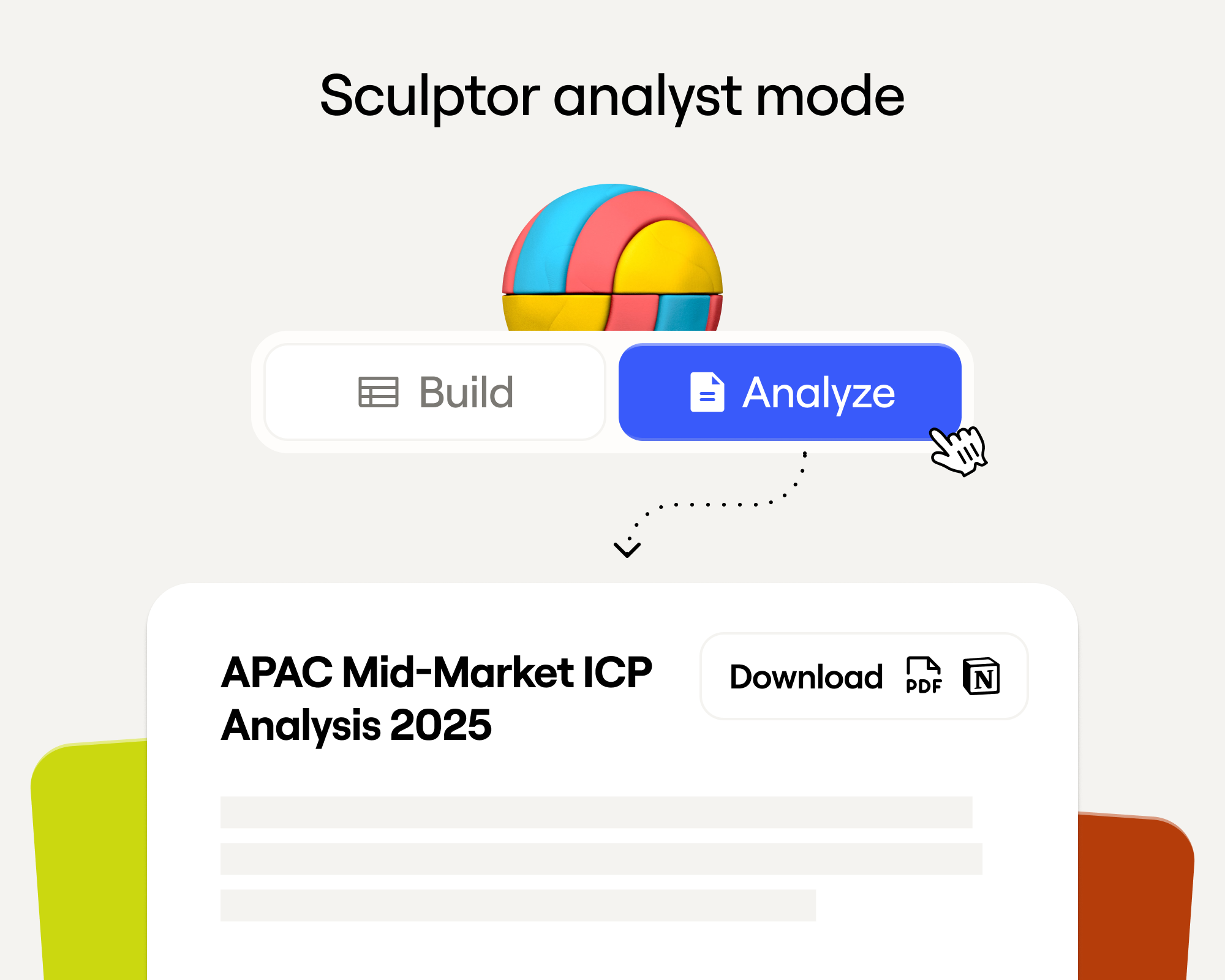
Sculptor Analyst Mode: Turning Context-Rich Data Into Actionable GTM Insights
Режим аналитика Sculptor: превращение контекстно насыщенных данных в действенные GTM-инсайты

In a place where girls often choose between career or marriage, she carved her own path
Там, где девушки часто выбирают между карьерой и замужеством, она проложила свой путь

How we designed Sculpt
Как мы разработали дизайн Sculpt

Clay announces second employee tender offer in nine months at a $5B valuation
Clay объявляет о втором тендерном предложении для сотрудников за девять месяцев при оценке в $5 млрд
Clay is now available as a connector in Claude
Clay теперь доступен как коннектор в Claude
Sellers have a new AI edge: Clay in ChatGPT
У продавцов появилось новое AI-преимущество: Clay в ChatGPT

Clay reaches $100M ARR
Clay достигает $100M ARR

Clay Certifications: Turning mastery into credentials that matter
Сертификации Clay: превращение мастерства в значимые квалификации
Mobile Phone Verification Methodology
Методология верификации мобильных телефонов
Work Email Verification Methodology
Методология верификации рабочих email
Stop Guessing, Start Analyzing: How Sculptor Turns Your GTM Data Into Your Competitive Advantage
Хватит гадать — начните анализировать: как Sculptor превращает ваши GTM-данные в конкурентное преимущество
Find and outreach local businesses with Openmart and Clay Sequencer
Находите локальные бизнесы и выходите на них с Openmart и Clay Sequencer

Announcing Web Intent
Анонс Web Intent
How Clay Uses Clay: Conversational Data
Как Clay использует Clay: разговорные данные

Sculpting GTM’s future with six major launches
Формируя будущее GTM: шесть крупных запусков

Introducing Claygent Navigator
Представляем Claygent Navigator

Announcing the Clay Partner Program
Анонс партнёрской программы Clay

Introducing GPT-5 in Claygent: sharper research, stronger formulas, better outbound
Представляем GPT-5 в Claygent: более точные исследования, мощные формулы, лучший аутбаунд
Clay Series C announcement. The GTM engineering era begins now
Анонс раунда Series C от Clay. Эра GTM-инженерии начинается сейчас

Claygent surpasses 1 billion runs
Claygent преодолевает отметку в 1 миллиард запусков

Announcing Sculpt: Clay’s first annual user conference
Анонс Sculpt: первая ежегодная пользовательская конференция Clay
Announcing custom signals at Clay
Анонс пользовательских сигналов в Clay

Clay announces employee tender offer led by Sequoia at $1.5B valuation
Clay объявляет о тендерном предложении для сотрудников под руководством Sequoia при оценке в $1,5 млрд

Create personalized presentations at scale with Clay and Google Slides
Создавайте персонализированные презентации в масштабе с Clay и Google Slides