Best Open Source Web Scraping Tools 2026: Top 5 - The GTM with Clay Blog
Статья представляет обзор пяти лучших open-source инструментов для веб-скрапинга в 2026 году: Scrapy, Beautiful Soup, PySpider, Apache Nutch и Heritrix. Каждый инструмент проанализирован по критериям простоты использования, поддержки JavaScript, масштабируемости и расширяемости. Scrapy лидирует благодаря мощным возможностям параллельных запросов и расширений на Python, Beautiful Soup подходит новичкам, PySpider умеет работать с JavaScript-страницами, Apache Nutch масштабируется через Hadoop, а Heritrix предназначен для веб-архивирования. Авторы отмечают общие ограничения open-source решений — необходимость навыков программирования, вопросы безопасности и совместимости — и предлагают Clay как no-code альтернативу, объединяющую скрапинг с обогащением данных, поиском лидов и персонализацией кампаний.
Claygent Builder: The easiest way to build, test, and deploy GTM Agents
Build production-ready Claygents in natural language with Sculptor. Test on real data for free, track versions, and deploy once across every workflow. All inside Clay.
How Clay Uses Clay Ads: From $250 to $25 CPL
See how Clay uses its own Ads feature to cut LinkedIn CPL from $250 to $25 and unlock Meta with enriched CRM audiences. No manual uploads needed.
HG Insights Corporate Hierarchy: GTM Precision in Clay
Use HG Insights corporate hierarchy data in Clay to clean CRMs, map parent-child accounts, and trigger expansion plays. See how it works.
Sales GTM Engineering: How Clay Built the Role From Scratch
Learn what sales GTM engineering is, how it collapses SDR, AE, and SE roles into one, and how Clay built and hires for this high-leverage function. See how it works.
How to Automate Inbound Lead Outreach: The Clay Playbook
Learn how to automate inbound lead outreach with enrichment, scoring, and personalized sequences. See the exact Clay workflow that runs without manual work.
demandDrive Joins Clay’s Partner Ecosystem as an Official Clay Studio Partner
demandDrive joins Clay’s partner ecosystem to help B2B teams turn account intelligence into pipeline and revenue with GTM engineering and automation.
B2B Sales Prospecting: 15 Strategies to Drive More Conversions
Master B2B sales prospecting with 15 proven strategies covering ICP building, multi-channel outreach, and list hygiene. Build a pipeline that converts.
AI Sales Assistants: 11 Ways to Accelerate Your Outbound
Discover 11 ways AI sales assistants automate lead research, enrichment, and email personalization. See how top B2B teams use them to accelerate outbound.
The Three Laws of GTM: How to Win in the AI Era
The three laws of GTM explain why uniqueness, saturation, and iteration speed determine who wins. Learn how AI changes the rules and what to do about it.
Best Work Email Finders by Segment: SMB vs. Enterprise
We tested 12 email finders across 4,700+ contacts to find the best work emails by segment. See accuracy, cost, and coverage winners for SMB and enterprise.
How Clay Converts Trial Users Into Customers With Automated Outreach
See how Clay uses automated outreach to convert trial users into customers, with enrichment, lead scoring, and personalized HubSpot campaigns. Learn how.
Best Mobile Phone Data Providers for B2B Sales Teams
We tested 9,806 numbers across 10 B2B mobile phone data providers. See which wins on accuracy, coverage, and cost for NAMER, EMEA, and APAC.
How to Build a Complete AI Outbound Sales Funnel
Learn how to build a complete AI outbound sales funnel—from account scoring to personalized outreach—using Clay waterfalls and automation. See how it works.
How to Get More Customers Using Outbound Sales: A Complete Guide
Learn how outbound sales works, who it's right for, and how to build a strategy from prospecting to closing. Covers cold calling, email, and more.
How to Automate 6 Cold Email Campaigns in One Clay Workflow
Learn how to automate 6 cold email campaigns from a single Clay table — with enrichment, AI classification, and deduplication built in. See how it works.
How Clay Identifies Tier 1 Accounts: A Three-Score System
See how Clay identifies tier 1 accounts using a three-score system: fit, engagement, and contract value. Learn how sales and marketing align on the same priorities.
Lead Scoring in Clay: A Step-by-Step Formula Guide
Learn how to build lead scoring formulas in Clay to prioritize your ICP leads by employee count, job postings, and more. See how it works.
How to Validate Cold Outbound Offers and Find Message-Market Fit
Learn how to validate cold outbound offers by finding message-market fit — from breaking down your value prop to testing with a phased email approach. See how it works.
Troubleshooting Outbound Sales and Prospecting: A Comprehensive Guide
Fix broken outbound sales campaigns with this guide. Diagnose open and reply rates, reduce no-shows, qualify prospects with MEDDIC, and optimize what's working.
Bulk Enrichment: Enrich Millions of CRM Records in Clay
Bulk enrichment lets Enterprise teams enrich millions of Salesforce records with firmographics, tech stack, and AI research — then write results back automatically.
Clay Templates: Automate, Customize, and Replicate Any GTM Workflow
Clay Templates let you replicate full GTM workflows in hours, not days. Automate prospecting from data scraping to AI messaging, free and fully customizable.
How to Optimize Your Credit Usage in Clay
Learn how to optimize your credit usage in Clay with conditional formulas, Clearbit waterfall lookups, and smarter enrichment workflows. Save credits fast.
AI for sales prospecting
Learn about how to use AI for sales prospecting in this comprehensive guide, including framework for creating AI prompts and examples of cold email templates using AI that real sales teams have used successfully to land clients. AI sales prospecting can save your team thousands of hours—and double or triple your positive response rates.
The Reverse Demo: How Clay Replaced Traditional B2B Sales Demos
A reverse demo lets prospects solve real problems live, guided by your rep. Learn how Clay used 100+ sessions to boost conversion, retention, and product quality.
Data Waterfalls: How to Maximize Contact Coverage with Clay
Data waterfalls query multiple providers in sequence so you only pay for matches. See how Clay pushes coverage from 30% to 80%+ without annual contracts.
How Clay Runs ABM Campaigns: A Step-by-Step Playbook
See how Clay runs ABM campaigns — scoring 300 accounts, personalizing mailers and landing pages, and automating SDR follow-up. Learn how.
How We Built Clay's GTM Engineering Function
See how Clay built its GTM engineering function with sprint-based delivery, founder-level reporting, and full sales automation. A practical inside look.
Best Personal Email Finder Tools: Tested and Ranked
We tested 5 personal email finder tools across 2,354 prospects. See accuracy, coverage, and pricing data — plus the waterfall order that hit 79% coverage.
How to Use OpenAI to Write Cold Emails from Scratch with Clay
Learn how to use OpenAI to write personalized cold emails at scale with Clay. Set up the integration, craft better prompts, and boost deliverability.
How to Run a Personalized Demo Play at Scale with Clay
Learn how to automate a personalized demo play using Clay, Claygent, and AI enrichment to build custom mockups at scale. See how it works.
Automated Slide Deck Creation: How Clay Builds QBRs from Your Data
Clay's automated slide deck creation pulls from Snowflake, Salesforce, and Gong to build QBRs in minutes. Save 90+ hours per quarter. See how it works.
HG Insights + Clay: B2B Technographic and Firmographic Data
HG Insights surfaces deep technographic and firmographic data from billions of documents. Use it in Clay workflows to enrich accounts and power GTM. See how it works.
B2B Cold Email Deliverability: 21 Best Practices
Master B2B cold email deliverability with 21 proven best practices: domain setup, inbox warmup, authentication, and copy tips that keep you out of spam. Learn how.
Basics of Google Search Operators: A Practical Guide
Learn the basics of Google Search Operators and how to use them in Clay for prospecting, list building, and company research. See how it works.
AI Lead Generation: The Complete B2B Guide
Learn how AI lead generation automates list building, enrichment, and personalized outreach for B2B teams. Scale your pipeline without scaling headcount. See how it works.
Clay MCP: Ops-built workflows, consumable by reps
Clay MCP: Ops-built workflows, consumable by reps
How to Manage and Enrich Inbound Leads Automatically
Learn how to manage and enrich inbound leads automatically using a four-phase workflow that scores, segments, and triggers outreach from one email. See how it works.
GTM Alpha: How Winning Teams Build a Competitive Edge
GTM alpha is the edge winning teams build with unique data and signal-based plays. Learn how to find hidden signals, run better plays, and outpace competitors.
Why Good CRM Data Matters and How Clay Helps
Poor CRM data kills outreach. Learn why CRM data coverage fails and how Clay's waterfall enrichment lifts coverage rates from 20% to 80%. See how it works.
How to Use Formulas in Clay: AI Generator and Manual Entry
Learn how to use formulas in Clay with the AI Formula Generator or manual entry. Transform and clean your data faster. See how it works.
GTM Engineering: What It Is, How It Works, and How to Hire
GTM engineering turns ops teams into revenue builders using AI and automation. Learn what GTM engineers do, how to structure the role, and how to hire one.
Formulas in Clay: A Beginner's Intro for Non-Engineers
Learn how to use formulas in Clay without coding. This intro covers conditional statements, combining columns, and auto-qualifying leads. Start in 30 minutes.
How Clay Uses Clay for SEO and AEO: 3 Systems That Scale
See how Clay uses Clay for SEO and AEO: automated content refresh, video-to-page conversion, and a custom AI visibility dashboard. Learn how.
Turn Web Visitors into Leads: A Warm Outbound Play for B2B Sales
Learn how to turn web visitors into leads using a warm outbound play for B2B sales — with RB2B, Clay, and Lemlist. See how it works.
How to Use Web Scraping to Enrich Your Data with Clay
Learn how to use web scraping to enrich your data without code. Clay's Claygent answers deep GTM research questions at scale. See how it works.
How to Create a Sales Prospect List in Minutes
Learn how to create your own sales prospect list in minutes using Clay. Pull from 40+ sources, enrich with ICP data, and export to your CRM. See how it works.
Best B2B Email List Providers: Tested and Ranked (2026)
We tested 8 B2B email list providers head-to-head. See accuracy results, per-email pricing, and how to waterfall providers for maximum coverage.
Outbound Sales Automation: How to 10x Pipeline Without More SDRs
Learn how outbound sales automation replaces manual SDR work, cuts cost per email by 100x, and scales pipeline without growing headcount. See how it works.
The Wake the Dead Play: Reactivate Closed-Lost Deals with Clay
The wake the dead play uses Clay + ChatGPT to send automated, personalized emails to closed-lost prospects. Restart stalled deals in a few steps. Learn how.
Three Tips to Guarantee Email Deliverability for Cold Outbound
Split volume, verify contacts, and personalize copy to guarantee email deliverability for cold outbound. Three actionable tips that keep you out of spam.
How Clay Uses Clay for Customer Support: 3 Real Workflows
See how Clay's customer support team uses Clay to enrich Intercom tickets, automate QA, and draft help articles. Real workflows, real results.
B2B Cold Email Copywriting: The Complete Guide
Master B2B cold email copywriting with proven templates, a research framework, and a checklist used to send 800k+ emails a month. Start writing emails that get replies.
Introducing Clay Functions
Build Your GTM Logic Once, Apply It Everywhere
Clay and Apollo Integration: Enrichment, Sequencing, and More
The Clay and Apollo integration unlocks 5X faster enrichment and direct sequencer API access. See how joint customers go from data to booked meetings.
The Many Lives of Spreadsheets: A History and What Comes Next
Explore the many lives of spreadsheets — from VisiCalc in 1979 to self-filling automation tools today. See how the no-code vision keeps evolving.
AI recruiting strategies
Learn our top AI recruiting workflows to help you identify, research, and reach out to qualified candidates for open roles. AI can eliminate manual work and help you reach out to—and land—better employees for your clients.
How to Hire a GTM Engineer: The Complete Guide
Learn how to hire a GTM engineer: when to make the hire, what skills to screen for, red flags to avoid, and where to find the best candidates. See how it works.
Inside Clay's GTM Engineering Lab: Plays, Principles, and Automation
See how Clay's GTM engineering lab turns internal problems into revenue plays using AI, automation, and data-driven principles. Learn how it works.
How to Build the Most Targeted Account Lists Possible
Generic tools leave bad-fit companies in your account list. Learn how to build targeted account lists using AI enrichment and real workflow examples in Clay.
Personalized Direct Mail at Scale: The Gifting Play with Clay
Learn how to run personalized direct mail campaigns using Clay — validate contacts, generate AI gift copy, and export to email. See how it works.
How to Set Up Your Full Inbound Sales Process on Clay
Learn how to set up your full inbound sales process on Clay — enrich leads, tag MQLs, and automate email campaigns from form to demo. See how it works.
AI-Enabled GTM for Private Equity: The Value Creation Playbook
Learn how AI-enabled GTM for private equity drives value creation across portfolios—from data quality to agentic workflows. See how it works.
Do More With Your Data: Clay's Post-Data-Provider Approach
Clay's post-data-provider approach combines 150+ providers, waterfall enrichment, and AI scraping to maximize data coverage. See how it works.
Google Maps Lead Generation for Niche Local Businesses
Learn how to use Google Maps lead generation to find niche local businesses, enrich owner contacts, and send personalized outreach at scale with Clay.
24 AI Email Personalization Examples for Cold Outreach (With Prompts)
Get 24 AI email personalization examples for cold outreach, with ChatGPT prompts you can run at scale in Clay. Learn how to write emails that actually convert.
How to Ace Your Follow-Ups: A Practical Sales Guide
Learn how to ace your follow-ups with value-driven outreach, personalization tips, multi-channel tactics, and automation tools that keep deals moving. See how it works.
How to Prioritize Your Waitlist with Lead Enrichment
Learn how to prioritize your waitlist using lead enrichment. Turn raw signups into qualified leads by company, title, and role — no long forms needed. See how.
B2B Cold Email Templates: Frameworks That Get Replies
Learn how to write B2B cold email templates that convert with a proven 5-part framework, follow-up strategy, and real examples. See how it works.
Audiences: now in Enterprise beta
Clay Audiences unifies your CRM, product data, and intent signals into one layer — so reps and agents can run precise, personalized GTM plays at scale.
The thinking behind our new pricing: our internal memo
Clay pricing memo: INTERNAL
Introducing Clay’s new pricing
Today, we’re launching a pricing update that reduces data costs, and simplifies and improves the value of our plans. Our goal is to have Clay be your default tool for GTM Engineering.
Clay partners with Lusha and Beauhurst to expand European data coverage
Lusha adds lookalike prospecting, contact enrichment, and signals in EMEA. Beauhurst adds private funding and corporate structure data in the UK and Germany.
Source your precise TAM from lookalikes you can trust with Ocean.io and Clay
Clay + Ocean now enable preview-based B2B lookalike discovery. Preview leads before committing credits and expand your TAM with greater precision.
Clay doubles down on supporting European GTM teams
Clay's waterfall enrichment delivers 2–3x more mobile phone coverage than leading solo providers across Europe. Plus new data partnerships, a London office, and timezone-aligned support.
In Nigeria, she built a life where money wouldn’t decide
Clay blog | In Nigeria, she built a life where money wouldn’t decide
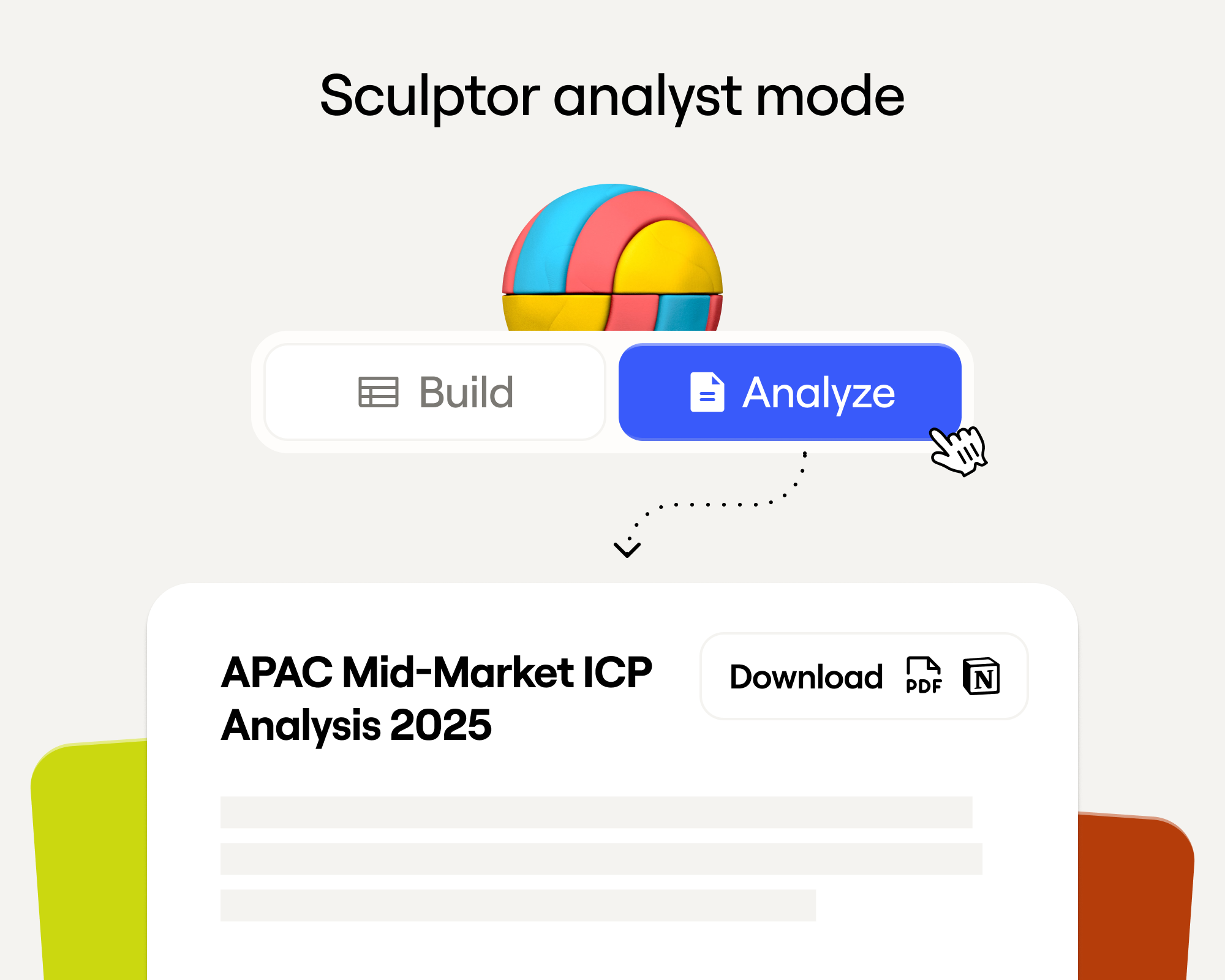
Sculptor Analyst Mode: Turning Context-Rich Data Into Actionable GTM Insights
Gather business intelligence and share documents of this analysis directly from Sculptor
In a place where girls often choose between career or marriage, she carved her own path
Javeria Shah won the Clay Cup 2025 despite being denied a US visa and competing remotely from Pakistan. Learn how she transitioned from electronics engineering into GTM engineering and built her own business.
How we designed Sculpt
Our first conference, Sculpt, is where the analog soul of Clay met the digital mind of Clay.
Clay announces second employee tender offer in nine months at a $5B valuation
A rare repeat employee liquidity event, designed to give builders flexibility as Clay accelerates
Clay is now available as a connector in Claude
Bring Clay's contact databases, enrichment providers, and AI agents into your Claude workflow.
Sellers have a new AI edge: Clay in ChatGPT
Use Clay directly in ChatGPT to find the right buyers, research people and companies, and draft personalized outbound. One conversation, powered by live GTM data.
Clay reaches $100M ARR
Clay has crossed $100M ARR, growing from $1M to $100M in two years after six years of foundational product work. The milestone reflects durable customer adoption, efficient growth, and an ecosystem of GTM builders using Clay to power their business.
Clay Certifications: Turning mastery into credentials that matter
The Clay education team has built a certification program that runs entirely on Clay and gives users credentials that actually matter
Mobile Phone Verification Methodology
Clay has partnered with The Kiln to setup a series of large-scale data test across mobile phone, work email, personal email, email verification, and more. Below, we explain the approach to these tests.
Work Email Verification Methodology
Clay has partnered with The Kiln to setup a series of large-scale data test across mobile phone, work email, personal email, email verification, and more. Below, we explain the approach to these tests.
Stop Guessing, Start Analyzing: How Sculptor Turns Your GTM Data Into Your Competitive Advantage
Analyze your GTM data with Sculptor to turn fragmented information into actionable insight.
Find and outreach local businesses with Openmart and Clay Sequencer
Get the right contacts for local businesses without stitching together multiple tools or wasting valuable time on setup instead of selling.
Announcing Web Intent
Use Website Intent in Clay to see which companies visit your site, track engagement, and trigger personalized GTM plays. Turn website traffic into real buyer intent data.
How Clay Uses Clay: Conversational Data
How we use Clay to mine millions of pages of call transcripts to generate revenue, and how you can use it too.
Sculpting GTM’s future with six major launches
Today at Sculpt, we're launching six major features that will help teams turn any growth idea into reality faster.
Introducing Claygent Navigator
A new Claygent model that can use a browser to take actions and extract information from webpages.
Announcing the Clay Partner Program
The Clay Partner Program is to a partner, what a toolbox is to an artist. It keeps essential resources within reach and grows more sophisticated as your expertise develops. We've designed everything around one simple principle: helping you grow your business as Clay grows.
Introducing GPT-5 in Claygent: sharper research, stronger formulas, better outbound
GPT-5 is now a model option across Clay, bringing the best research and conversational writing we've ever shipped to your GTM workflows.
Clay Series C announcement. The GTM engineering era begins now
We raised a $100M Series C at a $3.1B valuation to power GTM engineering!
Claygent surpasses 1 billion runs
The world's most loved AI research agent in GTM has passes a huge milestone at 1 billion runs.
Announcing Sculpt: Clay’s first annual user conference
Join us for Sculpt, Clay’s first annual user conference on Sept 17 in San Francisco where GTM leaders build AI workflows, share creative tactics, and get early access to new features.
Announcing custom signals at Clay
Clay's new custom signals platform helps sales teams track unique data changes that indicate buying opportunities. Turn any data point into a sales signal, enrich with context, and automate personalized outreach to find GTM alpha your competitors miss.
Clay announces employee tender offer led by Sequoia at $1.5B valuation
Clay allows employees to sell vested shares for immediate liquidity through a $20M tender offer at a $1.5B valuation. With 10x revenue growth in 2022-2023 and serving 8,000+ customers including OpenAI and Hubspot, Clay continues to change how businesses approach go-to-market strategies with their AI agent Claygent.
Create personalized presentations at scale with Clay and Google Slides
Automate personalized sales decks with Clay’s Google Slides integration. Instantly generate tailored presentations for leads, customers, QBRs, and internal updates. Use one template to create hundreds of presentations at scale.
Turn Gong conversations into automated GTM workflows
Clay now integrates with Gong—turn messy call transcripts into powerful automations in Salesforce, HubSpot, Notion, Slack, Google Sheets, and 100+ other integrations.

Product
Use Cases
Solutions
Resources
Company
Pricing
Features





Additional
How Clay uses Clay
LinkedIn + Meta Ads on Autopilot










CRM enrichment
Keep your CRM clean with the highest quality data
BY TEAM



BY STAGE


BY CUSTOMERS


Rootly
Link long form description will go in this slot here.

Regency Supply
Link long form description will go in this slot here.

Mistral AI
Link long form description will go in this slot here.

A-LIGN
Link long form description will go in this slot here.
Intercom
Link long form description will go in this slot here.
Intercom
Grew their outbound-sourced pipeline by +140%

START GROWING




DISCOVER
Community
PARTNER WITH US
Clay Commnity
In Nigeria, she built a life where money wouldn’t decide

OUR COMPANY



GET IN TOUCH


SOCIALS



Article – NY Times
Clay allows employees to sell shares at a $5b valuation.

Best Open Source Web Scraping Tools: Top 5 Reviewed


Web scraping is your ticket to unlocking access to vast amounts of data available on the internet and skipping time-consuming manual research.
In only a few clicks, you can get info that serves as a solid foundation for generating leads, researching the market and competition, and growing your business.
There are plenty of fish in the web scraping sea, and if your priorities are cost efficiency and flexibility, open-source tools can be the way to go. 🧑💻
While the open-source filter narrows down your options to a certain degree, you can still find plenty of choices. To help you understand their advantages and drawbacks, our team compiled this list of excellent web scraping tools among open-source options.
We also found a potentially superior alternative that offers more efficiency. 🥊
TL;DR
- The top five open source web scraping tools are Scrapy, Beautiful Soup, PySpider, Apache Nutch, and Heritrix — each suited to different use cases and technical skill levels.
- Open source scrapers are free and flexible, but most require coding knowledge (Python or Java) and come with tradeoffs around JavaScript handling, scalability, or security.
- If you need scraping plus enrichment, prospecting, and campaign personalization without writing code, Clay is a no-code alternative worth considering.
- Clay's Claygent (an AI-based web scraper), Chrome extension, and pre-built web scraping templates let you extract and normalize data without any programming background.
How We Selected the Best Open Source Web Scraping Tools
We wanted to ensure each and every review in this article is objective and bias-free, which is why our team tailored a unique approach:
We can shortlist the best open-source web scrapers, but we can't estimate your specific needs. To make a smart decision, consider the factors listed in the table below:
Top 5 Open Source Web Scraping Tools: In-Depth Reviews
Our three-step approach to analyzing open-source web scrapers yielded a list of the top five options:
📌 If you don't want to limit yourself to open-source solutions exclusively and want more feature variety, we'll introduce you to another fantastic web scraping alternative: Clay.
1. Scrapy
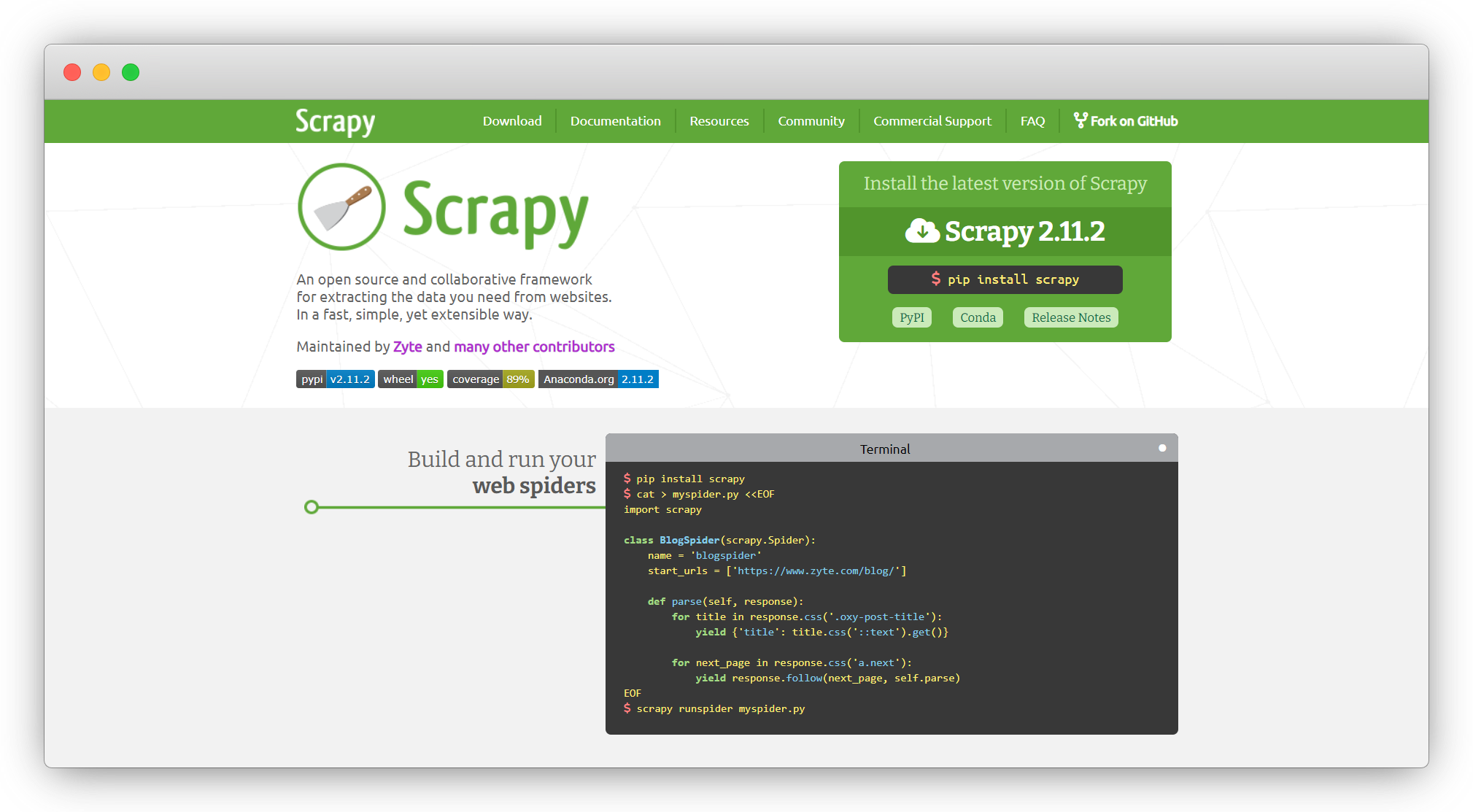
Scrapy sits at the open-source web scraping throne. It's written in Python, so you can install and run it like any other Python package. 👑
Though Scrapy's main purpose is web scraping, it has two more uses:
To extract info from a web page with Scrapy, you need to write spiders and define how the website will be scraped, how to complete the crawl, and how to pull structured data.
You'll be thrilled by Scrapy's ability to process multiple requests simultaneously. You don't have to wait for one request to complete before running another one.
If you want strong extensibility support, Scrapy has it. Different middleware, extensions, and pipelines allow you to add your own functionalities to the tool.
While you can extend the supported file formats in the tool's settings for more flexibility, by default, Scrapy lets you store data in:
Scrapy is completely free to use, making it an excellent option for beginners with a limited budget and startups.
As for potential drawbacks, it's important to mention that Scrapy can't scrape dynamic content on its own (you can use plug-ins to change this). There's also a learning curve, especially for those who aren't familiar with Python.
✔️ Written in Python, easy to set up
✔️ Extensibility support
✔️ Multiple export options
2. Beautiful Soup
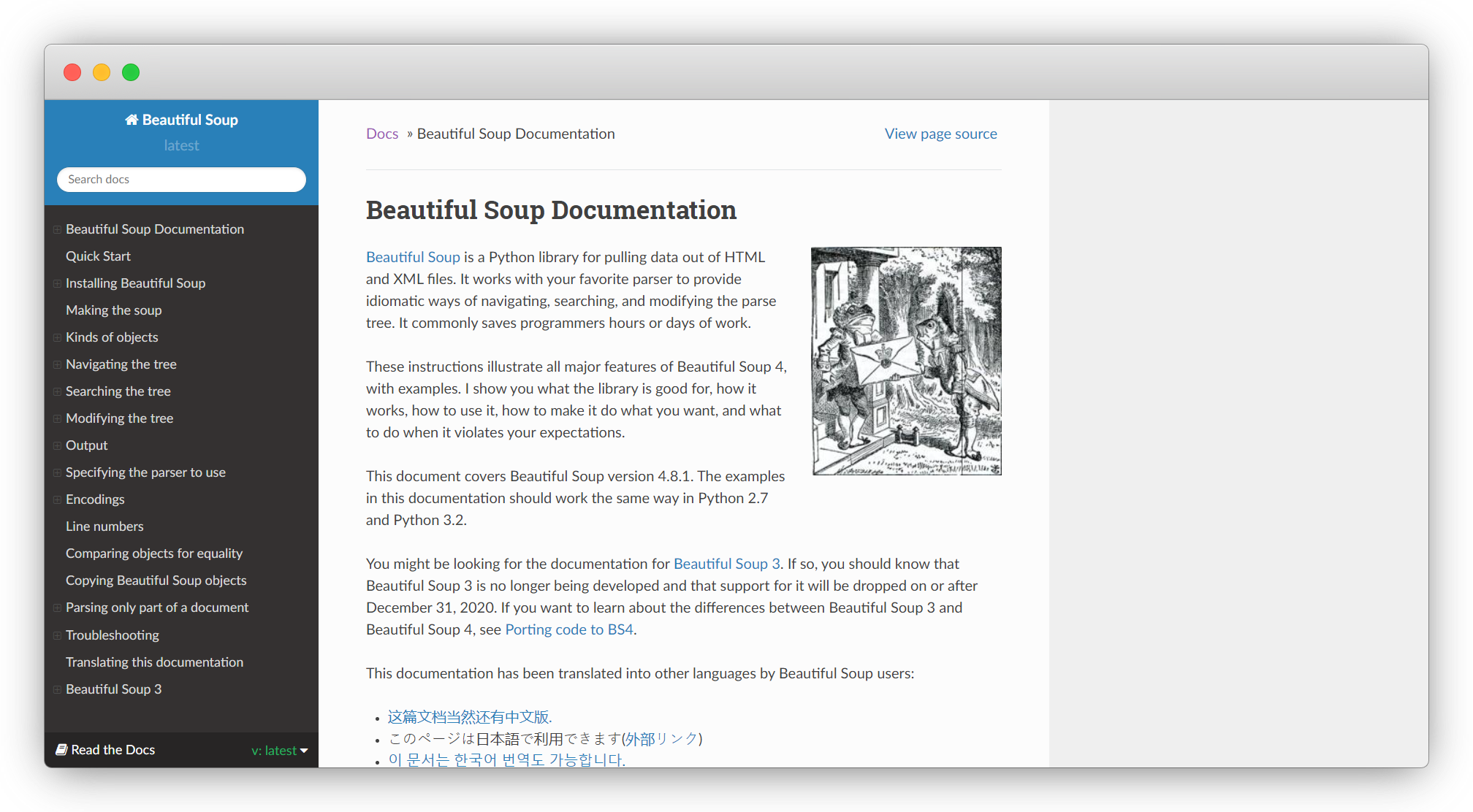
Beautiful Soup is a Python package that can pull data from HTML and XML documents, and you can use it for web scraping purposes.
The package works by creating a parse tree of the parsed web page based on specific criteria. This tree is filled with Python elements. You can navigate and modify it to pull the elements you're interested in.
Beautiful Soup is known for its ease of use. A user-friendly syntax makes it appealing even for non-programmers and scraping novices. Still, the package is quite powerful and can handle missing or broken HTML by trying to interpret them to get you the data you need. 💪
If you're new to the Beautiful Soup universe, you'll appreciate its huge community. You can easily find detailed documentation and resources on the functionalities and uses.
In terms of drawbacks, Beautiful Soup can't handle concurrent requests as well as Scrapy can. So, if you're looking for a tool for large-scale or complex scraping, Beautiful Soup isn't the best option. Another potential downside is that Beautiful Soup can't handle JavaScript, which limits its functionality.
✔️ Easy to use
✔️ Ideal for simpler scraping tasks
✔️ Backed by a huge community
3. PySpider
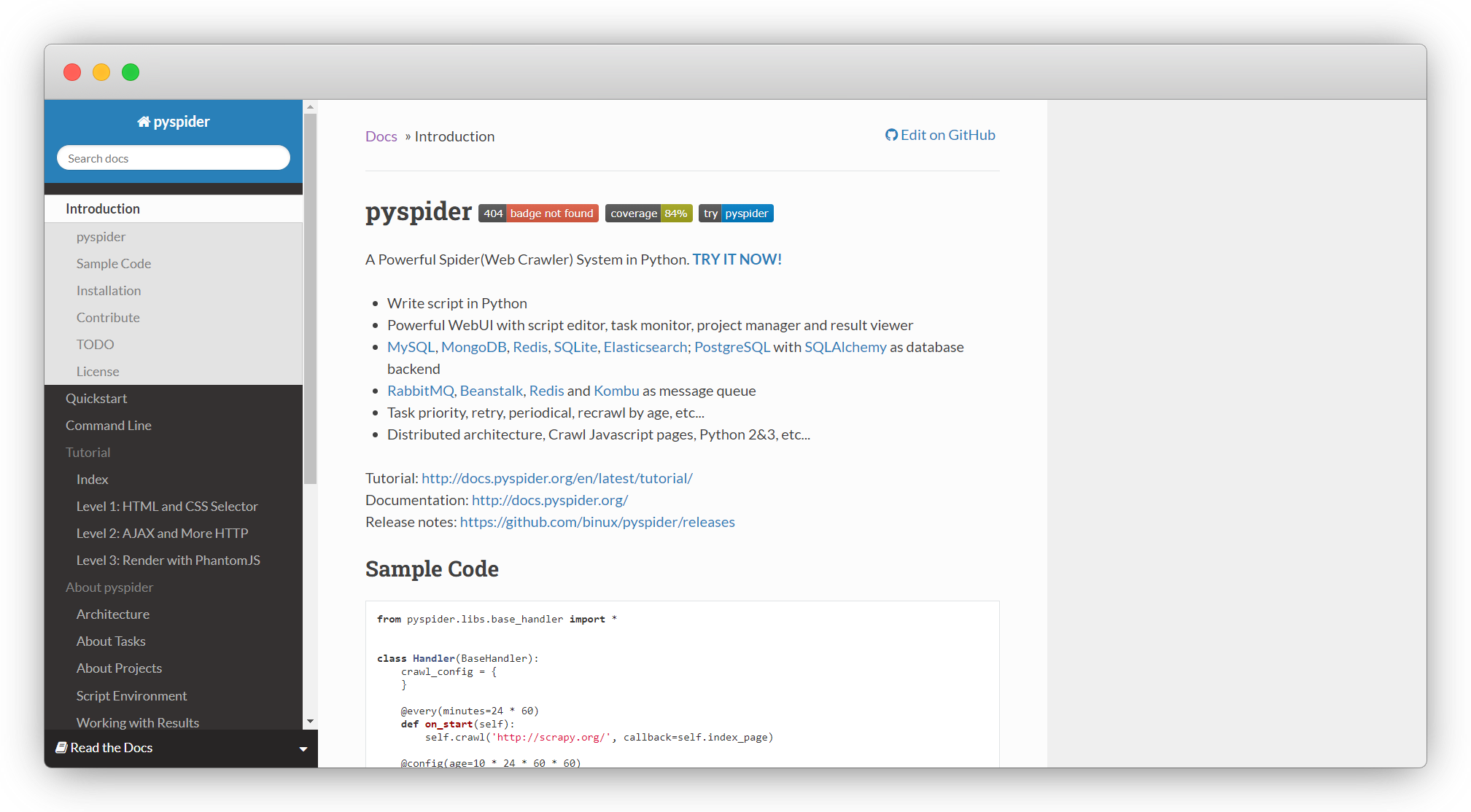
PySpider is an open-source web crawler system written in Python. The platform has its own web user interface that lets you:
If you need to scrape a web page at specific times or multiple times within a particular period, you'll like PySpider's scheduling option. It lets you schedule scraping tasks in advance and ensure you don't miss important info.
Another convenient option is handling concurrent requests. You can run multiple scraping tasks simultaneously and boost your efficiency. Plus, it can crawl JavaScript pages, providing fantastic scraping coverage.
PySpider and its options are well-documented, so you can easily find answers to your questions. Still, the system comes with a learning curve and a complex setup, so it's not an option for those lacking coding skills or scraping experience.
✔️ Task scheduler
✔️ Can crawl JavaScript pages
✔️ Well-documented
💡 Pro tip: If you're looking for a no-code scraping solution, Clay is an excellent option.
4. Apache Nutch
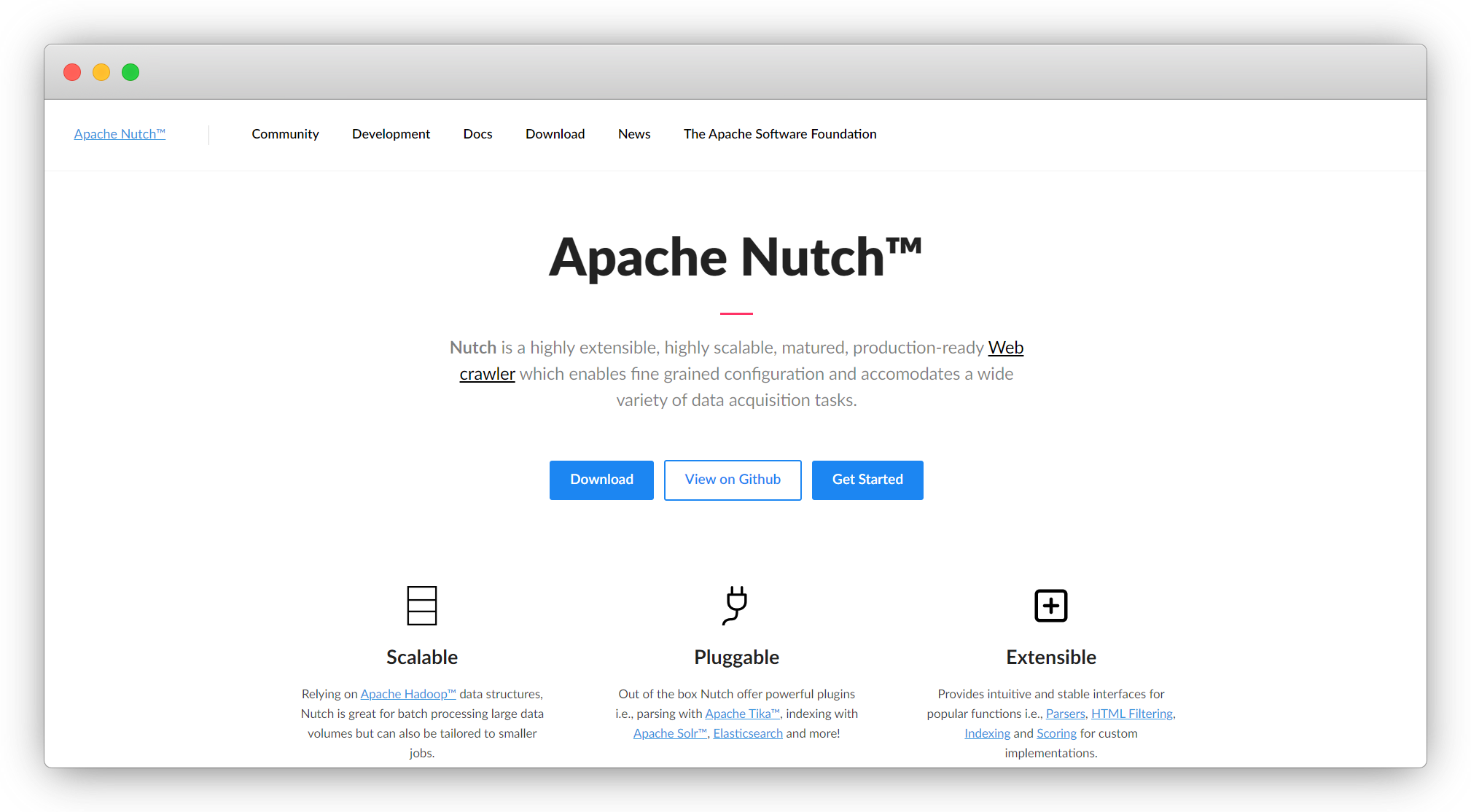
Known for its extensibility and scalability, Apache Nutch is another popular open-source web crawler.
The crawler is written in Java and based on the Apache Hadoop framework designed for seamless processing of large datasets across clusters of computers. Thanks to this, Apache Nutch can handle large-scale scraping tasks without a drop in performance. Of course, it's also suitable for smaller scraping jobs.
Apache Nutch comes with built-in plugins, including:
As the crawler is extensible and has a modular architecture, users can also configure custom implementations for parsing, HTML filtering, or scoring and create their own plug-ins. 🔌
The platform has a wide community and extensive documentation, so you can easily find answers to your questions and resolve issues. Like other platforms on the list, this one's also free. 💲
As for drawbacks, some users report that Apache Nutch consumes too much memory and CPU, so you need a solid infrastructure if you want to run it.
✔️ Good for large-scale scraping tasks
✔️ Modular architecture
✔️Extensive documentation and a live community
5. Heritrix
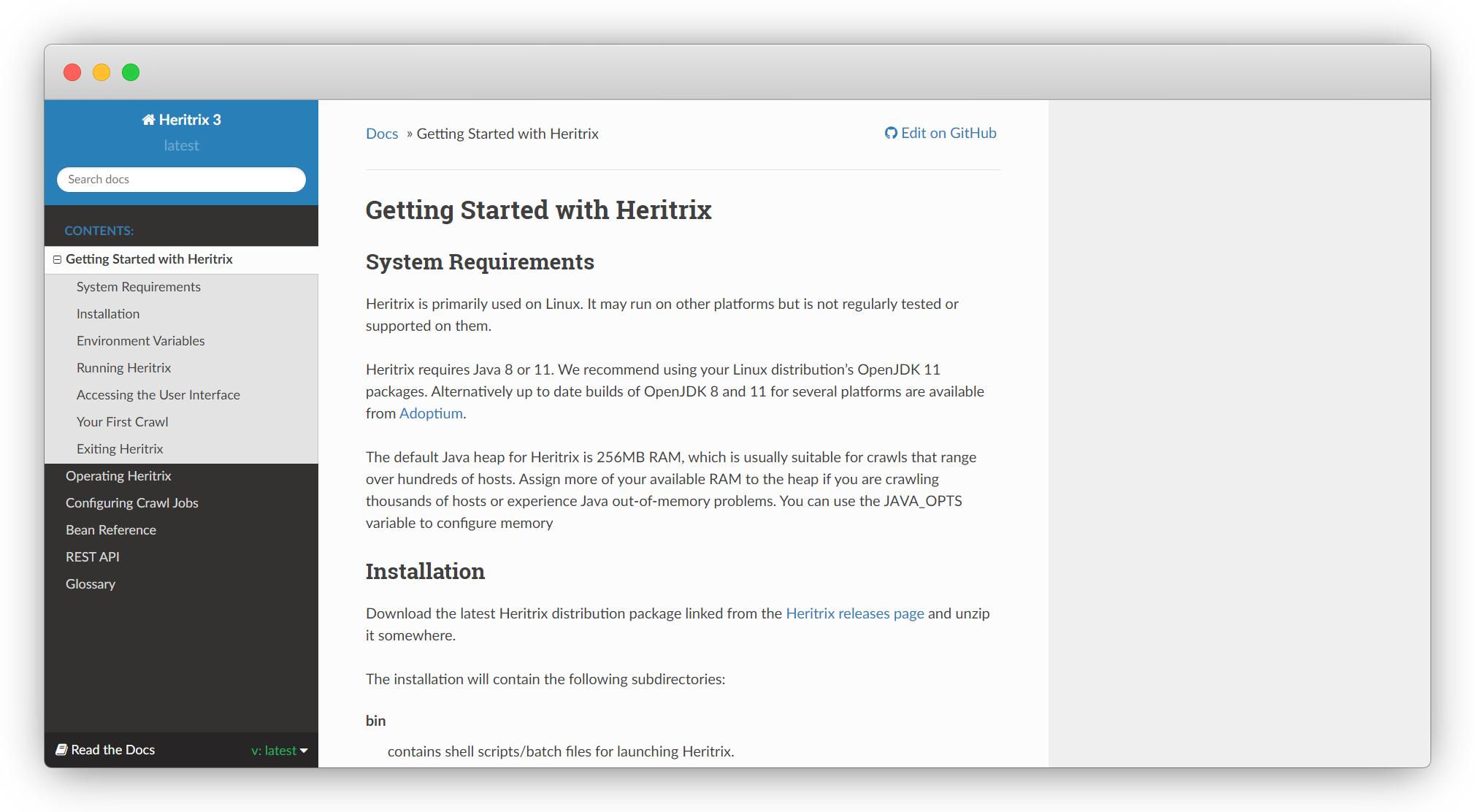
Heritrix is another open-source web scraper written in Java. Its main purpose is web archiving: collecting data from the internet in an archival format to preserve it for scientists or the public.
Heritrix respects the robots.txt exclusion directives and META nofollow tags, so it won't try to access pages, content, or links that aren't allowed by the website you're trying to scrape. This ensures you're always scraping ethically without breaking any rules or laws. 👌
The system comes with a web-based user interface, where you can control the scraping process and see any potential issues or delays.
Heritrix is completely free, and you can redistribute or modify it without worries.
While it's excellent for collecting all kinds of data points, Heritrix has had issues with crawling and storing duplicate content in the past, which can be a significant drawback for some users.
✔️ Designed for web archiving
✔️ Respects robots.txt exclusion directives and META nofollow tags
✔️ Web-based user interface
Benefits and Limitations of Open Source Web Scraping Tools
While open-source software tools have plenty of benefits, they also come with a fair share of drawbacks. Exploring these in more detail can help you determine if this is the right path for you. Consult the table below for an overview of benefits and limitations:
What Can You Use Instead of Open-Source Web Scrapers?
If you're not willing to compromise on security, compatibility, or user-friendliness, consider looking into other web scraping options. Specialized tools with advanced web scraping features are your best bet. They can scrape any type of data from any website in seconds. ⏩
Some tools even go beyond data scraping and offer options for:
If you're in the market for such a tool, Clay is a fantastic choice. This GTM infrastructure platform offers ease of use, advanced functionality, and affordable pricing to help you tighten workflows. 😍
🚨 Want to see Clay's scraping features first-hand? Check out this video:
How Can Clay Help You Scrape Data?
As a top-rated GTM infrastructure platform, Clay offers several scraping features that can help you search every corner of the internet and find the info you need.
One of the platform's stellar options is Claygent, an AI-based web scraper. Tell Claygent what you need, and it will visit every website to find the info. You only need to provide a few simple prompts in Claygent's Mission field, and it will take care of the rest. 😎
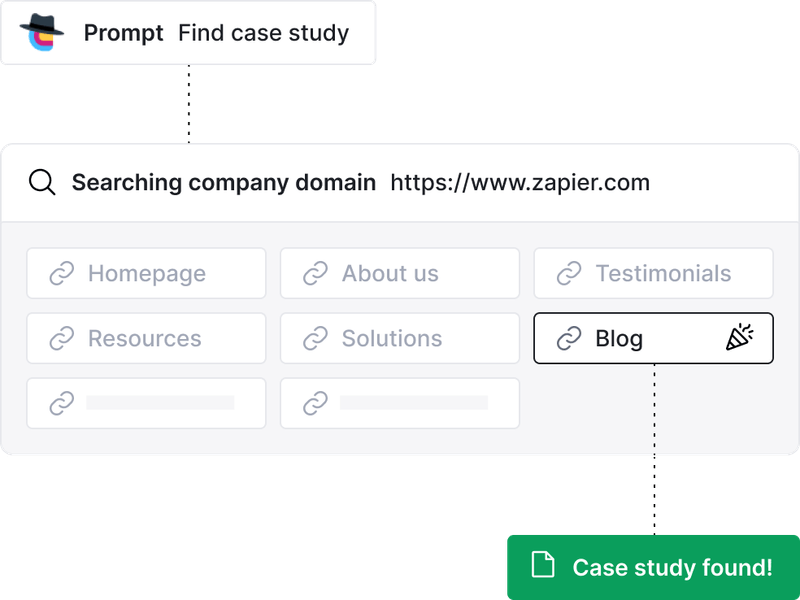
Besides scraping data from websites, Claygent can also read and summarize PDFs, so you can extract info from documents as well. As you can check the logic behind Claygent's every answer, you can be 100% confident of its accuracy. 🥰
Another noteworthy scraping feature in Clay's arsenal is the Chrome extension. It can scrape info from any website and extract it to a table for easier navigation and further work, allowing your team to focus on other valuable aspects of your sales campaigns. ⌛
Web scraping templates are another reason why Clay stands out from its alternatives. Use these templates to save time when performing specific scraping tasks, such as:
A common problem when web scraping is data uniformity. You often end up with inconsistent names, job titles, locations, or whatever data points you're scraping. Clay helps you overcome this problem with its data formatting options that clean the scraped data and organize it in a table. The feature lets you automatically normalize data points like:
Other Clay Features You'll Adore
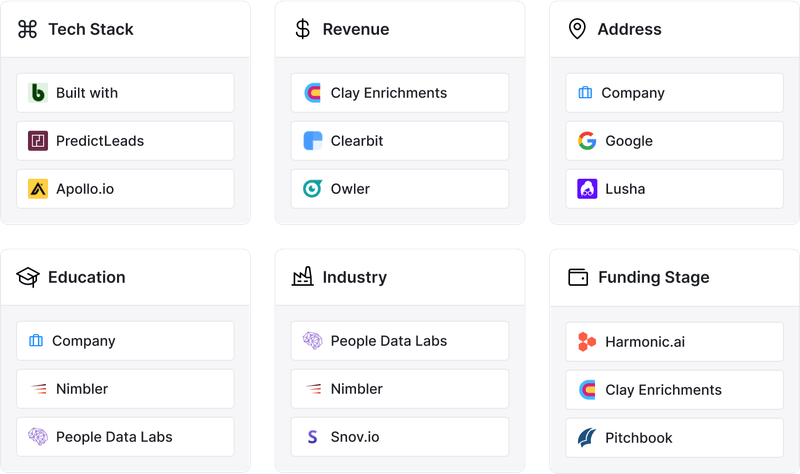
Fantastic scraping options are only a portion of Clay's offer.
Unlike many of its alternatives, which pull data from a single database, Clay can tap into over 50 of them, allowing you to find even the most specific pieces of info. This ensures fantastic data coverage. You can extract all kinds of data from virtually any corner of the internet.
Aside from that, Clay offers plenty of other useful options to help you streamline your workflows and save time, such as:
Although it's charged with advanced options that can scale your business, Clay is incredibly easy to set up and use. You don't need a degree in programming or any knowledge of Python or JavaScript to leverage Clay's options.
See what a user says about Clay:

Create a Clay Account
The only action left to take is to create your Clay account, and that won't take much of your time:
Clay has a free forever plan that allows you to explore the platform and its options and integrations at zero cost and see if it's a good fit. If you like it, you can choose one of the paid plans outlined below:
All plans, including the free one, come with unlimited users, so you and your entire team can enjoy Clay. 🥰
If you're not sure if Clay's the right option just yet and want to learn more about it, visit Clay University for detailed overviews of the platform's features. We also recommend joining the Slack community and subscribing to the newsletter to learn about different uses of Clay and receive the latest updates. 📥
Frequently Asked Questions
Which open source web scraping tool is best for beginners?
Beautiful Soup is the most beginner-friendly option on this list. Its user-friendly syntax works even for non-programmers, and it has a large community with detailed documentation. That said, it's best suited for simpler scraping tasks and can't handle JavaScript or concurrent requests.
Do any of these open source scrapers handle JavaScript-rendered pages?
PySpider can crawl JavaScript pages, which gives it an advantage over Scrapy and Beautiful Soup for dynamic content. Scrapy can't handle dynamic content on its own, though you can add plug-ins to extend that capability.
What's the difference between a web scraper and a web crawler?
A web scraper extracts specific data from web pages, while a web crawler systematically browses the web to index or archive content. Several tools on this list, including Scrapy, Apache Nutch, and Heritrix, support both functions to varying degrees.
When does it make sense to use a no-code tool instead of an open source scraper?
If your team lacks Python or Java experience, or if you need scraping combined with enrichment, prospecting, and campaign personalization, a no-code tool is the faster path. Clay's Claygent and Chrome extension let you extract and normalize data without writing any code.
Web scraping is your ticket to unlocking access to vast amounts of data available on the internet and skipping time-consuming manual research.
In only a few clicks, you can get info that serves as a solid foundation for generating leads, researching the market and competition, and growing your business.
There are plenty of fish in the web scraping sea, and if your priorities are cost efficiency and flexibility, open-source tools can be the way to go. 🧑💻
While the open-source filter narrows down your options to a certain degree, you can still find plenty of choices. To help you understand their advantages and drawbacks, our team compiled this list of excellent web scraping tools among open-source options.
We also found a potentially superior alternative that offers more efficiency. 🥊
TL;DR
- The top five open source web scraping tools are Scrapy, Beautiful Soup, PySpider, Apache Nutch, and Heritrix — each suited to different use cases and technical skill levels.
- Open source scrapers are free and flexible, but most require coding knowledge (Python or Java) and come with tradeoffs around JavaScript handling, scalability, or security.
- If you need scraping plus enrichment, prospecting, and campaign personalization without writing code, Clay is a no-code alternative worth considering.
- Clay's Claygent (an AI-based web scraper), Chrome extension, and pre-built web scraping templates let you extract and normalize data without any programming background.
How We Selected the Best Open Source Web Scraping Tools
We wanted to ensure each and every review in this article is objective and bias-free, which is why our team tailored a unique approach:
We can shortlist the best open-source web scrapers, but we can't estimate your specific needs. To make a smart decision, consider the factors listed in the table below:
Top 5 Open Source Web Scraping Tools: In-Depth Reviews
Our three-step approach to analyzing open-source web scrapers yielded a list of the top five options:
📌 If you don't want to limit yourself to open-source solutions exclusively and want more feature variety, we'll introduce you to another fantastic web scraping alternative: Clay.
1. Scrapy
Scrapy sits at the open-source web scraping throne. It's written in Python, so you can install and run it like any other Python package. 👑
Though Scrapy's main purpose is web scraping, it has two more uses:
To extract info from a web page with Scrapy, you need to write spiders and define how the website will be scraped, how to complete the crawl, and how to pull structured data.
You'll be thrilled by Scrapy's ability to process multiple requests simultaneously. You don't have to wait for one request to complete before running another one.
If you want strong extensibility support, Scrapy has it. Different middleware, extensions, and pipelines allow you to add your own functionalities to the tool.
While you can extend the supported file formats in the tool's settings for more flexibility, by default, Scrapy lets you store data in:
Scrapy is completely free to use, making it an excellent option for beginners with a limited budget and startups.
As for potential drawbacks, it's important to mention that Scrapy can't scrape dynamic content on its own (you can use plug-ins to change this). There's also a learning curve, especially for those who aren't familiar with Python.
✔️ Written in Python, easy to set up
✔️ Extensibility support
✔️ Multiple export options
2. Beautiful Soup
Beautiful Soup is a Python package that can pull data from HTML and XML documents, and you can use it for web scraping purposes.
The package works by creating a parse tree of the parsed web page based on specific criteria. This tree is filled with Python elements. You can navigate and modify it to pull the elements you're interested in.
Beautiful Soup is known for its ease of use. A user-friendly syntax makes it appealing even for non-programmers and scraping novices. Still, the package is quite powerful and can handle missing or broken HTML by trying to interpret them to get you the data you need. 💪
If you're new to the Beautiful Soup universe, you'll appreciate its huge community. You can easily find detailed documentation and resources on the functionalities and uses.
In terms of drawbacks, Beautiful Soup can't handle concurrent requests as well as Scrapy can. So, if you're looking for a tool for large-scale or complex scraping, Beautiful Soup isn't the best option. Another potential downside is that Beautiful Soup can't handle JavaScript, which limits its functionality.
✔️ Easy to use
✔️ Ideal for simpler scraping tasks
✔️ Backed by a huge community
3. PySpider
PySpider is an open-source web crawler system written in Python. The platform has its own web user interface that lets you:
If you need to scrape a web page at specific times or multiple times within a particular period, you'll like PySpider's scheduling option. It lets you schedule scraping tasks in advance and ensure you don't miss important info.
Another convenient option is handling concurrent requests. You can run multiple scraping tasks simultaneously and boost your efficiency. Plus, it can crawl JavaScript pages, providing fantastic scraping coverage.
PySpider and its options are well-documented, so you can easily find answers to your questions. Still, the system comes with a learning curve and a complex setup, so it's not an option for those lacking coding skills or scraping experience.
✔️ Task scheduler
✔️ Can crawl JavaScript pages
✔️ Well-documented
💡 Pro tip: If you're looking for a no-code scraping solution, Clay is an excellent option.
4. Apache Nutch
Known for its extensibility and scalability, Apache Nutch is another popular open-source web crawler.
The crawler is written in Java and based on the Apache Hadoop framework designed for seamless processing of large datasets across clusters of computers. Thanks to this, Apache Nutch can handle large-scale scraping tasks without a drop in performance. Of course, it's also suitable for smaller scraping jobs.
Apache Nutch comes with built-in plugins, including:
As the crawler is extensible and has a modular architecture, users can also configure custom implementations for parsing, HTML filtering, or scoring and create their own plug-ins. 🔌
The platform has a wide community and extensive documentation, so you can easily find answers to your questions and resolve issues. Like other platforms on the list, this one's also free. 💲
As for drawbacks, some users report that Apache Nutch consumes too much memory and CPU, so you need a solid infrastructure if you want to run it.
✔️ Good for large-scale scraping tasks
✔️ Modular architecture
✔️Extensive documentation and a live community
5. Heritrix
Heritrix is another open-source web scraper written in Java. Its main purpose is web archiving: collecting data from the internet in an archival format to preserve it for scientists or the public.
Heritrix respects the robots.txt exclusion directives and META nofollow tags, so it won't try to access pages, content, or links that aren't allowed by the website you're trying to scrape. This ensures you're always scraping ethically without breaking any rules or laws. 👌
The system comes with a web-based user interface, where you can control the scraping process and see any potential issues or delays.
Heritrix is completely free, and you can redistribute or modify it without worries.
While it's excellent for collecting all kinds of data points, Heritrix has had issues with crawling and storing duplicate content in the past, which can be a significant drawback for some users.
✔️ Designed for web archiving
✔️ Respects robots.txt exclusion directives and META nofollow tags
✔️ Web-based user interface
Benefits and Limitations of Open Source Web Scraping Tools
While open-source software tools have plenty of benefits, they also come with a fair share of drawbacks. Exploring these in more detail can help you determine if this is the right path for you. Consult the table below for an overview of benefits and limitations:
What Can You Use Instead of Open-Source Web Scrapers?
If you're not willing to compromise on security, compatibility, or user-friendliness, consider looking into other web scraping options. Specialized tools with advanced web scraping features are your best bet. They can scrape any type of data from any website in seconds. ⏩
Some tools even go beyond data scraping and offer options for:
If you're in the market for such a tool, Clay is a fantastic choice. This GTM infrastructure platform offers ease of use, advanced functionality, and affordable pricing to help you tighten workflows. 😍
🚨 Want to see Clay's scraping features first-hand? Check out this video:
How Can Clay Help You Scrape Data?
As a top-rated GTM infrastructure platform, Clay offers several scraping features that can help you search every corner of the internet and find the info you need.
One of the platform's stellar options is Claygent, an AI-based web scraper. Tell Claygent what you need, and it will visit every website to find the info. You only need to provide a few simple prompts in Claygent's Mission field, and it will take care of the rest. 😎
Besides scraping data from websites, Claygent can also read and summarize PDFs, so you can extract info from documents as well. As you can check the logic behind Claygent's every answer, you can be 100% confident of its accuracy. 🥰
Another noteworthy scraping feature in Clay's arsenal is the Chrome extension. It can scrape info from any website and extract it to a table for easier navigation and further work, allowing your team to focus on other valuable aspects of your sales campaigns. ⌛
Web scraping templates are another reason why Clay stands out from its alternatives. Use these templates to save time when performing specific scraping tasks, such as:
A common problem when web scraping is data uniformity. You often end up with inconsistent names, job titles, locations, or whatever data points you're scraping. Clay helps you overcome this problem with its data formatting options that clean the scraped data and organize it in a table. The feature lets you automatically normalize data points like:
Other Clay Features You'll Adore
Fantastic scraping options are only a portion of Clay's offer.
Unlike many of its alternatives, which pull data from a single database, Clay can tap into over 50 of them, allowing you to find even the most specific pieces of info. This ensures fantastic data coverage. You can extract all kinds of data from virtually any corner of the internet.
Aside from that, Clay offers plenty of other useful options to help you streamline your workflows and save time, such as:
Although it's charged with advanced options that can scale your business, Clay is incredibly easy to set up and use. You don't need a degree in programming or any knowledge of Python or JavaScript to leverage Clay's options.
See what a user says about Clay:
Create a Clay Account
The only action left to take is to create your Clay account, and that won't take much of your time:
Clay has a free forever plan that allows you to explore the platform and its options and integrations at zero cost and see if it's a good fit. If you like it, you can choose one of the paid plans outlined below:
All plans, including the free one, come with unlimited users, so you and your entire team can enjoy Clay. 🥰
If you're not sure if Clay's the right option just yet and want to learn more about it, visit Clay University for detailed overviews of the platform's features. We also recommend joining the Slack community and subscribing to the newsletter to learn about different uses of Clay and receive the latest updates. 📥
Frequently Asked Questions
Which open source web scraping tool is best for beginners?
Beautiful Soup is the most beginner-friendly option on this list. Its user-friendly syntax works even for non-programmers, and it has a large community with detailed documentation. That said, it's best suited for simpler scraping tasks and can't handle JavaScript or concurrent requests.
Do any of these open source scrapers handle JavaScript-rendered pages?
PySpider can crawl JavaScript pages, which gives it an advantage over Scrapy and Beautiful Soup for dynamic content. Scrapy can't handle dynamic content on its own, though you can add plug-ins to extend that capability.
What's the difference between a web scraper and a web crawler?
A web scraper extracts specific data from web pages, while a web crawler systematically browses the web to index or archive content. Several tools on this list, including Scrapy, Apache Nutch, and Heritrix, support both functions to varying degrees.
When does it make sense to use a no-code tool instead of an open source scraper?
If your team lacks Python or Java experience, or if you need scraping combined with enrichment, prospecting, and campaign personalization, a no-code tool is the faster path. Clay's Claygent and Chrome extension let you extract and normalize data without writing any code.
More Articles
Claygent Builder: The easiest way to build, test, and deploy GTM Agents

How Clay Uses Clay Ads: From $250 to $25 CPL

HG Insights Corporate Hierarchy: GTM Precision in Clay

Sales GTM Engineering: How Clay Built the Role From Scratch

How to Automate Inbound Lead Outreach: The Clay Playbook
demandDrive Joins Clay’s Partner Ecosystem as an Official Clay Studio Partner

B2B Sales Prospecting: 15 Strategies to Drive More Conversions

AI Sales Assistants: 11 Ways to Accelerate Your Outbound

The Three Laws of GTM: How to Win in the AI Era

Best Work Email Finders by Segment: SMB vs. Enterprise

How Clay Converts Trial Users Into Customers With Automated Outreach

Best Mobile Phone Data Providers for B2B Sales Teams

How to Build a Complete AI Outbound Sales Funnel

How to Get More Customers Using Outbound Sales: A Complete Guide

How to Automate 6 Cold Email Campaigns in One Clay Workflow
How Clay Identifies Tier 1 Accounts: A Three-Score System

Lead Scoring in Clay: A Step-by-Step Formula Guide

How to Validate Cold Outbound Offers and Find Message-Market Fit

Troubleshooting Outbound Sales and Prospecting: A Comprehensive Guide
Bulk Enrichment: Enrich Millions of CRM Records in Clay

Clay Templates: Automate, Customize, and Replicate Any GTM Workflow

How to Optimize Your Credit Usage in Clay

AI for sales prospecting

The Reverse Demo: How Clay Replaced Traditional B2B Sales Demos

Data Waterfalls: How to Maximize Contact Coverage with Clay
How Clay Runs ABM Campaigns: A Step-by-Step Playbook

How We Built Clay's GTM Engineering Function

Best Personal Email Finder Tools: Tested and Ranked

How to Use OpenAI to Write Cold Emails from Scratch with Clay

How to Run a Personalized Demo Play at Scale with Clay

Automated Slide Deck Creation: How Clay Builds QBRs from Your Data

HG Insights + Clay: B2B Technographic and Firmographic Data

B2B Cold Email Deliverability: 21 Best Practices

Basics of Google Search Operators: A Practical Guide

AI Lead Generation: The Complete B2B Guide
Clay MCP: Ops-built workflows, consumable by reps

How to Manage and Enrich Inbound Leads Automatically

GTM Alpha: How Winning Teams Build a Competitive Edge

Why Good CRM Data Matters and How Clay Helps

How to Use Formulas in Clay: AI Generator and Manual Entry

GTM Engineering: What It Is, How It Works, and How to Hire

Formulas in Clay: A Beginner's Intro for Non-Engineers
How Clay Uses Clay for SEO and AEO: 3 Systems That Scale

Turn Web Visitors into Leads: A Warm Outbound Play for B2B Sales

How to Use Web Scraping to Enrich Your Data with Clay

How to Create a Sales Prospect List in Minutes

Best B2B Email List Providers: Tested and Ranked (2026)

Outbound Sales Automation: How to 10x Pipeline Without More SDRs

The Wake the Dead Play: Reactivate Closed-Lost Deals with Clay

Three Tips to Guarantee Email Deliverability for Cold Outbound
How Clay Uses Clay for Customer Support: 3 Real Workflows

B2B Cold Email Copywriting: The Complete Guide

Introducing Clay Functions
Clay and Apollo Integration: Enrichment, Sequencing, and More

The Many Lives of Spreadsheets: A History and What Comes Next

AI recruiting strategies
How to Hire a GTM Engineer: The Complete Guide

Inside Clay's GTM Engineering Lab: Plays, Principles, and Automation

How to Build the Most Targeted Account Lists Possible

Personalized Direct Mail at Scale: The Gifting Play with Clay

How to Set Up Your Full Inbound Sales Process on Clay

AI-Enabled GTM for Private Equity: The Value Creation Playbook

Do More With Your Data: Clay's Post-Data-Provider Approach

Google Maps Lead Generation for Niche Local Businesses

24 AI Email Personalization Examples for Cold Outreach (With Prompts)

How to Ace Your Follow-Ups: A Practical Sales Guide

How to Prioritize Your Waitlist with Lead Enrichment

B2B Cold Email Templates: Frameworks That Get Replies

Audiences: now in Enterprise beta

The thinking behind our new pricing: our internal memo

Introducing Clay’s new pricing
Clay partners with Lusha and Beauhurst to expand European data coverage
Source your precise TAM from lookalikes you can trust with Ocean.io and Clay

Clay doubles down on supporting European GTM teams
In Nigeria, she built a life where money wouldn’t decide
Sculptor Analyst Mode: Turning Context-Rich Data Into Actionable GTM Insights

In a place where girls often choose between career or marriage, she carved her own path

How we designed Sculpt

Clay announces second employee tender offer in nine months at a $5B valuation
Clay is now available as a connector in Claude
Sellers have a new AI edge: Clay in ChatGPT

Clay reaches $100M ARR

Clay Certifications: Turning mastery into credentials that matter
Mobile Phone Verification Methodology
Work Email Verification Methodology
Stop Guessing, Start Analyzing: How Sculptor Turns Your GTM Data Into Your Competitive Advantage
Find and outreach local businesses with Openmart and Clay Sequencer
Announcing Web Intent
How Clay Uses Clay: Conversational Data
Sculpting GTM’s future with six major launches

Introducing Claygent Navigator

Announcing the Clay Partner Program

Introducing GPT-5 in Claygent: sharper research, stronger formulas, better outbound
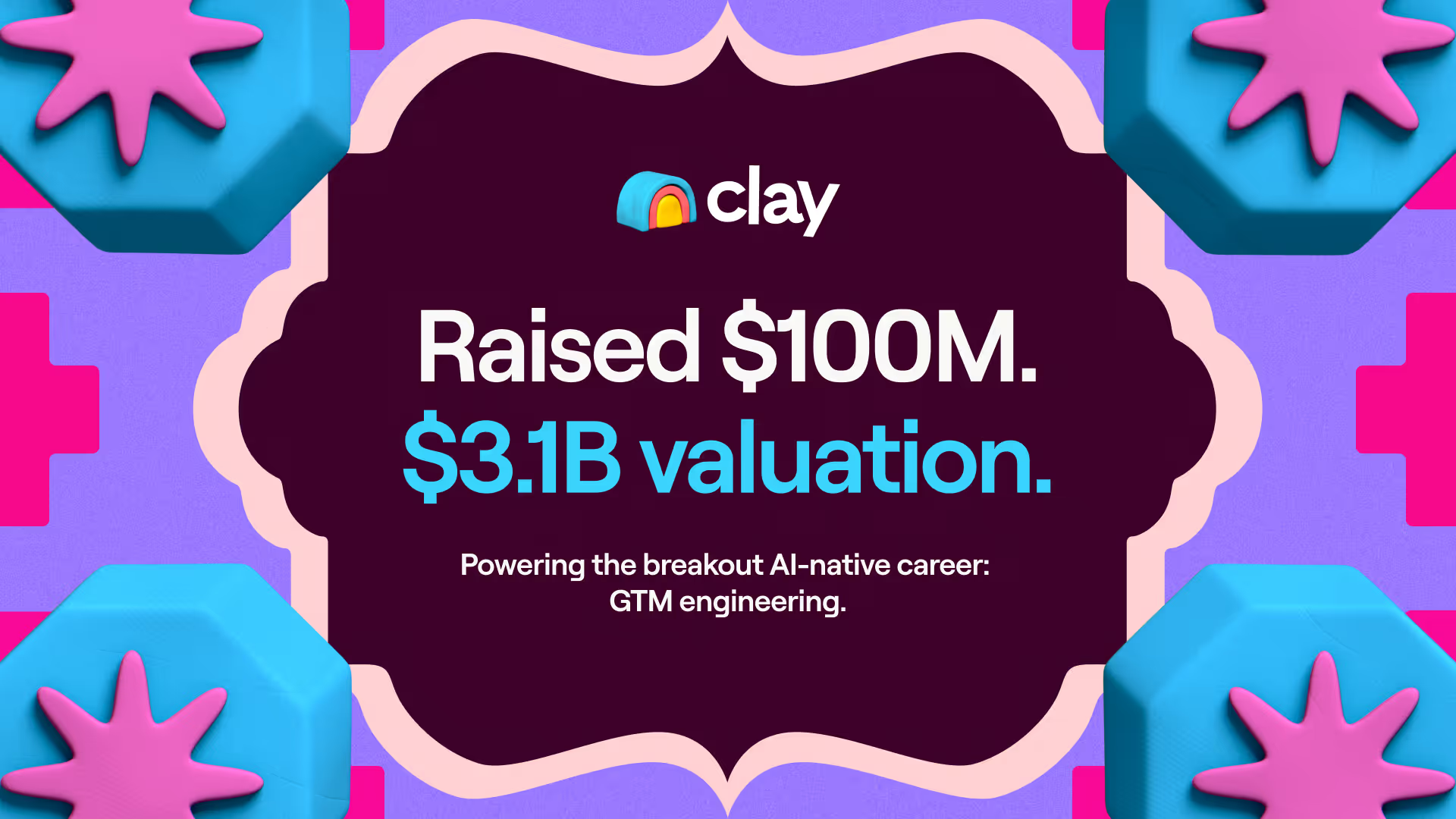
Clay Series C announcement. The GTM engineering era begins now

Claygent surpasses 1 billion runs
Announcing Sculpt: Clay’s first annual user conference
Announcing custom signals at Clay

Clay announces employee tender offer led by Sequoia at $1.5B valuation
Create personalized presentations at scale with Clay and Google Slides