[AINews] Agents for Everything Else: Codex for Knowledge Work, Claude for Creative Work
Спокойный новостной день AINews посвящён двум крупным апдейтам: OpenAI расширила Codex за пределы программирования через лендинг «Codex for Work» с динамическим UI, ускоренным на 42% Computer Use, командами /chronicle и /goal, а также интеграциями с Microsoft/Google/Salesforce. Anthropic в свою очередь выпустила Claude Security для ревью кода и расширила поддержку креативных инструментов — Blender, Autodesk, Adobe Creative Cloud, Ableton, Splice, Canva Affinity. В бенчмарках UK AISI зафиксировала GPT-5.5 на уровне Claude Mythos Preview по кибератакам (71.4% против 68.6%), вышли open-weight модели Qwen3.6 27B (лидер до 150B параметров, Intelligence Index 46), Tencent Hy3-preview, xAI Grok 4.3 и Ant Group Ling 2.6 1T. Отдельный сюжет — multimodal-направление DeepSeek с bounding boxes для computer-use агентов и исчезновение их репозитория «Thinking with Visual Primitives». Также обсуждаются инфраструктурные сдвиги: акцент на harness-инжиниринг у Cursor, DeepAgents deploy от LangChain и рост атак на цепочку поставок (компрометация PyPI-пакета lightning).
[AINews] Agents for Everything Else: Codex for Knowledge Work, Claude for Creative Work
[AINews] Агенты для всего остального: Codex для интеллектуальной работы, Claude для творческой
a quiet day lets us reflect on coding agents "breaking containment"
тихий день позволяет поразмышлять о том, как кодинг-агенты «прорывают периметр»
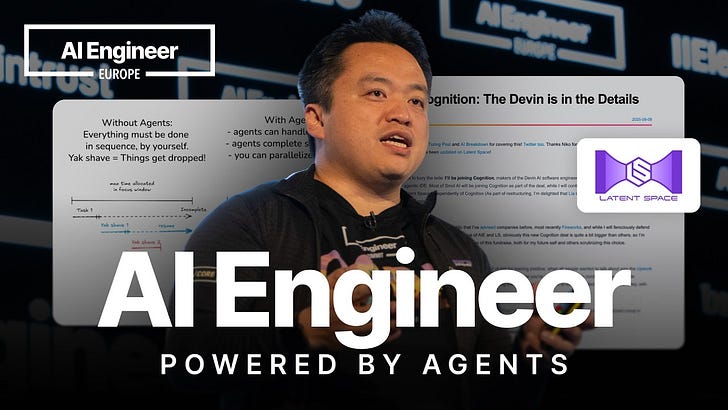
We mentioned on the Unsupervised Learning pod about the thesis that “coding agents are breaking containment”, and that talk is published live today.
Мы упоминали в подкасте Unsupervised Learning тезис о том, что «кодинг-агенты прорывают периметр», и сегодня этот доклад опубликован вживую.
Some launches are discrete; others roll up over time. Both Claude and Codex had very big weeks, with Claude generally winning the impression count war as has been happening for a while now.
Некоторые запуски точечны, другие накапливаются со временем. И у Claude, и у Codex были очень насыщенные недели, причём Claude в целом выигрывает войну по охватам, как это уже происходит какое-то время.
Codex
Codex
Today’s big Codex update was “Codex for Work”, basically a landing page that pitches Codex for Knowledge Work (not just coding), following on from last week’s beginnings of turning Codex into the presumptive OpenAI “SuperApp”. But it’s not just a landing page update; the latest Codex now has 42% faster CUA, responsive browser, /chronicle, /goal (“our take on the Ralph loop), and the onboarding now encourages you to plug into the Microsoft/Google/Salesforce suite and the agent now has a curiously Cowork-like planning UI and shows an in-app file editor for MS Office files.
Главным апдейтом Codex сегодня стал «Codex for Work» — по сути лендинг, позиционирующий Codex как инструмент для интеллектуальной работы (а не только для кодинга), что продолжает линию прошлой недели по превращению Codex в потенциальный «SuperApp» от OpenAI. Но это не просто обновление лендинга: в свежем Codex теперь CUA на 42% быстрее, отзывчивый браузер, /chronicle, /goal («наша версия Ralph loop»), а онбординг теперь предлагает подключиться к набору Microsoft/Google/Salesforce, и у агента появился любопытный Cowork-подобный UI для планирования и встроенный редактор файлов для документов MS Office.
Basically, as Tibo says, “Codex now available for non-coders”, Greg “Codex is for everyone, for any task done with a computer”, and Sam “try it for non-coding computer work.” You get the picture.
По сути, как говорит Tibo, «Codex теперь доступен и для не-программистов», Greg добавляет: «Codex для всех, для любой задачи, выполняемой на компьютере», а Sam пишет: «попробуйте его для некодинговой работы за компьютером». Картина ясна.
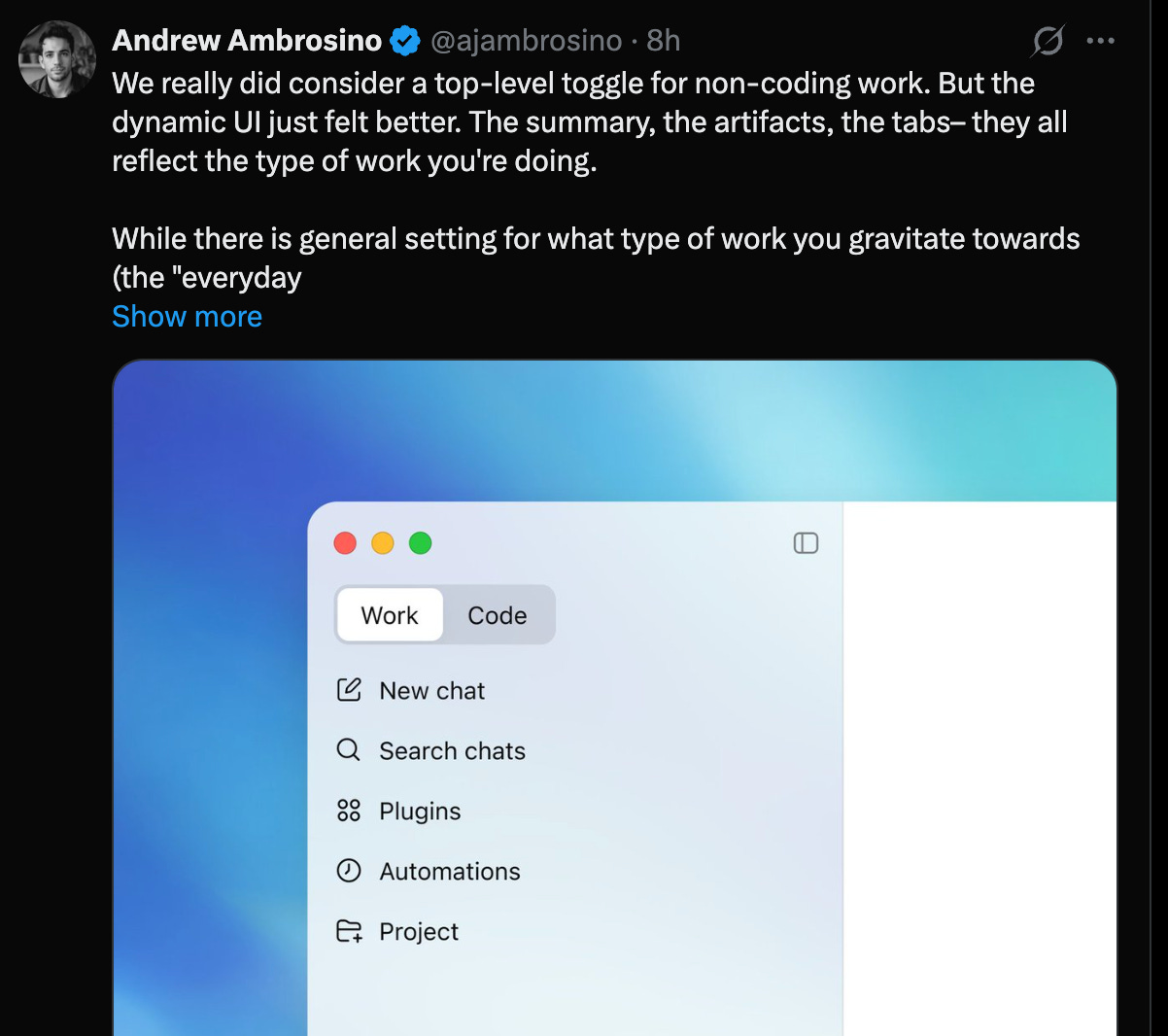
The “dynamic UI” is an interesting choice - the team explicitly rejects the Claude Cowork-like toggle, choosing instead to let the agent route the UI experience.
«Динамический UI» — интересный выбор: команда явно отказалась от Cowork-подобного переключателя в духе Claude, предпочтя, чтобы агент сам управлял пользовательским опытом.
Claude
Claude
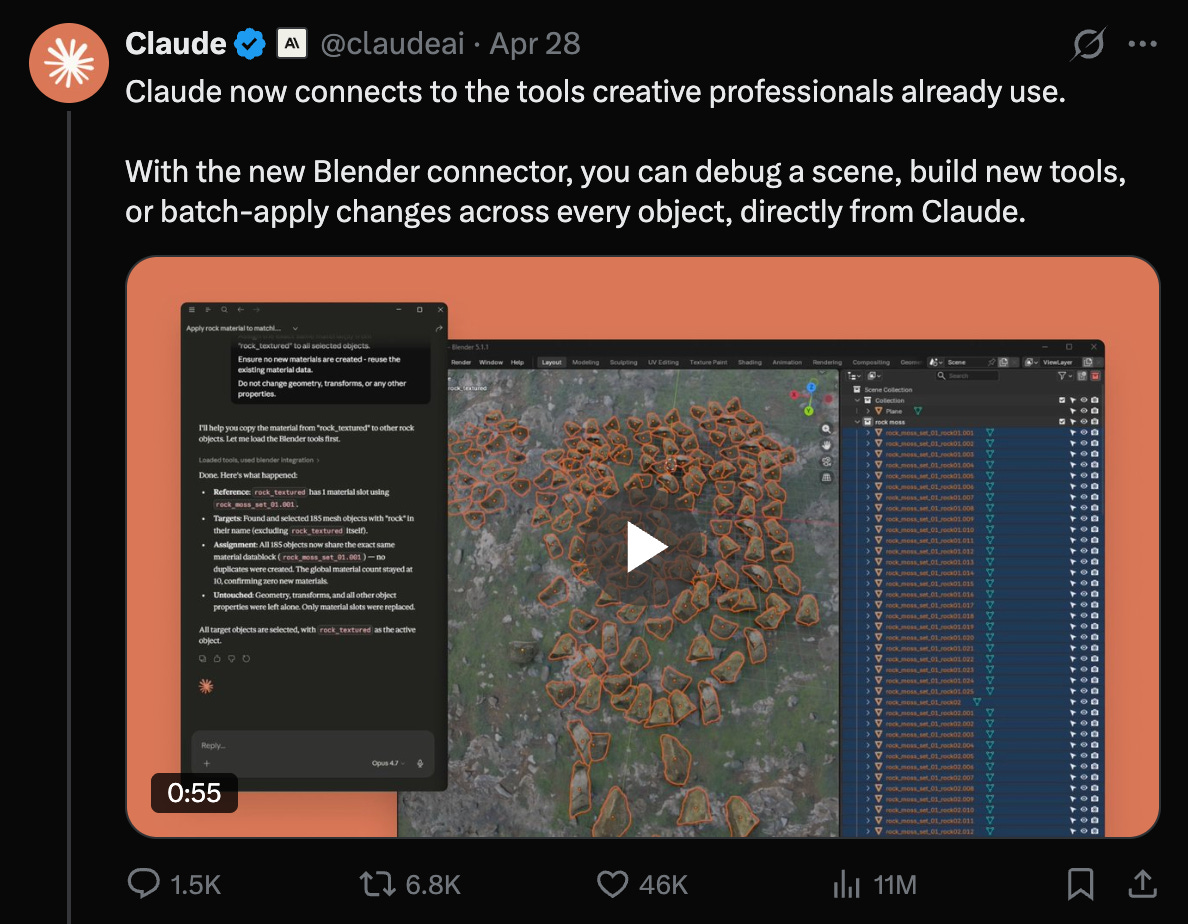
Against the backdrop of increasing security vulnerabilities, and a meta mythos around Mythos, Anthropic launched Claude Security, a code review tool.
На фоне растущего числа уязвимостей в безопасности и мета-сюжета вокруг Mythos, Anthropic запустила Claude Security — инструмент для код-ревью.
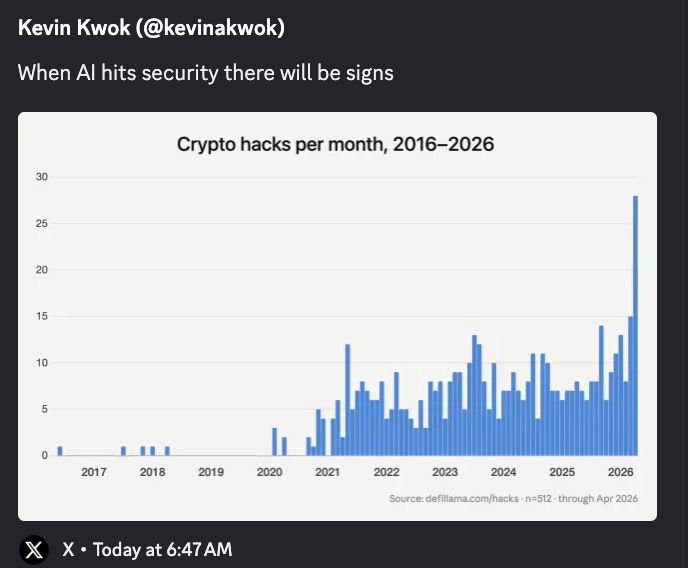
But probably the bigger news this week was the support of creative tools like Blender, Autodesk, Adobe Creative Cloud, Ableton, Splice, Canva Affinity, and more.
Но, пожалуй, более крупной новостью недели стала поддержка творческих инструментов — Blender, Autodesk, Adobe Creative Cloud, Ableton, Splice, Canva Affinity и других.
AI News for 4/29/2026-4/30/2026. We checked 12 subreddits, 544 Twitters and no further Discords. AINews’ website lets you search all past issues. As a reminder, AINews is now a section of Latent Space. You can opt in/out of email frequencies!
AI News за 29.04.2026–30.04.2026. Мы проверили 12 сабреддитов, 544 твиттера и больше никаких Discord-серверов. Сайт AINews позволяет искать по всем прошлым выпускам. Напоминаем, что AINews теперь является разделом Latent Space. Вы можете подписаться или отписаться от рассылок разной частоты!
AI Twitter Recap
Обзор AI Twitter
OpenAI’s GPT-5.5, Codex expansion, and cyber capability evaluations
GPT-5.5 от OpenAI, расширение Codex и оценки киберспособностей
GPT-5.5 is now credibly in the top tier for long-horizon cyber tasks: the UK AI Security Institute reported that GPT-5.5 became the second model to complete one of its multi-step cyber-attack simulations end-to-end, and multiple follow-on posts highlighted rough parity with Claude Mythos Preview on this eval: @scaling01 cited 71.4% average pass rate for GPT-5.5 vs 68.6% for Mythos, while @cryps1s noted GPT-5.5 solved the TLO chain in 2/10 attempts vs Mythos’ 3/10. @polynoamial emphasized that performance was still improving past 100M tokens of inference budget, suggesting no obvious saturation yet. This materially changes the earlier narrative that Anthropic had a unique lead in offensive cyber automation. OpenAI also paired this moment with a product-side security release: Advanced Account Security for ChatGPT, adding phishing-resistant sign-in and hardened recovery.
Codex is moving beyond coding into general computer work: OpenAI shipped a substantial Codex update framed explicitly as “for everyone, for any task done with a computer,” with the main announcement highlighting role-based onboarding, app connections, and workflows spanning docs, slides, spreadsheets, research, and planning. @ajambrosino summarized the update as dynamic task-specific UI, 20% faster computer/browser use, better slide/sheet handling, and less clunky handoffs, while @AriX called out that Computer Use runs 42% faster after the update. Sam Altman amplified the launch with “big upgrade for codex today! try it for non-coding computer work.” The broader pattern: OpenAI is productizing “computer-use agent” UX, not just model capability.
Benchmark deltas were incremental but economically meaningful: Artificial Analysis reported GPT-5.5 Pro as a slight new SOTA on CritPt over GPT-5.4 Pro, but the interesting point was not raw score—it achieved the bump with ~60% lower cost and token use on that frontier-science eval. That lines up with broader chatter that the GPT-5.5 family is less about a dramatic intelligence discontinuity than about stronger reliability and better efficiency in high-value workflows.
GPT-5.5 теперь убедительно входит в высшую лигу по длинногоризонтным кибер-задачам: UK AI Security Institute сообщил, что GPT-5.5 стала второй моделью, прошедшей одну из их многошаговых симуляций кибератак от начала до конца, и несколько последующих постов отметили примерный паритет с Claude Mythos Preview на этом тесте: @scaling01 привёл средний показатель прохождения 71.4% для GPT-5.5 против 68.6% у Mythos, а @cryps1s отметил, что GPT-5.5 решила цепочку TLO в 2/10 попытках против 3/10 у Mythos. @polynoamial подчеркнул, что производительность продолжала расти даже за пределами 100M токенов бюджета инференса, что говорит об отсутствии очевидного насыщения. Это существенно меняет прежний нарратив о том, что у Anthropic есть уникальное лидерство в наступательной кибер-автоматизации. OpenAI приурочила к этому моменту и продуктовый релиз по безопасности: Advanced Account Security для ChatGPT с устойчивым к фишингу входом и укреплённым восстановлением доступа.Codex выходит за пределы кодинга в общую работу на компьютере: OpenAI выпустила существенное обновление Codex, явно позиционируемое как «для всех, для любой задачи на компьютере», с главным анонсом, подсвечивающим онбординг по ролям, подключение приложений и сценарии работы с документами, слайдами, таблицами, ресёрчем и планированием. @ajambrosino кратко описал обновление как динамический UI под конкретные задачи, на 20% более быструю работу с компьютером/браузером, улучшенную обработку слайдов/таблиц и менее громоздкие передачи задач, а @AriX отметил, что Computer Use работает на 42% быстрее после обновления. Sam Altman поддержал запуск словами «большой апгрейд codex сегодня! попробуйте для некодинговой работы за компьютером». Более широкий тренд: OpenAI продуктизирует UX «computer-use агента», а не только возможности модели.Дельты в бенчмарках были инкрементальными, но экономически значимыми: Artificial Analysis отметили GPT-5.5 Pro как новую слегка опережающую SOTA на CritPt по сравнению с GPT-5.4 Pro, но любопытно не само значение — прибавка была достигнута при ~60% меньшей стоимости и расходе токенов на этом frontier-научном тесте. Это согласуется с общим тоном дискуссий о том, что семейство GPT-5.5 — это не столько драматический скачок интеллекта, сколько более высокая надёжность и эффективность в дорогих сценариях.
Open-weight model movement: Qwen3.6, Tencent Hy3-preview, Grok 4.3, and Ling 2.6 1T
Движение open-weight моделей: Qwen3.6, Tencent Hy3-preview, Grok 4.3 и Ling 2.6 1T
Qwen3.6 27B looks like the most important open-weight release of the day: Artificial Analysis ranked Qwen3.6 27B as the new open-weights leader under 150B parameters with an Intelligence Index score of 46, ahead of Gemma 4 31B and prior Qwen variants. Key details: Apache 2.0, 262K context, native multimodal input, and BF16 weights small enough to fit on a single H100. The companion 35B A3B MoE scored 43, making it the strongest open model around 3B active parameters. The tradeoff is expensive inference-by-output-token: AA estimates Qwen3.6 27B used ~144M output tokens on the suite and is roughly 21× the cost of Gemma 4 31B to run there. Still, on capability-per-size it appears to be a notable step.
Tencent’s Hy3-preview is competitive but not class-leading: Artificial Analysis described Hy3-preview as a 295B total / 21B active MoE with 256K context and a restricted-commercial-use community license. It scored 42 on AA’s Intelligence Index, trailing recent open peers like Qwen3.6 27B, DeepSeek V4 Flash, and GLM-5.1. The most interesting bright spot was CritPt, where it matched GLM-5.1 at 4.6%, suggesting better-than-average scientific reasoning relative to its overall position.
xAI’s Grok 4.3 improved sharply on agentic benchmarks while getting cheaper: Artificial Analysis measured Grok 4.3 at 53 on the Intelligence Index, up four points from Grok 4.20 v2, with a major jump on GDPval-AA to 1500 Elo. AA also reported approximately 40% lower input price and 60% lower output price than the prior version. The release still trails GPT-5.5 on GDPval-AA by a wide margin, but it looks like a real systems-and-post-training improvement rather than a minor rev.
Ant Group’s Ling 2.6 1T targets cost-efficiency rather than frontier status: Artificial Analysis positioned Ling 2.6 1T as a 1T-parameter non-reasoning model scoring 34, with decent GPQA/HLE numbers and notably low benchmark-run cost at roughly $95. The caveat is reliability: AA reported a 92% hallucination rate on AA-Omniscience.
Qwen3.6 27B выглядит как самый важный open-weight релиз дня: Artificial Analysis поставили Qwen3.6 27B на первое место среди open-weights моделей до 150B параметров с Intelligence Index 46, опередив Gemma 4 31B и предыдущие версии Qwen. Ключевые детали: лицензия Apache 2.0, контекст 262K, нативный мультимодальный ввод и веса BF16, помещающиеся в один H100. Сопутствующий 35B A3B MoE набрал 43, что делает его самой сильной открытой моделью в районе 3B активных параметров. Минус — дорогой инференс по выходному токену: AA оценивают, что Qwen3.6 27B использовала ~144M выходных токенов на пакете тестов и обходится примерно в 21× дороже Gemma 4 31B в этом сравнении. Тем не менее по соотношению возможности/размер это заметный шаг.Hy3-preview от Tencent конкурентоспособна, но не лидер класса: Artificial Analysis описали Hy3-preview как MoE 295B общего / 21B активных с контекстом 256K и community-лицензией с ограниченным коммерческим использованием. Она получила 42 по Intelligence Index AA, уступая недавним открытым конкурентам — Qwen3.6 27B, DeepSeek V4 Flash и GLM-5.1. Самый интересный момент — CritPt, где она сравнялась с GLM-5.1 на 4.6%, что говорит о научных способностях выше среднего относительно её общего положения.Grok 4.3 от xAI заметно подтянулся на agentic-бенчмарках и подешевел: Artificial Analysis измерили Grok 4.3 на 53 балла по Intelligence Index — это на четыре пункта выше, чем у Grok 4.20 v2, с большим скачком на GDPval-AA до 1500 Elo. AA также сообщили о примерно 40% более низкой цене на вход и 60% более низкой цене на выход по сравнению с предыдущей версией. Релиз всё ещё значительно отстаёт от GPT-5.5 на GDPval-AA, но выглядит как реальное улучшение в системной части и пост-тренинге, а не как мелкая ревизия.Ling 2.6 1T от Ant Group ориентирован на стоимостную эффективность, а не на frontier-статус: Artificial Analysis позиционируют Ling 2.6 1T как модель на 1T параметров без reasoning с оценкой 34, неплохими числами по GPQA/HLE и заметно низкой стоимостью прогона бенчмарка — около $95. Оговорка — надёжность: AA сообщают о 92% уровне галлюцинаций на AA-Omniscience.
DeepSeek multimodal/vision work, GUI agents, and training scale speculation
Мультимодальные/визуальные работы DeepSeek, GUI-агенты и спекуляции о масштабах обучения
DeepSeek’s multimodal direction appears tightly coupled to computer-use agents: @nrehiew_ highlighted that DeepSeek trains vision into V4-Flash by having the model directly output bounding boxes and point coordinates during reasoning, interpreting this as a computer-use-oriented design rather than generic VLM work. A second post argues the paper’s “visual primitives” tasks map directly to browser/computer use rather than broad multimodal understanding (link). That framing matches parallel observations from @teortaxesTex that DeepSeek may be integrating vision weights back into the main V4 line rather than releasing a separate “V4-Flash-Vision”.
The repo disappearance became a story of its own: after release, several observers noted that DeepSeek’s “Thinking with Visual Primitives” repo vanished, including @teortaxesTex and @arjunkocher. No clear explanation emerged in these tweets, but the deletion drew more attention because the work suggested a concrete recipe for visual reasoning and GUI grounding.
Scaling chatter points to very large token counts for frontier pretraining: @teortaxesTex argued that >100T tokens is no longer unusual for frontier models and estimated a hypothetical 100T-token DeepSeek V4 as “V4 + 2 more epochs,” while @nrehiew_ back-of-the-enveloped ~150T tokens and ~9e25 pretraining FLOPs for a ~100B active model, suggesting a run feasible in roughly 14 days on an OpenAI-scale 100K GB200 cluster at conservative MFU. These are speculative takes, but useful as calibration for what “frontier-scale” now means in practice.
Мультимодальное направление DeepSeek, по всей видимости, тесно завязано на computer-use агентах: @nrehiew_ отметил, что DeepSeek тренирует зрение в V4-Flash так, что модель напрямую выдаёт bounding boxes и координаты точек во время рассуждения, интерпретируя это как дизайн под computer-use, а не под обычный VLM. Второй пост утверждает, что задачи «визуальных примитивов» из статьи напрямую соответствуют работе с браузером/компьютером, а не широкому мультимодальному пониманию (ссылка). Эта рамка совпадает с параллельными наблюдениями @teortaxesTex о том, что DeepSeek, возможно, интегрирует визуальные веса обратно в основную линию V4, а не выпускает отдельный «V4-Flash-Vision».Исчезновение репозитория стало отдельной историей: после релиза несколько наблюдателей заметили, что репозиторий DeepSeek «Thinking with Visual Primitives» исчез — об этом писали @teortaxesTex и @arjunkocher. Внятного объяснения в этих твитах не прозвучало, но удаление привлекло больше внимания, потому что работа предлагала конкретный рецепт для визуального рассуждения и GUI-грундинга.Разговоры о масштабе указывают на очень большие объёмы токенов для frontier-предобучения: @teortaxesTex утверждает, что >100T токенов больше не считается необычным для frontier-моделей, и оценивает гипотетический DeepSeek V4 на 100T токенов как «V4 + ещё 2 эпохи», а @nrehiew_ прикинул на коленке ~150T токенов и ~9e25 FLOPs предобучения для модели с ~100B активных параметров, что соответствует прогону, осуществимому примерно за 14 дней на кластере уровня OpenAI с 100K GB200 при консервативном MFU. Это спекуляции, но полезные как калибровка того, что сегодня значит «frontier-масштаб» на практике.
Agent infrastructure, harness engineering, and collaborative agent systems
Инфраструктура агентов, harness-инжиниринг и системы коллаборации агентов
There is a clear shift from model-centric bragging to harness-centric engineering: Cursor published a strong note on how it tests and tunes its agent harness, focusing on runtime, evals, degradation repair, and model-specific customization rather than generic benchmark claims. @Vtrivedy10 explicitly connected Cursor’s writeup to design patterns converging across agent builders: bespoke prompts/tools per model, mixed offline+online evals, dogfooding, and treating the context window as the primary compute boundary.
LangChain continues to package deployment and multi-tenant agent infra: @hwchase17 introduced DeepAgents deploy, a config-driven cloud deployment flow via deepagents.toml, covering agent, sandbox, auth, and frontend sections. Related posts from LangChain staff detailed agent-server patterns for data isolation, delegated credentials, and RBAC in multi-user deployments (example). This is increasingly the boring-but-important layer turning demos into enterprise software.
Collaborative multi-agent workspaces are getting more concrete: @cmpatino_ introduced Agent Collabs, using Hugging Face buckets plus Spaces as a shared backend for swarms of heterogeneous agents to exchange messages, artifacts, and progress. The noteworthy idea is not just “agents collaborating,” but lightweight coordination primitives that let weaker agents contribute useful validation work while better-resourced agents handle expensive experiments.
Налицо явный сдвиг от хвастовства характеристиками моделей к инжинирингу harness-обвязки: Cursor опубликовали серьёзную заметку о том, как они тестируют и тюнят свой agent harness, с фокусом на рантайм, evals, восстановление после деградаций и кастомизацию под конкретные модели, а не на общие заявления по бенчмаркам. @Vtrivedy10 прямо связал материал Cursor с дизайн-паттернами, которые сходятся у разных разработчиков агентов: индивидуальные промпты/инструменты под каждую модель, смешанные offline+online evals, dogfooding и восприятие контекстного окна как основной вычислительной границы.LangChain продолжает упаковывать развёртывание и multi-tenant инфраструктуру для агентов: @hwchase17 представил DeepAgents deploy — конфиг-ориентированный поток облачного развёртывания через deepagents.toml, с секциями для агента, песочницы, авторизации и фронтенда. Связанные посты сотрудников LangChain описали паттерны agent-сервера для изоляции данных, делегированных учётных данных и RBAC в многопользовательских развёртываниях (пример). Это всё более тот скучный, но важный слой, который превращает демки в корпоративный софт.Коллаборативные multi-agent рабочие пространства становятся всё более конкретными: @cmpatino_ представил Agent Collabs, использующий бакеты Hugging Face и Spaces в качестве общего бэкенда для роёв разнородных агентов, обменивающихся сообщениями, артефактами и прогрессом. Примечательна не сама идея «агентов, сотрудничающих между собой», а лёгкие примитивы координации, позволяющие более слабым агентам делать полезную работу по валидации, пока более ресурсные агенты ведут дорогие эксперименты.
Security, supply chain, and account hardening
Безопасность, цепочка поставок и защита аккаунтов
Open-source package compromise remains an acute operational risk: Socket reported that the popular PyPI package lightning was compromised in versions 2.6.2 and 2.6.3, with malicious code executing on import, downloading Bun, and running an 11 MB obfuscated JavaScript payload aimed at credential theft. @theo connected that incident with additional package compromises (intercom-client on npm) and a Linux zero day, arguing the tempo of software supply-chain attacks is increasing.
Security scanners are becoming first-class AI products: Anthropic rolled out Claude Security, described by @kimmonismus and later @_catwu as a repo vulnerability scanner that validates findings and suggests fixes, powered by Opus 4.7. Cursor shipped a parallel offering with Cursor Security Review, including always-on PR review and scheduled codebase scans. This is one of the clearest examples of model vendors moving directly into established devsecops categories.
Компрометация open-source пакетов остаётся острым операционным риском: Socket сообщили, что популярный PyPI-пакет lightning был скомпрометирован в версиях 2.6.2 и 2.6.3 — вредоносный код выполнялся при импорте, скачивал Bun и запускал 11 МБ обфусцированной JavaScript-нагрузки, нацеленной на кражу учётных данных. @theo связал этот инцидент с другими компрометациями пакетов (intercom-client в npm) и Linux zero day, утверждая, что темп атак на цепочку поставок ПО нарастает.Сканеры безопасности становятся полноценными AI-продуктами: Anthropic выкатили Claude Security, описанный @kimmonismus и позднее @_catwu как сканер уязвимостей репозиториев, который валидирует находки и предлагает исправления, работая на Opus 4.7. Cursor выпустили параллельный продукт — Cursor Security Review, включающий постоянный ревью PR и плановые сканирования кодовой базы. Это один из самых наглядных примеров того, как поставщики моделей напрямую заходят в устоявшиеся категории devsecops.
Top tweets (by engagement)
Топ твитов (по вовлечённости)
OpenAI Codex broadens into general knowledge work: OpenAI’s Codex announcement and Sam Altman’s follow-up were the day’s biggest product posts, signaling a strategic push from “coding agent” to “computer-use agent”.
GPT-5.5’s cyber eval result mattered: UK AISI’s thread was one of the highest-engagement technical posts and reshaped comparisons with Anthropic’s Mythos.
Qwen shipped interpretability tooling, not just models: Qwen-Scope, an open suite of sparse autoencoders for Qwen models, stood out as a rare release focused on feature steering, debugging, data synthesis, and evaluation rather than raw model weights.
Anthropic published a large-scale guidance/sycophancy study: their analysis of 1M Claude conversations tied behavioral research directly to training changes for Opus 4.7 and Mythos Preview, an important sign that post-training loops are becoming more productized and data-informed.
OpenAI Codex расширяется в общую интеллектуальную работу: анонс Codex от OpenAI и фоллоу-ап Sam Altman стали крупнейшими продуктовыми постами дня, обозначая стратегический сдвиг от «кодинг-агента» к «computer-use агенту».Результат GPT-5.5 на кибер-тесте оказался важен: ветка UK AISI вошла в число самых обсуждаемых технических постов и переформатировала сравнение с Mythos от Anthropic.Qwen выпустили инструменты интерпретируемости, а не только модели: Qwen-Scope — открытый набор sparse autoencoders для моделей Qwen — выделился как редкий релиз, ориентированный на управление фичами, отладку, синтез данных и оценку, а не на сырые веса.Anthropic опубликовали масштабное исследование по guidance/сикофантии: их анализ 1M разговоров с Claude напрямую связал поведенческое исследование с изменениями в обучении для Opus 4.7 и Mythos Preview — важный знак того, что циклы пост-тренинга становятся всё более продуктизированными и data-driven.
AI Reddit Recap
Обзор AI Reddit
/r/LocalLlama + /r/localLLM Recap
/r/LocalLlama + /r/localLLM Обзор
1. AMD Ryzen 395 Box and Halo Box Launch
1. Запуск AMD Ryzen 395 Box и Halo Box
Keep reading with a 7-day free trial
Продолжайте читать с 7-дневным бесплатным пробным периодом
Subscribe to Latent.Space to keep reading this post and get 7 days of free access to the full post archives.
Подпишитесь на Latent.Space, чтобы продолжить читать этот пост и получить 7 дней бесплатного доступа к полному архиву постов.