Optimizing Software Factories
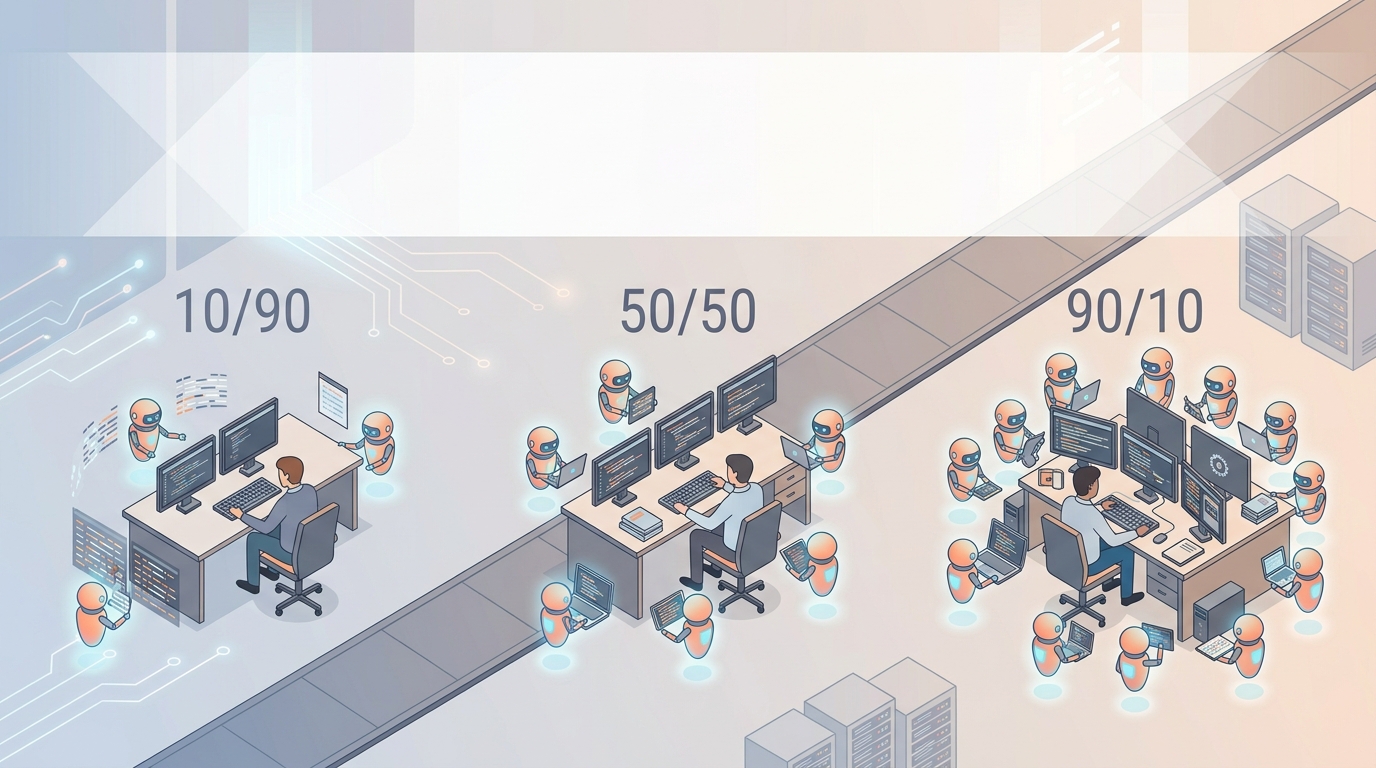
Тунгуз ставит вопрос об устойчивости (а не пропускной способности) при выборе соотношения ИИ/людей в инженерных командах. В команде из двадцати инженеров уход одного — это 5% потери персонала, тогда как в «ИИ-заряженной» команде из трёх человек, управляющей двадцатью автономными агентами, тот же уход означает потерю 33% персонала и трети институциональной памяти. При 10/90 типичный бюджет среднестадийного стартапа содержит ~20 инженеров и привычную иерархию; при 50/50 — ~12 инженеров плюс флот агентов, где инженеры становятся архитекторами решений; при 90/10 — три инженера в центре созвездия автономных агентов без менеджеров и резервирования. Автор обращается к операционным исследованиям: на производстве заводы работают при загрузке 70–90%, а запас (slack) — это не потери, а свойство, обеспечивающее устойчивость системы. Концентрируя оркестрационные знания в трёх головах, вы работаете на 100% загрузки, и большинству стартапов пока не стоит делать такую ставку.
What happens when a startup employee leaves on a Monday?
In a twenty-person engineering team, one resignation is a 5% headcount loss. The remaining nineteen absorb the work.
In an AI-pilled three-person team running twenty autonomous agents, one resignation is a 33% headcount loss.
The agents do not resign. They keep generating, reviewing, testing, and deploying. But one-third of the institutional memory that trains, prompts, validates, and debugs the agent fleet walks out the door.
The tradeoff at the heart of AI/labor ratio decisions is not throughput. It is resiliency.
At 10/90 (10% AI, 90% labor), a typical mid-stage startup engineering budget powers ~20 engineers and a layer of Copilot, Cursor, and inference spend. Traditional hierarchy. Human code review as the bottleneck. The org chart looks familiar.
At 50/50, the same budget powers ~12 engineers and a fleet of agents. Engineers become solution architects, problem decomposers, and prompt designers. Manager span of control widens because agents do not need standups.
At 90/10, three engineers sit at the center of a constellation of autonomous agents that generate, review, test, deploy, monitor, and optimize. No managers. No hierarchy. No redundancy.
If we are building software factories, maybe it’s time to study operations research.
In manufacturing, the rule of thumb is simple: run your factory at 70–90% utilization. At 100%, one breakdown cascades into missed deadlines, burned teams, and lost customers. The slack is not waste. It is the feature that keeps the system robust.
Engineering teams are not factories, but the same logic applies. When you concentrate orchestration knowledge in three heads, you are running at 100% utilization.
Most startups should not make that bet yet.