Every Agent Needs a Box — Aaron Levie, Box
Это спецвыпуск подкаста Latent Space с Аароном Леви (CEO Box) и приглашённым со-ведущим Джеффом Хьюбером (Chroma). Box впервые преодолел отметку в $1,1 млрд ARR с маржой 28% и обслуживает 67% компаний из Fortune 500. Главный тезис эпизода — «каждому агенту нужен box (ящик/песочница)»: по мере роста числа агентов им потребуется инфраструктура для доступа к корпоративным данным, управления правами, идентичности и governance. Леви объясняет, почему кодинг-агенты «взлетели» первыми (текст-в-текст, открытый доступ к коду, документация, технические пользователи), тогда как остальной экономике придётся годами перестраивать рабочие процессы под агентов. Обсуждаются context engineering и «context rot», пределы поиска у frontier-моделей, агентские evals (включая APEX от Mercor и собственный приватный eval Box по ~10 индустриям), founder mode, будущее ИИ в кино и расцвет DevRel.
Every Agent Needs a Box — Aaron Levie, Box
Каждому агенту нужен box — Аарон Леви, Box
The reception to our recent post on Code Reviews has been strong. Catch up!
Отклик на наш недавний пост о Code Reviews оказался мощным. Догоняйте!
Amid a maelstrom of discussion on whether or not AI is killing SaaS, one of the top publicly listed SaaS companies in the world has just reported record revenues, clearing well over $1.1B in ARR for the first time with a 28% margin. As we comment on the pod, Aaron Levie is the rare public company CEO equally at home in both worlds of Silicon Valley and Wall Street/Main Street, by day helping 70% of the Fortune 500 with their Enterprise Advanced Suite, and yet by night is often found in the basements of early startups and tweeting viral insights about the future of agents.
На фоне бури обсуждений о том, убивает ли ИИ SaaS, одна из ведущих публичных SaaS-компаний мира только что отчиталась о рекордной выручке, впервые преодолев планку в $1,1 млрд ARR с маржой 28%. Как мы отмечаем в подкасте, Аарон Леви — редкий CEO публичной компании, одинаково своей в обоих мирах: Кремниевой долины и Уолл-стрит/Мейн-стрит. Днём он помогает 70% компаний из Fortune 500 с их Enterprise Advanced Suite, а ночью его нередко можно встретить в подвалах ранних стартапов, где он пишет вирусные твиты о будущем агентов.
Now that both Cursor, Cloudflare, Perplexity, Anthropic and more have made Filesystems and Sandboxes and various forms of “Just Give the Agent a Box” cool (not just cool; it is now one of the single hottest areas in AI infrastructure growing 100% MoM), we find it a delightfully appropriate time to do the episode with the OG CEO who has been giving humans and computers Boxes since he was a college dropout pitching VCs at a Michael Arrington house party.
Теперь, когда Cursor, Cloudflare, Perplexity, Anthropic и другие сделали файловые системы, песочницы и разнообразные формы «просто дай агенту box» крутыми (и не просто крутыми — это сейчас одна из самых горячих областей в AI-инфраструктуре, растущая на 100% в месяц), нам кажется на редкость уместным сделать выпуск с тем самым OG-CEO, который выдаёт людям и компьютерам Box’ы с тех пор, как был бросившим колледж студентом, питчившим венчурных инвесторов на домашней вечеринке у Майкла Аррингтона.
Enjoy our special pod, with fan favorite returning guest/guest cohost Jeff Huber!
Наслаждайтесь нашим спецвыпуском с любимцем публики, вернувшимся гостем и со-ведущим Джеффом Хьюбером!
Note: We didn’t directly discuss the AI vs SaaS debate - Aaron has done many, many, many other podcasts on that, and you should read his definitive essay on it. Most commentators do not understand SaaS businesses because they have never scaled one themselves, and deeply reflected on what the true value proposition of SaaS is.
Примечание: мы не обсуждали напрямую дебаты «ИИ против SaaS» — Аарон записал на эту тему очень-очень-очень много других подкастов, и вам стоит прочитать его исчерпывающее эссе об этом. Большинство комментаторов не понимают SaaS-бизнесы, потому что сами никогда не масштабировали ни одного и глубоко не размышляли о том, в чём истинная ценность SaaS.
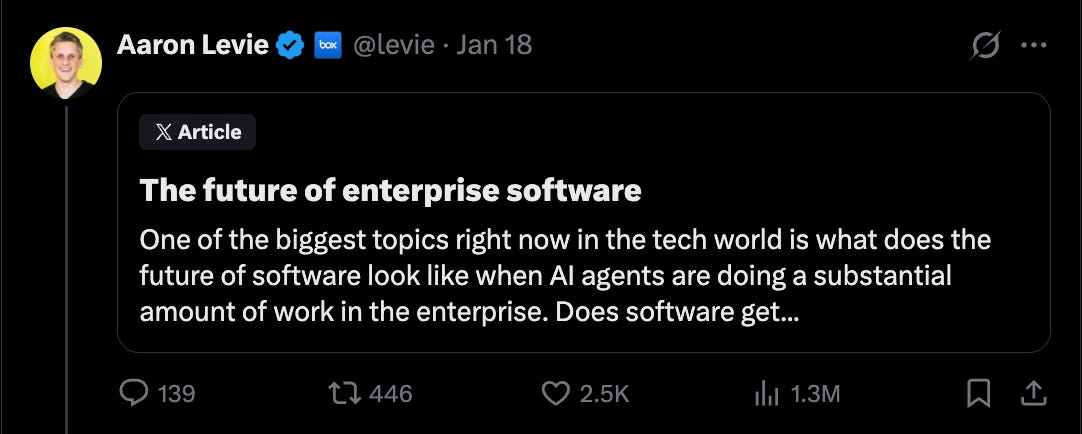
We also discuss Your Company is a Filesystem:
Мы также обсуждаем «Ваша компания — это файловая система»:
We also shoutout CTO Ben Kus’ and the AI team, who talked about the technical architecture and will return for AIE WF 2026.
Мы также передаём привет CTO Бену Кусу и команде ИИ, которые рассказали о технической архитектуре и вернутся на AIE WF 2026.
Full Video Episode
Полная видеоверсия эпизода
Timestamps
Таймкоды
00:00 Adapting Work for Agents
01:29 Why Every Agent Needs a Box
04:38 Agent Governance and Identity
11:28 Why Coding Agents Took Off First
21:42 Context Engineering and Search Limits
31:29 Inside Agent Evals
33:23 Industries and Datasets
35:22 Building the Agent Team
38:50 Read Write Agent Workflows
41:54 Docs Graphs and Founder Mode
55:38 Token FOMO Culture
56:31 Production Function Secrets
01:01:08 Film Roots to Box
01:03:38 AI Future of Movies
01:06:47 Media DevRel and Engineering
00:00 Адаптация работы под агентов01:29 Почему каждому агенту нужен box04:38 Governance и идентичность агентов11:28 Почему кодинг-агенты взлетели первыми21:42 Context engineering и пределы поиска31:29 Внутри агентских evals33:23 Индустрии и датасеты35:22 Создание команды агентов38:50 Read/Write-воркфлоу агентов41:54 Документы, графы и founder mode55:38 Культура token FOMO56:31 Секреты производственной функции01:01:08 От кино к Box01:03:38 ИИ и будущее кино01:06:47 Медиа, DevRel и инженерия
Transcript
Расшифровка
Adapting Work for Agents
Адаптация работы под агентов
Aaron Levie: Like you don’t write code, you talk to an agent and it goes and does it for you, and you may be at best review it. That’s even probably like, like largely not even what you’re doing. What’s happening is we are changing our work to make the agents effective. In that model, the agent didn’t really adapt to how we work.
Aaron Levie: Типа ты не пишешь код, ты говоришь с агентом, и он идёт и делает это за тебя, а ты в лучшем случае проверяешь результат. И это, наверное, тоже по большей части даже не то, чем ты занимаешься. Что на самом деле происходит — мы меняем нашу работу, чтобы агенты были эффективны. В этой модели агент не особо адаптировался к тому, как работаем мы.
We basically adapted to how the agent works. All of the economy has to go through that exact same evolution. Right now, it’s a huge asset and an advantage for the teams that do it early and that are kinda wired into doing this ‘cause you’ll see compounding returns. But that’s just gonna take a while for most companies to actually go and get this deployed.
По сути, это мы адаптировались к тому, как работает агент. Всей экономике придётся пройти ровно через ту же эволюцию. Прямо сейчас это огромный актив и преимущество для команд, которые делают это рано и которые как бы заточены под это, потому что вы увидите накапливающуюся отдачу. Но большинству компаний понадобится время, чтобы реально развернуть это у себя.
swyx: Welcome to the Lane Space Pod. We’re back in the chroma studio with uh, chroma, CEO, Jeff Hoover. Welcome returning guest now guest host.
swyx: Добро пожаловать в Lane Space Pod. Мы снова в студии Chroma с, э-э, CEO Chroma Джеффом Хьюбером. Добро пожаловать, вернувшийся гость, а теперь — гость-ведущий.
Aaron Levie: It’s a pleasure. Wow. How’d you get upgraded to, uh, to that?
Aaron Levie: Это удовольствие. Ого. Как тебя повысили до, э-э, вот этого?
swyx: Because he’s like the perfect guy to be guest those for you.
swyx: Потому что он идеальный человек, чтобы быть гостем-ведущим для тебя.
Aaron Levie: That makes sense actually, for We love context. We, we both really love context le we really do.
Aaron Levie: Вообще-то логично. Мы любим контекст. Мы оба правда очень любим контекст, правда любим.
We really do.
Правда любим.
swyx: Uh, and we’re here with, uh, Aaron Levy. Welcome.
swyx: И с нами сегодня, э-э, Аарон Леви. Добро пожаловать.
Aaron Levie: Thank you. Good to, uh, good to be [00:01:00] here.
Aaron Levie: Спасибо. Рад, э-э, быть [00:01:00] здесь.
swyx: Uh, yeah. So we’ve all met offline and like chatted a little bit, but like, it’s always nice to get these things in person and conversation. Yeah. You just started off with so much energy. You’re, you’re super excited about agents.
swyx: Да. Мы все встречались офлайн, немного болтали, но всегда приятно делать такие вещи вживую, в разговоре. Да. Ты прямо с порога с такой энергией. Ты, ты дико воодушевлён агентами.
I love
Обожаю
Aaron Levie: agents.
Aaron Levie: агентов.
swyx: Yeah. Open claw. Just got by, got bought by OpenAI. No, not bought, but you know, you know what I mean?
swyx: Да. Open Claw. Их только что купила OpenAI. Нет, не купила, но, ну, ты понял, о чём я.
Aaron Levie: Some, some, you know, acquihire. Executive
Aaron Levie: Что-то типа, ну знаешь, acquihire. Найм руководителей.
swyx: hire.
swyx: Наём руководителей.
Aaron Levie: Executive hire. Okay. Executive hire. Say,
Aaron Levie: Наём руководителей. Ладно. Наём руководителей. Скажем так,
swyx: hey, that’s my term. Okay. Um, what are you pounding the table on on agents? You have so many insightful tweets.
swyx: эй, это мой термин. Ладно. Эм, на чём ты так настаиваешь насчёт агентов? У тебя столько проницательных твитов.
Why Every Agent Needs a Box
Почему каждому агенту нужен box
Aaron Levie: Well, the thing that, that we get super excited by that I think is probably, you know, should be relatively obvious is we’ve, we’ve built a platform to help enterprises manage their files and their, their corporate files and the permissions of who has access to those files and the sharing collaboration of those files.
Aaron Levie: Ну, то, что нас супер заводит и что, наверное, должно быть относительно очевидно: мы построили платформу, которая помогает корпорациям управлять своими файлами, своими корпоративными файлами, правами доступа к этим файлам, а также шарингом и совместной работой с этими файлами.
All of those files contain really, really important information for the enterprise. It might have your contracts, it might have your research materials, it might have marketing information, it might have your memos. All that data obviously has, you know, predominantly been used by humans. [00:02:00] But there’s been one really interesting problem, which is that, you know, humans only really work with their files during an active engagement with them, and they kind of go away and you don’t really see them for a long time.
Все эти файлы содержат действительно очень важную для компании информацию. Это могут быть ваши контракты, ваши исследовательские материалы, маркетинговая информация, ваши служебные записки. Все эти данные, очевидно, [00:02:00] преимущественно использовались людьми. Но есть одна по-настоящему интересная проблема: люди работают со своими файлами только во время активного взаимодействия с ними, а потом эти файлы как бы исчезают, и ты их подолгу не видишь.
And all of a sudden, uh, with the power of AI and AI agents, all of that data becomes extremely relevant as this ongoing source of, of answers to new questions of data that will transform into, into something else that, that produces value in your organization. It, it contains the answer to the new employee that’s onboarding, that needs to ramp up on a project.
И вдруг, э-э, с мощью ИИ и ИИ-агентов все эти данные становятся крайне актуальными — как постоянный источник ответов на новые вопросы, как данные, которые трансформируются во что-то ещё, что создаёт ценность в вашей организации. В них содержится ответ для нового сотрудника, который проходит онбординг и которому надо разобраться в проекте.
Um, it contains the answer to the right thing to sell a customer when you’re having a conversation to them, with them contains the roadmap information that’s gonna produce the next feature. So all that data. That previously we’ve been just sort of storing and, and you know, occasionally forgetting about, ‘cause we’re only working on the new active stuff.
Эм, в них содержится ответ о том, что правильнее всего предложить клиенту во время разговора с ним; в них содержится информация о роадмапе, которая породит следующую фичу. Так что все эти данные, которые раньше мы просто хранили и, знаете, периодически о них забывали, потому что работали только над новым, активным —
All of that information becomes valuable to the enterprise and it’s gonna become extremely valuable to end users because now they can have agents go find what they’re looking for and produce new, new [00:03:00] value and new data on that information. And it’s gonna become incredibly valuable to agents because agents can roam around and do a bunch of work and they’re gonna need access to that data as well.
вся эта информация становится ценной для компании, и она станет крайне ценной для конечных пользователей, потому что теперь их агенты смогут найти то, что они ищут, и создать новую [00:03:00] ценность и новые данные на основе этой информации. И она станет невероятно ценной для агентов, потому что агенты могут бродить вокруг и выполнять кучу работы, и им тоже понадобится доступ к этим данным.
And um, and you know, sometimes that will be an agent that is sort of working on behalf of, of, of you and, and effectively as you as and, and they are kind of accessing all of the same information that you have access to and, and operating as you in the system. And then sometimes there’s gonna be agents that are just.
И, знаете, иногда это будет агент, который как бы работает от вашего имени, по сути как вы, и он получает доступ ко всей той же информации, что и вы, и действует в системе как вы. А иногда это будут агенты, которые просто —
Effectively autonomous and kind of run on their own and, and you’re gonna collaborate and work with them kind of like you did another person. Open Claw being the most recent and maybe first real sort of, you know, kind of, you know, up updating everybody’s, you know, views of this landscape version of, of what that could look like, which is, okay, I have an agent.
по сути автономны, как бы работают сами по себе, и вы сотрудничаете и работаете с ними примерно как с другим человеком. Open Claw — самый свежий и, может, первый по-настоящему, ну знаете, обновивший у всех взгляд на эту картину пример того, как это может выглядеть: окей, у меня есть агент.
It’s on its own system, it’s on its own computer, it has access to its own tools. I probably don’t give it access to my entire life. I probably communicate with it like I would an assistant or a colleague and then it, it sort of has this sandbox environment. So all of that has massive implications for a platform that manage that [00:04:00] enterprise data.
Он на своей собственной системе, на своём собственном компьютере, у него есть доступ к своим собственным инструментам. Я, наверное, не даю ему доступ ко всей своей жизни. Я, наверное, общаюсь с ним так, как общался бы с ассистентом или коллегой, и у него есть это песочничное окружение. Так что всё это имеет колоссальные последствия для платформы, которая управляет [00:04:00] корпоративными данными.
We think it’s gonna just transform how we work with all of the enterprise content that we work with, and we just have to make sure we’re building the right platform to support that.
Мы думаем, что это просто трансформирует то, как мы работаем со всем корпоративным контентом, с которым имеем дело, и нам просто нужно убедиться, что мы строим правильную платформу для поддержки этого.
swyx: The sort of shorthand I put it is as people build agents, everybody’s just realizing that every agent needs a box. Yes.
swyx: Если коротко, я формулирую это так: по мере того как люди строят агентов, все начинают понимать, что каждому агенту нужен box (ящик). Да.
And it’s nice to be called box and just give everyone a box.
И как удачно называться Box и просто выдавать всем box.
Aaron Levie: Hey, I if I, you know, if we can make that go viral, uh, like I, I think that that terminology, I, that’s the
Aaron Levie: Эй, если, знаешь, если мы сможем сделать это вирусным, типа, я думаю эта формулировка, это —
swyx: tagline. Every agent
swyx: слоган. Каждому агенту
Aaron Levie: needs a box. Every agent needs a box. If we can make that the headline of this, I’m fine with this. And that’s the billboard I wanna like Yeah, exactly.
Aaron Levie: нужен box. Каждому агенту нужен box. Если мы сможем сделать это заголовком этого выпуска — я не против. И это билборд, который я хочу… Да, именно.
Every agent needs a box. Um, I like it. Can we ship this? Like,
Каждому агенту нужен box. Эм, мне нравится. Можем мы это зашипить? Типа,
swyx: okay, let’s do it. Yeah.
swyx: окей, давай сделаем это. Да.
Aaron Levie: Uh, my work here is done and I got the value I needed outta this podcast Drinks.
Aaron Levie: Эм, моя работа здесь сделана, и я получил от этого подкаста ту ценность, которая мне была нужна. Напитки.
swyx: Yeah.
swyx: Да.
Agent Governance and Identity
Governance и идентичность агентов
Aaron Levie: But, but, um, but, but, you know, so the thing that we, we kind of think about is, um, is, you know, whether you think the number 10 x or a hundred x or whatever the number is, we’re gonna have some order of magnitude more agents than people.
Aaron Levie: Но, эм, но, ну, в общем, мы думаем вот о чём: считаешь ли ты, что их будет в 10 раз больше, в сто раз или сколько угодно — у нас будет на какой-то порядок больше агентов, чем людей.
That’s inevitable. It has to happen. So then the question is, what is the infrastructure that’s needed to make all those agents effective in the enterprise? Make sure that they are well governed. Make sure they’re only doing [00:05:00] safe things on your information. Make sure that they’re not getting exposed. The data that they shouldn’t have access to.
Это неизбежно. Это просто должно произойти. И тогда вопрос: какая инфраструктура нужна, чтобы все эти агенты были эффективны в компании? Чтобы они были хорошо управляемы (well governed). Чтобы они делали [00:05:00] только безопасные вещи с вашей информацией. Чтобы им не открывались данные, к которым у них не должно быть доступа.
There’s gonna be just incredibly spectacularly crazy security incidents that will happen with agents because you’ll prompt, inject an agent and sort of find your way through the CRM system and pull out data that you shouldn’t have access to. Oh, we
Будут просто невероятно, феерически безумные инциденты безопасности с агентами, потому что ты сделаешь prompt injection агенту, и он как бы пройдёт сквозь CRM-систему и вытащит данные, к которым у тебя не должно быть доступа. О, у нас
Jeff Huber: have God,
Jeff Huber: есть, Боже,
Aaron Levie: right? I mean, that’s just gonna happen all over the place, right?
Aaron Levie: верно? В смысле, такое будет просто повсюду, да?
So, so then the thing is, is how do you make sure you have the right security, the permissions, the access controls, the data governance. Um, we actually don’t yet exactly know in many cases how we’re gonna regulate some of these agents, right? If you think about an agent in financial services, does it have the exact same financial sort of, uh, requirements that a human did?
Так что вопрос в том, как обеспечить правильную безопасность, права, контроль доступа, data governance. Эм, мы во многих случаях пока даже точно не знаем, как мы будем регулировать некоторых из этих агентов, да? Если подумать об агенте в финансовых услугах — на него распространяются ровно те же финансовые, э-э, требования, что и на человека?
Or is it, is the risk fully on the human that was interacting or created the agent? All open questions, but no matter what, there’s gonna need to be a layer that manages the, the data they have access to, the workflows that they’re involved in, pulling up data from multiple systems. This is the new infrastructure opportunity in the era of agents.
Или весь риск целиком на человеке, который взаимодействовал с агентом или создал его? Всё это открытые вопросы, но в любом случае понадобится слой, который управляет данными, к которым у них есть доступ, воркфлоу, в которых они участвуют, подтягиванием данных из нескольких систем. Это новая инфраструктурная возможность эпохи агентов.
swyx: You have a piece on agent identities, [00:06:00] which I think was today, um, which I think a lot of breaking news, the security, security people are talking about, right? Like you basically, I, I always think of this as like, well you need the human you and then there you need the agent. You
swyx: У тебя есть материал об идентичностях агентов, [00:06:00] который, кажется, вышел сегодня, и о котором, как мне кажется, много говорят, срочная новость, специалисты по безопасности. Ты, по сути, — я всегда мыслю об этом так: ну, нужен человеческий «ты», а потом нужен агент. Ты
Aaron Levie: Yes.
Aaron Levie: Да.
swyx: And uh, well, I don’t know if it’s that simple, but is box going to have an opinion on that or you’re just gonna be like, well we’re just the sort of the, the source layer.
swyx: И, ну, не знаю, так ли всё просто, но будет ли у Box своё мнение на этот счёт, или вы просто будете типа «ну мы просто слой-источник».
Yeah. Let’s Okta of zero handle that.
Ага. Пусть Okta с нулевым доверием это разруливает.
Aaron Levie: I think we’re gonna have an opinion and we will work with generally wherever the contours of the market end up. Um, and the reason that we’re gonna have an opinion more than other topics probably is because one of the biggest use cases for why your agent might need it, an identity is for file system access.
Aaron Levie: Думаю, у нас будет своё мнение, и мы в целом будем работать там, где в итоге сформируются границы рынка. Эм, и причина, по которой у нас будет мнение по этой теме больше, чем по другим, наверное, в том, что один из самых крупных кейсов, зачем твоему агенту вообще нужна идентичность, — это доступ к файловой системе.
So thus we have to kind of think about this pretty deeply. And I think, uh, unless you’re like in our world thinking about this particular problem all day long, it might be, you know, like, why is this such a big deal? And the reason why it’s a really big deal is because sometimes sort of say, well just give the agent an, an account on the system and it just treats, treat it like every other type of user on the system.
Так что нам приходится продумывать это довольно глубоко. И я думаю, что, э-э, если ты не в нашем мире и не думаешь об этой конкретной проблеме целыми днями, может показаться, ну типа, а в чём вообще проблема? А причина, почему это правда большая проблема, в том, что иногда говорят: ну просто дай агенту аккаунт в системе и обращайся с ним [00:07:00] как с любым другим типом пользователя.
The [00:07:00] problem is, is that I as Aaron don’t really have any responsibility over anybody else’s box account in our organization. I can’t see the box account of any other employee that I work with. I am not liable for anything that they do. And they have, I have, I have, you know, strict privacy requirements on everything that they’re able to, you know, that, that, that they work on.
Проблема в том, что я, Аарон, не несу никакой ответственности за чей-либо ещё аккаунт Box в нашей организации. Я не вижу аккаунт Box ни одного другого сотрудника, с которым работаю. Я не несу ответственности ни за что, что они делают. И у меня есть строгие требования к приватности всего того, над чем они работают.
Agents don’t have that, you know, don’t have those properties. The person who creates the agent probably is gonna, for the foreseeable future, take on a lot of the liability of what that agent does. That agent doesn’t deserve any privacy because, because it’s, you know, it can’t fully be autonomously operated and it doesn’t have any legal, you know, kind of, you know, responsibility.
У агентов этого нет, ну, нет этих свойств. Человек, который создаёт агента, скорее всего, в обозримом будущем будет брать на себя большую часть ответственности за то, что делает этот агент. Этот агент не заслуживает никакой приватности, потому что, ну, он не может полностью автономно функционировать и не несёт никакой юридической, ну, как бы, ответственности.
So thus you can’t just be like, oh, well I’ll just create a bunch of accounts and then I’ll, I’ll kind of work with that agent and I’ll talk to it occasionally. Like you need oversight of that. And so then the question is, how do you have a world where the agent, sometimes you have oversight of, but what if that agent goes and works with other people?
Так что нельзя просто сказать: «о, я просто наделаю кучу аккаунтов, а потом буду как бы работать с этим агентом и иногда с ним разговаривать». Типа, нужен надзор за ним. И тогда вопрос: как устроить мир, где за агентом иногда есть надзор, но что если этот агент пойдёт работать с другими людьми?
That person over there is collaborating with the agent on something you shouldn’t have [00:08:00] access to what they’re doing. So we have all of these new boundaries that we’re gonna have to figure out of, of, you know, it’s really, really easy. So far we’ve been in, in easy mode. We’ve hit the easy button with ai, which is the agent just is you.
Вон тот человек сотрудничает с агентом над чем-то, к чему у тебя не должно быть [00:08:00] доступа. Так что у нас появляется куча новых границ, которые придётся как-то определить. Это очень-очень легко. Пока что мы были в лёгком режиме. Мы жали кнопку «легко» с ИИ — это когда агент просто и есть ты.
And when you’re in quad code and you’re in cursor, and you’re in Codex, you’re just, the agent is you. You’re offing into your services. It can do everything you can do. That’s the easy mode. The hard mode is agents are kind of running on their own. People check in with them occasionally, they’re doing things autonomously.
И когда ты в Claude Code, в Cursor, в Codex — агент просто есть ты. Ты логинишься в свои сервисы. Он может делать всё, что можешь ты. Это лёгкий режим. Сложный режим — это когда агенты как бы работают сами по себе. Люди периодически с ними сверяются, агенты делают что-то автономно.
How do you give them access to resources in the enterprise and not dramatically increased the security risk and the risk that you might expose the wrong thing to somebody. These are all the new problems that we have to get solved. I like the identity layer and, and identity vendors as being a solution to that, but we’ll, we’ll need some opinions as well because so many of the use cases are these collaborative file system use cases, which is how do I give it an agent, a subset of my data?
Как дать им доступ к ресурсам компании и при этом радикально не увеличить риск безопасности и риск того, что ты покажешь что-то не то кому-то не тому. Это всё новые проблемы, которые нам предстоит решить. Мне нравится слой идентичности и вендоры идентичности как решение этого, но нам тоже понадобятся свои мнения, потому что очень многие кейсы — это вот эти коллаборативные кейсы с файловой системой: как дать агенту подмножество моих данных?
Give it its own workspace as well. ‘cause it’s gonna need to store off its own information that would be relevant for it. And how do I have the right oversight into that? [00:09:00]
Дать ему ещё и собственное рабочее пространство. Потому что ему понадобится хранить собственную информацию, которая будет ему релевантна. И как обеспечить правильный надзор за этим? [00:09:00]
Jeff Huber: One thing, which, um, I think is kind interesting, think about is that you know, how humans work, right? Like I may not also just like give you access to the whole file.
Jeff Huber: Об одном моменте, который, эм, мне кажется довольно интересным подумать: ну, как работают люди, да? Типа, я тоже могу не давать тебе доступ ко всему файлу.
I might like sit next to you and like scroll to this like one part of the file and just show you that like one part and like, you know,
Я могу как бы сесть рядом с тобой и проскроллить вот до этой одной части файла и показать тебе только эту одну часть, и, ну,
swyx: partial file access.
swyx: частичный доступ к файлу.
Jeff Huber: I’m just saying I think like our, like RA does seem to be dead, right? Like you wanna say something is dead uhhuh probably RA is dead. And uh, like the auth story to me seems like incredibly unsolved and unaddressed by like the existing state of like AI vendors.
Jeff Huber: Я просто к тому, что, мне кажется, наша, типа, RAG вроде как мертва, да? Если уж говорить, что что-то мертво, угу, то, наверное, RAG мертва. И, э-э, история с авторизацией мне кажется невероятно нерешённой и неохваченной нынешним состоянием ИИ-вендоров.
But
Но
Aaron Levie: yeah, I think, um, we’re, I mean you’re taking obviously really to level limit that we probably need to solve for. Yeah. And we built an access control system that was, was kind of like, you know, its own little world for, for a long time. And um, and the idea was this, it’s a many to many collaboration system where I can give you any part of the file system.
Aaron Levie: да, я думаю, эм, ты, очевидно, доводишь это до того предела, который нам, наверное, и правда нужно решить. Да. И мы построили систему контроля доступа, которая долгое время была как бы своим собственным маленьким миром. И, эм, идея была такая: это система коллаборации «многие-ко-многим», где я могу дать тебе любую часть файловой системы.
And it’s a waterfall model. So if I give you higher up in the, in the, in the system, you get everything below. And that, that kind of created immense flexibility because I can kind of point you to any layer in the, in the tree, but then you’re gonna get access to everything kind of below it. And that [00:10:00] mostly is, is working in this, in this world.
И это водопадная модель. То есть если я даю тебе доступ выше в иерархии системы, ты получаешь всё, что ниже. И это создало огромную гибкость, потому что я могу как бы указать тебе на любой уровень в [00:10:00] дереве, но тогда ты получаешь доступ ко всему, что под ним. И в основном это работает в этом мире.
But you do have to manage this issue, which is how do I create an agent that has access to some of my stuff and somebody else’s stuff as well. Mm-hmm. And which parts do I get to look at as the creator of the agent? And, and these are just brand new problems? Yeah. Crazy. And humans, when there was a human there that was really easy to do.
Но приходится управлять вот этой проблемой: как создать агента, у которого есть доступ к части моих данных и к части данных кого-то ещё. Угу. И на какие части я как создатель агента имею право смотреть? И это просто абсолютно новые проблемы. Да. С ума сойти. А с людьми, когда там был человек, это было очень легко.
Like, like if the three of us were all sharing, there’d be a Venn diagram where we’d have an overlapping set of things we’ve shared, but then we’d have our own ways that we shared with each other. In an agent world, somebody needs to take responsibility for what that agent has access to and what they’re working on.
Типа, если бы мы втроём что-то шарили, была бы диаграмма Венна, где у нас было бы пересекающееся множество того, что мы пошарили, но при этом у нас были бы и свои собственные способы шарить друг с другом. В мире агентов кто-то должен взять на себя ответственность за то, к чему у агента есть доступ и над чем он работает.
These are like the, some of the most probably, you know, boring problems for 98% of people on, on the internet, but they will be the problems that are the difference between can you actually have autonomous agents in an enterprise context
Это, наверное, одни из самых, ну, скучных проблем для 98% людей в интернете, но именно они станут той разницей, которая определит, сможешь ли ты реально иметь автономных агентов в корпоративном контексте,
swyx: Yeah.
swyx: Да.
Aaron Levie: That are not leaking your data constantly.
Aaron Levie: которые не сливают твои данные постоянно.
swyx: No. Like, I mean, you know, I run a very, very small company for my conference and like we already have data sensitivity issues.
swyx: Нет. Типа, ну, знаешь, я веду очень-очень маленькую компанию для своей конференции, и у нас уже есть проблемы с чувствительностью данных.
Yes. And some of my team members cannot see Yes. Uh, the others and like, I can’t imagine what it’s like to run a Fortune 500 and like, you have to [00:11:00] worry about this. I’m just kinda curious, like you, you talked to a lot like, like 70, 80% of your cus uh, of the Fortune 500, your customers.
Да. И некоторые члены моей команды не могут видеть, да, э-э, других, и типа, я даже не представляю, каково это — управлять Fortune 500 и [00:11:00] беспокоиться об этом. Мне просто любопытно, типа, ты, ты много общаешься примерно с 70–80% твоих клиентов из Fortune 500.
Aaron Levie: Yep. 67%. Just so we’re being very
Aaron Levie: Ага. 67%. Просто чтобы быть очень
SE
swyx: точными.
swyx: precise.
Так что да. Я не
So Yeah. I’m not
Aaron Levie: Окей. Окей.
Aaron Levie: Okay. Okay.
swyx: Что-то я округляю. Да. Округляй вверх. Я прогнозирую на
swyx: Something I’m rounding up. Yes. Round up. I’m projecting to, for
Aaron Levie: правительство.
Aaron Levie: the government.
swyx: Я прогнозирую на конец года.
swyx: I’m projecting to the end of the year.
Aaron Levie: Окей.
Aaron Levie: Okay.
swyx: Вот так.
swyx: There you go.
Aaron Levie: Ты прям так это подаёшь, типа, мы, ну, нам надо этим заняться. Типа, мы что-то слишком долго добираемся до 80%. Ну,
Aaron Levie: You do make it sound like, like we, we, well we’ve gotta be on this. Like we’re, we’re taking way too long to get to 80%. Well,
swyx: нет, в смысле, типа, как они к этому подходят?
swyx: no, I mean, so like. How are they approaching it?
Так? Потому что у тебя ведь нет окончательного ответа.
Right? Because you’re, you don’t have a, you don’t have a final answer yet.
Aaron Levie: Ну, окей, так вот, это на самом деле суровая реальность, которая, к сожалению, как бы немного льёт воду на праздник.
Why Coding Agents Took Off First
Почему кодинг-агенты взлетели первыми
Aaron Levie: Well, okay, so, so this is actually, this is the stark reality that like, unfortunately is the kinda like pouring the water on the party a little bit.
Aaron Levie: Ну, окей, так вот, это на самом деле суровая реальность, которая, к сожалению, как бы немного льёт холодную воду на этот праздник.
swyx: Yes.
swyx: Да.
Aaron Levie: We all in Silicon Valley are like, have the absolute best conditions possible for AI ever.
Aaron Levie: Мы все в Кремниевой долине имеем абсолютно лучшие из возможных условий для ИИ за всю историю.
And I think we all saw the dke, you know, kind of Dario podcast and this idea of AI coding. Why is that taken off? And, and we’re not yet fully seeing it everywhere else. Well, look, if you just like enumerated the list of properties that AI coding has and then compared it to other [00:12:00] knowledge work, let’s just, let’s just go through a few of them.
И, думаю, мы все видели тот подкаст, ну, с Дарио, и эту идею про ИИ-кодинг. Почему он взлетел? И почему мы пока не видим этого везде в остальных сферах. Ну, смотри, если просто перечислить список свойств, которыми обладает ИИ-кодинг, и сравнить их с другой [00:12:00] умственной работой, давай просто пройдёмся по нескольким из них.
Generally speaking, you bring on a new engineer, they have access to a large swath of the code base. Like, there’s like very, like you, just, like new engineer comes on, they can just go and find the, the, the stuff that they, they need to work with. It’s a fully text in text out. Medium. It’s only, it’s just gonna be text at the end of the day.
В общем и целом, ты нанимаешь нового инженера — у него есть доступ к большому пласту кодовой базы. Типа, новый инженер приходит и может просто пойти и найти ту штуку, с которой ему надо работать. Это полностью «текст на входе, текст на выходе». В конце концов, это просто текст. Так что это реально здорово с точки зрения того, с чем агент может работать.
So it’s like really great from a, from just a, uh, you know, kinda what the agent can work with. Obviously the models are super trained on that dataset. The labs themselves have a really strong, kind of self-reinforcing positive flywheel of why they need to do, you know, agent coding deeply. So then you get just better tooling, better services.
Очевидно, модели супер натренированы на этом датасете. У самих лабораторий есть очень сильный самоподкрепляющийся положительный маховик: почему им надо глубоко заниматься агентным кодингом. И ты получаешь просто более качественный тулинг, более качественные сервисы.
The actual developers of the AI are daily users of the, of the thing that they’re we’re working on versus like the, you know, probably there’s only like seven Claude Cowork legal plugin users at Anthropic any given day, but there’s like a couple thousand Claude code and you know, users every single day.
Сами разработчики ИИ — ежедневные пользователи той штуки, над которой мы работаем; в отличие от, ну, наверное, в Anthropic в любой отдельно взятый день всего семь пользователей юридического плагина Claude Cowork, но при этом есть пара тысяч пользователей Claude Code каждый день.
So just like, think about which one are they getting more feedback on. All day long. So you just go through this list. You have a, you know, everybody who’s a [00:13:00] developer by definition is technical so they can go install the latest thing. We’re all generally online, or at least, you know, kinda the weird ones are, and we’re all talking to each other, sharing best practices, like that’s like already eight differences.
Так что просто подумай, по какому из них они получают больше фидбэка. Целыми днями. И ты идёшь по этому списку дальше. У тебя есть, ну, каждый, кто [00:13:00] разработчик, по определению технический, так что он может пойти и поставить себе последнюю версию чего угодно. Мы все в целом онлайн, или, по крайней мере, ну, странные из нас — да, и мы все разговариваем друг с другом, делимся лучшими практиками — это уже, типа, восемь отличий.
Versus the rest of the economy. Every other part of the economy has like, like six to seven headwinds relative to that list. You go into a company, you’re a banker in financial services, you have access to like a, a tiny little subset of the total data that’s gonna be relevant to do your job. And you’re have to start to go and talk to a bunch of people to get the right data to do your job because Sally didn’t add you to that deal room, you know, folder.
От остальной экономики. У любой другой части экономики, типа, шесть-семь встречных ветров относительно этого списка. Ты приходишь в компанию, ты банкир в финансовых услугах, у тебя есть доступ к крошечному подмножеству всех данных, которые понадобятся, чтобы делать твою работу. И тебе приходится идти и говорить с кучей людей, чтобы получить нужные данные для своей работы, потому что Салли не добавила тебя в эту папку deal room.
And that that, you know, the information is actually in a completely different organization that you now have to go in and, and sort of run into. And it’s like you have this endless list of access controls and security. As, as you talked about, you have a medium, which is not, it’s not just text, right? You have, you have a zoom call that, that you’re getting all of the requirements from the customer.
И эта информация на самом деле в совершенно другой организации, в которую тебе теперь надо как-то попасть. И типа, у тебя бесконечный список контролей доступа и безопасности. Как ты и говорил, у тебя среда, которая не просто текст, да? У тебя есть Zoom-звонок, на котором ты получаешь все требования от клиента.
You have a lot of in-person conversations and you’re doing in-person sales and like how do you ever [00:14:00] digitize all of that information? Um, you know, I think a lot of people got upset with this idea that the code base has all the context, um, that I don’t know if you follow, you know, did you follow some of that conversation that that went viral?
У тебя куча личных разговоров, ты ведёшь личные продажи, и типа, как ты вообще [00:14:00] оцифруешь всю эту информацию? Эм, думаю, многих расстроила эта идея, что в кодовой базе есть весь контекст, эм, не знаю, следил ли ты — следил ли ты за тем разговором, что стал вирусным?
Is like, you know, it’s not that simple that, that the code base doesn’t have all the knowledge, but like it’s a lot, you’re a lot better off than you are with other areas of knowledge work. Like you, we like, we like have documentation practices, you write specifications. Those things don’t exist for like 80% of work that happens in the enterprise.
Типа, ну, всё не так просто; кодовая база не содержит всех знаний, но, типа, в ней многое есть, и ты в гораздо лучшем положении, чем в других областях умственной работы. У тебя, у нас есть, типа, практики документирования, ты пишешь спецификации. Этого не существует, типа, для 80% работы, которая происходит в компании.
That’s the divide that we have, which is, which is AI coding has, has just fully, you know, where we’ve reached escape velocity of how powerful this stuff is, and then we’re gonna have to find a way to bring that same energy and momentum, but to all these other areas of knowledge work. Where the tools aren’t there, the data’s not set up to be there.
Вот в чём наш разрыв: ИИ-кодинг полностью, ну, достиг скорости отрыва (escape velocity) по тому, насколько это мощная штука, а потом нам придётся найти способ принести ту же энергию и импульс во все остальные области умственной работы. Где инструментов нет, где данные не подготовлены.
The access controls don’t make it that easy. The context engineering is an incredibly hard problem because again, you have access control challenges, you have different data formats. You have end users that are gonna need to kind of be kind of trained through this as opposed to their adopting [00:15:00] these tools in their free time.
Где контроли доступа не делают это таким лёгким. Где context engineering — невероятно сложная проблема, потому что, опять же, у тебя проблемы с контролем доступа, у тебя разные форматы данных. У тебя конечные пользователи, которых придётся как бы обучать всему этому, в отличие от того, как они осваивают [00:15:00] эти инструменты в свободное время.
That’s where the Fortune 500 is. And so we, I think, you know, have to be prepared as an industry where we are gonna be on a multi-year march to, to be able to bring agents to the enterprise for these workflows. And I think probably the, the thing that we’ve learned most in coding that, that the rest of the world is not yet, I think ready for, I mean, we’re, they’ll, they’ll have to be ready for it because it’s just gonna inevitably happen is I think in coding.
Вот где находится Fortune 500. И поэтому нам, я думаю, как индустрии надо быть готовыми к тому, что мы будем в многолетнем походе к тому, чтобы суметь принести агентов в корпорацию для этих воркфлоу. И, думаю, то, чему мы научились в кодинге больше всего, к чему остальной мир пока, как мне кажется, не готов — в смысле, им придётся быть готовыми, потому что это просто неизбежно произойдёт — это, думаю, в кодинге.
What, what’s interesting is if you think about the practice of coding today versus two years ago. It’s probably the most changed workflow in maybe the history of time from the amount of time it’s changed, right? Yeah. Like, like has any, has any workflow in the entire economy changed that quickly in terms of the amount of change?
Что интересно: если подумать о практике написания кода сегодня по сравнению с тем, что было два года назад. Это, наверное, самый сильно изменившийся воркфлоу, может, за всю историю — по объёму того, насколько он изменился, да? Да. Типа, менялся ли вообще какой-либо воркфлоу во всей экономике так быстро по масштабу изменений?
I just, you know, at least in any knowledge worker workflow, there’s like very rarely been an event where one piece of technology and work practice has so fundamentally, you know, changed, changed what you do. Like you don’t write code, you talk to an agent and it goes and [00:16:00] does it for you, and you may be at best review it.
Я просто, ну, по крайней мере в любом воркфлоу умственного работника очень редко случалось событие, когда один кусок технологии и рабочая практика так фундаментально, ну, изменили то, что ты делаешь. Типа, ты не пишешь код, ты говоришь с агентом, и он идёт и [00:16:00] делает это за тебя, а ты в лучшем случае проверяешь.
And even that’s even probably like, like largely not even what you’re doing. What’s happening is we are changing our work to make the agents effective. In that model, the agent didn’t really adapt to how we work. We basically adapted to how the agent works. Mm-hmm. All of the economy has to go through that exact same evolution.
И даже это, наверное, по большей части даже не то, чем ты занимаешься. Что на самом деле происходит — мы меняем нашу работу, чтобы агенты были эффективны. В этой модели агент не особо адаптировался к тому, как работаем мы. По сути, это мы адаптировались к тому, как работает агент. Угу. Всей экономике придётся пройти ровно через ту же эволюцию.
The rest of the economy is gonna have to update its workflows to make agents effective. And to give agents the context that they need and to actually figure out what kind of prompting works and to figure out how do you ensure that the agent has the right access to information to be able to execute on its work.
Остальной экономике придётся обновить свои воркфлоу, чтобы сделать агентов эффективными. И дать агентам нужный им контекст, и реально понять, какой промптинг работает, и понять, как обеспечить, чтобы у агента был правильный доступ к информации, чтобы он мог выполнять свою работу.
I, you know, this is not the panacea that people were hoping for, of the agent drops in, just automates your life. Like you have to basically re-engineer your workflow to get the most out of agents and, uh, and that, that’s just gonna take, you know, multiple years across the economy. Right now it’s a huge asset and an advantage for the teams that do it early and that are kinda wired into doing this.
Я, ну, это не та панацея, на которую люди надеялись — что агент сваливается с неба и просто автоматизирует твою жизнь. Типа, тебе по сути придётся переинженерить свой воркфлоу, чтобы выжать из агентов максимум, и это просто займёт, ну, несколько лет по всей экономике, да. Прямо сейчас это огромный актив и преимущество для команд, которые делают это рано и которые как бы заточены под это.
‘cause [00:17:00] you’ll see compounding returns, but that’s just gonna take a while for most companies to actually go and get this deployed.
Потому что [00:17:00] вы увидите накапливающуюся отдачу, но большинству компаний понадобится время, чтобы реально это развернуть.
swyx: I love, I love pushing back. I think that. That is what a lot of technology consultants love to hear this sort of thing, right? Yeah, yeah, yeah. First to, to embrace the ai. Yes. To get to the promised land, you must pay me so much money to a hundred percent to adopt the prescribed way of, uh, conforming to the agents.
swyx: Обожаю, обожаю возражать. Я думаю, что именно это любят слышать многие технологические консультанты — вот эту вот штуку, да? Да, да, да. Первым принять ИИ. Да. Чтобы добраться до земли обетованной, ты должен заплатить мне кучу денег — на сто процентов — чтобы принять предписанный способ, э-э, подстройки под агентов.
Yes. And I worry that you will be eclipsed by someone else who says, no, come as you are.
Да. И я переживаю, что тебя затмит кто-то другой, кто скажет: нет, приходи как есть.
Aaron Levie: Yeah.
Aaron Levie: Да.
swyx: And we’ll meet you where you are.
swyx: И мы встретим тебя там, где ты есть.
Aaron Levie: And, and, and and what was the thing that went viral a week ago? OpenAI probably, uh, is hiring F Dees. Yeah. Uh, to go into the enterprise. Yeah. Yeah. And then philanthropic is embedded at Goldman Sachs.
Aaron Levie: И, и что это была за штука, что стала вирусной неделю назад? OpenAI, наверное, э-э, нанимает FDE. Да. Чтобы заходить в корпорации. Да. Да. А Anthropic встроен в Goldman Sachs.
Yeah. So if the labs are having to do this, if, if the labs have decided that they need to hire FDE and professional services, then I think that’s a pretty clear indication that this, there’s no easy mode of workflow transformation. Yeah. Yeah. So, so to your point, I think actually this is a market opportunity for, you know, new professional services and consulting [00:18:00] firms that are like Agent Build and they, and they kind of, you know, go into organizations and they figure out how to re-engineer your workflows to make them more agent ready and get your data into the right format and, you know, reconstruct your business process.
Да. Так что если лабораториям приходится это делать, если лаборатории решили, что им нужно нанимать FDE и профессиональные услуги, то это, думаю, довольно ясный знак, что тут нет лёгкого режима трансформации воркфлоу. Да. Да. Так что, к твоему вопросу, я думаю, на самом деле это рыночная возможность для, ну, новых компаний профессиональных услуг и [00:18:00] консалтинга, типа Agent Build, которые заходят в организации и разбираются, как переинженерить твои воркфлоу, чтобы сделать их более agent-ready, привести данные в правильный формат и, ну, перестроить твой бизнес-процесс.
So you’re, you’re not doing most of the work. You’re telling agents how to do the work and then you’re reviewing it. But I haven’t seen the thing that can just drop in and, and kinda let you not go through those changes.
Так что ты, ты не делаешь большую часть работы. Ты говоришь агентам, как делать работу, а потом проверяешь её. Но я пока не видел штуки, которая может просто свалиться с неба и как бы избавить тебя от прохождения этих изменений.
swyx: I don’t know how that kind of sales pitch goes over. Yeah. You know, you’re, you’re saying things like, well, in my sort of nice beautiful walled garden, here’s, there’s, uh, because here’s this, here’s this beautiful box account that has everything.
swyx: Не знаю, как зайдёт такой питч в продажах. Да. Ну, знаешь, ты говоришь что-то типа: ну, в моём, типа, прекрасном огороженном саду, вот тут есть, э-э, потому что вот этот вот красивый аккаунт Box, где есть всё.
Yes. And I’m like, well, most, most real life is extremely messy. Sure. And like, poorly named and there duplicate this outdated shit
Да. А я такой: ну, большая часть реальной жизни — это жуткий бардак. Конечно. И типа, с плохими названиями, там дубликаты, устаревшая фигня
Aaron Levie: a hundred percent. And so No, no, a hundred percent. And so this is actually No. So, so this is, I mean, we agree that, that getting to the beautiful garden is gonna be tough.
Aaron Levie: на сто процентов. И поэтому нет, нет, на сто процентов. И поэтому это на самом деле — нет, так вот, это, в смысле, мы согласны, что добраться до прекрасного сада будет тяжело.
swyx: Yeah.
swyx: Да.
Aaron Levie: There’s also the other end of the spectrum where I, I just like, it’s a technical impossibility to solve. The agent is, is truly cannot get enough context to make the right decision in, in the, in the incredibly messy land. Like there’s [00:19:00] no a GI that will solve that. So, so we’re gonna have to kind of land in somewhere in between, which is like we all collectively get better at.
Aaron Levie: Есть и другой конец спектра, где я, типа, это технически невозможно решить. Агент действительно просто не может получить достаточно контекста, чтобы принять правильное решение в, в этой невероятно [00:19:00] хаотичной местности. Типа, нет такого AGI, который это решит. Так что нам придётся как бы приземлиться где-то посередине: типа, мы все коллективно становимся лучше в
Documentation practices and, and having authoritative relatively up-to-date information and putting it in the right place like agents will, will certainly cause us to be much better organized around how we work with our information, simply because the severity of the agent pulling the wrong data will be too high and the productivity gain of that you’ll miss out on by not doing this will be too high as well, that you, that your competition will just do it and they’ll just have higher velocity.
практиках документирования и в том, чтобы иметь авторитетную, относительно актуальную информацию и класть её в правильное место. Агенты точно заставят нас гораздо лучше организоваться вокруг того, как мы работаем с нашей информацией, просто потому что цена того, что агент подтянет не те данные, будет слишком высока, и прирост продуктивности, который ты упустишь, не делая этого, тоже будет слишком велик — твои конкуренты просто сделают это и будут иметь более высокую скорость.
So, uh, and, and we, we see this a lot firsthand. So we, we build a series of agents internally that they can kind of have access to your full box account and go off and you give it a task and it can go find whatever information you’re looking for and work with. And, you know, thank God for the model progress, but like, if, if you gave that task to an agent.
Так что, э-э, и мы видим это часто, из первых рук. Мы строим серию агентов внутри, у которых может быть доступ к твоему полному аккаунту Box, и они идут и — ты даёшь им задачу, и они могут пойти и найти любую нужную тебе информацию и поработать с ней. И, ну, слава богу за прогресс моделей, но типа, если бы ты дал ту же задачу агенту
Nine months ago, you’re just gonna get lots of bogus answers because it’s gonna, it’s gonna say, Hey, here’s, here are fi [00:20:00] five, you know, documents that all kind of smell like the right thing. And I’m gonna, but I, but you’re, you’re putting me on the clock. ‘cause my assistant prompt says like, you know, be pretty smart, but also try and respond to the user and it’s gonna respond.
девять месяцев назад, ты бы просто получил кучу липовых ответов, потому что он бы сказал: эй, вот [00:20:00] пять, ну, документов, которые все как бы пахнут нужным. И я как бы… но ты же поставил мне таймер. Потому что мой системный промпт ассистента говорит, типа, будь довольно умным, но ещё и постарайся ответить пользователю — и он отвечает.
And it’s like, ah, it got the wrong document. And then you do that once or twice as a knowledge worker and you’re just never
И типа, ой, он взял не тот документ. И ты так делаешь раз или два как умственный работник, и всё, ты просто никогда
swyx: again,
swyx: больше,
Aaron Levie: never again. You’re just like done with the system.
Aaron Levie: никогда больше. Ты просто как бы покончил с системой.
swyx: Yeah. It doesn’t work.
swyx: Да. Она не работает.
Aaron Levie: It doesn’t work. And so, you know, Opus four six and Gemini three one Pro and you know, whatever the latest five 3G BT will be, like, those things are getting better and better and it’s using better judgment.
Aaron Levie: Она не работает. И поэтому, ну, что-то типа Opus 4.6, и Gemini 3.1 Pro, и, ну, какой там будет последний GPT-5.3 — эти штуки становятся всё лучше и лучше, и он использует более здравые суждения.
And this sort of like the, all of these updates to the agentic tool and search systems are, are, we’re seeing, we’re seeing very real progress where the agent. Kind of can, can almost smell some things a little bit fishy when it’s getting, you know, we, we have this process where we, we have it go fan out, do a bunch of searches, pull up a bunch of data, and then it has to sort of do its own ranking of, you know, what are the right documents that, that it should be working with.
И это, типа, все эти обновления агентного тулинга и поисковых систем — мы видим, мы видим очень реальный прогресс, где агент как бы может почти учуять, что что-то слегка подозрительно, когда он получает, ну, у нас есть процесс, где мы заставляем его развернуться веером (fan out), сделать кучу поисков, подтянуть кучу данных, а потом он должен как бы сам сделать ранжирование, ну, какие правильные документы ему стоит взять в работу.
And again, like, you know, the intelligence level of a model six months ago, [00:21:00] it’d be just throwing a dart at like, I’m just, I’m gonna grab these seven files and I, I pray, I hope that that’s the right answer. And something like an opus first four five, and now four six is like, oh, it’s like, no, that one doesn’t seem right relative to this question because I’m seeing some signal that is making that, you know, that’s contradicting the document where it would normally be in the tree and who should have access.
И опять же, типа, ну, уровень интеллекта модели полгода назад — [00:21:00] он бы просто кидал дротик наугад, типа, я просто схвачу эти семь файлов и буду молиться, надеяться, что это правильный ответ. А что-то типа Opus сначала 4.5, а теперь 4.6 такое: о, типа, нет, вот этот не выглядит правильным относительно этого вопроса, потому что я вижу некий сигнал, который противоречит — этот документ обычно был бы в этом месте дерева, и вот кто должен иметь доступ.
Like it’s doing all of that kind of work for you. But like, it still doesn’t work if you just have a total wasteland of data. Like, it’s just not, it’s just not possible. Partly ‘cause a human wouldn’t even be able to do it. So basically if a, if a really, really smart human. Could not do that task in five or 10 minutes for a search retrieval type task.
Типа, он делает всю эту работу за тебя. Но, типа, это всё равно не работает, если у тебя просто абсолютная пустыня из данных. Типа, это просто невозможно. Отчасти потому, что человек тоже не смог бы это сделать. По сути, если по-настоящему-по-настоящему умный человек не смог бы выполнить эту задачу за пять-десять минут для задачи поиска и извлечения.
Look, you know, your agent’s not gonna be able to do it any better. You see this all day long. So
Слушай, ну, твой агент не сможет сделать это сколько-нибудь лучше. Ты видишь это целыми днями. Так что
Context Engineering and Search Limits
Context engineering и пределы поиска
swyx: this touches on a thing that just passionate about it was just context engineering. I, I’m just gonna let you ramble or riff on, on context engineering. If, if, if there’s anything like he, he did really good work on context fraud, which has really taken over as like the term that people use and the reference
swyx: это затрагивает тему, которой я просто страстно увлечён — это как раз context engineering. Я, я просто дам тебе порассуждать или поимпровизировать на тему context engineering. Если, если там есть что-то — он, он проделал реально хорошую работу по context rot, который реально захватил позицию термина, который люди используют, и референс
Aaron Levie: a hundred percent.
Aaron Levie: на сто процентов.
We, we all we think about is, is the context rob problem. [00:22:00]
Всё, о чём мы думаем, — это проблема context rot. [00:22:00]
Jeff Huber: Yeah, there’s certainly a lot of like ranking considerations. Gentech surgery think is incredibly promising. Um, yeah, I was trying to generate a question though. I think I have a question right now. Swyx.
Jeff Huber: Да, там точно есть много соображений по ранжированию. Агентный поиск, мне кажется, невероятно перспективен. Эм, да, я пытался сгенерировать вопрос, правда. Кажется, у меня сейчас есть вопрос. Swyx.
Aaron Levie: Yeah, no, but like, like I think there was this moment, um, you know, like, I don’t know, two years ago before, before we knew like where the, the gotchas were gonna be in ai and I think someone was like, was like, well, infinite context windows will just solve all of these problems and ‘cause you’ll just, you’ll just give the context window like all the data and.
Aaron Levie: Да, нет, но типа, думаю, был такой момент, эм, ну, не знаю, года два назад, до того как мы узнали, типа, где будут подводные камни в ИИ, и думаю, кто-то был типа: ну, бесконечные контекстные окна просто решат все эти проблемы, потому что ты просто, ты просто дашь в контекстное окно, типа, все данные, и.
It’s just like, okay, I mean, maybe in 2035, like this is a viable solution. First of all, it, it would just, it would just simply cost too much. Like we just can’t give the model like the 5,000 documents that might be relevant and it’s gonna read them all. And I’ve seen enough to, to start believing in crazy stuff.
Это типа, окей, ну, может, в 2035-м это жизнеспособное решение. Во-первых, это бы просто, это бы просто слишком дорого стоило. Типа, мы просто не можем дать модели, типа, 5000 документов, которые могут быть релевантны, и чтобы она прочитала их все. И я повидал достаточно, чтобы начать верить в безумные вещи.
So like, I’m willing to just say, sure. Like in, in 10 years from now,
Так что, типа, я готов просто сказать: конечно. Типа, через, через 10 лет
swyx: never say, never, never.
swyx: никогда не говори «никогда», никогда.
Aaron Levie: In, in 10 years from now, we’ll have infinite context windows at, at a thousandth of the price of today. Like, let’s just like believe that that’s possible, but Right. We’re in reality today. So today we have a context engineering [00:23:00] problem, which is, I got, I got, you know, 200,000 tokens that I can work with, or prob, I don’t even know what the latest graph is before, like massive degradation.
Aaron Levie: Через, через 10 лет у нас будут бесконечные контекстные окна по цене в тысячу раз дешевле сегодняшней. Типа, давай просто поверим, что это возможно, но, да, мы в реальности сегодня. Так что сегодня у нас проблема context engineering [00:23:00] — это, у меня есть, ну, 200 000 токенов, с которыми я могу работать, или, наверное, я даже не знаю последний график, до, типа, массивной деградации.
16. Okay. I have 60,000 tokens that I get to work with where I’m gonna get accurate information. That’s not a lot of tokens for a corpus of 10 million documents that a knowledge worker might have across all of the teams and all the projects and all the people they work with. I have, I have 10 million documents.
16. Окей, у меня есть 60 000 токенов, с которыми я могу работать и где я получу точную информацию. Это немного токенов для корпуса из 10 миллионов документов, который может быть у умственного работника по всем командам, всем проектам и всем людям, с которыми он работает. У меня 10 миллионов документов.
Which, you know, maybe is times five pages per document or something like that. I’m at 50 million pages of information and I have 60,000 tokens. Like, holy shit. Yeah. This is like, how do I bridge the 50 million pages of information with, you know, the couple hundred that I get to work with in that, in that token window.
Что, ну, может, умножить на пять страниц на документ или вроде того. Я на уровне 50 миллионов страниц информации, а у меня 60 000 токенов. Типа, чёрт возьми. Да. Это, типа, как мне навести мост между 50 миллионами страниц информации и, ну, парой сотен, с которыми я могу работать в этом окне токенов.
Yeah. This is like, this is like such an interesting problem and that’s why actually so much work is actually like, just like search systems and the databases and that layer has to just get so locked in, but models getting better and importantly [00:24:00] knowing when they’ve done a search, they found the wrong thing, they go back, they check their work, they, they find a way to balance sort of appeasing the user versus double checking.
Да. Это, типа, такая интересная проблема, и поэтому на самом деле так много работы — это, типа, просто поисковые системы и базы данных, и этот слой просто должен встать на место намертво, но модели становятся лучше и, что важно, [00:24:00] знают, когда они сделали поиск, нашли не то, возвращаются, проверяют свою работу, они находят способ балансировать между, так сказать, угождением пользователю и перепроверкой.
We have this one, we have this one test case where we ask the agent to go find. 10 pieces of information.
У нас есть один, у нас есть один тестовый кейс, где мы просим агента пойти и найти 10 единиц информации.
swyx: Is this the complex work eval?
swyx: Это complex work eval?
Aaron Levie: Uh, this is actually not in the eval. This is, this is sort of just like we have a bunch of different, we have a bunch of internal benchmark kind of scenarios. Every time we, we update our agent, we have one, which is, I ask it to find all of our office addresses, and I give it the list of 10 offices that we have.
Aaron Levie: Э-э, это на самом деле не в этом eval. Это, это просто, ну, у нас есть куча разных, у нас есть куча внутренних бенчмарк-сценариев. Каждый раз, когда мы обновляем нашего агента, у нас есть один: я прошу его найти все адреса наших офисов, и я даю ему список из 10 офисов, которые у нас есть.
And there’s not one document that has this, maybe there should be, that would be a great example of the kind of thing that like maybe over time companies start to, you know, have these sort of like, what are the canonical, you know, kind of key areas of knowledge that we need to have. We don’t seem to have this one document that says, here are all of our offices.
И нет ни одного документа, в котором это есть — может, и должен бы быть, это был бы отличный пример того типа штуки, который, типа, со временем компании начнут, ну, иметь вот такие, типа, какие у нас канонические, ну, ключевые области знаний, которые нам надо иметь. У нас, похоже, нет ни одного документа, в котором написано: вот все наши офисы.
We have a bunch of documents that have like, here’s the New York office and whatever. So you task this agent and you, you get, you say, I need the addresses for these 10 offices. Okay. And by the way, if you do this on any, you know, [00:25:00] public chat model, the same outcome is gonna happen. But for a different kind of query, you give it, you say, I need these 10 addresses.
У нас куча документов типа: вот нью-йоркский офис, и что там ещё. Так что ты задаёшь этому агенту задачу и говоришь: мне нужны адреса этих 10 офисов. Окей. И, кстати, если ты сделаешь это на любой, ну, [00:25:00] публичной чат-модели, исход будет тот же. Но для другого типа запроса ты даёшь, ты говоришь: мне нужны эти 10 адресов.
How many times should the agent go and do its search before it decides whether or not, there’s just no answer to this question. Often, and especially the, the, let’s say lower tier models, it’ll come back and it’ll give you six of the 10 addresses. And it’ll, and I’ll just say I couldn’t find the other
Сколько раз агент должен пойти и сделать свой поиск, прежде чем решить, есть ли вообще ответ на этот вопрос. Часто, и особенно, скажем, модели более низкого уровня, он вернётся и даст тебе шесть из 10 адресов. И, и я просто скажу: я не смог найти остальные
swyx: four.
swyx: четыре.
It, it doesn’t know what It doesn’t know. It
Он не знает того, чего не знает. Он
Aaron Levie: doesn’t know what It doesn’t know. Yeah. So the model is just like, like when should it stop? When should it stop doing? Like should it, should it do that task for literally an hour and just keep cranking through? Maybe I actually made up an office location and it doesn’t know that I made it up and I didn’t even know that I made it up.
Aaron Levie: не знает того, чего не знает. Да. Так что модель просто типа, типа, когда ему остановиться? Когда ему остановиться? Типа, должен ли он выполнять эту задачу буквально час и просто продолжать долбить? Может, я на самом деле выдумал расположение офиса, а он не знает, что я его выдумал, и я сам даже не знал, что я его выдумал.
Like, should it just keep, re should it read every single file in your entire box account until it, until it should exhaust every single piece of information.
Типа, должен ли он просто продолжать — должен ли он прочитать каждый файл во всём твоём аккаунте Box, пока он не — пока не исчерпает каждый кусочек информации.
swyx: Expensive.
swyx: Дорого.
Aaron Levie: These are the new problems that we have. So, you know, something like, let’s say a new opus model is sort of like, okay, I’m gonna try these types of queries.
Aaron Levie: Это новые проблемы, которые у нас есть. Так что, ну, что-то типа новой модели Opus как бы такое: окей, я попробую вот эти типы запросов.
I didn’t get exactly what I wanted. I’m gonna try again. I’m gonna, at [00:26:00] some point I’m gonna stop searching. ‘cause I’ve determined that that no amount of searching is gonna solve this problem. I’m just not able to do it. And that judgment is like a really new thing that the model needs to be able to have.
Я не получил ровно то, что хотел. Попробую снова. Я, в [00:26:00] какой-то момент я остановлю поиск. Потому что я определил, что никакой объём поиска не решит эту проблему. Я просто не способен это сделать. И вот это суждение — это, типа, реально новая штука, которой модель должна обладать.
It’s like, when should it give up on a task? ‘cause, ‘cause you just don’t, it’s a can’t find the thing. That’s the real world of knowledge, work problems. And this is the stuff that the coding agents don’t have to deal with. Because they, it just doesn’t like, like you’re not usually asking it about, you’re, you’re always creating net new information coming right outta the model for the most part.
Это типа, когда ему стоит сдаться в задаче? Потому что ты просто не — он просто не может найти эту штуку. Это реальный мир проблем умственной работы. И это та штука, с которой кодинг-агентам не приходится иметь дело. Потому что они — это просто не — типа, ты обычно не спрашиваешь его о, ты всегда создаёшь принципиально новую информацию, идущую прямо из модели, по большей части.
Obviously it has to know about your code base and your specs and your documentation, but, but when you deploy an agent on all of your data that now you have all of these new problems that you’re dealing with
Очевидно, ему надо знать о твоей кодовой базе, твоих спеках и документации, но, но когда ты разворачиваешь агента на всех своих данных — вот тут у тебя появляются все эти новые проблемы, с которыми ты имеешь дело.
Jeff Huber: our, uh, follow follow-up research to context ride is actually on a genetic search. Ah. Um, and we’ve like right, sort of stress tested like frontier models and their ability to search.
Jeff Huber: Наше, э-э, дальнейшее исследование после context rot — это как раз про агентный поиск. А. Эм, и мы как бы, ну, стресс-тестировали frontier-модели и их способность искать.
Um, and they’re not actually that good at searching. Right. Uh, so you’re sort of highlighting this like explore, exploit.
Эм, и они на самом деле не так уж хороши в поиске. Да. Э-э, так что ты как бы подсвечиваешь вот это, исследовать vs эксплуатировать (explore/exploit).
swyx: You’re just say, Debbie, Donna say everything doesn’t work. Like,
swyx: Ты прям как Дебби Даунер, говоришь, что всё не работает. Типа,
Aaron Levie: well,
Aaron Levie: ну,
Jeff Huber: somebody has to be,
Jeff Huber: кто-то же должен быть,
Aaron Levie: um, can I just throw out one more thing? Yeah. That is different from coding and, and the rest [00:27:00] of the knowledge work that I, I failed to mention.
Aaron Levie: эм, можно я вброшу ещё одну штуку? Да. Которая отличается от кодинга и [00:27:00] остальной умственной работы и которую я забыл упомянуть.
So one other kind of key point is, is that, you know, at the end of the day. Whether you believe we’re in a slop apocalypse or, or whatever. At the end of the day, if you, if you build a working product at the end of, if you, if you’ve built a working solution that is ultimately what the customer is paying for, like whether I have a lot of slop, a little slop or whatever, I’m sure there’s lots of code bases we could go into in enterprise software companies where it’s like just crazy slop that humans did over a 20 year period, but the end customer just gets this little interface.
Так что ещё один, как бы, ключевой момент в том, что, ну, в конце концов. Веришь ли ты, что мы в апокалипсисе слопа (slop) или что там, в конце концов, если ты построил работающий продукт, в конце концов, если ты построил работающее решение — именно за это в итоге платит клиент. Типа, есть ли у меня много слопа, мало слопа или что там. Я уверен, есть куча кодовых баз, в которые мы могли бы заглянуть в энтерпрайз-софтверных компаниях, где это просто безумный слоп, который люди делали 20 лет, но конечный клиент просто получает вот этот маленький интерфейс.
They can, they can type into it, it does its thing. Knowledge work, uh, doesn’t have that property. If I have an AI model, go generate a contract and I generate a contract 20 times and, you know, all 20 times it’s just 3% different and like that I, that, that kind of lop introduces all new kinds of risk for my organization that the code version of that LOP didn’t, didn’t introduce.
Он может, может вбить в него что-то, и оно делает своё дело. У умственной работы нет этого свойства. Если у меня есть ИИ-модель, я заставляю её сгенерировать контракт, и я генерирую контракт 20 раз, и, ну, все 20 раз он отличается всего на 3%, и вот этот слоп вносит совершенно новые виды риска для моей организации, которых кодовая версия этого слопа не вносила.
These are, and so like, so how do you constrain these models to just the part that you want [00:28:00] them to work on and just do the thing that you want them to do? And, and, you know, in engineering, we don’t, you can’t be disbarred as an engineer, but you could be disbarred as a lawyer. Like you can do the wrong medical thing In healthcare, you, there’s no, there’s no equivalent to that of engineering.
Это, и типа, так как же ограничить эти модели только той частью, над которой ты [00:28:00] хочешь, чтобы они работали, и чтобы они делали только то, что ты хочешь? И, ну, в инженерии мы не — тебя не лишат лицензии как инженера, но тебя могут лишить лицензии как юриста. Типа, ты можешь сделать что-то не то в медицине, в здравоохранении — там нет, там нет эквивалента этого в инженерии.
Like, do
Типа, хотел
swyx: you want there to be, because I’ve considered software
swyx: бы ты, чтобы был, потому что я подумывал — инженер-программист
Jeff Huber: engineer. What’s that? Civil engineering there is, right? Not
Jeff Huber: что-что? В гражданском строительстве есть, да? Не
Aaron Levie: software civil engineer. Sure. Oh yeah, for sure. But like in any of our companies, you like, you know, you’ll be forgiven if you took down the site and, and we, we will do a rollback and you’ll, you’ll be in a meeting, but you have not been disbarred as an engineer.
Aaron Levie: инженер-программист по гражданскому строительству. Конечно. О да, точно. Но типа, в любой из наших компаний — типа, ну, тебя простят, если ты положил сайт, и мы, мы сделаем откат, и ты, ты будешь на совещании, но тебя не лишили лицензии как инженера.
We don’t, we don’t change your, you know, your computer science, uh, blame
Мы не, мы не меняем твою, ну, твою степень по компьютерным наукам, э-э, вину
Jeff Huber: degree, this postmortem.
Jeff Huber: степень, этот разбор полётов (postmortem).
Aaron Levie: Yeah, exactly. Exactly. So, so, uh, now maybe we collectively as an industry need to figure out like, what are you liable for? Not legally, but like in a, in a management sense, uh, of these agents. All sorts of interesting problems that, that, that, uh, that have to come out.
Aaron Levie: Да, именно. Именно. Так что, ну, может, нам коллективно как индустрии надо разобраться, типа, за что ты несёшь ответственность? Не юридически, но, типа, в смысле управления, за этих агентов. Всякие интересные проблемы, которые, которые, э-э, которым предстоит вылезти.
But in knowledge work, that’s the real hostile environments that we’re operating in. Hmm.
Но в умственной работе это та реально враждебная среда, в которой мы оперируем. Хм.
swyx: I do think like, uh, a lot of the last year’s, 2025 story was the rise of coding agents and I think [00:29:00] 2026 story is definitely knowledge work agents. Yes. A hundred
swyx: Я правда думаю, типа, э-э, история большой части прошлого года, 2025-го, была про взлёт кодинг-агентов, и я думаю, [00:29:00] история 2026-го — это однозначно агенты умственной работы. Да. На сто
Aaron Levie: percent.
Aaron Levie: процентов.
swyx: Right. Like that would, and I think open claw core work are just the beginning.
swyx: Да. Типа, и я думаю, Open Claw, Cowork — это лишь начало.
Yes. Like it’s, the next one’s gonna just gonna be absolute craziness.
Да. Типа, следующий просто будет абсолютным безумием.
Aaron Levie: It it is. And, and, uh, and it’s gonna be, I mean, again, like this is gonna be this, this wave where we, we are gonna try and bring as many of the practices from coding because that, that will clearly be the forefront, which is tell an agent to go do something and has an access to a set of resources.
Aaron Levie: Так и есть. И, э-э, это будет, в смысле, опять же, типа, это будет вот эта волна, где мы постараемся принести как можно больше практик из кодинга, потому что это явно будет передним краем: скажи агенту пойти что-то сделать, и у него есть доступ к набору ресурсов.
You need to be responsible for reviewing it at the end of the process. That to me is the, is the kind of template that I just think goes across knowledge, work and odd. Cowork is a great example. Open Closet’s a great example. You can kind of, sort of see what Codex could become over time. These are some, some really interesting kind of platforms that are emerging.
Ты должен отвечать за проверку этого в конце процесса. Вот это для меня, типа, тот шаблон, который, я просто думаю, распространится на всю умственную работу. И Cowork — отличный пример. Open Claw — отличный пример. Можно как бы примерно увидеть, чем Codex может стать со временем. Это некоторые реально интересные, типа, платформы, которые появляются.
swyx: Okay. Um, I wanted to, we touched on evals a little bit. You had, you had the report that you’re gonna go bring up and then I was gonna go into like, uh, boxes, evals, but uh, go ahead. Talk about your genetic search thing.
swyx: Окей. Эм, я хотел — мы немного коснулись evals. У тебя был, у тебя был отчёт, который ты собирался показать, а потом я хотел перейти к, э-э, evals Box, но, э-э, давай. Расскажи про свою штуку с агентным поиском.
Jeff Huber: Yeah. Mostly I think kinda a few of the insights. It’s like number one frontier model is not good at search.
Jeff Huber: Да. В основном, думаю, пара инсайтов. Типа, номер один: frontier-модель не хороша в поиске.
Humans have this [00:30:00] natural explore, exploit trade off where we kinda understand like when to stop doing something. Also, humans are pretty good at like forgetting actually, and like pruning their own context, whereas agents are not, and actually an agent in their kind of context history, if they knew something was bad and they even, you could see in the trace the reason you trace, Hey, that probably wasn’t a good idea.
У людей есть этот [00:30:00] естественный компромисс «исследовать/эксплуатировать», когда мы как бы понимаем, когда перестать что-то делать. Ещё люди довольно хорошо умеют забывать, на самом деле, и как бы подрезать (prune) собственный контекст, тогда как агенты — нет, и на самом деле агент в своей, типа, истории контекста, если он знал, что что-то было плохо, и даже — ты мог видеть в трейсе причину, ты трейсишь — эй, это, наверное, была не лучшая идея.
If it’s still in the trace, still in the context, they’ll still do it again. Uhhuh. Uh, and so like, I think pruning is also gonna be like, really, it’s already becoming a thing, right? But like, letting self prune the con windows
Если это всё ещё в трейсе, всё ещё в контексте, он всё равно сделает это снова. Угу. Э-э, и поэтому, типа, думаю, прунинг тоже станет, типа, реально — он уже становится явлением, да? Но, типа, дать ему самому подрезать контекстные окна
swyx: be a big deal. Yeah. So, so don’t leave the mistake. Don’t leave the mistake in there.
swyx: будет важной штукой. Да. Так что, так что не оставляй ошибку там. Не оставляй ошибку там.
Cut out the mistake but tell it that you made a mistake in the past and so it doesn’t repeat it.
Вырежи ошибку, но скажи ему, что ты сделал ошибку в прошлом, чтобы он её не повторил.
Jeff Huber: Yeah. But like cut it out so it doesn’t get like distracted by it again. ‘cause really, you know, what is so, so it will repeat its mistake just because it’s been, it’s in
Jeff Huber: Да. Но, типа, вырежи её, чтобы он не, типа, отвлекался на неё снова. Потому что на самом деле, ну, что так, так — он повторит свою ошибку просто потому, что она была, она в
swyx: the
swyx: в
Jeff Huber: context. It’s
Jeff Huber: контексте. Она
Aaron Levie: in the context so much.
Aaron Levie: в контексте, очень даже.
That’s a few shot example. Even if it, yeah.
Это few-shot пример. Даже если, да.
Jeff Huber: It’s like oh this
Jeff Huber: Это типа, о, это
Aaron Levie: is a great thing to go try even if
Aaron Levie: отличная штука, чтобы попробовать, даже если
Jeff Huber: it didn’t work.
Jeff Huber: это не сработало.
Aaron Levie: Yeah,
Aaron Levie: Да,
Jeff Huber: exactly.
Jeff Huber: именно.
Aaron Levie: So
Aaron Levie: Так что
Jeff Huber: there’s like a bunch of stuff there. Just
Jeff Huber: там есть куча всего. Просто
Aaron Levie: Groundhogs Day inside these models. Yeah. I’m gonna go keep doing the same wrong
Aaron Levie: «День сурка» внутри этих моделей. Да. Я буду продолжать делать ту же неправильную
Jeff Huber: thing. Covering sense. I feel like, you know, some creator analogy you’re trying like fit a manifold in latent space, which kind is doing break program synthesis, which is kinda one we think about we’re doing right.
Jeff Huber: штуку. В каком-то смысле, я как бы чувствую, ну, что-то типа аналогии создателя — ты как бы пытаешься подогнать многообразие (manifold) в латентном пространстве, что, типа, и есть некий синтез программ, о котором мы как бы думаем, что мы делаем, да.
Like, you know, certain [00:31:00] facts might be like sort of overly pitting it. There are certain, you know, sec sectors of latent space and so like plug clean space. Yeah. And, uh, and
Типа, ну, [00:31:00] определённые факты могут как бы чрезмерно «зафиксировать» его. Есть определённые, ну, секторы латентного пространства, и типа, plug clean space. Да. И, э-э, и
swyx: so we have a bell, our editor as a bell every time you say that. So
swyx: так что у нас есть звоночек — наш редактор как звоночек каждый раз, когда ты это говоришь. Так что
Jeff Huber: you have, you have to like remove those, like
Jeff Huber: тебе надо, типа, убирать вот это, типа
swyx: you shoulda a gong like TPN or something.
swyx: у тебя должен быть гонг, типа TPN или что-то.
If
Если
Jeff Huber: we gong, you either remove those links to like kinda give it the freedom, kind of do what you need to do. So, but yeah. We’ll, we’ll release more soon. That’s
Jeff Huber: мы гонгаем, ты либо убираешь эти ссылки, чтобы как бы дать ему свободу делать то, что нужно. Так что, в общем, да. Мы, мы скоро выпустим больше. Это
Aaron Levie: awesome.
Aaron Levie: класс.
Jeff Huber: That’ll, that’ll be cool.
Jeff Huber: Это, это будет круто.
swyx: We’re a cerebral podcast that people listen to us and, and sort of think really deep. So yeah, we try to keep it subtle.
swyx: Мы интеллектуальный подкаст, нас слушают и как бы реально думают глубоко. Так что да, мы стараемся держать это тонко.
Okay. We try to keep it.
Окей. Мы стараемся держать это.
Aaron Levie: Okay, fine.
Aaron Levie: Окей, ладно.
Inside Agent Evals
Внутри агентских evals
swyx: Um, you, you guys do, you guys do have EVs, you talked about your, your office thing, but, uh, you’ve been also promoting APEX agents and complex work. Uh, yeah, whatever you, wherever you wanna take this just Yeah. How you
swyx: Эм, ты, у вас же есть evals, ты рассказывал про свою штуку с офисами, но, э-э, ты ещё и продвигал APEX agents и complex work. Э-э, да, в общем, куда захочешь это повести. Просто да. Как ты
Aaron Levie: Apex is, is obviously me, core’s, uh, uh, kind of, um, agent eval.
Aaron Levie: APEX — это, очевидно, э-э, агентский eval от Mercor.
We, we supported that by sort of. Opening up some data for them around how we kind of see these, um, data workspaces in, in the, you know, kind of regular economy. So how do lawyers have a workspace? How do investment bankers have a workspace? What kind of data goes into those? And so we, [00:32:00] we partner with them on their, their apex eval.
Мы, мы поддержали его, как бы. Открыв для них часть данных о том, как мы видим вот эти, эм, рабочие пространства данных в, ну, как бы обычной экономике. То есть как у юристов устроено рабочее пространство? Как у инвестбанкиров устроено рабочее пространство? Какие данные туда попадают? И вот мы [00:32:00] сотрудничали с ними над их APEX eval.
Our own, um, eval is, it’s actually relatively straightforward. We have a, a set of, of documents in a, in a range of industries. We give the agent previously did this as a one shot test of just purely the model. And then we just realized we, we need to, based on where everything’s going, it’s just gotta be more agentic.
Наш собственный, эм, eval, он на самом деле относительно прост. У нас есть, э-э, набор документов в диапазоне индустрий. Мы даём агенту — раньше это делалось как one-shot тест чисто модели. А потом мы просто поняли, что нам надо, исходя из того, куда всё идёт, это просто должно быть более агентным.
So now it’s a bit more of a test of both our harness and the model. And we have a rubric of a set of things that has to get right and we score it. Um, and you’re just seeing, you know, these incredible jumps in almost every single model in its own family of, you know, opus four, um, you know, sonnet four six versus sonnet four five.
Так что теперь это в большей степени тест и нашего harness, и модели. И у нас есть рубрика — набор вещей, которые надо сделать правильно, и мы это оцениваем. Эм, и ты просто видишь, ну, эти невероятные скачки практически у каждой модели в её собственном семействе, ну, Opus 4, эм, ну, Sonnet 4.6 против Sonnet 4.5.
swyx: Yeah. We have this up on screen.
swyx: Да. У нас это на экране.
Aaron Levie: Okay, cool. So some, you’re seeing it somewhere like. I, I forget the to, it was like 15 point jump, I think on the main, on the overall,
Aaron Levie: Окей, круто. Так что вы где-то это видите, типа, я, я забыл точно, это был, типа, скачок на 15 пунктов, кажется, на главном, на общем,
swyx: yes.
swyx: да.
Aaron Levie: And it’s just like, you know, these incredible leaps that, that are starting to happen. Um,
Aaron Levie: И это просто, ну, эти невероятные прыжки, которые начинают происходить. Эм,
swyx: and OP doesn’t know any, like any, it’s completely held out from op.
swyx: и Opus ничего не знает, типа, любого — это полностью held-out от Opus.
Aaron Levie: This is not in any, there’s no public data which has, you know, Ben benefits and this is just a private eval that we [00:33:00] do, and then we just happen to show it to, to the world. Hmm. So you can’t, you can’t train against it. And I think it’s just as representative of. It’s obviously reasoning capabilities, what it’s doing at, at, you know, kind of test time, compute capabilities, thinking levels, all like the context rot issues.
Aaron Levie: Этого нет нигде, нет публичных данных, что, ну, имеет свои, э-э, плюсы, и это просто приватный eval, который мы [00:33:00] делаем, и мы просто берём и показываем его миру. Хм. Так что ты не можешь, ты не можешь тренироваться против него. И, думаю, это просто настолько же показательно для. Это, очевидно, способности к рассуждению, что он делает на, на, ну, как бы test-time compute способностях, уровнях мышления, всех, типа, проблемах context rot.
So many interesting, you know, kind of, uh, uh, capabilities that are, that are now improving
Так много интересных, ну, как бы, э-э, способностей, которые, которые теперь улучшаются.
swyx: one sector that you have. That’s interesting.
swyx: Один сектор, который у тебя есть. Это интересно.
Industries and Datasets
Индустрии и датасеты
swyx: Uh, people are roughly familiar with healthcare and legal, but you have public sector in there.
swyx: Э-э, люди примерно знакомы со здравоохранением и юриспруденцией, но у тебя там есть госсектор.
Aaron Levie: Yeah.
Aaron Levie: Да.
swyx: Uh, what’s that? Like, what, what, what is that?
swyx: Э-э, а это что? Типа, что, что, что это?
Aaron Levie: Yeah, and, and we actually test against, I dunno, maybe 10 industries.
Aaron Levie: Да, и мы на самом деле тестируем, не знаю, может, на 10 индустриях.
We, we end up usually just cutting a few that we think have interesting gains. All extras, won a lot of like government type documents. Um,
Мы, мы обычно просто отрезаем несколько, в которых, как нам кажется, интересные приросты. Все экстра — выиграл, типа, кучу документов государственного типа. Эм,
swyx: what is that? What is it? Government type documents?
swyx: а это что? Что это? Документы государственного типа?
Aaron Levie: Government filings. Like a tax
Aaron Levie: Государственные подачи (filings). Типа, налоговая
swyx: return, like
swyx: декларация, типа
Aaron Levie: a probably not tax returns. It would be more of what would go the government be using, uh, as data.
Aaron Levie: наверное, не налоговые декларации. Это было бы скорее то, что использовало бы правительство, э-э, как данные.
So, okay. Um, so think about research that, that type of, of, of data sets. And then we have financial services for things like data rooms and what would be in an investment prospectus. Uhhuh,
Так что, окей. Эм, так что подумай об исследованиях, об этом типе, э-э, данных, наборах. А ещё у нас есть финансовые услуги для таких вещей, как data room и то, что было бы в инвестиционном проспекте. Угу,
swyx: that one you can dog food.
swyx: вот это вы можете тестировать на себе (dog food).
Aaron Levie: Yeah, exactly. Exactly. Yes. Yes. [00:34:00] So, uh, so we, we run the models, um, in now, you know, more of an agent mode, but, but still with, with kinda limited capacity and just try and see like on a, like, for like basis, what are the improvements?
Aaron Levie: Да, именно. Именно. Да. Да. [00:34:00] Так что, э-э, мы гоняем модели, эм, теперь, ну, больше в режиме агента, но, но всё равно с, с как бы ограниченной мощностью, и просто пытаемся посмотреть, типа, на, типа, эквивалентной основе, какие улучшения?
And, and again, we just continue to be blown away by. How, how good these models are getting.
И, и опять же, нас просто продолжает поражать. Насколько, насколько хороши становятся эти модели.
swyx: Yeah, I mean, I think every serious AI company needs something like that where like, well, this is the work we do. Here’s our company eval. Yeah. And if you don’t have it, well, you’re not a serious AI company.
swyx: Да, в смысле, думаю, каждой серьёзной ИИ-компании нужно что-то такое, типа: ну, вот работа, которую мы делаем. Вот наш корпоративный eval. Да. И если у тебя его нет, ну, ты не серьёзная ИИ-компания.
Aaron Levie: There’s two dimensions, right?
Aaron Levie: Тут два измерения, да?
So there’s, there’s like, how are the models improving? And so which models should you either recommend a customer use, which one should you adopt? But then every single day, we’re making changes to our agents. And you need to know
Так что есть, есть, типа, как улучшаются модели? И, соответственно, какие модели тебе стоит либо рекомендовать клиенту, либо какую тебе принять. Но потом каждый божий день мы вносим изменения в наших агентов. И тебе надо знать,
swyx: if you regressed,
swyx: не произошла ли регрессия,
Aaron Levie: if you know. Yeah. You know, I’ve been fully convinced that the whole agent observability and eval space is gonna be a massive space.
Aaron Levie: произошла ли. Да. Знаешь, я полностью убеждён, что всё пространство agent observability и eval станет огромным пространством.
Um, super excited for what Braintrust is doing, excited for, you know, Lang Smith, all the things. And I think what you’re going to, I mean, this is like every enter like literally every enterprise right now. It’s like the AI companies are the customers of these tools. Every enterprise will have this. Yeah, you’ll just [00:35:00] have to have an eval.
Эм, супер воодушевлён тем, что делает Braintrust, воодушевлён, ну, LangSmith, всеми этими вещами. И, думаю, что будет — в смысле, это, типа, каждая корпорация прямо сейчас. Типа, ИИ-компании — клиенты этих инструментов. У каждой корпорации это будет. Да, тебе просто [00:35:00] придётся иметь eval.
Of all of your work and like, we’ll, you’ll have an eval of your RFP generation, you’ll have an eval of your sales material creation. You’ll have an eval of your, uh, invoice processing. And, and as you, you know, buy or use new agentic systems, you are gonna need to know like, what’s the quality of your, of your pipeline.
Всей твоей работы, и типа, у тебя будет eval генерации RFP, у тебя будет eval создания продающих материалов. У тебя будет eval твоей, э-э, обработки счетов (invoice processing). И, и по мере того как ты, ну, покупаешь или используешь новые агентные системы, тебе надо будет знать, типа, какое качество у твоего, у твоего пайплайна.
swyx: Yeah.
swyx: Да.
Aaron Levie: Um, so huge, huge market with agent evals.
Aaron Levie: Эм, так что огромный, огромный рынок с агентскими evals.
swyx: Yeah.
swyx: Да.
Building the Agent Team
Создание команды агентов
swyx: And, and you know, I’m gonna shout out your, your team a bit, uh, your CTO, Ben, uh, did a great talk with us last year. Awesome. And he’s gonna come back again. Oh, cool. For World’s Fair.
swyx: И, и, ну, я хочу немного похвалить твою, твою команду, э-э, твоего CTO, Бена, э-э, он сделал отличное выступление с нами в прошлом году. Класс. И он снова вернётся. О, круто. На World's Fair.
Aaron Levie: Yep.
Aaron Levie: Ага.
swyx: Just talk about your team, like brag a little bit. I think I, I think people take these eval numbers in pretty charts for granted, but No, there, I mean, there’s, there’s lots of really smart people at work during all this.
swyx: Просто расскажи о своей команде, типа, похвастайся немного. Думаю, я, думаю, люди воспринимают эти eval-цифры и красивые графики как должное, но нет, в смысле, там, там есть куча реально умных людей, работающих над всем этим.
Aaron Levie: Biggest shout out, uh, is we have a, we have a couple folks at Dya, uh, Sidarth, uh, that, that kind of run this. They’re like a, you know, kind of tag tag team duo on our evals, Ben, our CTO, heavily involved Yasha, head of ai, uh, you know, a bunch of folks. And, um, evals is one part of the story. And then just like the full, you know, kind of AI.
Aaron Levie: Самый большой привет, э-э: у нас есть пара ребят, Дия, э-э, Сидартх, которые как бы этим рулят. Они, типа, такой, ну, как бы тэг-тим дуэт на наших evals. Бен, наш CTO, плотно вовлечён. Яша, глава ИИ, э-э, ну, куча ребят. И, эм, evals — это одна часть истории. А потом просто вся, ну, как бы ИИ.
An agent team [00:36:00] is, uh, is a, is a pretty, you know, is core to this whole effort. So there’s probably, I don’t know, like maybe a few dozen people that are like the epicenter. And then you just have like layers and layers of, of kind of concentric circles of okay, then there’s a search team that supports them and an infrastructure team that supports them.
Команда агентов [00:36:00] — это, э-э, это, ну, как бы ядро всего этого начинания. Так что там, наверное, не знаю, может, несколько десятков человек, которые, типа, эпицентр. А дальше у тебя, типа, слои и слои, как бы концентрические круги: окей, потом есть поисковая команда, которая их поддерживает, и инфраструктурная команда, которая их поддерживает.
And it’s starting to ripple through the entire company. But there’s that kind of core agent team, um, that’s a pretty, pretty close, uh, close knit group.
И это начинает расходиться рябью по всей компании. Но есть вот это как бы ядро — команда агентов, эм, это довольно, довольно близкая, э-э, сплочённая группа.
swyx: The search team is separate from the infra team.
swyx: Поисковая команда отдельна от инфра-команды.
Aaron Levie: I mean, we have like every, every layer of the stack we have to kind of do, except for just pure public cloud.
Aaron Levie: В смысле, у нас, типа, каждый, каждый слой стека нам приходится как бы делать, кроме чистого публичного облака.
Um, but um, you know, we, we store, I don’t even know what our public numbers are in, you know, but like, you can just think about it as like a lot of data is, is stored in box. And so we have, and you have every layer of the, of the stack of, you know, how do you manage the data, the file system, the metadata system, the search system, just all of those components.
Эм, но, эм, ну, мы, мы храним, я даже не знаю, какие у нас публичные цифры, ну, но, типа, можно просто думать об этом как: куча данных хранится в Box. И вот у нас есть, и у тебя каждый слой, э-э, стека: ну, как ты управляешь данными, файловой системой, системой метаданных, поисковой системой, всеми этими компонентами.
And then they all are having to understand that now you’ve got this new customer. Which is the agent, and they’ve been building for two types of customers in the past. They’ve been building for users and they’ve been building for like applications. [00:37:00] And now you’ve got this new agent user, and it comes in with a difference of it, of property sometimes, like, hey, maybe sometimes we should do embeddings, an embedding based, you know, kind of search versus, you know, your, your typical semantic search.
И потом они все вынуждены понять, что теперь у тебя есть этот новый клиент. Которым является агент, а они строили для двух типов клиентов в прошлом. Они строили для пользователей и они строили для, типа, приложений. [00:37:00] А теперь у тебя есть этот новый пользователь-агент, и он приходит с отличием — иногда по свойствам, типа, эй, может, иногда нам стоит делать эмбеддинги, на основе эмбеддингов, ну, как бы поиск, вместо, ну, твоего, твоего типичного семантического поиска.
Like, it’s just like you have to build the, the capabilities to support all of this. And we’re testing stuff, throwing things away, something doesn’t work and, and not relevant. It’s like just, you know, total chaos. But all of those teams are supporting the agent team that is kind of coming up with its requirements of what, what do we need?
Типа, это просто, типа, тебе приходится строить способности, чтобы поддержать всё это. И мы тестируем штуки, выбрасываем что-то, что-то не работает, не релевантно. Это просто, ну, тотальный хаос. Но все эти команды поддерживают команду агентов, которая как бы формирует свои требования: что, что нам нужно?
swyx: Yeah. No, uh, we just came from, uh, fireside chat where you did, and you, you talked about how you’re doing this. It’s, it’s kind of like an internal startup. Yeah. Within the broader company. The broader company’s like 3000 people. Yeah. But you know, there’s, there’s a, this is a core team of like, well, here’s the innovation center.
swyx: Да. Нет, э-э, мы только что пришли с, э-э, fireside chat, где ты, ты говорил о том, как ты это делаешь. Это, это типа как внутренний стартап. Да. Внутри более крупной компании. Более крупная компания — это, типа, 3000 человек. Да. Но, ну, есть, есть, это ядро команды, типа, ну, вот центр инноваций.
Aaron Levie: Yeah.
Aaron Levie: Да.
swyx: And like that every company kind of is run this way.
swyx: И типа, что каждая компания как бы устроена так.
Aaron Levie: Yeah. I wanna be sensitive. I don’t call it the innovation center. Yeah. Only because I think everybody has to do innovation. Um, there, there’s a part of the, the, the company that is, is sort of do or die for the agent wave.
Aaron Levie: Да. Я хочу быть аккуратным. Я не называю это центром инноваций. Да. Только потому, что, думаю, каждый должен заниматься инновациями. Эм, есть, есть часть, как бы, компании, которая, типа, «пан или пропал» для волны агентов.
swyx: Yeah.
swyx: Да.
Aaron Levie: And it only happens to be more of my focus simply because it’s existential that [00:38:00] we get it right.
Aaron Levie: И это случайно оказывается в большей степени моим фокусом просто потому, что это экзистенциально — [00:38:00] чтобы мы сделали это правильно.
swyx: Yeah.
swyx: Да.
Aaron Levie: All of the supporting systems are necessary. All of the surrounding adjacent capabilities are necessary. Like the only reason we get to be a platform where you’d run an agent is because we have a security feature or a compliance feature, or a governance feature that, that some team is working on.
Aaron Levie: Все поддерживающие системы необходимы. Все окружающие, смежные способности необходимы. Типа, единственная причина, по которой мы можем быть платформой, на которой ты запускаешь агента, — это потому, что у нас есть фича безопасности, или фича комплаенса, или фича governance, над которой работает какая-то команда.
But that’s not gonna be the make or break of, of whether we get agents right. Like that already exists and we need to keep innovating there. I don’t know what the right, exact precise number is, but it’s not a thousand people and it’s not 10 people. There’s a number of people that are like the, the kind of like, you know, startup within the company that are the make or break on everything related to AI agents, you know, leveraging our platform and letting you work with your data.
Но это не будет тем, что решит, сделаем мы агентов правильно или нет. Типа, это уже существует, и нам надо продолжать там вводить инновации. Я не знаю, какое точное число правильное, но это не тысяча человек и не 10 человек. Есть какое-то количество людей, которые, типа, как бы стартап внутри компании, которые «пан или пропал» по всему, что связано с ИИ-агентами, ну, использующими нашу платформу и позволяющими тебе работать с твоими данными.
And that’s where I spend a lot of my time, and Ben and Yosh and Diego and Teri, you know, these are just, you know, people that, that, you know, kind of across the team. Are working.
И вот на это я трачу много времени, и Бен, и Йош, и Диего, и Тери — ну, это просто, ну, как бы люди по всей команде. Работают.
swyx: Yeah. Amazing.
swyx: Да. Потрясающе.
Read Write Agent Workflows
Read/Write-воркфлоу агентов
Jeff Huber: How do you, how do you think about, I mean, you talked a lot about like kinda read workflows over your box data. Yep.
Jeff Huber: Как ты, как ты думаешь о — в смысле, ты много говорил, типа, про read-воркфлоу по твоим данным в Box. Ага.
Right. You know, gen search questions, queries, et cetera. But like, what about like, write or like authoring workflows?
Да. Ну, вопросы агентного поиска, запросы и т.д. Но типа, что насчёт, типа, write или, типа, авторских (authoring) воркфлоу?
Aaron Levie: Yes. I’ve [00:39:00] already probably revealed too much actually now that I think about it. So, um, I’ve talked about whatever,
Aaron Levie: Да. Я, [00:39:00] наверное, уже раскрыл слишком много, на самом деле, теперь, когда я об этом думаю. Так что, эм, я говорил всякое,
Jeff Huber: whatever you can.
Jeff Huber: что можешь.
Aaron Levie: Okay. It’s just us. It’s just us. Yeah. Okay. Of course, of course.
Aaron Levie: Окей. Это только мы. Это только мы. Да. Конечно, конечно.
So I, I guess I would just, uh, I’ll make it a little bit conceptual, uh, because again, I’ve already, I’ve already said things that are not even ga but, but we’ve, we’ve kinda like danced around it publicly, so I, yeah, yeah. Okay. Just like, hopefully nobody watches this, um, episode. No.
Так что, я, я, наверное, просто, э-э, сделаю это немного концептуальным, э-э, потому что, опять же, я уже, я уже сказал вещи, которые даже ещё не GA, но мы, мы как бы плясали вокруг этого публично, так что я, да, да. Окей. Просто типа, надеюсь, никто не смотрит этот, эм, эпизод. Нет.
swyx: It’s tidbits for the Heidi engaged to go figure out like what exactly, um, you know, is, is your sort of line of thinking.
swyx: Это крупицы для глубоко вовлечённых, чтобы они пошли и вычислили, что именно, эм, ну, твоя как бы линия мысли.
Sure. They can connect the dots.
Конечно. Они смогут соединить точки.
Aaron Levie: Yeah. So, so I would say that, that, uh, we, you know, as a, as a place where you have your enterprise content, there’s a use case where I want to, you know, have an agent read that data and answer questions for me. And then there’s a use case where I want the agent to create something.
Aaron Levie: Да. Так что, так что я бы сказал, что, э-э, мы, ну, как место, где у тебя твой корпоративный контент, есть кейс, где я хочу, ну, чтобы агент прочитал эти данные и ответил мне на вопросы. А потом есть кейс, где я хочу, чтобы агент что-то создал.
And use the file system to create something or store off data that it’s working on, or be able to have, you know, various files that it’s writing to about the work it’s doing. So we do see it as a total read write. The harder problem has so far been the read only because, because again, you have that kind of like 10 [00:40:00] million to one ratio problem, whereas rights are a lot of, that’s just gonna come from the model and, and we just like, we’ll just put it in the file system and kinda use it.
И использовал файловую систему, чтобы что-то создать, или сохранить данные, над которыми он работает, или чтобы иметь, ну, разные файлы, в которые он пишет о работе, которую делает. Так что мы действительно видим это как полноценное read/write. Более сложной проблемой пока было read, потому что, потому что, опять же, у тебя вот эта как бы проблема соотношения 10 [00:40:00] миллионов к одному, тогда как write — это многое, что просто будет идти из модели, и мы как бы просто положим это в файловую систему и используем.
So it’s a little bit of a technically easier problem, but the only part that’s like, not necessarily technically hard, it is just like it’s not yet perfected in the state of the ecosystem is, you know, building a beautiful PowerPoint presentation. It’s still a hard problem for these models. Like, like we still, you know, like, like these formats are just, we’re not built for.
Так что это чуть-чуть технически более лёгкая проблема, но единственная часть, которая, типа, не обязательно технически сложна — это просто, типа, что пока не доведено до совершенства в состоянии экосистемы — это, ну, построение красивой презентации PowerPoint. Это всё ещё сложная проблема для этих моделей. Типа, типа, мы всё ещё, ну, типа, эти форматы просто, мы не были созданы для них.
They’re
Они
swyx: working on it.
swyx: работают над этим.
Aaron Levie: They’re, they’re working on it. Everybody’s working on it.
Aaron Levie: Они, они работают над этим. Все работают над этим.
swyx: Every launch is like, well, we do PowerPoint now.
swyx: Каждый запуск, типа, ну, мы теперь умеем PowerPoint.
Aaron Levie: We’re getting, yeah, getting a lot, getting a lot of better each time. But then you’ll do this thing where you’ll ask the update one slide and all of a sudden, like the fonts will be just like a little bit different, you know, on two of the slides, or it moved, you know, some shape over to the left a little bit.
Aaron Levie: Мы становимся, да, становимся намного лучше каждый раз. Но потом ты делаешь такую штуку, где ты просишь обновить один слайд, и вдруг, типа, шрифты будут просто чуть-чуть другими, ну, на двух слайдах, или он сдвинул, ну, какую-то фигуру немного влево.
And again, these are the kind of things that, like in code, obviously you could really care about if you really care about, you know, how beautiful is the code, but at the end, user doesn’t notice all those problems and file creation, the end user instantly sees it. You’re [00:41:00] like, ah, like paragraph three, like, you literally just changed the font on me.
И опять же, это те штуки, которые, типа, в коде, очевидно, ты можешь реально париться, если тебе реально важно, ну, насколько красив код, но в конце концов пользователь не замечает всех этих проблем, а в создании файлов конечный пользователь мгновенно это видит. Ты [00:41:00] такой, ах, типа, абзац три, типа, ты буквально только что сменил мне шрифт.
Like it’s a totally different font and like midway through the document. Mm-hmm. Those are the kind of things that you run into a lot of in the, in the content creation side. So, mm-hmm. We are gonna have native agents. That do all of those things, they’ll be powered by the leading kind of models and labs.
Типа, это совершенно другой шрифт, типа, посреди документа. Угу. Это те штуки, на которые ты часто натыкаешься в, в части создания контента. Так что, угу. У нас будут нативные агенты. Которые делают все эти вещи, они будут работать на ведущих, как бы, моделях и лабораториях.
But the thing that I think is, is probably gonna be a much bigger idea over time is any agent on any system, again, using Box as a file system for its work, and in that kind of scenario, we don’t necessarily care what it’s putting in the file system. It could put its memory files, it could put its, you know, specification, you know, documents.
Но штука, которая, думаю, наверное, станет гораздо более крупной идеей со временем — это любой агент на любой системе, опять же, использующий Box как файловую систему для своей работы, и в этом, как бы, сценарии нам не обязательно важно, что он кладёт в файловую систему. Он может класть свои файлы памяти, может класть свои, ну, спецификации, ну, документы.
It could put, you know, whatever its markdown files are, or it could, you know, generate PDFs. It’s just like, it’s a workspace that is, is sort of sandboxed off for its work. People can collaborate into it, it can share with other people. And, and so we, we were thinking a lot about what’s the right, you know, kind of way to, to deliver that at scale.
Он может класть, ну, какие там у него markdown-файлы, или он может, ну, генерировать PDF. Это просто, типа, это рабочее пространство, которое как бы изолировано песочницей под его работу. Люди могут совместно работать в нём, он может шарить с другими людьми. И вот мы, мы много думаем о том, какой правильный, ну, как бы способ доставить это в масштабе.
Docs Graphs and Founder Mode
Документы, графы и founder mode
swyx: I wanted to come into sort of the sort of AI transformation or AI sort of, uh, operations things. [00:42:00] Um, one of the tweets that you, that you wanted to talk about, this is just me going through your tweets, by the way. Oh, okay. I mean, like, this is, you read
swyx: Я хотел перейти к как бы теме ИИ-трансформации или ИИ-операций. [00:42:00] Эм, один из твитов, который ты, который ты хотел обсудить — это просто я листаю твои твиты, кстати. О, окей. В смысле, типа, это, ты читаешь
Aaron Levie: one by one,
Aaron Levie: один за другим,
swyx: you’re the, you’re the easiest guest to prep for because you, you already have like, this is the, this is what I’m interested in.
swyx: ты, ты самый лёгкий гость для подготовки, потому что у тебя уже, типа, вот это — вот то, что мне интересно.
I’m like, okay, well, are
Я такой, окей, ну, мы
Aaron Levie: we gonna get to like, like February, January or something? Where are we in the, in the timelines? How far back are we going?
Aaron Levie: доберёмся до, типа, февраля, января или чего там? Где мы в, в таймлайнах? Как далеко назад мы идём?
swyx: Can you, can you describe boxes? A set of skills? Right? Like that, that’s like, that’s like one of the extremes of like, well if you, you just turn everything into a markdown file.
swyx: Можешь ли ты описать Box как набор скиллов (skills)? Да? Типа, это, это типа, это типа одна из крайностей, типа: ну, если ты просто превратишь всё в markdown-файл.
Yeah. Then your agent can run your company. Uh, like you just have to write, find the right sequence of words to
Да. То твой агент сможет управлять твоей компанией. Э-э, типа, тебе просто надо написать — найти правильную последовательность слов, чтобы
Aaron Levie: Yes.
Aaron Levie: Да.
swyx: To do it.
swyx: сделать это.
Aaron Levie: Sorry, is
Aaron Levie: Извини, это
that
и есть
swyx: the question? So I think the question is like, what if we documented everything? Yes. The way that you exactly said like,
swyx: вопрос? Так что, думаю, вопрос такой: что если бы мы задокументировали всё? Да. Так, как ты только что сказал, типа,
Aaron Levie: yes.
Aaron Levie: да.
swyx: Um, let’s get all the Fortune five hundreds, uh, prepared for agents.
swyx: Эм, давай подготовим все Fortune 500, э-э, к агентам.
Yes. And like, you know, everything’s in golden and, and nicely filed away and everything. Yes. What’s missing? Like, what’s left, right? Like
Да. И типа, ну, всё в золоте и красиво разложено по полочкам и всё такое. Да. Чего не хватает? Типа, что осталось, да? Типа
Aaron Levie: Yeah.
Aaron Levie: Да.
swyx: You’ve, you’ve run your company for a decade. Like
swyx: Ты, ты управлял своей компанией десятилетие. Типа
Aaron Levie: Yeah. I think the challenge is that, that that information changes a week later. And because something happened in the market for that [00:43:00] customer, or us as a company that now has to go get updated, and so these systems are living and breathing and they have to experience reality and updates to reality, which right now is probably gonna be humans, you know, kinda giving those, giving them the updates.
Aaron Levie: Да. Думаю, проблема в том, что эта информация меняется неделю спустя. И потому что что-то случилось на рынке у этого [00:43:00] клиента, или у нас как компании, и теперь это надо обновить, и поэтому эти системы живые и дышащие, и им приходится переживать реальность и обновления реальности, что прямо сейчас, наверное, будут люди, ну, как бы дающие им эти обновления.
And, you know, there is this piece about context graphs as as, uh, that kinda went very viral. Yeah. And I, I, I was like a, i, I, I thought it was super provocative. I agreed with many parts of it. I disagree with a few parts around. You know, it’s not gonna be as easy as as just if we just had the agent traces, then we can finally do that work because there’s just like, there’s so much more other stuff that that’s happening that, that we haven’t been able to capture and digitize.
И, ну, есть этот материал про context graphs, как, э-э, который как бы стал очень вирусным. Да. И я, я, я думал, это было супер провокационно. Я согласился со многими частями. Я не согласен с несколькими частями про. Ну, это не будет так легко, как просто — если бы у нас были трейсы агентов, то мы наконец смогли бы сделать ту работу, потому что там просто, типа, есть столько другого материала, который происходит и который мы не смогли захватить и оцифровать.
And I think they actually represented that in the piece to be clear. But like there’s just a lot of work, you know, that that has to, you just can’t have only skills files, you know, for your company because it’s just gonna be like, there’s gonna be a lot of other stuff that happens. Yeah. Change over time.
И, думаю, они на самом деле отразили это в материале, чтобы было ясно. Но типа, там просто много работы, ну, которая должна — ты просто не можешь иметь только skills-файлы, ну, для своей компании, потому что это просто будет, типа, там будет куча другого материала, который происходит. Да. Меняется со временем.
Yeah. Most companies are practically apprenticeships.
Да. Большинство компаний на практике — это ученичества (apprenticeships).
swyx: Most companies are practically apprenticeships. Like
swyx: Большинство компаний на практике — это ученичества. Типа
Jeff Huber: every new employee who joins the team, [00:44:00] like you span one to three months. Like ramping them up.
Jeff Huber: каждый новый сотрудник, который приходит в команду, [00:44:00] типа, ты тратишь от одного до трёх месяцев. Типа, чтобы ввести их в курс.
Aaron Levie: Yes. All
Aaron Levie: Да. Всё
Jeff Huber: that tat knowledge
Jeff Huber: это негласное (tacit) знание
Aaron Levie: is
Aaron Levie: не
Jeff Huber: not written down.
Jeff Huber: записано.
Aaron Levie: Yes.
Aaron Levie: Да.
Jeff Huber: But like, it would have to be if you wanted to like give it to an Asian.
Jeff Huber: Но типа, его пришлось бы записать, если бы ты хотел, типа, отдать это агенту.
Right. And so like that seems to me like to be
Да. И поэтому, типа, это мне кажется
Aaron Levie: one is I think you’re gonna see again a premium on companies that can document this. Mm-hmm. Much. There’ll be a huge premium on that because, because you know, can you shorten that three month ramp cycle to a two week ramp cycle? That’s an instant productivity gain.
Aaron Levie: одно: думаю, ты снова увидишь премию (premium) на компании, которые могут это задокументировать. Угу. Огромную. Будет огромная премия на это, потому что, потому что, ну, можешь ли ты сократить тот трёхмесячный цикл ввода в курс до двухнедельного цикла? Это мгновенный прирост продуктивности.
Can you re dramatically reduce rework in the organization because you’ve documented where all the stuff is and where the answers are. Can you make your average employee as good as your 90th percentile employee because you’ve captured the knowledge that’s sort of in the heads of, of those top employees and make that available.
Можешь ли ты радикально сократить переделки (rework) в организации, потому что ты задокументировал, где весь материал и где ответы. Можешь ли ты сделать среднего сотрудника таким же хорошим, как твой сотрудник из 90-го перцентиля, потому что ты захватил знания, которые как бы в головах у этих топовых сотрудников, и сделал это доступным.
So like you can see some very clear productivity benefits. Mm-hmm. If you had a company culture of making sure you know your information was captured, digitized, put in a format that was agent ready and then made available to agents to work with, and then you just, again, have this reality of like add a 10,000 person [00:45:00] company.
Так что, типа, можно увидеть очень ясные выгоды для продуктивности. Угу. Если бы у тебя была корпоративная культура, обеспечивающая, ну, что твоя информация захвачена, оцифрована, положена в формат, который agent-ready, и потом сделана доступной агентам для работы, и потом ты просто, опять же, имеешь эту реальность, типа, в компании на 10 000 [00:45:00] человек.
Mapping that to the, you know, access structure of the company is just a hard problem. Is like, is like, yeah, well, you just, not every piece of information that’s digitized can be shared to everybody. And so now you have to organize that in a way that actually works. There was a pretty good piece, um, this, this, uh, this piece called your company as a file is a file system.
Сопоставление этого, ну, со структурой доступа компании — это просто сложная проблема. Типа, типа, да, ну, не каждый кусок информации, который оцифрован, можно расшарить всем. И поэтому теперь тебе надо организовать это так, чтобы это реально работало. Был довольно хороший материал, эм, этот, этот, э-э, этот материал под названием «Ваша компания — это файловая система».
I, did you see that one?
Я, видел ты его?
swyx: Nope.
swyx: Не-а.
Aaron Levie: Uh, yes. You saw it. Yeah. And, and, uh, I actually be curious your thoughts on it. Um, like, like an interesting kind of like, we, we agree with it because, because that’s how we see the world and, uh,
Aaron Levie: Э-э, да. И, и, э-э, мне правда было бы любопытно твоё мнение о нём. Эм, типа, типа интересная как бы, мы, мы согласны с ним, потому что, потому что так мы видим мир, и, э-э,
swyx: okay. We, we have it up on screen. Oh,
swyx: окей. У нас это на экране. О,
Aaron Levie: okay. Yeah. But, but it’s all about basically like, you know, we’ve already, we, we, we already organized in this kind of like, you know, permission structure way.
Aaron Levie: окей. Да. Но, но это всё о том, ну, что мы уже, мы, мы уже организованы вот в этой как бы, ну, структуре прав вот таким образом.
Uh, and, and these are the kind of, you know, natural ways that, that agents can now work with data. So it’s kind of like this, this, you know, kind of interesting metaphor, but I do think companies will have to start to think about how they start to digitize more, more of that data. What was your take?
Э-э, и, и это как бы те естественные способы, которыми агенты теперь могут работать с данными. Так что это как бы вот эта, ну, как бы интересная метафора, но я правда думаю, компаниям придётся начать думать о том, как они начнут оцифровывать больше, больше этих данных. А какое было твоё мнение?
Jeff Huber: Yeah, I mean, like the company’s probably like an acid compliant file system.
Jeff Huber: Да, в смысле, типа, компания, наверное, как, типа, ACID-совместимая файловая система.
Aaron Levie: Uh,
Aaron Levie: Э-э,
Jeff Huber: yeah. Which I’m guessing boxes, right? So, yeah. Yes.
Jeff Huber: да. Которой, я предполагаю, является Box, да? Так что да. Да.
swyx: Yeah. [00:46:00]
swyx: Да. [00:46:00]
Jeff Huber: Which you have a great piece on, but,
Jeff Huber: У тебя про это отличный материал, но,
swyx: uh, yeah. Well, uh, I, I, my, my, my direction is a little bit like, I wanna rewind a little bit to the graph word you said that there, that’s a magic trigger word for us. I always ask what’s your take on knowledge graphs?
swyx: э-э, да. Ну, э-э, моё, моё, моё направление немного, типа, я хочу немного отмотать назад к слову «граф», которое ты там сказал — это для нас магическое слово-триггер. Я всегда спрашиваю: что ты думаешь о графах знаний (knowledge graphs)?
Yeah. Uh, ‘cause every, especially at every data database person, I just wanna see what they think. There’s been knowledge graphs, hype cycles, and you’ve seen it all. So.
Да. Э-э, потому что каждый, особенно каждый человек из мира баз данных — я просто хочу посмотреть, что они думают. Были хайп-циклы графов знаний, и ты всё это повидал. Так что.
Aaron Levie: Hmm. I actually am not the expert in knowledge graphs, so, so that you might need to
Aaron Levie: Хм. Я на самом деле не эксперт по графам знаний, так что, так что тебе, может, надо
swyx: research, you don’t need to be an expert. Yeah. I think it’s just like, well, how, how seriously do people take it?
swyx: поисследовать, тебе не надо быть экспертом. Да. Думаю, это просто, типа, ну, насколько серьёзно люди к этому относятся?
Yeah. Like, is is, is there a lot of potential in the, in the HOVI?
Да. Типа, есть, есть ли там много потенциала в, в этой штуке?
Aaron Levie: Uh, well, can I, can I, uh, understand first if it’s, um, is this a loaded question in the sense of are you super pro, super con, super anti medium? I
Aaron Levie: Э-э, ну, можно, можно я, э-э, сначала пойму: это, эм, это нагруженный вопрос в смысле — ты супер за, супер против, супер анти, средне? Я
swyx: see pro, I see pros and cons. Okay. Uh, but I, I think your opinion should be independent of mine.
swyx: вижу плюсы, я вижу плюсы и минусы. Окей. Э-э, но я, думаю, твоё мнение должно быть независимо от моего.
Aaron Levie: Yeah. No, no, totally. Yeah. I just want to see what I’m stepping into.
Aaron Levie: Да. Нет, нет, абсолютно. Да. Я просто хочу понять, во что я вступаю.
swyx: No, I know. It’s a, and it’s a huge trigger word for a lot of people out Yeah. In our audience. And they’re, they’re trying to figure out why is that? Because why
swyx: Нет, я знаю. Это, и это огромное слово-триггер для многих людей там. Да. В нашей аудитории. И они, они пытаются понять, почему это так? Потому что почему
Aaron Levie: is this such a
Aaron Levie: это такая
swyx: hot item for them? Because a lot of people get graph religion.
swyx: горячая тема для них? Потому что многие люди обретают «графовую религию».
And they’re like, everything’s a graph. Of course you have to represent it as a graph. Well, [00:47:00] how do you solve your knowledge? Um, changing over time? Well, it’s a graph.
И они такие, всё — это граф. Конечно, ты должен представлять это как граф. Ну, [00:47:00] как ты решаешь, что твои знания, эм, меняются со временем? Ну, это граф.
Aaron Levie: Yeah.
Aaron Levie: Да.
swyx: And, and I think there, there’s that line of work and then there’s, there’s a lot of people who are like, well, you don’t need it. And both are right.
swyx: И, и думаю, есть, есть эта линия работы, а потом есть, есть много людей, которые такие: ну, тебе это не нужно. И обе стороны правы.
Aaron Levie: Yeah. And what do the people who say you don’t need it, what are they
Aaron Levie: Да. А те, кто говорят, что это не нужно, за что они
swyx: arguing for Mark down files. Oh, sure, sure. Simplicity.
swyx: выступают? За markdown-файлы. О, конечно, конечно. За простоту.
Aaron Levie: Yeah.
Aaron Levie: Да.
swyx: Versus it’s, it’s structure versus less structure. Right. That’s, that’s all what it is. I do.
swyx: Против — это, это структура против меньшей структуры. Да. Вот, вот и всё, что это такое. Я правда
Aaron Levie: I think the tricky thing is, um, is, is again, when this gets met with real humans, they’re just going to their computer.
Aaron Levie: думаю, хитрая штука в том, эм, что, что, опять же, когда это встречается с реальными людьми, они просто идут к своему компьютеру.
They’re just working with some people on Slack or teams. They’re just sharing some data through a collaborative file system and Google Docs or Box or whatever. I certainly like the vision of most, most knowledge graph, you know, kind of futuristic kind of ways of thinking about it. Uh, it’s just like, you know, it’s 2026.
Они просто работают с какими-то людьми в Slack или Teams. Они просто шарят какие-то данные через коллаборативную файловую систему — Google Docs, или Box, или что угодно. Мне точно нравится видение большинства, ну, как бы графа знаний, ну, как бы футуристических способов думать об этом. Э-э, это просто, ну, это 2026 год.
We haven’t seen it yet. Kind of play out as as, I mean, I remember. Do you remember the, um, in like, actually I don’t, I don’t even know how old you guys are, but I’ll for, for to show my age. I remember 17 years ago, everybody thought enterprises would just run on [00:48:00] Wikis. Yeah. And, uh, confluence and, and not even, I mean, confluence actually took off for engineering for sure.
Мы этого ещё не видели. Как бы разыгрывания этого, как, в смысле, я помню. Помнишь ли ты, эм, типа, на самом деле, я даже не знаю, сколько вам, ребята, лет, но я, чтобы показать свой возраст. Я помню, 17 лет назад все думали, что корпорации будут просто работать на [00:48:00] Wiki. Да. И, э-э, Confluence, и, не даже — в смысле, Confluence реально взлетел для инженерии, точно.
Like unquestionably. But like, this was like everything would be in the w. And I think based on our, uh, our, uh, general style of, of, of what we were building, like we were just like, I don’t know, people just like wanna workspace. They’re gonna collaborate with other people.
Типа, бесспорно. Но типа, это было, типа, всё будет в Wiki. И думаю, исходя из нашего, э-э, нашего, э-э, общего стиля, ну, того, что мы строили, типа, мы просто были такие, не знаю, люди просто, типа, хотят рабочее пространство. Они будут сотрудничать с другими людьми.
swyx: Exactly. Yeah. So you were, you were anti-knowledge graph.
swyx: Именно. Да. Так что ты был, ты был анти-графом знаний.
Aaron Levie: Not anti, not anti. So
Aaron Levie: Не анти, не анти. Так что
swyx: not non
swyx: не «нет»
Aaron Levie: I’m not, I’m not anti. ‘cause I think, I think your search system, I just think these are two systems that probably, but like, I’m, I’m not in any religious war. I don’t want to be in anybody’s YouTube comments on this. There’s not a fight for me.
Aaron Levie: Я не, я не анти. Потому что я думаю, я думаю, твоя поисковая система — я просто думаю, это две системы, которые, наверное, но типа, я, я не в какой-либо религиозной войне. Я не хочу быть в чьих-либо комментариях на YouTube по этому поводу. Это не моя битва.
swyx: We, we love YouTube comments. We’re, we’re, we’re get into comments.
swyx: Мы, мы любим комментарии на YouTube. Мы, мы, мы лезем в комментарии.
Aaron Levie: Okay. Uh, but like, but I, I, it’s mostly just a virtue of what we built. Yeah. And we just continued down that path. Yeah.
Aaron Levie: Окей. Э-э, но типа, но я, я, это в основном просто в силу того, что мы построили. Да. И мы просто продолжили идти по этому пути. Да.
swyx: Yeah.
swyx: Да.
Aaron Levie: And, um, and that, that was what we pursued. But I’m not, this is not a, you know, kind of, this is not a, uh, it’s
Aaron Levie: И, эм, и это, это было то, что мы преследовали. Но я не, это не, ну, как бы, это не, э-э, это
swyx: not existential for you. Great.
swyx: не экзистенциально для тебя. Отлично.
Aaron Levie: We’re happy to plug into somebody else’s graph.
Aaron Levie: Мы рады подключиться к чьему-то ещё графу.
We’re happy to feed data into it. We’re happy for [00:49:00] agents to, to talk to multiple systems. Not, not our fight.
Мы рады кормить данными в него. Мы рады, чтобы [00:49:00] агенты говорили с несколькими системами. Не, не наша битва.
swyx: Yeah.
swyx: Да.
Aaron Levie: But I need your answer. Yeah. Graphs or nerd Snipes is very effective nerd.
Aaron Levie: Но мне нужен твой ответ. Да. Графы — или nerd snipe (заманивание ботанов) очень эффективен, ботан.
swyx: See this is, this is one, one opinion and then I’ve,
swyx: Смотри, это, это одно, одно мнение, а потом я,
Jeff Huber: and I think that the actual graph structure is emergent in the mind of the agent.
Jeff Huber: и думаю, что сама графовая структура — эмерджентна в разуме агента.
Ah, in the same way it is in the mind of the human. And that’s a more powerful graph ‘cause it actually involved over time.
А. Ровно так же, как она в разуме человека. И это более мощный граф, потому что он реально эволюционирует со временем.
swyx: So don’t tell me how to graph. I’ll, I’ll figure it out myself. Exactly. Okay. All right. And
swyx: Так что не говори мне, как графить. Я, я разберусь сам. Именно. Окей. Хорошо. И
Jeff Huber: what’s yours?
Jeff Huber: а какой у тебя?
swyx: I like the, the Wiki approach. Uh, my, I’m actually like, uh, you know, obviously I spent some my time at cognition, which, uh, you, you know very well.
swyx: Мне нравится подход Wiki. Э-э, мой, я на самом деле, типа, э-э, ну, очевидно, я провёл часть времени в Cognition, которую ты, ты очень хорошо знаешь.
Yep. And they’ve had a lot of success with Deep Wiki. Yeah. It powers a lot of Devrel and brain
Ага. И у них был большой успех с Deep Wiki. Да. Это питает кучу DevRel и
Aaron Levie: super powerful.
Aaron Levie: супер мощно.
swyx: And it’s super, it’s useful for humans, but it’s, oh my God, it’s useful for agents.
swyx: И это супер, это полезно для людей, но это, о боже, это полезно для агентов.
Aaron Levie: Yes. Tell me if you think I’m, I’m wrong on this, but, but not much of an access control structure issue?
Aaron Levie: Да. Скажи, если думаешь, что я не прав, но, но не особо проблема структуры контроля доступа?
swyx: No.
swyx: Нет.
Aaron Levie: There’s like the whole, you get the whole code base and everybody gets to,
Aaron Levie: Там типа, всё, ты получаешь всю кодовую базу и все получают,
swyx: well, before, before I speak too much, there may be some enterprise controls on Sure.
swyx: ну, прежде чем я скажу слишком много, там могут быть какие-то enterprise-контроли на. Конечно.
The enterprise Deb offering that I’m not familiar with. Yeah. But yeah, I don’t, I don’t have any, anything on the public side. But, you know, I, I think like, almost like every agent should have its [00:50:00] own wiki that it’s updating and that’s. Persistent memory and yeah, that is a very weak knowledge graph.
В enterprise-предложении Dev, с которым я не знаком. Да. Но да, я не, у меня нет ничего на публичной стороне. Но, ну, я, думаю, типа, почти как, типа, у каждого агента должна быть его [00:50:00] собственная Wiki, которую он обновляет, и это. Постоянная память, и да, это очень слабый граф знаний.
Jeff Huber: Yeah.
Jeff Huber: Да.
swyx: And you, you could strengthen it if you want more structure, but you may not need it.
swyx: И ты, ты можешь усилить его, если хочешь больше структуры, но она тебе может не понадобиться.
Jeff Huber: Markdown files, having links and wiki style. Right. Yep. Very effective. Right, Lindy?
Jeff Huber: Markdown-файлы со ссылками в стиле Wiki. Да. Ага. Очень эффективно, да, Lindy?
Aaron Levie: Yep.
Aaron Levie: Ага.
swyx: I like that. As a, as a just general pattern. Um, okay. So, uh, last couple questions. Sure. But feel free to jump on in or, or if you want any rants.
swyx: Мне это нравится. Как, как просто общий паттерн. Эм, окей. Так, э-э, последняя пара вопросов. Конечно. Но не стесняйся вклиниваться, или, если хочешь поразглагольствовать (rants).
Um, I see you as a very interesting and, and unusual founder where, like, you’ve been in a business and you are, you’re both like, you’re off like of two worlds, like you’re of Silicon Valley, but you’re also of the Fortune five hundreds. And like, I feel like your kind of founder mode is very different from the Brian Chesky founder mode.
Эм, я вижу тебя как очень интересного и, и необычного основателя, где, типа, ты был в бизнесе, и ты, ты как бы из двух миров, типа ты из Кремниевой долины, но ты ещё и из Fortune 500. И типа, я чувствую, что твой как бы founder mode очень отличается от founder mode Брайана Чески.
And I’m just kinda curious if you have like ref reflections on like how you operate as a founder,
И мне просто как бы любопытно, есть ли у тебя, типа, рефлексии о том, как ты действуешь как основатель,
Aaron Levie: what would his founder mode be?
Aaron Levie: а какой был бы его founder mode?
swyx: Don’t delegate.
swyx: Не делегировать.
Aaron Levie: Ah, right. And what, how would you put me,
Aaron Levie: А, точно. И как, как бы ты охарактеризовал меня,
swyx: you do delegate. Ah,
swyx: ты делегируешь. А,
Aaron Levie: okay. I, I, I, I see the, um, I think that I, I don’t know that Brian and I would be that far removed from each other when you get to the specifics.
Aaron Levie: окей. Я, я, я вижу, эм, думаю, я, я не знаю, что мы с Брайаном были бы так уж далеки друг от друга, когда дойдёшь до специфики.
swyx: Okay.
swyx: Окей.
Aaron Levie: So there’s a whole bunch that I delegate, [00:51:00] 90%. Of the work that happens at Box is fully, you know, fully delegated. We’ve got great leaders running, running, all that stuff. It’s just too much for my brain to handle. And probably 70% of the work, I’m gonna make up all the numbers here, probably 70% of the work at Box or 70, 80% of the work at Box.
Aaron Levie: Так что есть целая куча того, что я делегирую, [00:51:00] 90%. Работы, которая происходит в Box, полностью, ну, полностью делегирована. У нас есть отличные лидеры, которые ведут, ведут весь этот материал. Это просто слишком много для моего мозга. И, наверное, 70% работы — я тут навыдумываю все цифры — наверное, 70% работы в Box или 70–80% работы в Box.
I only need to really look at about 5% of that for like, some high leverage decisions to be involved in, you know, what’s the marketing message that we think is gonna resonate with, with customers. So that’s a little bit of high leverage thing that, that, that we do in marketing. But most of marketing activities I don’t get involved in.
Мне реально надо смотреть лишь примерно на 5% этого, ради, типа, каких-то высокорычажных (high leverage) решений, в которых надо участвовать: ну, какое маркетинговое сообщение, как мы думаем, срезонирует с, с клиентами. Так что это немного высокорычажная штука, которую мы делаем в маркетинге. Но в большинстве маркетинговых активностей я не участвую.
What’s our sales pitch? Maybe I’ll be involved in that a little bit. Or like what’s roughly the investments or push we’re gonna do in certain verticals. You know, that’s about 5% of like the total bandwidth of, you know, this, the, the key areas of sales or go to market. Okay. So like. 70, 80% of the company, I can just do about 5%.[00:52:00]
Какой у нас питч в продажах? Может, я немного в этом поучаствую. Или типа, какие примерно инвестиции или толчок мы сделаем в определённых вертикалях. Ну, это примерно 5%, типа, всей полосы пропускания, ну, этого, ключевых областей продаж или go-to-market. Окей. Так что типа. 70–80% компании, я могу просто делать около 5%.[00:52:00]
And then, and then just like operationally, we’ve got great leaders and they’re gonna execute on that, and we collaborate on the 5% anyway. It’s not like I’m just like making up a decision and, and saying to go and do it. Then there’s this part that is like the existential part of the business, which is if we don’t do this right, we’re out of business.
А потом, а потом просто, типа, операционно, у нас есть отличные лидеры, и они будут исполнять это, и мы всё равно сотрудничаем по этим 5%. Это не то что я просто, типа, выдумываю решение и говорю пойти и сделать его. Потом есть эта часть, которая, типа, экзистенциальная часть бизнеса: если мы не сделаем это правильно, мы вне игры.
And, uh, by virtue of just being a founder, you get kind of sucked into that part of the work because you can feel it. Like, this is like, like you can just see how the AI tsunami could wipe you out if you make just 2, 3, 4, 5 wrong decisions in this space. Like couple wrong architecture decisions, couple wrong AI feature decisions, couple wrong API platform decisions, and, and you might be out of the game in a year from now and like, you just feel it in your bones.
И, э-э, в силу того что ты основатель, тебя как бы засасывает в эту часть работы, потому что ты можешь это чувствовать. Типа, это, типа, ты просто видишь, как ИИ-цунами может тебя смыть, если ты примешь всего 2, 3, 4, 5 неправильных решений в этом пространстве. Типа, пара неправильных архитектурных решений, пара неправильных решений по ИИ-фичам, пара неправильных решений по API-платформе, и, и ты можешь оказаться вне игры через год, и типа, ты просто чувствуешь это нутром.
You, you know, this, uh, like, it’s just like, like, like we feel this all day long in this space given what’s happening. Hmm. And so that, in that area. It’s, you can’t kind of delegate in a classic sense. You still need to make sure you’ve got great leaders and strong hires and people that, that are have high agency.
Ты, ну, это, э-э, это просто, типа, типа, типа, мы чувствуем это целыми днями в этом пространстве, учитывая то, что происходит. Хм. И поэтому в этой области. Тут, тут нельзя делегировать в классическом смысле. Тебе всё ещё надо обеспечить, что у тебя отличные лидеры, и сильные найм, и люди, у которых высокая agency.
‘cause [00:53:00] they wanna be able to the own part of the, the strategy and the roadmap or else you can’t hire good people. But, but you know, there’s gonna be a lot of little micro forks in the road that they will compound to determine whether you’ve succeed or fail. And so your kind of founder energy just like automatically draws you into, into those because, because they are the determining decisions of, of your company’s future.
Потому что [00:53:00] они хотят иметь возможность владеть частью, ну, стратегии и роадмапа, иначе ты не можешь нанять хороших людей. Но, но, ну, будет куча маленьких микро-развилок на дороге, которые сложатся и определят, преуспеешь ты или провалишься. И поэтому твоя как бы основательская энергия как бы автоматически втягивает тебя в них, потому что, потому что это и есть определяющие решения для будущего твоей компании.
And that’s kind of where I spend my time and I, and you have to kind of, you know, do it in a collaborative way again, because if you are only dictatorial and just, you know, you just won’t, won’t eventually be able to hire the best people. ‘cause they won’t wanna work on that environment. But you also just can’t like.
И вот примерно туда я трачу своё время, и тебе как бы приходится, ну, делать это коллаборативно, опять же, потому что если ты только диктаторский и просто, ну, ты в итоге не сможешь нанимать лучших людей. Потому что они не захотят работать в такой среде. Но ты также просто не можешь, типа.
Abdicate all the responsibility because the risks are, are just simply too high. Like, and so you have to somehow, obviously, add some value. And so the value I add is I’ve seen 20 years of this business, so I, I think I can kind of piece together what I expect the value propositions are gonna be and how customers will react to certain things.
Отказаться от всей ответственности, потому что риски просто слишком высоки. Типа, и поэтому тебе надо как-то, очевидно, добавлять какую-то ценность. И ценность, которую я добавляю — я повидал 20 лет этого бизнеса, так что я, думаю, я могу как бы сложить вместе то, какими, я ожидаю, будут ценностные предложения и как клиенты отреагируют на определённые вещи.
So that’s what I can bring to the table. And then you have this kind of existential fear of, if I get it wrong, it’s all on me anyway. [00:54:00] I don’t get to blame, you know, you know, the engineer that was working on that project, like, it’s all, it’s, it’s, it’s my fault, right? Like at the end of the day, it’ll be my fault if it doesn’t work.
Так что вот это я могу принести на стол. А потом у тебя есть этот как бы экзистенциальный страх: если я ошибусь, это всё равно всё на мне. [00:54:00] Я не могу винить, ну, инженера, который работал над тем проектом, типа, это всё, это, это моя вина, да? Типа, в конце концов это будет моя вина, если это не сработает.
So by virtue of of that liability, uh, responsibility, you just get pulled into needing to make sure like it’s all going a according to, to kind of how you think it needs to end up. I don’t, I don’t know how Brian would answer that, I guess, but like I, I, yeah,
Так что в силу этой ответственности, обязанности, тебя просто втягивает в необходимость обеспечить, типа, чтобы всё шло так, как, по-твоему, оно должно закончиться. Я не, я не знаю, как бы Брайан ответил на это, наверное, но типа, я, я, да,
swyx: it’s a long essay. It’s an interesting essay.
swyx: это длинное эссе. Это интересное эссе.
People should go and compare and contrast your answer versus his, uh, I do think that, um, systems have a way of letting entropy get to them. Yep. And you, you, if you step away for too long, you need to have a way to like check in and go like, well, do I need to come back in? Or are we good? And people are gonna tell you things are good, but they’re not good.
Людям стоит пойти и сравнить твой ответ с его, э-э, я правда думаю, что, эм, у систем есть свойство — энтропия до них добирается. Ага. И ты, ты, если отходишь слишком надолго, тебе нужен способ как бы сверяться и говорить, типа: ну, надо ли мне вернуться? Или мы в порядке? И люди будут говорить тебе, что всё хорошо, но всё не хорошо.
Yes,
Да,
Aaron Levie: yes. A hundred percent.
Aaron Levie: да. На сто процентов.
swyx: Yeah.
swyx: Да.
Aaron Levie: And that’s actually, I’m, um, I’m a fan of actually process for the, that 70 to 80%.
Aaron Levie: И это на самом деле, я, эм, я фанат процесса для тех 70–80%.
swyx: Yeah.
swyx: Да.
Aaron Levie: So that 70 to 80% the process is you’re gonna do a, you know, a quarterly business review and you’re gonna have a brand check-in, and you’re gonna do [00:55:00] those, like, you’re gonna make sure that, that you’re seeing all the, the right episodes of, of what’s changing and, and how, and how it’s kind of, you know, evolving and, and make sure it’s kind of going the right direction.
Aaron Levie: Так что для тех 70–80% процесс такой: ты будешь делать, ну, ежеквартальный бизнес-обзор, и у тебя будет brand-сверка, и ты будешь делать [00:55:00] вот эти, типа, ты будешь обеспечивать, что ты видишь все, все правильные эпизоды того, что меняется, и, и как, и как это как бы, ну, эволюционирует, и, и обеспечивать, что это идёт в правильном направлении.
And then there’s some areas which is like, no, it’s 24 7. Like, like I guarantee after this podcast at 11:00 PM I’ll be doing a Zoom with Ben, uh, and probably some other people. ‘cause we’re gonna be talking about agents and, and new platform features and like, that’s amazing. That’s your just in the cauldron, you know, kind of grinding on, on, on that side.
А потом есть какие-то области, которые, типа, нет, это 24/7. Типа, типа, я гарантирую, после этого подкаста в 23:00 я буду на Zoom с Беном, э-э, и, наверное, ещё парой людей. Потому что мы будем говорить об агентах и, и новых фичах платформы, и типа, вот это потрясающе. Вот это ты просто в котле (cauldron), ну, как бы перемалываешь, на, на этой стороне.
swyx: Yeah. Yeah. That’s, uh, that’s extremely, um, realistic. Yeah. What is, what it’s like, and I just want to have people hear your perspective on what,
swyx: Да. Да. Это, э-э, это крайне, эм, реалистично. Да. Что это, что это, типа, и я просто хочу, чтобы люди услышали твою перспективу на то, что,
Token FOMO Culture
Культура token FOMO
Aaron Levie: and this is what you like, and this is the, this is this like, um, you read the post about, you know, everybody having agents running on the weekend and, um, and it’s like, uh, you know, you, you just.
Aaron Levie: и вот это то, что тебе типа, и это, это вот это, типа, эм, ты читал пост о том, ну, как все запускают агентов на выходных, и, эм, и это типа, э-э, ну, ты просто.
I mean, first of all, anybody crazy enough to come to Silicon Valley? Like we don’t bring good news about the sort of like healthiness of our environment right now. Like, like, like you have to,
В смысле, во-первых, любой, кто настолько безумен, чтобы приехать в Кремниевую долину? Типа, мы не приносим хороших новостей о, так сказать, здоровости нашей среды прямо сейчас. Типа, типа, типа, тебе надо,
swyx: and
swyx: и
Aaron Levie: [00:56:00] you have to know what you’re signing up for. But like, like, you know, there, there’s a real issue, which is like, shoot, do I have enough agents running?
Aaron Levie: [00:56:00] тебе надо знать, на что ты подписываешься. Но типа, типа, ну, там, там есть реальная проблема, типа: блин, достаточно ли у меня запущено агентов?
And, and
И, и
swyx: oh yeah, I made a meme that was like semi viral for me about this. Exactly, yes. That was incredible. That’s,
swyx: о да, я сделал мем, который стал полу-вирусным для меня про это. Именно, да. Это было невероятно. Это,
Aaron Levie: and, and, and that, that
Aaron Levie: и, и, и это, это
swyx: was, you can’t even enjoy a party these days. Becausecause, you’re working with your tokens.
swyx: было — ты даже не можешь насладиться вечеринкой в эти дни. Потому что, потому что ты работаешь со своими токенами.
Aaron Levie: No. You just compute out there that you’re not utilizing,
Aaron Levie: Нет. У тебя там просто простаивает compute, который ты не используешь,
swyx: what the hell? Like,
swyx: какого чёрта? Типа,
so
так
Aaron Levie: like there’s
Aaron Levie: типа, там
swyx: ad I paid for the $200, I’m gonna spend the $200.
swyx: я заплатил $200, я собираюсь потратить эти $200.
Aaron Levie: Yeah.
Aaron Levie: Да.
swyx: Uh, I’m gonna spend $6,000 out of 200 bucks. Yeah, exactly.
swyx: Э-э, я собираюсь потратить $6000 из 200 баксов. Да, именно.
Jeff Huber: Exactly.
Jeff Huber: Именно.
Aaron Levie: We
Aaron Levie: Нам
Jeff Huber: need to make anthropic very unprofitable. So,
Jeff Huber: надо сделать Anthropic очень неприбыльным. Так что,
swyx: yeah. Yeah. We’re not doing a good enough job. Cool.
swyx: да. Да. Мы недостаточно хорошо справляемся. Круто.
Production Function Secrets
Секреты производственной функции
swyx: I have a closing question. If you, unless you,
swyx: У меня есть завершающий вопрос. Если ты, разве что ты,
Jeff Huber: I have a question. I’ve asked this question in private before, but I ask it again, which is, uh, it’s a question that Tyler Cowen asks his guests on his podcast, which is, uh, what is the Aaron Levy production function?
Jeff Huber: у меня есть вопрос. Я задавал этот вопрос в частном порядке раньше, но задам снова, это, э-э, вопрос, который Тайлер Коуэн задаёт своим гостям в подкасте, это, э-э, какова производственная функция (production function) Аарона Леви?
And, uh, uh
И, э-э, э-э
swyx: Oh, I love
swyx: О, обожаю
Jeff Huber: that. I love this question because there’s so a few people that I think are good at both executing. Also like distilling and like, just putting good ideas into the ether. Mm-hmm. You put a lot of good ideas into the ether. And so like what is the air levee production function that allows you you to do that versus others?[00:57:00]
Jeff Huber: это. Обожаю этот вопрос, потому что мало кто, как мне кажется, хорош и в исполнении. А также в, типа, дистилляции и, типа, просто вбрасывании хороших идей в эфир. Угу. Ты вбрасываешь много хороших идей в эфир. И поэтому, типа, какова производственная функция Аарона Леви, которая позволяет тебе делать это в отличие от других?[00:57:00]
Aaron Levie: How do I get that information? Or
Aaron Levie: Как я получаю эту информацию? Или
swyx: I, I can give you a, a, a variant. Yeah. Which is what goes into air and levee.
swyx: Я, я могу дать тебе, э-э, вариант. Да. А именно: что входит в Аарона Леви.
Aaron Levie: Yeah.
Aaron Levie: Да.
swyx: And what goes out and how does it turn inside? Yeah.
swyx: И что выходит, и как оно превращается внутри? Да.
Aaron Levie: I’m just trying to think of, ‘cause I mean, you know, there’s some very, I, I just read a lot of Twitter, uh, as well. And so like, I just, and you’ve, you
Aaron Levie: Я просто пытаюсь придумать, потому что, в смысле, ну, есть некоторые очень, я, я просто читаю много Twitter, э-э, тоже. И типа, я просто, и ты, ты
swyx: spent a lot of effort
swyx: приложил много усилий
Aaron Levie: too.
Aaron Levie: тоже.
Jeff Huber: Contrast, you don’t see like, great. Many essays from Brian Chesky every day.
Jeff Huber: Контраст: ты не видишь, типа, отличных, многих эссе от Брайана Чески каждый день.
Aaron Levie: Uh,
Aaron Levie: Э-э,
Jeff Huber: but you
Jeff Huber: но ты
Aaron Levie: do
Aaron Levie: видишь
Jeff Huber: from you.
Jeff Huber: от тебя.
Aaron Levie: Oh, yeah. And you’re
Aaron Levie: О, да. И ты
Jeff Huber: kind of weird in that way, so
Jeff Huber: вроде как странный в этом смысле, так что
Aaron Levie: why? Maybe he’s, he, maybe he’s healthier than me. Actually. We should just like, we should just text him to see if, you know, he’s got a more I think he does
Aaron Levie: почему? Может, он, он, может, он здоровее меня. На самом деле. Нам стоит просто, типа, нам стоит просто написать ему, чтобы проверить, ну, есть ли у него более — думаю, у него есть
swyx: work out.
swyx: тренировки.
Aaron Levie: Yeah. He got bigger
Aaron Levie: Да. У него больше
swyx: muscles.
swyx: мышц.
Aaron Levie: That’s the thing. I, I work out less than him and I tweet more than him. So, so that’s the, that’s how we’re balancing things out. I am, um, I mostly, the way I just think about it is, uh, is just, um, you know, there’s, there’s lots of work that’s happening in the business. I am getting to see the, all the problems that we are running into constantly.
Aaron Levie: В этом и дело. Я, я тренируюсь меньше него и твичу больше него. Так что вот так мы как бы балансируем. Я, эм, в основном, я думаю об этом так: э-э, это просто, эм, ну, в бизнесе происходит куча работы. Я получаю возможность видеть все проблемы, на которые мы натыкаемся постоянно.
And I am trying to, uh, be a little bit of a, create a flywheel between what we’re doing [00:58:00] internally, what, what, what. Then we talk about, uh, getting a feedback loop on that and seeing other people’s, you know, experiences of what they’re doing. Bring that back into the business. And, and so I just see, uh, like my job is as, you know, hopefully being able to kind of connect the dots.
И я пытаюсь, э-э, быть немного как бы — создать маховик между тем, что мы делаем [00:58:00] внутри, что, что, что мы потом обсуждаем, э-э, получить петлю обратной связи на это и видеть опыт других людей, что они делают. Принести это обратно в бизнес. И, и поэтому я просто вижу, э-э, типа, моя работа в том, чтобы, надеюсь, как бы уметь соединять точки.
Of, of what’s going on in the world with what’s going on in box. And then I just happened to tweet about that along the way.
О, о том, что происходит в мире, с тем, что происходит в Box. А потом я просто заодно об этом твичу.
swyx: Yeah.
swyx: Да.
Aaron Levie: Um, because
Aaron Levie: Эм, потому что
swyx: it’s all you, there’s no like,
swyx: это всё ты, нет никакого, типа,
Aaron Levie: yeah.
Aaron Levie: да.
swyx: Editor,
swyx: редактора,
Aaron Levie: there’s no,
Aaron Levie: нет никакого,
swyx: yeah.
swyx: да.
Aaron Levie: Yeah.
Aaron Levie: Да.
swyx: Wow.
swyx: Ого.
Aaron Levie: The, uh, I got, um, there was a funny, uh, uh, my, I, I tried to get an internship in, um, between freshman and sophomore year of this company, and it was a, it was a film, uh, kind of production company in New York.
Aaron Levie: Э-э, у меня есть, эм, была забавная, э-э, э-э, моя, я, я пытался получить стажировку, эм, между первым и вторым курсом — этой компании, и это была, это была кино-, э-э, как бы продакшн-компания в Нью-Йорке.
And, uh, I got the internship and then I emailed my liaison kind of guy who sponsored me for the internship and I said, Hey, I’d like to do a blog of my summer internship. Hmm. Where I blog about, you know, the, the being an intern at a production company in New York and. About like a, I dunno, half a day, a day later, [00:59:00] uh, they emailed me back saying they’ve rescinded the internship.
И, э-э, я получил стажировку, а потом написал своему как бы куратору, парню, который спонсировал меня на стажировку, и сказал: эй, я хотел бы вести блог о своей летней стажировке. Хм. Где я веду блог о, ну, о том, как быть стажёром в продакшн-компании в Нью-Йорке. И. Примерно через полдня-день, [00:59:00] э-э, они написали мне в ответ, что отозвали стажировку.
swyx: No.
swyx: Нет.
Aaron Levie: Um, uh, yeah, because, because I showed a lack of judgment on, you know, professionalism, you know, or whatever. Like, like just even the, the idea that I would ask that question, red flags went up of like, who the fuck is this guy? So anyway, I, I only say that to say that like, like to me, just like, you know, building in public is just like a natural, is a natural thing.
Aaron Levie: Эм, э-э, да, потому что, потому что я проявил недостаток рассудительности в, ну, профессионализме, ну, или что там. Типа, типа, сама, сама идея, что я задал бы такой вопрос — поднялись красные флаги, типа, кто, чёрт возьми, этот парень? Так что в общем, я, я только к тому говорю это, что, типа, типа, для меня просто, ну, building in public — это просто естественная, естественная штука.
And so I, so I just, you know, go through the day. We, we deal with interesting problems. I tweet about them. I get information back in the process. I, I see your work. I see your work. You know, I see a bunch of folks and, and try and, you know, kind of incorporate that back in the box. My job is to try and connect all these things together and, uh, and make, make it useful.
И поэтому я, поэтому я просто, ну, прохожу день. Мы, мы имеем дело с интересными проблемами. Я твичу о них. Я получаю информацию обратно в процессе. Я, я вижу твою работу. Я вижу твою работу. Ну, я вижу кучу ребят, и, и пытаюсь, ну, как бы инкорпорировать это обратно в Box. Моя работа — пытаться соединять все эти штуки вместе и, э-э, делать, делать это полезным.
swyx: And you’re, I mean, you’re the number one spokesperson, right? So you do have to be out there.
swyx: И ты, в смысле, ты спикер номер один, да? Так что тебе приходится быть на виду.
Aaron Levie: Yeah, I, but I, I kind of would be doing it whether or not, like it’s, I don’t really think of it as a job requirement as much as like, I just like, I like social media.
Aaron Levie: Да, я, но я, я как бы делал бы это в любом случае, типа, это, я не особо думаю об этом как о требовании работы, скорее как: я просто, типа, я люблю соцсети.
Jeff Huber: You’re so good at it.
Jeff Huber: Ты так хорош в этом.
Aaron Levie: Yeah.
Aaron Levie: Да.
Jeff Huber: It’s so hard to believe.
Jeff Huber: В это так трудно поверить.
So like,
Так что типа,
Aaron Levie: okay, sorry.
Aaron Levie: окей, извини.
Jeff Huber: Do you get up at 5:00 AM [01:00:00] with coffee? Is that your secret? It’s like, how do you work or do you actually just like, in the back of Waymo’s, like, is, do you do it that way? Like how do you do this?
Jeff Huber: Ты встаёшь в 5 утра [01:00:00] с кофе? В этом твой секрет? Типа, как ты работаешь, или ты на самом деле просто, типа, на заднем сиденье Waymo, типа, ты, ты так это делаешь? Типа, как ты это делаешь?
Aaron Levie: It’s, it’s, no, it’s, it’s, it’s mostly that though. It’s mostly, uh, there’s a, you know, I, I, I have a commute home each night.
Aaron Levie: Это, это, нет, это, это, это в основном вот так. Это в основном, э-э, есть, ну, я, я, у меня есть поездка домой каждый вечер.
I try and see, you know, my kids’ most, most weekdays before I have to hop back online. So there’s like a 20 minute window there.
Я стараюсь увидеть, ну, своих детей, по большей части, в большинство будних дней, прежде чем мне надо снова сесть онлайн. Так что есть, типа, 20-минутное окно там.
Jeff Huber: Okay.
Jeff Huber: Окей.
Aaron Levie: Where I can kinda like distill the information that’s happened and nice. And be like, ah, is there anything I learned today that would be interesting to throw out there? Or anything that I saw.
Aaron Levie: Где я могу как бы дистиллировать информацию, которая произошла, и приятно. И быть типа, ах, узнал ли я сегодня что-то, что было бы интересно вбросить туда? Или что-то, что я увидел.
And then probably somewhere between like seven 30 and 9:00 PM I finally get a chance to like look through the feed. Mm. And see like, did anything crazy happen in ai? And, um, uh, and then that’s, that will also kind of catalyze, you know, something Yep. As like, that’s the best I can kind of,
А потом, наверное, где-то между, типа, 19:30 и 21:00 я наконец получаю шанс как бы просмотреть ленту. Мм. И увидеть, типа, случилось ли что-то безумное в ИИ? И, эм, э-э, и потом это, это тоже как бы катализирует, ну, что-то. Ага. Типа, это лучшее, что я могу как бы,
swyx: you
swyx: ну,
Aaron Levie: know, respect.
Aaron Levie: уважение.
Yeah. Okay. Thanks.
Да. Окей. Спасибо.
swyx: Uh, and now I know you, you cut off his 8:00 PM I will try to get AI news out before 8:00 PM so I can help him.
swyx: Э-э, и теперь я знаю, ты, ты отрезаешь его в 20:00. Я постараюсь выпускать AI News до 20:00, чтобы я мог ему помочь.
Aaron Levie: Yeah.
Aaron Levie: Да.
swyx: Do, do his thing.
swyx: Делать, делать своё дело.
Aaron Levie: Ba basically, if, if I [01:01:00] don’t see it before eight to eight 30, I’m not gonna
Aaron Levie: По сути, если, если я [01:01:00] не увижу это до восьми — половины девятого, я не смогу
swyx: Yeah. It’s, I’m gonna
swyx: Да. Это, я буду
Aaron Levie: be able to like court tweet or something.
Aaron Levie: сделать, типа, quote-tweet или что-то.
swyx: Yeah,
swyx: Да,
yeah.
да.
Aaron Levie: Uh, because, uh, because then I’m back on Zoom after that,
Aaron Levie: Э-э, потому что, э-э, потому что потом я снова на Zoom после этого,
Film Roots to Box
От кино к Box
swyx: so I wasn’t gonna plan on asking this, but you’ve mentioned, uh, you mentioned the film stuff.
swyx: так что я не планировал об этом спрашивать, но ты упомянул, э-э, ты упомянул штуку с кино.
Aaron Levie: Yeah.
Aaron Levie: Да.
swyx: And I know from one of my favorite parts of doing your research on you was that, uh, you got the idea for Box from like, the, the Paramount lot. Yeah. Uh, pushing paper. Uh, are you film guy? You, you’re a big,
swyx: И я знаю из одной из моих любимых частей подготовки исследования о тебе, что, э-э, ты получил идею Box, типа, с, с лота Paramount. Да. Э-э, перекладывание бумаг. Э-э, ты киноман? Ты, ты большой,
Aaron Levie: uh, I, I I, I, I would say I used to be more of a film guy.
Aaron Levie: я, я, я, я, я бы сказал, я раньше был больше киноманом.
swyx: Yeah. What, what’s your, what what, what are your favorites?
swyx: Да. Какие, какие у тебя любимые?
If you have, you wanna list off any
Если есть, хочешь перечислить какие-нибудь
Aaron Levie: kind of the classic, uh, wannabe film student classics are, are you
Aaron Levie: классические, э-э, классики начинающего киностудента — это, ты
swyx: talking Scorsese?
swyx: говоришь о Скорсезе?
Aaron Levie: Yeah. Panino, pop Fiction, Magnolia. Requiem for a dream, basically. Like if there was an art house film in the nineties, uh, to early two thousands, that was my genre. Yeah. That got me into like, wow, wouldn’t it be cool to do, you know, you know, film.
Aaron Levie: Да. «Танино», «Криминальное чтиво», «Магнолия». «Реквием по мечте», по сути. Типа, если был артхаусный фильм в девяностых, э-э, до начала двухтысячных, это был мой жанр. Да. Который затащил меня в, типа, ого, было бы круто заняться, ну, ну, кино.
And then I, I thought maybe I could connect digital into it. Like, could you, could you do film online? That just seemed too [01:02:00] hard from a licensing standpoint. And then obviously Netflix, you know, kind of existed. Um, so I, I never quite was able to fully connect the dots on these things. But the internship at Paramount, um, was one kind of catalyst for starting box because we were using just traditional enterprise software.
А потом я, я думал, может, я мог бы подключить цифру к этому. Типа, мог бы ты, мог бы ты делать кино онлайн? Это просто казалось слишком [01:02:00] сложным с точки зрения лицензирования. А потом, очевидно, Netflix, ну, как бы появился. Эм, так что я, я так и не смог до конца соединить точки в этих вещах. Но стажировка в Paramount, эм, была одним из как бы катализаторов запуска Box, потому что мы использовали просто традиционный энтерпрайз-софт.
And I was like, wow. It’s like really hard to share data, you know, just like files going back and forth. Um, but the same thing was happening in school as well, and so that all led to, led the box basically.
И я был типа, ого. Это типа реально трудно шарить данные, ну, типа просто файлы туда-сюда. Эм, но то же самое происходило и в учёбе, и поэтому всё это привело к, привело к Box, по сути.
swyx: Um, well, a 24 is, uh, you know, kind of giving back the sort of resurgence of the independent film, I guess a
swyx: Эм, ну, A24 как бы, ну, возвращает, так сказать, возрождение независимого кино, наверное,
Aaron Levie: hundred percent.
Aaron Levie: на сто процентов.
swyx: Um, uh, in, in, in, in the face of all the Marvel slop.
swyx: Эм, э-э, перед лицом всего этого марвеловского слопа.
Aaron Levie: Uh, you know, I was thinking about this the other day, and a 24 is, you know, uh, certainly the best, uh, EE example I’m sure of, of this today. But, um, you know, they just don’t, you know, you, it’s hard to make a film, uh, like, you know, no country for old men or, um, there will be blood like, like what is that movie today?
Aaron Levie: Э-э, ну, я думал об этом на днях, и A24 — это, ну, э-э, точно лучший, э-э, пример, я уверен, этого сегодня. Но, эм, ну, они просто не, ну, ты — трудно снять фильм, э-э, типа, ну, «Старикам тут не место» или, эм, «Нефть» — типа, типа, какой фильм сегодня такой?
swyx: Yeah.
swyx: Да.
Aaron Levie: Like what is a brand new movie that is just like original? [01:03:00] You just watch it and you’re like, what, what did I just watch? So
Aaron Levie: Типа, какой совершенно новый фильм просто, типа, оригинальный? [01:03:00] Ты просто смотришь его и думаешь, что, что я только что посмотрел? Так что
swyx: my, my, you know, sixes movie bench is, uh, Forrest Gump.
swyx: мой, мой, ну, мой эталонный фильм-«шестёрка» — это, э-э, «Форрест Гамп».
Aaron Levie: Okay.
Aaron Levie: Окей.
swyx: Which iconic in its time.
swyx: Который был культовым в своё время.
Aaron Levie: Yep. A hundred percent.
Aaron Levie: Ага. На сто процентов.
swyx: Never again.
swyx: Никогда больше.
Aaron Levie: Yeah. Yeah. We, we did not make, we don’t know how to make Fors Gump anymore.
Aaron Levie: Да. Да. Мы, мы не сняли, мы не умеем больше снимать «Форреста Гампа».
Um, they will try it with the sequel
Эм, они попробуют это с сиквелом
Jeff Huber: though, at some point.
Jeff Huber: всё-таки, в какой-то момент.
Aaron Levie: For sure. I, I honestly fors
Aaron Levie: Точно. Я, честно, Форрест
swyx: Gump two in 30
swyx: Гамп 2 через 30
Aaron Levie: years. I’ll be fine with it. No, that Fors Gump has a kid. Like he’s still right. Yeah, he’s still right. Exactly. Um, I think for Gump has a grandkid would be like a good movie. Like what is the grandkid of Forres Gump doing in, uh, in 2026
Aaron Levie: лет. Я буду не против. Нет, у Форреста Гампа есть ребёнок. Типа, он всё ещё, да. Да, он всё ещё, именно. Эм, думаю, у Форреста Гампа есть внук — был бы хороший фильм. Типа, что внук Форреста Гампа делает в, э-э, 2026-м
swyx: goes tropical.
swyx: идёт тропическим путём.
Aaron Levie: Yeah. But, um, yeah, I definitely, let’s, I wanna see good, I wanna see more movies out there.
Aaron Levie: Да. Но, эм, да, я определённо, давай, я хочу видеть хорошие, я хочу видеть больше фильмов там.
AI Future of Movies
ИИ и будущее кино
Aaron Levie: You know, I’m a little bit conflicted on AI and film because,
Aaron Levie: Знаешь, я немного в раздрае насчёт ИИ и кино, потому что,
swyx: oh, that, let’s see that.
swyx: о, вот это, давай это услышим.
Aaron Levie: Well, because I, uh, the world does not need more slop on, on AI entertainment, but I’m kind of like in a mode where I think that AI is, is, is gonna be, you know, generally a pure positive.
Aaron Levie: Ну, потому что я, э-э, миру не нужно больше слопа в, в ИИ-развлечениях, но я как бы в режиме, где думаю, что ИИ, э-э, в целом будет чистым позитивом.
Because if I’m a, [01:04:00] if I was me 25 years ago in high school, for sure, I would be making a full production film. That had explosions and car chases and, but then there’d be like people that would show up there. So like I think that ability to, to just, you get to be Spielberg, you know, is, is, you know, completely amazing and, and democratizing.
Потому что если бы я, [01:04:00] если бы я был собой 25 лет назад в старшей школе, точно, я бы снимал полноценный продакшн-фильм. С взрывами и автомобильными погонями, но потом там были бы люди, которые бы заявились. Так что типа, я думаю, эта способность, чтобы просто, ты получаешь возможность быть Спилбергом, ну, это, ну, совершенно потрясающе и, и демократизирующе.
That is incredible. And I, you know, I’m, I’m concerned about like, how do you make sure that we still get PT Anderson. Along the way and, and can we make sure that those, those guys exist? And then interestingly, I never, and I never saw it, but Darren Aronofsky, I, I believe, has either put out or gonna put out a, an AI film, you know, even some of the best artists are, are, you know, starting to adopt this.
Это невероятно. И я, ну, я, я обеспокоен, типа, как обеспечить, что мы всё ещё получим Пола Томаса Андерсона. По пути, и, и можем ли мы обеспечить, что эти, эти ребята существуют? И потом, что интересно, я никогда, и я так и не видел, но Даррен Аронофски, я, кажется, либо выпустил, либо собирается выпустить, э-э, ИИ-фильм, ну, даже некоторые из лучших художников, ну, начинают это принимать.
But, um, uh, but yeah, I, I definitely don’t want to, what I don’t wanna do is just be like in this like TikTok feed of just films and it’s just like, oh, this film about the car chase that does this thing. And it says like, we don’t need that. Like, like, [01:05:00] like this should be a form of entertainment and art and let’s use AI to accelerate the production process.
Но, эм, э-э, но да, я, я определённо не хочу — чего я не хочу делать, так это просто быть в этой типа TikTok-ленте из просто фильмов, и это просто типа, о, этот фильм про автомобильную погоню, который делает вот эту штуку. И там написано, типа, нам это не нужно. Типа, типа, [01:05:00] типа, это должно быть формой развлечения и искусства, и давай использовать ИИ, чтобы ускорить процесс производства.
Do the really hard CG work that, that you just, you had to spend way too much money on previously to do the, you know, kind of like, let’s, let’s use it to test out all new kind of plot ideas. Uh, yeah. Previs.
Делать реально сложную CG-работу, на которую ты, ты просто раньше должен был тратить слишком много денег, делать, ну, типа, давай, давай использовать это, чтобы тестировать все новые типа идеи сюжета. Э-э, да, previs.
Jeff Huber: Yeah, exactly. Like
Jeff Huber: Да, именно. Типа
Aaron Levie: backgrounds and that’s incredible. Like whatever. Yeah. And all those things are super incredible.
Aaron Levie: фоны, и это невероятно. Типа, что угодно. Да. И все эти штуки супер невероятны.
I still like the, it’s very nostalgic, but I still like the idea of like. This is a camera and a person and a person that says, you know, action. Uh, and then, and let’s hopefully like surround AI around that. Yeah. We’ll, but we’ll, we’ll see how that plays out.
Мне всё ещё нравится, это очень ностальгично, но мне всё ещё нравится идея, типа. Это камера, и человек, и человек, который говорит, ну, «мотор». Э-э, и потом, и давай, надеюсь, окружим ИИ вокруг этого. Да. Мы, ну, мы посмотрим, как это разыграется.
swyx: Yeah. I think, you know, so one of the things that stability ai, uh, made an impression on me was like, well, you know, and at least now we can remake Game of Throne Season eight, and I can, you know, uh, like, like it was meant to be not, uh, not rushed.
swyx: Да. Думаю, ну, одна из вещей, которой Stability AI, э-э, произвёл на меня впечатление, была типа: ну, знаешь, и теперь хотя бы мы можем переснять восьмой сезон «Игры престолов», и я могу, ну, э-э, типа, типа так, как было задумано, не, э-э, не наспех.
Yeah.
Да.
Aaron Levie: And then you watch, um, well I have a six and a half year old and I, you know, you see a lot of these kid movies and you’re like, yeah, that probably will be ai. I don’t totally know the job math ‘cause I don’t know how many animators there are today. [01:06:00] But I actually think, weirdly, I think we could be producing more high quality, maybe even slightly educational kids entertainment.
Aaron Levie: А потом ты смотришь, эм, ну, у меня шестилетка с половиной, и я, ну, ты видишь кучу этих детских фильмов, и ты думаешь, да, это, наверное, будет ИИ. Я не до конца знаю математику по рабочим местам, потому что я не знаю, сколько аниматоров сегодня. [01:06:00] Но я на самом деле думаю, как ни странно, я думаю, мы могли бы производить больше качественного, может, даже слегка образовательного развлечения для детей.
And so it’s maybe that’s a positive is like we could just have like more, like you could just have a Pixar for like, you know, things where kids learn stuff. And it used to be these like very, you know, lo-fi uh, you know, kinda lesson things.
И поэтому, может, это позитив — типа, мы могли бы просто иметь больше, типа, ты мог бы просто иметь Pixar для, ну, штук, где дети учатся чему-то. А раньше это были эти типа очень, ну, лоу-фай, э-э, ну, как бы уроки-штуки.
swyx: I mean, we had tellies, you know, that so slow.
swyx: В смысле, у нас были «телепузики», ну, такие медленные.
Aaron Levie: So, so we, we could have way more of that.
Aaron Levie: Так что, так что мы, мы могли бы иметь намного больше такого.
And, and maybe every animator that today is making a Pixar film is now, you know, we’re like, we fragment that out and uh, but now they’re responsible for more content and they’ve got AI agents running. So like, so, so I think there’s some optimistic scenarios on the entertainment side is like, there’s a lot of great use cases for being able to do, you know, generative media.
И, и, может, каждый аниматор, который сегодня делает фильм Pixar, теперь, ну, мы как бы фрагментируем это, и, э-э, но теперь они отвечают за больше контента, и у них ИИ-агенты работают. Так что типа, так что, думаю, есть какие-то оптимистичные сценарии на стороне развлечений, типа: есть много отличных кейсов для возможности делать, ну, генеративные медиа.
swyx: Yeah. Yeah. Edu edutainment as well.
swyx: Да. Да. Edutainment тоже.
Media DevRel and Engineering
Медиа, DevRel и инженерия
swyx: I guess one question I is, it’s kind of like a self-serving one and almost like an advice, uh, side of the, the, the, the question, one of the things I just, uh, really enjoyed, uh, researching you was that, uh, Michael Arrington had some influence in the [01:07:00] box journey because he went to his house party.
swyx: Думаю, один вопрос, он как бы немного своекорыстный и почти как совет, э-э, сторона, э-э, вопроса — одна из вещей, которую я просто, э-э, реально получил удовольствие, э-э, исследуя тебя, была, что, э-э, Майкл Аррингтон имел некоторое влияние в [01:07:00] пути Box, потому что ты пришёл на его домашнюю вечеринку.
Aaron Levie: Yes.
Aaron Levie: Да.
swyx: And, and that’s how you got funding.
swyx: И, и вот как ты получил финансирование.
Aaron Levie: Yes.
Aaron Levie: Да.
swyx: One of latent spaces. That’s a deep cut, right?
swyx: Один из Latent Space. Это глубокий деталь, да?
Aaron Levie: Yeah. Very deep cut. That’s a oh six deep cut.
Aaron Levie: Да. Очень глубокий деталь. Это деталь из 2006-го.
swyx: Yeah. Uh, do, I mean, do you want to tell that story? I don’t know if you’ve told it very
swyx: Да. Э-э, ты, в смысле, хочешь рассказать эту историю? Не знаю, рассказывал ли ты её много
Aaron Levie: much. It’s not very much of the story. Yeah. Uh, because I probably just,
Aaron Levie: там немного истории. Да. Э-э, потому что я, наверное, просто,
swyx: it’s like a random intro, right?
swyx: это типа случайное знакомство, да?
Like,
Типа,
Aaron Levie: um, well, it was just he used to have house parties. Yeah. Uh, TechCrunch had had these house parties and, and it was, um, probably no different than somebody’s doing a house party in sf Uh, you know, just go, yeah. And you just go and you meet the VCs and founders and like, I’m gonna make up examples, so I don’t want to like, you know, there’d be like Chad Hurley over there pitching his, you know, YouTube to people.
Aaron Levie: эм, ну, это просто он раньше устраивал домашние вечеринки. Да. Э-э, у TechCrunch были эти домашние вечеринки, и, и это было, эм, наверное, ничем не отличалось от того, как кто-то устраивает домашнюю вечеринку в SF. Э-э, ну, просто идёшь, да, и ты просто идёшь и встречаешь VC и основателей, и типа, я навыдумываю примеры, так что не хочу, типа, ну, там был бы типа Чад Хёрли вон там, питчащий свой, ну, YouTube людям.
And like, like that’s just like how it worked. And it was just like, wow. Like that was this era where all these new companies were, were emerging. And I met, uh, our first investor, uh, in Silicon Valley at one of these house parties, Emily Melton, who then brought us into D-D-D-F-J-D, that, that became our Series A.
И типа, типа, это просто, типа, так оно работало. И это было просто типа, ого. Типа, это была эта эра, когда все эти новые компании появлялись. И я встретил, э-э, нашего первого инвестора, э-э, в Кремниевой долине на одной из этих домашних вечеринок — Эмили Мелтон, которая потом привела нас в DFJ, что, что стало нашим Series A.
So that was all because of Arrington’s, uh, backyard Party.
Так что это всё было благодаря, э-э, вечеринке на заднем дворе у Аррингтона.
swyx: One of my inspirations for late space is to be as helpful, influential, whatever as TechCrunch was. That’s [01:08:00] awesome. In the day.
swyx: Одно из моих вдохновений для Latent Space — быть таким же полезным, влиятельным, чем угодно, каким был TechCrunch. Это [01:08:00] потрясающе. В своё время.
Aaron Levie: That’s Yeah.
Aaron Levie: Это да.
swyx: What would a new TechCrunch today look like? You know, what, what, what, what should I, what should I do? I think there used to be TechCrunch Disrupt.
swyx: Как бы выглядел новый TechCrunch сегодня? Ну, что, что, что мне стоит, что мне стоит делать? Думаю, раньше был TechCrunch Disrupt.
Yeah. You know, I could do that with my conference, but I haven’t done it yet.
Да. Ну, я мог бы сделать это со своей конференцией, но я ещё не сделал.
Aaron Levie: Well, I mean, I think,
Aaron Levie: Ну, в смысле, думаю,
swyx: um, useful. I don’t know.
swyx: эм, полезно. Не знаю.
Aaron Levie: Uh, well, you know, actually interestingly, I would, I would argue Disrupt came after the period that was the, was that Deep cut period. Okay. So, so I think Di Disrupt, you know, ended up being, you know, you know, catalyzing.
Aaron Levie: Э-э, ну, знаешь, на самом деле, что интересно, я бы, я бы поспорил, что Disrupt появился после того периода, который был, был тем периодом глубоких деталей. Окей. Так что, думаю, Disrupt, ну, в итоге стал, ну, ну, катализирующим.
I don’t even, I think Cloud Flare launched It disrupted, yes. Is that the story? Right.
Я даже не, думаю, Cloudflare запустился на Disrupt, да. Это та история? Да.
swyx: They were runners up.
swyx: Они были вторыми (runners up).
Aaron Levie: Okay. Okay. So like, so like, I think anytime. Anytime you can be in a, a launchpad is, is just great because it draws in people that are, that’s what I’m trying to do in that creative moment. And whether it needs to be a contest or, or just like everybody gets like five minutes and you’re fundraising.
Aaron Levie: Окей. Окей. Так что типа, так что типа, думаю, в любое время. В любое время, когда ты можешь быть на launchpad — это просто здорово, потому что это притягивает людей, которые, это то, что я пытаюсь делать в тот креативный момент. И нужно ли это сделать конкурсом, или просто типа все получают по пять минут, и ты фандрейзишь.
I mean, who knows? But, but I mean, for what it’s worth, like, I don’t know, have that much advice. ‘cause I think you, you’re, you’re already doing it effectively. Like I, I just like watched the YouTube videos late at night. Um, uh, from the events. I haven’t [01:09:00] been to one of your events, but like from the, from the camera angles, it looks like everybody’s there trying,
В смысле, кто знает? Но, но в смысле, чего бы это ни стоило, типа, не знаю, у меня не так много советов. Потому что думаю, ты, ты уже делаешь это эффективно. Типа я, я просто типа смотрю YouTube-видео поздно ночью. Эм, э-э, с [01:09:00] событий. Я не был, я не был ни на одном из твоих событий, но типа, с, с ракурсов камеры, выглядит так, будто все там стараются,
Jeff Huber: trying.
Jeff Huber: стараются.
So
Так что
Aaron Levie: what’s great is that people are gonna be in the audience as like two random people and they’ll be like, you know, the next, the next big AI company will come from, you know, people coming to a meetup. ‘cause they were like, ah, I came in from Chicago and I’m ah, from, you know. Poland and let’s go do a startup.
Aaron Levie: что здорово — это что люди будут в зале, типа два случайных человека, и они будут типа, ну, следующая, следующая большая ИИ-компания выйдет из, ну, людей, пришедших на митап. Потому что они были типа, ах, я приехал из Чикаго, и я, ах, из, ну. Польши, и давай замутим стартап.
Like that’s
Типа вот это
swyx: the
swyx: та
Aaron Levie: magic
Aaron Levie: магия
swyx: of
swyx: в
Aaron Levie: the valley.
Aaron Levie: Долины.
swyx: Dix Hy found his co-founder at a IE Oh, and I know of at least one marriage. That’s, that’s, wow,
swyx: Dix Hy нашёл своего сооснователя на AIE. О, и я знаю как минимум об одном браке. Это, это, ого,
Aaron Levie: you have marriages
Aaron Levie: у тебя уже есть браки
swyx: already. Yeah. Yeah.
swyx: уже. Да. Да.
Aaron Levie: I
Aaron Levie: Я
Jeff Huber: don’t,
Jeff Huber: не,
Aaron Levie: I never heard that about,
Aaron Levie: я никогда не слышал такого про,
swyx: that’s my go, that’s my favorite. KPI.
swyx: это мой любимый, это мой любимый KPI.
Aaron Levie: Wow. We have AI marriages at the, at the AI engineer conferences.
Aaron Levie: Ого. У нас ИИ-браки на, на ИИ-инженерных конференциях.
These are both
Это оба
Jeff Huber: humans. To be clear,
Jeff Huber: люди. Чтобы было ясно,
swyx: that’s a very good clarification. I like that. You have to check.
swyx: это очень хорошее уточнение. Мне это нравится. Тебе надо проверять.
Jeff Huber: Yes. That’s a
Jeff Huber: Да. Это
swyx: very good
swyx: очень хорошее
Aaron Levie: clarification.
Aaron Levie: уточнение.
swyx: No, but I, I think you have, you’re, you’re insightful business leader with like, a lot of thoughts on media, so I just figured I would,
swyx: Нет, но я, думаю, у тебя есть, ты, ты проницательный бизнес-лидер с, типа, кучей мыслей о медиа, так что я просто решил, что
Aaron Levie: I mean, media is such an interesting space right now because, because I, you know, with the go direct model, every company is gonna have to be a media company.
Aaron Levie: в смысле, медиа — это такое интересное пространство прямо сейчас, потому что, потому что я, ну, с моделью go direct, каждой компании придётся быть медиакомпанией.
You
Ты
swyx: are going, you are the og. Go direct.
swyx: являешься, ты OG. Go direct.
Aaron Levie: Yeah. But, but, but you know, we [01:10:00] we’re, we’re still like. Like, I think, I think what, what you guys are doing, and I don’t even know all the overlapping relationships, but like I watch your guys’ videos of your events, watch your event videos, but like, it’s clearly like this is the new format, right?
Aaron Levie: Да. Но, но, но, ну, мы [01:10:00] всё ещё типа. Типа, думаю, думаю, то, что вы, ребята, делаете, и я даже не знаю всех пересекающихся отношений, но типа, я смотрю ваши, ребята, видео с ваших событий, смотрю видео ваших событий, но типа, это явно типа, это новый формат, да?
Companies have to become channels to communicate with audiences. Yeah. I think the resurgence, resurgence maybe is a bad word ‘cause it implies it decline, but like, Devrel is hot. Yeah. Like the hottest thing of all time right now. I like if you could produce a fricking factory of Devrel people, like there’s just like unlimited jobs right now on the other end of that.
Компаниям приходится становиться каналами для коммуникации с аудиториями. Да. Думаю, возрождение, возрождение — может, плохое слово, потому что подразумевает спад, но типа, DevRel горяч. Да. Типа самая горячая штука всех времён прямо сейчас. Я типа, если бы ты мог производить чёртову фабрику DevRel-людей, типа там просто типа безграничные рабочие места прямо сейчас на другом конце этого.
Yeah.
Да.
Jeff Huber: Yeah.
Jeff Huber: Да.
Aaron Levie: Um, ‘cause we’re gonna, everybody needs their services and APIs to be used by agents. And so we have to all find a way to like, like, Hey, look at me. Like, like agent over, oh please come over here agent. And that’s gonna, that’s a content game. Like how do you get the agents to see your stuff
Aaron Levie: Эм, потому что мы собираемся — всем нужно, чтобы их сервисы и API использовались агентами. И поэтому нам всем приходится находить способ типа, типа, эй, посмотри на меня. Типа, типа, агент сюда, о, пожалуйста, иди сюда, агент. И это будет, это контент-игра. Типа, как ты заставляешь агентов увидеть твой материал
swyx: Yeah.
swyx: Да.
Aaron Levie: And know your APIs and like, this is like a new world that, that we are in. And uh, it’s gonna be a. It’s, it’s gonna completely be a [01:11:00] digital marketing, you know, kind of world that we’re in.
Aaron Levie: И узнать твои API, и типа, это типа новый мир, в, в котором мы. И, э-э, это будет. Это, это будет полностью [01:11:00] мир цифрового маркетинга, ну, как бы, в котором мы.
swyx: Yeah. Uh, for what it’s worth, I’m trying to help by doing little writing bootcamps and basically turn into a Devrel bootcamp.
swyx: Да. Э-э, чего бы это ни стоило, я пытаюсь помочь, проводя маленькие буткемпы по письму, и по сути превращая в DevRel-буткемп.
Um, where, you know, well, it’s a demand and supply problem. There’s, there’s huge demand. Yeah. There’s no supply. Wow. All this increase
Эм, где, ну, ну, это проблема спроса и предложения. Есть, есть огромный спрос. Да. Нет предложения. Ого. Всё это увеличение
Aaron Levie: supply. Why is your no supply?
Aaron Levie: предложения. Почему у тебя нет предложения?
swyx: The one, the really good ones were for themselves.
swyx: Реально хорошие были для себя самих.
Aaron Levie: Uh huh.
Aaron Levie: Угу.
swyx: Creator economy screwed, screwed you over.
swyx: Creator economy кинула, кинула тебя.
Aaron Levie: So, so I see so, so Substack and Yes. YouTube payouts.
Aaron Levie: Так что, так что я вижу, так что Substack и да. Выплаты YouTube.
And that’s, is that
И это, это
swyx: really making Patreon? Yeah. Like the, the most talented guys are making, you know, millions and just working for themselves while for you,
swyx: реально делает Patreon? Да. Типа, самые талантливые ребята зарабатывают, ну, миллионы и просто работают на себя, тогда как для тебя,
Aaron Levie: that’s not, we don’t want them to make that much money. Okay.
Aaron Levie: это не, мы не хотим, чтобы они зарабатывали так много денег. Окей.
swyx: We need to be able to hire
swyx: Нам надо иметь возможность нанимать
Aaron Levie: people.
Aaron Levie: людей.
swyx: I mean, I think, I think like, you know, do do what some companies are doing, you know, I’m not saying it’s my situation exactly, but like give them equity and like Uhhuh it should probably would be worth more, uh, just like sort of helping them out.
swyx: В смысле, думаю, думаю, типа, ну, делай то, что делают некоторые компании, ну, я не говорю, что это в точности моя ситуация, но типа дай им долю (equity), и типа угу, оно, наверное, стоило бы больше, э-э, просто как бы помогая им.
Aaron Levie: Well, they are getting Oh, sorry. As full-time employees or not?
Aaron Levie: Ну, они получают — о, извини. Как фулл-тайм сотрудники или нет?
swyx: I’m part-time.
swyx: Я парт-тайм.
Aaron Levie: You need full-time.
Aaron Levie: Тебе нужен фулл-тайм.
swyx: I’m part-time.
swyx: Я парт-тайм.
Aaron Levie: Yeah. But, but you’re, you’re you n of one, like, we like also people that are full-time.
Aaron Levie: Да. Но, но ты, ты — ты исключение (n из одного), типа, мы тоже типа любим людей, которые фулл-тайм.
swyx: Yeah. Yeah. My classic joke or, or like, observation [01:12:00] was like, this was when HubSpot bought, like their, they bought like a newsletter business.
swyx: Да. Да. Моя классическая шутка или, или, типа, наблюдение [01:12:00] было типа, это было, когда HubSpot купил, типа, их, они купили типа newsletter-бизнес.
Uh, and then they bought the, my first million, like the, the sort of podcast. Oh, okay. Dharmesh, you must know Dharmesh. Um, so he’s like obsessed with this guy. Okay. So, so my conclusion was like every company must either build or buy a media company. Yes. Right. And until you, unless you realize that. You have to take it that seriously that you are running a media business in your company.
Э-э, а потом они купили, мой My First Million, типа, тот самый подкаст. О, окей. Дхармеш, ты ведь должен знать Дхармеша. Эм, так он типа одержим этим парнем. Окей. Так что, так что мой вывод был типа: каждая компания должна либо построить, либо купить медиакомпанию. Да. Да. И пока ты, пока ты не осознаешь это. Тебе надо отнестись к этому так серьёзно, что ты управляешь медиабизнесом в своей компании.
Yes. You will never be good at it.
Да. Ты никогда не будешь в этом хорош.
Aaron Levie: Yes, a hundred percent.
Aaron Levie: Да, на сто процентов.
swyx: Yeah.
swyx: Да.
Aaron Levie: Yeah. No, we’re, we’re very much taking that seriously. But, but still, and yet Devrel, I mean, I gotta do one plug. I don’t all is out. Please, please. We’re hiring a Devrel.
Aaron Levie: Да. Нет, мы, мы очень даже относимся к этому серьёзно. Но, но всё же, и тем не менее DevRel, в смысле, я должен сделать один плаг. Я не — всё высказано. Пожалуйста, пожалуйста. Мы нанимаем DevRel.
swyx: Yeah.
swyx: Да.
Like,
Типа,
Jeff Huber: like please
Jeff Huber: типа, пожалуйста
swyx: no, all engineers here. Like, yeah. Like you’ve made it, like, and I just said every, every agent needs a box.
swyx: нет, тут все инженеры. Типа, да. Типа, ты сделал это, типа, и я только что сказал, каждому агенту нужен box.
Like, let’s go, let’s go.
Типа, погнали, погнали.
Aaron Levie: Thank you. No, that, that’s the headline. And we are hiring Devrel to make that happen. Uh, but yeah, I think Devrel is like the future job. So we’re all just gonna be doing Devrel in some form.
Aaron Levie: Спасибо. Нет, вот это заголовок. И мы нанимаем DevRel, чтобы это произошло. Э-э, но да, думаю, DevRel — это типа работа будущего. Так что мы все просто будем заниматься DevRel в той или иной форме.
swyx: Okay. Yeah.
swyx: Окей. Да.
Aaron Levie: I mean, what is FD
Aaron Levie: В смысле, что такое FDE
swyx: developers are ruling the earth. Yeah.
swyx: разработчики правят землёй. Да.
Jeff Huber: What is FDI don’t know. Um,
Jeff Huber: Что такое FDE, я не знаю. Эм,
Aaron Levie: no, it’s, it’s Devrel.
Aaron Levie: нет, это, это DevRel.
swyx: Yeah. Okay.
swyx: Да. Окей.
Aaron Levie: No, you just, you’re going to
Aaron Levie: Нет, ты просто, ты идёшь в
swyx: a company, isn’t it just like glorify consulting? That’s, that’s the downside.
swyx: компанию, разве это не типа прославленный консалтинг? Это, это минус.
Aaron Levie: Sure. I mean, I guess nobody can like actually [01:13:00] d you know, fully define this, but, um, uh, but I think it’s, it’s, it’s micro Devrel, like you’re in the company, you’re helping them with the services.
Aaron Levie: Конечно. В смысле, наверное, никто не может, типа, реально [01:13:00] д-, ну, полностью это определить, но, эм, э-э, но думаю, это, это, это микро-DevRel, типа ты внутри компании, ты помогаешь им с сервисами.
Yeah. You’re doing a little bit extra implementation. Yeah.
Да. Ты делаешь немного дополнительной имплементации. Да.
swyx: Yeah.
swyx: Да.
Aaron Levie: Um, but, uh, but yeah, so it’s, uh, I, I think we’re all, you know, the thing that’s gonna happen on the ledger of software is we’re gonna produce far more output of code and thus features per dollar. But on the other end of this, we’re gonna actually end up spending probably just as much on how do you get all of that stuff to the customer, and it’s gonna create a new set of roles that we are all doing, partly because I, either, because there’s so much choice and now you have to kind of fight for attention there, or because this stuff is, is just changing so quickly that you have to technically help your customers.
Aaron Levie: Эм, но, э-э, но да, так что это, э-э, я, думаю, мы все, ну, штука, которая произойдёт в реестре (ledger) софта — мы будем производить намного больше выхода кода и, соответственно, фич на доллар. Но на другом конце этого мы на самом деле в итоге будем тратить, наверное, столько же на то, как доставить весь этот материал клиенту, и это создаст новый набор ролей, которыми мы все будем заниматься, отчасти потому, что я, либо, потому что есть так много выбора, и теперь тебе приходится как бы бороться за внимание там, либо потому что этот материал меняется так быстро, что тебе приходится технически помогать своим клиентам.
Along the journey. Yeah, so, so I just think like, I, this is why I, I, I always laugh when, you know, people say you don’t need to be an engineer, don’t do computer science. I actually think like that is like still one of the most protected job categories because [01:14:00] things are only getting more technical. Things are only gonna get harder and anybody in a technical position is in the best position.
По пути. Да, так что, так что я просто думаю, типа, я, поэтому я, я всегда смеюсь, когда, ну, люди говорят, что тебе не надо быть инженером, не занимайся компьютерными науками. Я на самом деле думаю, типа, что это типа всё ещё одна из самых защищённых категорий работы, потому что [01:14:00] вещи становятся только более техническими. Вещи будут становиться только сложнее, и любой на технической позиции в лучшем положении.
Yeah. To get agents deployed, get them built, get them adopted, build the, the, the custom code software to the, for the IT system, all of that.
Да. Чтобы развернуть агентов, построить их, добиться их принятия, построить, э-э, кастомный код-софт для, для IT-системы, всё это.
swyx: So, yeah. Yeah. My, my classic founding story of like why I picked AI engineer as a title and as, as a, as a theme for this podcast as theme for my conference was, um, back in like early 2023, someone al came to me and said like, I’m all in on ai.
swyx: Так что, да. Да. Моя, моя классическая история основания, типа, почему я выбрал AI engineer как титул и как, как, как тему для этого подкаста, как тему для моей конференции, была, эм, ещё в, типа, начале 2023-го кто-то пришёл ко мне и сказал, типа: я весь в ИИ.
What should I do? And I was like, I just looked at her. I was like,
Что мне делать? И я был типа, я просто посмотрел на неё. Я был типа,
Jeff Huber: God dammit, there’s nothing you can do.
Jeff Huber: чёрт возьми, тут ничего не поделаешь.
swyx: Like engineers are about to get so much more powerful than you Uhhuh. You don’t even understand.
swyx: Типа, инженеры вот-вот станут настолько мощнее тебя, угу. Ты даже не понимаешь.
Aaron Levie: Tell me there’s a good, did she go and then learn?
Aaron Levie: Скажи мне, есть хорошая — она пошла и потом научилась?
swyx: No, I didn’t, I didn’t say any of that to her.
swyx: Нет, я не, я не сказал ей ничего из этого.
Aaron Levie: Oh, oh, I see, I see, I see.
Aaron Levie: О, о, я понял, я понял, я понял.
swyx: Okay. Yeah, I’m not, I’m not that honest. Well,
swyx: Окей. Да, я не, я не настолько честный. Ну,
Aaron Levie: I hope, I hope somewhere out there. She, she did, went to some online academy.
Aaron Levie: я надеюсь, надеюсь, где-то там. Она, она пошла, ушла в какую-то онлайн-академию.
swyx: Exactly. Learn to code.
swyx: Именно. Научилась кодить.
Aaron Levie: Yeah.
Aaron Levie: Да.
swyx: But there, there’s a lot of people, like, there’s a lot of people who believe AI too much, and then they’re like, well, you don’t need to learn to code, so I won’t learn to code.
swyx: Но есть, есть много людей, типа, есть много людей, которые верят ИИ слишком сильно, и потом они типа: ну, тебе не надо учиться кодить, так что я не буду учиться кодить.
Yeah. And then there’s, there’s like, there’s a bunch of us who are like, just in that [01:15:00] sweet spot of like, we can code and we can wield AI a thousand times more effectively than you can. Yeah. And like, well, who’s gonna win here? Like
Да. А потом есть, есть типа, есть куча нас, кто типа просто в этом [01:15:00] сладком пятне (sweet spot), типа, мы можем кодить, и мы можем владеть ИИ в тысячу раз эффективнее, чем ты. Да. И типа, ну, кто тут победит? Типа
Jeff Huber: I, I think I, this was another, uh, a tweet, but it was like the observation that like, really software engineering for the past 30 years was the primary career track for like technical, high agency people that wanted to have a large outsize impact on the world.
Jeff Huber: Я, думаю, я, это было ещё одно, э-э, наблюдение из твита, но оно было типа: реально, инженерия ПО последние 30 лет была основным карьерным треком для типа технических, высоко-agency людей, которые хотели иметь большое, выдающееся влияние на мир.
swyx: Yeah.
swyx: Да.
Jeff Huber: And like, software was a means to, you know, do that Right. Effectively. Um, and so yeah, with ai, is it like that, uh, and, and for AI could eat software engineering or software engineering could eat all their kind of domains of discipline.
Jeff Huber: И типа, ПО было средством, чтобы, ну, делать это, да. Эффективно. Эм, и поэтому да, с ИИ, это типа так, э-э, и, и либо ИИ может сожрать инженерию ПО, либо инженерия ПО может сожрать все их типа домены дисциплины.
Aaron Levie: You, those pr same principles then get applied to every other and then function,
Aaron Levie: Те же принципы потом применяются к каждой другой функции,
Jeff Huber: right?
Jeff Huber: да?
Aaron Levie: Yeah, exactly. Yeah. I
Aaron Levie: Да, именно. Да. Я
Jeff Huber: mean, g team engineering, is that a hundred percent Anything else? Yeah.
Jeff Huber: в смысле, GTM-инженерия, это на сто процентов. Что-то ещё? Да.
Aaron Levie: Well, this is the, you know, uh, anybody who believes that an enterprise, and I’m, I’m, I’m mixed on the, I’m mixed on this is, but if you believe that an enterprise is going to build its own software for all of its problems, then you must be the most long on computer science, you know, as a discipline of all time, because guess what, most of the economy does not have enough engineers to then [01:16:00] maintain all those systems, to update to all those systems, to figure out the, the relationship between the business problem and what the code needs to do to go and actually manage that.
Aaron Levie: Ну, это, ну, э-э, любой, кто верит, что предприятие — и я, я, я в смешанных чувствах насчёт, я в смешанных чувствах насчёт этого — но если ты веришь, что предприятие будет строить собственный софт для всех своих проблем, тогда ты должен быть максимально long (ставить) на компьютерные науки, ну, как на дисциплину всех времён, потому что угадай что, у большей части экономики не хватает инженеров, чтобы потом [01:16:00] поддерживать все эти системы, обновлять все эти системы, разбираться в, в связи между бизнес-проблемой и тем, что код должен делать, чтобы пойти и реально этим управлять.
And so, so like that’s, that’s a very pro. Engineering job argument of what the future’s gonna look like. I’m still, again, I go back and forth on like, are you gonna really build all these things versus no prepackaged software, but no matter what, there’s gonna be 10 to a hundred times more code. So I think you can be very long engineering right now as just a, you know, purely on the dimension of, of software’s gonna become increasingly more important once agents are, are, you know, turning everything into software.
И поэтому, так что типа это, это очень про-инженерный, про-рабочие-места аргумент о том, как будет выглядеть будущее. Я всё ещё, опять же, мечусь туда-сюда, типа, реально ли ты будешь строить все эти штуки против нет, преднастроенный софт, но в любом случае, кода будет в 10–100 раз больше. Так что думаю, ты можешь быть очень long инженерию прямо сейчас, как просто, ну, чисто по измерению того, что ПО станет всё более и более важным, как только агенты, ну, превращают всё в ПО.
swyx: Yeah. All right. Three software guys say software in room. Okay.
swyx: Да. Ладно. Три ПО-парня говорят «ПО» в комнате. Окей.
Aaron Levie: Not biased at all. Okay.
Aaron Levie: Совсем не предвзято. Окей.
swyx: But, uh, Aaron, your inspiration. All right. Take you. It’s such a pleasure.
swyx: Но, э-э, Аарон, ты вдохновение. Ладно. Тебе. Было такое удовольствие.
Aaron Levie: All right. Good to be here.
Aaron Levie: Ладно. Рад был быть здесь.
Discussion about this episode
Обсуждение этого эпизода