Competitive Strategy in the Age of AI
Томаш Тунгуз разбирает конкурентную стратегию в эпоху ИИ через призму классического подхода Google, который «коммодитизировал свои дополнения» — бесплатные карты, почта, браузер и мобильная ОС, убрав все барьеры между пользователем и поиском. Стратегия Anthropic повторяет этот путь: рост использования модели в разнообразных задачах даёт больше данных и делает модель умнее, подобно тому как запросы улучшали поиск Google. Риск для экосистемы в том, что бесплатный «достаточно хороший» продукт делает ранее привлекательные категории нежизнеспособными — так и не нашли ответа email, рекламная инфраструктура и UGC-видео. Однако через специализацию или прямую конкуренцию выжили облачные сервисы, тревел, регистрация доменов и соцсети, поскольку фокус ограничен даже у крупнейших компаний. Главное преимущество стартапа — способность сфокусироваться сильнее гиганта, но нужно выбрать правильную точку давления. В числе шагов Anthropic упоминаются Model Context Protocol, безопасность Claude Code, запуск Claude Cowork и Claude Design, а также интеграция Slack, Figma и Asana внутри Claude.
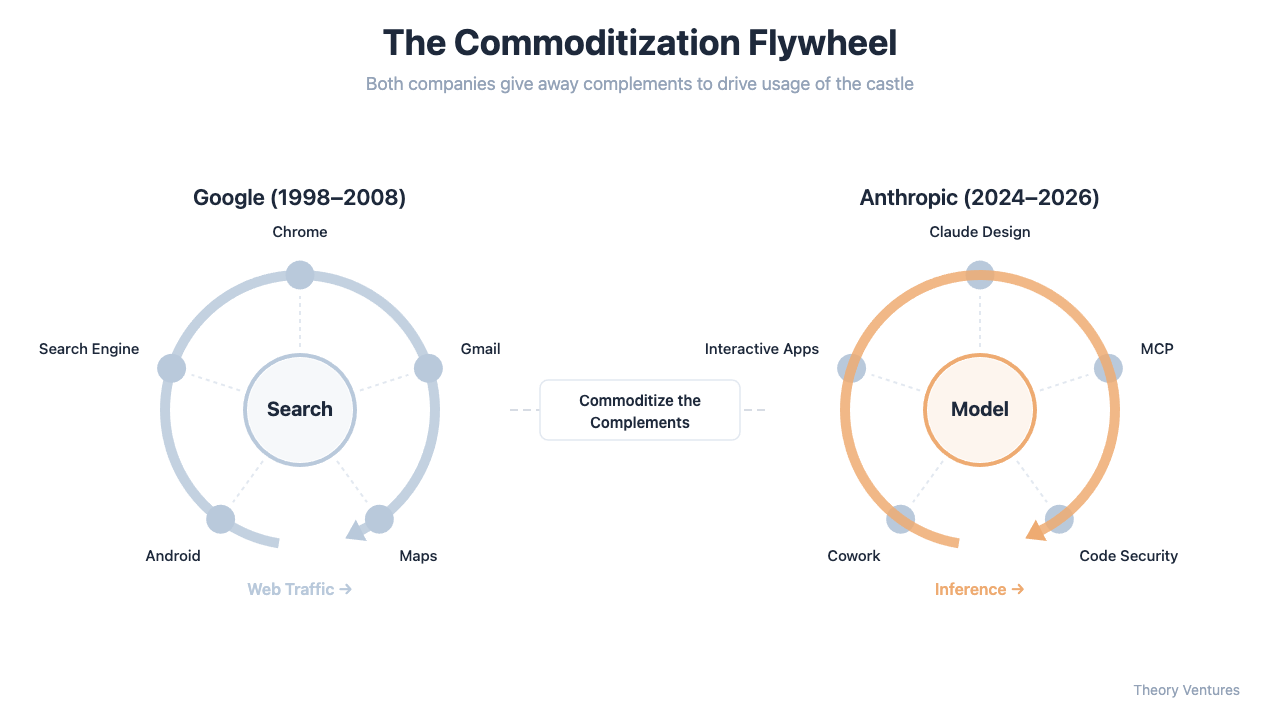
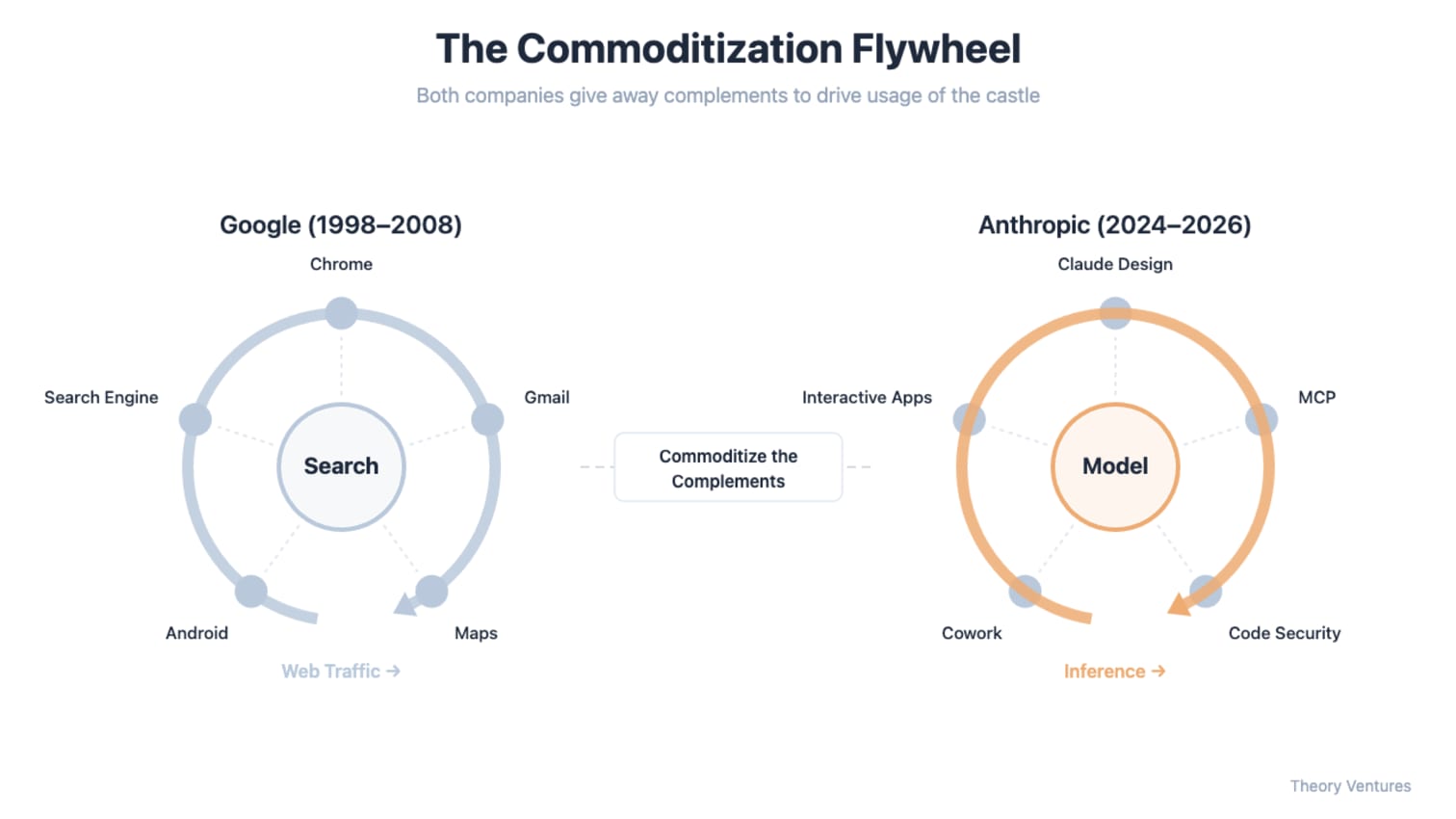
Google commoditized its complements : free maps, free email, free browsers, a free mobile OS. They removed every toll booth between the user & search.
Anthropic’s strategy parallels Google’s, a natural extension of the strength of the core product, the model.
For Anthropic, more usage across diverse tasks means more data, which produces a smarter model—just as more queries improved Google search.
The risk of this strategy to the ecosystem is that it makes previously attractive categories no longer viable. Commoditizing the complement does not demand a best-in-class replacement. A free, good-enough product is enough to change market dynamics.
Some categories never developed a competitive response to this strategy : email, advertising infrastructure, user-generated video.
But plenty of categories survived through specialization or direct competition : cloud, travel, domain registration, social networking. Commoditizing complements doesn’t always work because focus is scarce even for the largest, fastest growing businesses.
A startup’s greatest advantage is that it can outfocus the giant. But it needs to pick the right place to pressure.